Skip to content

Tag: Publishing

Midweek Miscellany

A new monograph on Japanese un-brand MUJI to be published by Rizzoli later this month (via Swiss Legacy).

Finishing Touches — Type foundry Hoefler & Frere-Jones on the little details that make their typefaces:

In the middle of Gotham, our family of 66 sans serifs, there is a hushed but surprising moment: a fraction whose numerator has a serif. So important was this detail that we decided to offer it as an option for all the other fractions, a decision that ultimately required more than 400 new drawings. Why?…[I]t’s something that we added because we felt it mattered. Even if it helped only a small number of designers solve a subtle and esoteric problem, we couldn’t rest knowing that an unsettling typographic moment might otherwise lie in wait.

And on the subject of typography… A handy PDF chart for mixing typefaces (via Smashing Magazine)

Blade Runner Will Prove Invincible — Philip K. Dick on Blade Runner, the film adaptation of Do Androids Dream of Electric Sheep, in a letter to the production company (via Coudal):

The impact of BLADE RUNNER is simply going to be overwhelming, both on the public and on creative people — and, I believe, on science fiction as a field… Science fiction has slowly and ineluctably settled into a monotonous death: it has become inbred, derivative, stale. Suddenly you people have come in, some of the greatest talents currently in existence, and now we have a new life, a new start… My life and creative work are justified and completed by BLADE RUNNER. Thank you… It will prove invincible.

And by coincidence, not only did I just watch the director’s cut of Blade Runner again just the other day (for approximately the bazillionth time), it was recently announced that Blade Runner director Ridley Scott would be producing a 4-part TV adaptation of The Man in the High Castle for the BBC. Awesome.

Deceptively SimpleThree Percent’s Chad W. Post on OR Books innovative publishing model:

The OR Books business model is deceptive in its simplicity. In many ways, it’s a throwback to a time before supply-chain intermediaries permanently altered the bookselling business—a time when publishers were also printers and bookstores. It’s a model that—if successful in the long run—thrives on both satisfying the needs of customers and maximizing the publisher’s return.

And finally…

Part One of Eleanor Wachtel’s interview with John le Carré about his new book Our Kind of Traitor for CBC Radio’s Writers & Co.:

Writers and Co. John Le Carre Interview

Comments closed

Something for the Weekend

More Than Words — Yves Peters takes a typographical look at the winners of British Book Design and Production Awards 2010 for FontFeed. The winners all look wonderful, but, as Peters notes, it is a shame that only the publishers are credited, not the designers of the books.

An Archaeology of Business Cards — Penguin book designer Coralie Bickford-Smith discusses her workspace and her work with From the Desk Of…:

Right now I’m in the middle of designing a 20-book series, as well as sundry standalone titles, and my desk is usually a mess of ideas and scribbles on innumerable scraps of paper. There’s a whole archaeology of business cards, post-it notes and other treasures under there. I like to be surrounded by the current proofs to make sure the designs are working and that any tweaks are made in time for the final print. I like my desk – it’s my own tiny world in a big office.

My Q & A with Coralie is here.

Reading the ProcessThe New Yorker’s Book Bench interviews book designer Rodrigo Corral:

Reading is always part of the process when we’re working on a book jacket or cover for fiction. I read, I take notes, I take breaks. I’ll stop on the title, re-read it, and think about how it plays into the book and its overall message and intent. It’s rare to be able to illustrate the tone of the entire story by only depicting one moment from the book, so I prefer using a new image or design that I feel represents the story accurately.

The Rejection of Literalism — Steven Heller talks about his biography of designer Alvin Lustig Born Modern* with Imprint:

I did not get the impression that Lustig went into the book jacket biz with a literary bent. He did, however, have the temerity to try just about anything. And since, as a kid, he was interested in designing his way, he just, well, designed his way. So, I guess “confidence” is the right word. It was ballsiness. He had a vision—wherever it came from—and he pursued it. He was largely self-taught.
And, also via Imprint

Design Dossier: Graphic Design for Kids by Pamela Pease published by Paintbox Press, seen at The Daily Heller.

12 Reasons to be Excited About Publishing’s Future — Following up an earlier post about the love of books, Digital Book World‘s Guy LeCharles Gonzalez asks book industry folks why they’re excited about publishing.

And finally…

Help Me Destroy Public Radio” — Alec Baldwin channels Jack Donaghy for his “Do Not Pledge To Public Radio” pledge drive promo for NPR.

* Born Modern is published by Chronicle Books, who are distributed in Canada by my employer Raincoast Books.

1 Comment

Jay Rosen on the Media

The Economist’s Democracy in America blog has an interesting Q & A with Jay Rosen, professor of journalism at NYU and author of What Are Journalists For?, about the American news media. The focus is largely on politics (Democracy in America is a blog about American politics after all), but Rosen’s insights into the future of the news media in general are also pertinent to the book industry:

The cost of changing settled routines seems too high, but the cost of not changing is, in the long term, even higher. A good example is the predicament of the newspaper press: the print edition provides most of the revenues, but it cannot provide a future. I know of no evidence to show that young people are picking up the print habit. So if the cost of abandoning print is too high, the cost of sticking with it may be even higher, though slower to reveal itself. That’s a problem…

…[T]he alternative to chasing clicks is building trust and an editorial brand. “What people want” arguments don’t impress me. I think anyone with a half a brain knows that you have to listen to demand and give people what they have no way to demand. You have to listen to them, and assert your authority from time to time, because listening well is what gives you the authority to recommend what is not immediately in demand.

Link

Comments closed

On Publishing 8 Faces

Following on from Craig Mod’s recent essay ‘Kickstartup’  (and to some extent Derek Powazek’s older essay ‘How to Publish a Magazine in a Day and a Half’) designer Elliot Jay Stocks has written an interesting step-by-step post on traditionally publishing the first issue of his typography magazine 8 Faces:

Right now, in an age of print-on-demand for real-world publication and iPads / iPhones / Kindles for virtual publication, it would — on the face of it — seem unwise to launch a magazine like 8 Faces, especially as it’s targeted at such a niche audience. As I said in the introduction of the magazine, “everything about this project shouldn’t work.” But it has, and it’s done so in a bigger way than I ever would’ve imagined. I was confident that there was going to be a demand for the first issue, but I had no idea that it’d sell out in under two hours…

The essay is full of practical insights and 8 Faces is another great example of how people are using the web and traditional print media to publish in new and innovative ways.

(link via Eightface)

How to Publish a Magazine in a Day and a Half

1 Comment

Opportunities and Charm

In a recent op-ed for The Financial Times (registration required), John Makinson, CEO of the Penguin Group, outlined the opportunities e-books offer to publishers:

What is being missed in the debate about the division of digital spoils is the opportunity offered by e-books to authors and readers, as well as to publishers who have the specialist skills to exploit it… [W]e should not forget that the growth of the book market has always been driven not by changes in consumer demand but by the availability of new channels of supply. It was true of supermarkets and book clubs, and it will be true of digital platforms and formats.

While e-books mean that publishers can develop new products that expand on the traditional book, says Makinson, digital technology will also provide them with “rich consumer data” that can inform decisions about pricing and content. Furthermore, social networks and online communities  will allow for greater reader engagement in the publishing process.

According to Makinson, technology will redefine the industry but, so long as publishers are adept at learning new skills, it will enhance their role rather than diminish it. And even with the “explosive growth” of e-books, Makinson is optimistic about print:

Perhaps the charm of the physical book will be lost one day. But I doubt it. Readers of all ages retain a remarkable emotional attachment to the thing. It is portable, convenient and a pleasure to own… There’s life in the old book yet.

(link)

Comments closed

Kickstart

Craig Mod’s fascinating essay on re-publishing his book Art Space Tokyo using fund-raising website Kickstarter has been much linked to elsewhere, but I’ve only just found time to actually read it and it is definitely worth your time if you have hadn’t had chance to read it yourself yet:

I had one chief consideration in defining the goals for the Kickstarter project: make enough books to generate substantial returns. Then use those returns to further expand this or similar publishing endeavors.

I never intended to just sell a few books. The last thing I wanted was for this Kickstarter project to be nothing more than the start and end of Art Space Tokyo’s new print run. Instead, I wanted it to be the jumping point for exploring more projects in a similar spirit to Art Space Tokyo; a means to explore digital books and to fund the startup of a publishing venture that could make this happen.

(link)

Comments closed

Something for the Weekend

Today is Penguin’s 75th Birthday! Happy Birthday Penguin.

Tony Lacey, Publishing Director of Penguin, discusses the Penguin Decades series:

And The Guardian interviews Penguin Chief Executive John Makinson, who sounds pretty pleased with himself (Penguin just announced record-breaking half year results):

“[E-books] redefine what we do as publishers and I feel, compared with most of my counterparts, more optimistic about what this means for us,” he says. “Of course there are issues around copyright protection and there are worries around pricing and around piracy, royalty rates and so on, but there is also this huge opportunity to do more as publishers.” Publishing, he says, must embrace innovation: “I am keen on the idea that every book that we put on to an iPad has an author interview, a video interview, at the beginning. I have no idea whether this is a good idea or not. There has to be a culture of experimentation, which doesn’t come naturally to book publishers.

In other news…

Copy Writer from the Dark Side — Author Will Self (Liver) discusses advertising with Gordon Comstock for an interview the Creative Review:

I straighten my dog collar and point out some of the things we might have in common, the novelist and the adman. The love of epigrams, the twisting of cliché, the use of animals behaving uncannily – all Self tropes, all things that a copywriter might well have in his book.

It’s a notion I can imagine certain writers would bridle at, but Self only nods philosophically, “Well, maybe I am a copywriter that’s gone to the dark side, I don’t know.”

Wonder Woman Returns — Kate Beaton goes all superhero and shit at Hark! A Vagrant. Kate is now also selling prints directly from her site and from TopatoCo.

And finally, on a related note and because it’s Friday,…

Lady Gaga Kidnaps Commissioner Gordon:

Supervillain Lady Gaga brazenly abducted Commissioner James Gordon from a charity fundraiser Tuesday, leaving police baffled and the citizens of Gotham fearing for their safety. Known for her outlandish costumes and geometric polygon hair, the criminal madwoman made a daring escape from Arkham Asylum last week and has been taunting authorities by interrupting television broadcasts ever since… While the kidnapping occurred at stately Wayne Manor, home of playboy jet-setter Bruce Wayne, the eccentric billionaire was not available for comment.

Comments closed

Pass the Gestalt, Please

An interesting post by the whip-smart Evan Schnittman, Managing Director of Group Sales and Marketing at Bloomsbury, about e-book rights and royalties at his blog Black Plastic Glasses:

[A] successful and coherent publishing is not the sum of individual publishing rights, but rather the gestalt work presented coherently to a global audience. Viewing the ebook out of the context of the rest of the work gets us nowhere. We must understand how ebooks fit into the publishing ecosphere and only then can we determine what the right royalty should be… The whole work has FAR greater value than the sum of the individual rights. Allowing each individual part, or right, to be disaggregated and auctioned to the highest bidder serves only those who make profit from short-term gain.

(via MobyLives)

Comments closed

Midweek Miscellany

The portfolio of Julia Hastings, Art Director of Phaidon Press (via It’s Nice That).

Rarefied Content — Alan Rapp on the future of photography books at Imprint:

[A]rguably the independently published photo book is flourishing. You can see this from the increasing popularity of on-demand printing services such as Blurb, Lulu, and MagCloud , as well as the number of successful and well-published photographers who have launched their own publishing ventures, such as Alec Soth, Richard Renaldi, and Shane Lavalette (a practice which itself has a long pedigree, from Alfred Stieglitz to Ralph Gibson). Yet this kind of kaleidoscopic output creates another issue—who but the most ardent follower can keep abreast of this vast dispersion of small-scale publishing?

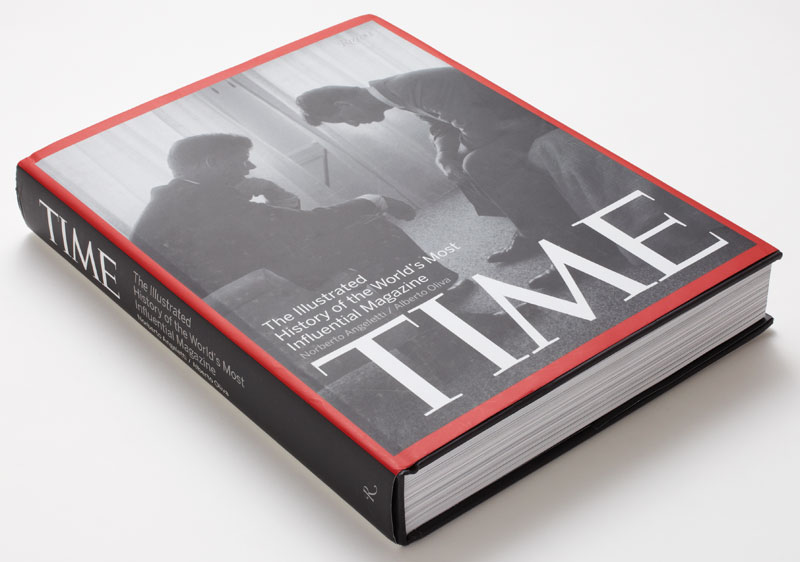
The Illustrated History of Time designed by Luke Hayman at Pentagram:

And finally…

The trailer for the animated adaptation of Shaun Tan‘s The Lost Thing (via The Art Department | Irene Gallo):

I’ve posted this before, but here’s a short documentary about making the film:

The Lost Thing website.

Comments closed

Penguin 75: Q & A with Paul Buckley and Christopher Brand

Launched with 10 titles by Allen Lane in 1935, Penguin Books turns 75 this year. To commemorate the anniversary, Executive VP Creative Director Paul Buckley has compiled Penguin 75, a collection of 75 book covers from the Penguin US archive.

Penguin 75 is an inside look at the Penguin design process with candid and irreverent commentary from authors, designers, editors and artists as well as Penguin Art Directors Darren Haggar and Roseanne Serra and Buckley himself. Filled with the kind of distinctive illustrative covers that are now associated with Penguin US, the book is wonderful slice of American book cover design. As Karen Horton recently noted in her interview with Buckley for design:related:

Penguin 75… is less about the history of the old orange-spined paperbacks and more about the relationships Creative Director Paul Buckley helped to facilitate in the last decade between publisher, editor, author, and designer.”

I was lucky enough to talk to Paul and the book’s designer Christopher Brand about Penguin 75 last week.

How did Penguin 75 come about?

PB: I’ve always had a mix of fascination, disdain, and understanding, for what my staff and I go through in trying to get our work approved, as well as what the editors and publishers are dealing with on their end. Of course all people whose work is subjective go through some sort of approval process — and it’s not easy for the folks on the other end of the situation either; the ones saying “this is just not right”. As it’s something we do not hear much about (other than at some industry function), I thought it would be interesting to put some of these stories together in book form.

And how did you get involved in the project, Chris?

CB: I was working on staff at Penguin at the time. I let Paul know that I would be interested in working on it when he first mentioned the project to everyone. I mostly work on covers but I’ve had the chance to work on a few interiors before this one.

What criteria did you use to choose the covers?

PB: There were different sets of criteria; the most obvious being that they had to be Penguin paperbacks, as we had decided to use this project in conjunction with our 75th Penguin imprint anniversary. Another criteria was that I wanted to show recent Penguin work, so nothing older than 10 years or so. Then it came down to a combination of which covers look great and also have an interesting story associated with them, as well as trying to get a mix of intriguing authors and designers in there — not just your obvious fiction darlings, but a true microcosm of the publishing world and art world.
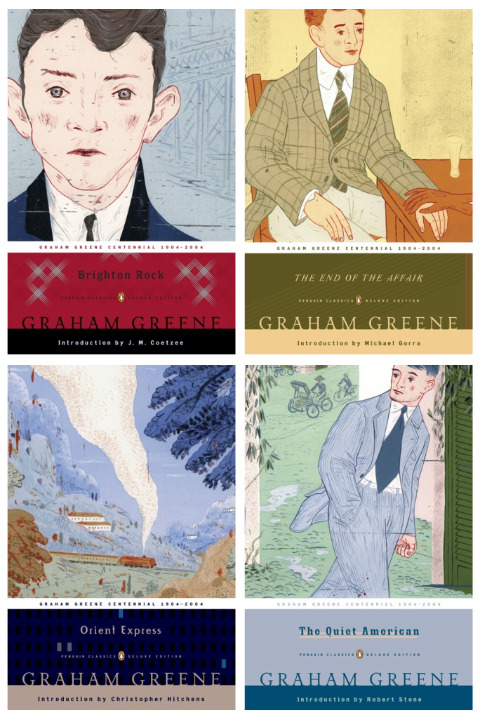
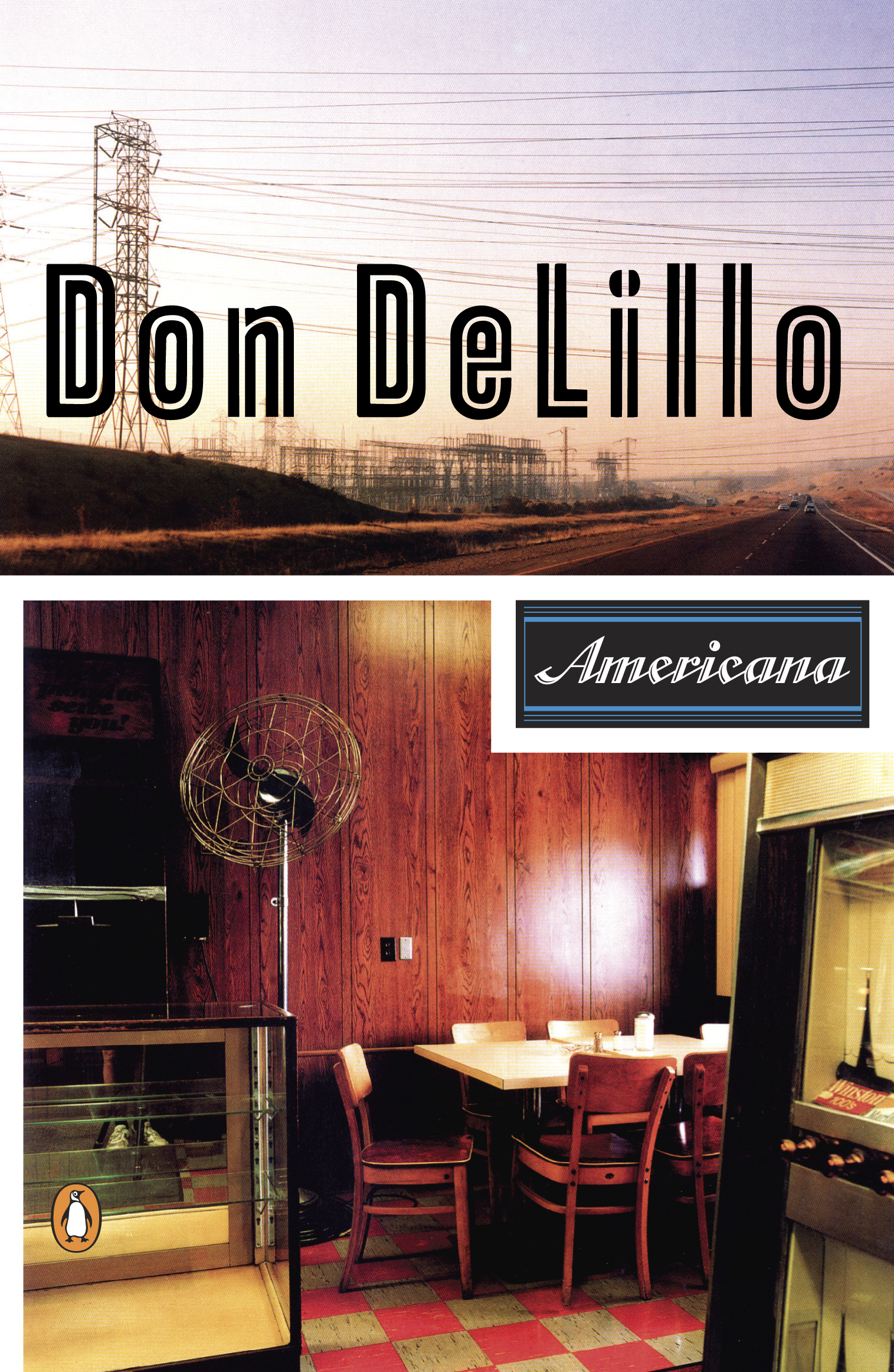
The covers are very different from the iconic Penguin paperback covers. Do you think the book shows a different side to Penguin’s design history?

PB: Of course. Penguin UK does a gorgeous job of tapping into the Penguin archive and history, and while I like to go there from time to time, I’m very interested in Penguin’s future in a different sort of way. The beautiful Penguin by Design is just not who I am, and if I tried to do a version of that, two things would happen — I’d fail as my heart would not be in it, and no one would buy it as it’s already out there in a few books. This is not to say that I’m not a huge fan of Penguin’s design history — I am, but I see it as a place to tap into occasionally, while still moving the brand forward — as nothing creative can remain as it was, nor should it if it wants to stat vital in it’s own day. But we do maintain Penguin’s age old love of illustrated and well crafted covers.

Do you have a sense that Penguin US has a design sensibility that is separate from the Penguin UK tradition?

PB: Whether you’re UK or US, it’s still Penguin tradition, so I don’t define it as you do. Both sides are very proud of Penguin, it’s history, it’s cache, it’s values — and both sides have built Penguin into what it is today, and what it stands for. So while we are separate entities that bring different things to the table, the overall strive to keep the quality bar set very high is paramount to either side.
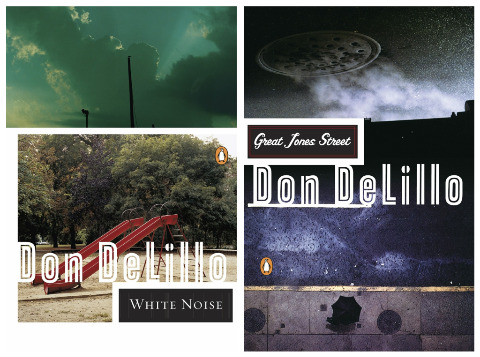
Was it hard to choose just 75 covers?

PB: Unbelievably hard. That ate up the first month or so, just getting it down to 75, who was left in, who was left out, who on staff has five covers in, while another has only one or two, is it a good mix visually and editorially of this and that, etc etc.

Chris, did you have a say in any of the selections?

CB: Paul did an initial edit and went through tons of the books. Once he narrowed it down I helped a little bit with figuring out what we should put in, but mostly I would come to Paul later on when were trying to lay out the book. If we couldn’t get enough content for one of the books then we would have to find another one to put in. Or, if Paul wanted to add more books toward the end then we had to figure out what to subtract. I was more involved when it affected the design.

Were there any covers or comps that you wanted to include but couldn’t?

PB: By the nature of only utilizing 75 covers / series, things have to be left out. So yes, but only for that reason.

Penguin 75 includes contributions from authors and editors as well as designers, but I notice you left out Sales & Marketing!

PB: I did not leave out sales and marketing any more than I left out elves and leprechauns… I simply did not have any real sales and marketing stories. The Penguin marketing director, John Fagan, is hands down the best marketing director in the universe — we all know the horror stereotype stories of the marketing director killing this and that just to hear their own voices in the room, but John is so much an integral part of our team and loves what we are doing with our packaging; so unless he really thinks we’re missing something, he’s incredibly supportive; and when he does have something to say, he still manages to do it in a kind and intelligent way. Our sales team also leaves that stereotype behind. Trust me, you see in the book that I’m not pulling any punches and I made sure no one else in the book did either — so if I had great Penguin sales and marketing stories, you’d be reading them.

As a designer, were you surprised by any of the  comments from authors and editors about the cover designs, Chris?

CB: The range of comments from the authors was pretty surprising. Some were very thoughtful and you could tell they appreciate and understand book cover design. Other authors weren’t very happy with their covers and they made that pretty clear.

Was it fun to design a book about book design?

CB: More than anything, it was just fun for me to be working on the interior of a book instead of just the cover. It was a nice change.

Were there any unique challenges?

CB: The biggest challenge was that Paul and I were working on this book, but at the same time we both had full time jobs at Penguin. Paul tried to clear my plate for me a bit, but we both still had a lot of other responsibilities to deal with. Another thing that was hard was that we were sort of doing this whole thing on the fly. We were responsible for not just designing the book but gathering all of the content and all of the things that we needed to design the book (the comments, the hi-res art, etc.). We had to get everything together as we went and this stuff trickled in throughout the process.

On a design level, there was a lot of information to organize. It was challenging to come up with a system for everything. We had comments from that authors and designers, then there were comments from the art directors that we created another system for, all of the credit information for each book, we were showing alternative designs for some covers. There was a lot to think about.

Did you try to take account of Penguin’s design history while working on your design?

CB: I did take Penguin’s history into account at the beginning when we were figuring out what the layout should look like. I used Gill Sans throughout the book, but it’s pretty small and doesn’t feel overwhelmingly “Penguin”. I tried some things that were more in the style of older Penguin covers, but in the end we went with something more modern.

Was it strange to design a book that includes some of your own work?

CB: It was a little strange at first, but many of the covers in the book were designed by my co-workers so a lot of the work was very familiar to me.

So, did the book make you reconsider any of your own designs, or your design process?

PB: I’d love to sound thoughtful and say “yes” and expound on some brilliant new design wisdom — but the answer is “no”. All of the entries in this book are well known to me, and most have been for years. Putting them all down in one place just made me feel proud of what my department does — but I’ve always been incredibly proud of my team. If anything, it made me reconsider what it takes to put a book together, and see editors and authors in a more favorable light.

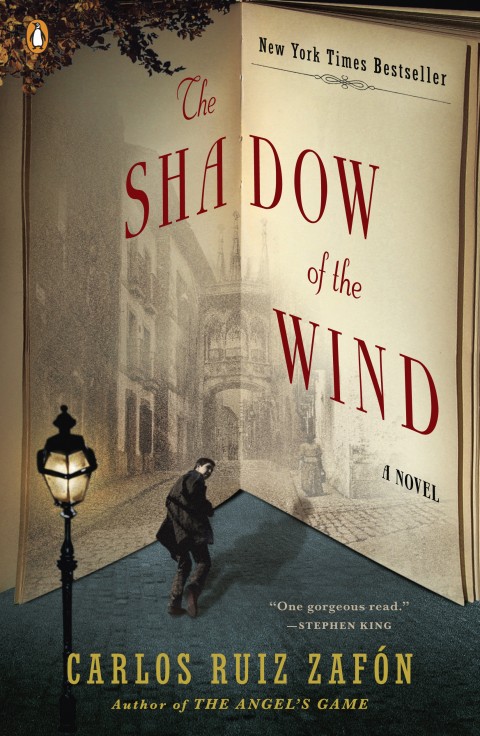
And, Chris, I have to ask… How does it feel to be immortalized on the cover of The Shadow of the Wind by Carlos Ruiz Zafón?

CB: It was an amazing opportunity. I think this only the beginning of my modeling career.
Thanks Paul and Chris!

Images:

  1. Penguin 75 cover, design by Paul Buckley
  2. Penguin “Graphic Classics”:
    The Dharma Bums | Art Director: Paul Buckley |  Illustrator/Designer: Jason
    The Portable Dorothy Parker | Art Director: Paul Buckley | Illustrator/Designer: Seth
  3. Graham Greene Backlist | Designer/Art Director: Paul Buckley | Illustrator Brian Cronin
  4. Don Delillo Backlist:
    Americana
    | Designer/Art Director: Paul Buckley | Photos: Jeff Brouws
    White Noise | Designer/Art Director: Paul Buckley | Photos: Jason Fulford
    Great Jones Street | Designer/Art Director: Paul Buckley | Photos: Hugues Colson (top), Tom Zimberzoff (bottom)
  5. Emporium and unused image | Designer/Art Director: Paul Buckley | Illustrator: Viktor Koen
  6. Special Topics in Calamity Physics | Designer/Art Director: Paul Buckley
  7. Pages 220 – 223  Penguin 75 | Designer: Christopher Brand
  8. Pages 244 – 247 Penguin 75 | Designer: Christopher Brand
  9. There Once Lived a Woman Who Tried To Kill Her Neighbor’s Baby | Designer: Christopher Brand | Illustrator: Sam Weber | Art Director: Roseanne Serra
  10. The Jewish Messiah | Designer: Christopher Brand art Rodrigo Corral Design | Art Director: Darren Haggar
  11. The Shadow of the Wind | Designer: Tal Goretsky | Art Directors: Darren Haggar and Paul Buckley
4 Comments

The Slow Media Manifesto

Slow Media is a blog about literature, music, film, arts and entertainment. Here, re-posted with permission, is their Slow Media Manifesto:

The first decade of the 21st century, the so-called ‘naughties’, has brought profound changes to the technological foundations of the media landscape. The key buzzwords are networks, the Internet and social media. In the second decade, people will not search for new technologies allowing for even easier, faster and low-priced content production. Rather, appropriate reactions to this media revolution are to be developed and integrated politically, culturally and socially. The concept “Slow”, as in “Slow Food” and not as in “Slow Down”, is a key for this. Like “Slow Food”, Slow Media are not about fast consumption but about choosing the ingredients mindfully and preparing them in a concentrated manner. Slow Media are welcoming and hospitable. They like to share.

1. Slow Media are a contribution to sustainability. Sustainability relates to the raw materials, processes and working conditions, which are the basis for media production. Exploitation and low-wage sectors as well as the unconditional commercialization of user data will not result in sustainable media. At the same time, the term refers to the sustainable consumption of Slow Media.

2. Slow media promote Monotasking. Slow Media cannot be consumed casually, but provoke the full concentration of their users. As with the production of a good meal, which demands the full attention of all senses by the cook and his guests, Slow Media can only be consumed with pleasure in focused alertness.

3. Slow Media aim at perfection. Slow Media do not necessarily represent new developments on the market. More important is the continuous improvement of reliable user interfaces that are robust, accessible and perfectly tailored to the media usage habits of the people.

4. Slow Media make quality palpable. Slow Media measure themselves in production, appearance and content against high standards of quality and stand out from their fast-paced and short-lived counterparts – by some premium interface or by an aesthetically inspiring design.

5. Slow Media advance Prosumers, i.e. people who actively define what and how they want to consume and produce. In Slow Media, the active Prosumer, inspired by his media usage to develop new ideas and take action, replaces the passive consumer. This may be shown by marginals in a book or animated discussion about a record with friends. Slow Media inspire, continuously affect the users’ thoughts and actions and are still perceptible years later.

6. Slow Media are discursive and dialogic. They long for a counterpart with whom they may come in contact. The choice of the target media is secondary. In Slow Media, listening is as important as speaking. Hence ‘Slow’ means to be mindful and approachable and to be able to regard and to question one’s own position from a different angle.

7. Slow Media are Social Media. Vibrant communities or tribes constitute around Slow Media. This, for instance, may be a living author exchanging thoughts with his readers or a community interpreting a late musician’s work. Thus Slow Media propagate diversity and respect cultural and distinctive local features.

8. Slow Media respect their users. Slow Media approach their users in a self-conscious and amicable way and have a good idea about the complexity or irony their users can handle. Slow Media neither look down on their users nor approach them in a submissive way.

9. Slow Media are distributed via recommendations not advertising: the success of Slow Media is not based on an overwhelming advertising pressure on all channels but on recommendation from friends, colleagues or family. A book given as a present five times to best friends is a good example.

10. Slow Media are timeless: Slow Media are long-lived and appear fresh even after years or decades. They do not lose their quality over time but at best get some patina that can even enhance their value.

11. Slow Media are auratic: Slow Media emanate a special aura. They generate a feeling that the particular medium belongs to just that moment of the user’s life. Despite the fact that they are produced industrially or are partially based on industrial means of production, they are suggestive of being unique and point beyond themselves.

12. Slow Media are progressive not reactionary: Slow Media rely on their technological achievements and the network society’s way of life. It is because of the acceleration of multiple areas of life, that islands of deliberate slowness are made possible and essential for survival. Slow Media are not a contradiction to the speed and simultaneousness of Twitter, Blogs or Social Networks but are an attitude and a way of making use of them.

13. Slow Media focus on quality both in production and in reception of media content: Craftsmanship in cultural studies such as source criticism, classification and evaluation of sources of information are gaining importance with the increasing availability of information.

14. Slow Media ask for confidence and take their time to be credible. Behind Slow Media are real people. And you can feel that.

Stockdorf and Bonn, Jan 2, 2010

Benedikt Köhler
Sabria David
Jörg Blumtritt

(via Wired)

2 Comments