New York Times film critic A.O. Scott on Sam Peckinpah’s fantastic 1969 Western The Wild Bunch:
Comments closed
Published November 8, 2011
Books, Design and Culture
New York Times film critic A.O. Scott on Sam Peckinpah’s fantastic 1969 Western The Wild Bunch:
Comments closed
I was reading about Clint Eastwood’s 1971 film Dirty Harry this week for a long, much overdue (now almost mythical) post I’m supposed to be writing, and so I have to share A. O. Scott’s video review of the movie for The New York Times:
Comments closedNew York Times film critic A. O. Scott revisits Robert Altman’s 1970 film MASH:
The film was based on MASH: A Novel About Three Army Doctors by former military surgeon Richard Hooker, first published in 1968.
Comments closedNew York Times film critic A.O. Scott turns his attention to the 1955 French thriller Les Diaboliques directed by Henri-Georges Clouzot:
Les Diaboliques was based on the novel Celle qui n’était plus (She Who Was No More) by Pierre Boileau and Thomas Narcejac and before Clouzot bought the rights to the screenplay, Alfred Hitchcock was apparently about to do so. Coincidently, Robert Bloch, author of Pyscho, was a fan of Clouzot’s movie.
Comments closed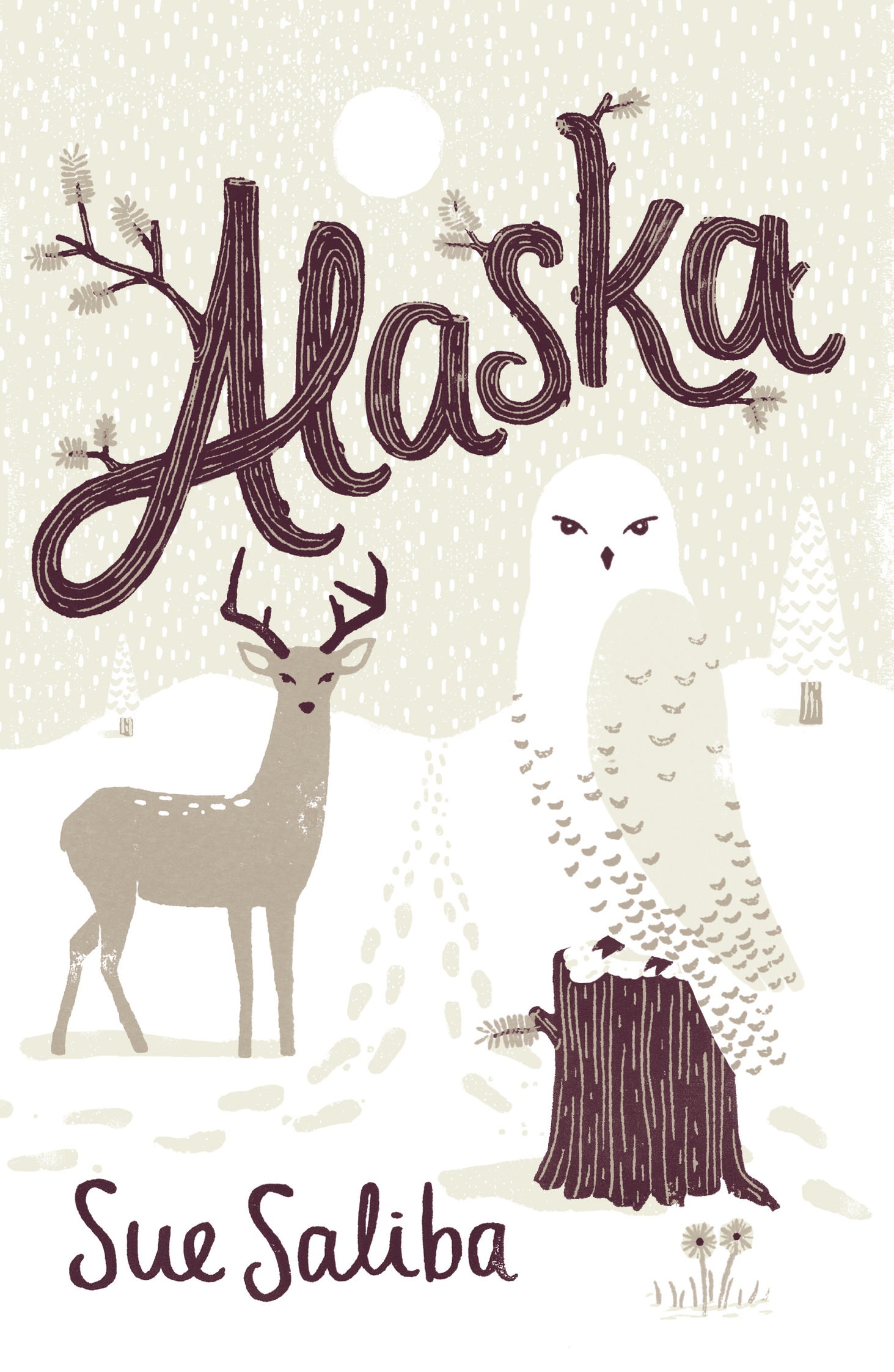 An interview with the talented Allison Colpoys, book designer at Penguin Books Australia, at The Design Files.
Particular Beasts — A brief interview with art director John Gall about teaching book design:
Each book is its own particular beast that has to be designed from the ground up. Every designer has their own way of looking at the problem and coming up with a solution. It can’t help but be personal on some level.

A Twist, Flourish or Quirk — Louise Fili and Steven Heller, authors of Scripts: Elegant Lettering from Design’s Golden Age, on script typefaces at Design Observer:
During the letterpress era [script typefaces] were in such great demand that many people “invented” them, and many others copied them. In some commercial printing shops, composing cases filled with scripts were stacked floor to ceiling to the exclusion of other type. Printers routinely amassed multiple styles of the heavy metal type fonts, each possessing a distinct twist, flourish or quirk, used to inject the hint of personality or dash of character to quotidian printed pieces… Scripts signaled propriety, suggested authority yet also exuded status and a bourgeois aesthetic. The wealthy classes couldn’t get enough fashionable scripts in their diet.
The Pilot Fish and The Whale — David Carr, media columnist at the New York Times, talks about the documentary Page One: Inside The New York Times with screenwriter Aaron Sorkin for Interview Magazine:
I think one of the things that Page One does an amazing job of demonstrating is the importance of editors. You can see our editor, Bruce Headlam, shaping, arguing, pushing back. Of course, that’s what you don’t have a lot of in the blogosphere. There is nobody pushing people to support what they’re saying, nobody arguing against the assumptions that are brought to the table…
Slow Journalism — An interview with cartoonist and journalist Joe Sacco (Footnotes in Gaza) for the A.V. Club:
[I]t’s one of the slowest art forms or media there is. You know, there’s fast food and there’s the slow food movement; I guess this is slow journalism. It just forces you into it. It’s difficult for me because I love being in the field, so to speak. I love that day-to-day thrill of being in places, and the great privilege of meeting people and going into their homes and seeing what their lives are like. I love that. But when you compare how much time is spent reporting to how much time is spent at a desk just writing and drawing, the reporting is a fraction. That’s just the way it is.
And finally…

Sing Out — Dorian Lynskey, author of 33 Revolutions per Minute, recommends five books about protest songs. The cover of 33 Revolutions per Minute was designed by Jacob Covey.
The New York Times movie critic A. O. Scott on the aesthetics of failure in Bruce Robinson’s 1987 film Withnail & I:
Not only is the film largely autobiographical, it is apparently an adaptation of an unpublished novel Robinson wrote in 1969.
Comments closed
Last Thursday The New York Times hosted an exhibition of rejected book jacket designs called ‘Killed Covers’. Fortunately for those of us who don’t live in New York they’ve also posted a gallery of 20 covers from the show.
(Pictured above left: design by Roberto de Vicq, Wetlands. Right: design by John Gall and Leanne Shapton, Autograph Man)

The New York Times movie critic A. O. Scott looks at the enduring appeal of The French Connection:
William Friedkin’s 1971 film was a fictionalized adaptation of the nonfiction book The French Connection: A True Account of Cops, Narcotics, and International Conspiracy by Robin Moore, first published in 1969.
New York Times movie critic A. O. Scott discusses Katsuhiro Otomo’s 1988 anime classic Akira and Japan’s pop culture obsession with apocalyptic disaster:
The film was based on Otomo’s original six-volume, 2182-page epic, which is thought to be one of the first works of manga to be translated into English in its entirety.
Comments closed
Anthony Gottlieb writes on the renewed interest in 16th Century French essayist Michel de Montaigne for The New York Times:
Like Socrates, Montaigne claims that what he knows best is the fact that he does not know anything much. To undermine common beliefs and attitudes, Montaigne draws on tales of other times and places, on his own observations and on a barrage of arguments in the ancient Pyrrhonian skeptical tradition, which encouraged the suspension of judgment as a middle way between dogmatic assertion and equally dogmatic denial. Montaigne does often state his considered view, but rarely without suggesting, explicitly or otherwise, that maybe he is wrong. In this regard, his writing is far removed from that of the most popular bloggers and columnists, who are usually sure that they are right.
And, funnily enough, Sarah Bakewell author of How To Live: Or, A Life of Montaigne in One Question and Twenty Attempts at an Answer — one of the books mentioned by Gottlieb — recently spoke to Eleanor Wachtel about Montaigne for CBC Radio’s Writers & Company:
CBC RADIO WRITERS & Co. WITH SARAH BAKEWELL
The cover of the US edition of How To Live, published by Other Press, is by Mr. John Gall (pictured above). But you knew that already of course….


Two stunningly minimal designs by Rodrigo Corral for New Directions.
Faceout Books is back after a hiatus. First up, an interview with Jennifer Heuer about her design for Down and Delirious in Mexico City by Daniel Hernandez.
Haystacks of Needles — Nicholas Carr, author of The Shallows, on situational overload versus ambient overload:
Situational overload is not the problem. When we complain about information overload, what we’re usually complaining about is ambient overload. This is an altogether different beast. Ambient overload doesn’t involve needles in haystacks. It involves haystack-sized piles of needles. We experience ambient overload when we’re surrounded by so much information that is of immediate interest to us that we feel overwhelmed by the neverending pressure of trying to keep up with it all. We keep clicking links, keep hitting the refresh key, keep opening new tabs, keep checking email in-boxes and RSS feeds, keep scanning Amazon and Netflix recommendations – and yet the pile of interesting information never shrinks.
The cause of situational overload is too much noise. The cause of ambient overload is too much signal.
The Case for the Novella — The New York Times Magazine has an excerpt from “The Three-Day Weekend Plan,” an essay by John Brandon from the new book The Late American Novel: Writers on the Future of Books (Soft Skull):
Bluntly, the novella is in its Golden Age as a form right now because no one is beating it with a stick until nickels fall out. So my plan for the novella is — drum roll: Do nothing. Or do whatever little is required to steward the status quo. Let’s agree, shall we, to keep throwing around the inane term Great American Novel, and to never, ever utter the phrase Great American Novella.
And on the subject of The New York Times Magazine…
 The Speed of Change — Former Design Director for NYTimes.com Khoi Vinh on the new design of the New York Times Magazine:
Comments closedDigital publishing is supposed to be much quicker than print publishing, but this… suggests that more important than the speed of medium is the nimbleness of the business behind it. The print side of The New York Times takes a lot of good natured ribbing for being slow to publish news, but it’s still very, very good at what it does. Which is to say that few organizations can publish on a weekly basis and still effect the kind of major change that this redesign represents.
In some ways, the digital side of the business is not as nimble as that. To be sure, few companies can execute digital publishing as well as The New York Times… But partly because the medium is much younger and constantly changing, partly because best practices are less well-defined, and partly because the mission is more diffuse, execution is a more intricate, protracted and, often, inefficient affair on the digital side.