Skip to content

Tag: interview

Nabokov’s 1964 Playboy Interview


Longform has posted a Playboy interview with Vladimir Nabokov from January 1964:

When I remember afterwards the force that made me jot down the correct names of things, or the inches and tints of things, even before I actually needed the information, I am inclined to assume that what I call, for want of a better term, inspiration, had been already at work, mutely pointing at this or that, having me accumulate the known materials for an unknown structure. After the first shock of recognition—a sudden sense of “this is what I’m going to write”—the novel starts to breed by itself; the process goes on solely in the mind, not on paper; and to be aware of the stage it has reached at any given moment, I do not have to be conscious of every exact phrase. I feel a kind of gentle development, an uncurling inside, and I know that the details are there already, that in fact I would see them plainly if I looked closer, if I stopped the machine and opened its inner compartment; but I prefer to wait until what is loosely called inspiration has completed the task for me.

(read the full interview)

Comments closed

Design Matters with Chip Kidd

Kicking off a new season Design Matters, designer and art director Chip Kidd in conversation with Debbie Millman:

1 Comment

Chip Kidd: What the Stories Look Like


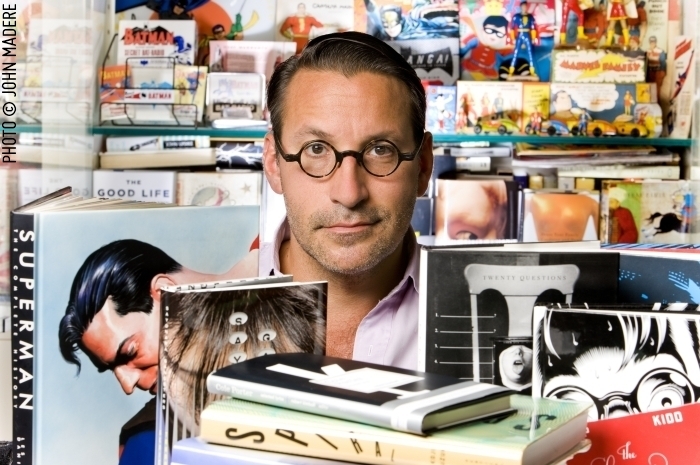
Penn State alumnus Chip Kidd discusses his career at length in a recent interview conducted at the university by host Patty Satalia:

Kidd’s novel The Cheese Monkeys is  loosely based on his time at Penn State.

Comments closed

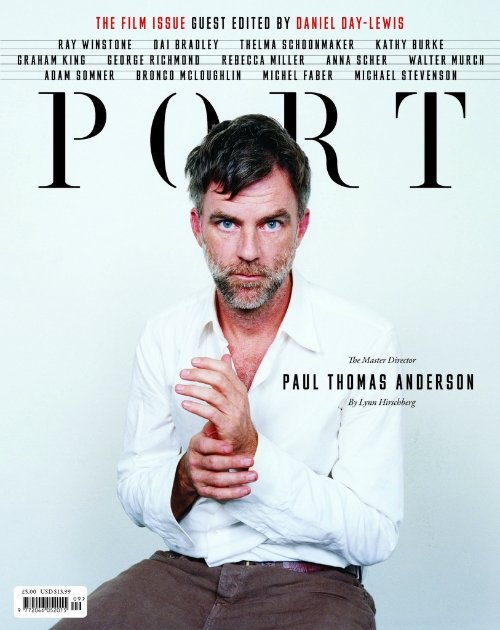
The Master Director: Paul Thomas Anderson


Port magazine has just made Lynn Hirschberg’s interview with filmmaker Paul Thomas Anderson from their Spring issue available on online:

The Master is not supposed to be a riddle,” he said, when I asked him if he intentionally made the film hard to embrace. “It’s not meant to be medicine. It’s not meant to be something that you have to work hard at deciphering. It’s a same old – same old story presented in a new way. It’s about Freddie and Dodd’s love for each other, what it means to be a master and a subject and vice versa. I don’t find it particularly difficult, but maybe it’s operator error.” Anderson paused and then smiled. “Meaning maybe it is my fault, but fuck it.”

Interestingly, Anderson’s next film is a Thomas Pynchon adaptation:

Anderson seems to move on faster now, although he may not be dwelling on the complex reaction to The Master because he is in the midst of pre-production on his next movie. It’s an adaptation of Thomas Pynchon’s 2009 novel Inherent Vice that is set to begin filming in late spring. This is the first screenplay of a Pynchon novel that the author, who is known for his literary pyrotechnics and his mysterious, reclusive nature, has authorised. The book, which is set in the late 60s and early 70s, centres on a counterculture detective that, reportedly, will be played by Joaquin Phoenix, but Anderson would not discuss any aspect of his new project. “I have always loved his work,” Anderson said, not even willing to voice Pynchon’s name. When I peppered him with questions, he shook his head no, with a stubborn half-smile.

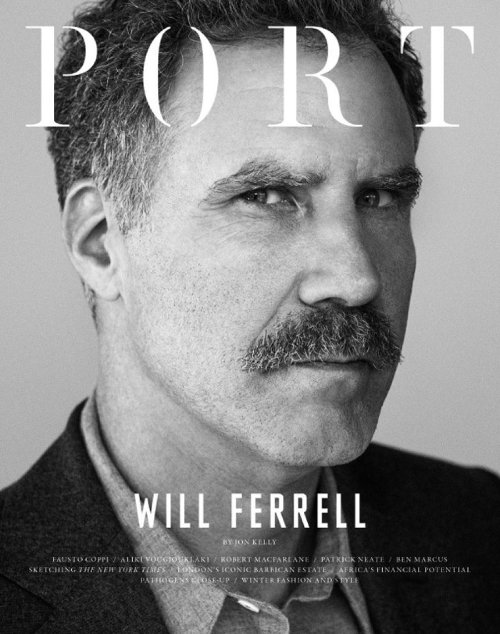
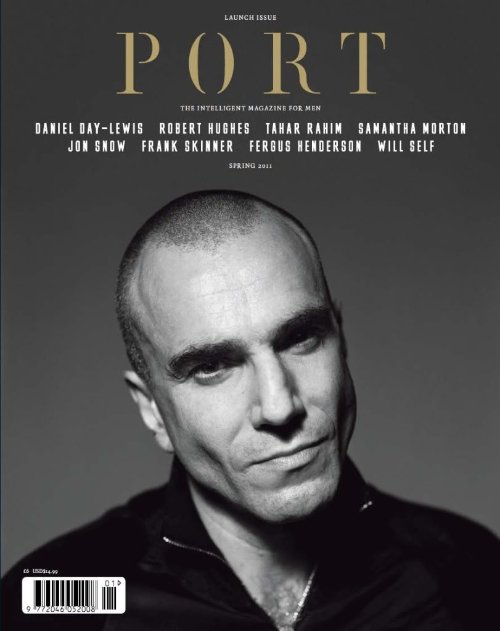
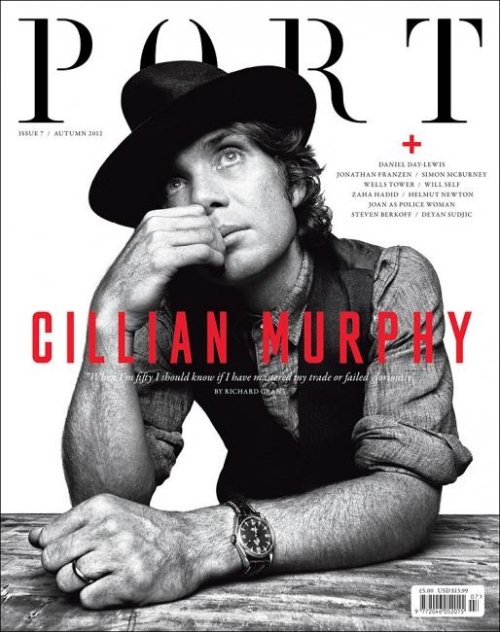
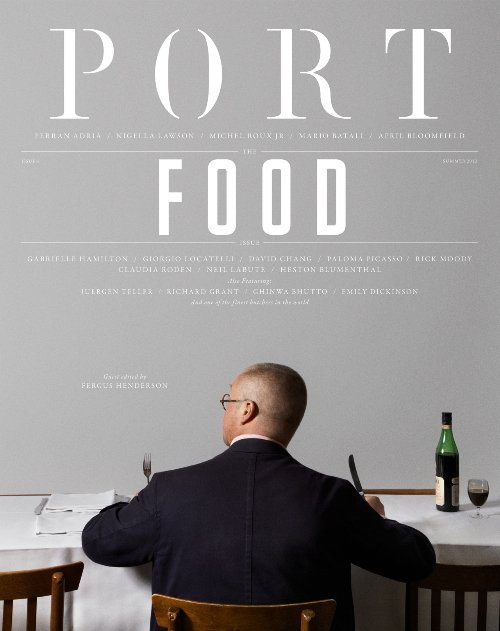
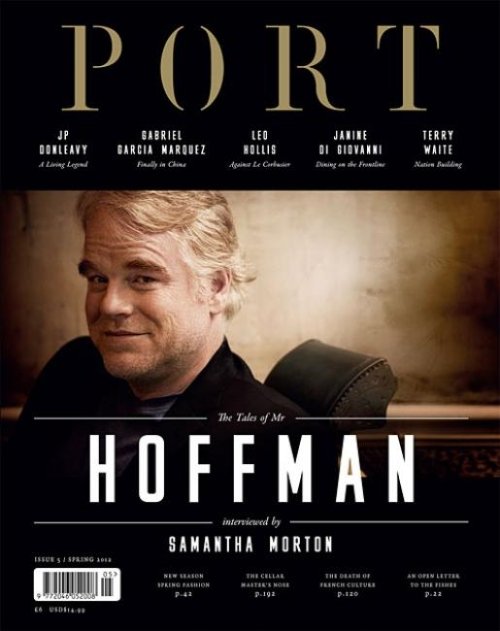
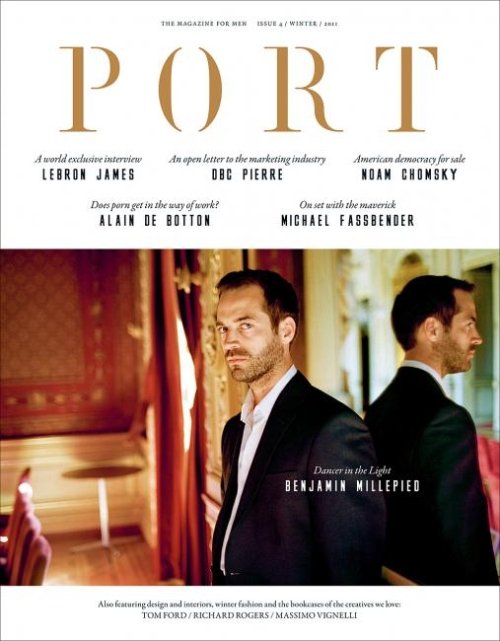
And if Stefan Ruiz’s photographs of Anderson haven’t convinced you that Port is beautifully looking magazine here are a few covers:

Long may it continue.

Comments closed

Françoise Mouly: In the Service of What the Artist is Saying

In a follow up to his short Q & A with Françoise Mouly and her partner Art Spiegelman for the National Post, David Balzer has a fascinating full-length interview with Mouly, publisher of Toon Books and art editor of the New Yorker, at Hazlitt:

I think that if you set out with a scripted outcome, you don’t succeed. I’m acting out things that work on me. I spent most of my terribly unhappy childhood years immersed in books. I found early on that it was a great way to escape any kind of arguments with my parents or emotional upheaval. I loved reading and being lost in a book. I trained as an architect. As an architect you’re part of a team and no architect can build a house by themselves. But a bookmaker can make a book all by themselves. And an author: look at my husband’s book, or Marjane Satrapi’s Persepolis—she manages to convey a very rich world, and her personality is very well expressed in a book that shows her handwriting, that has a sense of her.

In a way I got a very classical education growing up in France in the sixties, and learning Latin, Greek, French and English. But I’m well versed in the technological part of the 21st century. The common denominator for me is stories, narrative structure. That’s how I understand things. I find them, books, the right recipient for something that is both complex and nourishing. I watch movies and enjoy them; I watch, you know, The Wire and TV shows, but still, the stories I read in books inhabit my brain in a special way. Those characters are very present in my thinking. And children’s books are a very real part of how I think. So I find it a privilege to actually be in communication, to leave a trace of something that’s actually going to be read.

Hazlitt

Comments closed

Paul Pope: In Your Space


In an interview for BookExpo, cartoonist and artist Paul Pope talks about his work, influences, and, yes, his studio space:


Pope’s new book Battling Boy is out in the fall from First Second (and, for the sake of disclosure, distributed in Canada by my employer Raincoast Books). He will be at BookExpo signing galleys on May 30th.

Comments closed

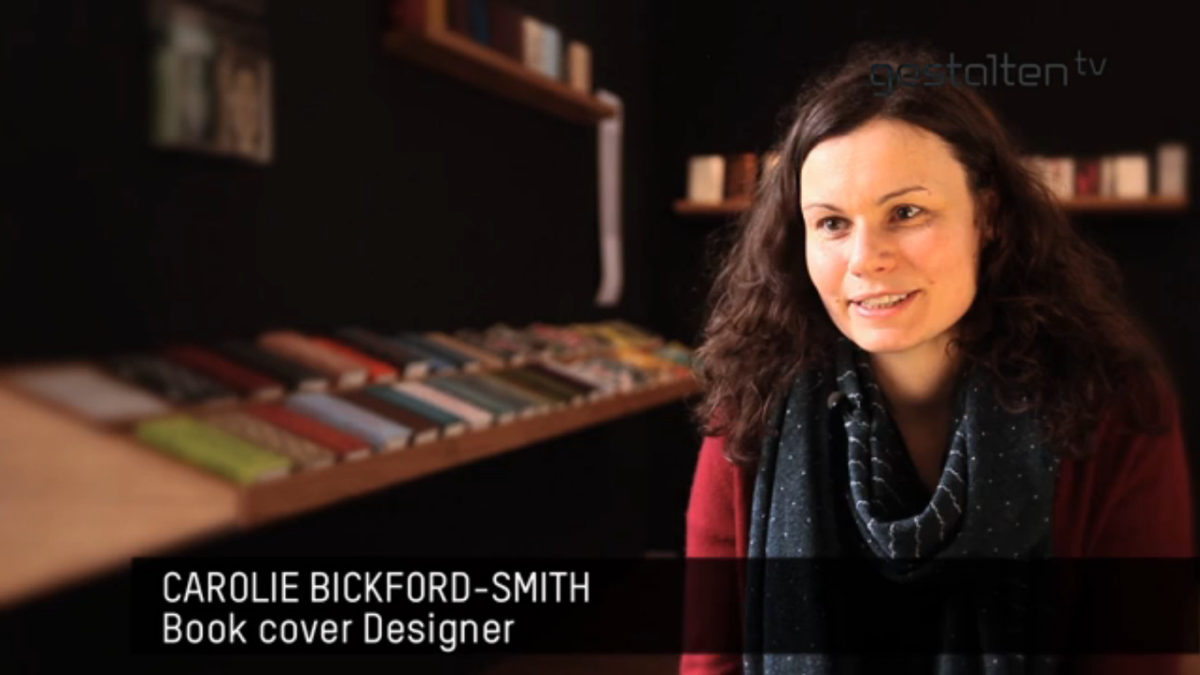
Carolie Bickford-Smith—A Series Woman

In this new interview with Gestalten.tv, Penguin Press designer Coralie Bickford-Smith talks about her love of books, her design process and the importance of research:

[vimeo 65388307 w=500]

Coralie’s work is featured in Fully Booked: Ink on Paper, published earlier this year by Gestalten.


You can read my 2009 interview with Coralie here.

1 Comment

Distortion is Character

Brian Eno talks about art, music and his creative process in this video for Alfred Dunhill:

(via David Pearson on Twitter)

Comments closed

Q & A with Misha Beletsky, Part Two

In part one of our conversationMisha Beletsky, art director at Abbeville Press, discussed his interest in the work of German-born designer and calligrapher Ismar David, the subject his recent book The Book Jackets of Ismar David, published by RIT Press. In this second and final part of our interview, Misha and talks about his own work as a designer and an art director:

How did you become interested in design?

The father of a boyhood friend in Russia was a book designer. He had a photo lab set up in his closet, took pictures of letters, and pasted them up with rubber cement. Having access to creation of the book, that holy of the holies of the bookish world I grew up in seemed like magic. I thought it was the coolest thing in the world. One day I tagged along with this friend to take night classes at the Moscow Printing Institute. Suddenly, I felt it was no longer a world I could enjoy as a guest, but a world I could be a part of. I felt it was not only something I liked doing, but an area where I could make a real difference. When I arrived in the US, one particular image from a RISD catalog influenced my decision to choose this school over others: a photograph of a calligraphy class. The unassuming black-and-white image spoke to me more than all lavish and clever full-color catalogs of other schools not because I wanted to become a calligrapher, but because I knew this was a place that based its design education on a solid ground. The essential training in typography I received at RISD laid the ground for my summer internship with David R. Godine, Publisher in Boston. This small press started out as a letterpress printing shop in a barn and over the years has been responsible for more important books on book design and typography than any single publisher in this country. There I caught the bug of fine printing. I began appreciating printer’s ink, impression, and paper, and there I was indoctrinated about the proper use of old style figures and small caps. I learned to consider all elements of the book as a part of one system where the whole is more than a sum of its parts and each part is integrally related to each other. Empowered by my discovery of the letterpress, I went back to school to spend my Senior year hand-setting metal type, carving woodcuts, and printing my own limited-edition books. My first job after school designing book interiors for Alfred A. Knopf was the best way to apply the ideals of fine printing to real-life trade publishing. Knopf house style had changed little since the heady days of W.A. Dwiggins, George Salter, and Warren Chappell. I explored every nook in the corporate library, taking in every book designed by the best designers of the 30s, 40s, and 50s. Their lessons are still with me today.

Could you describe your book cover design process?

Most of the books I design are art books, which usually implies I am responsible for both the cover and the interior design. This means I have a rare privilege of making sure the cover and the interior design agree. I usually start from the inside out: I decide on the interior typography first, and then move on to the jacket. Unlike most trade books, where cover designers are only limited by their imagination and their budget in the choice of the artwork, the cover image for illustrated books usually comes from within the book. I select an image, crop it, and design the typography. This limitation made me keenly aware of how much you can do with type alone and sympathetic to the designers of the past who were able to achieve great results with limited tools.

What do you look for in a designer’s portfolio?

I look for understanding of and an eye for traditional book typography. Only a handful of portfolios out of hundreds I reviewed had it.

Do you see any prevalent trends in contemporary book design?

There is a relatively new trend of purely decorative covers and bindings by Coralie Bickford-Smith and others that seems to be a reaction to the overwhelming number of clever designs. As far as interiors go, by and large, I see a lot of unexciting work of decent quality and very little great work. I keep waiting for a resurgence of good typography, but it has not arrived yet.

What advice would you give a designer starting their career?

Read Ben Shahn’s The Shape of Content. Learn calligraphy, drawing, and printmaking. Learn letterpress printing from metal type. Manual skills cannot be emphasized enough.

Who are some of your design heroes?

Bruce Rogers, the subject of my new book. He had an almost unfathomable sensitivity to typography. In his lifetime he was famous to a point of embarrassment. Today he is hardly ever talked about. Yet, to me he remains the most versatile and the most accomplished practitioner of our craft.

Another name is Vladimir Favorsky, a towering genius of Russian graphic arts, completely forgotten outside of Russia. For many years he taught at VKhuTeMas, the Russian sister-school of the Bauhaus (which evolved into the design department of Moscow Printing Institute where I briefly studied), yet he was in opposition to the Constructivist ideas espoused by most professors there. He developed an original design philosophy of his own that integrated Avant-garde ideas with the traditional craft of wood engraving. Ironically, his fusion of the old and the new may prove more relevant today than the radical rejection of the old by his famous modernist colleagues.

What does the future hold for book cover design?

Who knows? What does the future hold for visual art or for our culture at large? It seems we’ve been living in a cultural twilight zone. We’ve tried Modernism and we came to a logical dead end, we’ve tried revolting against Modernism, and we’ve become tired of that, too. What’s next? I hope we can learn to build on top of what the previous generations learned instead of rejecting whatever the last fashion was and trying to outdo it. In the words of Goethe that Ismar David loved to quote, “What you inherited from your fathers, acquire it to make it your own.”

Thanks Misha! (And I couldn’t resist including this…)

Read part one.

Comments closed

Q & A with Misha Beletsky, Art Director Abbeville Press, Part One

Misha Beletsky is the art director of New York’s Abbeville Press, an independent publisher of fine art and illustrated books.

Towards the end of last year, Misha was kind enough to send me a copy of his recent book, The Book Jackets of Ismar David, published by RIT Press.

A German-born graphic artist, David worked in Germany and then Jerusalem before moving permanently to the United States to become part of a group of accomplished calligraphers who also worked as book jacket designers in New York in the 1950s. David’s bold and expressive style was informed by a mastery of the typographic tradition (he designed a calligraphic Hebrew typeface called David Hebrew), and he worked for many of leading publishers of the day including Alfred A. Knopf, Harper and Row, Houghton Mifflin, Random House and others.

In this post, the first of a two-part interview, Misha discusses the book and his interest in the work of Ismar David.

When did you first come across the work of Ismar David?

Anyone who reads Hebrew is familiar with David’s work, whether they are aware of it or not: David Hebrew, a font he designed happens to be one of the most ubiquitous Hebrew typefaces for text setting. I was first exposed to his work outside of type design as I researched my article on the history of Hebrew typography around twelve years ago.

What interested you about him?

David’s work is powerful and beautiful, yet little known. He had a rare ability of using traditional skills and historical knowledge to arrive at strikingly contemporary results.

Did David’s work change when he moved to the US?

His work matured and became more diverse, as he grew in his craftsmanship and absorbed many exciting influences of 1950s’ New York design scene. He was working alongside other accomplished calligrapher jacket designers like George Salter, Warren Chappell, Arnold Bank, Phil Grushkin, Charles Skaggs, Oscar Ogg, Jeanyee Wong, and Lili Wronker, among others. They all knew each other and learned from each other’s work.

Do you consider David to be primarily a book designer or a calligrapher?

He was a graphic artist who used calligraphy as a primary means of expression. He was equally comfortable designing book jackets, architectural interiors, logos, advertisements, and monumental inscriptions, depending on the project at hand.

What was special about his Hebrew typeface ‘David’?

It was the first 20th c. Hebrew text type, whose letterforms were not based on an existing typographic model, but found inspiration in historic calligraphic hands. David distilled the idea of the Hebrew letter to its purest form.

How did David’s work differ from his contemporaries Paul Rand and Alvin Lustig?

His work could not be called clever or conceptual. He relied on the sheer power of the letter, shape, and color to create stunning jackets that told the book’s story through a primary visual vocabulary.

Is David’s work still relevant today?

I believe it is. Twenty years into the “conceptual revolution” in our book cover design, the Modernist idiom is getting a bit tired. We are ready for something different. There is a renewed interest in traditional typography and design craftsmanship, and it is here that we could learn a thing or two from David.

Do you think we’re seeing a revival of calligraphy, lettering and hand-drawn type?

Somewhat: if Pinterest stats are any indication, lettering compositions are trending along with pictures of fashionable outfits, cute puppies, and expensive home interiors. It’s not a complete comeback, though. On one hand, a few talented designers like Marian Bantjes and Jessica Hische are enjoying a tremendous degree of success with their decorative lettering work. On the other hand, the work of traditionally trained calligraphers is still in relatively low demand. What seems encouraging, though, is a renewed interest in, and appreciation of, calligraphy as a craft. I would attribute the interest in this and other handicrafts to the backlash against the proliferation of the computer that has left the hand out of the creative process. At the same token, the plethora of visual resources now available on the Internet provides unprecedented access to the rare historical calligraphic books and manuscripts. In this case the same computer is actually helping to make the handicraft popular again.

Thanks Misha.

You can find more images from The Book Jackets of Ismar David on Facebook. Part two of my converation with Misha will be available tomorrow.

Comments closed

Design Matters with Roberto de Vicq de Cumptich

Designer Roberto de Vicq de Cumptich interviewed by Debbie Millman for Design Matters. Wonderful stuff:

Roberto’s most recent book Men of Letters & People of Substance is published by Godine:


Comments closed

Charles Burns on Bookworm

Cartoonist Charles Burns discusses his new book The Hive with Michael Silverblatt on KCRW show Bookworm:

KCRW Bookworm: Charles Burns THE HIVE mp3


Comments closed