Skip to content

Tag: interview

Q & A with Matt Roeser, Candlewick Press

If you follow book design on social media at all, chances are you’ve come already across Matt Roeser‘s  funny, if somewhat dinosaur-fixated, Twitter feed. But over the past couple of years as senior designer at independent children’s publisher Candlewick Press in Massachusetts, Matt has been quietly producing some bright, brilliant, and original covers for their line of young adult titles.

I first came across Matt’s work about 4 years ago when he first started a Tumblr project called New Cover, and was working outside publishing in St. Louis. Now he is designing books full-time, it only seemed appropriate to ask him a few questions about his interests and influences, his work, and his career. We corresponded by email.
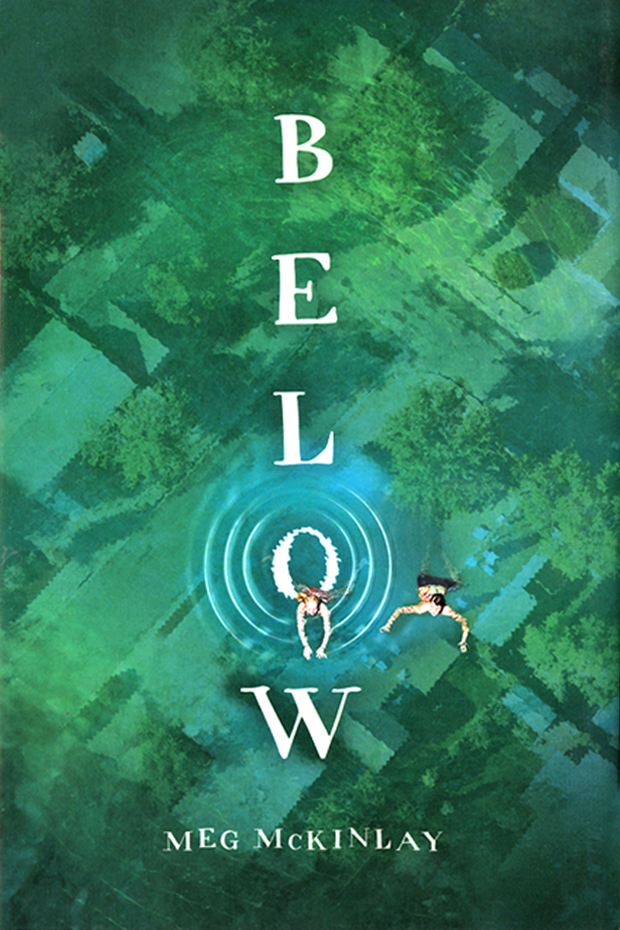
Below

Were there a lot of books in your house growing up?

Absolutely. We lived two blocks away from our library, so my parents were always taking my brother and I there and letting me bring home as much as I could carry. That, paired with the book order forms our teachers would pass out every month (of which I had an unhealthy level of excitement for) meant there was always a constant stream of books in our house.

Did you have a favourite book as a kid?

I had three, and to this day, still can’t decide which one I like the most because they’re each fabulous in their own way: From the Mixed-Up Files of Mrs. Basil E. Frankweiler because the kids run away and live in a museum (I’m still hoping to do this one day!), The Westing Game, because it’s an epic murder mystery, and The Phantom Tollbooth, because it’s so imaginative and full of wordplay, which I have a soft-spot for.
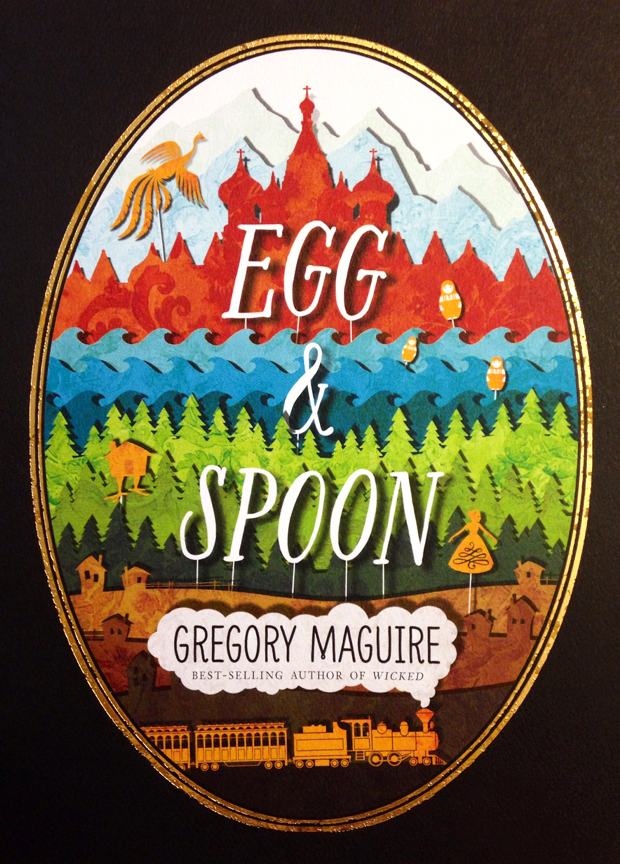
EggandSpoon

Do you remember when you first became interested in design?

Yes, and it was paired with reading in a way. The movie Jurassic Park came out when I was 10 and I went with my brother to see it at least 5 or 6 times and was just completely enthralled. Then my brother bought the book with the now-classic Chip Kidd design on the front. I read it and, being my first “big-person” book that I had read, it really stuck with me. I remember thinking it was so cool that the design of the jacket was used for the logo for the park in the movie. And it was on t-shirts, lunchboxes, everything. The fact that a new Jurassic Park movie is coming out next year, and they’re still using Chip Kidd’s design just makes me so happy. So while I don’t think I completely realized it at the time, that’s the moment that I became aware and interested in design. And since I’ve never actually grown up, all of the things I loved as a child (dinosaurs, space, time travel) still excite me to this day (thus why a majority of my tweets revolve around dinosaurs). I even had a Jurassic Park themed 30th birthday party which was simultaneously my most proud and most embarrassing moment in life.

Is anyone else in your family creative?

Yeah, my immediate and extended family is full of carpenters and woodworkers, interior designers and painters and people that just generally like to create and build with their hands.

Did you study design at school?

Initially, when I started college, I dove deep into marketing. However, I quickly found out, after taking macro-economics and a plethora of other numbers-based courses, that the business side of marketing was not at all interesting to me. I then started taking a bunch of creative communication classes that included various advertising and graphic design courses, and quickly felt much more at home. Ultimately, a lot of my design education was self-taught, but at school I learned the basic process of working on creative projects that really stuck with me.

What were you doing before you joined Candlewick?

I worked with the creative team at Atomicdust, a branding and marketing agency in St. Louis, Missouri. I definitely learned the ins and outs of the creative process while there. We had a great array of clients that allowed us to flex our creative muscles in a variety of ways as we came up with messaging and then decided the best ways to get that message out. Learning how to boil down a company’s entire purpose/goals/soul into a clear message was great experience for what I do now: communicating an entire book’s essence through its jacket.
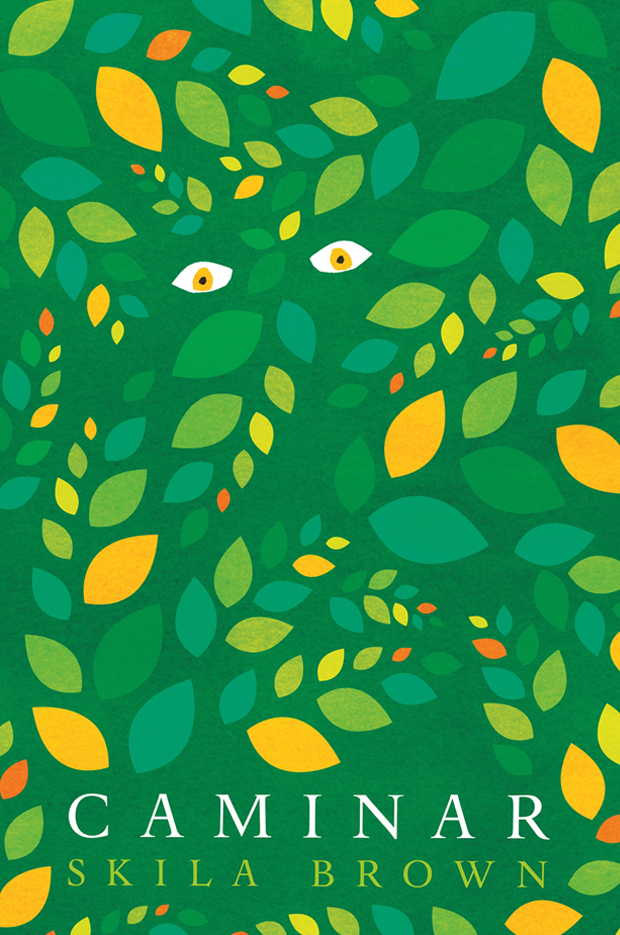
Caminar

Before you were designing books professionally, you started New Cover, a self-initiated project redesigning the covers of some of your favourite books. Was your goal to get a job in publishing?

Ultimately. It was really driven from the fact that I love to read and I love design, and it had always been a secret “dream-job” ambition of mine to make of career of combining the two. Part of my job at Atomicdust was hiring designers, and as a result, I was sent tons of resumes and portfolios. Every once in a while, there would be someone who didn’t have any work to show but was still looking for a job, but you can’t really hire a designer without seeing any of their work. And then it hit me; if I wanted publishers to hire me to design book covers, they weren’t just going to do it because they saw that I could design websites and brochures. They would need to see book covers. So I picked a few of my favorite books and started creating new covers for them. The project was featured on a couple of design blogs and then spiralled from there into real work from publishers.

Can you tell me a little bit about Candlewick Press and what it’s like to work there?

Candlewick has all of the best elements of a smaller company mixed with the structure of a larger corporate company. There are about 95 employees in total and we’re all on one huge floor of a building in Davis Square, a sort of hipster-y area right outside of Boston. It’s a really open and encouraging environment that gives me the freedom to fully visualize the design ideas I have for titles. We’re the companion company to Walker Books in the UK as well as Walker Australia, so occasionally we’ll take on some of their titles and vice versa, or we’ll coordinate a global launch for a title that we will all be simultaneously publishing. It also means we have an almost never-ending source of imported chocolates and cookies coming to the office via visitors from our other branches.

How many designers work in your office?

The art department has about 15 designers, a majority of who work primarily on picture books. I mostly work on young adult and middle grade fiction and a non-fiction title every now and then.

AvaLavender

Did you ever think you would make a career of designing kids’ books?

Looking back at previous jobs, you can definitely see all of the stepping stones that got me here. In high school, I worked in the children’s room of my town’s library. Then, during college, I worked at a preschool. So I’ve always sort of been surrounded by kids’ books. That, paired with graphic design in college and at Atomicdust, and it makes sense.

Can you describe your process for designing a book cover?

First, I read the book. I like to think that the jacket idea is already there in the text somewhere and I just have to find it and bring it to fruition. Once I’ve read the manuscript, I start sketching out ideas both on paper and on my computer. Sometimes I have a really clear initial vision of what the cover should look like and the final cover ends up looking pretty similar. Other times, I won’t have as clean-cut of an initial idea, so I’ll do really broad image searches based on a few keywords I’ve written down while reading just to get the wheels turning. It’s hard to say where ideas come from. The ultimate goal is to make a finished product that would catch someone’s eye, regardless of who the specific audience is. If I can make it interesting enough for anyone to pick up, I’ve done my job.
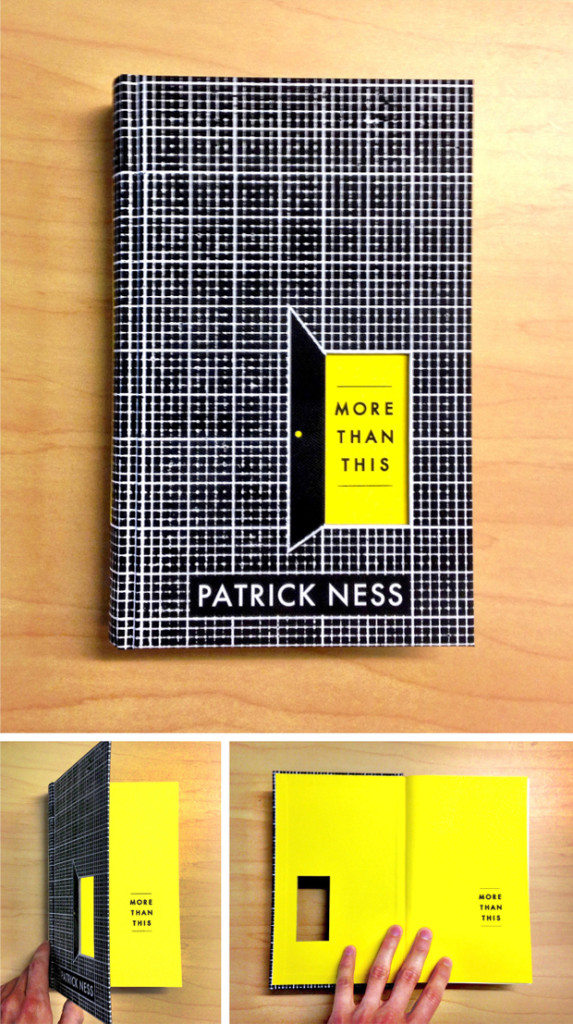
MoreThanThis

What are your favourite kinds of projects to work on?

Anything that’s a little off. As a reader, I like stories where about 75% of what’s going on seems normal and then there’s this gray space remaining where something unexpected/bizarre/weird is happening. It’s why I like books like The Prestige, Jonathan Strange and Mr. Norrell, A Tale for the Time Being, and the TV show LOST. So story-wise, those are projects I get the most excited about. Also, anytime a book is part of Launch (the titles that the publisher is really pumped about) because that ultimately means they’re willing to try different things to set the book apart. Whether it’s a die-cut through the case for More Than This, or a ¾ jacket wrapped around a printed case, or stamping the entire design in foil, I enjoy playing with the materials in new ways.

Who are some of your design heroes?

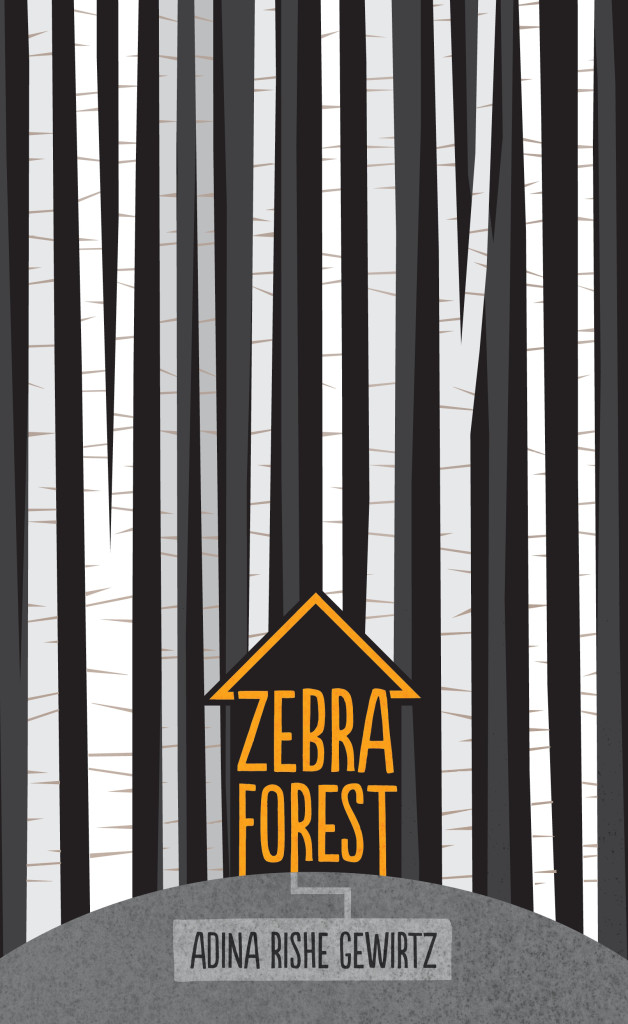
Chip Kidd, Jonathan Gray, Peter Mendelsund. Their designs are always interesting, unique and more often than not, little works of art.
zebra-forest

Who else do you think is doing interesting work right now?

Will Staehle and Oliver Munday. They are two people that whenever I see their name on a book jacket, I’m simultaneously super excited to see a great cover and also maddeningly jealous of their innate talent that makes it look so easy. I haven’t seen a cover of theirs that I don’t like.

Is there a particular author or a book you’d like to design (or redesign!) a cover for?

Hmm, this is tough. I feel like a lot of them I did as part of New Cover back in the day, although I should revisit some of those and the questionable design decisions I made at the time. Some of those author names are in such a tiny point size that I just laugh thinking about it now. I would love to take on a series redesign as it’s something I haven’t gotten the chance to do professionally.

What’s in your ‘to read’ pile?

The Bone Clocks by David Mitchell! I’ve been anticipating this book for a while after reading and falling in love with his novel Cloud Atlas. A coworker was able to grab an ARC of the The Bone Clocks at BEA, so I’m currently immersed in it. I’m also looking forward to the new Murakami book coming out in a few months. And, after numerous people have told me that they can’t believe I haven’t read it yet, The Lost City of Z is the next book I’m reading.
FloatingShelves

Do you have a system for organizing your books?

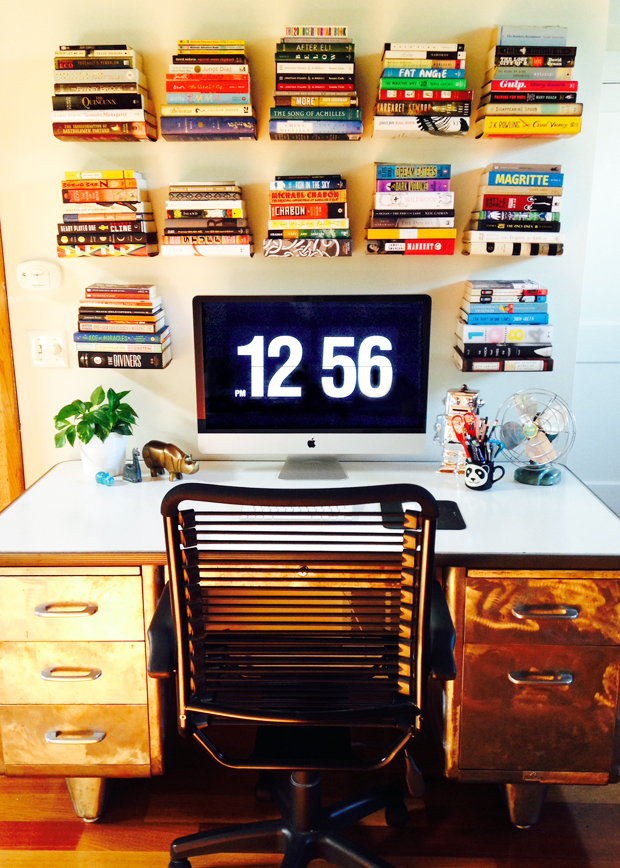
A few years back, I saw a floating pile of books on a wall in a design store and thought it was genius. Then, like I do with most things, I went overboard and bought 15 of them to hang over my desk. (See photo) They’re perfect for displaying some of my books in a way that’s a little different than normal. I try and fill them with a good mix of books I love and books that are visually amazing, and then put the majority of my other books in these three huge old steel lockers I have. One day, I will have a room with shelves going up every wall and a rolling ladder that I can ride around on like Belle does in the beginning of Beauty and the Beast and then I will truly be happy.

What’s the one book you recommend to everyone?

Cloud Atlas. It’s one where I would pause after reading a sentence and look out the window and contemplate life and just wonder how anyone could possibly be this good at writing. If you only saw the movie and hated it, go read the book. Before that, A Confederacy of Dunces. The dialogue is hysterical and I don’t remember laughing more at a book in my entire life.
PlayForTheCommandant

What does the future hold for book cover design?

I think regardless of how popular ebook readers become, there’s always going to be those titles that people want to buy a physical copy of. Maybe this means, as an industry, we make fewer (but more special) physical versions of books, which I don’t necessarily see as a bad thing. I’m a big believer in quality over quantity and if we want people to buy physical books, they need to be everything that they can’t get in an ebook: the materials should be exceptional, the design should be a work of art, the interior should have (gasp!) well thought out margins. It should be something they want to display. On the flip side, there’s always going to be an audience that only cares about the content. They don’t want stacks of books everywhere, don’t want to lug them around, don’t care (gasp!) about margins. I can understand all of that. But there will still be a need for associating some sort of image with the book. I can’t/don’t want to imagine a future where there’s just a long text list of titles that people choose from with no accompanying visual. When that day comes, you can find me barricaded in my own personal library, muttering to myself as I zoom around on my rolling ladder.

Thanks Matt!

Comments closed
Q & A with Erin Fitzsimmons

House of Ivy and Sorrow

In recent years, I doubt there’s been a greater publishing success story than Young Adult — or ‘YA’ —  fiction.

Sometimes mistakenly described as a genre, YA is actually an age-category roughly ascribed to books across a range of subjects and genres that are suitable for teenagers. Yet, confusingly,  YA is not quite synonymous with ‘Teen Fiction.’ While Teen Fiction is assigned books appropriate for ages 12-17, YA is increasingly used to describe (albeit loosely) fiction intended specifically for older teens and even readers in their 20s and beyond.

In 2012, Publishers Weekly reported that “55% of buyers of works that publishers designate for kids aged 12 to 17… are 18 or older, with the largest segment aged 30 to 44, a group that alone accounted for 28% of YA sales.” If it wasn’t exactly news that grown-ups read books for teens, their willingness to do so openly, and the development of a passionate fan culture driven as much by these adults as teens, has seen a change in the way publishers think about YA and how they package it.

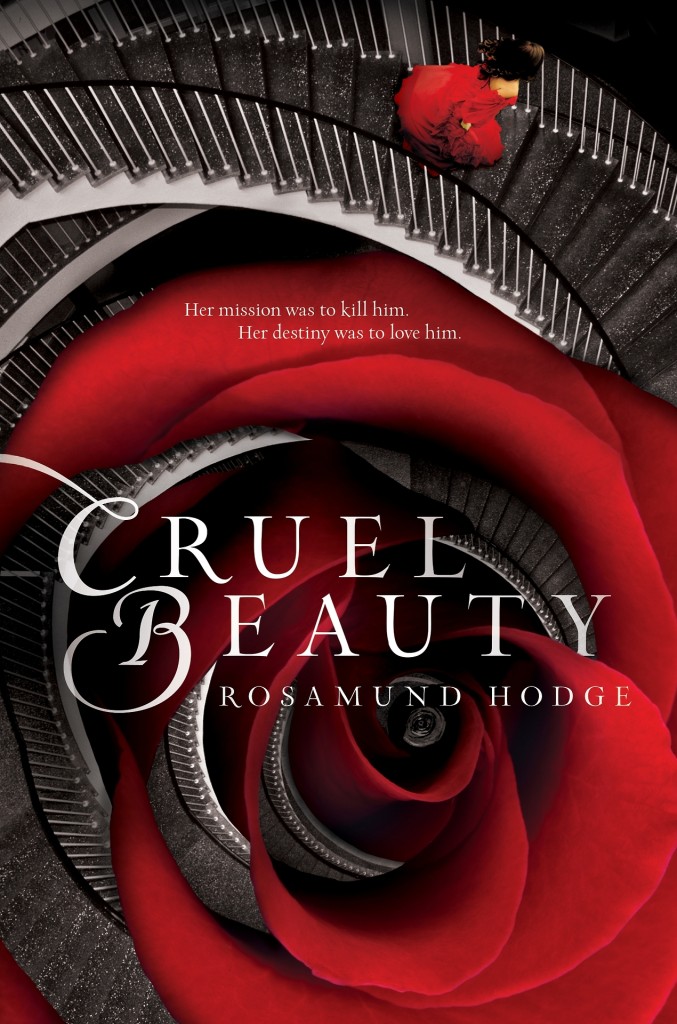
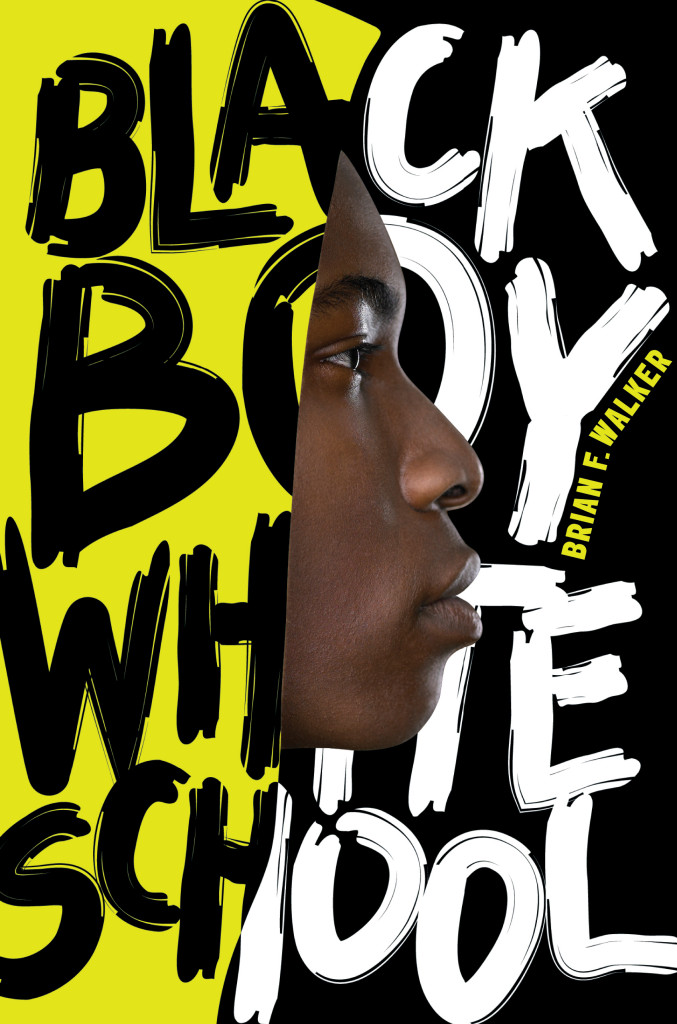
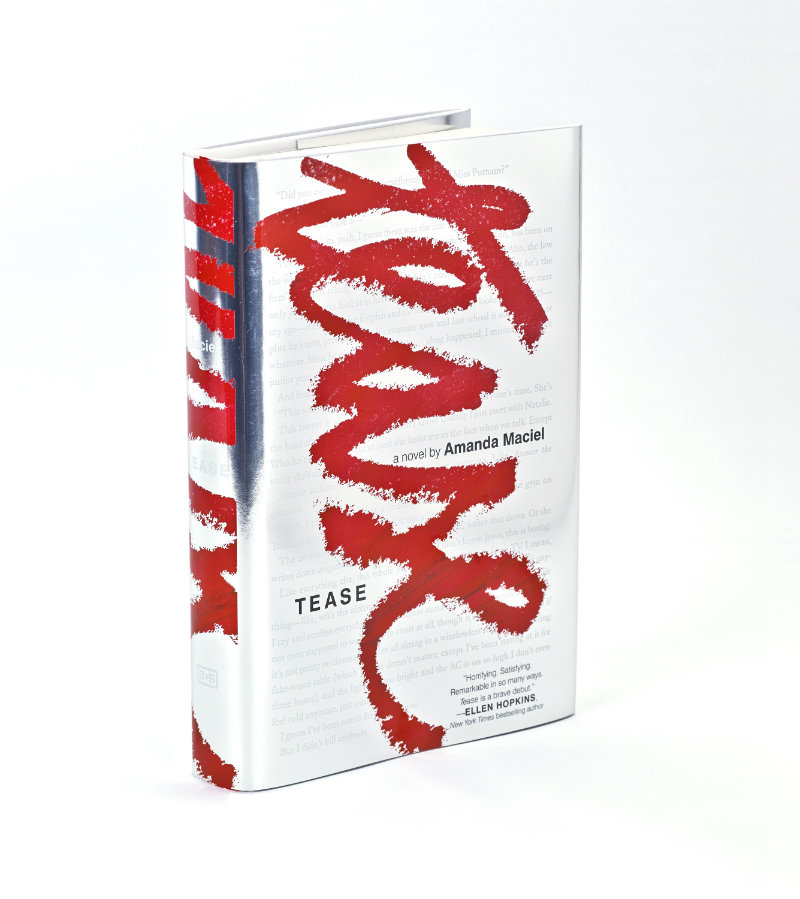
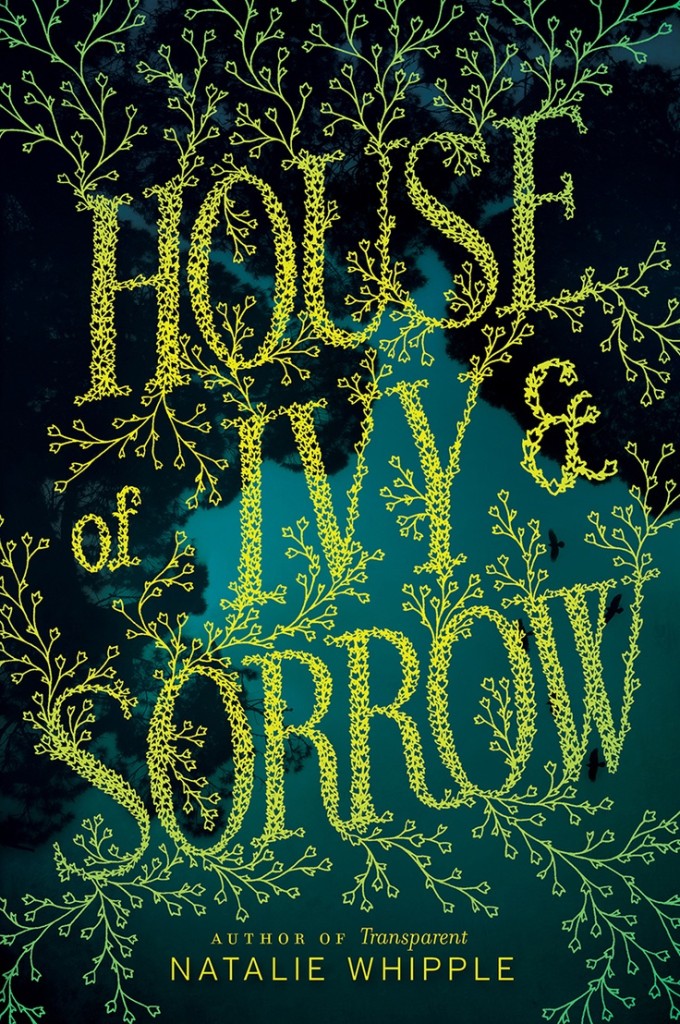
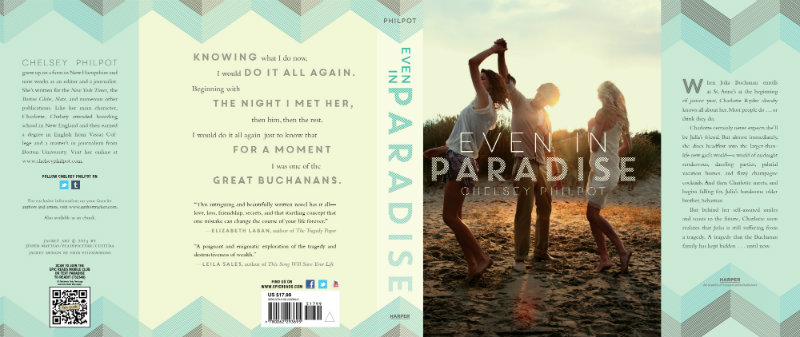
The growing sophistication of YA cover design can be seen in the work of Erin Fitzsimmons, associate art director for HarperTeen in New York. The attention to lettering and typography throughout Erin’s work, notably on the cover of House of Ivy and Sorrow by Natalie Whipple and Tease by Amanda Maciel (see below), convinced me that YA design is something that should be featured here and happily Erin agreed to talk about her work. We corresponded by email.

EveninParadise_jacket

Did you read a lot of books growing up?

When I was very young, I memorized my favorite children’s book, We’re Going on a Bear Hunt, so I could “read” it to my little sister. When I was older, I was into all the big chapter and middle-grade series: Goosebumps, Boxcar Children, Sweet Valley High. I must’ve just missed the Harry Potter era. I’m reading them now and they’re incredible.

Do you remember your favourite book as a teenager?

It’s funny—I’ve read far more teen books now than I ever read growing up. As a high school student, you have to do so much required reading for school, I don’t remember reading many books for fun. The book I remember reading most vividly as a teen was Jurassic Park. I went through a Michael Crichton phase, and then skipped straight to John Grisham. I read pretty much his entire library in mass market paperbacks over the course of a few summers.

When did you first become interested in design?

About 7 years ago, I started working in publishing as a photo editor. I went to school for photojournalism, but it wasn’t for me. I was convinced that since I couldn’t hack it as a photographer, I was meant to be a photo editor. Indeed, I was much better at editing, but after a year or so, my Art Director offered me the chance to design a book cover. It was love at first design, and I haven’t looked back since.

cruel-beauty

Is anyone else in your family creative?

Fortunately, my entire immediate family is creative. Both of my parents went to art school, and are supremely more talented than I will ever be. My dad owns an art gallery and frame shop, and my mom is a floral designer. My little sisters are also involved in creative fields: one is an art therapist and the other works at a youth theater when not in college. Thanks to them, I feel very supported in what I do. Even better, I don’t ever have to explain what a book designer does to them! A slightly unfortunate side effect is that simple things like Easter egg dyeing and pumpkin carving can get very competitive in my house.

Did you study design at school?

I desperately wanted to go to art school for photography, but my sage parents suggested I broaden my studies. I was lucky enough to find the Gallatin School at NYU. Gallatin allows you to take classes in all of the undergrad schools at NYU, and there are no traditional majors. So while my concentration was photojournalism, I was able to study communication and jazz history and documentary filmmaking and so forth. The challenge of this type of education was to find the way it all related to storytelling, and I’ve continued that practice in my professional career. I see design as a logical extension of storytelling, as it’s often the method and means through which stories are told. Without my Gallatin education, I might not have been so open to recognizing those relationships and trying new fields. Still to this day I find myself wanting to constantly learn new things. At the moment, it is type design, lettering, and calligraphy, but who knows what’s next.

BlackBoyWhiteSchool

Have you always specialized in young adult books?

My first experience designing books was at Fairchild Books, a small publisher of fashion and interior design textbooks. Even though we published educational books, their designs had to be a bit more stylish than your average textbook. My experience there was very much trial by fire, as I learned everything I could about design and publishing. A few years later I transitioned to HarperCollins, where I started designing mostly Young Adult and Middle Grade/Tween titles.

Can you describe your process for designing a book cover?

It differs from project to project. The basic step-by-step is usually the same: read the book > take notes > sketch/comp ideas > find artists > present > refine > present > (repeat some more…) > finalize! But within there are so many variables. There are a ton of people to please when it comes to a book cover, so that can certainly affect the flow.

Sometimes you’ll have an idea at the very start of the process, and sometimes it won’t come until much later. I tend to work up too many ideas in the early stages, and truth be told, many of my best ideas develop by mistake (or at least from different intentions) so it’s important for me to explore even the crazy/weird/bad ones.

I often find if your concept is good enough from the start, it should survive the rounds and rounds and come out all polished and shiny at the end. I am just finishing up an incredible project where the image I had in my head while reading became a pencil sketch and is now a striking piece of artwork. They can’t all be like that, but it certainly makes up for the rest.

SeptemberGirls

What are your favourite kinds of projects to work on?

I especially like working on stories that are out there and different. In the YA world, there tends to be a lot of repetition: Well, that worked, so let’s do it again, and again… So it’s truly exciting when you read something fresh. As a designer, you can really latch onto what makes the book unique, and focus on those differences to set the cover design apart.

What kinds of books present the greatest creative challenges?

There are a few genres in teen (Dystopian and Sci-Fi/Fantasy, for example) that have been tread upon so heavily that it can be difficult to come up with new and original ideas. Similarly, anything that can be considered trendy at the moment will be more of a challenge to break the mold of what’s been working for other publishers. We can try to resist the trend all we want, but too often in the end, commercial appeal will win out for the teen market. But we will still keep trying to push those boundaries.

Blackout_series

Do you approach series differently from individual cover designs?

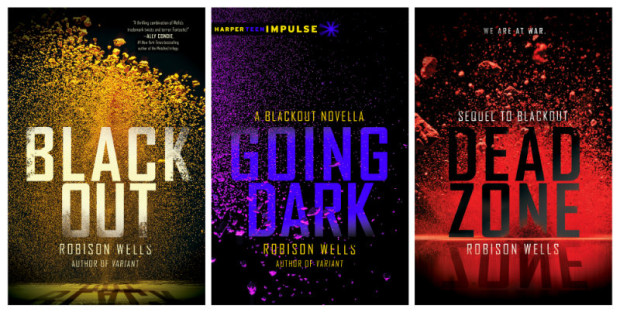
Absolutely. We live in the land of trilogies, so if your idea won’t work three times, it won’t work at all. We often are asked to concept more than one book in a series at once, just to prevent the inevitable frustration if your idea doesn’t carry through. For the upcoming Snow Like Ashes, we designed the entire series from the start. The third book in that series won’t publish until 2016, so it’s a bit crazy to think that far ahead. Blackout was another instance where I found a series of photographs I loved, but I had to be sure from the outset that we could make each cover feel special across a series. Lately they’ve been adding last minute “interstitial” e-novellas to our release in between hardcovers in our bigger series. It might as well be the book design equivalent of a knuckleball.

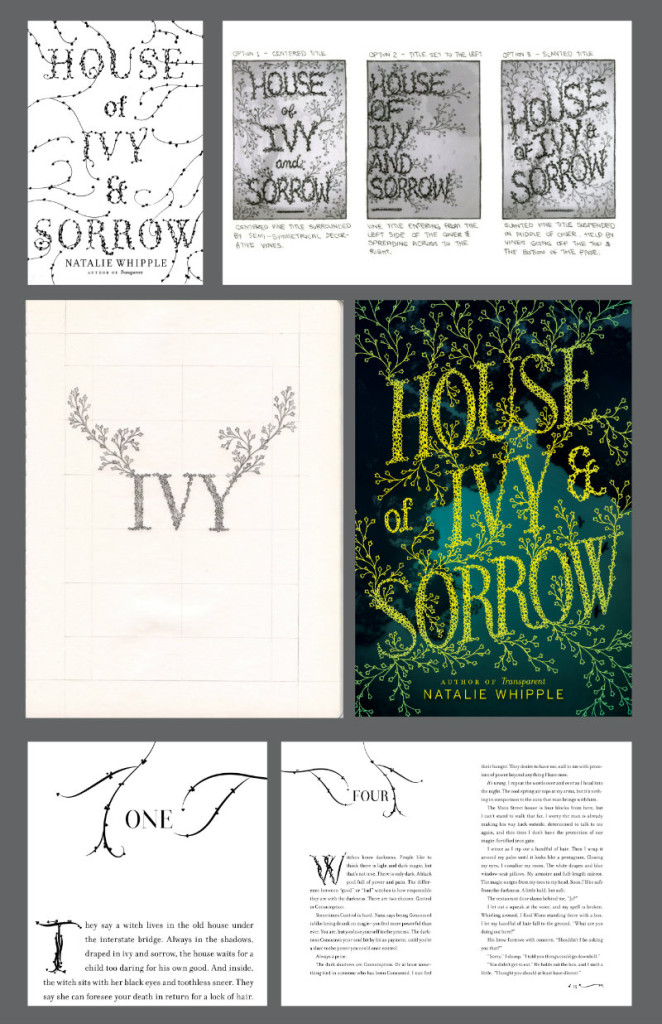
For the cover of House of Ivy and Sorrow by Natalie Whipple you used a custom typeface called Ivy Type. Do you like to experiment with type design and lettering in your work?

I do, and House of Ivy & Sorrow is one of my all-time favorite projects for this reason! I had been sketching ideas for the cover design for weeks, and it just wasn’t working (my lettering skills are still very much in development). Luckily, I was able to hire fellow CooperType grad Sasha Prood to letter and illustrate the final cover. She took it so much further than I ever could have on my own. I am so grateful to get to work with incredible artists like her that make my ideas better.

The upside was that since we design both the book covers and interiors, I was able to digitize my lettering and create a character set to use for the interior design drop caps, so all was not lost in the end. I’ve created a couple of custom faces for book interiors I’ve worked on, and lately I’ve been doing a lot more hand-lettering for covers. It’s definitely something I want to keep exploring and improving upon.

HouseofIvy&Sorrow_process

Is the popularity of teen fiction among adults allowing you to create more sophisticated designs? Or is there just more pressure now on designers to produce commercial covers? 

It might be a bit of both, actually! I started in teen right as the Twilight phase was ending and Dystopian era was beginning, and so began the rise (and return) of more sophisticated subject matters. Realistic fiction has always been a staple of teen fiction, but the sheer popularity of authors like John Green and Rainbow Rowell has pushed it to the extreme in recent years. More adults are reading teen books, and therefore the covers have begun to mature along with their readers. There was also a time where sophisticated did not equal commercial. It’s wild how much that has shifted in just a few years. The lines are starting to blur and overlap, and I see it even in the adult section. It’s so fascinating to be a part of.

Cover designs are obviously important to YA readers, and ‘cover reveals’ have become common for big releases. But are YA covers still an under-appreciated art in the industry?

The cover reveal has taken on a life of its own. The popularity of Goodreads and the plethora of YA blogs has created the need for most authors to reveal their covers in advance of the catalog posting. It used to be only the lead titles were revealed, but now almost every cover ends up with the same fanfare. And with that fanfare comes scrutiny. There are entire blog posts dedicated to covers they like or don’t like. But between the reveals and the rising popularity of the teen genre, we’ve all been pushed to make better covers, and the results have been fantastic. YA covers used to be automatically looked down upon, but that is changing (slowly, but surely). And hopefully it continues to shift. I’d love to hire more adult designers to get their perspective on our genre. I also think a lot of people would be surprised at how much work goes into these covers. There are an ever growing number of talented folks working in teen design.

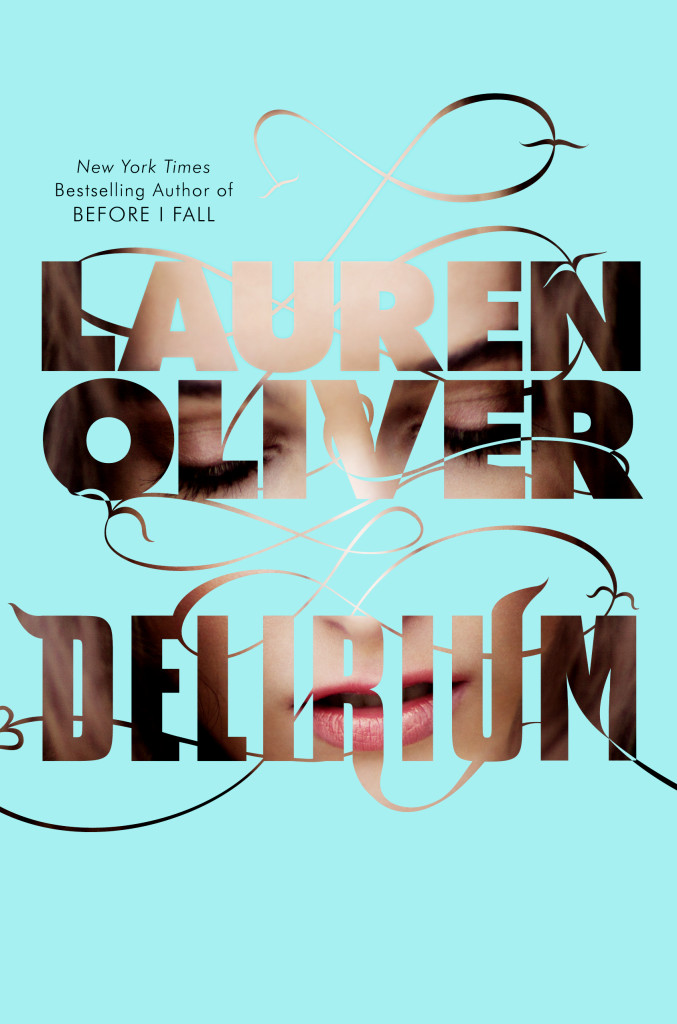
Delirium

Who are some of your design heroes?

Paula Scher, Peter Mendelsund, Louise Fili, Marian Bantjes, Chip Kidd, John Gall, Barbara deWilde.

Who do you think is doing interesting work right now?

Book design: Ray Shappell, Jen Heuer, Lucy Ruth Cummins, Jaya Miceli, Helen Yentus, Jon Gray, Theresa Evangelista, Olga Grlic, Elena Giavaldi, Oliver Munday.

Type/lettering/design: Dan Cassaro, Sasha Prood, Sean Freeman, Craig Ward, Isabel Urbina, I Love Dust, Kellerhouse.

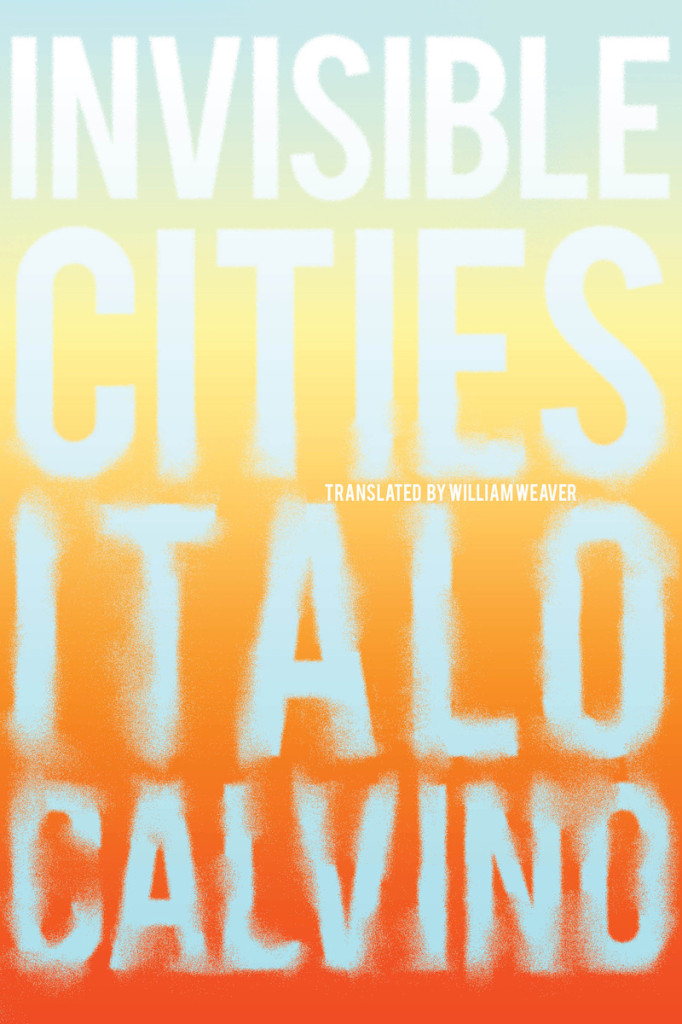
InvisibleCities

Is there a particular author or a book you’d like to design (or redesign!) a cover for?

Italo Calvino would be a dream, though I fear Peter Mendelsund might have dibs! Maybe the next repackage?

I designed a cover for Invisible Cities for an SVA Continuing Ed typography class that I still really like, but I’d love to take another swing at it, along with the rest of his work.

What‘s in your ‘to read’ pile?

I am halfway through two epic series: Harry Potter and Game of Thrones, Italo Calvino’s Letters, Wildwood by Colin Meloy and Carson Ellis, The Luminaries, Claire DeWitt and the Bohemian Highway.

Do you have system for organizing your books?

Most of our design and photography books are in the living room, but the rest of our (far too many) books are in the bedroom. We have a large white bookcase in there, and most of our décor is gray and white, so I spent way too long arranging the books in a rainbow spectrum. It’s not the most functional way, but it sure looks pretty and it’s forced me to pay a lot more attention to spine design.

Do you have a favourite book?

Invisible Cities. I read it first in college and have read it countless times since. There’s always something new to discover.

Tease_3D_rev

What does the future hold for book cover design?

Innovative and interactive packaging, a focus on book as object, and (hopefully) a continual blurring of the lines between adult and teen design.

Thank you, Erin!

1 Comment

Q & A with Isabel Urbina Peña

Untitled-2

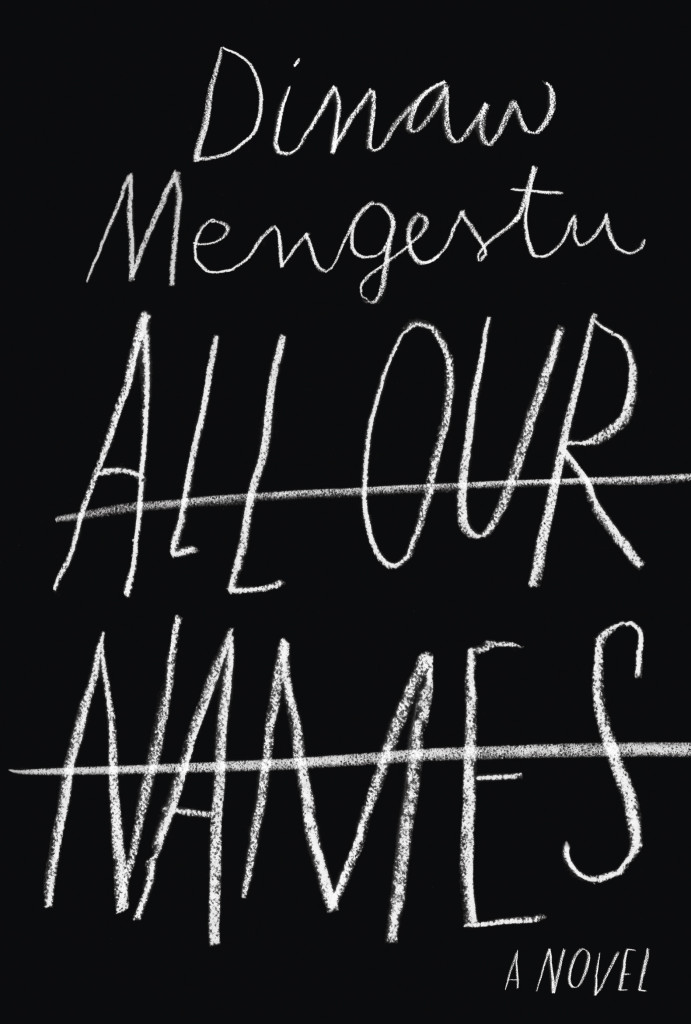
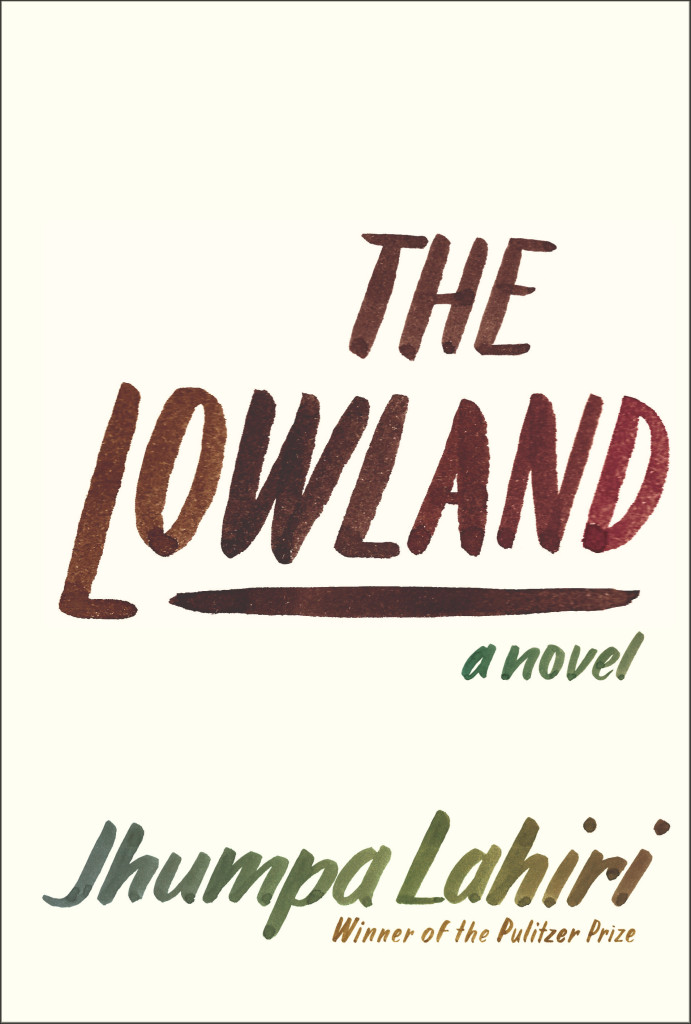
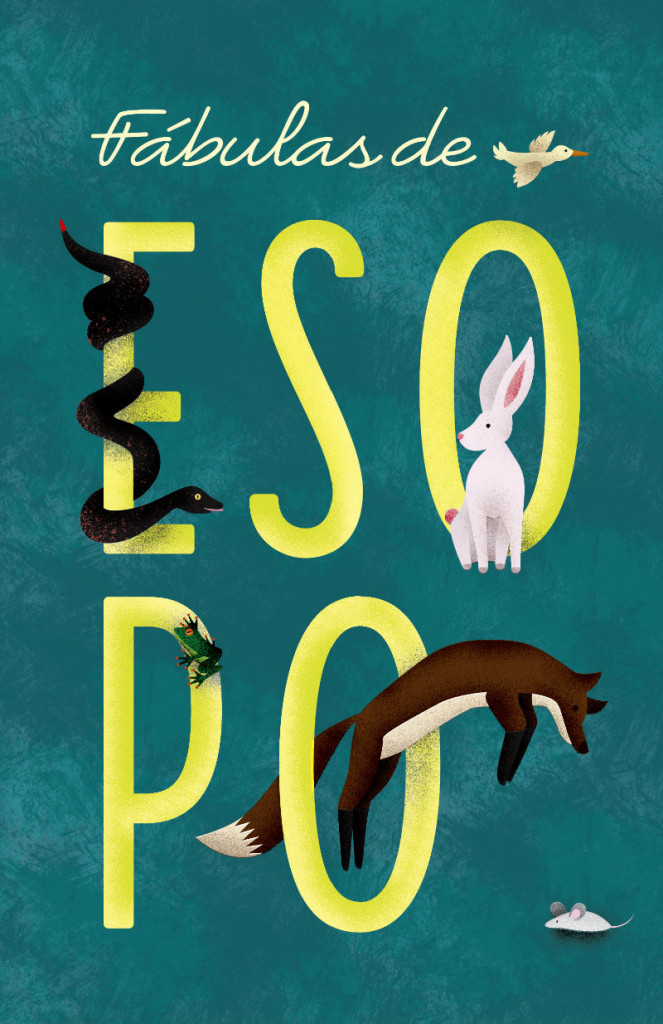
If you’ve walked into a North American bookstore recently, or you’ve been paying attention to the book reviews on this side of the Atlantic, you will have no doubt seen the stylish black cover for All Our Names by Dinaw Mengestu with its distinctive chalkboard lettering. Or perhaps you remember the hand-lettered cover for the Knopf edition of The Lowland by Jhumpa Lahiri? It was one of my favourite covers of the past year. Both are the work of Venezuelan designer Isabel Urbina Peña. Now based in New York City, Isabel is a cover designer for Random House and creator of a typographic zine called Rants from a Stranger.

Since relaunching her website earlier this year, Isabel’s cover designs have been featured on numerous blogs already (including here), but I was thrilled to have the opportunity to talk to her earlier this month about her work and career in greater depth.

Isabel and I corresponded by email. Here is our conversation:

Untitled-3

Do you remember when you first became interested in design?

I think because of my parents, art was in my life since I can remember. But, when I was in 7th grade there was a big boom of internet start-ups in Venezuela and I remember clearly “deciding” that I wanted to be a graphic designer then…I was 13 and the concept of what graphic design was at the time was probably wrong, but that moment definitely steered me in this direction. Also, there was a moment in my “foundation year” in college where one of my type teachers talked about how the “typographer” was present in the page, but invisible to the reader and that just flipped a switch in my brain.

Is anyone else in your family creative?

Both of my parents are architects and they really motivated my sister and me creatively while growing up.

We spent half of our childhoods going to museums, plays, as well as ceramic, poetry and creative writing classes. My dad also paints and belongs to a drawing circle. When I was little he would sit with me and walk me through art books or give me a canvas and ask me to paint from inspiration, or even from some big painting like Van Gogh’s sunflowers. Paul Klee, Gauguin and Chagall are a few of the artists that I discovered through them when I was six or seven… I have to say my mind was blown, I still cherish those moments.

Untitled-2

Were there a lot of books in your house growing up?

A ton. My dad also reads a LOT… So he wanted me to be “a reader.” I would get books for Christmas, birthdays, holidays, regular days…no Nintendo growing up… believe me that was tough, haha. He really sparked a love for reading and I would find new material everywhere; at my grandma’s I would read through all my uncle’s adventure books; at garage sales I started picking up Penguin paperbacks because they looked so simple and literary. Reading felt like something my dad and I shared, but it was also mine to discover.

Did you study design in Venezuela?

Yes, I studied at a small school called ProDiseño. Until very recently the “campus” was literally a two-flight house with a tub and a living room. Classes were really small, so everyone knew each other. The school started after a group of 80 students from IDD (Instituto de Diseño Neumann) left to start their own school. Neumann was founded by a large group of European immigrants who taught them design through the Bauhaus principles. Prodiseño had a very strong inclination towards clean, conceptual design. Everything had a purpose and “a why.” The content always came first; then the form. It was a very special experience and it prepared me to do anything (design, typography, illustration, animation, motion graphics…) and most importantly taught me to learn how to “think.” It was a very complete, Renaissance-style education.

Untitled-4

Is there a strong arts/design community in Caracas?

Definitely, though it is a rather small one compared to New York City, it is very interesting.

There are a lot of events that support the arts and design and mostly DIY culture. A lot of self-proposed shows and collectives that put on parties with great visuals and self-produced posters. Also, a lot of zines and self-published publications are popping all over town.

How is living in New York different?

Well, New York is different in every way: from the variety of people you meet to the cultural experiences that are available to you. Living here, for me, has been a rich experience loaded with references of all kinds, and motivation. If anything it makes me expect more from myself and aim higher.

How long have you lived there?

This is my 6th year in New York, but it honestly feels like I just got here. Of course, I’ve learned so much and evolved, but it feels like it never gets old.

escribiendolanuevahistoria_web

Does what’s going on in Venezuela worry you?

YES, I am glad you asked.

I am extremely worried by what’s going on in Venezuela and I think not enough people know about our situation. Protests started almost two months ago and people are being murdered and attacked on the streets daily and there doesn’t seem to be any change in the attitude of the current government. The truth is the people have the right to protest for the many problems that Venezuelan people are dealing with right now (the extreme insecurity they live in, the rapidly increasing inflation rates, the scarcity of many basic necessities and the extreme corruption, just to name a few) and the way that the government is handling this protests is, just, criminal. There are human right violations occurring left and right and even though there is proof (video and photos) for a lot of these events, the government is turning a blind eye and not doing anything to impart justice. Instead they focus their efforts in bullying opposition leaders and undermining the people’s rights. It is very, very sad and scary for all Venezuelan people and unfortunately change won’t come easily… but Venezuelans are still fighting hard, hopefully with a brighter future awaiting for all.

Can you describe your process for designing a book cover?

I start by reading the book and the TI (Title Info) sheet, getting familiar with the author and his backlist, if there is one. I take a bunch of notes and list ideas while and after I’m reading. I try to list everything—you never know when the “silliest” idea will spark something good. I’ll do a mood board and sketch a selection of these ideas in small (2 x 3 inches or so) detailed thumbnails with pencil and paper. Depending on the book, developing these ideas might be on or off the computer. I do a lot of paperback-size pencil sketches to define a lot of the lettering shapes and details.

Sometimes I will ink and do minimal clean up in the computer and sometimes I digitize the lettering in a font editing software and make the comps. Once I do that, I usually present a range of “developed” ideas and looks to my art director. We discuss if we need to adjust or tighten anything and then show the editors.

fabulasdeesopo_web

What are your favourite kinds of projects to work on?

Honestly, I am quite new at this, and I try to get the most out of any project. Figuring out what best represents the book I’m working on is one of the things I enjoy the most. That said, I really love doing all the cover art from scratch, and creating a “unique” design with custom lettering and illustrations.

Can you tell me about your zine “Rants from a Stranger”?

Rants from a Stranger is a self-published “booklet” inspired by zines, graphic novels, comics and the DIY culture. I like to call it a “typographic novel,” though it doesn’t really qualify as a graphic novel because of its length, and it is more on the zine realm. I love type and lettering and this was the perfect excuse to hand-letter more and produce a periodical self-published piece where I had full control of the creative direction.

I thought it would be fun and different to develop a series of “comics” without illustrations and solely use lettering as the “characters” of the story. So far there are two black and white issues and the third issue (special edition, in color) is coming out in late April as a collaboration with a very talented musician and artist from Venezuela, Mariana Martin Capriles, aka Mpeach. I’m really excited about this issue because of our collaboration, and also because it comes with a paper record player and a flexi EP record of her new song, “Boogaloo Mutante.”

Who are some of your design heroes?

Gerd Leufert, Gego (Gertrude Goldschmidt) and Nedo Mión Ferraro were very important figures in my formation as a designer and I still look through their books every time I have a chance. Their students, now well known graphic designers, and former teachers of mine, like Álvaro Sotillo, Gabriela Fontanillas and Carlos Rodríguez have always inspired me through their impeccable work and dedication.

Doyald Young’s lettering work take my breath away, and old school type designers like W.A. Dwiggins and Frederic Goudy are daily inspirations.

Who do you think is doing interesting work right now?

So many brilliant folks out there! Freddy Arenas, my super talented other half, does amazing motion graphics and illustration.

In the cover design world, my co-workers are doing great stuff, all the time. Linda Huang, Joan Wong, Pablo Delcán, Kelly Blair, Megan Wilson, Peter Mendelsund, Carol Carson, Stephanie Ross… From the type, design, art and illustration world Jesse Ragan, Village, Kris Sowersby, OCD, Steve Powers (ESPO), Sergio Barrios, Wayne WhiteCraig Ward, Alex Trochut, Elizabeth Carey Smith, Gustavo Dao, Suzi Sadler, Ryan Bernis, Priyanka Batra, Sasha Prood, Ping Zhu, Victo Ngai, Elana Schenkler, Geoff McFetridge, Nobrow Press, quite a mix…

I could keep going…

What advice would you give a designer starting their career?

Try harder. I think it’s really important to be critical of your own work and be able to accept its faults. Always, strive for more and be hungry. At the same time, embrace your mistakes, learn from them and move on to the next project. I am a big fan of tweaking and fixing til the end of days… but sometimes you just have to learn to let go of projects and keep going. Erik van Blokland said to our Cooper Type class (regarding typeface design), “Release early and release often; recognize what you did wrong in the project and try again.” I remind myself to do that everyday.

I think you should always try to work in what you love and feel passionate about. Even if it means reinventing yourself and making up your own projects in your spare time. This is where the good work will be. Don’t be afraid to make changes and try different things if you need to.

Untitled-10

What’s in your ‘to read’ pile?

I’m currently reading Americanah by Chimamanda Ngozi Adichie and Inter Views by James Hillman. I really want to read Dissident Gardens by Jonathan Lethem, My Age of Anxiety by Scott Stossel and The Goldfinch by Donna Tartt from this past season.

Someday, I’d love to re-read Cortazar’s Hopscotch (Rayuela) and all of Jorge Luis Borges.

The list goes on…

Do you have system for organizing your books?

Ha, no. I used to be very organized and had them alphabetically, color code them, etc… Those days are over… Nowadays, I move them around pretty often and they stay wherever they land.

Do you have a favourite book?

Not really a favourite single book, but I do have an influential shortlist: Virginia Woolf’s The Waves, L’Étranger by Albert Camus, Cuentos de Amor, Locura y Muerte by Horacio Quiroga, Piedra de Mar by Francisco Massiani, Ficciones by Jorge Luis Borges, Oscar Wilde’s Collection by Siruela (Biblioteca de Babel).

Thanks Isabel!

4 Comments

Design Matters with Irma Boom

Book designer Irma Boom spoke to Debbie Millman recently about her work for Design Matters:

Comments closed

Q & A with Steven Heller, Shadow Type

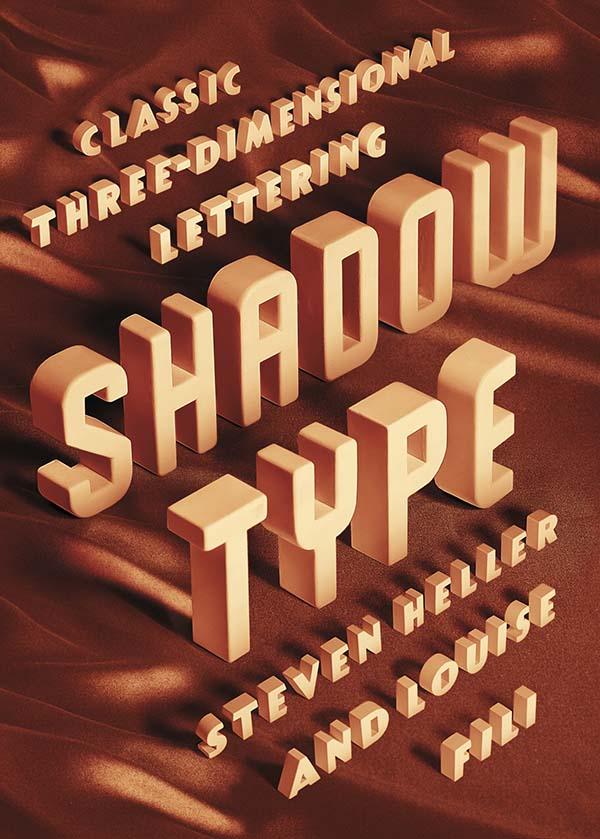
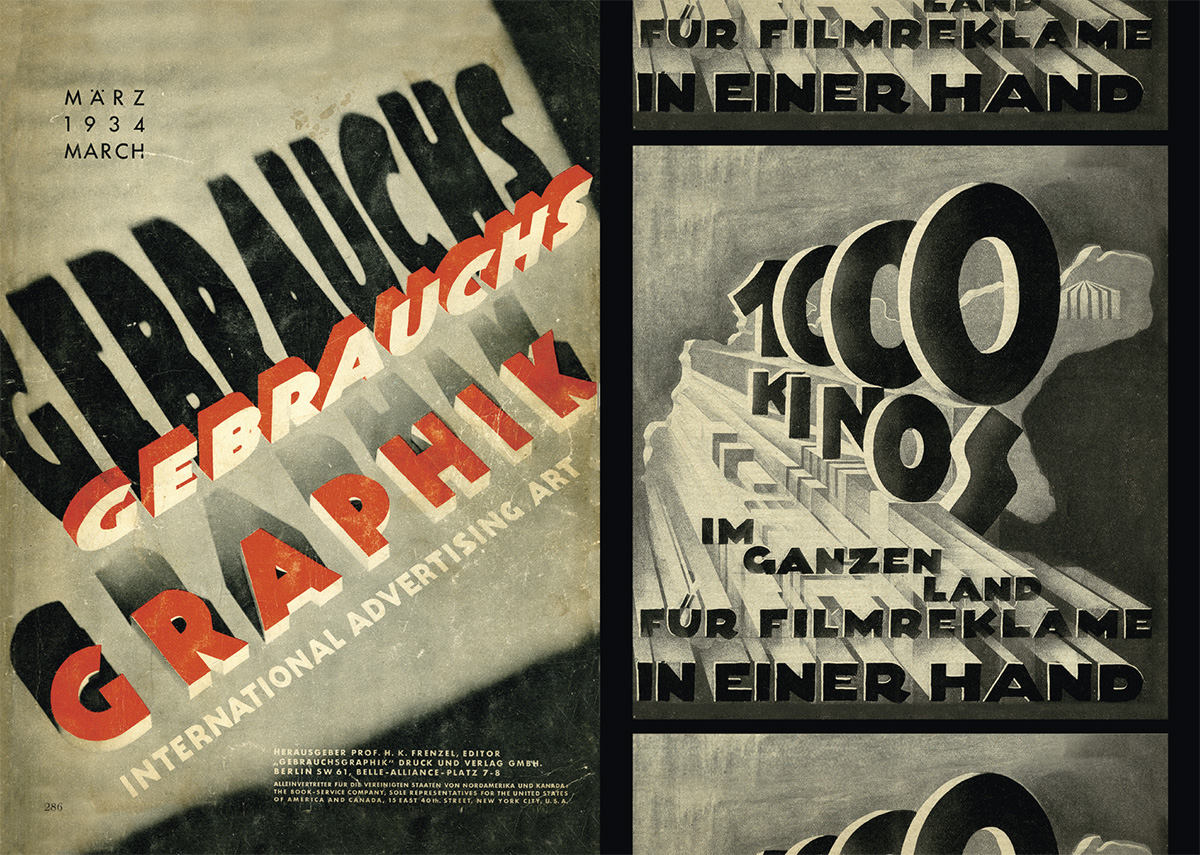
“Dimensional typefaces toy with human perception, challenging the limits of cognition. Whether framed by a subtle tint or a bold silhouette, in color or in black and white, a shadow adds bulk, enabling the words to rise voluminously from otherwise flat and unmonumental surfaces. Shadow faces are typographic trompes l’œil, fascimiles of real three-dimensional letters and inscriptions in sculpture and architecture… This sculptural essence of shadow type adds not only to the letters’ visibility, but also to their continuing allure.”

Just thinking about how much Steven Heller writes makes me a little giddy. The renowned art director, educator, design historian, and critic provides a steady stream of design commentary in newspaper, magazine and journal articles (not to mention his blog for Print magazine, The Daily Heller). He has authored, co-authored, or edited over 100 books on design, illustration and typography, including the recent Shadow Type: Classic Three-Dimensional Lettering, co-authored with his partner Louise Fili.

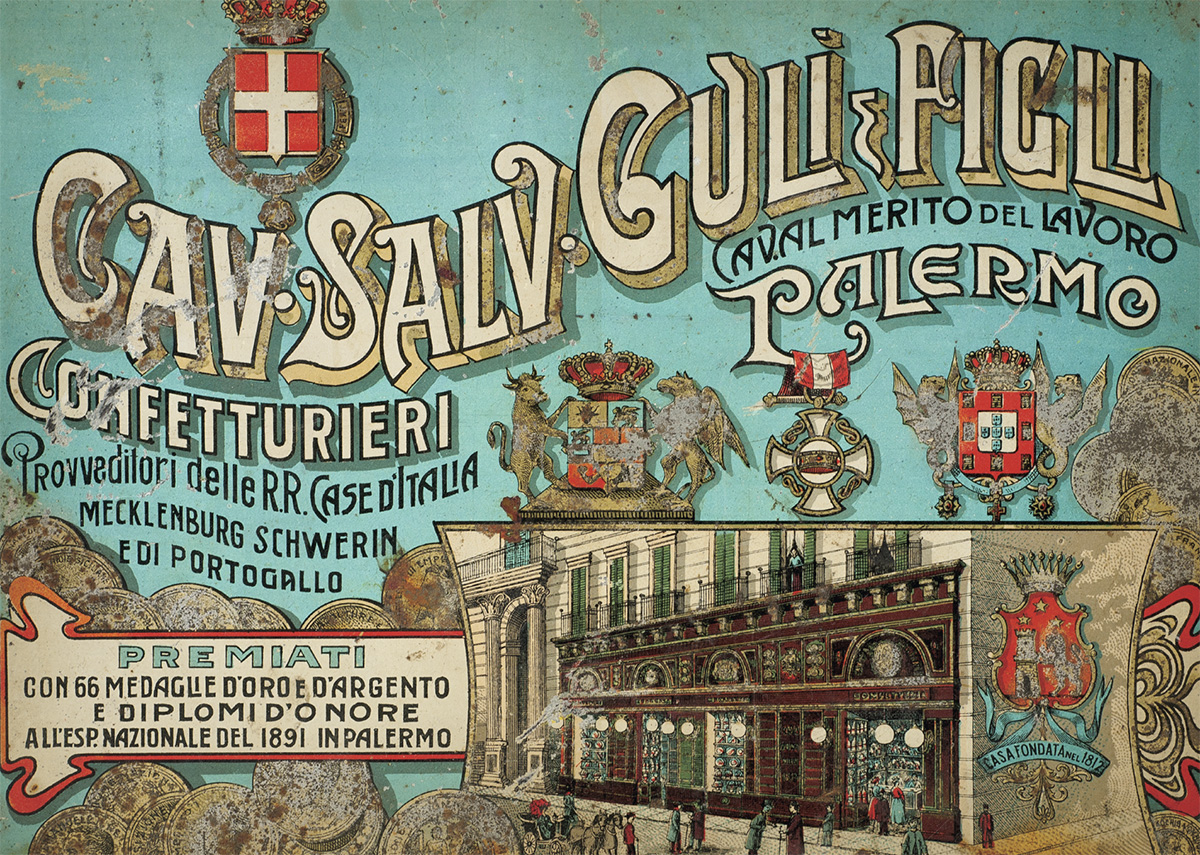
Shadow letters started to make an appearance on merchants’ signs in the 18th-century, and were introduced as metal typefaces as early as 1815, but they did not become common in printed text until later in the 19th-century. After a surge in popularity among printers and their clients, type foundries began to provide a wide selection of styles and sizes, and by the late 19th-century shadow wood type was also in demand, coming in extra-large sizes so it could be used outdoors. “Whether custom drawn, or as metal or wood type, shadow letters animated newspaper and magazine mastheads, product labels, and, indeed, all kinds of signs and posters.”

Published in September last year by Princeton Architectural Press, and distributed in Canada by Raincoast Books, I had the opportunity to ask Steven about Shadow Type, his interest in design ephemera, and how he finds time to write.

Do you remember when you first became interested in design?

I was interested in pictures at an early age. I wanted to be like Jules Feiffer, a comics artist. Design came later. I was studying the work of some German satirists, who were also designers.

Did you grow up in a creative household?
Not especially.

Where did you begin your design career?
At 14 I worked for an ad agency doing RussssTogs. Didn’t go well. It took another 3 years before I was hired by an underground paper to do layouts.

When did you first start writing about design history?

When I was at the NY Times as OpEd art director, I did a little bit of writing on those Germans I mentioned. Then it accelerated to writing about publications and other historical themes.

How do you find the time write?

There’s always time.

Do you still get excited when you hold one of your own books in your hands for the first time?
Yes, the thrill is still there. But the high lasts shorter. An addict gets used to the fix and needs another and another. These days, I don’t rip the envelope right open. I let it sit for hours, so I have something to look forward to. Weird, I guess.

Why did you and Louise decide to write a book on classic three-dimensional lettering?

We did the first one on Scripts. We’ve done series before, they didn’t start out that way, but evolved. This evolved into Shadow Type. I have long loved the dimensional, colourful, sculptural letters.

When was the heyday of ‘shadow type’?
19th, 20th and 21st centuries. Its never gone out of style. But the golden age was late 1880s to 1940s.

Why did it become popular?
Dimensionality on flat surface. Our eyes love to be fooled.

Why do you think there is a renewed interest in ornate typography and lettering?
It comes and goes. I see a shift away again. But it has to do with the joy we get from ornament and I think it parallels what goes on in clothing.

Has Louise’s work contributed the revival of decorative type?
Possibly. But she’s not decorative per se. Her type choices are elegant. She’s about precision and aesthetic pleasure.


Do all the examples in the book come from your own collection?

For Scripts and Shadow yes. And for the next one too, that’s Stencil Type.


Why does design ephemera hold such a fascination for you?
I’ve come up with all sorts of reasons, but the all seem bogus. I feel the stuff somehow represents who I am. But I also love being a repository of history. More than that, I cannot say.

Your son, Nicolas Heller, recently made a film about your den called “The Cave.” What was that experience like?
He’s a great talent. I just set him loose. And he made his film. The stuff in that place should be interpreted by others. The juxtapositions of objects and books are at times wonderful.

What’s Nicolas working on now? 
He’s doing a series of documentaries on eccentric New Yorkers called NO YOUR CITY, he’s also filming designers for documentaries produced by Brian Collins.

Do you have a favourite book?
Of my own? I’ve done over 165, but I love Iron Fists. Of other people? There are too many to say.

What books are in your ‘to read’ pile?
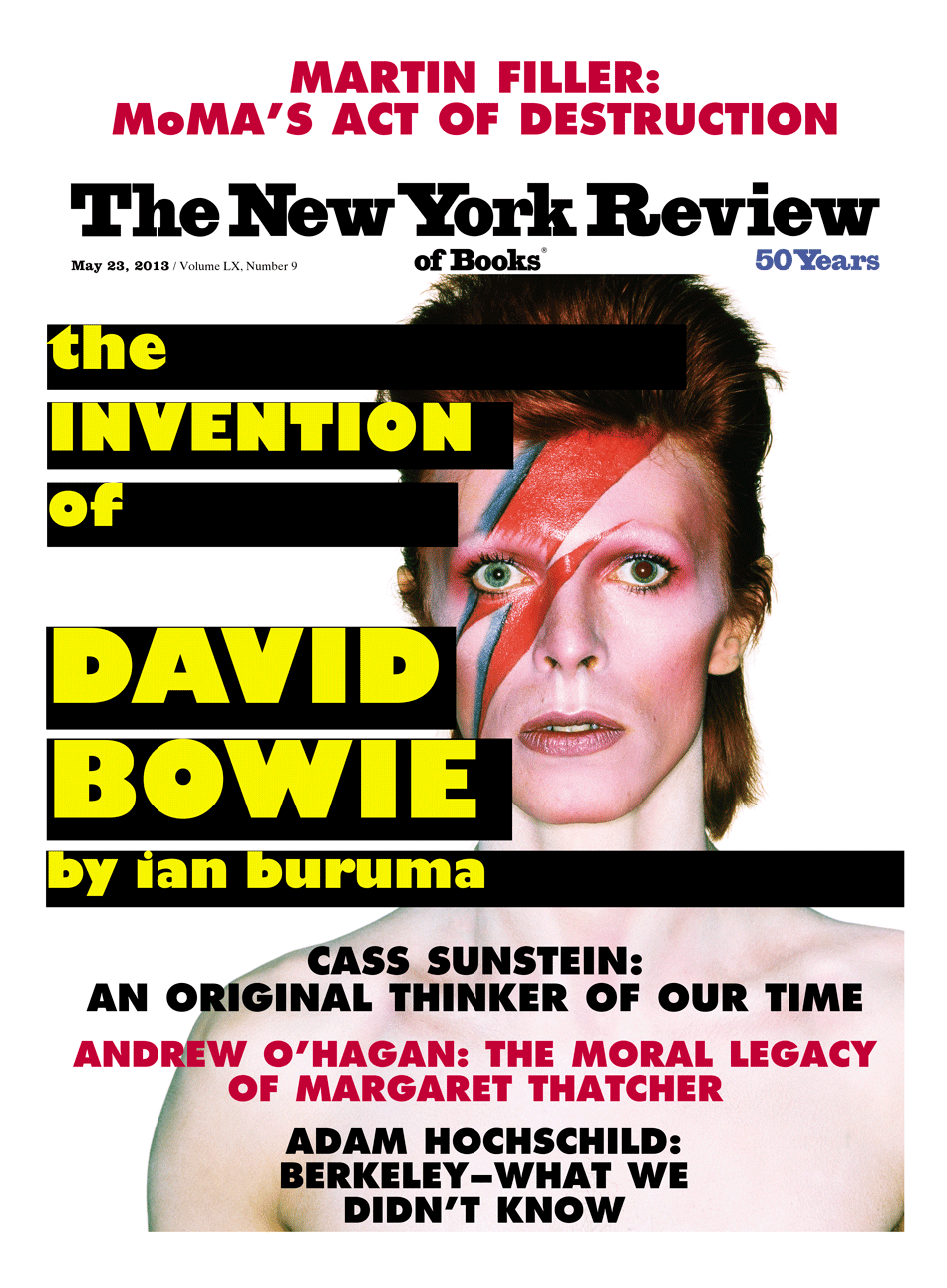
I just finished Deborah Solomon’s biography of Norman Rockwell – smartly done. And I finished Year Zero by Ian Buruma about the year 1945, makes the blood chill and boil. On the pile is a thick book about the Beatles. Not sure I’ll get to that.

Is there one book you think all designers should read?

I love Ben Shahn’s The Shape of Content. I also love The Hare with Amber Eyes, but for me, nothing is so essential that I’d stand on the mount and scream that they should read the tablets.

Thank you, Steven!

1 Comment

Q & A with Jessica Sullivan

If you saw my post on Canadian book covers last year, then you’ve already seen the work of Vancouver-based designer and art director Jessica Sullivan.

I first came across Jessica’s name in 2009. I was trying to convince Peter Cocking, then art director at Douglas & McIntyre, to agree to an interview. Peter, in his way, was having absolutely none of it (and still isn’t, really), but he did suggest that I talk to his senior designer Jessica Sullivan, “the best book designer in the country.” Nothing came of it then, but I did start to pay attention to Jessica’s work — to be honest, it was hard to miss her distinctive style, impeccable typography, and quite how many Alcuin Awards she was winning!

Now, five years after that original conversation with Peter, Jess is now working as a freelance designer and part-time art director for Greystone Books, and still delivering some of the best book covers in the country. In this interview she discusses her work, her career, and offers some advice for designers starting out today.

Jess and I corresponded by email.

When did you first become interested in design?

I took an art class for the very first time in grade ten. My teacher was a graphic designer and one of his clients was A & W. My 15-year-old self thought that was just about the coolest job I could have imagined.

From that day forward any time anyone asked me what I wanted to be when I grew up, I said Graphic Designer. Even though I didn’t really know what that meant.

Did you study design at school?

My determination to be a designer was thwarted by a scholarship to UBC, so after a bit of a detour, I rerouted and attended the Emily Carr Institute of Art + Design and received a BA in Communication Design.

Where did you start your career?

I think I started my career at school. I had this perception that landing a design job on my own was going to be impossible (I’m not sure why). I had it in my head that my first job would materialize through one of my instructors. I treated school like a very long job interview, only not so well-dressed. By fourth year an offer came by way of my typography instructor Peter Cocking, then Art Director at Douglas & McIntyre. A position was created for me and the two of us became the new in-house design department. And a book designer was born.

How long were you at Douglas & McIntyre?

9.5 years. During my tenure I married, had babies, designed hundreds of books and experienced a bankruptcy—theirs, not mine.

Has working freelance been very different from working in-house?

In almost every way. I’ve always enjoyed my job, but now I enjoy so many more aspects of it. There is a lot that’s rewarding outside of the work itself. You’re fairly invisible in an in-house scenario. There’s little you can change about process and there is an historical nucleus to the way things are done. It’s a lot simpler to affect change when it’s just me I’m dealing with. I’m pretty easy to work with.

Are you still designing books and book covers?

Yes, absolutely. I just design more than books now.

What have you worked on recently?

I’ve recently designed a book series for MOA [Museum of Anthropology] at UBC, I’m currently working on a visual identity for an editing and writing services company which I’m having a lot of fun with, and I just wrapped up a project for an exhibition of Japanese woodblock prints from the 1800s. I also continue my work with Greystone Books as their art director. A position which adds balance and bit of chaos to my work flow and ensures I leave the house at least once a week. It also guarantees a few good laughs—it’s a great office to work in.

What are your favourite kinds of projects?

I love it when after your first meeting you’ve not only fallen for the project itself (you have a vision for it, you can’t wait to get started, you can SEE how you’re going to make a difference and bring something to this thing) but you’ve also fallen for the people, the client. Every time this happens, and I’ve been very fortunate over the past 14 months as it’s happened quite frequently, I walk away from those meetings like there are tiny, little clouds under my feet.

What kind of books present the greatest creative challenges?

Fiction covers. I don’t know if I hate them or love them. It’s such a hard market, competitive and over saturated, so the cover becomes of utmost importance. It’s usually the most painful genre when designs are rejected, and I’m generally unfazed by rejections at this point in my career, it’s just part of the job. But I’m fairly opinionated regarding fiction and powerless in terms of persuasion, so it can make for a tortured process. And I might be over exaggerating a bit here.

Can you describe your process for designing a book cover?

If it’s fiction, I read the book, otherwise I read the synopsis and familiarize myself with the content and tone. Then I think. That’s probably the most important stage. Generate as many ideas and concepts from all that thinking. Source imagery or create imagery or have imagery created. Add type. Explore, test, judge, select, refine. Judge, select, refine. Judge, select, refine. Sleep. Wake up and see if I still agree with myself. Submit.

What advice would you give a designer starting their career?

1. Be professional at school. Be on time, hand things in by deadline. Design communities are often small. You will encounter your instructors out in the world. They will remember you if you pissed them off with your laziness. They will not hire you.

2. You only get out of school what you put into it. They can’t teach you to be a good designer; that comes from work and practice. Ensure that every instructor you encounter enriches your education—you are paying for it.

3. Continue to grow. If your job becomes boring—challenge yourself. Give yourself personal goals within your projects. Ensure that everything you create is adding to your own personal archive. When you’ve amassed what you need don’t be scared to leave and move on to the next challenge.

Is there a supportive design community in Vancouver?

I’m not really sure. I do feel I am part of a supportive community—although it’s not actually composed entirely (or much at all) of fellow designers. I’ve been told one exists in Toronto, and I have to admit, I am very curious about it all.

Where do you look for inspiration, and who are some of your design heroes?

I try to be aware of my surroundings, to makes connections of all kinds, not just in design. I like old things and new things and mixing the two together. I’m always looking at stuff. Printed stuff: books, magazines, wallpaper, packaging. Moving stuff: movies, documentaries, TV, birds. Invented stuff: art, architecture, interior design, music, fashion. Stuff that just exists: fish—which have the most amazing colour palettes, snow affirms the beauty of white space.

I am a fan of Barbara deWilde, Gabriele Wilson, John Gall, Paul Rand, Charles and Ray Eames, Charley Harper, B. C. Binning, Rex Ray. I’m not sure if any of them ever rescued anyone though.

What books have you read recently?

That’s a hard one. I’ve been so busy lately that I honestly haven’t had time to read anything besides work related matter. I used to read in transit and at night, so I consumed a lot of books on a monthly basis. Now I write proposals and tend to email on the bus rides and research in the evenings and fall asleep before I can finish a page of the book that’s sitting next to my bed, Ingenious Pain. The last book I read that I really devoured was Million Little Pieces which is strange because I almost exclusively read novels.

Do you have a favourite book?

That’s not possible. I can’t even say I have a favourite author. There’s just too many, too much to choose from. And I read all kinds of fiction, some of my favourites: A Spot of Bother Mark Haddon, Tom Bedlam George Hagen, On Beauty Zadie Smith, As I Lay Dying William Faulkner, The House of Mirth Edith Wharton, The Collector John Fowles, The Chimney Sweeper’s Boy Barbara Vine, The Mysteries of Pittsburgh Michael Chabon.

What does the future hold for book cover design?

I don’t really see that much changing, to be honest. Unless we’re no longer allowed to use paper, and we go back to the time where stories are housed in people’s memories. And then I’ll be useless for a number of reasons. I have a terrible memory for that kind of detail.

Thanks Jess! 

4 Comments

Joe Sacco on Bookworm


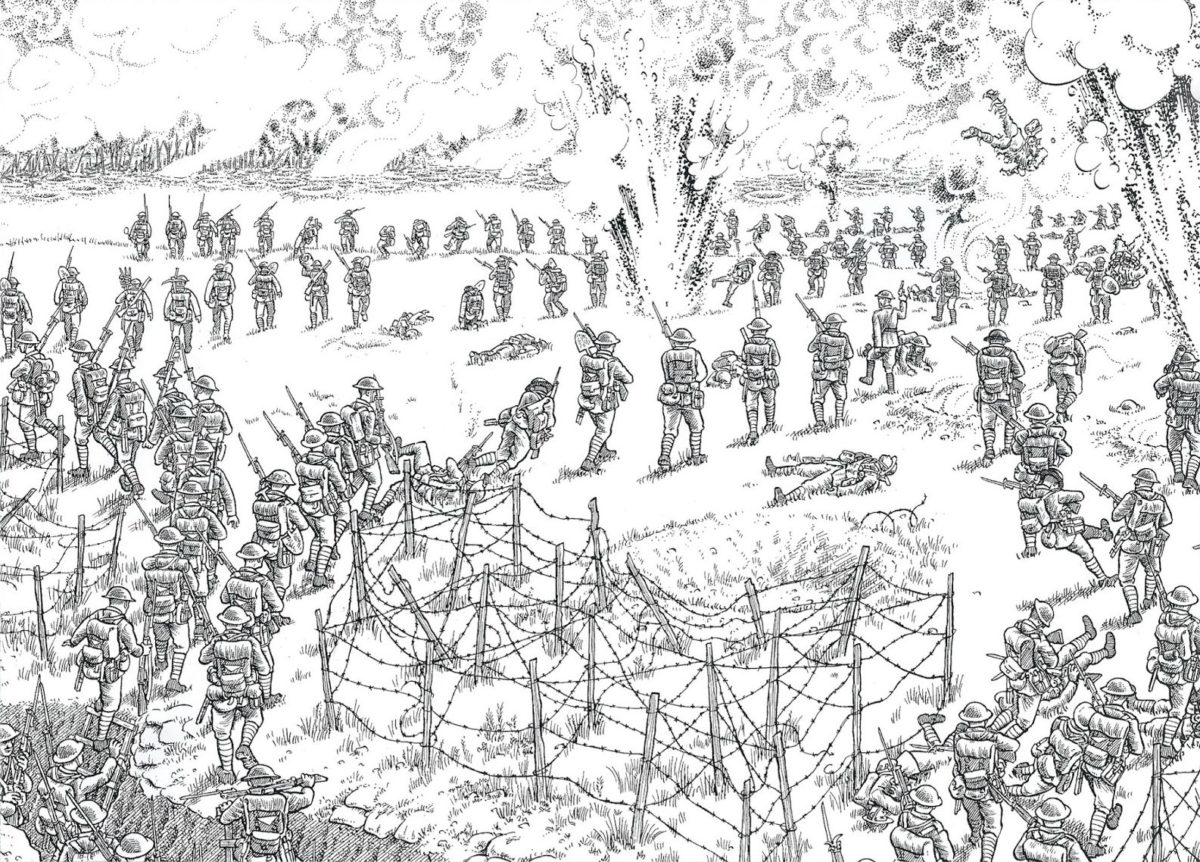
Following on from my post yesterday, Joe Sacco talks about his new book The Great War with Michael Silverblatt on Bookworm:

KCRW Bookworm: Joe Sacco The Great War mp3

Comments closed
Barbara Epstein, David Levine, and Graydon Carter on Magazine Publishing


Monday’s edition of CBC Radio show Ideas featured Michael Enright in conversation with the New York Review of Book‘s co-founder Barbara Epstein, caricaturist David Levine, and long-time Vanity Fair editor Graydon Carter:

CBC Radio IDEAS: Barbara Epstein/David Levine/Graydon Carter mp3

Comments closed

Joe Sacco: Putting the Reader in the Picture

Cartoonist Joe Sacco discusses his new illustration/book The Great War in an interview at Salon:

I think every medium has its strengths. But I think illustrated work puts the reader directly into a picture. You open up, let’s say, a comic book, and I’ve drawn a Palestinian refugee camp — you’re inside it, and with the multiple images, you’ll hopefully get an idea of the atmosphere. As a cartoonist, you’re concentrating on giving visual information — especially in the background — that can be conveyed by multiple images. And things follow the reader around. You know, the architecture will follow the reader from one panel to another, so it becomes part of the atmosphere that the reader is imbibing. With the written word, you can describe the architecture, but you’re not going to keep mentioning it as a figure is walking down the street, you’re not going to keep mentioning what the background is. With comics you can do that.

Comments closed

The Great Discontent: Paula Scher

The Great Discontent interview designer Paula Scher:

I think graphic design is an important profession because it’s part of what we put out into the world, and it’s what people see and perceive. It’s not just about doing design for the “public good.” The design community currently thinks that if you design something to help the victims of Hurricane Sandy, then that’s good, but if you design something for a bank, then that’s bad. I disagree. I think all design matters and all design deserves to be intelligent.

Obviously, we don’t want to advertise products that are horrible for people because that’s immoral. But if we can raise the expectation of what something can be, then we’ve done a huge service for our community. For example, consider the way most strip malls and shopping centers think they have to appear and behave: it’s horrible. Why can’t there be a different kind of experience? Why can’t we see them as something potentially terrific? There’s an architect named James Wines, whose Structure In the Environment architecture firm designed facades for a chain of BEST stores in the 1970s. He took big box stores and turned them into fantastic outdoor sculptures. He raised the expectation of what those experiences could be.

To me, that’s the most responsible design there is: taking something “bad” and making it terrific by raising the expectation. That’s what we do.

Comments closed

Gene Luen Yang: The In-Between World of the Graphic Novelist

The New Yorker‘s book blog Page-Turner have posted a wonderful interview with cartoonist Gene Yang:

I grew up reading comics, and I just have this deep attachment to the medium. I think a lot of the things in my life that I become most passionate about, and most excited about, are all from comics…  In traditional Asian arts, the word and the picture always sit next to each other. I have an aunt, a Chinese brush painter, who told me that when you do a Chinese brush painting, you have to pair the image up with some poetry. A complete work is not masterful unless both of those elements are masterful. So maybe there’s some sort of attachment there—the idea of words and pictures working together is part of my family history.

You can read my interview with Gene, posted yesterday, here.

1 Comment

Q & A with Gene Luen Yang

I wouldn’t be surprised if you were feeling a little disillusioned with comics right now — frictionless superhero movies that deliver ever-diminishing emotional returns; ham-fisted editorial decisions; disputes over rights, compensation and artwork; violence; stupidity; institutional misogyny and racism; and generic blandness will do that.

Beyond the multiplexes and controversies, however, it is actually a quite an exciting time to be reading comics.

There are signs — Brian K. Vaughan and Fiona Staples‘ space opera Saga, Hawkeye by Matt Fraction, David Aja and Javier Pulido, and Scott Snyder and Greg Capullo‘s horror-driven Batman spring to mind — that genre comics may still have some life in them.

Classic series and newspaper strips are being properly curated and are more available than before. Under-appreciated artists are being rediscovered.

Alternative cartoonists such as Peter Bagge, Alison Bechdel, Chester Brown, Jaime and Gilbert Hernandez, Rutu Modan, and Chris Ware are producing some of the best work of their careers. The art of Daniel Clowes and Art Spiegelman is being recognised with gallery exhibitions.

And sitting somewhere between in the alt. auteurs and the superheroes, cartoonists like Emily Carroll, Becky Cloonan, Tom Gauld, Faith Erin Hicks, Hope Larson, Bryan Lee O’Malley, Luke Pearson, Noelle Stevenson — artists who have absorbed a diverse range of influences — are carving out niches for themselves, often combining and subverting genres and styles to produce uniquely personal visions.

It’s in this last, loose group of cartoonists1 — the one between the experimental and the mainstream — that I’d put artist and writer Gene Luen Yang.

Best known for his work on the Avatar: The Last Airbender graphic novels, and the critically acclaimed American Born Chinese, Gene’s most recent work is Boxers & Saints, an ambitious two-volume historical graphical novel telling parallel stories of two young on the opposite sides of the Boxer Rebellion. Already shortlisted for the National Book Award for Young People’s Literature and listed amongst Publishers Weekly‘s best books of the year — it is a remarkably mature, compassionate, and accomplished work that is at times funny, at times tragic, but always very human.

I recently met Gene while he was in Toronto to promote Boxers & Saints. I was impressed by his thoughts on being a cartoonist and on the medium itself, and we spent a good couple of hours talking books, comics, and movies. We have since corresponded by email for this Q & A.

American Born Chinese and Boxers & Saints are distributed in Canada by my employer Raincoast Books, and parts of this interview have appeared previously on the Raincoast blog.

  1. These are, admittedly, all very arbitrary, untidy and personal lists and categorizations — nobody who’s interesting fits exactly.
2 Comments