Skip to content

Tag: illustration

Midweek Miscellany

Comic Unease — Cartoonist Emily Carroll talks about comics, fairy tales, dreams, and her story His Face All Red with The Comics Journal:

I think a lot of fairy tales have that sort of unease built into them, just because they introduce so many elements that they never explain, and use fairy tale logic—the kind that isn’t really logic at all, but has that matter-of-fact feel to it anyway—and the reader just has to roll with it.

Dark Matter — Author Lev Grossman on fan fiction for Time Magazine:

Fan fiction is what literature might look like if it were reinvented from scratch after a nuclear apocalypse by a band of brilliant pop-culture junkies trapped in a sealed bunker. They don’t do it for money. That’s not what it’s about. The writers write it and put it up online just for the satisfaction. They’re fans, but they’re not silent, couchbound consumers of media. The culture talks to them, and they talk back to the culture in its own language. Right now fan fiction is still the cultural equivalent of dark matter: it’s largely invisible to the mainstream, but at the same time, it’s unbelievably massive.

Grossman’s new novel The Magician King (the sequel to his 2009 novel The Magicians) is published next month.

Dysfunctional Spies — Author John Le Carré reflects on his time in MI6:

The creation of George Smiley, the retired spy recalled to hunt for… a high-ranking mole in Tinker, Tailor, was extremely personal. I borrowed elements of people I admired and invested them in this mythical character. I’m such a fluent, specious person now, but I was an extremely awkward fellow in those days. I also gave Smiley my social ineptitude, my lack of self-respect and my fumblings in love.

Because I came from a dysfunctional background, I made home the most dangerous place for Smiley. Home is where he lets himself in cautiously. Home is where he sees the shadow of his adulterous wife in the window and wonders who she’s with.

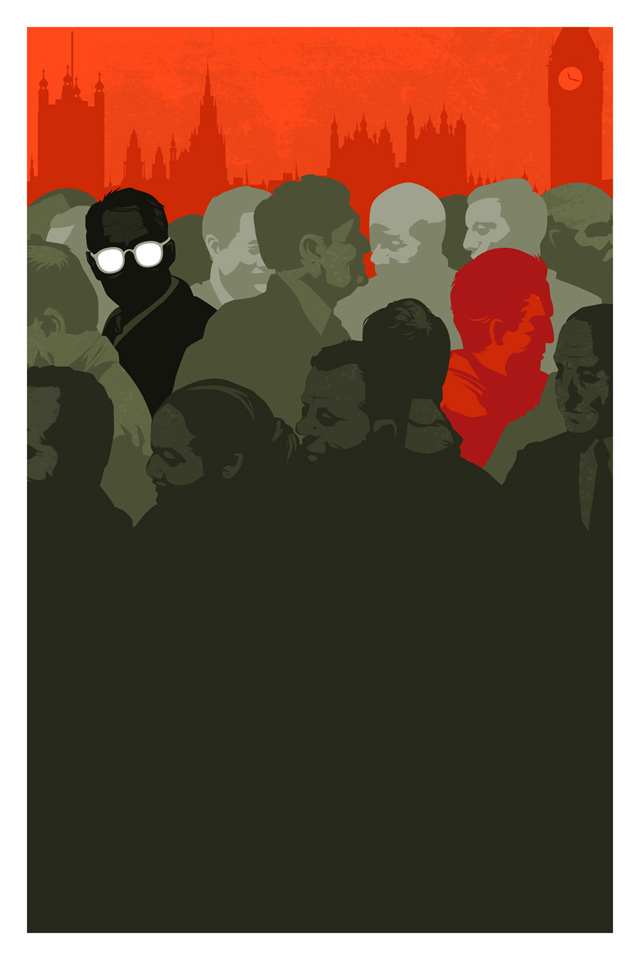
Pictured above is Matt Taylor’s incredible illustration for a new Penguin US edition of Le Carré’s novel Tinker, Tailor, Soldier, Spy — more of that wonderful stuff to come — and a new film adaptation of the book, starring Gary Oldman as Smiley, is being released later this year:

Comments closed

Midweek Miscellany

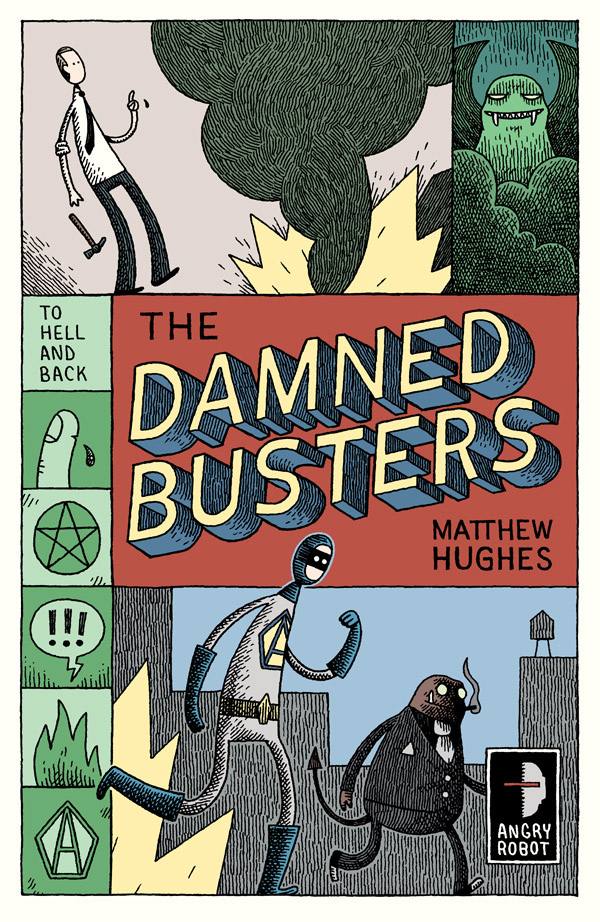
Cartoonist and illustrator Tom Gauld chats with the Angry Robot blog:

I find [robots] almost endlessly interesting. There is tragedy in their place between sentient beings and disposable products. And … they are much easier to draw than real people.

I’m hoping to interview Tom here as well sometime soon (just as soon as I think of something smart to ask him).

Hard Scenes — Actor, writer and director John Turturro talks about his work and one of my all time favourite films Miller’s Crossing at the A.V. Club (via Biblioklept):

Sometimes you think about movies, and you say, “Well, I want to try to do something that’s not exactly in a movie.” If you’ve ever been in a very dangerous situation, you know that people will do all kinds of things to keep themselves alive. It was very well-written, but you want to imagine what it’s really like to be in that kind of situation. It depends on what you’re willing to do, and in real life you would do a lot of different things. I tried to capture a little bit of that… to do something that was almost a little difficult to watch, because people aren’t trying to be heroic at those moments.

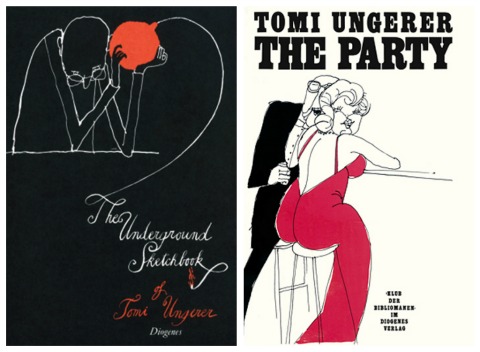
Curiosity and Collecting — Writer and illustrator Tom Ungerer in conversation with Julie Lasky at Design Observer:

One of the most important things for one’s own development is curiosity. Once you have curiosity, you just accumulate. My interests go from botany to mineralogy, geology, anatomy, history. Sometimes I’ve been bitten like bug. I buy one object and I’m so fascinated that I start collecting. And then when I finish collecting, and the collection doesn’t inspire, I give it away, like my toy collection of 6,000 pieces that I donated to my hometown museum for children.

Learning to Write — An interview with author Zadie Smith at The Literateur:

[O]ne of the things I look for in other people’s writing is the ability to confer freedom. That’s what I want to be able to do myself. I like a writer who doesn’t have to be in total control of how their readers react. More mystery, less explanation. All I can say is I’m working on it. But it’s so hard! I really feel I’m just at the base of a huge mountain called ‘learning how to write’. I’m still only 35. Learning to write is a task that takes up your whole life.

And finally…

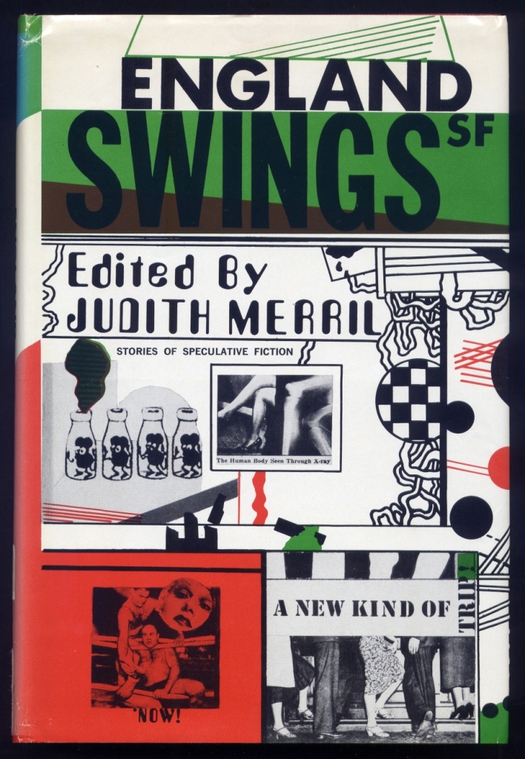
Rick Poynor on the unusual cover design for England Swings SF, published in 1968, also at Design Observer.

Comments closed

The Prince & The Sea | Emily Carroll

I loved last year’s spooky His Face All Red, and now cartoonist Emily Carroll has just posted a new, similarly atmospheric strip called The Prince & The Sea.

Carroll recently won the Joe Shuster Award for ‘Outstanding Webcomics Creator.’

Comments closed

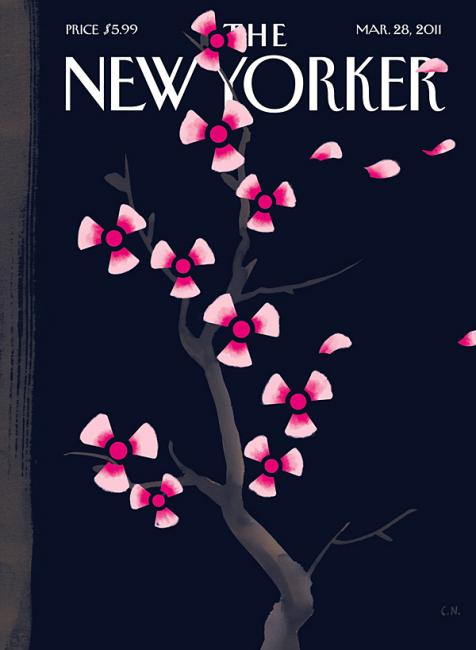
Christoph Niemann | Fresh Air

Illustrator Christoph Niemann talks to Fresh Air‘s Terry Gross about his illustrations for The New Yorker, Newsweek and the New York Times Magazine, and his new kids book That’s How:

I care so much about magazines and newspapers and books. This is the world that I live in as a consumer and that’s why I really care about contributing to this world. And I get a much bigger kick out of having my image seen like million times for like 20 seconds and then it ends up in the trash bin rather than having my image on somebody’s like over somebody’s sofa for 20 years.

NPR FRESH AIR: ‘That’s How’ Christoph Niemann Explains It All

The full transcript is here.

Comments closed

New Genres by Tom Gauld

I love these new illustrations by the super-talented Tom Gauld for an article in The Washington Post Book Review about genre fiction:

You can see more of Tom’s work and his regular literary cartoons for The Guardian on Flickr.

Comments closed

Midweek Miscellany

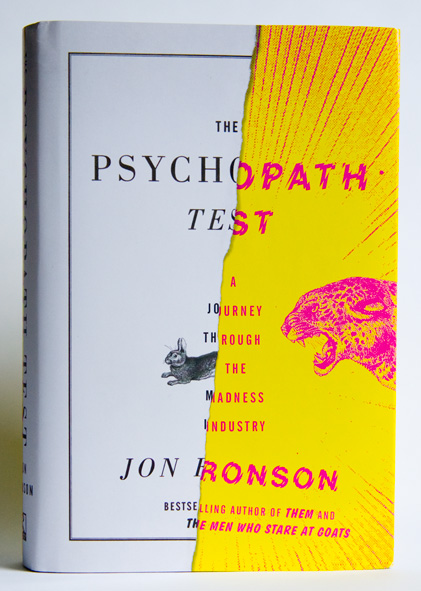
Half Crazy — Matt Dorfman on his great book cover design for The Psychopath Test by Jon Ronson, published by Riverhead Books:

Riverhead did not skimp on the production touches for this one. They sprung for a combination gritty matte finish (which covers the white paper portions of the jacket) and a shiny gloss for the yellow/magenta “crazy” half, thereby giving your sense of touch a noticeable edge if you find yourself blindly scanning your shelf for this book in a dark room (which I have done).

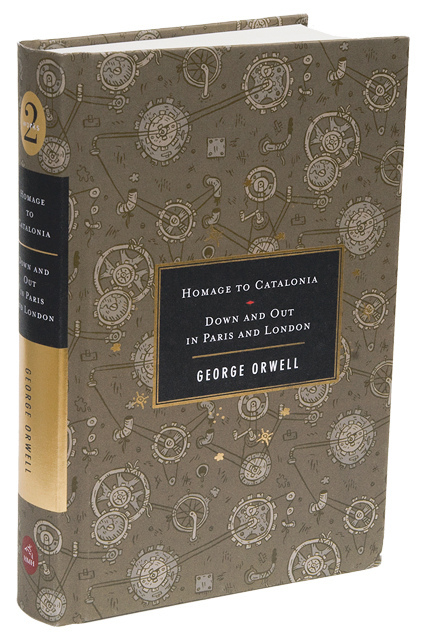
The Intimate Orwell — Simon Leys reviews Diaries by George Orwell, edited by Peter Davison, and George Orwell: A Life in Letters also edited and annotated by Davison, for the NYRB:

From the very start, literature was always Orwell’s first concern. This is constantly reflected in his correspondence: since early childhood “I always knew I wanted to write.” This statement is repeated in various forms, all through the years, till the end. But it took him a long time (and incredibly hard work) to discover what to write and how to write it. (His first literary attempt was a long poem, eventually discarded.) Writing novels became his dominant passion—and an accursed ordeal: “writing a novel is agony.” He finally concluded (some would say accurately), “I am not a real novelist.” And yet shortly before he died he was still excitedly announcing to his friend and publisher Fredric Warburg, “I have a stunning idea for a very short novel.”

Investigative Self-Repair — Author James Lasdun (It’s Beginning to Hurt) reviews Edward St. Aubyn’s latest semi-autobiographical Patrick Melrose novel At Last for The Guardian:

This act of investigative self-repair has all along been the underlying project of these extraordinary novels. It is the source of their urgent emotional intensity, and the determining principle of their construction. Not much gets into these books that doesn’t bear directly on Patrick’s predicament. Exposition is kept to a minimum; there are few descriptive passages, no digressions. For all their brilliant social satire, they are closer to the tight, ritualistic poetic drama of another era than the expansive comic fiction of our own.

And finally…

The General Specialist — Designer, illustrator, and letterer Jessica Hische talks to Method & Craft:

I love learning about new things whether or not they directly connect to how I earn a living and I think that this desire to pay attention to related industries is one of the reasons why I’m a figure in the design community. It’s by learning about many things that you’re able to understand specialization—that design is broken into countless micro-industries. If you don’t understand the differences between them (or acknowledge that they exist), there is no way for you to find your own specialized niche with in it.

Comments closed

In the Wilds | Nigel Peake

With the winter winds and driving rain, things naturally fall apart — twisted, gnarled, and eventually incapable of function. When something goes wrong, the solution is often improvised with whatever is available. This haphazard collage of old materials can make it feel as if the country is in a constant state of disrepair. The fences and gates, in particular, embody this with their bespoke supports. When one part collapses or a hole appears, the ubiquitous blue twine come out to bind everything together. Sometimes the original structure disappears altogether, and all that remains is the collection of parts propping it up. With this unspoken artistry, the unexpected is made.

From the introduction to In the Wilds by Nigel Peake

One of the joys of working at Raincoast Books is receiving books from New York-based publisher Princeton Architectural Press in the mail. This week, a beautiful  6″ by 8″ hardcover called In the Wilds by artist Nigel Peake arrived.

Peake who has worked with the likes of Ninja Tune, The Believer, Blueprint, and Dwell Magazine, lives and works in the Irish countryside (the self-described “middle of nowhere”). In The Wilds collects together his obsessively detailed drawings and watercolors of this rural life — the trees, fields, lakes, and rolling hills, but also farm houses, tractors, fences, and telegraph poles.

It is simply lovely.

Comments closed

Bricks | Stuart Bache

British designer Stuart Bache was art director on this lovely cover for the forthcoming novel Bricks by Leon Jenner. The epic cover illustration is by Jorn Kaspuhl, who also illustrated the book.

There is a really nice sense of something both classic and yet contemporary about this design, which seems appropriate for the book from what I can gather.  Stuart’s work has, of course, appeared on previously on The Casual Optimist, and you can read my short interview with him here.

Bricks itself is actually about a bricklayer who remembers a past life as a Druid at the time of the Roman invasion of Britain. It was — if I remember correctly — originally released by the author a few years ago as an online audio book. No doubt someone will correct if I am wrong.

Comments closed

Q & A with The Heads of State

Jason Kernevich (left) and Dustin Summers (right), known together as award-winning design shop The Heads of State, met in the design program at Tyler School of Art, Philadelphia. Shortly after graduating, the duo began producing screen-print posters for the local independent music scene. The simple, bold graphic style of their work quickly garnered international attention and acclaim, and their clients now include the likes of R.E.M., Wilco, The National, The New York Times and The Guardian, as well as publishers Penguin, HarperCollins, and Random House.

If that wasn’t enough, the duo recently released a new letterpress print inspired by F. Scott Fitzgerald’s novel The Great Gatsby . The 4-colour, limited edition print (on 140 lb. French Poptone Sweet Tooth paper) shows the business cards and personal stationery of the Jazz Age VIPs that attend Gatsby’s parties in the summer of 1922. Complete with lovely touches such vintage typography and the characters’ professions and street addresses, the print is a beautiful tribute to a 2oth Century classic.

Jason, Dustin and I corresponded by Twitter and email about the Gatsby print and their unique design collaboration.

How did this project come about?

We’d been kicking around the idea of doing something with the novel for a long time. Chapter Four breaks from the plot for a moment and the narrator begins reminiscing about the folks who came to the parties that summer. The names by themselves are just incredible. There is some detail given about the characters’ background but not much. We had to make a lot of it up. But there were hints at a profession or an address here and there and that led to the idea to do business cards.

What’s the enduring appeal of The Great Gatsby for you?

Like most people, we first came across this book in high school and hated it. Rediscovering it later in life has been a joy. The time period holds endless allure. It was between the wars. The reputation of the roaring twenties and its decadence and flamboyance allows the reader to imagine so much more than what’s on the page. And there’s plenty on the page! It’s all the more poignant because of the crash that followed.

Do you think the story has particular contemporary relevance?

The lead-up to the Great Depression holds a contemporary economic relevance for sure. But it’s also a hell of a break-up story in a way with it’s jealousy, conspiracy, and doomed aspirations. That is certainly a side of the novel not fully grasped in the 9th grade.

Your work often seems inspired by New Deal era WPA illustration and mid-century modern design. Are you also inspired by the Jazz Age?

We hadn’t really looked to it for much inspiration in the past, but through our research we found that a lot of the documents of that era were much more practical and less decorative than we anticipated, which connected more with our aesthetic.

How did you recreate the vintage type?

A lot of it came from books that we scanned as well as classic typefaces that predate the era or modern decorative faces that reference it. There was also some hand lettering done.

Did you research 1920’s typefaces? Were you trying to be totally accurate?

We weren’t trying to be 100% accurate. Capturing the spirit was the most important thing. We had a few historical references for inspiration. The credits and titles for the original King Kong conveyed a sense of glamour and of old New York that was appropriate for some cards despite the film being from 1933. We found a few business cards from the early twenties for doctors, furriers, jewelers, etc. They were surprisingly modest and utilitarian. Which makes sense due to printing and lettering limitations. So we aimed for somewhere in the middle.

Do you have a favourite ‘card’ on the poster?

It changes. The “Films Par Excellence” card is a favorite. But Jordan Baker’s gets our pick. She is the only main character we did a card for and we wanted to sneak it in as a payoff to fans of the book. We like to say that her card was inspired not just by her profession (golf champion) but by her eyelashes.

What’s the appeal of manual printing processes like letterpress and silkscreen?

It a tactile, sensual thing that you feel connected to as a viewer. It’s great to be able to interact with a piece of design in that way. It also added a disguise of authenticity and age to this project. Oh, the irony.

Could you describe your creative process? How does your collaboration work?

Over the years we’ve developed quite a shorthand with one another. Our process is sometimes as simple as a conversation while sketching. We’ve hit on some of our best ideas in a matter of few minutes by just talking through the problem at hand. Sometimes it’s more labored over. In those instances we hit the books, research, sketch, and let the best and most clear idea win. We are both always in pursuit of the best idea and that helps move things along.

Who are your design heroes?

We have so many. Plenty of usual suspects from the 1950’s and 1960’s and from our early days of making silkscreen posters. We love the travel posters of David Klein. Book designers like John Gall and Paul Sahre. Leanne Shapton is a personal favorite. A lot of our artist friends never cease to amaze us with the work they churn out. Jessica Hische. Tim Gough. Matt Curtius and Gina Triplett. Martha Rich. Josh Cochran and Chris Neal and everybody else at the Pencil Factory in Brooklyn.

What’s next for The Heads of State? Will we be seeing more book covers from you soon?

We’ve got some book covers in the works. We’re also working on more self-initiated projects and products as well as a few branding projects we’ll be unveiling in the next few months that we’re pretty psyched about.

Thanks!

How did this project come about?

We’d been kicking around the idea of doing something with the novel for a long time. Chapter Four breaks from the plot for a moment and the narrator begins reminiscing about the folks who came to the parties that summer. The names by themselves are just incredible. There is some detail given about the characters background but not much. We had to make a lot of it up. But there were hints at a profession or an address here and there and that led to the idea to do business cards.

What’s the enduring appeal of The Great Gatsby for you?

Like most people, we first came across this book in high school and hated it. Rediscovering it later in life has been a joy. The time period holds endless allure. It was between the wars. The reputation of the roaring twenties and its decadence and flamboyance allows the reader to imagine so much more than what’s on the page. And there’s plenty on the page! It’s all the more poignant because of the crash that followed.

Do you think the story has particular contemporary relevance?

The lead-up to the Great Depression holds a contemporary economic relevance for sure. But it’s also a hell of a break-up story in a way with it’s jealousy, conspiracy, and doomed aspirations. That is certainly a side of the novel not fully grasped in the 9th grade.

Your work often seems inspired by New Deal era WPA illustration and mid-century modern design. Are you also inspired by the Jazz Age?

We hadn’t really looked to it for much inspiration in the past, but through our research we found that a lot of the documents of that era were much more practical and less decorative than we anticipated, which connected more with our aesthetic.

How did you recreate the vintage type?

A lot of it came from books that we scanned as well as classic typefaces that predate the era or modern decorative faces that reference it. There was also some hand lettering done.

Did you research 1920’s typefaces? Were you trying to be totally accurate?

We weren’t trying to be 100% accurate. Capturing the spirit was the most important thing. We had a few historical references for inspiration. The credits and titles for the original King Kong conveyed a sense of glamour and of old New York that was appropriate for some cards despite the film being from 1933. We found a few business cards from the early twenties for doctors, furriers, jewelers, etc. They were surprisingly modest and utilitarian. Which makes sense due to printing and lettering limitations. So we aimed for somewhere in the middle.

Do you have a favourite ‘card’ on the poster?

It changes. The Films Par Excellence card is a favorite. But Jordan Baker’s gets our pick. She is the only main character we did a card for and we wanted to sneak it in as a payoff to fans of the book. We like to say that her card was inspired not just by her profession (golf champion) but by her eyelashes.

What’s the appeal of manual printing processes like letterpress and silkscreen?

It a tactile, sensual thing that you feel connected to as a viewer. It’s great to be able to interact with a piece of design in that way. It also added a disguise of authenticity and age to this project. Oh, the irony.

Could you describe your creative process? 10. How does your collaboration work?

Over the years we’ve developed quite a shorthand with one another. Our process is sometimes as simple as a conversation while sketching. We’ve hit on some of our best ideas in a matter of few minutes by just talking through the problem at hand. Sometimes it’s more labored over. In those instances we hit the books, research, sketch, and let the best and most clear idea win. We are both always in pursuit of the best idea and that helps move things along.

Who are your design heroes?

We have so many. Plenty of usual suspects from the 1950’s and 1960’s and from our early days of making silkscreen posters. We love the travel posters of David Klein. Book designers like John Gall and Paul Sahre. Leanne Shapton is a personal favorite. A lot of our artist friends never cease to amaze us with the work they churn out. Jessica Hische. Tim Gough. Matt Curtius and Gina Triplett. Martha Rich. Josh Cochran and Chris Neal and everybody else at the Pencil Factory in Brooklyn.

What’s next for The Heads of State? Will be seeing more book covers from you soon?

We’ve got some book covers in the works. We’re also working on more self-initiated projects and products as well as a few branding projects we’ll be unveiling in the next few months that we’re pretty psyched about.
Thanks!  Dan

5 Comments

Q & A with Clare Skeats

Hugo Wilcken’s Colony (published in 2007 and mentioned previously here) is almost certainly the novel I’ve talked up most this year. The cover, something like a jaunty vintage travel poster to a malarial Heart of Darkness (nauseously appropriate for a postmodern novel about a French penal colony), was designed by London-based print designer Clare Skeats.

Specializing in book design and art direction, Clare has a a great eye for partnering distinctive typography with bold creative imagery. Her covers often seem to use elements from the past, but always feel dynamically contemporary.

I’m really happy to have had the opportunity talk to Clare about her work. We corresponded by email.

How did you get into book design?

After graduating in 97, I tried, and failed to get a job as a junior designer at Penguin. They did offer me work experience though — so I moved to London to do that, and basically never left.

Have you always run your own studio? Where were you previously?

No. I stayed at Penguin for 4 years (they did eventually employ me!), then during a brief period at Random House, an opportunity arose to work for UK clothing designer Margaret Howell. It was great to step away from books for a bit and be part of a completely different industry. I was involved in virtually all aspects of the company; from designing Fashion Week press invites to drawing up manufacturing specification manuals. During my time there I was also working freelance — so after two very busy years, I left Margaret Howell to become full-time freelance, which is where I am now.

Could you describe your design process?

I’m lucky in that a lot of my clients allow me to just read and then make all the suggestions. I work in a number of ways; completely independently, or collaboratively with an illustrator or photographer. If I decide that illustration is the most appropriate response, I spend time identifying the right style and finding relevant practitioners. I’ve worked with Kazuko Nomoto (aka Nomoco) a great deal, and I found her initially as I had Andy Warhol’s Vogue illustrations in my head for Lolita. I’ll suggest say 3 or 4 illustrators to the client, along with a rough idea of the brief and composition. I then refine the brief and collaborate with the chosen illustrator.

Whether I’m working on my own, or collaboratively, I spend a lot of time researching — it’s a process I’ve always loved. For Somebody to Love I had to research embalming as the book is about a transsexual mortician who falls in love with one of her, um… clients. I wanted the cover to reflect the surgical and beautifying themes so I started to research embalming tools which lead me to those 18th-Century engravings of surgical instruments. Also used to great effect on this Simian Mobile Disco record cover designed by Kate Moross:

I needed to commission illustrations of modern instruments but retain the engraving reference and I initially proposed a wood engraver to the client, but the idea scared them. So I had to find a vector illustrator who could approximate an engraving style. I found Fred van Deelen who did a brilliant job. What I loved about Kate’s record cover was the way the central black circle (or maybe its a die-cut?) was working as a device to hold the type. So I shamelessly adapted it to my own needs for my cover.

When I started working on Potty!, I read the author’s autobiography which lead to a fun afternoon poking around the posh country outfitters shops of St. James and Saville Row — I took lots of photos and produced a mood board which helped me to get the sample spreads and art direction approved. I teach on the foundation course at Central St Martins and I’m always banging on about research — mostly because I can’t understand why a student wouldn’t want to do it!
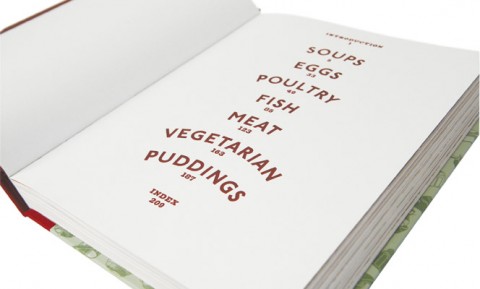
My client for Potty!, wanted an illustrative component to the design and I was wary at first as I think illustration can often look like a whimsical add-on in some cookbooks, which wouldn’t be appropriate at all with Clarissa. The book is about one pot cookery so I decided to make the pots the stars and commissioned scraper-board maestro Joe McLaren to produce them — there are 24 in total and this is my absolute favourite:

Do you prefer to use unconventional typography and hand-drawn lettering than more classic typefaces?

Not particularly — the enjoyment comes from finding the right type style for the job, and that could be making lettering out of cake decorations, or typesetting a whole book — each offers their own sense of fulfillment. Working with the wildly varying content of books offers wonderful opportunities to work with typefaces that wouldn’t normally get considered for most commercial print jobs. I hate snobbery in design — if Dom Casual is right for a job, go with it!

Do you ever create the type or letters yourself ?

I wouldn’t have the confidence to create digital type from scratch, its such a skill in itself — adapting existing fonts is about as far as I go. I’ve hand-drawn lettering quite a bit though — I like to use a dip pen and drawing ink which creates a really nice line. I used this for Lolita, Tom Bedlam and Just in Case, to name a few. Another Meg Rossoff cover I had rejected features lettering that I drew on damp paper to create a cloud-like effect when reversed-out of the sky.

I can’t walk past an art supply shop. The ‘STEINBECK’ stamp in Of Mice and Men comes courtesy of something called Fabfoam, which you’ll find next to the sequins and glitter in the ‘hobby craft’ section.

How do you approach designing a series of covers?

Find the longest combination of title and author, and then work backwards from there! If your design can accommodate One Day in the Life of Ivan Denisovich by Alexander Solzhenitsyn then you know you’re on to a good thing. I think a successful series style has enough consistency and rigour to be easily recognised but has enough flexibility within it to future-proof against unforeseen issues. If there are too many variables within a series style, it lacks identity — and if there are not enough, it looks dry and undynamic. The nice thing about designing the Vintage Classics series design was that I knew the images would be really diverse so I could make the rest of the cover quite restrained and structured.

What are your favourite books to work on?

Its always a thrill to get asked to do a classic. I did Animal Farm very early in my career at Penguin and I’ve always regarded it as a huge privilege — especially as I was so junior at the time. I recently had to re-do the artwork to fit the new Modern Classics grid, so I’m really honoured that it survived a series re-design!

I also like first-time authors (as there’s no baggage), and books about really odd subjects: invisible dogs, menopause, suicide, unicorns … bring it on. I’d like to do more books for young adults, but they usually get rejected!

What are the most challenging?

Without a doubt, it’s the BIG book. The one the publisher has paid huge sums for at Frankfurt as it’s ‘going to be the next … (insert name here)’. The amount of emphasis placed on the role that the jacket is expected to perform is enormous and yet if the book becomes a bestseller its widely regarded as being down to good writing and good reviews. But if it fails, its regarded as being the fault of the jacket. Its this widely-held belief that allows high street booksellers and supermarkets to assert so much influence on the design — so what should be an exciting job can turn into a fairly unrewarding experience for the designer.

Do you prefer working with illustrators or photographers? Or does it depend on the project?

I do enjoy the camaraderie on shoots — the Potty! shoot was great fun — but publishing cover budgets are usually such a feeble match for photographer’s fees that I find I’m constantly looking at ways to cut costs which just becomes a bit boring after a while. The preponderance of headless women on book covers is testament to the fact that there’s rarely budget for a model, hair or make-up. And yet, interestingly, the expectation from the publisher for a Merchant Ivory film still remains pretty high — even if the budget doesn’t.

I love the spontaneity of working with an illustrator — of making the most of their skills and seeing how they interpret a brief. When I saw the physical object that I commissioned from Helen Musselwhite on The Still Point, I gasped (in a good way)! Being able to hand-pick such talented people to work with is a huge privilege — it’s a part of my job that I will always love.

Do you see any recent trends in British book design?

Yes, I think production specs (particularly on hardbacks), have been steadily increasing in a bid to get the public excited about the physical objects again, so we’ve had a glut of cloth-and-foil, sprayed edges etc. There’s been a lot of patterns and a return to traditional typographic sensibilities, and a rediscovery of our British design heritage. Mid-century modern references are still enjoying a bit of a moment…

Where do you look for inspiration and who are some of your design heroes?

My earliest design hero was Charles Schultz. I was obsessed with Peanuts when I was a kid and copied the way that the characters wrote — I loved the way their handwriting appeared above their heads, I thought it was genius!

I was also a huge Roald Dahl fan and consequently grew up with the scratchy inky gorgeousness of Quentin Blake‘s illustrations.

No surprises here, but I greatly admire the work of designers like Saul Bass, Abram Games, Alan Fletcher, Alvin Lustig and Paul Rand — the wit and brevity of their work is so impressive. Slightly more decorative demi-gods include Eric Ravillious, Edward Bawden and Osbert Lancaster. Sorry for the lack of anyone female — or indeed, alive.

What does the future hold for book cover design?

Hopefully the impact of ebooks will be a positive; there’s a lot of books out there that really don’t deserve to see a printing press.

Thanks Clare!

4 Comments

Something for the Weekend

Traditional/Digital — An interview with book designer Sara Wood at nonslick (via Henry):

I’ve always used a variety of media, but my stand-by tools are my pencil (lately I’ve been using grease pencils as well), trace paper, my scanner, and a small library of textures that I bring into Photoshop. My work is most definitely a traditional/digital Frankenbaby. I like juxtapositions of smooth against rough, of lines that are refined against those that are just a little bit more spontaneous, and bringing my physical drawings into Photoshop gives me a great deal of flexibility for exploring that.

Literary Immersion — Writer and über-litblogger Maud Newton featured at From The Desks Of

For several years, Twain has been my standby when I’m really stuck.  I read him and remember that if I’m bored by what I’m writing, the reader will be, too. Basically, he reminds me to entertain myself first, and to assume that if I feel like what I’m writing is bullshit, the reader will see right through it.

The Colour of Cthulhu — Rick Poynor at Design Observer on the difficulty of visually realizing the work of H. P. Lovecraft:

Lovecraft has always posed a problem for anyone trying to turn the writer’s nightmares into visual imagery. The stories’ peculiar pleasure lies in the fully developed mythology that interconnects them, and in the morbidly refined vocabulary Lovecraft uses to evoke cosmic horrors too awful to describe, monstrous things from out of space and time too unfathomable to name, treading a fine line between an exquisitely apt descriptive style and embarrassingly purple prose. Lovecraft’s warped psychology and aberrant obsessions are best savored within the limitlessly accommodating theater of your own imagination. The risk with any attempt to make his spectral inventions literal and solid is that they will just look silly.

And finally…

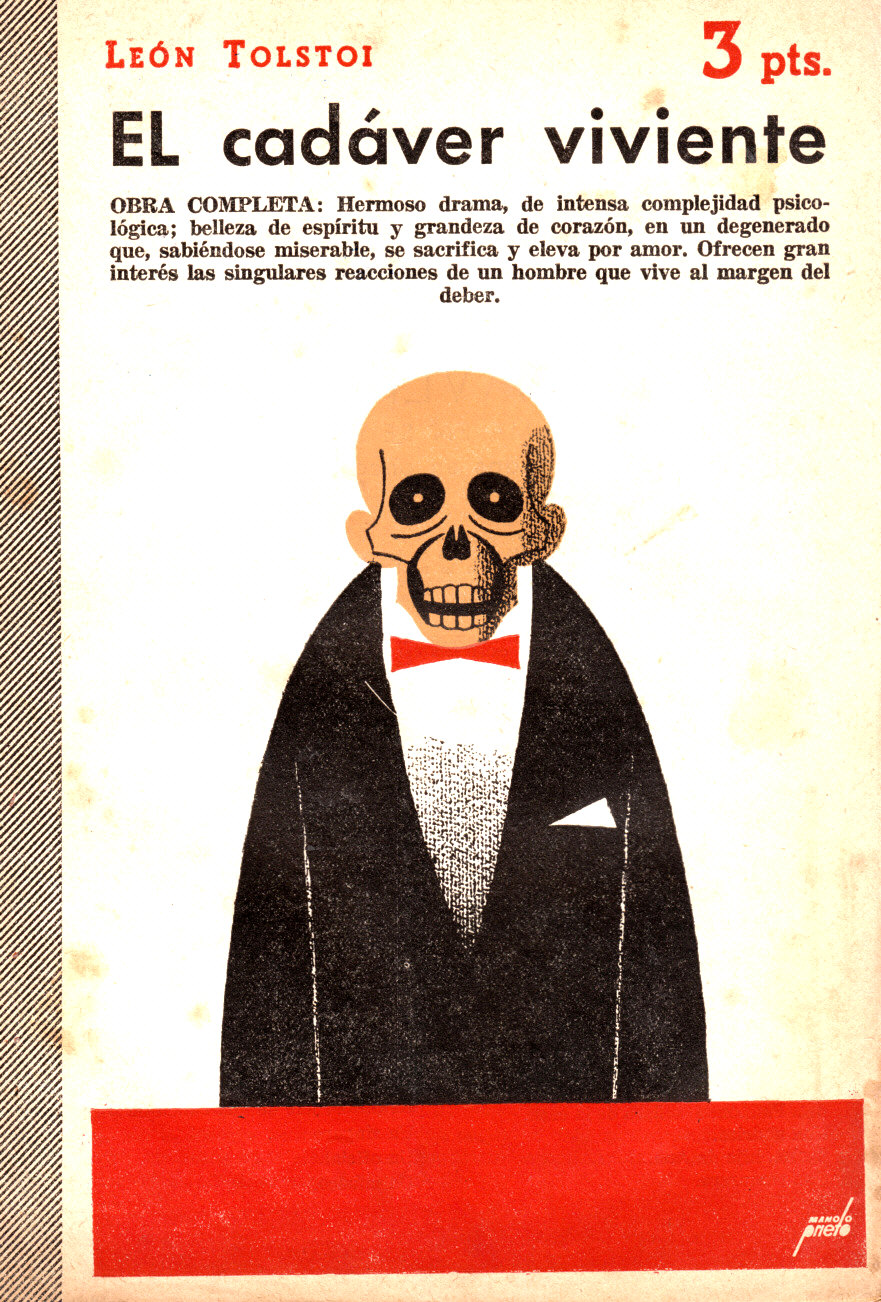
Some amazing vintage book cover designs from the 1940’s and 50’s by Spanish designer and illustrator Manolo Prieto (via Words and Eggs):

Comments closed

Midweek Miscellany

Pattern covers by Ray Fenwick for Houghton Mifflin Harcourt (thx Sio).

A look inside Graphic: Inside the Sketchbooks of the World’s Great Graphic Designers by Steven Heller and Lita Talarico at Fast Company.

Link Drop — A nice list of design blogs to sink your teeth into compiled by David Airey, author of Logo Design Love.

Photographs from Kevin Cumminsbook about Joy Division at Flavorwire.

Show Me The Money — Kevin Kelly, author of What Technology Wants and co-founder of Wired, talks to PW:

For readers, this is the best time in history. There’s never been more selection, more media types, or quality books. There’s never been more backlist books available. This is a high point for readers. For publishers, though, it is a low point, as their businesses are in transition. But I’m very optimistic, because in my research, money follows attention. Wherever attention flows, money follows.

And finally…

Telling Stories About Superweapons — In an awesome  (if slightly sprawling clearly-has-too-much-time-on-his-hands-and-might-be-bonkers) post, Christian Thorne, associate professor of English at Williams College, discusses Godzilla, Iron Man II and weapons of mass destruction (via Coudal):

Tony Stark is the Japanese scientist of the American Empire, the inventor who will not share his invention, the engineer who withholds the newest technology of death so that only he can command it: “You can’t have the suit. … I’m not giving you the suit. … You’re not getting the suit.” What the new movie shares with Godzilla is the notion that the perfect and ethical weapon would have to be entirely singular—there would literally only be one of them—and so would not be available for manufacture: a permanent prototype, forever in beta. By investing the killer armor with artisanal qualities, as though ICBMs could be blacksmithed, they suggest that the weapon’s uniqueness could be maintained into the future, since it is the hallmark of any handcrafted object that it is in some strict sense unrepeatable. That’s a fantasy, yes, but it’s an unsettled one; unease is simply built into its scenario. The conceit of an unshareable weapon comes with a worry automatically attached, which is simply that one will become two. Arms proliferate, and then so do anxieties, in their wake.

3 Comments