Michael Salu, artistic director of Granta, talks to Crane TV about his work, influences and personal style:
Comments closed
Published February 17, 2012
Books, Design and Culture
Michael Salu, artistic director of Granta, talks to Crane TV about his work, influences and personal style:
Comments closed
Vahram Muratyan’s playful illustrations comparing Paris and New York are now available in a beautiful new pocket-sized hardcover from Penguin.
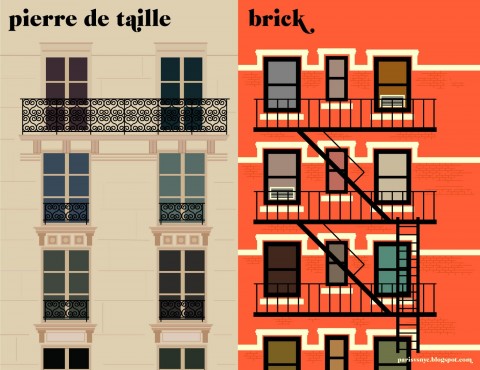

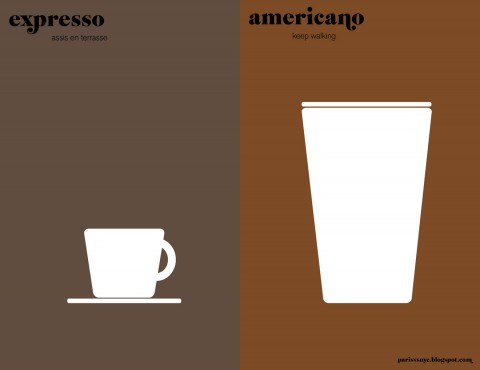
Prints are available to buy from the Paris versus New York blog.
Comments closed
Cartoonist Vera Brosgol has posted her startling, wordless mini-comic What Were You Raised by Wolves? online. Read it in its entirety here.
(via Robot 6)
Comments closed In the latest Design Matters podcast, Debbie Millman interviews artist and illustrator Brian Rea. The former art director for the Op-Ed page of The New York Times, Rea recently illustrated three of Malcolm Gladwell’s most popular books for a new boxed-set, Malcolm Gladwell Collected, designed by Paul Sahre:

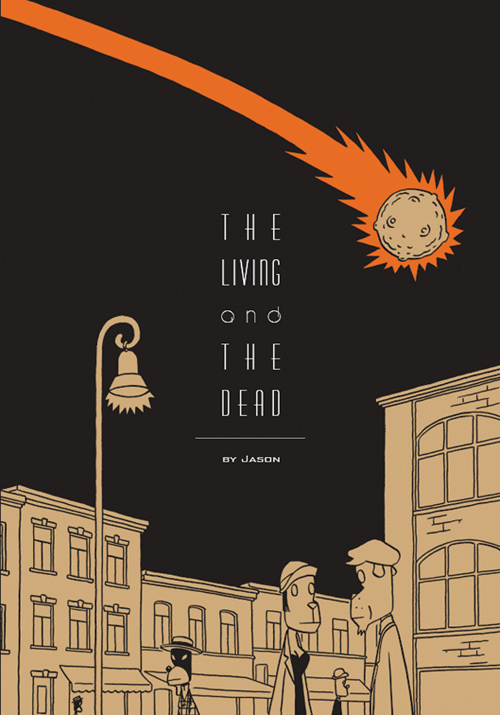
I’ve written about Norwegian cartoonist Jason for The Casual Optimist before and his work appears here with unerring regularity — if you are a frequent reader you are no doubt already familiar with it.
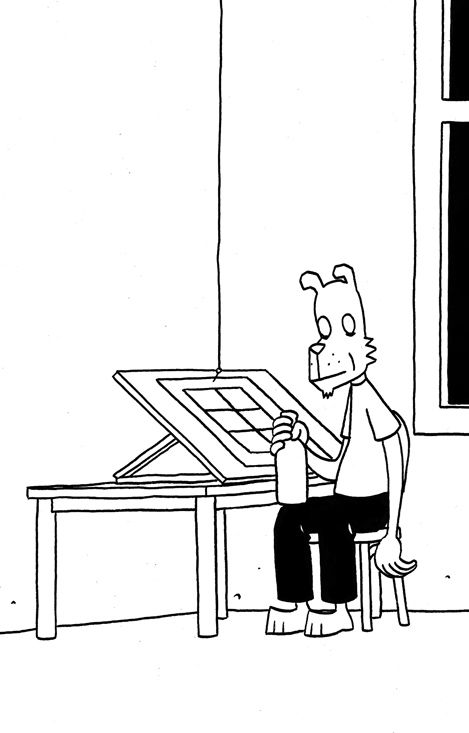
Like British cartoonist Tom Gauld who I interviewed early this year, Jason’s comics are immediately identifiable. You cannot mistake them for the work of someone else. And again, like Tom, Jason’s work references both the pop and the high-brow: zombies and werewolves on the one hand; Hemingway and the Beats on the other. The result is both original and off-beat. His protagonists are like renegades from a Max Fleischer cartoon who’ve inadvertently wandered into a Jim Jarmusch movie… Anthropomorphic animals smoking cigarettes, drinking coffee, talking about French actresses. Action and slapstick wrestle with ennui and loneliness.
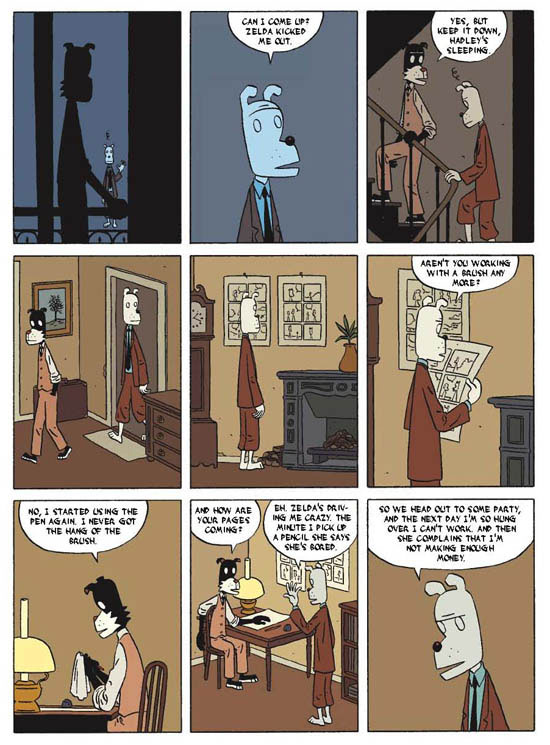
Jason, whose work has been translated into Swedish, Spanish, German, Italian and French, currently lives in Montpellier, France. He was kind enough to talk to me in English. His new short story collection Athos in America will be published in December by Fantagraphics.
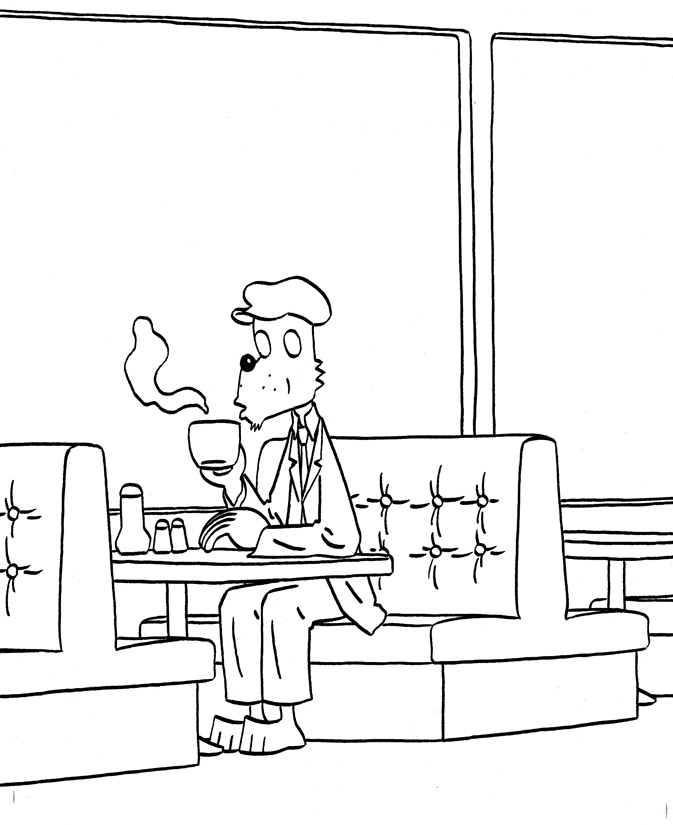
When did you first start drawing cartoons?
Around age 13, I guess. And then at age 16 I started selling cartoons and one page strips to a Norwegian humour magazine. I did that through high school.
Did you always want to be a professional cartoonist?
No, it was a hobby. To become a cartoonist in Norway was not much of an option. I went to art school to become an illustrator, but my career never took off, so I kept doing comics. I met other cartoonists in Oslo, there was sort of a little scene. And then I moved to France to be closer to the French comic book industry. I did books that were translated into English, French plus some other languages, and the last seven or eight years I’ve been able to have an income almost exclusively from doing comics.
How did you become involved with your US publisher Fantagraphics?
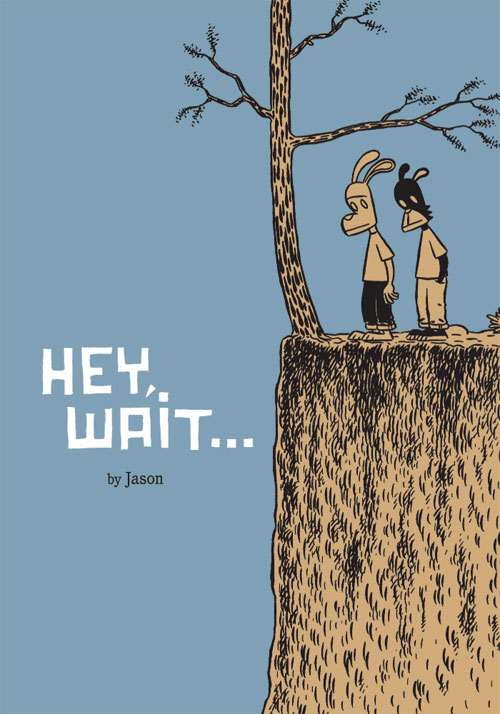
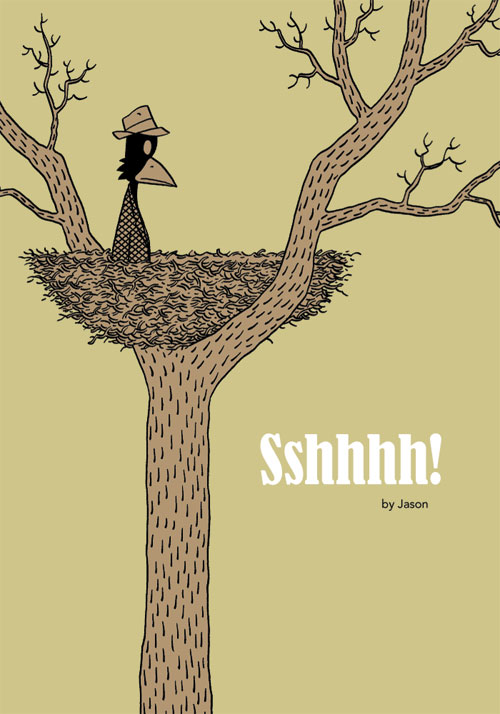
We sent — that is me and my Norwegian publisher, Jippi — we sent Hey, Wait… to Fantagraphics. I’m still not quite sure if Kim Thompson read our submission or if he had already read the French version, but anyhow, they decided to publish the book, and then later Shhh! And The Iron Wagon. And for some strange reason, the books seem to sell okay, so I’m still published by them. [Hey, Wait…, Shhh! and The Iron Wagon are collected in the book What I Did]
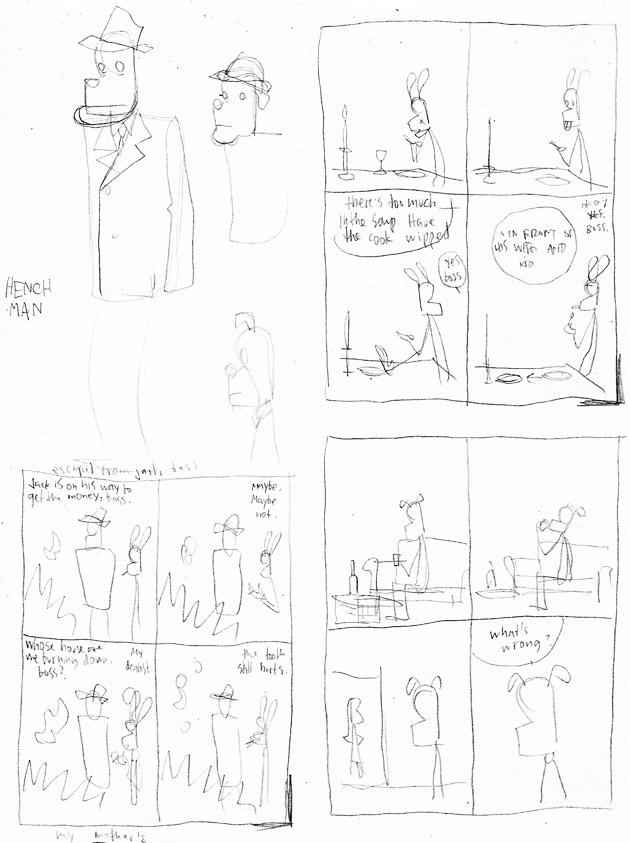
Briefly, could you describe your working process?
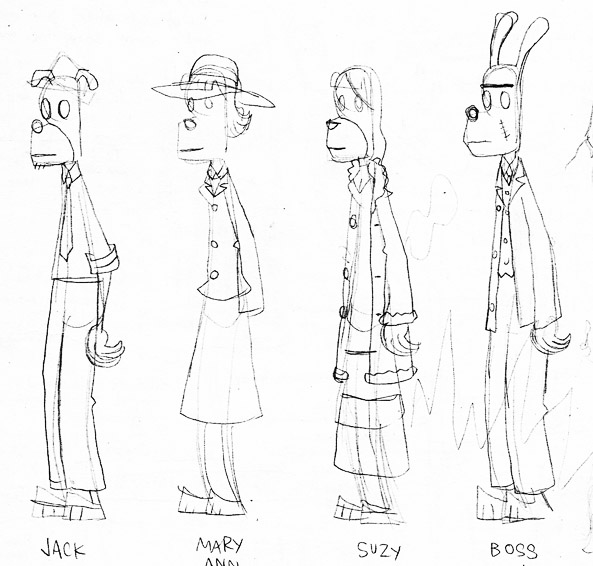
I have ideas in my brain, just lying there, that I sometimes think about. This can last years. Then suddenly I can get ideas for dialogues. I write this down. It’s maybe four or five pages. I can start working on those, and at the same time think about what’s going to happen next. I don’t write a full script. It’s based on improvisation. I write pieces of dialogue. Or sometimes I sketch out the pages first, the images, and write the dialogue after. I usually work on nine or ten pages at the same time, pencil a bit here , then ink it, and then pencil a bit there and ink that. It’s the completely wrong way of doing it, by the way, but it seems to be the only way I can work.
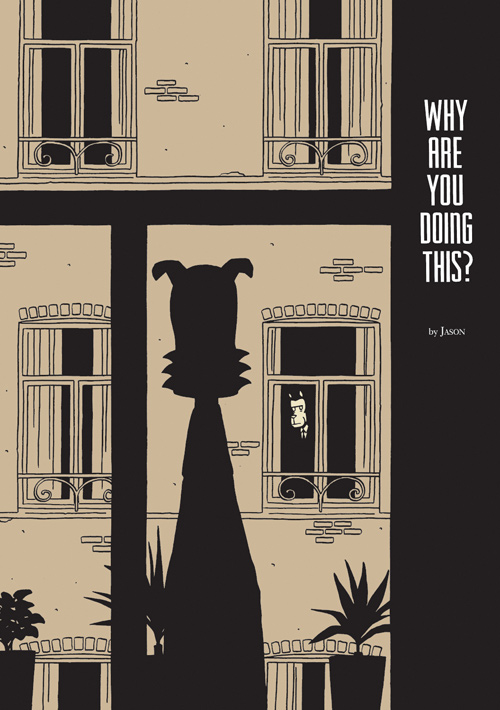
Your work often references classic movies. What are some of your favourite films?
How much room do you have? I like Fred Astaire and Ginger Rogers films, film noir, Brian De Palma, John Ford, especially The Searchers and Howard Hawks, especially Rio Bravo, Buster Keaton, Laurel and Hardy. Paris, Texas, Down by Law, Animal House, Blues Brothers, Fanny and Alexander, Five Easy Pieces, The Last Picture Show, Miller’s Crossing, Roman Holiday, On The Waterfront, Life of Brian. Days of Heaven by Terrence Malick is probably my favourite film.
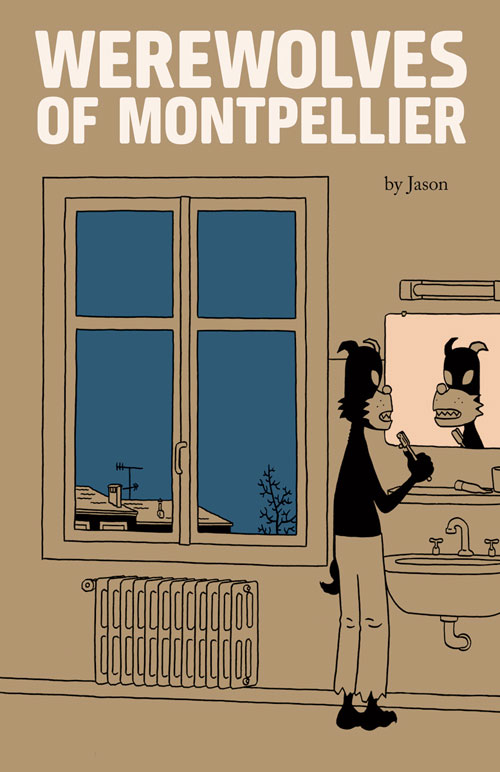
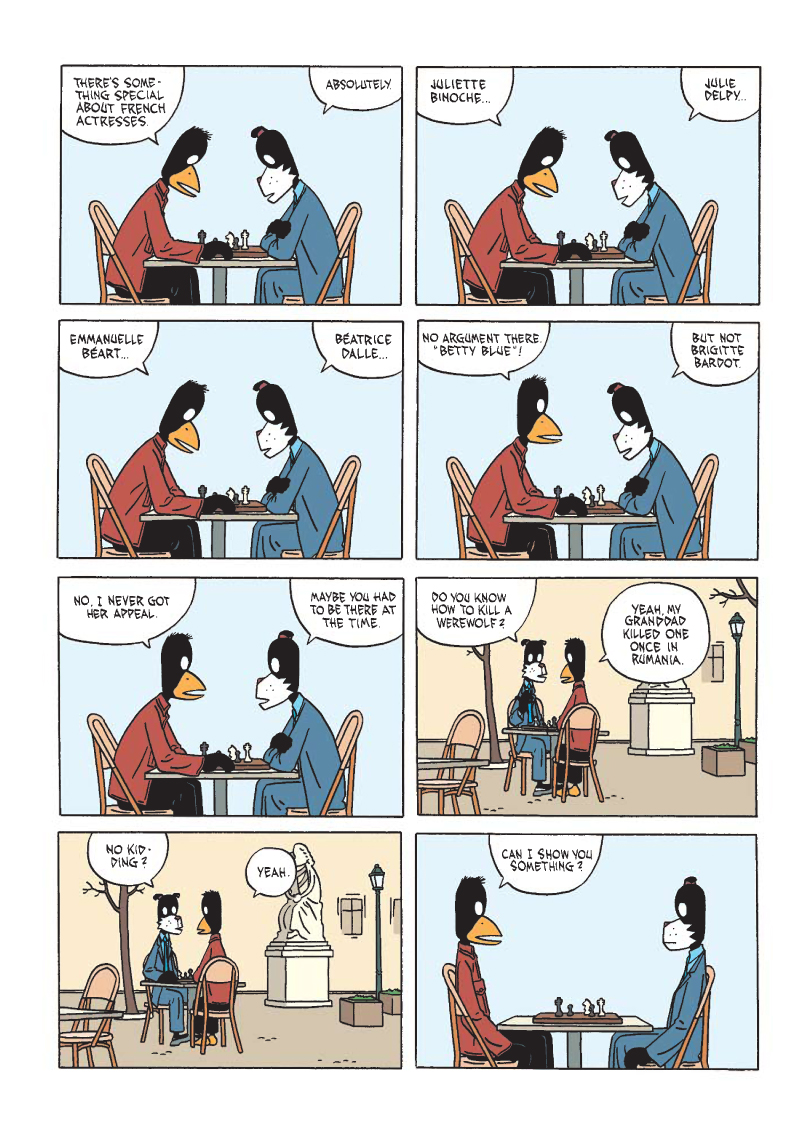
In your recent book Werewolves of Montpellier, one of the characters says they don’t understand the appeal of Brigitte Bardot. Really?
Yes, really! What, you like her? She just looked a little stupid to me. I find Catherine Deneuve a lot more appealing, or Emmanuelle Beart and Julie Delpy to stick with French actresses.
You recently post a list of your 5 favourite Tintin books. Has Hergé been an influence on your work?
Yes, very much so. It was one of the first cartoonists that appealed to me. I borrowed his albums at the library as a kid. I started drawing my own cartoons. And I think you can have a much worse teacher than Hergé. It’s not really the clear line that is the most important thing, even if that is part of what I like with him, it’s more the very clear storytelling that you find in his books. On page three you’re hooked. I think you can read his books in a foreign language, in Russian, and still understand the story and enjoy it. I don’t re-read the books that often, but I often take them out, my favourite albums like The Broken Ear and The Shooting Star, and just look at the drawings.
What do think about the new Steven Spielberg adaptation?
I’ve only seen the trailer. It doesn’t look that bad. I don’t want to just completely rule it out, like its a sacrilege and that Spielberg has no right to adapt Hergé. Not sure about the computer animation, but the original plan was apparently live action with a computer animated Terry [Milou/Snowy], and I think I really would have hated that. And the European animation films, based on each album, are just terrible. Everything that is exciting and funny in the albums are completely lost in the animation films. So I don’t think the Spielberg film can be any worse.
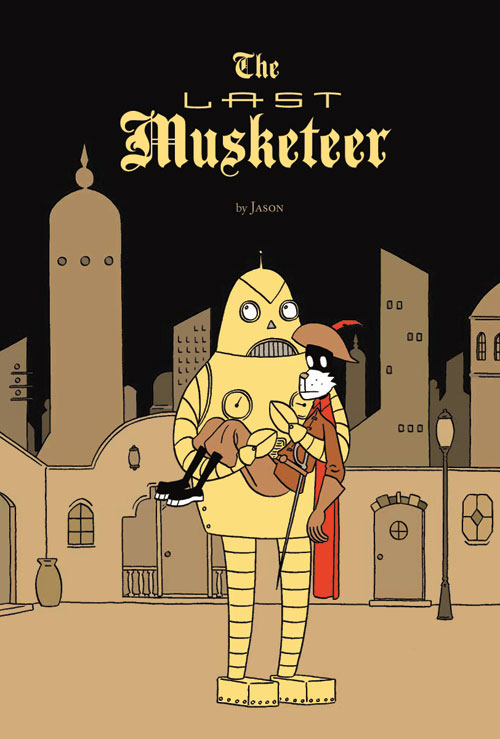
Who are some of your other creative heroes?
Jim Jarmusch, Hal Hartley, Wes Anderson, Aki Kaurismäki. Jaime Hernandez, Jim Woodring, Daniel Clowes, Chester Brown.
Who else do you think is doing interesting work right now?
There are two Argentinian cartoonists I like, Liniers and Pablo Holmberg. The French cartoonist Christophe Blain. Calef Brown’s children books. I like the Mutts books by Patrick McDonnell. I’m not sure if it’s necessarily «interesting», but I find them appealing. It’s like the last, good newspaper strip. I like the old newspaper strip collections: Captain Easy, Prince Valiant, Little Orphan Annie, Gasoline Alley.
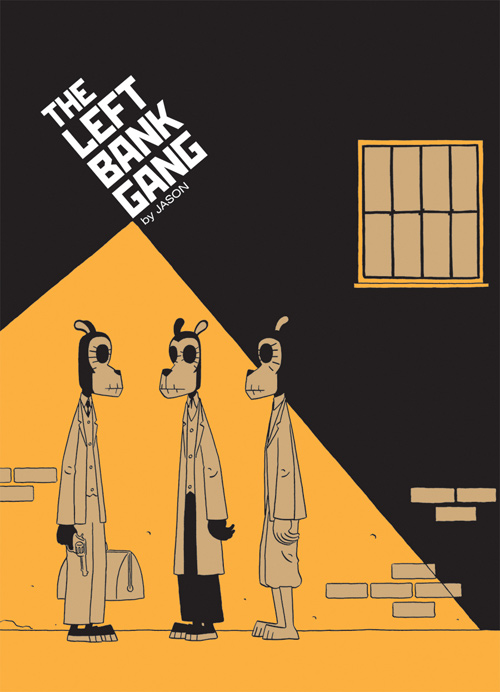
What books have you read recently?
This summer I read The Selected Letters by Jack Kerouac, Off The Road by Carolyn Cassady. I tried to read The Subterraneans by Kerouac, but gave up. I read Chronicles by Bob Dylan, Positively 4th Street by David Hadju and A Freewheelin’ Time by Suze Rotolo. I also read Dave Van Ronk’s memoirs, The Mayor of MacDougal Street, so I look forward to the new film by the Coen brothers, based on his life. What else? Blood Meridian by Cormac McCarthy, Last Night in Twisted River by John Irving and Freedom by Jonathan Franzen. I’m currently reading Volume 1 in The Letters of Ernest Hemingway.
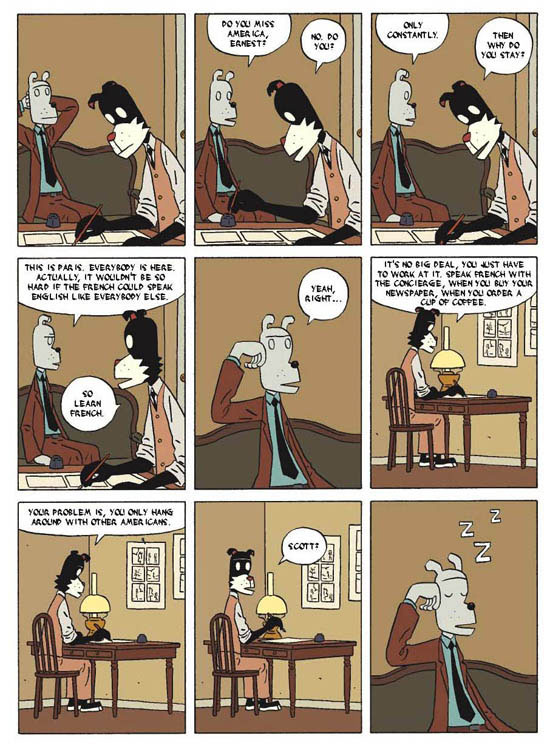
What are a few of your favourites books?
Well, Hemingway. The Sun Also Rises and A Farewell to Arms, his short stories. Bukowski, mostly his novels, but I’ve also started reading his poetry. Raymond Carver and Tobias Wolff. Lorrie Moore, her short stories. Kelly Link. There’s a British writer I like, Rupert Thomson. John Fante, especially Ask The Dust, John Steinbeck, especially East of Eden and Grapes of Wrath, Cormac McCarthy, especially The Road and No Country for Old Men. Raymond Chandler and other old pulp writers like Charles Willeford and David Goodis. I like Elmore Leonard. Paul Auster. John Irving. Every four or five years I re-read Cider House Rules, Garp and Hotel New Hampshire.

Are there any stories you would like to illustrate?
Yes, there are one or two books I’d like to adapt to comics. But I’ll probably wait until I’ve run out of ideas myself.
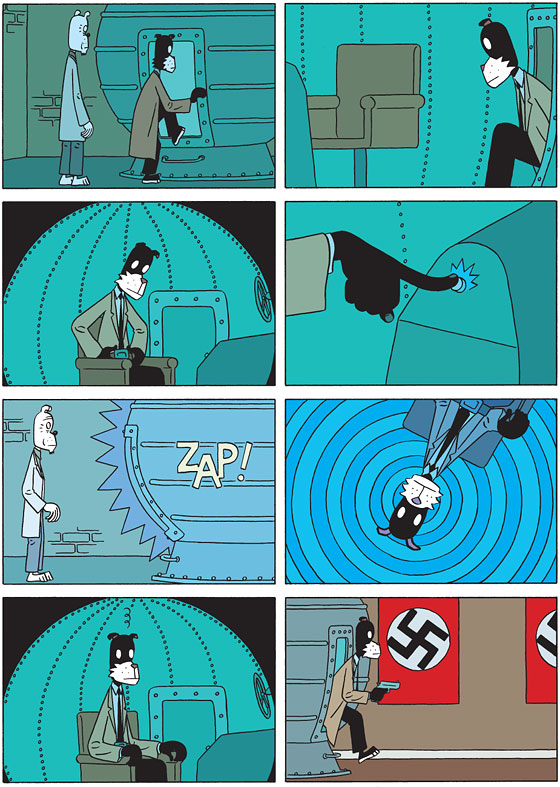
Do you worry about the future of books and print?
No. I don’t know. The bike didn’t disappear when the car came. There are hopefully room for both books and electronic media. Personally I’ll stick with paper. I’ve no interest in reading on a screen. And I’ll be dead in 40 years anyhow. How much can they screw it up by then?
Thanks Jason!
6 Comments

Outfoxed is a beautiful new 20 -page fairytale by cartoonist Dylan Meconis.
The whole comic is available online, and there’s more about the genesis of the comic on Dylan’s blog.
(via Alan Trotter)
Comments closedToday was a busy day at the end of a busy week, so no weekend round-up this week I’m sorry to say. I could not, however, go without mentioning Voldemort’s One Hour Service by Stuart and Kathryn Immonen:
 If you’ve read the Harry Potter books, or seen the latest movie, you will of course, get the reference:
“You have one hour. Dispose of your dead with dignity. Treat your injured. I speak now, Harry Potter, directly to you. You have permitted your friends to die for you rather than face me yourself. I shall wait for one hour in the Forbidden Forest. If, at the end of that hour, you have not come to me, have not given yourself up, then battle recommences. This time, I shall enter the fray myself, Harry Potter, and I shall find you, and I shall punish every man, woman, and child who has tried to conceal you from me. One hour.”
 It’s brilliant stuff. And, if you haven’t read Moving Pictures by Kathryn and Stuart, I strongly recommend it.
1 Comment

Tom Gauld is a cartoonist and illustrator based in London. I first came across his work a few years ago in a book called Both published by Bloomsbury in 2003. Both (sadly now out of print) collected comics by Tom and Simone Lia originally self-published as First and Second under their imprint Cabanon Press.
Since then Tom’s book cover illustrations and literary cartoons have featured regularly here and on The Accidental Optimist. His work is funny (oh so funny) — silly even — but it combines pathos with the farcical. His heroes are unlikely or put-upon; his robots lonely, mundane or murderous; detectives are clueless; scientists baffled. Everyone (including the robots), it seems, would rather have stayed at home with a cup of tea and a good book. There is a gentle subversiveness to it all, although it is never mean-spirited. I hesitate to describe it as Pythonesque, but it is in a way. Tom’s machines all look as if they go ‘ping’. Other references include superheroes (less than you might think), adventure serials, mysteries, literary fiction, 1970’s science-fiction, Stanley Kubrick, fairy tales, and old Open University TV shows. It’s eccentric to say the least, but wonderful nonetheless.
Tom and I corresponded by email.

When did you first start drawing cartoons?
I’ve drawn for as long as I can remember and I drew a lot of cartoons when I was at school, but I suppose it was when I was studying at Edinburgh College of Art (around 1998) that I really began drawing comics and cartoons seriously.
Why did you start self-publishing your work?
I first self-published a comic called First with my friend Simone Lia in 2001 when we were studying at the Royal college of Art in London. I’d say we did it partly because we didn’t know anyone else who would publish it, but also because I was interested in the business of designing and hand making the whole object. I had bought a self-published comic called OAF by Mat Brinkman a few years earlier and it inspired me to self-publish: it was small and hand-made and quite rough, but really unique and lovely. I suppose I’d seen self-published stuff before, but OAF really excited me.

Was the design of your books always important to you?
Yes, definitely. I think with any book, but particularly with a picture book of some kind, the experience for the reader begins before they even pick up the book. So I try to make every aspect of my own books contribute towards the story or idea. When I started, I was as much interested in designing, making and publishing a book as I was in the actual stories within.
Is Cabanon Press on permanent hiatus?
I wouldn’t want to say that Simone and I won’t ever start it up again. But we don’t have any plans to do anything with it for the moment. I’m still self-publishing things, but for Cabanon to work I think it has to be something Simone and I do together and we’re too busy with other things.

Where are your cartoons published now?
I do a weekly cartoon for The Guardian which appears in the (art and books) Review every Saturday, some of these cartoons also appear in The Believer’s comics section. I do something to accompany the The New York Times “Riff” essay every Sunday but that’s usually more an illustration than a cartoon. I also regularly put my work on my Flickr photostream.

Briefly, could you describe your working process?
I sit and think and doodle in my sketchbook until I have a good idea. Then I’ll make rough pencil sketches on copier paper till I have things worked out visually. Then I hone these sketches on paper and in photoshop till I have a rough version of the image which I can send to anyone who needs to approve it. Then I will print out the image and use a lightbox to trace an ink version which I crosshatch then scan back into the computer where I can clean it up, tweak bits and add any colour. I love using the computer but I try to stay away from it till I’ve done most of the thinking for an idea, looked at it from all sides, because I feel that once the computer is involved things are on an inevitable path to being finished. Whereas in my sketchbook the possibilities are endless.

How is illustrating a book cover different from your weekly cartoons?
It’s very different. I feel more pressure doing a book cover than almost anything else, I think “This author has probably spent years writing this book: I mustn’t mess it all up with a crap cover”. So I have to try and find a way to react to the book and make something which is suitable, but is also strong and interesting in its own way.

Are you planning any more full-length comics?
My forthcoming book Goliath is really the first time I’ve written a book-length narrative (albeit quite a short book) and I found it much harder than writing short pieces, but I’m happy with the result now. I will probably write another one, but not straight away. I’ve got a couple of shortish things I want to do, then after that I don’t know what I’ll do.

Where do you look for inspiration, and who are some of your cartooning heroes?
I listen to the radio, watch TV and films, go to museums and most of all read.
Cartooning heroes: William Heath-Robinson, Gary Larson, Roz Chast, Richard McGuire, Ben Katchor, Daniel Clowes, Chris Ware, Jochen Gerner.

How has Edward Gorey influenced your work?
I’m a big fan of Edward Gorey. I discovered his work when I was at college and immediately wanted to seek out everything he’d ever produced. I like that what he makes is unclassifiable: he makes picture books for adults which aren’t comics, many are self-published but they’re beautifully produced. I love his drawing, the odd narratives, the design of the books, the compositions, the hand drawn typography: everything really. The way I crosshatch (with small “patches” of short lines rather than long ones) I learned from Gorey.

Are you obsessed with robots?
I think I probably am a bit. I find they are very good props/characters for my stories and ideas. I like the inherent sadness in robots: they are sentient beings but also products which can break or be discarded (in my stories anyway). Also, they are much easier to draw than real people.

Who else do you think is doing interesting work right now?
Jon McNaught, Kate Beaton, Anders Nilson, Sammy Harkham.
What are a few of your favourite books?
Off the top of my head:
The Inheritors by William Golding
The Vinegar Works by Edward Gorey
Tinker, Tailor, Soldier, Spy by John le Carre
Teratoid Heights by Mat Brinkman
The Summer Book by Tove Jansson
The Stanley Kubrick Archives by Alison Castle

Are there any books you would love to illustrate?
I’d like to do a book of fairy-tales or folk-tales.
What have you read recently?
The Thousand Autumns of Jacob de Zoet by David Mitchell
Through the Language Glass by Guy Deutscher (A fascinating book about language and colour)
The Annotated Brothers Grimm by Maria Tatar
The Cardboard Valise by Ben Katchor

What’s next for books and print?
One thing which might happen with the rise of e-books is that the books that DO get published in paper may have to justify themselves by being better made, designed and illustrated. That would make me happy.
Thanks, Tom!
For the sake of full disclosure, I should mention that Tom’s forthcoming book Goliath, will be published by Drawn & Quarterly and distributed in Canada by my employer Raincoast Books.
7 Comments
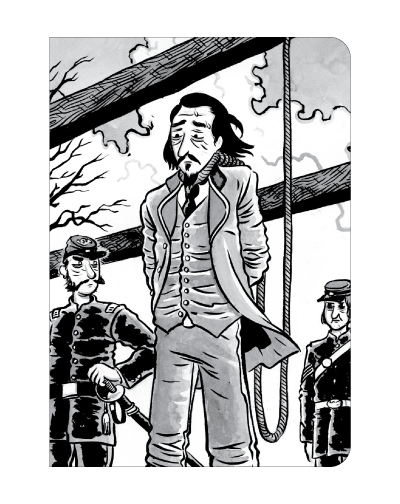
Good Ink, a new imprint of Portland’s Scout Books, have announced a new collection called American Shorts. Each pocket-sized volume in the series pairs a contemporary illustrator with a classic American short story. The first releases are An Occurrence at Owl Creek Bridge by Ambrose Bierce, illustrated by François Vigneault; Rip Van Winkle by Washington Irving, illustrated by Bwana Spoons; and The Jelly Bean by F. Scott Fitzgerald, illustrated by Vanessa Davis. (Pictured below, an illustration by François Vigneault for An Occurrence at Owl Creek Bridge).
Misery Loves Company — Edward St Aubyn, whose most recent novel At Last was released in May, interviewed in The Guardian:
The curious thing about St Aubyn’s novels is the way they counterpoint personal suffering and social comedy: it is misery lit recast by Evelyn Waugh. The upper class into which he was born and which failed to protect him is mercilessly skewered, including Princess Margaret, who does a brilliant comic turn in Some Hope, the third volume in the trilogy. “For some reason I can’t really analyse, I alternate between those two things,” St Aubyn says, “and I feel that to stay with just one of them would somehow be false. But the rhythm is completely instinctive. I’ve just had enough of the anguish, so I move on.”
Also in The Guardian: Anthony Clavane, author of Promised Land: A Northern Love Story, selects 10 novels about football (or soccer if you must).
And because it’s Friday (and an otherwise light news day), here’s Yowie and the Magpie, a great piece of animated storytelling made for Film London / UKFC Pulse Digital Shorts:
Comments closedAs a follow up to yesterday’s Design Matters post, I just wanted to share Angus Hyland’s extraordinary design for The Helmet of Horror by Victor Pelevin, published as part Canongate’s Myths series a few years ago:

The illustration is by Sara Fanelli.
2 Comments
Not long ago, I posted Stuart Bache’s wonderfully cinematic John le Carré covers for Sceptre in the UK. Now (as mentioned earlier today) John le Carré’s American publisher Penguin have reissued new editions of his books with amazing illustrations by Brighton-based illustrator Matt Taylor and design by Gregg Kulick and Paul Buckley. Mr Buckley art directed series.


Special thanks to Paul Buckley and Andrew Lau at Penguin US for providing the cover images, and to James at Caustic Cover Critic for bringing them to my attention.
7 Comments