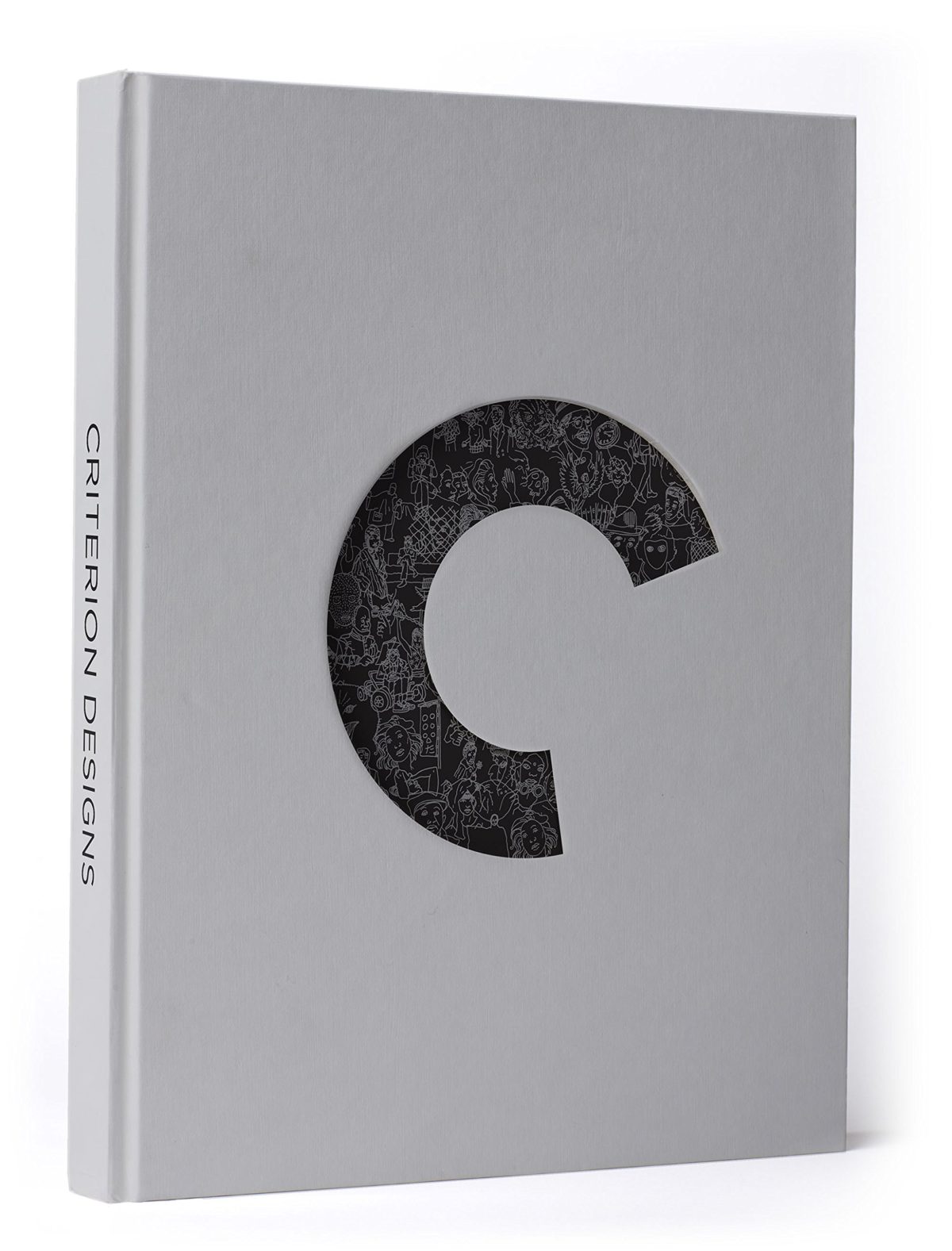
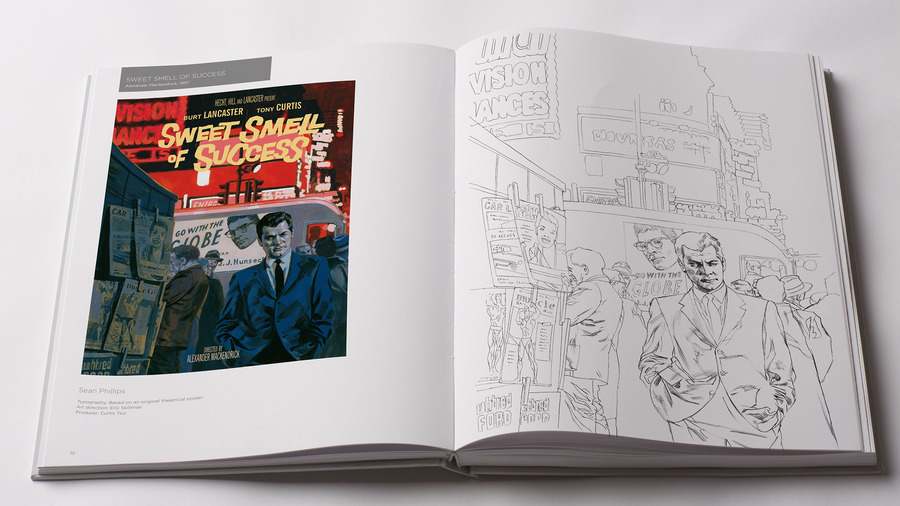
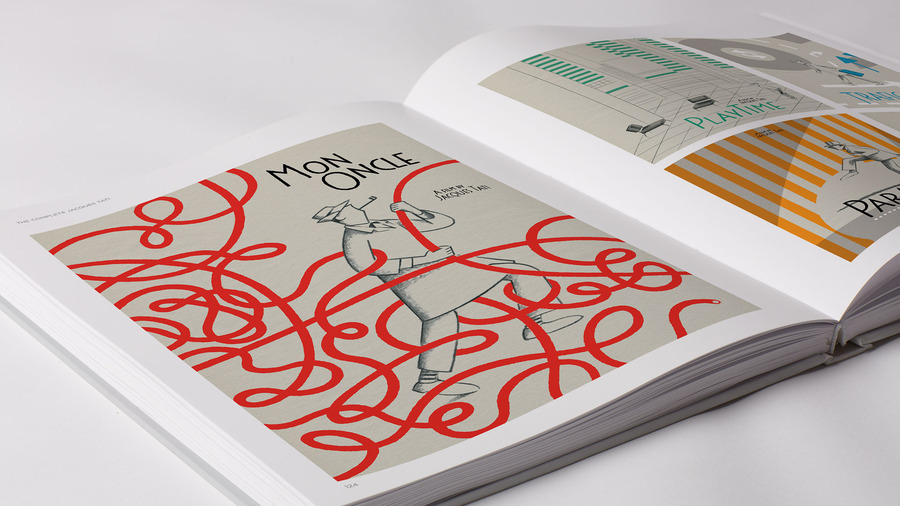
Another book for the wishlist (because in a shocking development no one gave it to me for Christmas), Criterion Designs features covers, art, and sketches art commissioned for the Criterion Collection. It looks beautiful…
Books, Design and Culture
Another book for the wishlist (because in a shocking development no one gave it to me for Christmas), Criterion Designs features covers, art, and sketches art commissioned for the Criterion Collection. It looks beautiful…
Comic Book Heaven is a short documentary by E.J. McLeavey-Fisher about Joe Leisner, owner of the comic book store Comic Book Heaven in Sunnyside, Queens New York:
Comments closed


I finally saw Only Lovers Left Alive this weekend (it can’t come as any surprise that I don’t get out much!), and I just came across this recent interview with director Jim Jarmusch about the film on IndieWire:
I’ve probably stolen from all kinds of places, but not really consciously. There’s nothing in this film that I can consciously say that I was making a direct reference to a film, but just the things they mention and talk about in the film as inspirations for the characters are then inspirations for the film itself… The beauty of ideas is that they are like waves in the ocean and they connect with things that came before them, and I think it is very important to embrace things that interest you and influence you, and incorporate them into what you do, as all artists have always done. The ones that say they don’t, are lying. Or are afraid that their work won’t be seen as being original, somehow.
The film, which is very much about art and authorship, does feel pasted together with bits of Jarmusch’s influences and interests. I’m sure many people will find Only Lovers Left Alive frustrating (its snub of Chechov’s gun in particular), but it is beautiful to just watch it slowly unfold.
(And, if you are curious, the font used in the posters picture above is apparently FF Brokenscript designed by Just van Rossum)
Comments closedWell, this is rather lovely… Gentlemen of Letters is a 16 minute documentary about sign painters in Dublin:
The film features the work of Kevin Freeney, Colm O’ Connor, Maser, James Earley, and Kevin Freeney Jr.
(via Quipsologies)
Comments closed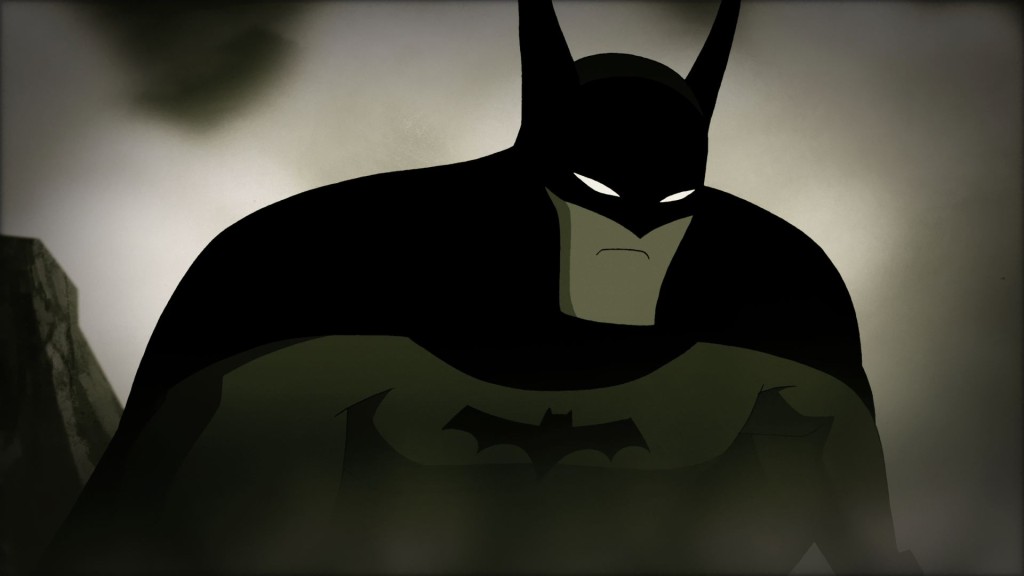
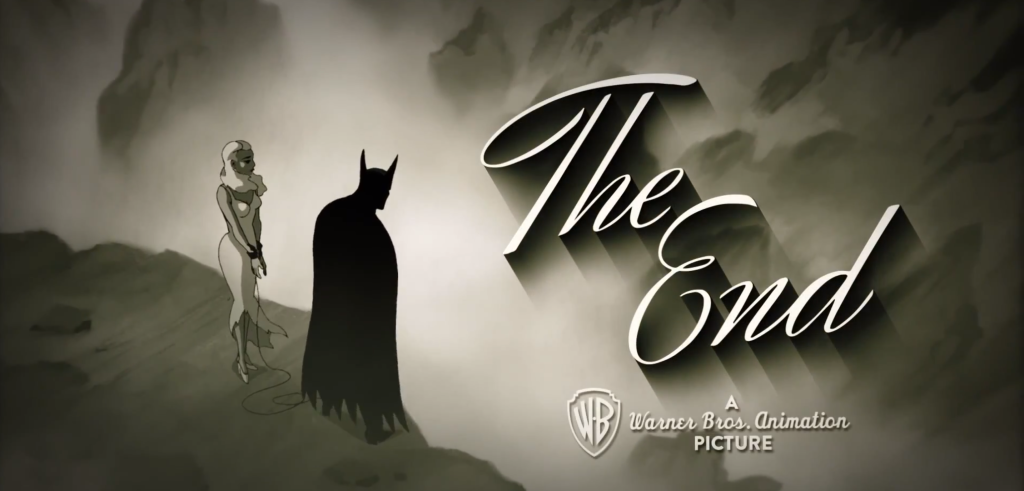
For me, and I suspect plenty of other people of a certain age, the noir-inspired Batman: The Animated Series, is still the most satisfying version of the character to come to screen. The series has long since ended but happily, Bruce Timm, co-creator of the series, has produced a new, wonderfully retro, animated short called Batman: Strange Days to celebrate the Dark Knight’s 75th anniversary:
In a recent interview with Comics Alliance, Timm talked about his work on the original series and the retro look of the new short:
I wanted to make the whole cartoon look as if it was like the cartoon itself was made in 1939, got stuck in a vault somewhere, and nobody has seen it until now. Not that I thought we were going to pull that kind of hoax, but that was the feel I wanted. I wanted it to be so authentically old school. I went back and looked at those early Bob Kane comics and even though they’re really super crude, there’s something really cool about the way Batman looks in those comics. He’s got the really long ears, they kind of stick out in an inverted “A” shape, or a “V” shape, on the top of his head because they kind of stick out on an angle; they’re really tall. He’s got tiny eyes, his trunks are long, his boots are long. He has short little gloves. I tried to incorporate as much of that in there as possible.
No surprise then that like the animated series, it reminds me a lot of the Fleischer Studios Superman cartoons from the early 1940s. The first episode of that series, “The Mad Scientist”, was released September 26th 1941 (before Superman could even fly!):
Personally, I like the episode 2, “The Mechanical Monsters, a lot:
And just as side note, when Batman first battled Hugo Strange’s giant monster men in Batman #1 (Spring 1940), he doesn’t mess about with tear gas — he actually takes them down with a machine gun. It would be the last time Batman killed anyone on purpose.

Skydweller combines over 5,000 photographs of London taken from the top of Cromwell Tower, one of the three residential towers in the city’s Barbican Estate. The short film is accompanied by music specially composed by Tom Rosenthal and poetry by Paul Haworth:
(via ArchDaily)
Comments closed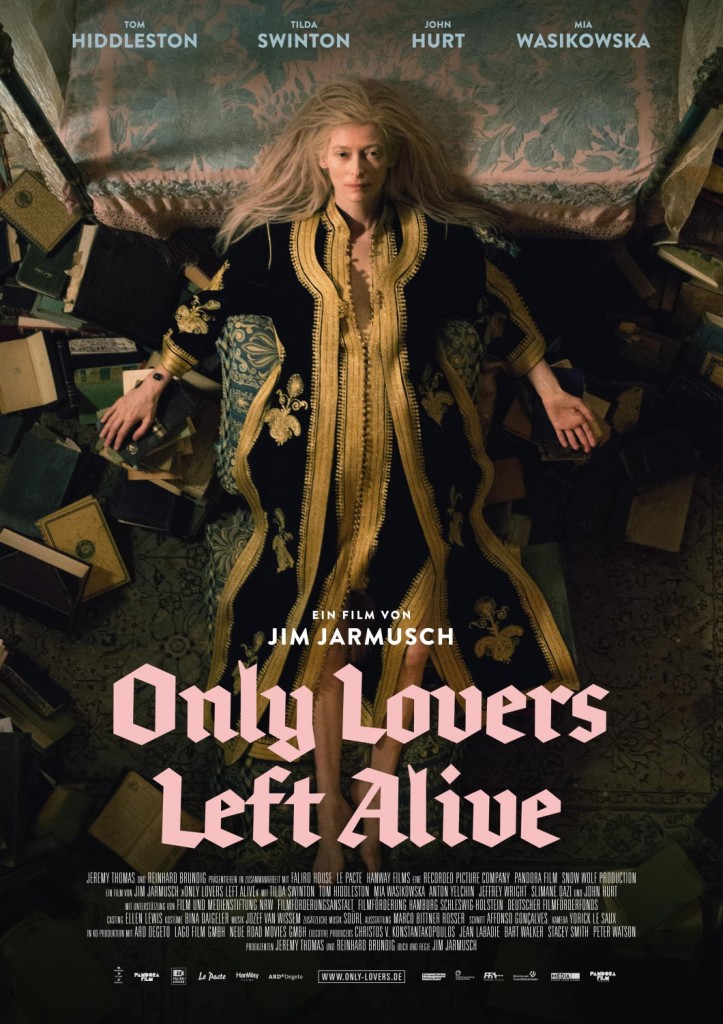
Jim Jarmusch talks to The Playlist about his new film Only Lovers Left Alive, and his interest in genre:
I just like genres… I really like the whole history of vampire films that are more the kind of marginal, the less conventional ones. Starting with “Vampyr” by Carl Dreyer in the ‘30s, and many, many interesting films – “Shadow of the Vampire” with Willem Dafoe, then in the ‘80s the “Hunger” with David Bowie and Catherine Deneuve. I liked George Romero’s film “Martin” a lot, Katheryn Bigelow’s film “Near Dark,” Abel Ferrara’s “The Addiction,” Clair Denis’ “Trouble Every Day,” Polanski’s “Fearless Vampire Killers.” I loved “Let The Right One In”—that was from like five, six years ago, beautiful… I’ve always loved… that type of approach. Rather than the sort of more obvious one and I wanted to make a love story for quite a long time. It’s had different variances to it, but somehow it got merged maybe eight years ago into my vampire film. So, I wanted to make a love story that involved vampires. Why, I can’t really tell you… It interests me. And I like genres too sometimes because they imply a kind of metaphoric element. Just by the fact that they are a genre. So you can work within [that genre] and do something different inside of that frame. So, that always appeals to me, or not always, but in the case of the few films where I’ve referred to genres, there’s something attractive there for me too.
Comments closed
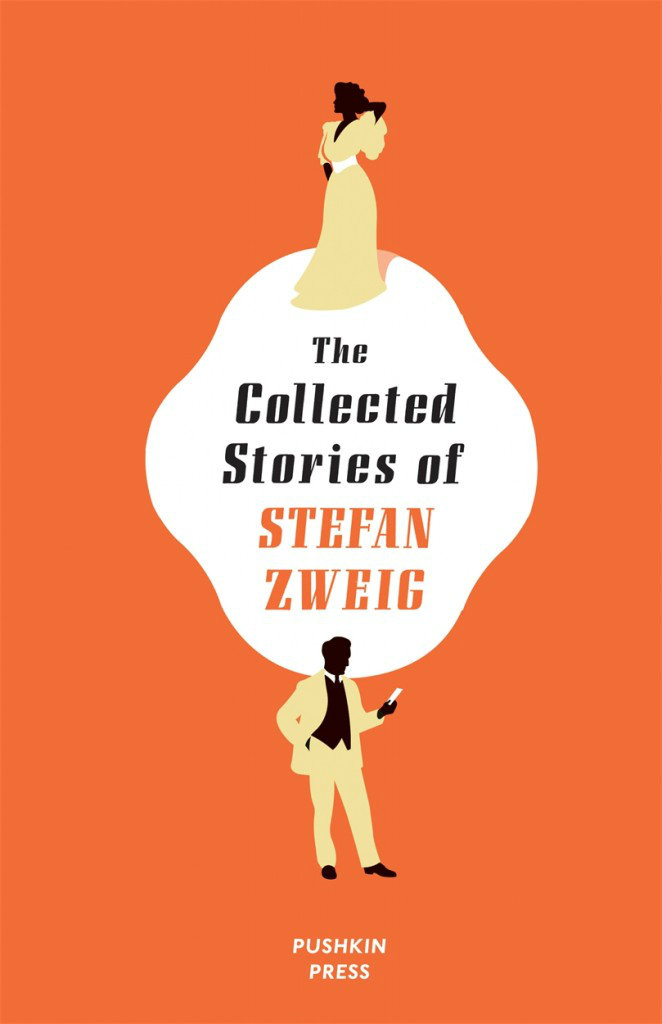
At the LA Review of Books, Tara Isabella Burton reviews The Collected Stories of Stefan Zweig recently published by Pushkin Press:
Zweig’s world is the world of the exile: the world of those displaced — by war, imprisonment, or by life, for whom hotels on Lake Geneva or the French Riviera are the only safe, if liminal, spaces. His characters are bereft of any sense of belonging; in the absence of a network, a sense of home, their emotions are heightened and their actions become ever more erratic. Thus in “Amok,” a doctor working in India finds himself blackmailing a patient for sex, painfully aware of how his self-imposed exile is disconnecting him from his own personal morality. In “Incident on Lake Geneva,” a Russian prisoner of war attempting to return home is stymied by a series of redrawn borders he does not understand; he tries to swim across, only to drown.
Such stories, of course, are colored by their political context: Zweig’s world is a world cut loose from itself. People’s bonds to their sense of self, of home, of country, of allegiance, have all been severed. But even consciously temporal stories like “Mendel the Bibliophile” — about a Viennese book collector sent to a concentration camp, and “The Invisible Collection,” about a blind art collector unaware of the fact that his family has sold his beloved prints to cope with rising German inflation — transcend their political context. They are, at their core, about the human need to connect, to ascribe meaning to what is not there, to look too fondly on an easier and imagined past as a means of coping with the at times impossible demands of real life.
Meanwhile, in the new issue of the London Review of Books, Michael Wood reviews the Zweig-inspired The Grand Budapest Hotel:
1 CommentZweig was born in an actual Europe and left, in the 1930s, to die in an actual Brazil… Best known during his lifetime for his vast and immensely readable biographies (of Dickens, Dostoevsky, Marie Antoinette, Mary Queen of Scots), he has recently been resurrected (in English, that is, since in French and German he hadn’t died) as the author of brilliant and bitter, if slightly too well-made fictions. It is from Joan Acocella’s fine introduction to one of them (Beware of Pity) that I take the fact that Zweig wrote a book called The World of Yesterday and the notion that he ‘saw himself as a citizen not of any one country, but of Europe as a whole.’ Of course Zweig was more serious about that world than the movie is or wants to be. He thought he had lived there. The movie thinks no one did.
A rather lovely short film on sign painter Mike Langley by Dress Code:
(via I Love Typography)
Comments closed
Shape is a lovely short film about design. Designed and directed by Johnny Kelly, and written by Scott Burnett, the film was commissioned by PIVOT Dublin to encourage young people to think about the world around them and where design fits in:

Kelly and Burnett recently talked to Creative Review about the project:
The duo looked at other recent design films, including Helvetica, Urbanized and Press Pause Play. They also found influence in films from the past, including Why Man Creates by Saul Bass, and “pretty much every educational/informational film made for IBM in the 60s and 70s”, says Burnett. In the end it was Charles and Ray Eames’ Powers of Ten that proved most useful. “Powers of Ten did offer the eventual breakthrough but conceptually rather than visually,” says Burnett. “Eventually the only thing that made sense was to zoom out and not make design the subject, but have it instead as the invisible catalyst in the story. Once we realised that then a lot of the early ideas found their way into the story which we just made nice and simple – a day in the life where the changes that are happening around us all the time are made visible.”
You can find out more about the project at SHAPEMAKECHANGE.
Comments closedApparently there is still no end to the interesting things being posted about filmmaker Wes Anderson (I will stop. Promise):
The video was created by kogonada.
Comments closed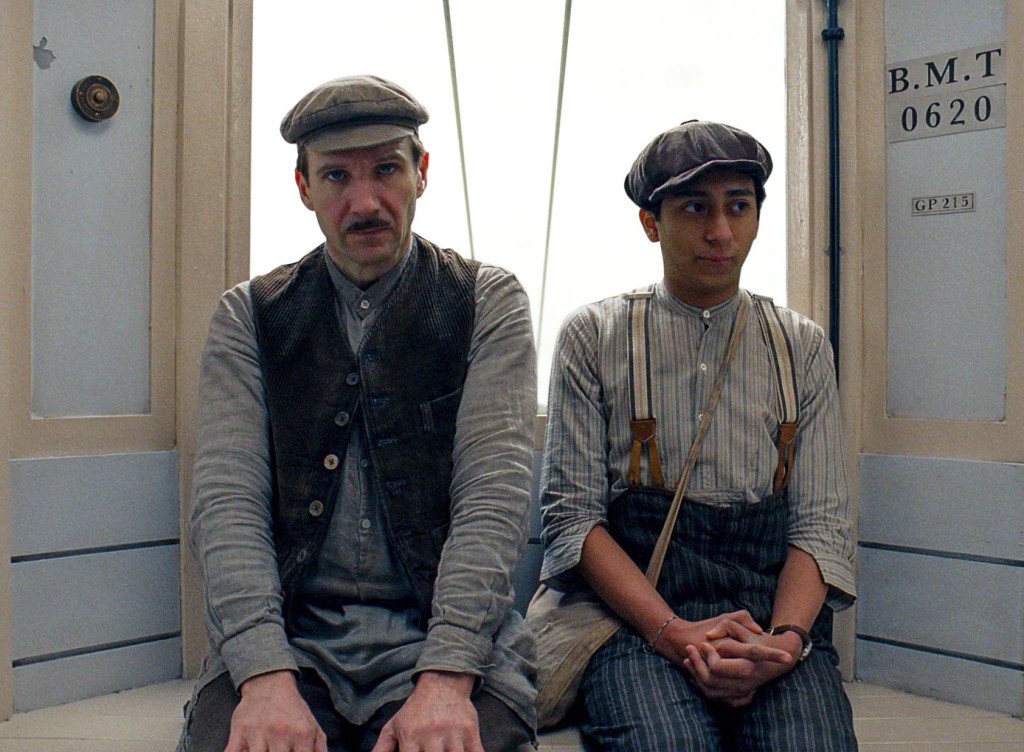
I really wasn’t going to post anything else about Wes Anderson and Stefan Zweig, but film critic Max Nelson’s review of The Grand Budapest Hotel for the LA Review of Books is one of the best things I’ve read on the subject:
1 CommentLike much of Zweig’s fiction, The Grand Budapest Hotel ends on an elegiac note. But what exactly is it elegizing? Agatha is too indistinct and vaguely defined a character for the movie to work as a tribute to lost love; her closest, warmest scenes with Zero pale in comparison to, say, Sam and Susie’s beachside dance in Moonrise Kingdom, Mr. Fox’s mid-film confrontation with his wife, or Margot and Richie’s devastating brief encounter late in Tenenbaums. You could argue that Zero, in Zweigian fashion, is conflating Agatha with the whole of prewar European life: its varied perfumes, its elaborately decorated baked goods, and its general sense of romance and adventure. But unlike prewar Vienna, prewar Zubrowka never existed anywhere other than in Anderson’s imagination. It’s difficult to imagine Zweig setting, for instance, Letter from an Unknown Woman or Journey into the Past in a fantasy country; like many of the author’s stories, they speak directly to his acute awareness of having caught the tail end of a particularly vivid chapter in his own national history. “I pity those,” he wrote, “who were not young during the last years of confidence in Europe,” for “whoever experienced that epoch… knows that all since has been retrogression and gloom.” If The Grand Budapest Hotel is an elegy for the codes and manners of fin-de-siècle Europe, then Anderson is trapped in a potentially disingenuous position: that of eulogizing a world he only ever could have accessed through the nostalgia-drenched writings of its earlier elegists, and which he can only now evoke on his own, imagined terms.