Hitch is an animated homage to Alfred Hitchcock by Felix Meyer, Pascal Monaco, and Torsten Strer, students at the University of Applied Sciences and Arts in Hannover:
(via Quipsologies)
Comments closedBooks, Design and Culture
Hitch is an animated homage to Alfred Hitchcock by Felix Meyer, Pascal Monaco, and Torsten Strer, students at the University of Applied Sciences and Arts in Hannover:
(via Quipsologies)
Comments closed Paint It Black — Alan Moore talks to Pádraig Ó Méalóid about the latest instalment of League of Extraordinary Gentlemen, Century: 1969 (available next month) for the Forbidden Planet blog:
What we’ve got in 1969, in keeping with the League’s usual practice, is that we’ve got a world entirely composed of references to the culture of that period, or around that period. So we’re taking bits from various films, television series, books, comics, any culture of that time we’re working into the fabric of our story… I hope that people will have as much fun digging out the various references as we had putting them in there…
See also: Pádraig Ó Méalóid’s recent interview with Alan Moore for 3AM Magazine.
Gonzo Graphic Novels — Six leading cartoonists discuss their own favourite cartoonists for The Guardian. Here’s political cartoonist Martin Rowson on Joe Sacco:
Although Art Spiegelman’s Maus is a work of incredible importance, I think it gave the entire genre a bum steer. It then got into this terrible kind of introspective, personal, adolescent angstiness. All this “you have to be serious about this because it’s a serious art form”: well, it is and it isn’t. Therefore, discovering Joe Sacco was a liberation. Here is somebody who is using the medium as journalism and reportage. It’s taking the best bits of the underground comics of the 60s – the radicalism – with the personal immersion you got with Spiegelman. It’s an extraordinarily powerful way of telling a story – a true one in this case. The fact that he places himself in the heart of it makes it gonzo journalism turned into a graphic novel, although it’s not really a graphic novel, it’s a sort of visual journalism.
Also in The Guardian… Lee Rourke, author of The Canal, on The Book Barge, a bookstore in a travelling canal barge:
It is the brainchild of Sarah Henshaw. “By setting up on a canal boat,” she explained, “we hope to promote a less hurried and harried lifestyle of idle pleasures, cups of tea, conversation, culture and, of course, curling up with an incomparably good Book Barge purchase.” I was immediately sold. But why a canal boat? “I hoped that by creating a unique retail space, customers would realise how independent bookshops can offer a far more pleasurable shopping experience than they’re likely to find online or on the discount shelves at supermarkets.”
Wonderful.
And finally…
Recording the Disjunction — Errol Morris talks to the A.V. Club about truth, self-deception, and his new documentary Tabloid:
Comments closedPeople sort of imagine that they go to a documentary—and this is also true [when] you read an article, a work of journalism—that they’re [experiencing] a work of non-fiction. We know that what we’re reading is not the absolute truth. If we’re reading a first-person account, we know that each and every one of us, myself included, have a great desire to be seen in a certain way, or to be perceived in a certain way. It’s unavoidable. What a movie can do—and this is what really does interest me, it’s at the heart of documentary—is not so much delivering the so-called truth. Yes, pursuing the truth, trying to investigate what really happened, trying to uncover some underlying reality, but recording that disjunction, that distance between how people see the world and the way the world might really be—that’s at the heart of the enterprise.
New York Times film critic A.O. Scott turns his attention to the 1955 French thriller Les Diaboliques directed by Henri-Georges Clouzot:
Les Diaboliques was based on the novel Celle qui n’était plus (She Who Was No More) by Pierre Boileau and Thomas Narcejac and before Clouzot bought the rights to the screenplay, Alfred Hitchcock was apparently about to do so. Coincidently, Robert Bloch, author of Pyscho, was a fan of Clouzot’s movie.
Comments closed
Sweet Nuttin’ — A primer on George Herriman’s classic and wonderfully idiosyncratic comic strip Krazy Kat at Robot 6:
Krazy Kat is far from a chore… Indeed, it is rarely anything less than a delight to read, although it can be a bit challenging for newcomers. The early strips are dense with wordplay, while the later strips take on the quality of near-abstract paintings at times. Then there’s Krazy’s off-kilter dialogue (“If only I could be star or a moom or a komi or ivin a solo eeklip. But me, I’m nuttin”). Thus, whichever book you decide to dive into first, I’d recommend taking your time. Read (and reread) the strips slowly and don’t feel the need to rush through.
Unhappy Endings — Jason Zinoman, author of Shock Value: How a Few Eccentric Outsiders Gave Us Nightmares, Conquered Hollywood and Invented Modern Horror, talks to Terry Gross for NPR’s Fresh Air:
I think that as you look at this period from ’68 to the end of the ’70s, generally, first of all, you see a lot more unhappy endings. There isn’t this kind of catharsis at the end that you see in a lot of movies before that.
The central kind of monsters are no longer werewolves and vampires and the supernatural. The central monsters are – or I guess I would say the central monsters become serial killers and zombies… And I think the other thing that marks it is there’s a certain kind of moral ambiguity about these movies and just generally a sort sense of confusion and disorientation that marks most of these films.
Meanwhile, over on KCRW filmmaker and author John Sayles talks about his hefty new book A Moment in the Sun with Michael Silverblatt for Bookworm.
And finally…

Rick Poynor on the dictionary as art concept for Designer Observer:
Comments closedWith book design, we should value appropriateness to subject, vivid animation of content, and the dexterity and panache with which the designers interpret every purposeful, cherishable convention of the book. The notion of continual reinvention as a worthwhile or attainable goal is particularly misplaced here…
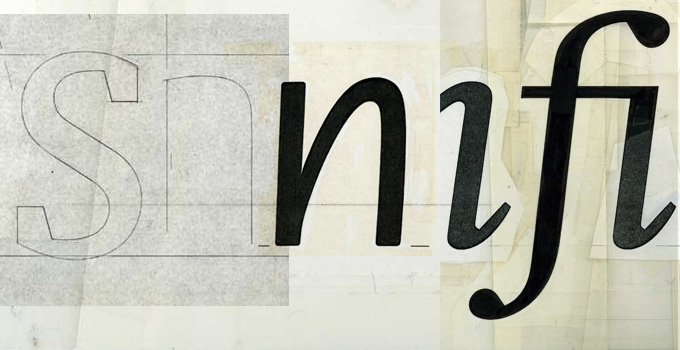
Simplicity with Sophistication — Typographer Gerard Unger talks about his work and the influence of Wim Crouwel with MyFonts:
What seemed amazing when I joined [Crouwel’s] company Total Design in 1967 was how simple it all seemed. When Wim explained how to design and do typography, you got the impression it had always been done like that and that it couldn’t be done any other way — maximum clarity. Later, I realized that this approach also had its limitations. When graphic designers had to select a typeface, they automatically specified Helvetica and stopped thinking. Wim’s own work was different: it seemed clear and simple, but was full of refinement, which comes naturally to him. That is probably why it is so attractive to younger generations: simplicity with sophistication. Yet I personally wouldn’t welcome a revival of Swiss typography — it was too formulaic. Also, I think design should be more of a social thing than that. For too long, graphic design has been about individualism and about fulfilling personal ambitions.
The Doctrine of Immaculate Rejection— A wonderful with E. B. White from the Paris Review 1969. It’s a great read, but it’s hard not to get the feeling it comes from a more genteel era that has long since disappeared (via Longform):
I revise a great deal. I know when something is right because bells begin ringing and lights flash. I’m not at all sure what the “necessary equipment” is for a writer—it seems to vary greatly with the individual. Some writers are equipped with extrasensory perception. Some have a good ear, like O’Hara. Some are equipped with humor—although not nearly as many as think they are. Some are equipped with a massive intellect, like Wilson. Some are prodigious. I do think the ability to evaluate one’s own stuff with reasonable accuracy is a helpful piece of equipment. I’ve known good writers who’ve had it, and I’ve known good writers who’ve not. I’ve known writers who were utterly convinced that anything at all, if it came from their pen, was the work of genius and as close to being right as anything can be.
And finally…
Type and Still Imagery — Writer-director Mike Mills, who began his career as a graphic designer, talks about his semi-autobiographical movie Beginners with AIGA:
Before I was a filmmaker I loved Godard as a graphic designer. He does the best design, to me. And a lot of my graphics being very, almost sort of didactic or presentational, or sort of centered and clean, to me really comes from how Godard uses type and still imagery in his films, in Tout va bien or One Plus One or Pierrot le Fou, so Godard’s been influencing me for a very long time. And the graffiti in the film is much more sort of May 1968, sort of Situationist graffiti rather than being like hip-hop graffiti.
There is also a book, Drawings From the Film Beginners, that accompanies the movie (thx @Henry)
Comments closed
Film critic Dave Kehr discusses the cinema of the 1970’s and his book When Movies Mattered: Reviews from a Transformative Decade with Colin Marshall for The Marketplace of Ideas podcast:
THE MARKET PLACE OF IDEAS: Dave Kehr When Movies Mattered mp3
2 Comments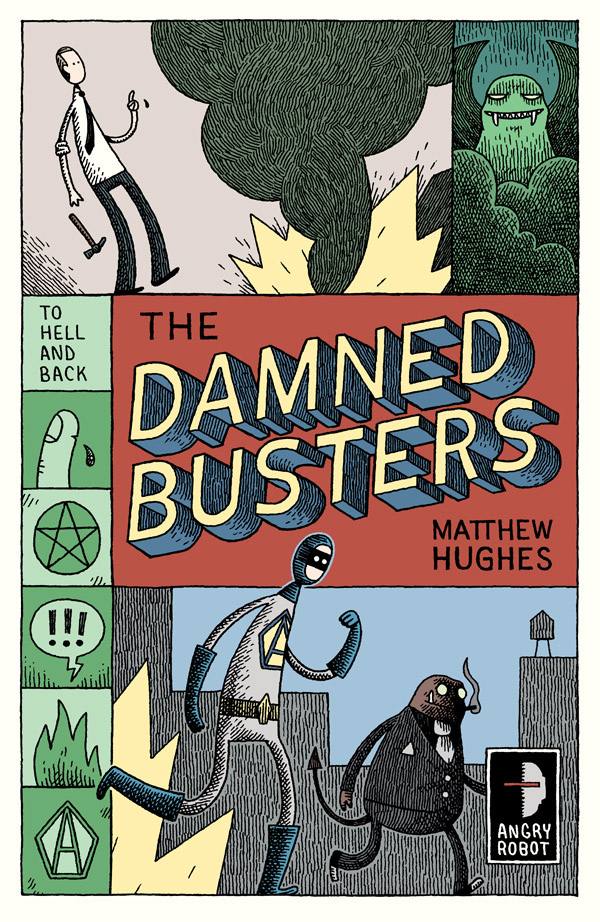 Cartoonist and illustrator Tom Gauld chats with the Angry Robot blog:
I find [robots] almost endlessly interesting. There is tragedy in their place between sentient beings and disposable products. And … they are much easier to draw than real people.
I’m hoping to interview Tom here as well sometime soon (just as soon as I think of something smart to ask him).
Hard Scenes — Actor, writer and director John Turturro talks about his work and one of my all time favourite films Miller’s Crossing at the A.V. Club (via Biblioklept):
Sometimes you think about movies, and you say, “Well, I want to try to do something that’s not exactly in a movie.” If you’ve ever been in a very dangerous situation, you know that people will do all kinds of things to keep themselves alive. It was very well-written, but you want to imagine what it’s really like to be in that kind of situation. It depends on what you’re willing to do, and in real life you would do a lot of different things. I tried to capture a little bit of that… to do something that was almost a little difficult to watch, because people aren’t trying to be heroic at those moments.
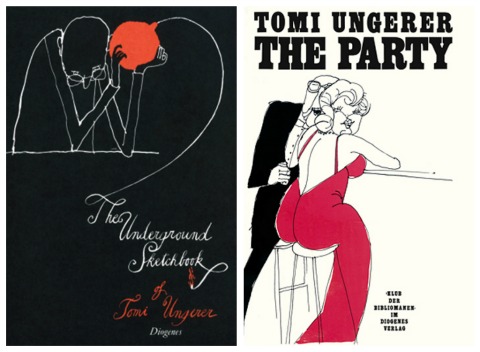
Curiosity and Collecting — Writer and illustrator Tom Ungerer in conversation with Julie Lasky at Design Observer:
One of the most important things for one’s own development is curiosity. Once you have curiosity, you just accumulate. My interests go from botany to mineralogy, geology, anatomy, history. Sometimes I’ve been bitten like bug. I buy one object and I’m so fascinated that I start collecting. And then when I finish collecting, and the collection doesn’t inspire, I give it away, like my toy collection of 6,000 pieces that I donated to my hometown museum for children.
Learning to Write — An interview with author Zadie Smith at The Literateur:
[O]ne of the things I look for in other people’s writing is the ability to confer freedom. That’s what I want to be able to do myself. I like a writer who doesn’t have to be in total control of how their readers react. More mystery, less explanation. All I can say is I’m working on it. But it’s so hard! I really feel I’m just at the base of a huge mountain called ‘learning how to write’. I’m still only 35. Learning to write is a task that takes up your whole life.
And finally…
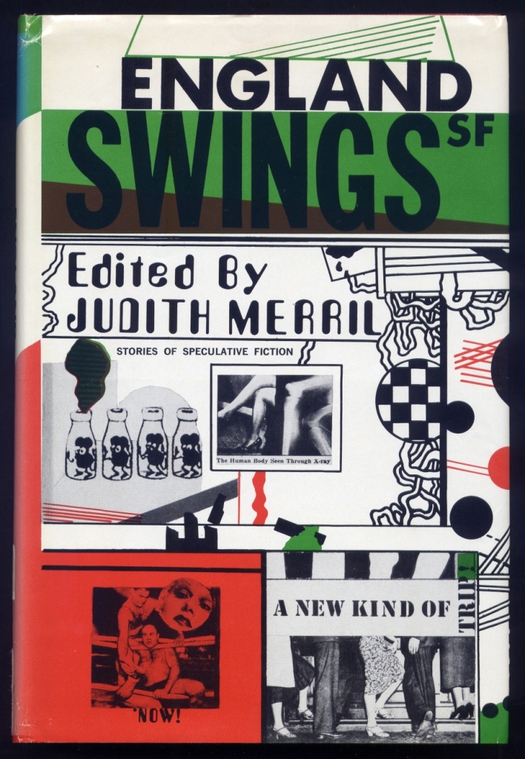
Rick Poynor on the unusual cover design for England Swings SF, published in 1968, also at Design Observer.
Comments closedOne last miscellaneous post before the weekend…
Filmmaker J.J. Abrams talks about his new movie Super 8 and, perhaps most interestingly, his storytelling process with Terry Gross for NPR’s Fresh Air:
In a movie like “The Graduate,” Ben and Elaine had their first real date and they’re, you know, sitting at a restaurant eating in his convertible car and people are being very loud and they put the top up. And they’re having this conversation and you can’t hear it, but you’re watching it. So you get to sort of, you know, fill in the blanks and I think there is a sort of – almost a reflexive reaction that we have to fill the blanks in when there’s something of some substance and pieces are missing. You sort of fill it in.
I think there’s something about the unseen and the unknown that has real value in moments. But I do think that, you know, you can’t apply a magic box approach to everything. And if you go to see a movie or if you watch a show, you better have something of substance that you’re building to. The whole thing in itself can’t be a magic box.
NPR FRESH AIR: J.J. Abrams: The ‘Super’ Career Of A Movie-Crazed Kid
The full transcript is here.
(via The Cultural Gutter)
1 CommentThe New York Times movie critic A. O. Scott on the aesthetics of failure in Bruce Robinson’s 1987 film Withnail & I:
Not only is the film largely autobiographical, it is apparently an adaptation of an unpublished novel Robinson wrote in 1969.
Comments closedI posted this on my other site, The Accidental Optimist, yesterday and it got a nice response so I thought I would post it here as well seeing as it’s a long weekend in Canada.
The video is a short animated filmography of Stanley Kubrick by French graphic designer Martin Woutisseth:
If you don’t know about it already, The Accidental Optimist is where I post things I find on the web — usually related to design, architecture, photography, and film — that don’t have a natural place here. You can follow a combined feed of both The Casual Optimist and The Accidental Optimist on Tumblr and Facebook.
Comments closed Canadian book designer Bill Douglas annotates one of his favourite covers for the newly launched Toronto weekly The Grid.
Tools of the Trade — Jonathon Green, author of the three volume Green’s Dictionary of Slang and the somewhat more compact and affordable Chambers Slang Dictionary, on the life of a lexicographer:
What I do is to sit alone in a room with a screen in front of me, a book more than likely to my left, held open by the weight of a discarded piece of chain, and within reach walls full of more books which are not just books but also tools and at the same time both extensions of and bastions for my existence. Some of them I have even made myself. With this screen and books and book-shaped tools I chase down words. And by placing these words in alphabetical order and by naming and defining and providing a word-based background for their existence and more words that illustrate examples of their use I create yet another book which is designated more than any other type to be a tool in its turn.
A Nostalgic Baseline — Harvard English Professor Leah Price, author of The Anthology and the Rise of the Novel and the forthcoming Unpacking My Library: Writers and Their Books, on books as objects:
“In thinking about new media, we measure what we do now against a nostalgic baseline. We compare the way we really do use digital media to the way we imagine we once used printed media, so that we take the reading of printed books to stand for all sorts of values we think we used to have, like sustained attention, linear thinking, noninstrumental appreciation,” Price said. “But if you just count how many pages came off of the printing press at any moment, never in any historical period have books, let alone literary works, been the majority of printed production.”
What Are You? — A wonderful essay by Alexander Chee, author of the novel Edinburgh, on comics, identity and American culture at The Morning News:
At the supermarket when people asked my white mom, “Whose little boy is this?” sometimes I would defiantly insist I was hers, sometimes say nothing, but I’d glare each time as if I had eyebeams that could vaporize them… No one else was like me, except my sister and brother… In the bathroom I sometimes imagined myself as I would have been with either a white face or an Asian one, looking into the hazel part of my eye and seeing the green extend across all the way, or watch it shrink back, covered by brown. The freckles would blanch away or extend until they met and my face turned darker.
It would have been easier to be a mutant, I decided. I sometimes told myself I was one, that it was the only explanation for the reason so many people asked me “What are you?”
The Ludovico Treatment — Steve Rose on Stanley Kubrick’s film adaptation of A Clockwork Orange, released 40 years ago, for The Guardian:
Beyond the UK, the movie has never been out of currency, particularly in the US, and particularly among the young. Its sci-fi stylings have aged remarkably well, and its almost abstract portrayal of out-of-control youth and paternalistic society have made it something of a teenage rite of passage, the movie equivalent of The Catcher in the Rye. Remarkably, it has been a style guide for pretty much every subsequent musical genre… On the big screen, meanwhile, every time you see a gang walking along in slow-motion, a speeded-up party scene, a slow pan out from a closeup of a face, a torture scene set to cheerful music, the chances are it was plundered from Kubrick’s original.
There Are Enough Chairs — A short interview with designer Dieter Rams in the New York Times:
Most of the things are done already — you can’t make it better. Look at chairs: there are enough chairs. There are bad chairs, some good ones, mostly bad ones. But there are, even with a chair, possibilities to make it more comfortable or, from the economic point, you can make it cheaper, save some material or you can try new materials.
And finally…
Because it’s Friday, and because I can, The Velvet Underground Oh! Sweet Nuthin’:
You can thank me later.
Comments closed