Skip to content

Tag: film

Something for the Weekend

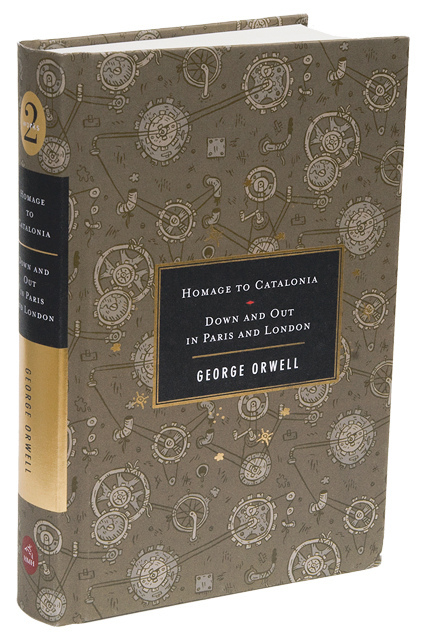
Defending the Unusual — Designer Allison Saltzman, art director at Ecco,  interviewed at Caustic Cover Critic:

Everywhere else I’ve worked, the books’ content still informs the cover design, but the overall aesthetic is subject to the publisher’s (and their art director’s) taste. I think the trick to happiness, in this business, is to find yourself a publisher or an art director whose taste you’re comfortable with. And you also need them to trust your instincts as a designer. I am so content at Ecco because the publisher and editors tell me about their books and the audience they’re aimed at, but then they just want me to read them and come up with cover ideas myself. Another good thing about Ecco is that the publisher wants and defends interesting and unusual covers; that’s rare.

Burying the Book — Laura Miller interviews legendary editor and writer Robert Gottlieb for Salon:

[S]ince I’ve been in publishing since the mid-’50s, I’ve lived through all the moments when doom was cried, going right back to “the medium is the message.” The book was dead — I can’t tell you how many times we’ve buried the book in my lifetime. The fact is that we haven’t buried the book, and however all this works out, we’re still not going to be burying the book. People are still going to be reading books, and whether they’re going to be reading them on a Kindle or as a regular physical hardcover book or a paperback or on their phones or listening to audiobooks, what’s the difference? A writer is still sending his or her work to you, and you’re absorbing it, and that’s reading.

Seeing the Pain — Mark Medley talks to Michael Pietsch, editor of the late David Foster Wallace, about constructing the recently released The Pale King:

“This project has been kind of all-consuming,” says Pietsch, whose only other experience editing a posthumous work came in 1985, when he worked on Ernest Hemingway’s bullfighting memoir The Dangerous Summer.

There was no outline, no list of chapters, no clues as to where Wallace planned to take the narrative. The chapters were not in sequence. The names of characters constantly changed. Pietsch thought he’d discovered the novel’s first chapter — the one which begins “Author here” — until he found a footnote explaining precisely why it wasn’t the first chapter. He laughs: “I thought, ‘Oh, I don’t even have a starting point!’ ” Still, the process “was sometimes exhilarating, delightful and joyful because I felt in his presence. And at other times heartbreaking because I saw how hard it was for him. You can’t read this book without seeing pain.”

The War of Independents — Andrew Keen, author of The Cult of the Amateur, on how online piracy is damaging independent filmmakers more than Hollywood:

One of the Internet’s greatest fallacies, its fishiest tale, is the idea of the “Long Tail.” Popularized by Wired magazine editor-in-chief Chris Anderson, first in a 2004 magazine article and then in the bestselling 2006 book, The Long Tail: Why the Future of Business Is Selling Less of More, it argues that the Internet is an ideal distribution platform for independent filmmakers, musicians, and writers struggling to compete against the financial might of mass media conglomerates… But Anderson’s argument has a fatal flaw. He forgets about Internet theft — the online cesspool of illegal peer-to-peer networks and illegal streaming services that has already decimated the music business and is now doing potentially irreparable damage to the motion picture industry. And in the face of piracy, I’m afraid, the belief that all the value in the Internet economy can be located in its tail is, literally, turned on its head. Rather than a long tail, Internet theft’s mass looting of the content industry is transforming the Internet into a fat-headed economy with everything on top — an increasingly unequal medium which discriminates against independent filmmakers and makes it harder, rather than easier, for them to make a living from today’s digital economy.

Before people yell at me, I’m sure that there are counter-arguments to Keen. Constructive ones are welcome in the comments (just leave ad hominem stuff at home).

And finally…

RUR — NPR discusses the origin on the word ‘robot’:

It was the brainchild of a wonderful Czech playwright, novelist and journalist named Karel Capek. He lived from 1880 to 1938. And he introduced it in 1920 in his hit play “RUR,” or “Rossum’s Universal Robots.”… [It] comes from an Old Church Slavonic word, rabota, which means servitude of forced labor. The word also has cognates in German, Russian, Polish and Czech. And it’s really a product of Central European system of serfdom, where a tenants’ rent was paid for in forced labor or service.

And he was writing this play about a company, Rossum’s Universal Robots, that was actually using biotechnology. They were mass-producing workers using the latest biology, chemistry and physiology to produce workers who lack nothing but a soul. They couldn’t love. They couldn’t have feelings. But they could do all the works that humans preferred not to do. And, of course, the company was soon inundated with our orders.

Well, when Capek named these creatures, he first came up with a Latin word labori, for labor. But he worried that it sounded a little bit too bookish, and at the suggestion of his brother, Josef, Capek ultimately opted for roboti, or in English, robots.


2 Comments

The French Connection | Critics’ Pick

The New York Times movie critic A. O. Scott looks at the enduring appeal of The French Connection:

William Friedkin’s 1971 film was a fictionalized adaptation of the nonfiction book The French Connection: A True Account of Cops, Narcotics, and International Conspiracy by Robin Moore, first published in 1969.

Comments closed

Little Scraps of Paper

Little Scraps of Paper is a lovely series of short documentary films about how creative people use notebooks to record their thoughts and develop their ideas. The series was created last year by director Tomas Leach, assisted by Nicolas Cambier and Daniel Diego Lincoln.

In this film, Norwegian product designer Oscar Narud talks about his process:

(Thanks Kate!)

Comments closed

Akira Revisited

New York Times movie critic A. O. Scott discusses Katsuhiro Otomo’s 1988 anime classic Akira and Japan’s pop culture obsession with apocalyptic disaster:

The film was based on Otomo’s original six-volume, 2182-page epic, which is thought to be one of the first works of manga to be translated into English in its entirety.

Comments closed

A Brief History of Title Design

Ian Albinson of the excellent The Art of the Title Sequence put together this short collection of film titles for the SXSW “Excellence in Title Design” competition screening:

(via Coudal)

Comments closed

Hitchcock and the History of Movie Trailers

If you are still stewing over last night’s lacklustre Oscars (or even if your not), take a listen to Terry O’Reilly’s entertaining history of movie trailers for The Age of Persuasion. He kicks it off with this genius trailer for Alfred Hitchcock’s The Birds:

And, for it’s worth, movie trailers were originally created to get people OUT of theatres, not into them. Brilliant.

Listen to The Age of Persuasion podcast:

CBC RADIO: AOP GOES TO THE MOVIES

Comments closed

Midweek Miscellany

The reluctant Daniel Clowes has a website. What the hell?

The Day The Movies Died — Mark Harris, author of the fantastic Pictures at the Revolution, on Hollywood blockbusters and the death of the great American movie. A really good read:

Which brings us to the embarrassing part. Blaming the studios for everything lets another culprit off too easily: us. We can complain until we’re hoarse that Hollywood abandoned us by ceasing to make the kinds of movies we want to see, but it’s just as true that we abandoned Hollywood. Studios make movies for people who go to the movies, and the fact is, we don’t go anymore—and by we, I mean the complaining class, of which, if you’ve read this far, you are absolutely a member. We stay home, and we do it for countless reasons… The urgency of seeing movies the way they’re presumably intended to be seen has given way to the primacy of privacy and the security of knowing that there’s really almost no risk of missing a movie you want to see and never having another opportunity to see it. Put simply, we’d rather stay home, and movies are made for people who’d rather go out.

You Can’t Learn Taste — A profile of Richard Russell, boss of London-based independent record label XL Recordings,  in The Guardian:

This, after all, is a label that is thriving in an industry that is supposed to be dying.

“It’s not dying . . . it’s changing,” says Russell. “But then it always has been, as is the whole world. I just don’t think about the future at all. It’s not my responsibility.”

Really? He doesn’t have a strategy?

“Yeah – put good records out. That’s it. I’m sure there are people thinking about stuff like copyright and downloading, but . . . you don’t want an author to be thinking about Kindles and shit like that, do you? I mean, we do our best, but we definitely don’t offer any solutions for the music industry.”

And there’s the problem. You can’t learn taste.

Also in The Guardian, Barry Miles, author of London Calling: A Countercultural History of London Since 1945, chooses his top 10 books about London’s counterculture.

And finally…

Alan Arkin’s video for his new book, An Improvised Life, published next month by Da Capo:

Nice.

(via Jacket Copy)

Comments closed

Something for the Weekend

Steven Heller, editor of I Heart Design and author/editor of countless other books about design, at 10 Answers.

And Steven Heller is one of the designers featured in BBC Radio documentary I Heart Milton Glaser about the iconic I (Heart) NY logo and the designer who created it (go listen now because it’s only available for a few more days).

Print and the City –a fascinating look at whether movable type printing presses were the drivers of economic growth in cities by Jeremiah Dittmar (via The Browser):

[C]ities in which printing presses were established 1450-1500 had no prior growth advantage, but subsequently grew far faster than similar cities without printing presses… Cities that adopted print media benefitted from positive spillovers in human capital accumulation and technological change broadly defined. These spillovers exerted an upward pressure on the returns to labour, made cities culturally dynamic, and attracted migrants.

In the pre-industrial era, commerce was a more important source of urban wealth and income than tradable industrial production. Print media played a key role in the development of skills that were valuable to merchants. Following the invention printing, European presses produced a stream of math textbooks used by students preparing for careers in business.

The Savage Marketplace — A really interesting and thoughtful survey of the current state of book editing in the UK by Alex Clark , with contributions from Diana Athill, Blake Morrison, Jeannette Winterson and others, for The Guardian:

[W]hat saps the spirit are the manuscripts that leave you with the question: why did no one sit down with the writer and point out where this isn’t working? Why didn’t a red pen mark the hackneyed phrase, or the stock character, or the creaky dialogue? And, sometimes, why didn’t someone deliver the unfortunate verdict: this simply isn’t ready yet, and may never be?

And finally, if you’re in London… Kemistry Gallery have an exhibition of film posters by Saul Bass from the BFI archive, February 17th to March 17th:

SOME GOOD NEWS FROM THE WORLD OF BOOKS.

Comments closed

Midweek Miscellany

A shiny new (and somewhat unsettling) cover for Joyland’s next e-book, How I Came to Haunt My Parents by Natalee Caple, designed by the shiny (and somewhat unsettling) David A Gee.

Holden Caulfield’s Goddam WarVanity Fair excerpts J. D. Salinger: A Life by Kenneth Slawenski:

Tuesday, June 6, 1944, was the turning point of J. D. Salinger’s life. It is difficult to overstate the impact of D-day and the 11 months of combat that followed. The war, its horrors and lessons, would brand itself upon every aspect of Salinger’s personality and reverberate through his work. As a young writer before entering the army, Salinger had had stories published in various magazines, including Collier’s and Story, and he had begun to conjure members of the Caulfield family, including the famous Holden. On D-day he had six unpublished Caulfield stories in his possession, stories that would form the spine of The Catcher in the Rye. The experience of war gave his writing a depth and maturity it had lacked; the legacy of that experience is present even in work that is not about war at all. In later life, Salinger frequently mentioned Normandy, but he never spoke of the details—“as if,” his daughter later recalled, “I understood the implications, the unspoken.”

An excerpt from Jason Epstein’s review Merchants of Culture: The Publishing Business in the Twenty-First Century by John B. Thompson for the latest NYRB:

Digital enthusiasts should… consider that as the embrace of other electronic media has widened, the average quality of their product has declined: from Masterpiece Theatre to Jersey Shore, from Franklin Roosevelt and Adlai Stevenson to Sarah Palin, from Julia Child to Rachael Ray. My own guess is that the digital future in which anyone can become a published writer will separate along the usual two paths, a narrow path toward more multilingual variety, specificity, and higher average quality and a broader path downward toward greater banality and incoherence, while the collective wisdom of the species, the infallible critic, will continue to preserve what is essential and over time discard the rest.

(The full review requires a subscription)

Best Online Comics Criticism 2010 chosen by contributors to The Comics Journal. And from that list, film scholar David Bordwell on Tintin (via Robot6):

Most commentators on Hergé mention that he was a film fan and drew many situations from movies of the 1920s and 1930s. Like Hollywood studio cinema, his tales put striking technique in the service of fluent storytelling. Pause to study the narrative and you’ll find a surprising richness to the imagery; start by looking at the pictures as pictures, and you’ll see how composition, color, and detail smoothly advance the action. Hergé was well aware that his polished imagery could stand scrutiny in its own right, but he saw it as serving a larger narrative dynamic.

(Out of curiosity, does anyone compile annual list of the best online literary criticism?)

Montaigne and Monkeys — Saul Frampton, author of the ridiculously titled  When I Am Playing With My Cat, How Do I Know She Is Not Playing With Me?: Montaigne and Being in Touch With Life, on 16th Century French philosopher Michel-de-Montaigne and neuroscience in The Guardian:

For Montaigne, as for contemporary neuroscientists, humans… have an inbuilt imitative, sympathetic capacity. Moreover, he does not see it as species-dependent… In one of his most famous aphorisms he asks: “When I am playing with my cat, how do I know she is not playing with me?” And he tells how animals themselves form “a certain acquaintance with one another” and greet each other “with joy and demonstrations of goodwill”. Then, in a lengthy comment added to the final edition of his essays, he completes the circle from animal-to-human to human-to-human again, concluding that we cannot help but communicate ourselves in some way… even if it is something to which we are habitually blind…

And finally  (in the unlikely case anyone missed it)…

Caustic Cover Critic interviews Christopher King, the new Art Director at Melville House Publishing.

1 Comment

True Grit

Filmmakers Joel and Ethan Coen recently discussed their movie adaptation of Charles Portis’ novel True Grit with Terry Gross on NPR’s Fresh Air:

Most of the dialogue is taken from the book, direct from the book. And in places where it wasn’t, where we were kind of, where we were aping the language of the book because the scenes didn’t derive from the original book, it wasn’t a question of learning to – you know, it wasn’t a foreign language. It is a strikingly different use of the English language, but it was more a question of kind of aping the tone, as opposed to anything more of an exercise than that… [We] didn’t go back to the Bible, although clearly in the book, the character is steeped in the Bible. Actually, all the characters, you kind of assume that part of their speech derives from either having learned to read from the Bible or, in that probably a lot of them are illiterate, just having heard a lot of Scripture.

Meanwhile, Jeff Bridges, the dude who plays US Marshall Reuben “Rooster” Cogburn in the Coen brothers’ film, is the subject of a new PBS American Masters documentary:

[UPDATE: The full PBS documentary can be seen here]

And, if you haven’t seen the movie yet, here’s the trailer:

Comments closed

Midweek Miscellany

Pattern covers by Ray Fenwick for Houghton Mifflin Harcourt (thx Sio).

A look inside Graphic: Inside the Sketchbooks of the World’s Great Graphic Designers by Steven Heller and Lita Talarico at Fast Company.

Link Drop — A nice list of design blogs to sink your teeth into compiled by David Airey, author of Logo Design Love.

Photographs from Kevin Cumminsbook about Joy Division at Flavorwire.

Show Me The Money — Kevin Kelly, author of What Technology Wants and co-founder of Wired, talks to PW:

For readers, this is the best time in history. There’s never been more selection, more media types, or quality books. There’s never been more backlist books available. This is a high point for readers. For publishers, though, it is a low point, as their businesses are in transition. But I’m very optimistic, because in my research, money follows attention. Wherever attention flows, money follows.

And finally…

Telling Stories About Superweapons — In an awesome  (if slightly sprawling clearly-has-too-much-time-on-his-hands-and-might-be-bonkers) post, Christian Thorne, associate professor of English at Williams College, discusses Godzilla, Iron Man II and weapons of mass destruction (via Coudal):

Tony Stark is the Japanese scientist of the American Empire, the inventor who will not share his invention, the engineer who withholds the newest technology of death so that only he can command it: “You can’t have the suit. … I’m not giving you the suit. … You’re not getting the suit.” What the new movie shares with Godzilla is the notion that the perfect and ethical weapon would have to be entirely singular—there would literally only be one of them—and so would not be available for manufacture: a permanent prototype, forever in beta. By investing the killer armor with artisanal qualities, as though ICBMs could be blacksmithed, they suggest that the weapon’s uniqueness could be maintained into the future, since it is the hallmark of any handcrafted object that it is in some strict sense unrepeatable. That’s a fantasy, yes, but it’s an unsettled one; unease is simply built into its scenario. The conceit of an unshareable weapon comes with a worry automatically attached, which is simply that one will become two. Arms proliferate, and then so do anxieties, in their wake.

3 Comments

Grand Openings: Fight Club

In a 5 part series of video essays for Moving Image Source called ‘Grand Openings’, critics Aaron Aradillas and Matt Zoller Seitz analyze the credit sequences of David Fincher’s films.

Part 3 in the series looks at Fincher’s adaptation of Chuck Palahniuks Fight Club:

(vis @mdash)

Comments closed