Skip to content

Tag: E-books

Something for the Weekend, March 20th, 2009

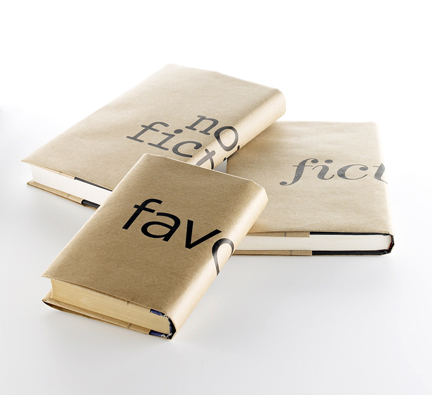
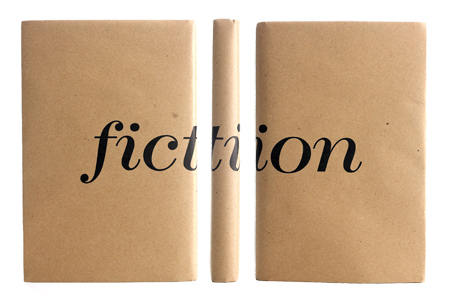
Book City Jackets— Printed at a small press in downtown New York, these lovely “updated versions of the classic paperbag bookcover” are made from recycled paper and sized to fit almost any book (pictured above). And they have a blog!  (via swissmiss & Design*Sponge).

Near Heretical — The inimitable Mike Shatkin on the story of DRM.

Don’t kill me, Robert BringhurstNic Boshart, BookNet Canada intern and coordinating editor at Invisible Publishing, offers another nice round-up of lessons for small presses from the BookNet Tech Forum.

Wish you were hereSeen Reading‘s collaborative Google map of independent bookstores.

That elusive viral componentWired on Random House, Simon & Schuster, Workman Publishing Co., Berrett-Koehler, Thomas Nelson, and Manning Publications making e-books and excerpts available on Scribd:

For book publishers, Scribd is not the only platform they are utilizing with the rising e-book hype, but the viral components are limited elsewhere… Along with navigation features like search and zoom, the books can be download (as a .pdf) and viewed on compatible e-book readers or shared across numerous social networks including Digg, Facebook and Twitter.

“The YouTube for print”PW has more on Scribd.

Sony e-book reader gets 500,000 books from Google, but Sara Nelson doesn’t think it will be enough in the LA Times:

Sony seems, instead, to be hitting hard on the theme that it’s giving options to publishers, who have not been shy about their complicated feelings toward Amazon and the power it wields.

Making public domain books more available is all to the good. But at the moment, Sony’s move appears to be too little, too late.

2 Comments

Monday Miscellany, March 16th, 2009

Beyond Miffy —  Caustic Cover Critic on Dutch illustrator and graphic designer Dick Bruna, best known for Miffy, but who also designed some very cool book covers for crime novels (picture above).

Cautiously Hopeful — Literary agent Nathan Bransford, who has been talking about remaining positive in the face of negativity on his own blog recently,  interviewed by Alan Rinzler on The Book Deal blog:

The role of publishers especially is going to change dramatically as there will be tremendous downward pressure on prices and publishers increasingly retrench behind “known” commodities and bestsellers.

Publishers will live and die by their big bets if they aren’t cultivating any small bets that have the potential of panning out in a big way.

6 Projects That Could Change Publishing for the Better — Michael Tamblyn’s  presentation from the BNC Tech Forum is available online.

Open Baskerville — An open source project to create a digital version of Fry’s Baskerville,  originally created by  Isaac Moore a punchcutter at the typefoundry of Joseph Fry in the 18th Century (via Eightface):

With the written word an absolute fundamental component of daily communication, typography and fonts have are vital to providing aesthetic harmony and legibility to our textual works. There are thousands of fonts available, of which only a small number are useful or any good for setting vast quantities of text, and of which an even smaller number are available to be freely distributed and shared. This project aims to help close that hole, beginning with a Baskerville revival.

Optic Nerve — the fabulous Adrian Tomine interviewed at the Creative Review (illustration above).

Why Kindle On The iPhone Matters — Michael Gaudet on the iPhone Kindle app at E-Reads:

What Amazon is finally acknowledging is that E-Books are a multi-device service and that Kindle is not just a device but an E-Book platform. E-Books may be commodities, but reading is a user habit that has always required a distribution service that anticipates the creative ways readers are looking to acquire new content.

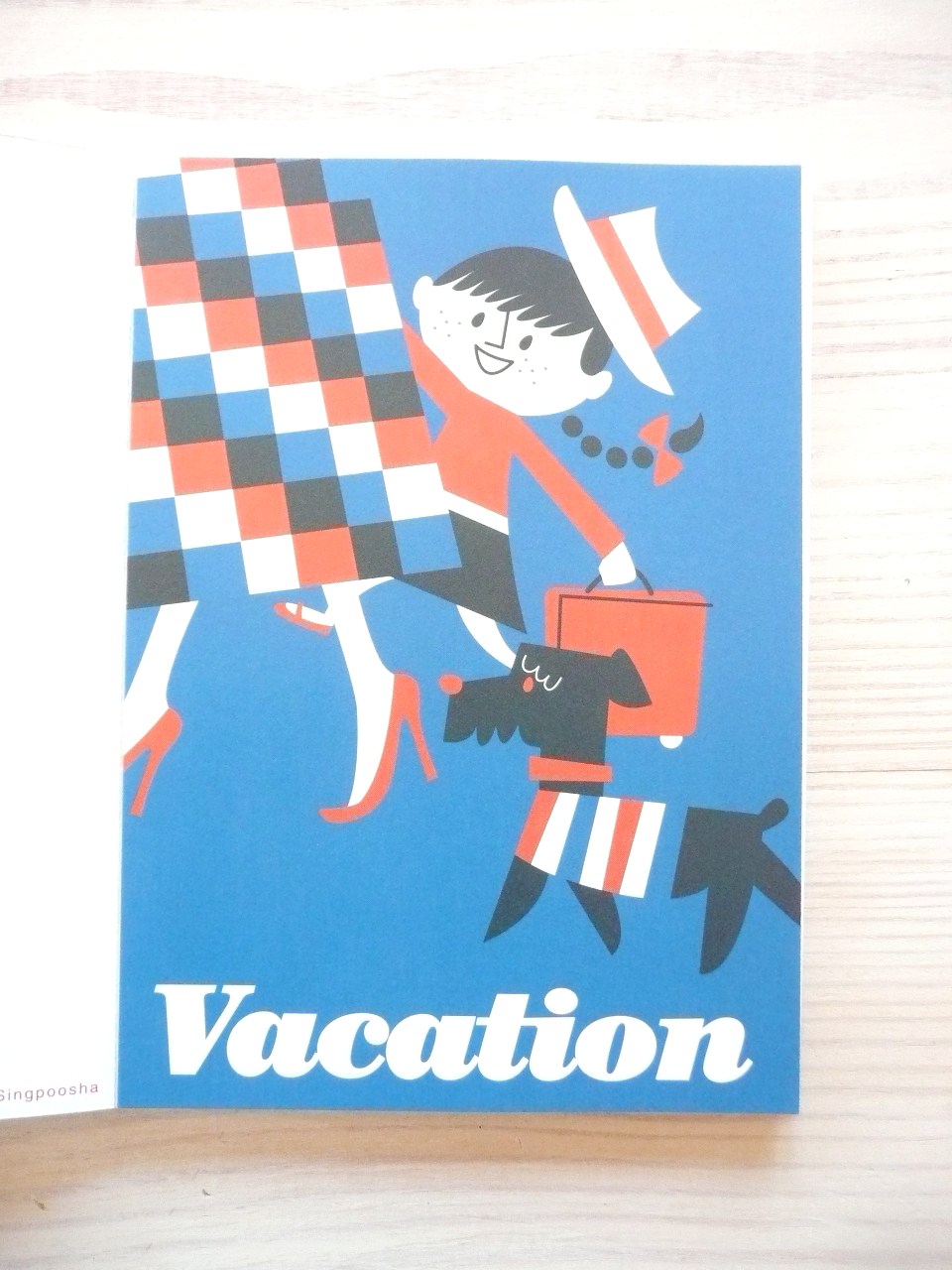
Books and Stuff — Illustrator and designer Amy Cartwright, who blogs about vintage kids books and modern design at Stickers and Stuff, shares some wonderful pictures of her favorite books and “the stories behind some of her finds” at the always awesome Grain Edit (including the Cosy Tomato Post Card Book pictured above).

Comments closed

BookNet Tech Forum

Yesterday I was at Book Net Canada’s Technology Forum at the Radisson Hotel on Queens Quay West in Toronto.

The theme of the event was Evolution or Revolution: “How does the publishing community best prepare for the next generation of reading (and readers)?”

With a wide-range of speakers from publishing and beyond, there were lots of ideas zipping around.

For basic details, the day’s schedule,  brief summaries, and slide-show presentations are available from the BNC website, and  immediate, off-the-cuff comments (including my own not terribly clever insights) can be found on Twitter with the tag #bnc09.

The Quillblog has just posted a scholarly summary of the day, but here are some of my slightly random notes on the good, the indifferent, and the ugly of Tech Forum 24 hours later…

The Good

BookNet. Along side SalesData and the forthcoming BiblioShare (which will facilitate access to bibliographic data),  Tech Forum demonstrated that BookNet is fast becoming the honest broker for publisher collaboration in Canada.  Whilst dropping heavy hints about future BNC projects (notably electronic cataloging) CEO Michael Tamblyn delivered a genuinely brilliant presentation, and slipped in the line of the day:

Plastic Logic is like Jesus: It’ll save the world, but only 12 people have seen it, and no one knows when it is coming.”

(With quips like that I can almost forgive him for: “What do you want your revolution to be?” Er… Something that doesn’t involve vacuous bullshit hyperbole?*)

Harlequin Enterprises. Discussing the evolution of their ebook program, it was hard not to be impressed with Harlequin’s willingness to experiment in  a potentially conservative market.  I’m yet to be convinced that everything they do could be done as effectively by a general trade publisher, but Harlequin’s initiatives  demonstrate  that publishers should innovate and innovate often. And involving authors and readers will only improve that process.

Neelan Choksi, COO of Lexcycle who managed to talk about technology without condescending to his audience or hard selling Stanza. He also dealt with  speed-presenting  the app’s new features as the video demo malfunctioned behind him with self-deprecating good humour.

Hugh McGuire (LibriVox, BookOven) shaking off scurilous internet rumours that he is the angry man of publishing, and talking about love. A lot. Hugh’s advice: Focus on readers and enable book lovers to talk about your books. Do not underestimate the power of passionate people!

And, it should also be said, Tech Forum was  a great opportunity to meet new people in the industry and catch up with familiar faces.

The Indifferent:

Too little discussion of quality and how to make better books; too much blather about marketing and window-dressing.

Asking a room full of Canadians “how many of you have Kindles?” is an easy mistake for an American to make, but it was indicative. The US and Canada are very similar — in lots and lots of ways — but there was very little recognition that there are also very real differences between the markets. The absence of any Canadian sales figures and stats (or even cultural references) made several presentations markedly less compelling.

Assuming that your specific experience can be generalized; the current model is valueless and irreparably broken (even though it provides the vast majority of our business and fuels yours);  that publishers are fiddling while Rome burns; you know something (anything) about the music industry and can make a convincing argument with sloppy comparisons;  all content is of equal value; social media will save the world; the screen is inherently better than print; DRM is the biggest thing we have to worry about…etc. etc.  =  big *meh*. Platitudinous  digital orthodoxy is . not. interesting.

The surprisingly low number of people online at the forum. Mark Birtels’ unofficial count had a dozen laptops in use in the room of around 200 people (all Apples except mine!), which is pretty close to the number of  people who live-tweeted the event… It’s hard to convince people we know our arse from our technological elbow with those kind of numbers…

The Ugly

The really good news is that there was surprising little to complain about. BNC Marketing Manager Morgan Cowie and the rest of the BNC staff did a great job of corralling everyone and ran a great event. BUT, just for the record,  if there’s one thing worse than PowerPoint presentations, it’s BAD PowerPoint presentations: Never. Use. Comic. Sans. In. Anything. Ever.


And if you were at Tech Forum yesterday, I would love to know what you thought about it. Send me an email send at danielwagstaff [at] gmail.com, DM me on Twitter, or leave a comment below…

*As its overall glibness atests, this post was written in haste  to be timely, ‘hyperbole’ better fits my intended meaning better than ‘bullshit’.
3 Comments

Something for the Weekend, March 6th, 2009

Abecediary — Steven Heller on alphabet books (Die Flucht Nach ABECEDERIA by the French comic artist Blexbolex pictured above).

Imprints in the 21st Century — Admittedly HarperCollins new Imprint It Books is an easy target (NB use of “tap into the zeitgeist” in a sentence = fail), but Mike Shatzkin does a good job of explaining why their strategy is past its sell by date (and beginning to smell):

General trade publishers need to see, and apparently don’t,  that their legacy brands are B2B [business-to-business]. They should be exploited that way. They need brands that can work B2C [business-to-consumer], but it will require discipline, focus, and an audience-first picture of what to publish to accomplish that.

Writing for a Living — Luminaries such as Will Self, Joyce Carol Oates, and AL Kennedy (quoted below) discuss whether writing is a joy or a chore in The Guardian:

“The joy of writing for a living is that you get to do it all the time. The misery is that you have to, whether you’re in the mood or not.”

Hugh at BookOven is angry this week.  He wants to know why publishers are not selling directly to customers from their website and why they make e-books so complicated. I think Hugh underestimates the time/money/skill-deficit obstacles publishers face in regard to both problems. I suspect Hugh thinks I’m an apologist and will be first up against the wall when the revolution comes.


Book Design Made Easy — cartoonist Tom Gauld is making his genius cartoons from The Guardian available on Flickr (via Drawn!, source of so many life-improving things).

4 Comments

Monday Miscellany, March 2nd, 2009

Apologies for a delayed entry in the Monday Miscellany category, but here we go (better late than never)…

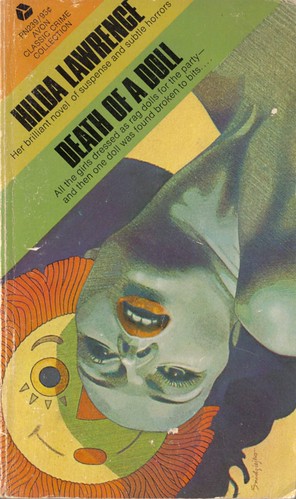
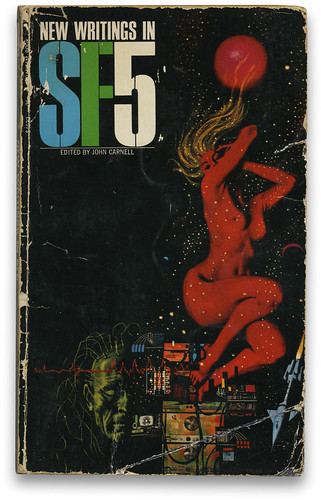
Eric Carl‘s Flickr photostream has some nice classic sci-fi and fantasy book covers (the rather fine looking Death of a Doll and New Writings in SF 5 pictured above). (via but does it float)

Re-envisioning the American small press — Fiona McCrae, director and publisher of Minneapolis independent Graywolf Press, profiled in PW (via @sarahw):

McCrae believes the publishing business is changing in favor of smaller presses, which can have close contact with their audiences and realistically support the smaller sales that typify many literary books: “I think that’s been true for a long time, and it’s just getting truer and truer and truer. There’s still obviously a layer in which we don’t compete, and it’s not our job to”

Rearrange, Rewrite, Redefine and ReimagineChicago-based indie Featherproof Books would like you to “remix” parts of their forthcoming titles, starting with Tour of the Drowned Neighborhood a short story taken from Blake Butler’s Scorch Atlas (via @R_Nash).

Overdue! The Central Library in Atlanta, the last building by “Modernist master” Marcel Breuer, is under threat according to Jonathan Lerner in Metropolis Magazine (pictured above).

A fair share — In the final installment of a 3-part series for the Globe and Mail on the publishing industry in Canada, James Adams looks at the thorny issue of digital rights.

Wild Hair, Wilder Ideas —  The Guardian profiles Alan Moore (and — on a related note — novelist Lydia Millet’s somewhat ill-considered assessment of Watchmen for the WSJ)

From Caveman to Spray Can: A Graphic Journey — Mike Dempsey’s gently meandering history of graphic design which not only features one or two books, but also the lovely Gill Sans typeface (picture above) which was used on the early Penguin paperbacks (via Noisy Decent Graphics).

Comments closed

Midweek Miscellany, February 4th, 2009

Slow Burner (above) — a rather awesome — if slightly racy — cover seen at the Bookkake Blog.

How to Publish in a Recession Part 3 — The always interesting Richard Nash, the editorial director of Soft Skull Press and the executive editor of Counterpoint, talks to Scott Esposito at Conversational Reading.

The Once and Future e-book: On Reading in the Digital Age — A fascinating article on the past, present, and future of e-books and e-book readers by John Siracusa at Ars Technica.  I think — like many —  he underestimates the challenges (such as rights issues and, on a really basic level, a lack of expertise and human resources) publishers face making their titles available as e-books, but this really is a must-read.

Book Expo Canada is officially dead. It is an ex-trade show– Surprising precisely no one. The Globe and Mail has publisher reactions and a postmortem interview with Tom Best, vice president, marketing, at H.B. Fenn. What troubles me is the belief that we need something to replace it…

There’s so much written about how publishers don’t know what they’re doing… But how do you know what to do?”The New York Observer talks to former PW editor Sara Nelson:

You’re making a bet on who’s gonna like something a year and a half from now. That’s without even getting into the economy or anything—just, ‘What’s the mood of a number of people going to be a year and a half from now?’ If you thought too much about that, you’d shoot yourself.”

“We are on the verge of an explosion in independent book publishing” — Hugh McGuire of Librivox and The Book Oven chats to Allentrepreneur.

The Google Paradox — Andrew Keen, author of The Cult of the Amateur, on two new books published (in the conventional way) about Google:

“the more Google does to kill the traditional publishing industry with the free online content from its search engine, the more books will get written about the central role of Google in our new digital economy… The irony of Elsewhere USA and What Would Google Do? is that both books rely on the five hundred year-old technology of Johannes Gutenberg’s moveable type to explain the wrenching digital transformation of the 21st century.”

Who is on twitter? — I think I fall into the cateogory of “people who are concerned about the collapse of the publishing industry.” (Thanks Sio!)

Comments closed

The e-book Revolution Favours the Agile (But Deep Pockets Help)

The publishing industry is finally turning toward “mass digitization”, Matthew Shaer reports in The Christian Science Monitor .

But “it’s not the bigger houses, such as Macmillan or HarperCollins, that are moving the fastest” he says. It is agile independent presses — who can make decisions quickly  and are “more open-minded when it comes to distribution and marketing” — that are “making the most extensive restructuring efforts” according to Schaer.

Independent presses are undoubtedly innovating — necessity is the mother of invention after all — and I would really love to believe that they can steal a march on the big publishers in the “e-book revolution”. Unfortunately I just don’t think it’s true. Or, at least, that simple.

Even if you ignore the Schaer’s assertion that the “typical” independent press can make quick decisions “without much internal friction” (in theory yes, in practice I’m not so sure), the ability to adapt is not just about a “fast and light ethos”, it is also about resources. It actually takes a great deal of time and expertise — often in short supply at small presses — to put a digital program in place. And although the cost of creating, marketing, and selling e-books may be low once the infrastructure is there, getting to that point requires a lot investment.

Soft Skull’s ambitious aim to have its entire list available digitally by the end of the year is a huge step for an independent publisher. But the two publishers Schaer specifically identifies as being behind the times are, in fact, already on this track. In November last year, Pan Macmillan made books available for the Stanza e-book reader for iPhones, and they currently offer a large, large number of downloads in different formats from their  web site, as do  HarperCollins .

In fact, ALL of the other major publishers — Random House, Penguin, and Simon & Schuster — offer e-books to download from their web sites in the US. Not that you would know from Schaer’s article.

And HarperCollins has been trailblazing with creative online initiatives in the past year. They set up Authonomy, a community site for writers, and are launching BookArmy, which Victoria Barnsley, chief executive of HarperCollins UK, describes as a “social networking site organised around books and authors.” . They’ve collaborated with if:book London and Apt to create an online, annotated version of Doris Lessing’s The Golden Notebook , and in December they released a charming online video, This Is Where We Live, to celebrate the 25th anniversary of their 4th Estate imprint, that quickly went viral.

In April 2008, HarperCollins also acquired The Friday Project — originally set up to find  web based material and turn it into books — as an “incubator for fostering new talent, and finding new markets.”

And let us not forget HarperStudio who may not be offering e-books yet, but have firmly established themselves on online.

Penguin have not been idle either. In December, Penguin US launched Penguin 2.0 to boost their web presence with an iPhone app and other downloads. Penguin in the UK — who sponsored in the recent BookCamp on technology and the future of the book — not only offer over 1,000 e-books on their website, they have an online dating service (no, really), and have created SpineBreakers, a web site with teenage contributors. And there is, of course, the ever-popular Penguin Blog.

The same day as Penguin 2.0 was announced, PW also reported that Random House would be partnering with Stanza and making select titles available for iPhones, and in January, Simon & Schuster relaunched their website with all the whistles-and-bells — such as blogs and author videos (outlined by PW here) — that one would expect from a publisher who knows their audience is online.

Of course none of  these strategies is perfect and the major publishers still have work to do on their e-books programs (there have been complaints about the  pricing in particular), but this is a period of experimentation and, with the best will in the world, it’s simply absurd to suggest, that the big publishers are “dinosaurs” who “think people are just sitting down in leather chairs and reading hardcopy books.”

Independent publishers may have “the most to gain from electronic publishing” as Richard Nash of Soft Skull says, and I genuinely hope that e-books usher in a renaissance of independent publishing. But the big publishers are not blind to the possibilities that technology is opening up and they have the resources to move quickly and boldly, and, in some cases at least, they are doing so. Let’s just give credit where it is due.

1 Comment

“A hint of optimism”

Publishers Weekly is reporting that following “one of publishing’s bleakest weeks” in living memory, there’s a reason for us to keep on living in the form of two recent digital announcements from Penguin and Random House.

Penguin have launched Penguin 2.0 which includes more online content, e-books and POD, as well as an app imaginatively called ‘Penguin Mobile’ which makes the features from Penguin’s website available on the iPhone.

In the meantime, Random House have announced a partnership with Stanza “the popular iPhone e-book reader from Lexcycle” that will make e-books by several RH authors available for free on the platform. According to the press release, the books available “will be drawn from each author’s backlist and will include excerpts for any new hardcovers coming in 2009.”

I have to say I was really surprised how much I like e-books on the iPhone. But what does this mean for single-purpose devices like Sony’s e-Reader and Amazon’s Kindle?

Comments closed

Monday Miscellany

A bolt of electricity: PW polls publishers on the challenges and opportunities facing their digital publishing programs. It’s a fascinating glimpse of where the likes of Random House, Simon & Schuster, and Penguin are heading… A must read I would say…

Narrative medicine: Exposure to literature can influence how young doctors approach their clinical work according to the New York Times (via Guy Kawasaki):

“The idea of combining literature and medicine — or narrative medicine as it is sometimes called — has played a part in medical education for over 40 years. Studies have repeatedly shown that such literary training can strengthen and support the compassionate instincts of doctors.”

In need of a good editor: Book Lover Cynthia Crossen laments the decline of editorial rigour in the WSJ:

“Editors are the invisible heroes of the publishing industry, and as publishing companies cut corners, they cut editors… But without strong editors, writers are like cars with accelerators but no brakes”

Comments closed

Not Quite A Crisis

According Carolyn Reidy, president and CEO of Simon & Schuster, a worse publishing environment may be on the way, reports Publishers Weekly:

Reidy said she hesitated to use the word “crisis” but “there is no question that we are currently dealing with a set of problems that will test us to our limits.” Critical issues facing publishers included: significant decrease in retail traffic, less consumer purchasing, a gloomy economic forecast, declining backlist sales, brand name authors continuing to sell but “everything else is far off normal levels,” and retail partners who demand more favorable terms and concessions “as if we are the answer to their problems,” she said. Other pre-existing problems she enumerated include retailers competing with publishers, low barriers to self-publishing, and the economics of digital publishing that appear to bring in less revenue.”

Tough times indeed, but it is not quite the end of the world apparently. Although publishers must adapt to new realities, and change business practices, the current situation is an opportunity rather than a threat:

“now we have the chance to actually find the reader where they are spending their time—in front of a screen—and cement a relationship with them through e-mail newsletters, viral marketing, mobile delivery and other tools.” Publishing survives, she noted, because readers have a fundamental need for information, inspiration, and entertainment, “and they get that in a book, directly from an author, in an unfiltered way that they cannot get from any other medium.”

Notably, Reidy urges publishers to make entire catalogues available as e-books and to create adopt print-on-demand when a title’s  sales begin to slow.

Link

Comments closed

Media’s Last Die Hard?

The full transcript of Victoria Barnsley’s speech ‘Media’s Last Die Hard?’ (mentioned yesterday) is now available on The Bookseller website:

“the pivotal question for publishers, as we confront the opportunities and threats of digitisation, isn’t a reductive one – it isn’t about asking if the physical book is dead.  It’s about asking, what we’re going to be doing, in the next 10 years, to engage with an increasing number of digital natives – writers and readers alike, while at the same time, building rich temples of content, in all their printed or electronic glory.”

Essential reading.

Comments closed

Midweek Miscellany, Nov 5, 2008

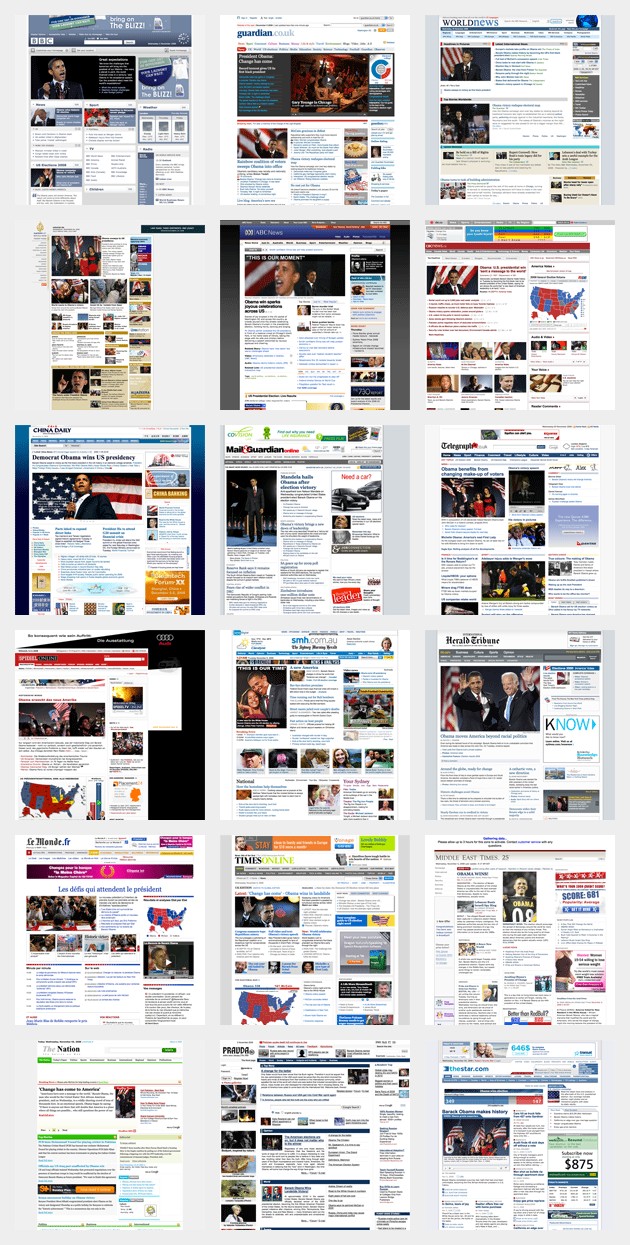
Konigi has posted a ‘small’ sampling of international front page newspaper coverage of the US Presidential Election (pictured) .   The US Sources are here. It’s hard not to be swept up in the excitement today. Breathtaking. (via SwissMiss)

“Publishing: Media’s Last Diehard?”: James Bridle (apt/booktwo)  has posts his v. interesting notes from a talk at the London School of Economics given by HarperCollins CEO Victoria Barnsley. More at The Bookseller.

“Seven hundred friends, and I was drinking alone”: Toronto author Hal Niedzviecki discovers the fickleness of Facebook friends in the New York Times (via DesignNotes).

Doubleday Dismissals Were Self-Inflicted: The New York Observer examines the recent lay-offs at Random House’s DoubleDay division and looks at the career of their publisher Steve Rubin (via Sarah Weinman).

Science Fiction and Fantasy editor Lou Anders interviewed on the Amazon blog Omnivoracious. What’s the hardest part of his job?

“Saying no to a piece of sheer brilliance because I know that the audience for it is about 200 people. I don’t for a minute believe that commercial and literary concerns are mutually exclusive … But not every worthy work has commercial potential. Trying to find books that fire on all cylinders means saying no to a lot of competent fiction that only fires on one or two. Being determined not to compromise on quality while still being commercially viable means that I am hunting in a very narrow bandwidth and have to read hundreds upon hundreds of submissions to find a very few prizes. I worry that a lifetime of saying no is bad for my karma, and have to remind myself that its the yes that the readers see and they are who I am serving.”

1 Comment