Skip to content

Tag: Comics

Something for the Weekend

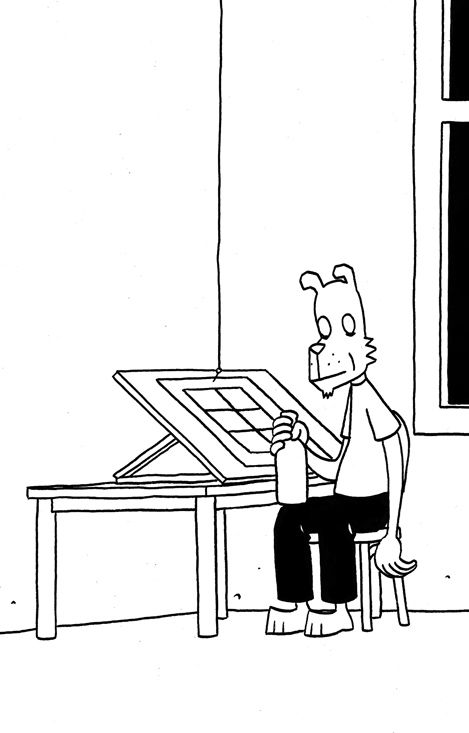
Jason’s cover drawing for his new book Athos in America (above).

Nordic Provenance — A lovely essay by Matthew Battles on writer and cartoonist Tove Jansson, creator of the Moomintrolls and author of brilliant novels such as The True Deceiver and The Summer Book:

The trolls, singers, and creeps in the Moomin books have about them all of the absurd rigor of Roald Dahl’s characters — only the hatred goes missing. In place of dread, Jansson’s characters struggle with vague longings, forever discovering that their worst enemies are not tempests or monsters or maiden aunts, but themselves. While they’re quite capable of getting up to mischief and putting themselves into dire circumstances, they see their way through troubles not by means of sentimentality but with a kind of philosophically playful savoir-faire.

The Death of a Plaything — Brian Dillon reviews Paraphernalia: The Curious Lives of Magical Things  by Steven Connor for The Guardian:

Though we know, even if vaguely, how an AA battery works, that it has a functional interior, it nonetheless seems a thing solid and uniform to the core, stonelike in its simplicity and selfsameness. We appear to learn from things not just about the practicalities of our local material world, but about the expanding world of metaphor: “A teacup asks to be picked up by the handle; a brandy glass invites us to cradle it, tender as a dove, from underneath.” Nor are the desires we bring to things entirely devotional or affectionate; in an echo of Baudelaire’s essay on toys – the poet’s immediate desire as a boy was to smash a toy and find its soul – Connor conjectures: “Perhaps all play has at its horizon the death of the plaything.”

And let’s finish how we started with the back cover for Athos in America by Jason:

I feel like that some days…

Comments closed

Midweek Miscellany

Lumps of Language — John Sutherland reviews The Words of Others: From Quotations to Culture by Gary Saul Morson for Literary Review:

We think of our use of language as ‘fluency’. There are, however, congealed lumps floating in it and, if we look beneath the surface, often more lumps than liquidity. Put another way, most language is pre-owned. The previous owners are, as Gary Morson instructs us, often worth knowing about.

Hard — Cartoonist James Sturm finds out just how hard it is to get a cartoon in The New Yorker:

I don’t normally draw gag cartoons; I’m what’s now called a “graphic novelist.” I’m not really considering a career change, but I was dealing with the mid-career blahs and wanted to try something new. It takes me several years to write and draw a book. The book’s subject determines and limits what I can and can’t draw. I enjoy the process, but it’s a slog. I wanted more spontaneity in my creative life. So in March I decided to fill a sketchbook, 90 pages, with New Yorker-style cartoons—one cartoon a day for three months. No excuses.

Much linked to elsewhere: A sad (and slightly bonkers) interview with Grant Morrison about his book Supergods in Rolling Stone.

Dan Nadel at The Comics Journal responds.

And finally… While were on the subject of comics…

Here’s an neat primer on comics journalism, in the form of comics journalism, by Dan Archer (via The Ephemerist).

Comments closed

Something for the Weekend

A Period of Digestion — Music journalist and author Simon Reyolds talks about his new book Retromania: Pop Culture’s Addiction To Its Own Past with the A.V. Club:

[S]o much happened in the 20th century and things moved so fast, and you had this enormous capitalist engine generating all these toys and gadgets and things that became rapidly obsolescent. It’s all piled up, hasn’t it? And you think of the sheer amount of recording that went on. It always blows my mind whenever I go record shopping how many records I’ve never seen before. I’ve been in record stores forever, decades I’ve been looking through them, and I still see things I’ve never seen, artists I’ve never heard of. The sheer amount of recording that was done, it is almost like this universe of music. Daniel Lopatin in the book actually says it’s a period of digestion, we’re digesting and processing all this stuff that happened musically and in other senses in this really runaway, fast period of time of production. And perhaps that’s fine. Perhaps that’s what we need.

And on a not unrelated note…

A wide-ranging interview with Alan Moore about his new book, Extraordinary Gentlemen: Century 1969, comics and popular culture, for Wired:

[T]he overall legacy of the first decade of the 21st century has been one wherein culture mirrors what was going on in our politics during those years. We had a form of politics that was concerned with spin and surface at the expense of any kind of moral or even rational content. In keeping with our well-spun political landscape, I think a lot of contemporary art, if it has a concept it is a concept in the advertising sense. It’s a little mental pun, something that you can use to sell cars or burgers. But in terms of art, once you’ve got the idea of joke, if you like, there is absolutely no need to ever look at those works again.

And sticking with comics…

From Superheroes to Superbrands — Paul Gravett on Grant Morrison’s new book Supergods: Our World in the Age of the Superhero and the poor treatment of the original creators of the comic book superheroes (thx Ed):

How easy is it for fans and pros today, so hypnotised since childhood by these ubiquitous, constantly repromoted properties, to ignore their tarnished histories? I’ve talked recently to some fan readers who are troubled when I mention this horrific, disfigured portrait lurking beneath the polished profiles, masks and capes, hidden in the attic, but who can’t seem to help themselves from still wanting to follow these perfect-looking, super-powered Dorian Grays, no matter what. Morrison prefers to elevate the superhero as an indestructible concept, almost an independent, self-actualising entity, acknowledging only slightly its murkier commercial side, but glossing over the exploitation rife in this business, then and now. Unlike earlier ‘public domain’ gods and goddesses from antiquity and religious faiths, Superheroes are as much Superbrands, properties that must make profits for DC, part of Time-Warner-AOL, and Marvel, bought by Disney. While Morrison and his ilk earn tidy sums from endless, spiralling makeovers of these franchises, both publishers are aggressively fighting lawsuits over ownership against the estates of Siegel and of Jack Kirby, joint architect of the Marvel Universe.

And finally…

A fascinating article by Adrian Hon on ‘cargo cults’ and Unbound, a crowdfunding site for books, in The Telegraph (via Waxy):

Unbound isn’t some fly-by-night operation; it was heavily promoted at the Hay Festival, it’s received gushing praise across the media – yet it may end up with a one in six success rate.

So, why was Unbound set up in the first place? It’s because they constructed a cargo cult, believing that if they mimicked the superficial elements of successful crowdfunding, they could enjoy the same success as others – but perhaps even more, thanks to their relationships with publishers, agents, authors, and the media.

It is perhaps a little unfair to single out Unbound. Traditional publishers who jump on the latest genre bandwagon without truly understanding what made the original popular are just as guilty.

Comments closed

Midweek Miscellany

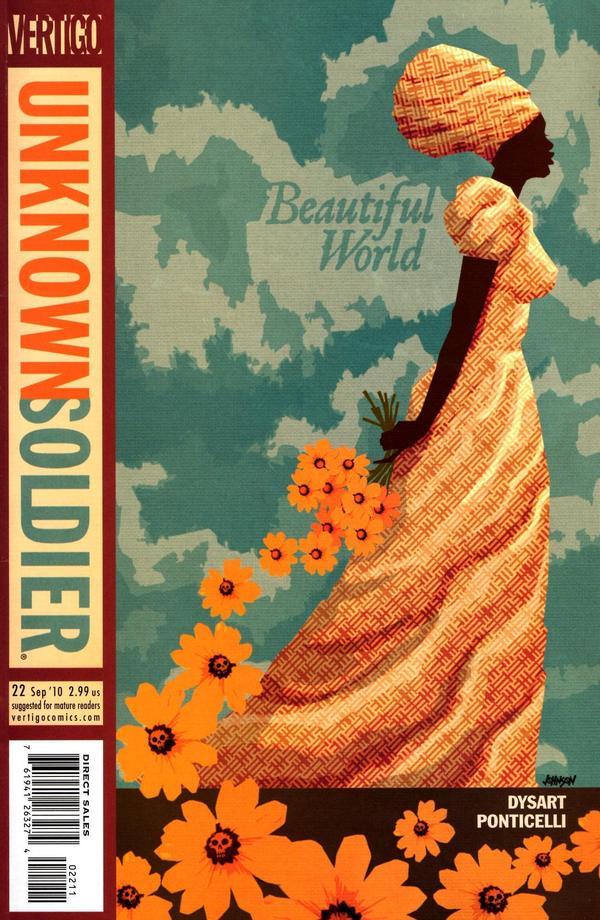
Kelly Thompson chooses her favourite 52 comic book covers from the past year on her blog 1979 Semifinalist. The cover above is by Dave Johnson for Unknown Soldier #22. Other personal favourites of mine on the list include the very retro Deadpool Pulp #4 by Jae Lee, and Hellboy: The Fury # 1 by Mike Mignola (you just can’t go wrong with a big axe really…)

And if you don’t read Kelly’s regular three sentence or less drunken demolitions of Marvel and DC covers you really are missing out. “Motherfucking gangbusters.”

Comics Dwindling Gene Pool — Alan Moore talks about the latest instalment of The League of Extraordinary Gentlemen, Century: 1969, and more with The Guardian:

These days, the majority of the comic book audience is 40-somethings who are not necessarily interested in comic books as a medium or panel progression or sequential narrative. They are probably interested in Wolverine. There is a large nostalgic component in there and there’s nothing wrong with it. But if those people then begin to influence the books themselves or increasingly the movies or the television series then they will want their story to refer to stories that they remember. It becomes very incestuous and over a few decades you get a very limited dwindling gene pool. And you get stories that have become weak through inbreeding.

And sticking with comics for a moment… Eric Reynolds talks about comics and Fantagraphics’ Mome Anthology in a four-part interview The Daily Cross Hatch:

Putting comics online is definitely of interest to myself and all of us at Fantagraphics, for sure. We know that that’s only going to continue to grow. It has certain advantages and disadvantages. But I don’t know if I necessarily want to edit an online anthology, per se. I don’t know why… I know if it’s just that I enjoy the tactile pleasures of print, or what, but—and this is my own personal preference—it doesn’t seem to quite exist when it’s on the Internet, which is quite paradoxical. The Internet has the potential to reach a lot more people that print, in this day and age, and yet, you don’t have that physical object to hold as proof that you did what you did.

Meanwhile, if you are looking for some ‘serious’ books for your vacation, the indefatigable Largehearted Boy is doggedly aggregating online summer reading lists for the year.

While at Slate Robert Pinsky explains  how not to write a book review (whether you’ve read the book in question or not).

And finally (in the likely instance you haven’t seen these yet)…

Cardon Webb’s clever designs for a new series of Oliver Sacks paperbacks from Vintage (via John Gall).


Comments closed

Something for the Weekend

Potential for Infection — A lovely essay by Alan Bennett on books, libraries, and bookcases, in the LRB:

‘Books Do Furnish a Room’, wrote Anthony Powell, but my mother never thought so and she’d always put them out of the way in the sideboard when you weren’t looking. Books untidy, books upset, more her view. Though once a keen reader herself, particularly when she was younger, she always thought of library books as grubby and with a potential for infection – not intellectual infection either. Lurking among the municipally owned pages might be the germs of TB or scarlet fever, so one must never be seen to peer at a library book too closely or lick your finger before turning over still less read such a book in bed.

Not A Sexy Trend Story — Dennis Johnson’s scathing must-read post on the Borders bankruptcy (and the way it is being reported) at MobyLives:

[T]his is a story that has become about some desired and sometimes advertiser-driven trend, and not the more complex reality — which is that what’s happened is not good for either print or digital books.

If there’s anything to take away from the Borders story, it’s this: It doesn’t at all represent that fewer people want to buy print books. It represents that fewer big corporations want to sell them.

19th Nervous Breakdown — Jonathan Ross reviews Supergods: Our World in the Age of the Superhero by Grant Morrison for The Guardian:

Shaving your head before dragging up in full fetish gear and wolfing down a magic mushroom omelette may well open the door to another realm, or give you access to demons and guardian angels. I have never tried it so I can’t say with absolute certainty. But I am pretty sure that what Morrison was experiencing and is describing is a cross between a nervous breakdown and a common-or-garden trip.

See also: David Itzkoff reviews the book (less sympathetically) for The New York Times.

And on a related note… Joe Carducci reviews Absolute Dark Knight by Frank Miller for the LA Review of Books.

And finally…

Typographical reference guide FontBook is now available on the  iPad:

Comments closed

Midweek Miscellany


Furious — Writer and herstorian Trina Robbins talks to Imprint about her new book on pioneering female cartoonist Tarpé Mills and her newspaper strip Miss Fury:

I’ve always been a lover of noir and of good adventure strips in the noir mode, as typified by Milton Caniff’s Terry and the Pirates. They are adventures that are good, fun escapist reading. As you know, there were a number of cartoonists during the 1940s who worked in that genre, but only Tarpé Mills was a woman. That alone would have been enough to attract her to me. But add to that: good art, solid storytelling, memorable characters… including three of the strongest female characters in comics…

Mills’s characters also wore great fashions… at a time when many of the male cartoonists dressed their female characters in featureless red strapless evening gowns or equally featureless short red V-necked dresses. Of course there are exceptions – Caniff was very up on women’s styles. But I think in general one sign that a comic is by a woman is that attention is paid to the clothing – Miss Fury, Brenda Starr, Mopsy, I could go on and on – and that men tend not to show much awareness of what real women are wearing, even today… especially today!

And on the subject of comics…

Word as Pictures — Designer Rob Harrigan has launched a new series of interviews about design and comics. First off is designer Rian Hughes:

Comics, in a broader sense, are simply words and pictures – and words AS pictures, which as a designer, and especially as a font designer, is what fascinates me the most. The formal aspects of communication – this is the very language designers manipulate for their own ends, the medium culture uses to spread memes.

Still Great, Still in Production — Alexander Lange reviews Dieter Rams: As Little Design as Possible by Sophie Lovell for The Architect’s Newspaper:

Open Dieter Rams: As Little Design as Possible. Turn to page 64. There you will find the Braun product line circa 1963. I would buy any one of those products today, save the cameras, were they sold in stores. Which is to say, you will get no argument from me about Rams’ greatness as an industrial designer and the superiority of his achievement as head of Braun’s product design department from 1961 to 1995, where he designed or co-designed 500 products, lighters, door handles, coffee grinders, hi-fis and televisions, hair dryers, and cameras. Plus those Vitsoe 606 shelves, still great, still in production.

And finally…

Steven Heller on designer, art director and inventor of the album cover Alex Steinweiss, who died on Sunday aged 94, for The New York Times:

Mr. Steinweiss preferred metaphor to literalism, and his covers often used collages of musical and cultural symbols. For a Bartok piano concerto, he rejected a portrait of Bartok, using instead the hammers, keys and strings of a piano placed against a stylized backdrop. For a recording of Gershwin’s “Rhapsody in Blue,” he used an illustration of a piano on a dark blue field illuminated only by an abstract street lamp, with a stylized silhouetted skyline in the background…

Mr. Steinweiss said he was destined to be a commercial artist. In high school he marveled at his classmates who “could take a brush, dip it in some paint and make letters,” he recalled. “So I said to myself, if some day I could become a good sign painter, that would be terrific!”

Comments closed

Something From the Weekend

Paint It Black — Alan Moore talks to Pádraig Ó Méalóid about the latest instalment of League of Extraordinary Gentlemen, Century: 1969 (available next month) for the Forbidden Planet blog:

What we’ve got in 1969, in keeping with the League’s usual practice, is that we’ve got a world entirely composed of references to the culture of that period, or around that period. So we’re taking bits from various films, television series, books, comics, any culture of that time we’re working into the fabric of our story… I hope that people will have as much fun digging out the various references as we had putting them in there…

See also: Pádraig Ó Méalóid’s recent interview with Alan Moore for 3AM Magazine.

Gonzo Graphic Novels — Six leading cartoonists discuss their own favourite cartoonists for The Guardian. Here’s political cartoonist Martin Rowson on Joe Sacco:

Although Art Spiegelman’s Maus is a work of incredible importance, I think it gave the entire genre a bum steer. It then got into this terrible kind of introspective, personal, adolescent angstiness. All this “you have to be serious about this because it’s a serious art form”: well, it is and it isn’t. Therefore, discovering Joe Sacco was a liberation. Here is somebody who is using the medium as journalism and reportage. It’s taking the best bits of the underground comics of the 60s – the radicalism – with the personal immersion you got with Spiegelman. It’s an extraordinarily powerful way of telling a story – a true one in this case. The fact that he places himself in the heart of it makes it gonzo journalism turned into a graphic novel, although it’s not really a graphic novel, it’s a sort of visual journalism.

Also in The Guardian… Lee Rourke, author of The Canal, on The Book Barge, a bookstore in a travelling canal barge:

It is the brainchild of Sarah Henshaw. “By setting up on a canal boat,” she explained, “we hope to promote a less hurried and harried lifestyle of idle pleasures, cups of tea, conversation, culture and, of course, curling up with an incomparably good Book Barge purchase.” I was immediately sold. But why a canal boat? “I hoped that by creating a unique retail space, customers would realise how independent bookshops can offer a far more pleasurable shopping experience than they’re likely to find online or on the discount shelves at supermarkets.”

Wonderful.

And finally…

Recording the Disjunction — Errol Morris talks to the A.V. Club about truth, self-deception, and his new documentary Tabloid:

People sort of imagine that they go to a documentary—and this is also true [when] you read an article, a work of journalism—that they’re [experiencing] a work of non-fiction. We know that what we’re reading is not the absolute truth. If we’re reading a first-person account, we know that each and every one of us, myself included, have a great desire to be seen in a certain way, or to be perceived in a certain way. It’s unavoidable. What a movie can do—and this is what really does interest me, it’s at the heart of documentary—is not so much delivering the so-called truth. Yes, pursuing the truth, trying to investigate what really happened, trying to uncover some underlying reality, but recording that disjunction, that distance between how people see the world and the way the world might really be—that’s at the heart of the enterprise.

Comments closed

Midweek Miscellany

Comic Unease — Cartoonist Emily Carroll talks about comics, fairy tales, dreams, and her story His Face All Red with The Comics Journal:

I think a lot of fairy tales have that sort of unease built into them, just because they introduce so many elements that they never explain, and use fairy tale logic—the kind that isn’t really logic at all, but has that matter-of-fact feel to it anyway—and the reader just has to roll with it.

Dark Matter — Author Lev Grossman on fan fiction for Time Magazine:

Fan fiction is what literature might look like if it were reinvented from scratch after a nuclear apocalypse by a band of brilliant pop-culture junkies trapped in a sealed bunker. They don’t do it for money. That’s not what it’s about. The writers write it and put it up online just for the satisfaction. They’re fans, but they’re not silent, couchbound consumers of media. The culture talks to them, and they talk back to the culture in its own language. Right now fan fiction is still the cultural equivalent of dark matter: it’s largely invisible to the mainstream, but at the same time, it’s unbelievably massive.

Grossman’s new novel The Magician King (the sequel to his 2009 novel The Magicians) is published next month.

Dysfunctional Spies — Author John Le Carré reflects on his time in MI6:

The creation of George Smiley, the retired spy recalled to hunt for… a high-ranking mole in Tinker, Tailor, was extremely personal. I borrowed elements of people I admired and invested them in this mythical character. I’m such a fluent, specious person now, but I was an extremely awkward fellow in those days. I also gave Smiley my social ineptitude, my lack of self-respect and my fumblings in love.

Because I came from a dysfunctional background, I made home the most dangerous place for Smiley. Home is where he lets himself in cautiously. Home is where he sees the shadow of his adulterous wife in the window and wonders who she’s with.

Pictured above is Matt Taylor’s incredible illustration for a new Penguin US edition of Le Carré’s novel Tinker, Tailor, Soldier, Spy — more of that wonderful stuff to come — and a new film adaptation of the book, starring Gary Oldman as Smiley, is being released later this year:

Comments closed

Midweek Miscellany

60 Years of Innovation — The estimable John Self on publisher Peter Owen for The Guardian:

It cannot simply be good luck that leads one man to publish such an embarrassingly long list of riches. Owen is clear that both “literary acumen and a business mind” are essential. He has survived where other publishing houses forging a similar path, such as those of Marion Boyars and John Calder, have been closed or sold, and had their lists filleted by larger houses; if you are just “an editor buying books you like, with no idea how to run a business,” Owen says, “you don’t stand a chance.” For him, a distinctive look helped: bold (and presumably inexpensive) two-colour covers by Keith Cunningham may have lacked the cool of Jan Tschichold’s Penguin templates, but gave the list a uniform feel. The odd commercial success helped more, with titles which caught the public mood such as Siddhartha and The Man Who Planted Trees. Owen may not always have liked his authors (Salvador Dali was “a creep [but] not as mad as you’d think. When you mentioned money, he suddenly became very sane”), but it’s hard to question his commitment to new and avant-garde writing.

Goodbye To All That — The Economist glumly ponders the fate of Borders and independent bookstores:

The problem, however, is that no one seems willing to buy full-price books anymore. Campaigns to get people to buy books from their local bookstores—such as “Save Bookstores Day” on June 25th—miss the point. While there is demand for real bricks-and-mortar places to gather, drink coffee and read new books, such places can’t exist if the market can’t accommodate them… [T]he market is squeezing out a meaningful public space. It will be interesting to see what fills the void these bookstores leave behind.

“Interesting” is probably not the adjective I would have used personally…

Dead Cool — Comics critic Paul Gravett talks about his new book 1001 Comics You Must Read Before You Die with Bleeding Cool:

Initially, the American publishers tried to insist that every one of 1001 Comics must be available in English. But I had to insist that this would exclude loads of absolute masterpieces, and it wouldn’t make the book work in the other languages it is going to appear in, such as French or German. So somewhere around 12 per cent or so of the 1001 are not available in English, at least not yet. I seriously hope that exposure in 1001 will alert publishers and motivate them to translate them.

And finally…

Naomi Yang, designer, visual artist, publisher and founding member of the band Galaxie 500, talks with Print Magazine:

A book has always been an object! That is what can be so wonderful about them and so different than a digital book—or even a print-on-demand book. A book is an entire world: you see the cover, you pick it up, you feel the material of the cover, you turn it over, you read the back—and then you open it! You get the progression of the half-title, the title page, the table of contents and then that first page of text, that first line. And there are so many small things, the page numbers, the running heads, the proportions of the margins—the same elements in each book—but how will you do it this time?


1 Comment

Midweek Miscellany

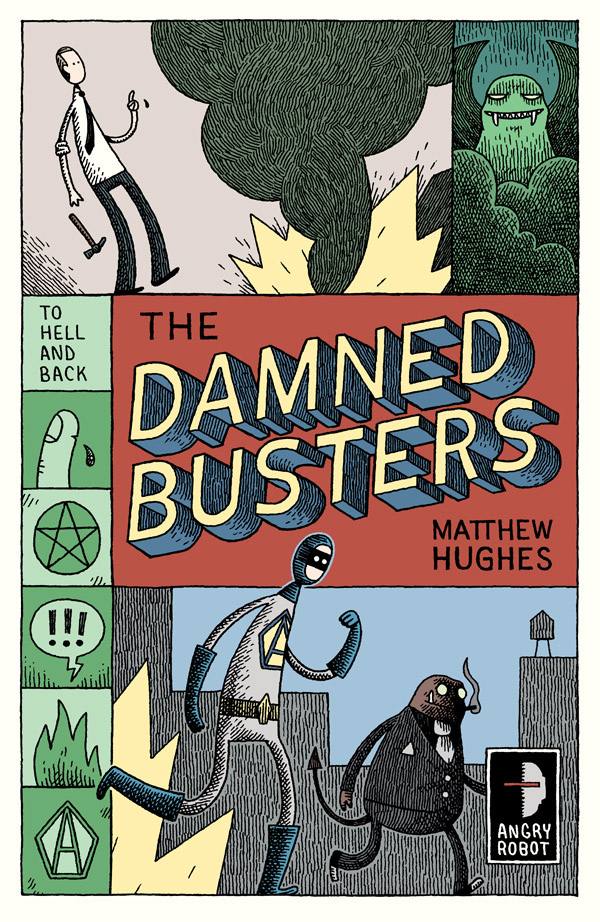
Cartoonist and illustrator Tom Gauld chats with the Angry Robot blog:

I find [robots] almost endlessly interesting. There is tragedy in their place between sentient beings and disposable products. And … they are much easier to draw than real people.

I’m hoping to interview Tom here as well sometime soon (just as soon as I think of something smart to ask him).

Hard Scenes — Actor, writer and director John Turturro talks about his work and one of my all time favourite films Miller’s Crossing at the A.V. Club (via Biblioklept):

Sometimes you think about movies, and you say, “Well, I want to try to do something that’s not exactly in a movie.” If you’ve ever been in a very dangerous situation, you know that people will do all kinds of things to keep themselves alive. It was very well-written, but you want to imagine what it’s really like to be in that kind of situation. It depends on what you’re willing to do, and in real life you would do a lot of different things. I tried to capture a little bit of that… to do something that was almost a little difficult to watch, because people aren’t trying to be heroic at those moments.

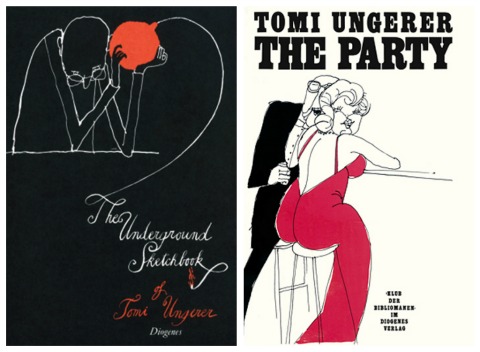
Curiosity and Collecting — Writer and illustrator Tom Ungerer in conversation with Julie Lasky at Design Observer:

One of the most important things for one’s own development is curiosity. Once you have curiosity, you just accumulate. My interests go from botany to mineralogy, geology, anatomy, history. Sometimes I’ve been bitten like bug. I buy one object and I’m so fascinated that I start collecting. And then when I finish collecting, and the collection doesn’t inspire, I give it away, like my toy collection of 6,000 pieces that I donated to my hometown museum for children.

Learning to Write — An interview with author Zadie Smith at The Literateur:

[O]ne of the things I look for in other people’s writing is the ability to confer freedom. That’s what I want to be able to do myself. I like a writer who doesn’t have to be in total control of how their readers react. More mystery, less explanation. All I can say is I’m working on it. But it’s so hard! I really feel I’m just at the base of a huge mountain called ‘learning how to write’. I’m still only 35. Learning to write is a task that takes up your whole life.

And finally…

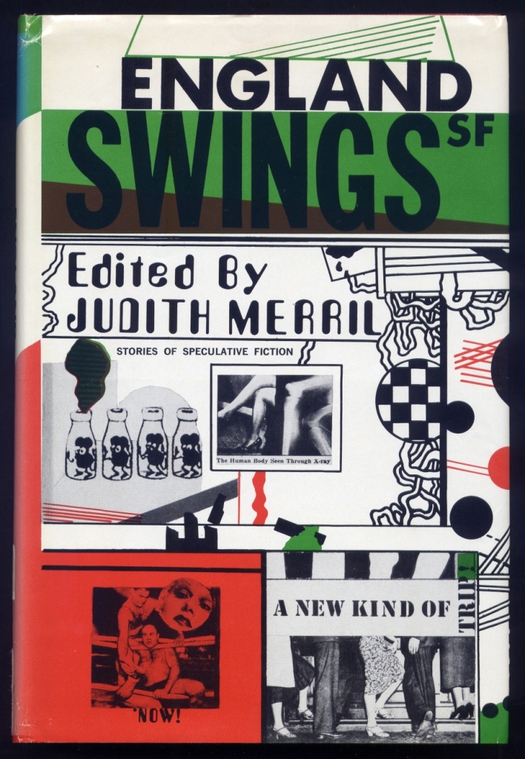
Rick Poynor on the unusual cover design for England Swings SF, published in 1968, also at Design Observer.

Comments closed

The Prince & The Sea | Emily Carroll

I loved last year’s spooky His Face All Red, and now cartoonist Emily Carroll has just posted a new, similarly atmospheric strip called The Prince & The Sea.

Carroll recently won the Joe Shuster Award for ‘Outstanding Webcomics Creator.’

Comments closed

Something for the Weekend

An interview with Toronto based lettering designer Ian Brignell at The Case and Point:

I’m influenced by just about everything, but I especially like the work that was done on packages from the 19th and early 20th century. I also enjoy amateur hand-lettered signs, since they often contain very quirky and original details that I would never think of. I have to mention that during college I saw a book with some examples of Herb Lubalin’s lettering work, and this was one of the moments that really made me want to pursue lettering for a living.

All Things Considered — An interview with Nate Burgos about his Rare Book Feast video project:

I enjoy writing about anyone and anything which interest me on my design-related blog, an all-people-and-things-considered destination. Then there’s tweeting, lots of it. Twitter is newsprint. Designer Lorraine Wild said, “You have to be interested in culture to design for it.”

Dull But DurableThe Guardian‘s Justin McGuirk on Soviet design and a new book on the subject called Made in Russia by Michael Idov:

There were some genuinely classic designs… The Lomo camera, with its super-saturated film, is still hugely popular in an otherwise digital world. The avos shopping bag, essentially a string vest with handles, was ubiquitous and remains far preferable to plastic bags, just as the collapsible portable cup is preferable to millions of plastic and polystyrene ones. The ribbed drinking glass, meanwhile, and the Saturna and Raketa vacuum cleaners, simply lasted for ever. We may mock Soviet design, but there are lessons to heed from it. Durability, for one. In our disposable culture, rapid replacement cycles have almost inured us to the idea that nothing lasts. Such is the price, apparently, of free enterprise and consumer choice.

Secretly Young — John le Carré’s keynote speech at the Think German Conference earlier this month (via Bookslut):

I was young when I started writing about George Smiley — twenty-eight — and Smiley was already old, a proxy father. But Smiley’s journey through the novel, despite his age, is the journey of a young man’s self-discovery. Underneath his inconspicuous exterior, he is a sensitive man still growing up, still looking for answers, and for the experience that delivers them.

In short: he is secretly young.

And Smiley’s private journey — from this first novel, right through to his last — for me at least, with the advantage of hindsight and no longer the responsibility of writing about him — is a single Bildungsroman that leads him through disappointments, mistaken loves, failures and occasional successes, to some kind of ultimate maturity: that is to say, to the point when he discovers that the object of his life’s search is neither the absolute enemy of his imagination, nor the absolute answer to his quest.

See also: Tom McCarthy, talks about his novels Remainder and C, and his life in Prague and Berlin before becoming a published writer, at The Days of Yore:

Your book is being held up as, you know, avant-garde, or as an anti-novel, or as anti-realist… None of these seem quite right. My understanding of the avant-garde is as a historical thing, it had a moment and it has an implication for now, but it’s almost like saying, “Are you leading the French revolution?” “No!” [Laughs.] If you pay too much attention, then when you sit down to write you’ve been primed to think: “Okay, so I’m being avant-garde; how do I be avant-garde?”

I don’t know exactly where I’m going next, but I don’t think it’ll be anything that blatantly looks either avant-garde or not avant-garde or realist or not realist.

And finally, seeing as it’s Friday…

A Pixaresque animated homage to the late Dave Stevens to mark the 20th anniversary of the film adaptation of his comic The Rocketeer:

(via Robot 6)

Comments closed