Skip to content

Tag: Books

Something for Weekend, May 29th, 2009

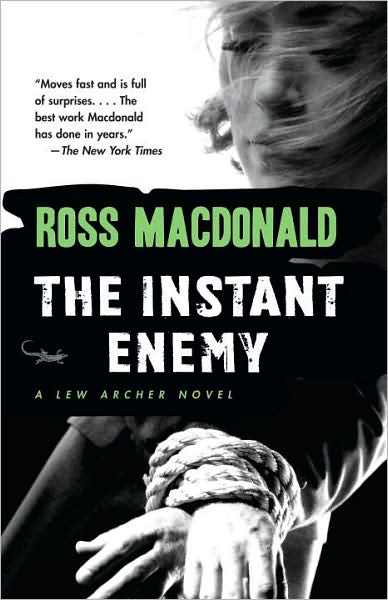
Hard-boiled — New designs for Ross MacDonald’s Lew Archer books by Joe Montgomery seen at FaceOut Books. I know I link to FaceOut just about every other week, but it’s an awesome site and the juxaposition of images in this series are great (as are some of the unused comps).

The Concierge and the BouncerPublishers Weekly report on Richard Nash (formerly of Soft Skull) and Dedi Felmen (formerly of Simon & Schuster) and their plans to “push back against the outmoded idea of publisher as cultural gatekeeper” with their new venture Round Table (announced at BEA this week):

The key is a shift from a caretaker mentality to a service mentality, from a linear supply-chain model to the idea of a free-floating, non-hierarchical “ecosystem” of readers, writers and authors… Nash and Felman’s idea of Publishing 2.0 could make a semi-professional reader, writer, editor and critic out of anyone with the desire.

Reading in a Digital World — A killer line in an otherwise blah article for Wired by Clive Thompson:

“We need to stop thinking about the future of publishing and think instead about the future of reading.”

Book Distribution in Canada — A Canadian Heritage study on book distribution in English Language Canada produced by Turner-Riggs dropped this week.

Can Editors Change Their Spots — David Hepworth’s thoughts on Robert G. Picard’s CS Monitor article ‘why journalists deserve low pay’,  and what “the new dispensation” means for  editors:

Magazine editors spend most of their time deciding what they’re *not* going to do and trying to arrive at a mix that the majority of people will like. They then find that whatever they’ve arrived at is too much for some people and not enough for others. This is made more difficult by the fact that their readers, being the most engaged in their particular area, are the people most likely to tap into other sources themselves. The people who value your mix most are also the people who would feel most qualified to mix it themselves.

The italics are mine.

Cover to Cover —  Steven Heller reviews newly released  ‘visual books’ in the New York Times with a nice accompanying  slide-show. (See image above, but hey NYT, when are you going to let people embed your slide-shows? When?).

Comments closed

Turning Towards Our Shelves

Ellen Lupton, author of Thinking With Type (interviewed by me here), interviews graphic designer David Barringer about his new collection of essays There’s Nothing Funny About Design over at Design Observer today.

It’s a wide ranging interview — mostly about design unsurprisingly — but a couple of paragraphs about books caught my eye:

I do think that ebooks are a step backwards, however. It’s like the fax. It’s not flexible or useful enough. Handheld computers should have greater power, and the Kindle instead has less. You should be able to access encyclopedias, dictionaries, and other searchable resources, just like we can on the computer or the iPhone. That’s where the real benefit of portable handheld units are. Who cares about downloading Twilight? I care about having access to entire online libraries of reference works, maps, and encyclopedias.

I’ve sort of come to the same conclusion. If e-readers are less convenient than cell phones, less useful than laptops, and less durable than books, what’s the point?

Anyway, David Barringer goes on to discuss our enduring emotional connection with book-books:

I’ve seen many friends who are avid readers turn toward their shelves of books and regard them as they would a photo album of their own lives. We take the contents of books into our imaginations, and our personalities are influenced by them. Looking at the books on my shelves, I feel memories bloom, my own life come back to me. Books are triggers for remembering where we have been, and who we are. A book is like a body part, and when you die and your connection to the book is broken, the book dies a little, too.

I thought that was rather touching…

Link

(NB Full Disclosure: Thinking With Type and There’s Nothing Funny About Design are published by Princeton Architectural Press, who are distributed in Canada by my employer, Raincoast Books)

Comments closed

Why Not? Or How We Live-Tweeted Fall 09

Why Not?

One the things that really stuck with me from Michael Tamblyn’s 6 Projects That Could Change Publishing For Ever presentation at the BookNet Tech Forum in March was the idea that publishers have to “place lots of little bets quickly.”

It tied into another idea that’s been kicking around recently about reframing ‘Why?’ questions into ‘Why Not?’ questions. That is to say, whenever we — publishers, book distributors et al — ask “why would we do this?” we should flip the question on it head and ask “why wouldn’t we?”.

This doesn’t mean we should pursue every idea that someone puts forward. Sometimes there will be good reasons not to try something — “it costs too much” and “it’s illegal and/or evil” are perfectly valid reasons that spring to mind to nix something (and no doubt there are  plenty more). But, in my experience, reframing the ‘why?’ question encourages people (me included) to think creatively and be more positive about ideas/projects we might otherwise dismiss out of hand.

#rainfall09

This is all a roundabout way of explaining how I ended up twittering from the  Raincoast Books Fall 09 Sales Conference last week.

Before we got under way on the first morning, a few of the early birds were laughing about using Raincoast’s Twitter account to micro-blog the presentations as they happened. Although it started as a joke, the near-inevitable “why would we?” and “who cares?” questions came up, and that raised the stakes. I turned the questions around and couldn’t actually think of any good reasons why we shouldn’t ‘live tweet’ the conference. I had my laptop, wireless access and a power source, so it seemed easy enough to do. And I figured people would tell me pretty quickly if they were bored and I should stop.

Decision made.

We quickly adopted #rainfall09 (an identifying reference tag for twitter posts or ‘tweets’ which was accidentally shortened to #rainfall on more than one occasion) and,  with some help from my colleague Siobhan, I covered all 3 days of the conference in a series of posts of 140 characters or less.

To people who live their lives online and are accustomed to social media rather than the slightly conservative book publishing world, the response to all this is probably a very sarcastic “big whup”. But sales conferences are not usually open and inclusive, and, needless to say, there was a degree of skepticism and resistance to overcome. Certainly it was experiment for us, if not, admittedly, a very large one. And  we were, as far as I’m aware (and someone please correct me if I am wrong), the first publisher/book distributor to Twitter their entire conference.

20/20

With the benefit of hindsight, the drawbacks were predictable. It was very intensive and time-consuming and I found it was difficult — at least initially —  to interact with the people actually in the room and tweet. I’m sure I missed a lot of nuance and I passed on more than few book samples with the barest of glances. We probably over-tweeted and lost a few followers as a consequence.

That all said, the positive outcomes vastly outweighed the problems. The feedback was overwhelmingly positive. We learnt as we went along — becoming better organized and tweeting less — and we gained far, far more followers than we lost over the 3-day period. Our posts were re-tweeted. Followers asked questions and made requests. We raised awareness of Raincoast, the publishers we work with, and the books we distribute. And we were able to connect with reviewers and bloggers we weren’t previously aware of.

I would do some things differently next time for sure. But, ultimately, it was definitely worth doing.

If you are thinking about live-tweeting your conference, here are my 5 Tips:

  1. Be Prepared — Whilst Twitter is great for spontaneity,  making sure you can set-up  your laptop with internet access, and a power source is essential (our conference days were 10 hours straight). And knowing the books (at least a little) in advance, definitely helps — I was often scrambling to find additional information on particular titles and bookmarking a few pages in my browser in advance would have been a plus.
  2. Be selective — Raincoast Books is primarily a distributor. We have something like a thousand titles a season from a variety of publishers. It is impossible to tweet about all of them, and it became quickly apparent it isn’t desirable to try. Our followers just wanted the highlights.
  3. Link — Readers also wanted links to more details if a title caught their eye. I had publisher websites and google open in separate tabs at all times. Even so, linking wasn’t always possible. Put your marketing materials online early and encourage your authors to update their sites (and join Twitter!).
  4. Be creative — If you can’t get your marketing material for your key titles online before conference, or something comes out of left-field, use the resources you do have to find an interesting work-around. When we had some very immediate reader interest in a book called The Quotable Douchebag and there was no information available online, the publisher Quirk Books quickly threw up a blog post with details.
  5. Tool-Up — Twitter management tools like TweetDeck and HootSuite are always useful for professional Twittering, but being able to quickly monitor replies, retweets, and references, not to mention conveniently shorten URLs was essential during conference.

Did you follow @RaincoastBooks or #rainfall09 last week? If so, how did you think it went? What could we do better next time? Leave a comment below or email me.

Note: This is my personal blog, and this post is my personal opinion. Neither reflect the opinion or official policy of Raincoast Books.

Illustrations from the Inspired Magazine Social Bird Icon Set (From the top: Chimero’s Birdie by Frank Chimero, Burdy by Tad Carpenter, and Jacque by Jessica Gonacha).

2 Comments

Naïve: Modernism and Folklore in Contemporary Graphic Design

Published this month by Gestalten (thanks Siobhan!):

A minimalist design vocabulary is currently being reinvented by a troop of young graphic designers who are rediscovering the stylistic elements reminiscent of classic graphic design such as silkscreen printing, classical typography, hand lettering, woodcutting and folk art and integrating them into their work. Naïve documents this extraordinary renaissance of Classic Modernism, from the 1940s to 1960s, in contemporary graphic design.

1 Comment

Something For The Weekend, April 3rd, 2009

On a very wet and miserable day in Toronto, it only seems appropriate to start with a couple of books about the rain and then move on to some steaming hot coffee before all the usual book miscellany…

Stickers and Stuff lauds Helen Borten’s lovely illustrations for Franklyn M. Branley’s book Rain and Hail (pictured above). And  Andy Smith shares some of his illustrations for his silkscreen book The Rainy Season on his blog (pictured below).

And, while were on the subject of Andy Smith, he’s posted some of his book jacket work  on Flickr (via Beyond the Covers).

The Daily Grind — Benjamin Obler, author of Javascotia, on his 5 Favourite Cups of Coffee in a Day at the Penguin blog:

It’s so obvious, I know, but the morning cup — the first — morning cup — is like the pioneer. The self-sacrificer. Without it, there would be no others… Even on a regular day, it’s a workhorse.

Head On — Indie heartthrob Richard Nash talks to Interview Magazine (via Booksquare):

It is very complicated for an unknown writer to reach an audience of readers given the vast numbers of unknown writers out there. How do people find out about it? So I believe in the role of intermediaries. People always look to trusted friends who might be more expert or knowledgeable in a given area for advice about things… The question is, who are going to be those people. The model is going to shift from kind of a gatekeeper model to an advisor/service model.

Mr. Nash was also interviewed by BookSlut back in March.

I watch you read — Julie Wilson,  AKA Seen Reading and publicist for Canadian publisher Anansi,  is now blogging for Walrus magazine.

Atomized — Mark Coker, CEO of e-publishing service Smashwords, talks about e-books and iPhones with Maria Schneider at  Editor Unleashed.

Bite-Size Edits — The Book Oven launches “a tool that makes proofreading easy and might just be the most fun you’ve ever had spotting typos with your clothes on.” The Book Oven blog has more. (NB Bite-Size Edits is still in private alpha, but  I have a couple of invitations so email/DM me or leave a comment below if you would like to be involved).

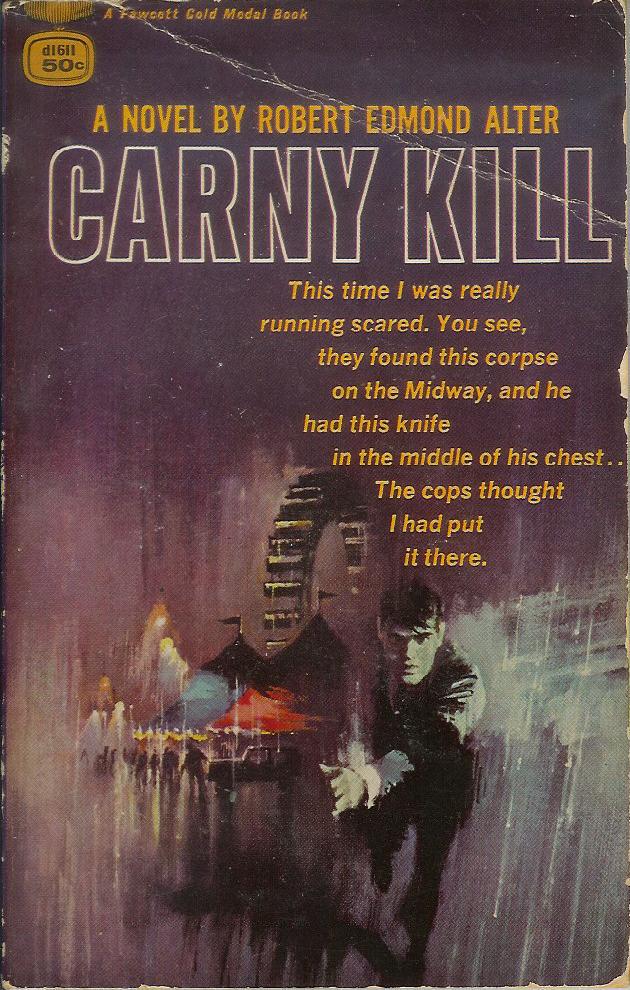
And finally, Carny Kill as seen at Pop Sensation (words fail):

Comments closed

Q & A with Ellen Lupton

“Ellen Lupton makes this industry smarter. If graphic design has a sense of its own history, an understanding of the theory that drives it and a voice for its continuing discourse, it’s largely because Lupton wrote it, thought it or spoke it.” — Katherine Feo, AIGA

Dedicated to raising design awareness, Ellen Lupton is the Director of the Graphic Design MFA program at Maryland Institute College of Art (MICA) and curator of contemporary design at the Cooper-Hewitt National Design Museum.

A regular columnist  for ReadyMade Magazine, she has contributed to Print, Eye, I.D., and Metropolis, and writes regularly about design at both Design-Your-Life and her own website Design Writing Research.

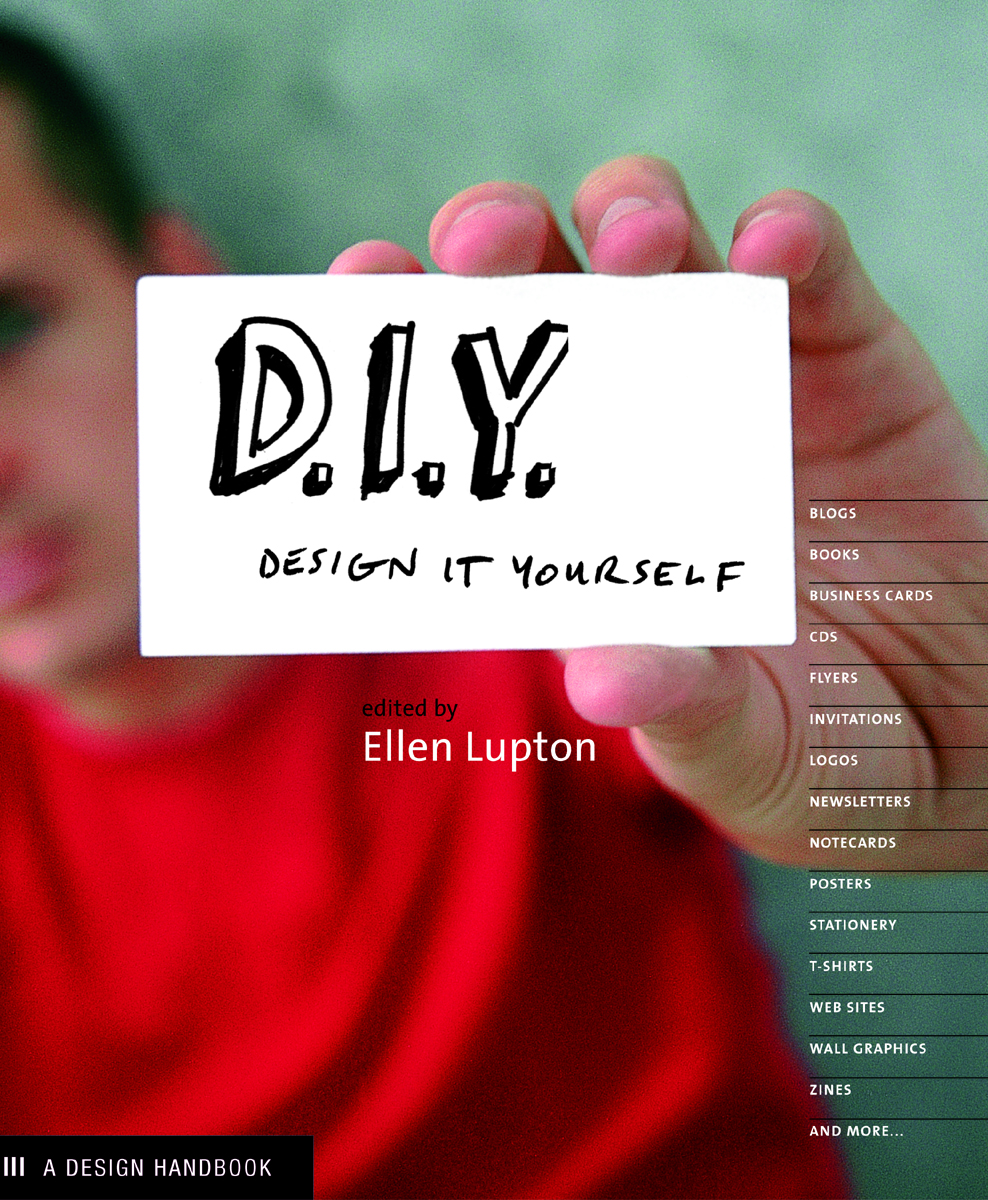
Her books include the indispensable introduction to typography Thinking with Type, DIY: Design It Yourself, D.I.Y. Kids,  co-authored with her identical twin sister Julia Lupton, and Graphic Design: The New Basics, co-authored with Jennifer Cole Phillips.

Design Your Life: The Pleasures and Perils of Everyday Things , another collaboration with her sister Julia, will be published by St. Martin’s Press later this year.

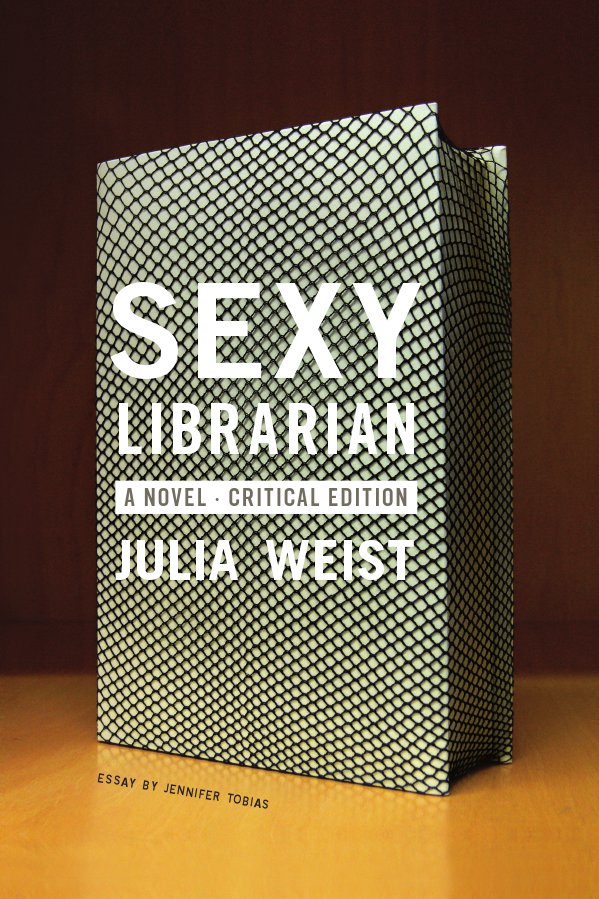
But, not content with being an  author, curator, designer, and educator, Ellen recently became a publisher, founding  Slush Editions to independently publish the novel Sexy Librarian by artist Julia Weist.

Sexy Librarian also features as a case study in Ellen’s latest book  Indie Publishing— a guide for independent authors written, researched, and designed in collaboration with graduate students at MICA — published in December 2008 by Princeton Architectural Press.

Ellen kindly replied to my questions about design and indie publishing by email.

And for the sake of full disclosure, I should make absolutely clear that several of Ellen’s books are published by New York’s Princeton Architectural Press who are distributed by Raincoast Books in Canada. But, for the record, that only explains why I have her email in my address book, not why I chose to interview her.

I have also interviewed Ellen previously for the Pages bookstore in Toronto.

How would you define ‘indie publishing’?
Indie publishing is author-driven. The traditional publishing industry is controlled by publishing professionals — editors, marketing people, promotional staff, and the publishers in charge. These are all skilled people. In our book, we use the term broadly, to encompass everything from handmade zines to print-on-demand books to offset publications distributed by the authors to small imprints created by design firms who wanted to get into the content business.

How is it different from the traditional publishing industry?
Because it’s author-initiated, indie publishing side-steps the traditional barriers of the publishing industry. It gets beyond the gatekeepers. Now, those gatekeepers act as guardians of quality to some degree, but they also contribute to a homogeneous and profit-driven publishing industry that many authors find hostile and hard to penetrate. Indie publishing often serves niche or local markets that can’t be addressed by mainstream publishing.

What are the benefits of publishing yourself?
If you have had difficulty breaking into the mainstream publishing world, going independent is liberating. If you end up producing a successful book, the profits can be substantial, but this shouldn’t be the main motive to get into publishing. Few authors make substantial bucks on their books — regardless of who publishes them. For most of us, writing and producing books is a labor of love.

What are the risks?
Most forms of indie publishing cost money, and that’s a risk. When you work with a commercial publisher, they foot the printing bill. Publishers also provide essential services like editing, proofreading, design, distribution, and marketing. The indie publisher has to take on all these tasks alone (or find friends to help out). It’s not easy, especially the distribution part. Self-published books are still viewed as less legitimate than commercially published books, although this is starting to change.

Do you see indie publishing as part of a wider D.I.Y. movement?
We are seeing more independent production in all creative fields — music, art, theater, design, etc. Younger creative people are interested in creating new institutions and networks outside the official art world or music/literature establishments. They are comfortable using technology to disseminate their ideas.

How has the internet affected the development of indie publishing?
The internet allows indie publishers to reach potential readers outside the bookstore system. Today, anyone can set up an Amazon Marketplace account or sell publications directly from their web sites. Print-on-demand publishers like Lulu and Blurb produce books when someone buys them, sending the finished book directly to the customer. These technologies are creating new possibilities for authors, especially those whose work is directed at narrower, smaller audiences.

What advice would you give someone publishing their first book?
Love your book. Get advice from lots of people in order to have the best possible content. Consider the different avenues that exist for publishing your work, including mainstream publishing as well as independent ventures.

Think about your audience and the best way to reach them. And think about your own primary goals for publishing a book. For example, an artist having a gallery exhibition might use a print-on-demand book as a tool for building his or her career via grant applications, networking with galleries and curators, securing lecturing and teaching opportunities, and more. A well-designed, carefully authored book has many functions. Selling copies to lots of people is just one of them. You might use a book as professional portfolio for landing a job or attracting clients — maybe all you need is a few copies.

What are some of the common mistakes people make designing books?
It’s important to use good software. The industry standard today is Adobe InDesign, which is available for both Mac and PC and can be easily learned via software manuals or technical workshops. Programs like Microsoft Word or Publisher are extremely cumbersome and will ultimately be frustrating to a person trying to design a refined and elegant book. Choosing a good typeface is also important. Avoid Times Roman, which was originally designed for newspapers and is so widely used as to be banal. Beautiful, high-quality typefaces such as  Garamond often come bundled with layout software and computer operating systems. Keeping your design simple and consistent from page to page is a rule of thumb for any book design. You also need to “unlearn” some habits from high school, such as leaving two spaces between sentences — this is not done in formal typesetting, and it will make your book look amateurish.

What do you look for in good book design?
Beautiful type, elegant margins, consistent pages.

Have you ever bought a book just for its cover?
Of course! Cover design is extremely important. A cover is not only a billboard advertising your book on a shelf, it’s also an online logo for your book that needs to look great at 100 pixels high. Getting help from a good graphic designer on your book cover is a worthwhile investment.

What will be the impact of e-books on publishing?
I believe that e-books are going to be very, very good for authors. By lowering the cost of publishing, e-books will make it easier for more authors to get their work published and to reach specific audiences who want their content. What I’m less sure about is how e-books will affect graphic designers!

Are we finally seeing the ‘End of Print’?
I do believe there is a sea change going on. After decades of unsuccessful attempts at creating electronic book readers, suddenly the time seems right. I don’t think print will disappear, but I think we will see less of it. It remains a tactile, permanent, stable medium that users can feel a personal attachment to.

What role do you think print-on-demand will play in the future?
Print-on-demand is where digital media and print meet. I think we will see a lot more of this as prices go down in the future. Ultimately, it is a more sustainable way to publish and involves less financial risk, but right now, it is too expensive for large-scale endeavors.

How will e-books and print co-exist?
E-books are great for disposable reading — magazines, casual fiction, newspapers. Perhaps every physical book in the future will come with an e-book supplement. I often want to quickly reference a book I read, and e-books would be great for that. Personally, I collect books, but I don’t need to keep the latest Richard Price book on my shelf forever.

As a designer, do you feel an attachment to print?
I am very attached to print. I don’t want to see it disappear in my own lifetime, that’s for sure. I love the tactility, permanence, and scale. But I do find myself reading more and more online.

Thanks very much Ellen!

4 Comments

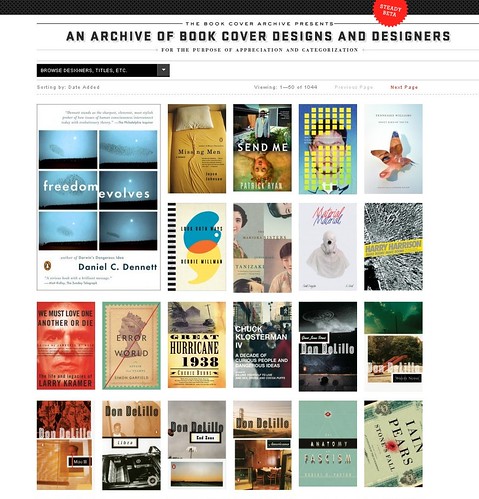
1/3 Alligator: The Book Cover Archive Q & A

Lauded and linked to by everyone from The Guardian newspaper to the New Yorker blog (not to mention the really important folks like Drawn!Kottke, We Made This,  and Veer)  the dazzling The Book Cover Archive is — as the name suggests — a hand-picked archive of book cover designs and designers, collected “for the purpose of appreciation and categorization.”

Edited and maintained by frequent collaborators Ben Pieratt of General Projects and Eric Jacobsen of Whisky Van Gogh Go, it’s an indexed database of credited book covers sortable and searchable by title, author, designer, art director, photographer, illustrator, genre, publication date, publisher, and even typeface.

Earlier this month, I emailed Ben and Eric with a series of questions about the project.

What was the impetus behind BCA?

Ben: In all honesty, the Book Cover Archive is meant to serve as a passive teaching tool for people like me who suck at book cover design but want to get better.

Do you see BCA as expansion on Covers, the book cover design project you created for Fwis?

Ben: The two sites provide different services. The Fwis Covers blog serves as a platform from which to comment and critique. You can’t post a cover on Covers without commenting on it. Whereas the Archive is passive in its function and editorial voice. The only curatorial decision is the binary It’s In Or It’s Not.

R. Mutt ReadyMech

You’re getting quite well known—notorious even—for online not-for-profit ventures like Covers, ReadyMech, Schtock, and now BCA. How do you get started on these projects?

Ben: For every launched project there’s 10 failed ones that never got off the ground. It’s really just a matter of having ideas for projects that you know no one is ever going to pay you for and then running with it anyway because its fun as hell.

How did you become interested in book cover design?

Ben: Senior year of college I was struggling with my thesis project. I think I had been doing a study of “bad taste” and was just having a hell of a time with it. At around the same time my former business partner, Chris, told me to read Ender’s Game, a Sci Fi classic. I hadn’t read any sci-fi growing up because my dad kept feeding me non-fiction stuff. I loved the book but was embarrassed to carry it around because the cover was so incredibly bad. So I changed my thesis project to redesigning the book covers of science fiction classics. I’ve been mildly obsessed with both sci-fi and book covers ever since.

How do you select which covers to include in the archive?

Ben: I’m picky as hell.

Are there particular designers you look out for?

Ben: I’d like to think that I judge each cover on its merits alone, but there’s no question that I’m super biased. If its American and it’s coming out of New York then I’m probably going to love it.

Eternal Light by Paul J. McAuley, designed by Sanda Zahirovic

Do you have any recent favourites?

Eric: I’m very excited about the new promotional work that Gollancz/Orion has been putting out, the Future Classics and Totally Space Opera series. Besides being surprisingly conceptual and classy takes on genre fiction, I think they point at a trend toward collectible and fetishable books as a revenue stream for authors and publishers. I hope we’ll be seeing more of these kinds of editions soon. More on this in a below.

You’re actually designer yourself. How do you go about designing a new book cover?

Ben: I don’t think I’ve designed anything decent enough to merit being asked this question, honestly. I have no tricks beyond embracing the power of utter panic.

What do think makes a good cover design?

Ben: one-half concept, one-quarter contextual appropriateness, one-half design, one-half je nais se quois, one-third alligator.

And, I have to ask, what makes for a bad one?

Ben: I’m starting to come to realize that the biggest difference between a good design and a mediocre one is the typography. Most covers have a decent, if not passable, concept. Everyone has concepts. It’s really the typography that sets the best apart from the rest. That’s my current thought anyway, subject to change.

Which book would you like to redesign?

Ben: I really dislike the covers of Malcolm Gladwell’s books. They’re completely decent, but they rub me the wrong way. They take a visual from his books and find a piece of related stock art and slap it together. I think he’s earned better. I’d also love to standardize Stephen Hawking’s catalog into some kind of glorious uber-nerd package with a lo-fi sci-fi aesthetic.

Have you ever seen a cover and thought “I wish I’d thought of that”?

Ben: Jamie Keenan’s design for Faster makes me want to give up on life. Jon Gray’s cover for Steinbeck’s Murder makes me feel inadequate in any number of ways. Rodrigo Corral’s design for Invisible Monsters makes me question my sense of self. Most recently Helen Yentus’ cover for The Way Through Doors leaves me questioning if I should pack it all up and become a plumber.

Have you ever bought a book just for the cover design?

Eric: Lots, particularly from McSweeneys. I also re-buy a lot of books I already own when newer, nicer editions come out.

The Americanization of Benjamin Franklin by Gordon Wood, designed by Evan Gaffney

Ben: I was looking for a good book on Ben Franklin recently and bought the Evan Gaffney-designed The Americanization of Benjamin Franklin specifically because I hated all the other covers. Great book, by the way.

With the growing popularity of e-books, are you concerned that book cover design may soon be a lost art (hence the need to archive it)?

Eric: Nope. See next question.

Ben: The only thing I’m worried about is animated covers. You know that shit is coming.

Are we finally seeing “The End of Print”? What’s next for books?

Ben: I have no idea. I don’t think I’m qualified to have an opinion on the issue. I certainly don’t think so. The tactility of the technology is going to have to improve significantly before people are willing and ready to abandoned their hard[cover]ware for hardware (sorry, I had to). As far as books are concerned, I assume the industry will go through the same pains as the music industry. The number of independent publishers and self-publishers will increase dramatically as technology allows them to bypass the major booksellers altogether.

Eric: I think that due to the nature of reading and readers, adoption of e-books will be much slower than that of digital music (a similar paradigm shift), so even if e-books herald an ‘End of Print,’ it’s at least a decade off.

Will it even happen at all? I think so. I hope so. When I read about objections to e-books, it’s usually a lot of hemming and hawing about tactility and comfort and even the smell of pages; these complaints rarely touch on such trivialities as book availability and overall readership, which e-books would certainly expand.

E-book detractors have of a strange idea of what most books are. Those beautiful dusty old encyclopedias, that rare first-edition of Ulysses, even your fancy new Vintage paperback? That is not most books. The Grisham and Grafton paperbacks at the airport, Chicken Soup for the Spirit, college textbooks — that’s most books. Does anyone really care if the next Janet Evanovich thriller has no corporeal form? Wouldn’t that be an improvement?

Those who fear e-books should have a discussion with audiophiles. While CD sales have been steadily declining all decade, vinyl — the choice of music lovers everywhere — has gone up. iTunes downloads didn’t destroy the serious album market; it got more people listening to more artists, at the expense of bulk CDs (which “real” music fans sneered at to begin with) by one-hit-wonders. Listen to audiophiles talk about the “warmth of sound,” fidelity and tactility of vinyl, and compare their words to those of bibliophiles talking about the scent of pages; these are kindred spirits.

Here’s a possible future scenario: e-books become wildly successful, at the expense of  “airport paperbacks” and the bestseller list. Big Box bookstores go the way of Virgin Records. Readership and literacy grows (this is already happening), leading to more bibliophiles and Serious Book Lovers. As the market of crappy, badly designed books diminishes, the demand for beautifully crafted, fetishable books grows (sparking an unexpected return of the Independent Bookstore). There will ultimately be fewer books “in print,” but more awesome, well-designed books than ever.

Thanks Ben and Eric!

Link.

5 Comments

6 Projects Video

6 Projects That Could Change Publishing For the Better — Video of Michael Tamblyn’s talk at BNC Technology Forum 2009:

1 Comment

Experiments

One of the recurring themes of the Book Net Tech Forum was that publishers need to learn through frequent experimentation, or as BNC CEO Michael Tamblyn put it: “place lots of little bets quickly.”

Mark Bertils has just posted this great interview with  O’Reilly Media’s Andrew Savikas recorded at the BNC Tech Forum last week on exactly this topic (and Andrew — sorry about making fun of your PowerPoint slides on Twitter):

And, all this ties in quite nicely with Clay Shirky’s recent — must read — essay on Newspapers and Thinking the Unthinkable :

“You’re gonna miss us when we’re gone!” has never been much of a business model. So who covers all that news if some significant fraction of the currently employed newspaper people lose their jobs?

I don’t know. Nobody knows… it’s easier to see what’s broken than what will replace it… We just got here. Even the revolutionaries can’t predict what will happen…

“If the old model is broken, what will work in its place?” The answer is: Nothing will work, but everything might. Now is the time for experiments, lots and lots of experiments…

Comments closed

Things Are Not Working Very Well. In Fact, They Never Did.

Trawling my RSS feeds looking for Monday’s links, I came across an interesting review of Systemantics, John Gall’s essay on ‘How Systems Work & Especially How They Fail’ (originally published in 1977 and available online here) .

I’m still processing everything from the Book Net Tech Forum, but in the context of revolutionizing the book industry, this line caught my eye:

“Reformers blame it all on “the system”, and propose new systems that would, they assert, guarantee a brave new world… Everyone, it seems, has his own idea of what the problem is and how it can be corrected. But all agree on one point — that their own system would work very well if only it were universally adopted.”

And now having just read the book’s introduction, which — somewhat remarkably — doesn’t seem to have dated much,  I think I’m going have to read the whole book…

Link (via LinkMachineGo)

Comments closed

BookNet Tech Forum

Yesterday I was at Book Net Canada’s Technology Forum at the Radisson Hotel on Queens Quay West in Toronto.

The theme of the event was Evolution or Revolution: “How does the publishing community best prepare for the next generation of reading (and readers)?”

With a wide-range of speakers from publishing and beyond, there were lots of ideas zipping around.

For basic details, the day’s schedule,  brief summaries, and slide-show presentations are available from the BNC website, and  immediate, off-the-cuff comments (including my own not terribly clever insights) can be found on Twitter with the tag #bnc09.

The Quillblog has just posted a scholarly summary of the day, but here are some of my slightly random notes on the good, the indifferent, and the ugly of Tech Forum 24 hours later…

The Good

BookNet. Along side SalesData and the forthcoming BiblioShare (which will facilitate access to bibliographic data),  Tech Forum demonstrated that BookNet is fast becoming the honest broker for publisher collaboration in Canada.  Whilst dropping heavy hints about future BNC projects (notably electronic cataloging) CEO Michael Tamblyn delivered a genuinely brilliant presentation, and slipped in the line of the day:

Plastic Logic is like Jesus: It’ll save the world, but only 12 people have seen it, and no one knows when it is coming.”

(With quips like that I can almost forgive him for: “What do you want your revolution to be?” Er… Something that doesn’t involve vacuous bullshit hyperbole?*)

Harlequin Enterprises. Discussing the evolution of their ebook program, it was hard not to be impressed with Harlequin’s willingness to experiment in  a potentially conservative market.  I’m yet to be convinced that everything they do could be done as effectively by a general trade publisher, but Harlequin’s initiatives  demonstrate  that publishers should innovate and innovate often. And involving authors and readers will only improve that process.

Neelan Choksi, COO of Lexcycle who managed to talk about technology without condescending to his audience or hard selling Stanza. He also dealt with  speed-presenting  the app’s new features as the video demo malfunctioned behind him with self-deprecating good humour.

Hugh McGuire (LibriVox, BookOven) shaking off scurilous internet rumours that he is the angry man of publishing, and talking about love. A lot. Hugh’s advice: Focus on readers and enable book lovers to talk about your books. Do not underestimate the power of passionate people!

And, it should also be said, Tech Forum was  a great opportunity to meet new people in the industry and catch up with familiar faces.

The Indifferent:

Too little discussion of quality and how to make better books; too much blather about marketing and window-dressing.

Asking a room full of Canadians “how many of you have Kindles?” is an easy mistake for an American to make, but it was indicative. The US and Canada are very similar — in lots and lots of ways — but there was very little recognition that there are also very real differences between the markets. The absence of any Canadian sales figures and stats (or even cultural references) made several presentations markedly less compelling.

Assuming that your specific experience can be generalized; the current model is valueless and irreparably broken (even though it provides the vast majority of our business and fuels yours);  that publishers are fiddling while Rome burns; you know something (anything) about the music industry and can make a convincing argument with sloppy comparisons;  all content is of equal value; social media will save the world; the screen is inherently better than print; DRM is the biggest thing we have to worry about…etc. etc.  =  big *meh*. Platitudinous  digital orthodoxy is . not. interesting.

The surprisingly low number of people online at the forum. Mark Birtels’ unofficial count had a dozen laptops in use in the room of around 200 people (all Apples except mine!), which is pretty close to the number of  people who live-tweeted the event… It’s hard to convince people we know our arse from our technological elbow with those kind of numbers…

The Ugly

The really good news is that there was surprising little to complain about. BNC Marketing Manager Morgan Cowie and the rest of the BNC staff did a great job of corralling everyone and ran a great event. BUT, just for the record,  if there’s one thing worse than PowerPoint presentations, it’s BAD PowerPoint presentations: Never. Use. Comic. Sans. In. Anything. Ever.


And if you were at Tech Forum yesterday, I would love to know what you thought about it. Send me an email send at danielwagstaff [at] gmail.com, DM me on Twitter, or leave a comment below…

*As its overall glibness atests, this post was written in haste  to be timely, ‘hyperbole’ better fits my intended meaning better than ‘bullshit’.

3 Comments

From New Typography to Swiss Style

As the cover of Emil Ruder’s Typographie (pictured above) suggests, Felix Weidler’s vast collection of modernist book design in Germany and Switzerland 1925-1965+ is a remarkable archive. It not only includes covers, but interior photos, and notes. Brilliant. (via davidthedesigner).

Comments closed