Skip to content

Tag: Books

Experiments

One of the recurring themes of the Book Net Tech Forum was that publishers need to learn through frequent experimentation, or as BNC CEO Michael Tamblyn put it: “place lots of little bets quickly.”

Mark Bertils has just posted this great interview with  O’Reilly Media’s Andrew Savikas recorded at the BNC Tech Forum last week on exactly this topic (and Andrew — sorry about making fun of your PowerPoint slides on Twitter):

And, all this ties in quite nicely with Clay Shirky’s recent — must read — essay on Newspapers and Thinking the Unthinkable :

“You’re gonna miss us when we’re gone!” has never been much of a business model. So who covers all that news if some significant fraction of the currently employed newspaper people lose their jobs?

I don’t know. Nobody knows… it’s easier to see what’s broken than what will replace it… We just got here. Even the revolutionaries can’t predict what will happen…

“If the old model is broken, what will work in its place?” The answer is: Nothing will work, but everything might. Now is the time for experiments, lots and lots of experiments…

Comments closed

Things Are Not Working Very Well. In Fact, They Never Did.

Trawling my RSS feeds looking for Monday’s links, I came across an interesting review of Systemantics, John Gall’s essay on ‘How Systems Work & Especially How They Fail’ (originally published in 1977 and available online here) .

I’m still processing everything from the Book Net Tech Forum, but in the context of revolutionizing the book industry, this line caught my eye:

“Reformers blame it all on “the system”, and propose new systems that would, they assert, guarantee a brave new world… Everyone, it seems, has his own idea of what the problem is and how it can be corrected. But all agree on one point — that their own system would work very well if only it were universally adopted.”

And now having just read the book’s introduction, which — somewhat remarkably — doesn’t seem to have dated much,  I think I’m going have to read the whole book…

Link (via LinkMachineGo)

Comments closed

BookNet Tech Forum

Yesterday I was at Book Net Canada’s Technology Forum at the Radisson Hotel on Queens Quay West in Toronto.

The theme of the event was Evolution or Revolution: “How does the publishing community best prepare for the next generation of reading (and readers)?”

With a wide-range of speakers from publishing and beyond, there were lots of ideas zipping around.

For basic details, the day’s schedule,  brief summaries, and slide-show presentations are available from the BNC website, and  immediate, off-the-cuff comments (including my own not terribly clever insights) can be found on Twitter with the tag #bnc09.

The Quillblog has just posted a scholarly summary of the day, but here are some of my slightly random notes on the good, the indifferent, and the ugly of Tech Forum 24 hours later…

The Good

BookNet. Along side SalesData and the forthcoming BiblioShare (which will facilitate access to bibliographic data),  Tech Forum demonstrated that BookNet is fast becoming the honest broker for publisher collaboration in Canada.  Whilst dropping heavy hints about future BNC projects (notably electronic cataloging) CEO Michael Tamblyn delivered a genuinely brilliant presentation, and slipped in the line of the day:

Plastic Logic is like Jesus: It’ll save the world, but only 12 people have seen it, and no one knows when it is coming.”

(With quips like that I can almost forgive him for: “What do you want your revolution to be?” Er… Something that doesn’t involve vacuous bullshit hyperbole?*)

Harlequin Enterprises. Discussing the evolution of their ebook program, it was hard not to be impressed with Harlequin’s willingness to experiment in  a potentially conservative market.  I’m yet to be convinced that everything they do could be done as effectively by a general trade publisher, but Harlequin’s initiatives  demonstrate  that publishers should innovate and innovate often. And involving authors and readers will only improve that process.

Neelan Choksi, COO of Lexcycle who managed to talk about technology without condescending to his audience or hard selling Stanza. He also dealt with  speed-presenting  the app’s new features as the video demo malfunctioned behind him with self-deprecating good humour.

Hugh McGuire (LibriVox, BookOven) shaking off scurilous internet rumours that he is the angry man of publishing, and talking about love. A lot. Hugh’s advice: Focus on readers and enable book lovers to talk about your books. Do not underestimate the power of passionate people!

And, it should also be said, Tech Forum was  a great opportunity to meet new people in the industry and catch up with familiar faces.

The Indifferent:

Too little discussion of quality and how to make better books; too much blather about marketing and window-dressing.

Asking a room full of Canadians “how many of you have Kindles?” is an easy mistake for an American to make, but it was indicative. The US and Canada are very similar — in lots and lots of ways — but there was very little recognition that there are also very real differences between the markets. The absence of any Canadian sales figures and stats (or even cultural references) made several presentations markedly less compelling.

Assuming that your specific experience can be generalized; the current model is valueless and irreparably broken (even though it provides the vast majority of our business and fuels yours);  that publishers are fiddling while Rome burns; you know something (anything) about the music industry and can make a convincing argument with sloppy comparisons;  all content is of equal value; social media will save the world; the screen is inherently better than print; DRM is the biggest thing we have to worry about…etc. etc.  =  big *meh*. Platitudinous  digital orthodoxy is . not. interesting.

The surprisingly low number of people online at the forum. Mark Birtels’ unofficial count had a dozen laptops in use in the room of around 200 people (all Apples except mine!), which is pretty close to the number of  people who live-tweeted the event… It’s hard to convince people we know our arse from our technological elbow with those kind of numbers…

The Ugly

The really good news is that there was surprising little to complain about. BNC Marketing Manager Morgan Cowie and the rest of the BNC staff did a great job of corralling everyone and ran a great event. BUT, just for the record,  if there’s one thing worse than PowerPoint presentations, it’s BAD PowerPoint presentations: Never. Use. Comic. Sans. In. Anything. Ever.


And if you were at Tech Forum yesterday, I would love to know what you thought about it. Send me an email send at danielwagstaff [at] gmail.com, DM me on Twitter, or leave a comment below…

*As its overall glibness atests, this post was written in haste  to be timely, ‘hyperbole’ better fits my intended meaning better than ‘bullshit’.

3 Comments

From New Typography to Swiss Style

As the cover of Emil Ruder’s Typographie (pictured above) suggests, Felix Weidler’s vast collection of modernist book design in Germany and Switzerland 1925-1965+ is a remarkable archive. It not only includes covers, but interior photos, and notes. Brilliant. (via davidthedesigner).

Comments closed

Monday Miscellany, March 2nd, 2009

Apologies for a delayed entry in the Monday Miscellany category, but here we go (better late than never)…

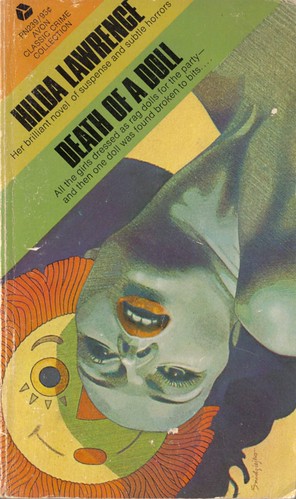
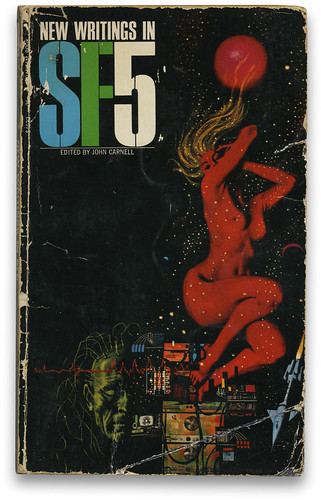
Eric Carl‘s Flickr photostream has some nice classic sci-fi and fantasy book covers (the rather fine looking Death of a Doll and New Writings in SF 5 pictured above). (via but does it float)

Re-envisioning the American small press — Fiona McCrae, director and publisher of Minneapolis independent Graywolf Press, profiled in PW (via @sarahw):

McCrae believes the publishing business is changing in favor of smaller presses, which can have close contact with their audiences and realistically support the smaller sales that typify many literary books: “I think that’s been true for a long time, and it’s just getting truer and truer and truer. There’s still obviously a layer in which we don’t compete, and it’s not our job to”

Rearrange, Rewrite, Redefine and ReimagineChicago-based indie Featherproof Books would like you to “remix” parts of their forthcoming titles, starting with Tour of the Drowned Neighborhood a short story taken from Blake Butler’s Scorch Atlas (via @R_Nash).

Overdue! The Central Library in Atlanta, the last building by “Modernist master” Marcel Breuer, is under threat according to Jonathan Lerner in Metropolis Magazine (pictured above).

A fair share — In the final installment of a 3-part series for the Globe and Mail on the publishing industry in Canada, James Adams looks at the thorny issue of digital rights.

Wild Hair, Wilder Ideas —  The Guardian profiles Alan Moore (and — on a related note — novelist Lydia Millet’s somewhat ill-considered assessment of Watchmen for the WSJ)

From Caveman to Spray Can: A Graphic Journey — Mike Dempsey’s gently meandering history of graphic design which not only features one or two books, but also the lovely Gill Sans typeface (picture above) which was used on the early Penguin paperbacks (via Noisy Decent Graphics).

Comments closed

BEC DOA

Book Expo Canada is in trouble.

The Canadian publishing trade show has been dogged by industry apathy and persistent complaints about high costs, low attendance, and a lack of paying customers for years. But the immediate need to cut costs in the face of the economic downturn — or, at least, see some kind of measurable return on investment —  has been the final straw for dissatisfied publishers.

Random House, Canada’s largest trade publisher, unilaterally withdrew from the event in November, and last week HarperCollins and Penguin — closely followed by  Scholastic Canada and H.B. Fenn & Co.  — announced that they would not be attending BEC in 2009 either.

Scheduled for June 19th-22nd at the Metro Toronto Convention Centre, organizers Reed Exhibitions initially said that it was still their intention to hold the annual convention even though Simon & Schuster was the only one of the “Big Four” multinational publishers committed to the ailing event.

Now it seems Reed may be reconsidering that decision after Random House’s recent announcement that they would be launching a new Toronto “literary and cultural” festival with the Globe and Mail in May —  one month before BEC.

With a high-profile media sponsor, and including events with crowd-pleasing luminaries such as Naomi Klein, Margaret MacMillan, Richard Florida, Pulitzer Prize nominee Ha Jin, and New Yorker columnist Adam Gopnik, the two day “Open House Festival” is clearly aimed at doing precisely what BEC has seemed so incapable of – bringing in paying customers and driving book sales.

More troubling for Reed is that the new festival means their latest initiative, the Toronto Book Fair, planned for the first weekend in October, will almost certainly be stillborn.

Details of the fair were unveiled earlier this month by John McGeary, Reed’s general manager for Canada.

Hoping to win over critics of Book Expo, McGeary outlined an “inclusive celebration of reading and literacy” akin to Salon du Livre. But hampered by a venue (the Direct Energy Centre) on the fringes of public transit, and scheduled for one of the busiest months in the publishing calendar, Reed’s plans disappointed the vast majority of the invited audience of independent booksellers and industry-types.

McGeary, relying heavily on his PowerPoint slides, struggled to articulate a coherent vision for a fair that nobody seemed to want, and was unable to substantially differentiate it from Word on the Street, the popular not-for-profit book festival taking place in downtown Toronto one week before the Reed event.

“We consider ourselves extremely different” was about the best McGeary could manage. “Yes”, a wag in the audience said, “Word on the Street is free and in Queen’s Park!” Touché .

The poor timing and location, combined with a breath-taking dearth of both imagination and logistical detail, makes it unsurprising that Random House and Penguin have already announced they will not be attending the new fair. And more publishers are sure to follow suit.

Reed — who are now, according to PW, reviewing all their dealings with the book industry in Canada — will no doubt blame the combined failure of BEC and the Toronto Book Fair on the crumbling economy and the mixed messages sent by fickle, selfish and duplicitous book industry players.

But Reed cannot entirely escape responsibility for their situation. They have consistently put the cart before the horse, planning events before they have identified a real need or purpose. This ‘build it and they will come’ attitude may have worked in the past, or perhaps elsewhere. Unfortunately Reed’s abortive attempt to make BEC more inclusive two years ago, the now infamous the Booked!, and the shortcomings of the trade show itself have seriously damaged their credibility in Toronto.

And Reed is guilty of simply trying too hard. Their efforts to be inclusive are laudable, and yet in trying please everyone, they inevitably please no one.

The book community in Toronto consists of authors, publishers, distributors, bookstores, libraries, readers, publicists, journalists, bloggers and more. Their interests conflict at least as often as they overlap, and one only needs to look at the finger-pointing and handbag-swinging caused by the high Canadian dollar last year to see that relations between publishers and booksellers, and booksellers and their customers, (not to mention the industry and the media), are fragile at best. People get upset. And they get over it. Reed has never quite seemed to grasp that to organise an effective event they will need to risk offending some people.

It is simply not fair to expect Reed to organise an event like BookCamp, or even Word on the Street. It would be impossible. But Reed could – and probably should – have organised an event like the Open House Festival. It should’ve been possible to work, initially at least, with one or all of the Big Four and a single retailer to kickstart something bigger and more inclusive. Random House’s understandable impatience has slammed that door  in Reed’s face, and, to be honest, it is hard now to see where they have left to turn.

Comments closed

Midweek Miscellany, Jan 28th 2009


John Updike (pictured) has died at 76The Guardian and the New York Times look back at his life and career in pictures. Designer Observer points to ‘Deceptively Conceptual’ Updike’s astute 2005 essay on book covers for the New Yorker:

Publishing forms a minor branch of the entertainment industry, and book design is increasingly a matter of fashion—that is, of attention-getting. In the visual clamor of a bookstore, the important thing is to be different; a whisper becomes a shout, and the ugly becomes beautiful if it attracts attention. Yet an utter flaunting of conventional expectations may baffle and repel the public; when the title and the author’s name are left off the front of the book… it sends a subliminal message of contempt for the written word, the product being packaged.

Batman as jazz– Brad Mackay wins top prize for funniest headline of the week for his look at the reinvention of the Dark Knight and the genius of BatManga! in the Globe and Mail.

“Content is Free… But Curation is Sacred” — Peter Collingridge at Times Emit considers the implications of the Google settlement and what happens if/when we are flooded with unmediated free “stuff”:

[A]s the amount of content we are exposed to increases, without any discernible gauge of quality, it is the trusted curators of that content to whom we will choose to give our attention, time or money, rather then trying to filter it all out personally… the curator may be the bloke in the record shop who knows my music collection and recommends something new, the staff in my local wine merchant, or a particularly good blog I follow, my newspaper – anything. However, it is not Amazon’s recommendation algorithm; it is decidedly human, and, over time, a relationship of trust is built up. If it works, that trust leads to action, purchase, attention, refinement and more trust.

See the Web Site, Buy the Book: J. Courtney Sullivan looks at author web sites and book trailers for the New York Times.

Sara Nelson, editor in chief of Publisher Weekly has been fired is “leaving as part of a companywide restructuring”. The indefatigable Sarah Weiman has a extensive round-up of the reactions in the blogosphere.

The fabulous Book Cover Archive have recently add a couple of lovely minimalist cover designs by Gabriele Wilson (pictured above). Nice.

Comments closed

More Vintage Penguins and Pelicans

Ace Jet 170 has just posted about a “brilliant and odd” vintage Penguin paperback design by Herbert Spencer (pictured):

And, what with the link yesterday to Things magazine’s collection of vintage Pelican covers, I thought I should also link to Ace Jet 170’s growing Penguin/Pelican Flickr collection.

Ace Jet 170

Ace Jet 170’s Penguin/Pelican Flickr Collection

UPDATE

Also: The Penguin Paperback Spotters’ Guide Flickr Pool

Comments closed

The Confessions of a Literary Editor

With regard to the challenges facing book review editors, mentioned here yesterday, Scott Pack has posted an interesting Q & A with Robert McCrum, former literary editor of The Observer newspaper (and former editor-in-chief at Faber & Faber):

What criteria did you use as a literary editor when deciding which books to review?

I always tried to choose the very best books available on the shelves – and on many weeks I felt I never had enough space. Plus, I tried never to lose sight of the fact that The Observer is a news-paper. The books we covered had to satisfy some fairly basic (literary) news criteria. What do I mean by that? Well, a new novel by Philip Roth or Milan Kundera is automatically more newsy than almost any first novel, unless of course you decide — as literary editor — that, say, Zadie Smith is a new voice to watch out for.

It all seems so straightforward — and I do have some sympathy for this view — and yet it leaves you wondering what hope is their for debut authors, under-appreciated talents, and small presses? (Zadie Smith — if needs to be said — was published by Penguin and hyped to the gills). Perhaps it also gives some indication as to why all newspaper book sections look so similar and review so many of the same titles?

Link

Comments closed

The New Globe & Mail Books

As announced in December last year, The Globe and Mail replaced its standalone Books tabloid with a combined ‘Focus and Books’ section this weekend, simultaneously launching a new Books website that will feature, amongst other things, daily book reviews, news on books and the publishing industry, and blogs by Globe Book’s online communities editor Peter Scowen and Books editor Martin Levin.

In context of the numerous issues facing newspapers internationally, and the rapid decline of book review coverage in the US (and elsewhere) in recent years, the Globe’s long-foreshadowed shake-up has garnered barely a murmur outside of Canada. Nevertheless there has been some lively discussion on several Canadian book blogs.

Describing it as a “an inauspicious start” and “a work in progress”, That Shakespeherian Rag gives the new books coverage a thorough critical mauling, drawing particular attention a egregious error regarding the 2008 Giller Prize-winning novel Through Black Spruce by Joseph Boyden, and several other missteps. The Literary Lad’s final verdict: “[A] mixed, but generally underwhelming bag, with the online component scoring better than the new print format… Let’s hope that the early hiccoughs are just that, and not an indication of how things are to be run in the long term.”

Mark at INDEX // mb , who has clearly given this a lot of thought (he’s written about the launch too), isn’t keen on the presentation, but does give credit where he thinks it’s due: “The Globe team have given us a great online destination for Canadian readers. Congratulations to them for planning, creating, and delivering the new site.”

And despite some initial disappointments, Hugh at Book Oven is also optimistic, noting that the “decision to not just quietly kill their book section, as so many other papers have, but to relocate it is encouraging.”

Like Hugh, I’m grateful the Globe has decided to maintain some kind of book coverage in what is a horribly toxic environment for newspapers and book reviews. And I know book review editors (particularly, perhaps, Canadian ones) have a truly thankless task —  trying to please everyone means, inevitably, you please nobody (least of all bloggers!).

I am personally sad, however, to see two distinct sections that I liked unceremoniously (and somewhat incoherently) brought together in a expedient shotgun wedding. No doubt Focus and Books will grow into its new identity and improve with time, but the result this weekend lacked clarity and a sense of purpose. The new features appeared, well, rather desperate.

The online component — technical issues aside — feels a little belated to me and the Globe is lagging behind the extensive book coverage to be found elsewhere on the web, notably at the New York Times and the Guardian who committed earlier to being online. Better late than never though, and with an authoritative and informed focus on the Canadian literary scene, the Globe might be able to carve out a niche for itself given time.

Peter Scowen — who has been honourably responding  to the critical reactions on the Globe’s In Other Words blog — notes that the online launch did not go “without a hiccup” and I don’t suppose that producing the new print section was straightforward. Perhaps it is really too early to tell how this will all play out? Still, I must confess to being strangely ambivalent about the new section and website. With layoff expected at the Globe any day now, I can’t shake the feeling that they’re re-arranging the deckchairs…

1 Comment

Monday Miscellany, Oct 27th, 2008

A day at the International Festival of Authors in Toronto and I’m running a wee bit behind, but–better late than never–here’s an evening edition of Monday Miscellany…

Ex-Penguin designer David Pearson  hopes to “reaffirm traditional methods of book production” with his new venture White Books according the Creative Review:


“Working on the premise that the ‘classics’ are usually the books that are treasured most, we’re aiming to create a package that stands a chance of ageing as gracefully as the writing within. Owing to the arrival of eBooks, many have prophesied the death of the printed word but we see this simply as an opportunity to turn the spotlight back on the traditional methods and to luxuriate in the craft and tactility of the physical book and the printed page.”

More on White Books at The Bookseller.

David Ulin sees a silver lining in the economic downturn (when am I allowed to start calling it a recession?) in the LA Times:

No more will publishers or writers have time or money for ephemera. During the Great Depression, even popular literature got serious: The 1930s saw the birth of noir. As the money dries up, so too, one hopes, does the gadabout nature of literary culture, the breathless gossip, all the endless hue and cry… [W]ith hard times upon us, it doesn’t seem too much to ask that this signal the start of a more stripped down, less self-absorbed period, in which we set aside the sound and fury and focus on the writing rather than the noise.

But this was the money quote for me:

“Don’t get me wrong: I’m all in favor of new technology, new delivery systems, new venues where the conversation about literature might take place. But the unrelenting insistence on newness has led down any number of blind alleys, perhaps most distressingly the ridiculous (and ongoing) print-versus-Web non-controversy, which has been promulgated almost exclusively by the least insightful people on both sides.”

Yes. Yes indeed.

Agent and former publisher Larry Kirshbaum at the HarperStudio’s The 26th Story:

“I would like to see publishers doing more marginal titles electronically — with creative Internet promotion —  as their test market, then go to print if there’s a sufficient response. This is not just a matter of ecology (e.g. avoiding waste), it’s promoting the idea that every book that is published physically will get significant attention by the publisher, the retailer and hopefully the consumer.”

Writer Al Alvarez’s awesome looking chair (pictured).

Author and controversial critic James Wood talks about his recent book How Fiction Works on KCRW’s Bookworm:

Comments closed

Google Expands Book Search

Google has announced that it is launching a new set of free Google Book Search tools “that allow retailers, publishers, and anyone with a web site to embed books from the Google Book Search index.”

Google Book Search, which already partners with publishers and libraries, give users the opportunity to search online and view a preview of a book if it’s out of copyright, or the publisher has given Google permission.

The new tools enable sites to embed books from the Google Book Search index, allowing them to display full-text search results from Book Search, and integrate with social features such as ratings and reviews:

“Ultimately, we believe that these tools and partnerships further our quest to make books more discoverable on the Web, from your Google search results to your favorite bookstores, publisher and author websites, online library catalogues, and social networks.”

Link


Comments closed