Skip to content

Tag: Design

Picador Spring 2011 Covers

Picador have just posted all their Spring 2011 covers to Facebook. There’s some lovely work. Here are a few favourites:

The Fever: Cover design by LeeAnn Falciani

Watching the World Change: Cover design by Henry Sene Yee • Cover photograph by Patrick Witty

Winterland: Cover design by Keith Hayes • Cover photograph by eyespy/GettyImages

(Thanks Henry).

6 Comments

The Art of Immersion | Jason Booher


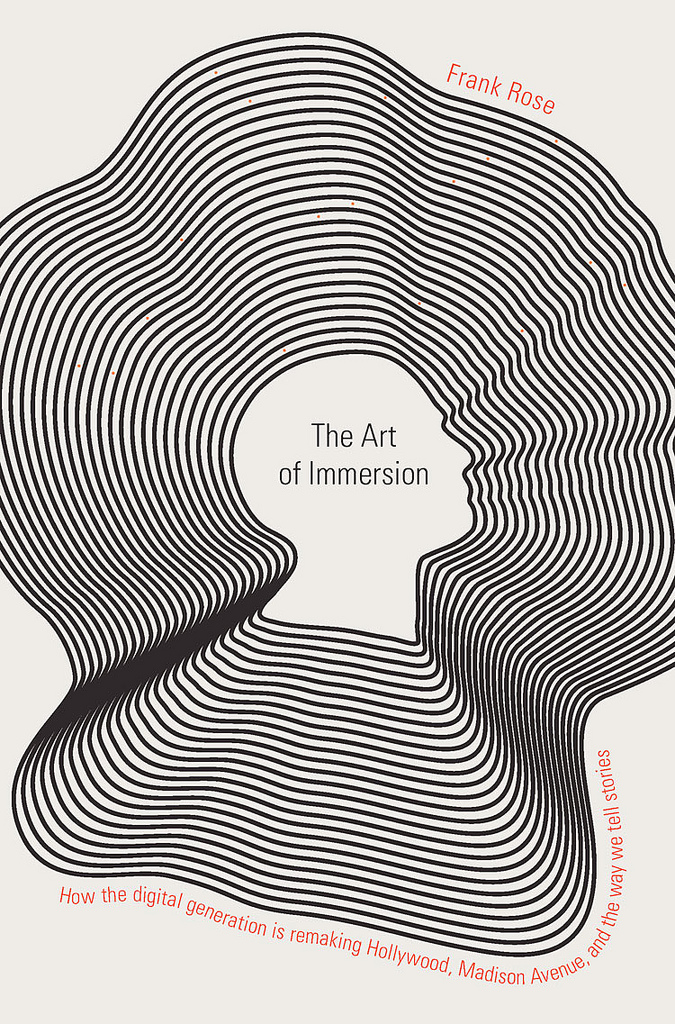
The nice folks at W.W. Norton were kind enough to give me a heads up about this beautiful new cover design by Jason Booher for The Art of Immersion by Frank Rose. Stunning stuff.

Be sure to check out W. W. Norton’s Book Design Archive on Flickr if you haven’t already.

Comments closed

Something for the Weekend

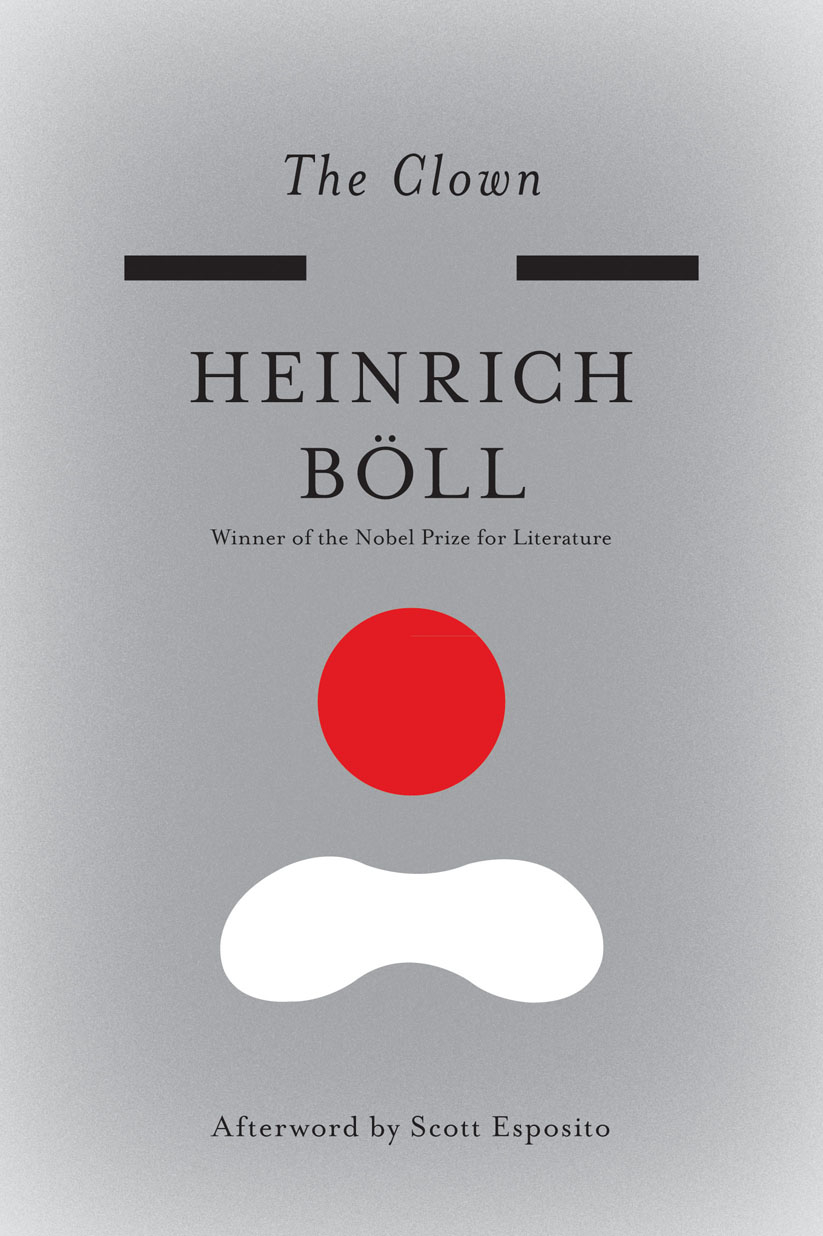
The Book Bench interviews designer Kelly Blair about her work and her Heinrich Böll redesigns for Melville House:

There are so many amazing and striking book covers out there, yet I am most often drawn to the simplest thing on the shelf. Perhaps it’s because I am so immersed in book design day-to-day, but sometimes going into the bookstore can feel visually overwhelming, like the cereal aisle at the grocery store. To that end, David Knopka’s series design for the Melville House novellas still stands as one of my favorites. For the same reason, walking into the Persephone book shop in London feels like a breath of fresh air.

And on the subject of book covers, I’ve been loving designer Andrew Henderson‘s Lovely Book Covers Tumblr.

You can find The Casual Optimist Tumblr here.

Cabaret — Author Hanif Kureishi on the art of writing for The Independent:

There’s no connection between being able to write and being able to explain your work in a rain-swept tent to an audience staring at you like hungry animals contemplating a suspect steak. Listening and reading are different experiences. Reading, writing for a reader, and being read, are intimate acts, and there’s something about trying to articulate what you’ve done that can flatten and reduce it, horrifyingly so.

Some writers choose the written word because they find it difficult to speak directly; many writers are in love with solitude. Whichever it is, good writing should resist interpretation, summary and the need for applause.

The Information — Michael Dirda reviews Too Much To Know: Managing Scholarly Information Before the Modern Age by Ann M. Blair for The Washington Post:

Just how to present information for easy use was a constant vexation. In late antiquity, one might simply find a list of authorities cited. Gradually, though, compilers began to employ categorical headings or to arrange entries alphabetically or according to elaborate branching diagrams of knowledge. “One historian has counted nineteen different systematic orders present in early modern encyclopedic works, including the order of creation, of the Decalogue, of the biblical narrative,” and various “chronological and geographical orders,” as well as others that follow “the chain of being.”

While people during the Middle Ages and later drew much of their learning from dictionaries and digests, the more ambitious also took extensive notes from whatever classics came their way. By the Renaissance one could even purchase the equivalent of “Reading for Dummies”: Francesco Sacchini’s 1614 “De ratione libros cum profectu legendi libellus,” i.e.,”A Little Book on How to Read With Profit.”

The Science of Making Decisions — Sharon Begley on how too much information impairs our ability to make decisions:

The problem has been creeping up on us for a long time. In the 17th century Leibniz bemoaned the “horrible mass of books which keeps on growing,” and in 1729 Alexander Pope warned of “a deluge of authors cover[ing] the land,” as James Gleick describes in his new book, The Information. But the consequences were thought to be emotional and psychological, chiefly anxiety about being unable to absorb even a small fraction of what’s out there. Indeed, the Oxford English Dictionary added “information fatigue” in 2009. But as information finds more ways to reach us, more often, more insistently than ever before, another consequence is becoming alarmingly clear: trying to drink from a firehose of information has harmful cognitive effects. And nowhere are those effects clearer, and more worrying, than in our ability to make smart, creative, successful decisions.

And related… Jonah Lehrer, contributing editor at Wired and the author of How We Decide and Proust Was a Neuroscientist, on why easy decisions seem so hard:

The problem, of course, is that the modern marketplace is a conspiracy to confuse, to trick the mind into believing that our most banal choices are actually extremely significant. Companies spend a fortune trying to convince us that only their toothpaste will clean our teeth, or that only their detergent will remove the stains from our clothes, or that every other cereal tastes like cardboard. And then there is the surreal abundance of the store shelf… While all these products are designed to cater to particular consumer niches, they end up duping the brain into believing that picking a floss is a high-stakes game, since it’s so damn hard. And so we get mired in decision-making quicksand.

Comments closed

50/50 Reinstated

Richard Grefé, executive director of AIGA, has announced that the 50 Books/50 Covers competition will continue:

In seeking to balance AIGA’s celebration of design in all its dimensions, we recently merged the historic AIGA competition for books and covers… into the broader competition, “365: Design Effectiveness,” which includes interactive, cross-media and print design. Book designers, publishers and admirers reacted strongly to this news with a public petition to “Save 50/50,” gaining more than a thousand signatures in mere days.

We have listened to these passionate voices in the design community, and we have reinstated “50 Books/50 Covers” as a distinct competition. Our intention was not to reduce our support for book designers, but to present AIGA as representative of—and respectful toward—all design disciplines equally. We apologize to those who construed the original decision as a reduction in AIGA’s commitment to the importance of book and cover design; that was not the intention, although it was clearly the impression. We also apologize for tinkering with something that is held so dear by so many; and we were remiss in how we vetted and communicated this change.

Thank you Christopher Sergio and Catherine Casalino for organizing the petition to save 50/50, and thank you AIGA for listening. YAY.

2 Comments

The Breaking of Eggs: One Book, Three Covers

Books published in both the US and UK will often have different covers in each country. The UK and the US are, after all, two nations divided by a common language. Even so, I was still quite surprised by just how different the cover of UK paperback edition The Breaking of Eggs by Jim Powell (forthcoming from Orion, above right) was from the cover US edition of the same book (published by Penguin, above left).

It was Dan Mogford the designer of the UK paperback who pointed me in the direction of the original US cover, designed by Gregg Kulick. I had, it turned out, seen Gregg’s cover before — it had caught my eye in Paul Buckley’s book Penguin 75 — I just hadn’t realized it was the same book that Dan had just designed the cover for!

As Dan and Gregg’s treatments were so different, I thought it might be informative to ask them both about their designs. In the process, I came across Nathan Burton’s design for the UK hardcover edition of The Breaking of Eggs (published by Weidenfeld & Nicolson, above middle) — another, altogether different, interpretation of the same story. I thought it would be interesting to ask Nathan what he remembered from his design brief as well.

I’m grateful to all three designers for sharing their thoughts on their very different directions…

Gregg Kulick:

The Breaking of Eggs is the story of an old curmudgeon who learns to take down all of the walls he built around himself and really enjoy life. As a child, he flees Poland to escape the war and settles in France. As an adult he becomes a travel writer who focuses on the old communist block and is very much a communist himself. The rest of the world and its excesses annoy him and he shuts himself out. Slowly he breaks down the walls and visits his lost brother in America.

The title refers to a Joseph Stalin quote “You can’t make an omelet without breaking eggs” and could be used as a metaphor for his own life. Or he as a child, he could also have been one of the broken eggs. Regardless, it was his mind that needed to be broken in order to live a truly full life. Which, is why I chose that imagery. The giant exclamation point was a homage to Rodchenko, who was a huge influence on my design as a student and who often used them in his design.

The map in the background just represents some of the places he wrote about as a travel writer. This was more of a request from editorial to show “place” on the cover and I think it was a very nice suggestion.

Nathan Burton:

The publisher had tried a photographic route previously to commissioning me which hadn’t worked so they wanted an alternative approach. Buzz words they came up with were: cafe, espresso, napkin, beer, handwritten notes, cigarette smoke, a guide book on a table, a train. It was a case of combining this with a nod toward an Eastern European aesthetic to come up with the final design.

Dan Mogford:

The previous incarnations of the jacket – on both sides of the Atlantic – had all been fairly quirky and lighthearted and the publishers were keen to open this book up to a different audience. Orion were quite specific about the direction they wanted to go with this – the phrase ‘traditional, sophisticated literary fiction’ was mentioned a few times!

The focus for this version of the jacket was to be the protagonist’s early year’s in Lodz, Poland around 1939 when he was abandoned by his mother. The brief asked for ‘a lonely looking boy in an urban Polish setting ideally with a woman walking away from him’ – this highly specific request meant I was looking at a composite image from the start, it was really a case of finding the right elements within a variety of period photographs then assembling them to tell the story you see in the final composition.

1 Comment

Save 50/50 Petition

Save AIGA 50/50

Book designers Christopher Sergio and Catherine Casalino have created an website and online petition asking AIGA to reconsider its recent decision to end its annual design competition  50 Books / 50 Covers:

This year—after nine-decades—AIGA has decided to quietly discontinue the 50/50 competition.

Their decision was made without public announcement or explanation, and implemented without fanfare. The usual 50/50 deadline came and went, but the “Call For Entries” never went out. The presumption seemed to be that no one would notice its loss.

But people have noticed. And as it turns out, many of us care. In the few short days since the design community first realized what was going on, people have expressed the desire to preserve a competition dedicated solely to excellence in book design. There has been a common consensus that even in the digital age celebrating the physical book is important.

That is why we have created this website and online petition—to help spread the word even further, to give voice to a larger audience, and to perhaps see if enough momentum might be built to save the 50 Books / 50 Covers competition.

If you are a fan of design in any medium, or of reading in any format, we ask you to help us take a stand for the combination of both forms of expression.

50 Books/50 Covers is one of only a few design competitions dedicated to excellence  in book design. It is important that it continues.

Save 50/50

Comments closed

Midweek Miscellany

The Death Ray by Daniel Clowes

The new cover for Daniel Clowes’ The Death Ray available this fall from Drawn + Quarterly. (The usual disclosure: D+Q is distributed in Canada by my employer Raincoast Books).

The Enemy of Creativity — Jim Holt reviews Nicholas Carr’s The Shallows for London Review of Books:

It’s not that the web is making us less intelligent; if anything, the evidence suggests it sharpens more cognitive skills than it dulls. It’s not that the web is making us less happy, although there are certainly those who, like Carr, feel enslaved by its rhythms and cheated by the quality of its pleasures. It’s that the web may be an enemy of creativity. Which is why Woody Allen might be wise in avoiding it altogether.

A Machine To Think With — Paul Duguid reviews Merchants of Culture by John B. Thompson, Publishing as a Vocation by Irving Louis Horowitz and The Phantoms on the Bookshelves by Jacques Bonnet  for the TLS:

I. A. Richards called the book “a machine to think with”, yet it is curiously resistant to technological standardization. That point escapes many digitizing technologists, who are not perhaps the anti-book boors as sometimes portrayed… Rather they may be the last romantics, idealizing the book as a simple carrier of information and so one that submits unproblematically to their computer algorithms.

Unsolving the City — BLDGBLOG talks to author China Miéville about architecture and his recent novels The City and The City and Kraken. Fantastic stuff:

My intent with The City and The City was… to derive something hyperbolic and fictional through an exaggeration of the logic of borders, rather than to invent my own magical logic of how borders could be. It was an extrapolation of really quite everyday, quite quotidian, juridical and social aspects of nation-state borders… But I’m always slightly nervous when people make analogies to things like Palestine because I think there can be a danger of a kind of sympathetic magic: you see two things that are about divided cities and so you think that they must therefore be similar in some way.

The new covers for Miéville’s forthcoming book Embassytown, and his entire back catalogue with Pan Macmillan UK, were designed by Crush Creative.

And finally…

Handsome Boy Modeling School — A profile Lorin Stein, editor of The Paris Review, in The New York Times’ Fashion and Style section:

Mr. Stein, an unabashed bon vivant who favors bespoke shirts and tailor-made suits by Kirk Miller, appears indifferent to accusations of pretension or dandyism… He has already cemented his status as a somewhat unlikely sex symbol (though among New York’s literary crowd, being pale, thin and occasionally bespectacled doesn’t count against you) with a practiced charm and habit of leaning in close and locking eyes intensely in conversation.

There is hope for us all yet… I just wish I could afford the bespoke shirts and tailor-made suits…

Comments closed

Something for the Weekend

Luc Sante, author of Low Life: Lures and Snares of Old New York, has posted an amazing selection of vintage French photographic noir book covers at John Gall’s blog Spine Out.

On the Defensive — Sam Lipsyte, author of The Ask, on teaching creative writing in The Financial Times:

When you teach creative writing, you are already on the defensive. People love to poke you in the chest and cry, “But you can’t teach writing!” This is precisely what I think about automobile driving but I let them rant while I rub the sore part where they poked me. I don’t know why people get so worked up about this subject. Nobody has asked them to teach creative writing or even to learn it. Apprenticeship, the sharing of history and technique, has always been a central feature of art-making. Yet people cling to a romantic idea of the self-made genius toiling away in a garret or napping undisturbed in a sleep module.

Books on Wheels — A really lovely article about bookmobiles from the Smithsonian Magazine:

Bookmobiles, the man said, had been a fundamental inspiration while growing up in rural Mississippi in the mid-1960s. The public library had been closed to blacks—but the bookmobile stopped right on his street, a portal into the world of literature.

The gentleman was W. Ralph Eubanks: today an acclaimed author, and Director of Publishing for the Library of Congress… “The librarians did not care that I was barefoot, and wearing a pair of raggedy shorts. All they cared about was that I wanted to read—and to help me find something I would enjoy reading.”

Eubanks’ story is just one example of the pivotal role bookmobiles have played in literary culture, and individual lives, for more than 150 years.

Strides at The Strand — Nancy Bass Wyden, co-owner of The Strand bookstore in New York, interviewed in The Daily Beast:

We have taken strides to grow with our customers and listen to their needs. When customers started requesting New York Times bestsellers, we started carrying new books and featuring them on tables in the front of the store; when customers started talking about the Internet, we got online; when Amazon and B&N.com became “competitors,” we partnered with them.

And finally…

The Trial — Judith Butler in the LRB on the implications of the ongoing and complex legal battle in Tel Aviv over several boxes of Kafka’s original writings:

Had the works been destroyed, perhaps the ghosts would not be fed – though Kafka could not have anticipated how limitlessly parasitic the forces of nationalism and profit would be, even as he knew those spectral forces were waiting.

Comments closed

Penguin Great Food | Coralie Bickford-Smith

The Creative Review has an early look at three of the covers for Penguin’s Great Food paperback series to be released in April.

Designed by the wonderful Coralie Bickford-Smith, each cover draws on a decorative ceramic style relevant to the period of the writing.

Meanwhile, in new article for Fast Company Coralie talks about the inspiration behind her book covers:

“I want these books to be cherished like the literature inside,” says Bickford-Smith of her obsessive attention to detail. “If something is well considered, it will entice. People want to explore it, feel it. That design shines through and connects.”

And, if you missed it, my Q & A with Coralie from 2009 is here.

2 Comments

Le Carré | Stuart Bache

I’m a big fan John Le Carré’s spy stories, so I was really pleased to see these wonderfully stark redesigns for Sceptre by British designer Stuart Bache, who I interviewed last year about his cover designs for the Canongate editions of Gil Scott-Heron.

You can see all 14 covers in the series here.

Comments closed

Midweek Miscellany

Designers & Books — A beautiful new site compiling lists of books that designers identify as “personally important, meaningful, and formative.” Nice.

Rules Are What Make You — Michael Bierut at Designer Observer on his modernist upbringing at Vignelli Associates:

The rules weren’t written down anywhere or even explicitly communicated. They were more like unspoken taboos. Using Cooper Black, like human cannibalism or having sex with your sister, simply wasn’t done. For many young designers in the studio, the rules were too much. They resisted (futilely), grew restless (eventually), and left. By staying, I learned to go beyond the easy-to-imitate style of Helvetica-on-a-grid. I learned the virtues of modernism.

Thoughts on Design — The legendary George Lois at 10 Answers

When I was 14, aspiring to be a designer, 26 year-old Paul Rand published his iconic book, THOUGHTS ON DESIGN. My copy of it, bought, dime by dime with tip money delivering flowers all over the five boroughs for my fathers florist shop, remains the most important book in my library of over 10,000 art books. It’s thread-bare condition is witness to my reading, and memorizing, his revolutionary approach to the creation of communicative design.

Autodestruct — Author Ursula K. Le Guin reviews Monsieur Pain by Roberto Bolaño for The Guardian:

Surrealist narrative is a literary form at war with itself; disconnection is a primary tactic of surrealism, and story is a process of making connections, however unexpected. Readers open to the autodestructive element of modern art may find the surrealist devices in Monsieur Pain more deeply engaging than coherent narrative. I find them curiously old-fashioned, overly cinematic, and all too close to self-parody. But this early Bolaño novel has a moral and political urgency that obliges me to accept its noir banalities. Its tortuous method of approaching the unspeakable reveals the face of evil without glamorising it, as popular literature and film so often do. By indirection it avoids collusion.

And finally…

A stop motion digital magazine cover by Adam Voorhes and Will Bryant for Bluetooth’s publication Signature:

(via DesignWorkLife)

Comments closed

Just My Type | The Book Show

Simon Garfield, author of Just My Type: A Book About Fonts, talks to Ramona Koval for The Book Show on ABC Radio National:

RN Book Show —  Simon Garfield: Just My Type Mp3

Comments closed