Skip to content

Tag: Design

Something for the Weekend

Sweet Nuttin’ — A primer on George Herriman’s classic and wonderfully idiosyncratic comic strip Krazy Kat at Robot 6:

Krazy Kat is far from a chore… Indeed, it is rarely anything less than a delight to read, although it can be a bit challenging for newcomers. The early strips are dense with wordplay, while the later strips take on the quality of near-abstract paintings at times. Then there’s Krazy’s off-kilter dialogue (“If only I could be star or a moom or a komi or ivin a solo eeklip. But me, I’m nuttin”). Thus, whichever book you decide to dive into first, I’d recommend taking your time. Read (and reread) the strips slowly and don’t feel the need to rush through.

Unhappy Endings — Jason Zinoman, author of Shock Value: How a Few Eccentric Outsiders Gave Us Nightmares, Conquered Hollywood and Invented Modern Horror, talks to Terry Gross for NPR’s Fresh Air:

I think that as you look at this period from ’68 to the end of the ’70s, generally, first of all, you see a lot more unhappy endings. There isn’t this kind of catharsis at the end that you see in a lot of movies before that.

The central kind of monsters are no longer werewolves and vampires and the supernatural. The central monsters are – or I guess I would say the central monsters become serial killers and zombies… And I think the other thing that marks it is there’s a certain kind of moral ambiguity about these movies and just generally a sort sense of confusion and disorientation that marks most of these films.

Meanwhile, over on KCRW filmmaker and author John Sayles talks about his hefty new book A Moment in the Sun with Michael Silverblatt for Bookworm.

And finally…

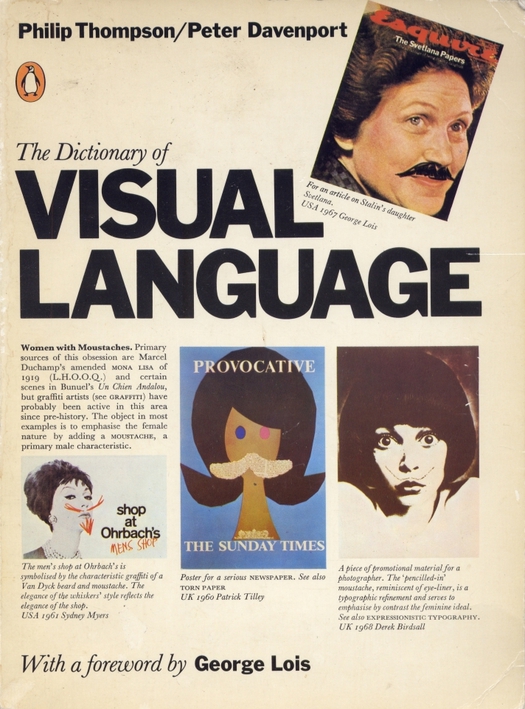
Rick Poynor on the dictionary as art concept for Designer Observer:

With book design, we should value appropriateness to subject, vivid animation of content, and the dexterity and panache with which the designers interpret every purposeful, cherishable convention of the book. The notion of continual reinvention as a worthwhile or attainable goal is particularly misplaced here…

Comments closed

Herbert Bayer’s Book of Maps

Nate Burgos of Design Feast takes an appreciative look at the World Geo-Graphic Atlas (1953) designed by Herbert Bayer with Martin Rosenzweig, Henry Gardiner and Masato Nakagawa. Published in 1953, the book contains 2,200 diagrams, graphs, charts, and symbols about the planet:

The video is part of a new series called ‘Rare Book Feast’ about “the timeless character of books.”

Comments closed

Midweek Miscellany

Juggling — The multi-tasking Charlotte Strick,  art editor of The Paris Review, art director at Faber & Faber and Farrar, Straus & Giroux, and book designer,  interviewed at From The Desk Of…

Genre — China Miéville, on his new book Embassytown and genre fiction in The Guardian:

“I love genres; I think they are fascinating. My issue with litfic is not that it is a genre but that (a) it doesn’t think it is and (b) it thinks it’s ipso facto better than all the ones that are genres. Literary fiction of that ilk – insular, socially and psychologically hermetic, neurotically backslapping and self-congratulatory about a certain milieu, disaggregated from any estrangement or rubbing of aesthetics against the grain – is in poor shape.”

Invasion by the Virtual — Iain Sinclair discusses London and five novels that capture the spirit and history of city:

When the railways were first put in, there was devastation, because there were so many competing companies who just ripped up houses right, left, and centre. In the name of catching the spirit of the age and indulging in this technological process (and the idea of progress through science), London was savagely remade. It took a long time to absorb, recover and discover itself through that. At the moment, we’re in this sort of management age — an age of the virtual — in which you can change reality by looking at digitised, computer-generated images and projecting a fantastic city of the future, like a science fiction. People have come to believe that this is reality, even though they are contradicted by observation, which shows you devastated fields, radioactive materials buried in the ground that have been ripped up fast, and absolute destruction… So it is a devastating moment for the city, which I don’t think has ever been under such a prolonged form of invasion by the virtual.

Franzen’s Ugly Americans — Tim Parks on reading Jonathan Franzen’s Freedom in Europe (and, incidentally, the work Swiss novelist Peter Stamm, author of Seven Years, which sounds great) (via Bookslut):

Freedom’s failings are interesting in so far as they deepen the mystery of the book’s international success. It’s one thing for the Americans to hype and canonize one of their favorite authors, but why do the Europeans buy into it? Ever anxious that they need to understand America, fascinated by its glamor and power, Europeans are perhaps attracted to those American novels that explain everything: Roth’s American Pastoral, DeLillo’s Underworld. More than a novel by an American they want The Great American Novel. But of course Europeans also resent American world hegemony and feel (still and no doubt wrongly) superior culturally.

And finally…

20 Books Every Graphic Designer Should Read and an interview with Rick Poynor, founding editor of Eye and a co-founder of Design Observer, who compiled the list, at Designers and Books:

Books always point to other books. A bookshop, like a library, is a fantastic, spatially organized, easily navigable source of vast quantities of interconnected information about what exists for you to discover and know. If someone devised an online virtual space that allowed you to do this kind of rapid, effortless, multifocal, visual, and spatial browsing—perhaps someone has, though it certainly isn’t Amazon or the iPad App Store—we’d applaud them for a brilliant new concept. But these marvelous spaces already exist, at least for the time being, right there in your local shopping street.

art editor of The Paris Review and an award-winning designer known for creating the jackets for books by Roberto Bolaño, Lydia Davis, and Jonathan Franzen, among many others. She is also art director of Faber & Faber, Inc. and of the paperback line at Farrar, Straus and Giroux.art editor of The Paris Review, art director of Faber & Faber and at Farrar, Straus & Giroux,
Comments closed

Midweek Miscellany

Scripts: Elegant Lettering from Design’s Golden Age — new from Steven Heller and Louise Fili, published by Thames & Hudson.

50/50 — Designer Andrew Henderson, curator of Lovely Book Covers, is going to spend 50 days designing 50 covers based on the 50 most influential books of the last 50 years.

See also: Matt Roeser’s New Cover project.

Why She Fell — An interesting article by Daniel Mendelsohn on Spider-Man and Julie Taymor’s ill-fated musical Spider-Man: Turn Off the Dark, in the NYRB:

What made Spider-Man unusual among superheroes when he debuted wasn’t so much the arachnid powers he derived from the radioactive spider…, but his very ordinariness. Bullied at school, worried about girls and money, fussing at and fussed at by his foster parents, the kindly Aunt May and Uncle Ben, Peter Parker is a regular lower-middle-class Joe with pretty average teenager problems… It’s not hard to see how all this made Spider-Man popular among teenaged comic book readers in the 1960s, that decade of the teenager. Indeed, the series marked the beginning of what one historian of the genre called a “revolution” — a newfound interest on the part of comic book creators in emphasizing the protagonist’s “everyday problems” rather than the glamour of being a superhero… The emphasis on Spidey’s ordinary humanness explains why this series, as opposed to a number of other superhero comics, is laden with “heavy doses of soap-opera and elements of melodrama.”

Sheep — Philosopher Simon Blackwell reviews How to Write a Sentence: And How to Read One by Stanley Fish for The New Republic:

It is wrong to think that the sentence is a mere slave, whose function is to bear content, which, while being the really important thing, is also something that could equally have been borne by another. Change the shape and ring, and you change everything. The balance, the alliterations, the variation, the melody, the lights glimmering in the words, can work together to transform even an ugly thought into something iridescent, as when Eli Wallach in The Magnificent Seven expressed his character’s indifference to the suffering he brings the peasants in one perfect, albeit perfectly brutal, sentence: “If God didn’t want them sheared, he would not have made them sheep.” As Fish says in his analysis of this example, here the “air of finality and certainty” is clinched by “the parallelism of clauses that also feature the patterned repetition of consonants and vowels” and then, of course the inevitability of that last dismissive word. If the devil has the best tunes, sometimes the bandits have the best sentences.

And finally…

The aforementioned Steven Heller on the paintings of Paul Rand at Design Observer:

[He] proceeded to tell me how he liked working in all media, including photography and painting and how it influences what he does and how rarely these “other things” are seen in print or elsewhere. Actually, he used excellent judgment insofar as the paintings and watercolors were appealing for their humor and craft, but they were paeans to Klee (and even Cezanne). They were not his true métier (pardon my French). They showed his interests and represented his eye, but painting was not his signature work…

What is there to say about these paintings and watercolors? Are they building blocks or respites from the rigors of graphic design? When I said, “Paul, one of the things I like about you, is that you don’t pretend to be a painter” he had a knowing look. I don’t think he wanted to be a painter, but he wanted to integrate art into graphic design, which he did so very well.

Comments closed

Something for the Weekend

Defending the Unusual — Designer Allison Saltzman, art director at Ecco,  interviewed at Caustic Cover Critic:

Everywhere else I’ve worked, the books’ content still informs the cover design, but the overall aesthetic is subject to the publisher’s (and their art director’s) taste. I think the trick to happiness, in this business, is to find yourself a publisher or an art director whose taste you’re comfortable with. And you also need them to trust your instincts as a designer. I am so content at Ecco because the publisher and editors tell me about their books and the audience they’re aimed at, but then they just want me to read them and come up with cover ideas myself. Another good thing about Ecco is that the publisher wants and defends interesting and unusual covers; that’s rare.

Burying the Book — Laura Miller interviews legendary editor and writer Robert Gottlieb for Salon:

[S]ince I’ve been in publishing since the mid-’50s, I’ve lived through all the moments when doom was cried, going right back to “the medium is the message.” The book was dead — I can’t tell you how many times we’ve buried the book in my lifetime. The fact is that we haven’t buried the book, and however all this works out, we’re still not going to be burying the book. People are still going to be reading books, and whether they’re going to be reading them on a Kindle or as a regular physical hardcover book or a paperback or on their phones or listening to audiobooks, what’s the difference? A writer is still sending his or her work to you, and you’re absorbing it, and that’s reading.

Seeing the Pain — Mark Medley talks to Michael Pietsch, editor of the late David Foster Wallace, about constructing the recently released The Pale King:

“This project has been kind of all-consuming,” says Pietsch, whose only other experience editing a posthumous work came in 1985, when he worked on Ernest Hemingway’s bullfighting memoir The Dangerous Summer.

There was no outline, no list of chapters, no clues as to where Wallace planned to take the narrative. The chapters were not in sequence. The names of characters constantly changed. Pietsch thought he’d discovered the novel’s first chapter — the one which begins “Author here” — until he found a footnote explaining precisely why it wasn’t the first chapter. He laughs: “I thought, ‘Oh, I don’t even have a starting point!’ ” Still, the process “was sometimes exhilarating, delightful and joyful because I felt in his presence. And at other times heartbreaking because I saw how hard it was for him. You can’t read this book without seeing pain.”

The War of Independents — Andrew Keen, author of The Cult of the Amateur, on how online piracy is damaging independent filmmakers more than Hollywood:

One of the Internet’s greatest fallacies, its fishiest tale, is the idea of the “Long Tail.” Popularized by Wired magazine editor-in-chief Chris Anderson, first in a 2004 magazine article and then in the bestselling 2006 book, The Long Tail: Why the Future of Business Is Selling Less of More, it argues that the Internet is an ideal distribution platform for independent filmmakers, musicians, and writers struggling to compete against the financial might of mass media conglomerates… But Anderson’s argument has a fatal flaw. He forgets about Internet theft — the online cesspool of illegal peer-to-peer networks and illegal streaming services that has already decimated the music business and is now doing potentially irreparable damage to the motion picture industry. And in the face of piracy, I’m afraid, the belief that all the value in the Internet economy can be located in its tail is, literally, turned on its head. Rather than a long tail, Internet theft’s mass looting of the content industry is transforming the Internet into a fat-headed economy with everything on top — an increasingly unequal medium which discriminates against independent filmmakers and makes it harder, rather than easier, for them to make a living from today’s digital economy.

Before people yell at me, I’m sure that there are counter-arguments to Keen. Constructive ones are welcome in the comments (just leave ad hominem stuff at home).

And finally…

RUR — NPR discusses the origin on the word ‘robot’:

It was the brainchild of a wonderful Czech playwright, novelist and journalist named Karel Capek. He lived from 1880 to 1938. And he introduced it in 1920 in his hit play “RUR,” or “Rossum’s Universal Robots.”… [It] comes from an Old Church Slavonic word, rabota, which means servitude of forced labor. The word also has cognates in German, Russian, Polish and Czech. And it’s really a product of Central European system of serfdom, where a tenants’ rent was paid for in forced labor or service.

And he was writing this play about a company, Rossum’s Universal Robots, that was actually using biotechnology. They were mass-producing workers using the latest biology, chemistry and physiology to produce workers who lack nothing but a soul. They couldn’t love. They couldn’t have feelings. But they could do all the works that humans preferred not to do. And, of course, the company was soon inundated with our orders.

Well, when Capek named these creatures, he first came up with a Latin word labori, for labor. But he worried that it sounded a little bit too bookish, and at the suggestion of his brother, Josef, Capek ultimately opted for roboti, or in English, robots.


2 Comments

If You Haven’t Saved By Now… | Lauren Panepinto

Lauren Panepinto, Creative Director at Orbit, whose Making of a Book Cover video was such a hit last year, has made a new video about creating the graphic optical illusions she originally intended to use in the design of the Simon Morden’s Equations of Life trilogy:

The no less stunning final covers actually look like this:

Comments closed

Bricks | Stuart Bache

British designer Stuart Bache was art director on this lovely cover for the forthcoming novel Bricks by Leon Jenner. The epic cover illustration is by Jorn Kaspuhl, who also illustrated the book.

There is a really nice sense of something both classic and yet contemporary about this design, which seems appropriate for the book from what I can gather.  Stuart’s work has, of course, appeared on previously on The Casual Optimist, and you can read my short interview with him here.

Bricks itself is actually about a bricklayer who remembers a past life as a Druid at the time of the Roman invasion of Britain. It was — if I remember correctly — originally released by the author a few years ago as an online audio book. No doubt someone will correct if I am wrong.

Comments closed

Something for the Weekend

Visual Vocabulary — An interesting interview with book designer Peter Mendelsund at Czech Position:

I definitely take into account the author’s native culture, though whether I choose to adopt something stylistic from this culture depends on the vagaries of the particular project. There are times when one wants to accentuate the universal aspects of a writer’s work; and there are times when one wants to situate an author in a specific time and place… With Kafka, I would argue that his greatness lies in the universality of his ideas, that his writing transcends time and place… Conversely, with many other writers, nationality is at the core of their work — their great subject is place and contextual identity. They may write about Czech-ness, or English-ness, etc. These are the books where it makes the most sense to bring the local artistic tropes and visual cues to bear. For what it’s worth, I love delving into the visual vocabulary of different cultures.

The Casual Optimist interview with Peter is here, and you can read my 2-cents on his Kafka redesigns here.

The Polish Club50 Watts asks you to design the Polish edition of your favourite book. $400 is up for grabs.

Living by Dying — Ben Ehrenreich, author of The Suitors and Ether (forthcoming), on the death of the book in the new Los Angeles Review of Books:

For the record, my own loyalties are uncomplicated.  I adore few humans more than I love books.  I make no promises, but I do not expect to purchase a Kindle or a Nook or any of their offspring.  I hope to keep bringing home bound paper books until my shelves snap from their weight, until there is no room in my apartment for a bed or a couch or another human being, until the floorboards collapse and my eyes blur to dim.  But the book, bless it, is not a simple thing… [W]hat could it mean for the book to die?  Which sort of book?  And what variety of death?  What if the book had only ever lived by dying?

A World Made of Stories — James Gleick, author of The Information, on memes:

In the competition for space in our brains and in the culture, the effective combatants are the messages. The new, oblique, looping views of genes and memes have enriched us. They give us paradoxes to write on Möbius strips. “The human world is made of stories, not people,” writes the novelist David Mitchell. “The people the stories use to tell themselves are not to be blamed.” Margaret Atwood writes: “As with all knowledge, once you knew it, you couldn’t imagine how it was that you hadn’t known it before. Like stage magic, knowledge before you knew it took place before your very eyes, but you were looking elsewhere.” Nearing death, John Updike reflected on

A life poured into words—apparent waste intended to preserve the thing consumed.

Fred Dretske, a philosopher of mind and knowledge, wrote in 1981: “In the beginning there was information. The word came later.” He added this explanation: “The transition was achieved by the development of organisms with the capacity for selectively exploiting this information in order to survive and perpetuate their kind.” Now we might add, thanks to Dawkins, that the transition was achieved by the information itself, surviving and perpetuating its kind and selectively exploiting organisms.

Cull or be Culled — NPR’s Linda Holmes on how we are missing everything:

You used to have a limited number of reasonably practical choices presented to you, based on what bookstores carried, what your local newspaper reviewed, or what you heard on the radio, or what was taught in college by a particular English department. There was a huge amount of selection that took place above the consumer level. (And here, I don’t mean “consumer” in the crass sense of consumerism, but in the sense of one who devours, as you do a book or a film you love.)

Now, everything gets dropped into our laps, and there are really only two responses if you want to feel like you’re well-read, or well-versed in music, or whatever the case may be: culling and surrender.

And on a related note…

Lester Bangs’ Basement — Bill Wyman on collecting and scarcity at Slate:

Lester Bangs, the late, great early-rock critic, once said he dreamed of having a basement with every album ever released in it… [T]he Internet today is very much like [that]. In its vastness, cacophony, and inaccuracy, it’s also very reminiscent of Borges’ Library of Babel. Just as that library contained books made up of every possible combination of letters, in the corners of the Internet I’m concerned with here you can find similar chaos: The song “Let It Be” by the Beatles, sure, but also mislabeled as by the Stones, by the Kinks, by the Hollies, by the “Battles” … and also with, of course, those same labels attached to entirely different songs (like “Let It Bleed”).

Anyway, is it enough?

For some, the enjoyment of art or culture has fetishistic aspects. To them, being a fan is about something more than just experiencing the art. There will always be collectors, fixating on the physical objects, like the great LP jackets from the 1960s and 1970s… And there will always be people who can’t be happy unless they have something regular fans don’t. Indeed, a friend of Bangs’, long after he died, said to me that the unspoken corollary in Bangs’ mind to his fantasy was that no one else would have access to it.

Happy Easter.

Comments closed

Making The Trees of Codes

Here’s a short video showing the complex production of Jonathan Safran Foer’s innovative die-cut novel Tree of Codes, published by Visual Editions and printed by Die Keure in Belgium:

(via Creative Review)

Comments closed

Coralie Bickford-Smith | Serious Interview

Alan Trotter entertainingly interviews Coralie Bickford-Smith about her new cover designs for the Penguin Great Food series:

The lettering on the covers is by the talented Stephen Raw, and you can see all the finished designs on the Penguin Books Flickr.

My interview with Coralie is here.

Comments closed

Kurt Weidemann 1922-2011 | GestaltenTV

GestaltenTV have posted an 16-minute interview with influential German typographer and graphic designer Kurt Weidemann who died at the age of 88 on March 31st, 2011:

Weidemann helped form the graphic identities companies such as Mercedes-Benz and Porsche, as well as designing books for the Büchergilde Gutenberg and the publishing houses Ullstein, Propyläen, Ernst Klett and Thieme.

Jürgen Siebert has written an obituary of Weidemann for FontFeed:

Weidemann was a disputatious designer. He disseminated his knowledge in numerous specialized books and countless presentations and talks. Legendary are his 10 Thesen zur Typografie, published in 1994 in the book Wo der Buchstabe das Wort führt. Ansichten über Schrift und Typografie. This resulted in his appeal: “God protect us from the vagrant creativity of the typomaniacs.” Weidemann never could reconcile with the immense variety of different typefaces. During a discussion at Swiss Mediaforum in 2010 he literally said: “There are ten, maybe fifteen very good typefaces, which I can agree with at least. There are 30,000 on the market, of which 29,990 can be sunk in the Pacific Ocean without causing any cultural damage.”

Comments closed

Kazuo Ishiguro | Jamie Keenan

The super-talented Jamie Keenan has done a beautiful redesign for Vintage’s Kazuo Ishiguro backlist. You can see them in their full glory at Art Director John Gall’s blog Spine Out.

Comments closed