Skip to content

Category: Writing

Title Fight

At The Paris Review blog, author Tony Tulathimutte (PRIVATE CITIZENS) considers how the titles of books get chosen:

Every literary generation has its naming conventions, and it’s as hard to imagine the sixty-five-word original title for Robinson Crusoe passing muster today as it is to imagine a nineteenth-century novel called Never Let Me Go. It’s easy to spot the fashions of our publishing moment: short-story collections are named after the collection’s centerpiece practically by default. Titles for longer literary works are often staked to a central relationship—The Time Traveler’s Wife, The Abortionist’s Daughter, The Orphan Master’s Son—or a group in a setting: The Swans of Fifth Avenue, The Mystics of Mile End, The Dogs of Littlefield. Publishing favors the memorable, the concrete, and the vivid; it also has grammatical preferences, like solitary adjectives (Mislaid, Thrown, Wild, Lit), rousing imperatives (See Me, Find Me, Find Her, Lean In), and quirky pleonasms like Everything Here Is the Best Thing Ever or What’s Important Is Feeling… And for whatever reason—maybe a surge of interest in young women’s lives, maybe Lena Dunham—we may soon hit Peak Girl, with The Girl on the Train, A Girl is a Half-formed Thing, Girl Through Glass, Girls on Fire, Girl at War, Gone Girl, The Girls 

Comments closed

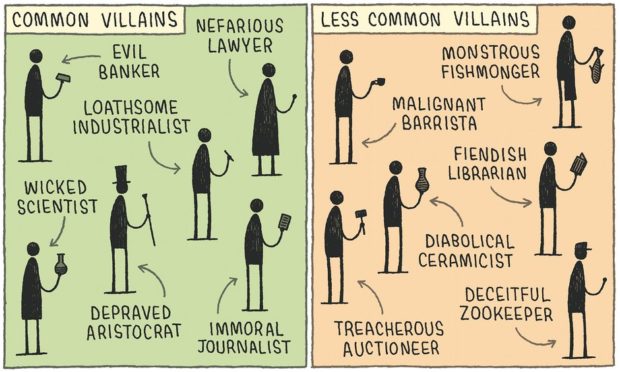
Less Common Villains

Less Common Villains Tom Gauld

Tom Gauld for The Guardian.

Comments closed

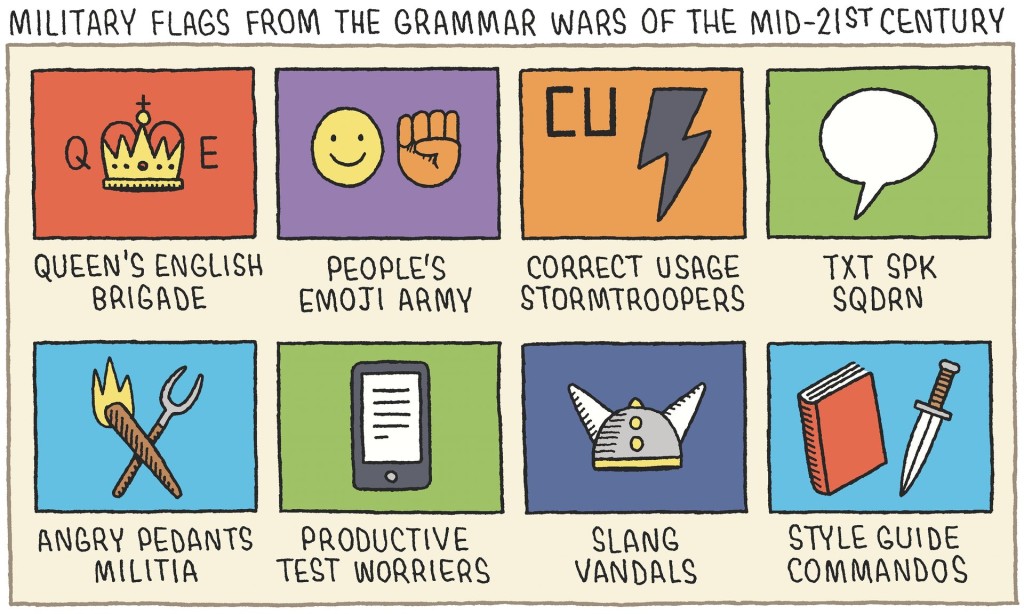
Grammar Wars

Grammar Wars Tom Gauld

Tom Gauld for The Guardian.

Comments closed

Comma Queen: The Illustrious Ampersand

Comma Queen Mary Norris takes a quick look at the origins of the beloved ampersand for The New Yorker:

Comments closed

“Awesome” is the New “Massive”

The New Yorker‘s ‘Comma Queen’ Mary Norris considers (mis)use of the words “massive” and “awesome”:

Comments closed

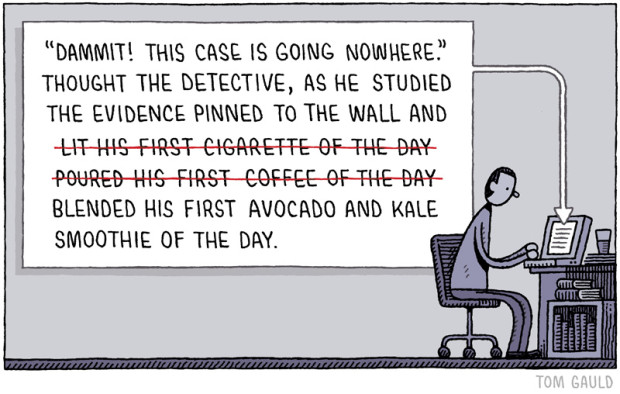
Dammit!

Dammit

Tom Gauld.

Comments closed

George Saunders Writing Education

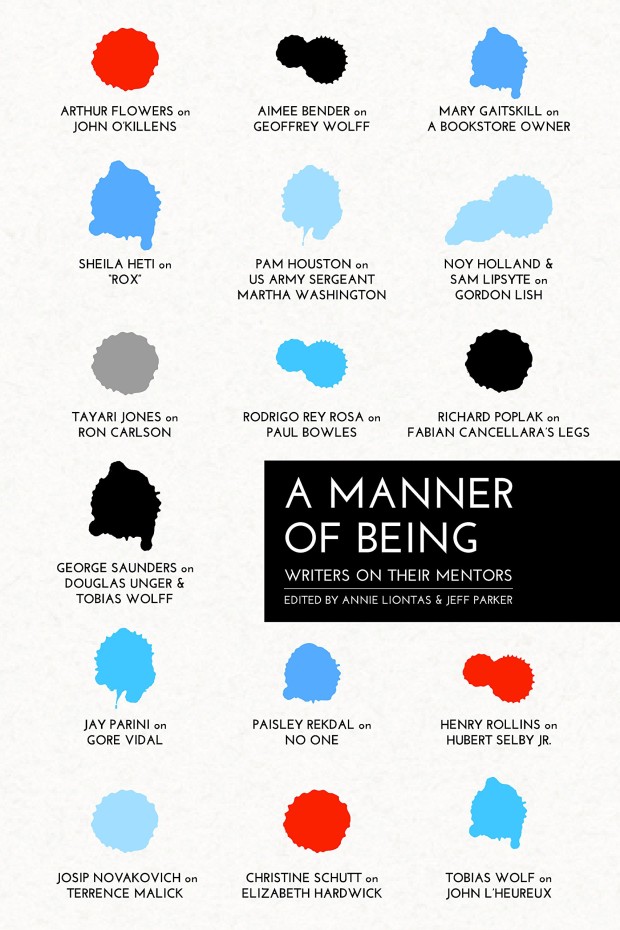
Manner of Being

The New Yorker has a lovely essay by George Saunders, excerpted from a new book called A Manner of Being: Writers on Their Mentors, on his education as a writer:

For me, a light goes on: we are supposed to be—are required to be—interesting. We’re not only allowed to think about audience, we’d better. What we’re doing in writing is not all that different from what we’ve been doing all our lives, i.e., using our personalities as a way of coping with life. Writing is about charm, about finding and accessing and honing ones’ particular charms. To say that “a light goes on” is not quite right—it’s more like: a fixture gets installed. Only many years later… will the light go on.

Comments closed

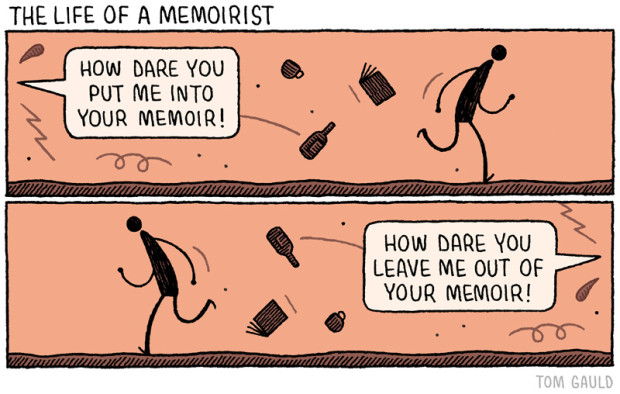
The Life of a Memoirist

Life of a Memoirist by Tom Gauld

Tom Gauld.

Comments closed

Comma Queen: Mad Dash

The New Yorker‘s Mary Norris, author Between You & Me: Confessions of a Comma Queen, clarifies the difference between the hyphen (-), the en dash (–), and the em dash (—):

Comments closed

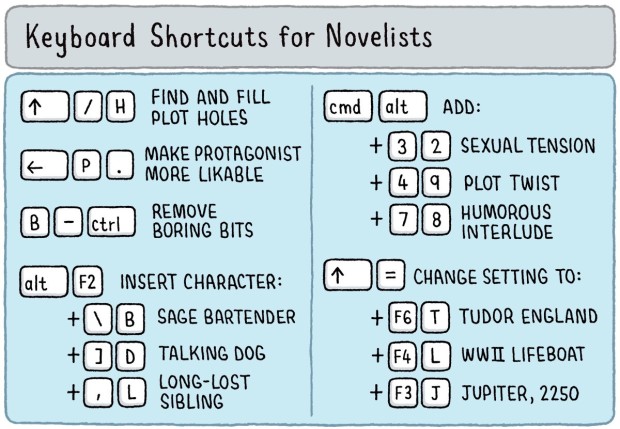
Keyboard Shortcuts for Novelists

keyboard shortcuts for novelists Tom Gauld

Tom Gauld for The New Yorker.

Comments closed

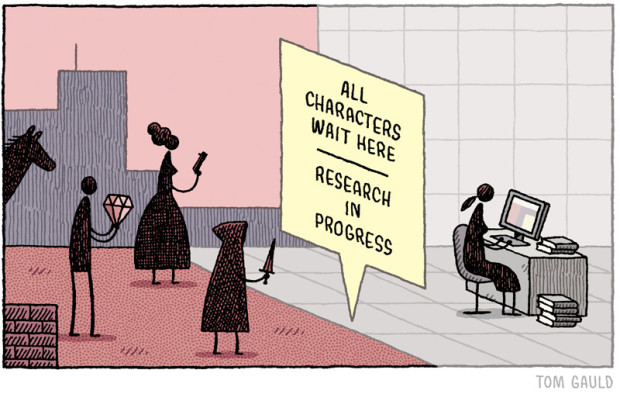
All Characters Wait Here

characters wait here tom gauld

Mr. Tom Gauld

Comments closed

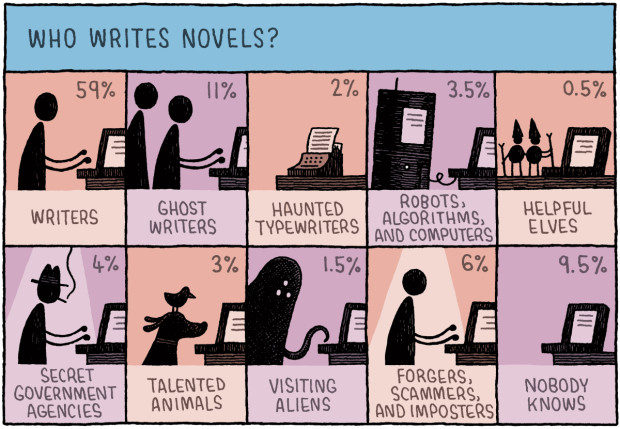
Who Writes Novels?

Gauld-Who-Writes-Novels-526-1200

Tom Gauld for The New Yorker.

Comments closed