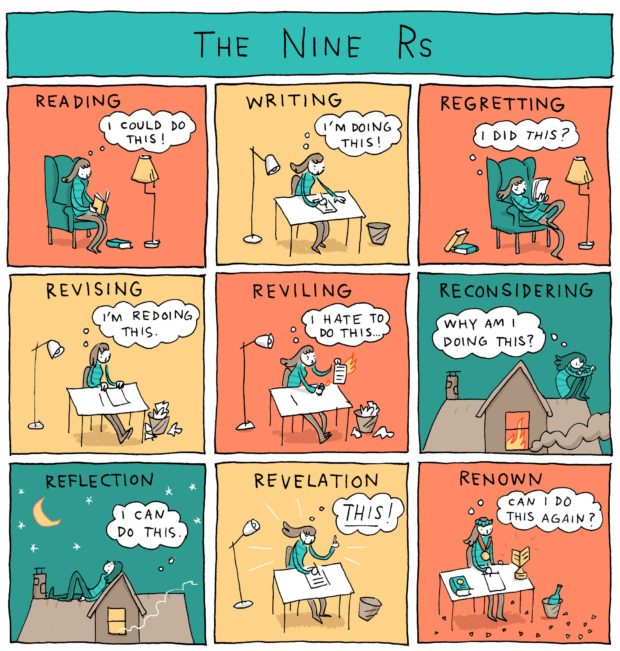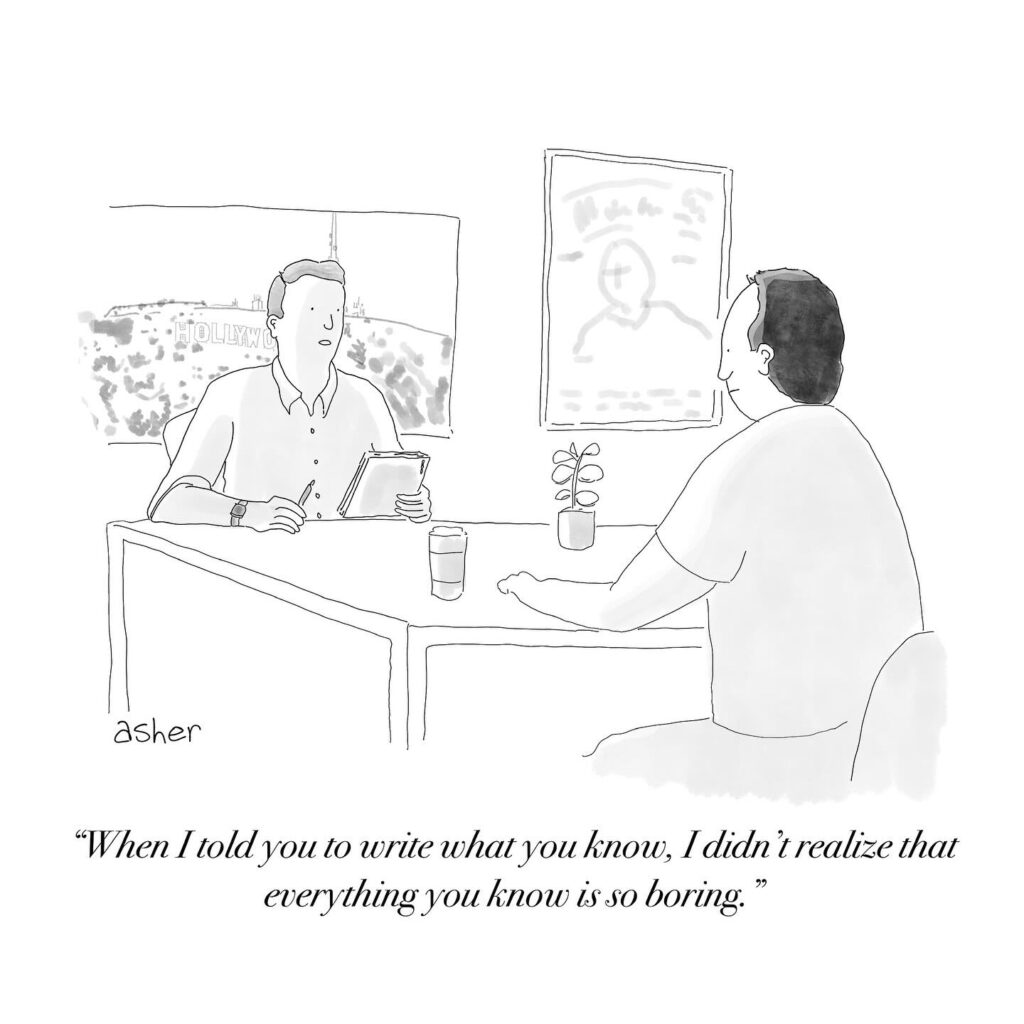
This is pretty much why I don’t write anything I don’t have to.
Asher Perlman’s book of cartoons, Well, This is Me, is available now.
Comments closedBooks, Design and Culture
This is pretty much why I don’t write anything I don’t have to.
Asher Perlman’s book of cartoons, Well, This is Me, is available now.
Comments closed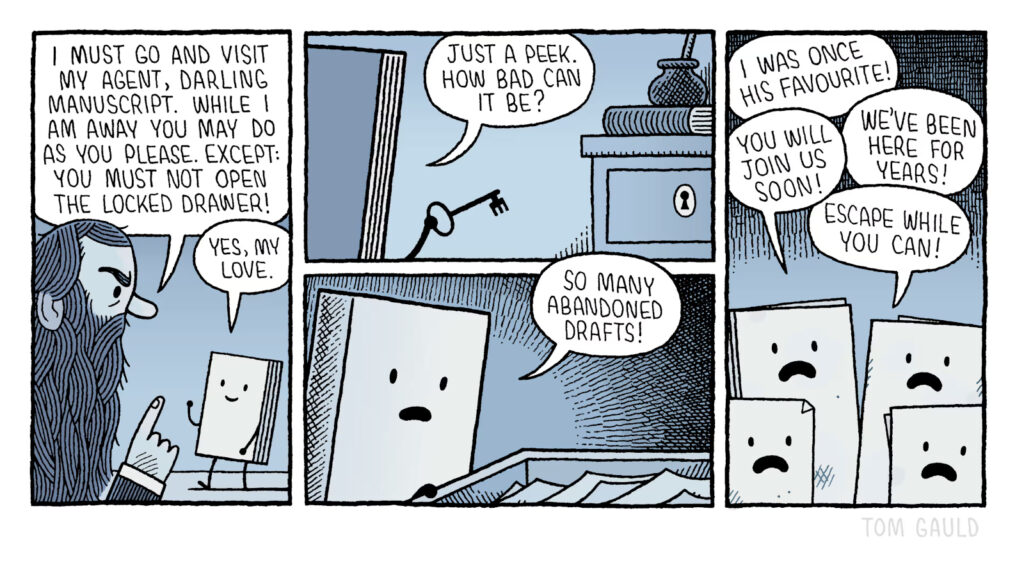
This, but for my personal art and design projects, and my actual proper job.
(Tom Gauld for The Guardian, obviously. Tom is currently selling some original drawings in his shop if you would like to own one of his masterpieces)
Comments closed
Cartoon by Graham Annabelle.
And just a reminder, Graham AKA Grickle has a new graphic novel for kids called Eerie Tales from the School of Screams coming out this summer.
Comments closed
Michelle Dean talks about her new book, Sharp:The Women Who Made an Art of Having an Opinion, and the nature of criticism with Roxane Gay for The Cut:
Comments closedI tend to judge a piece of criticism by how smart I find the argument… I don’t mean, how much I agree with it, exactly, but more: how much does this open up the subject at hand? Does it show me things about it I didn’t already know? I like debate and argument, so I’m usually all right with disagreement, and I’m even all right if the critic doesn’t come to a clear thumbs up or thumbs down. But I need the disagreement to have some kind of line I can follow on the map. I like following an interesting mind along it.
Bad criticism recites rote arguments. The shame of rote arguments isn’t just that they’re clichés, though they are, but that they tend to hide from us why a critic is actually thinking what they’re thinking. In which case there’s no point in reading the review at all. I don’t care about the bare fact that anyone liked or didn’t like a book or movie; they can only interest me in that bare fact by writing an intelligent review.
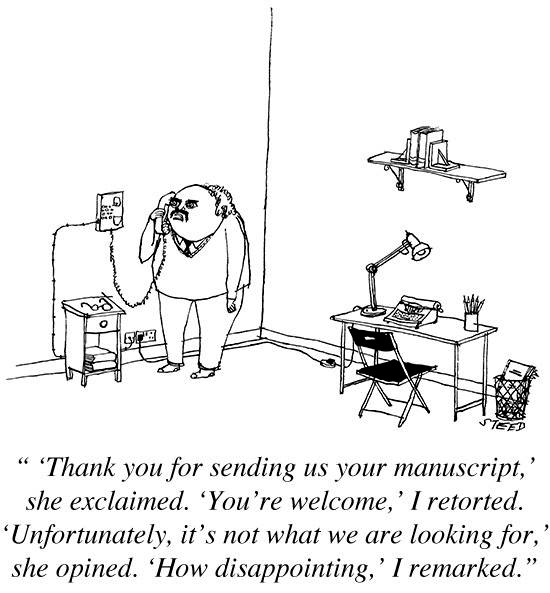
Edward Steed for The New Yorker.
Comments closed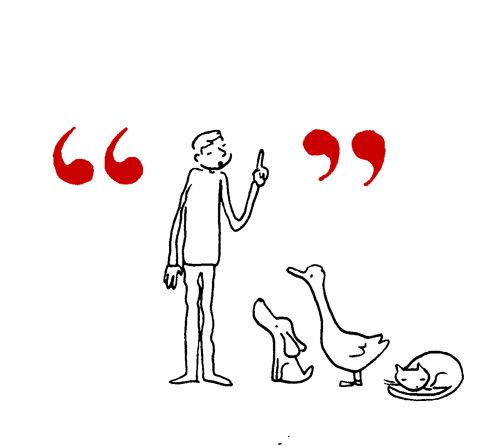
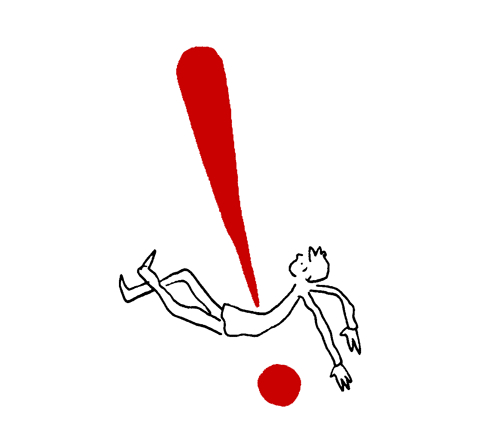
Grant Snider has drawn a lovely series of cartoons on punctuation for The New Yorker.



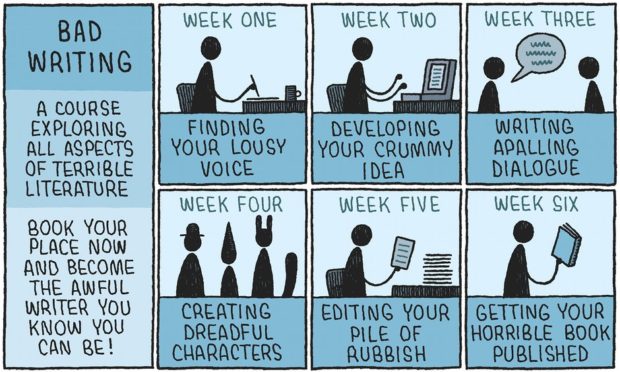
Tom Gauld for The Guardian, inspired by this piece on what makes bad writing bad by Toby Litt.
Comments closed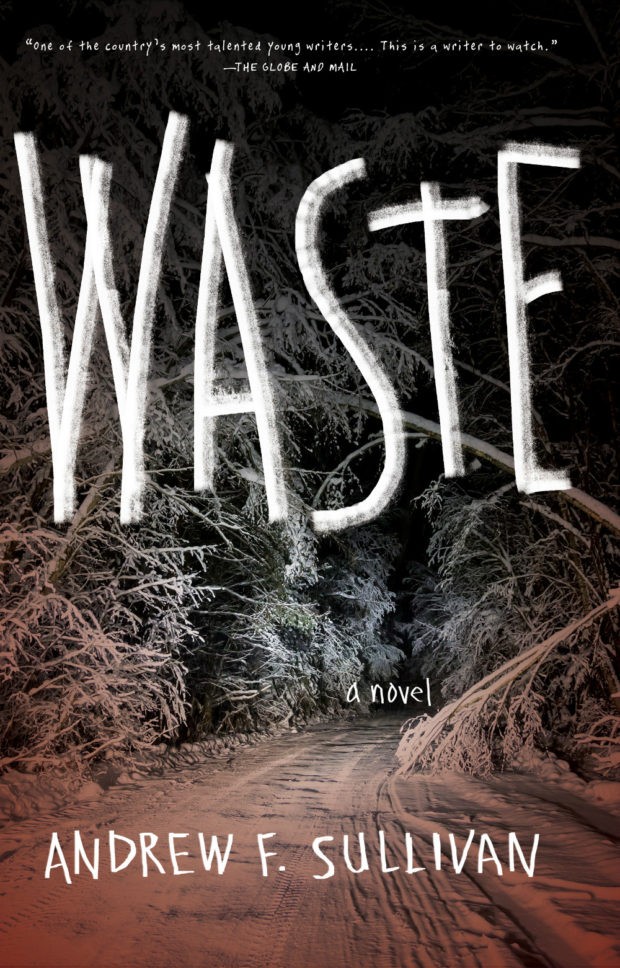
I mentioned Andrew F. Sullivan’s piece on High-Rise last week, and I recently spoke to the author about his own novel WASTE, and about influence of David Lynch on his writing in a Q & A for Publishers Group Canada:
Comments closedInitially, I think I was very resistant to Lynch. I think I thought a lot of it was just nonsense for the sake of nonsense. It was Blue Velvet that won me over, that showed me you could implicate and confront your audience, you could tell a sad, vicious truth and people would want to hear it/see it. Lynch opened up so many opportunities to leave the explanation out, to make the work immersive and unsettling while still dancing around the established conventions for storytelling. What he was doing seemed very singular, but also invested in the everyday, in waking up, going to work, putting in the hours. He created a world, especially in Twin Peaks, that began as just slightly askew, plausible even. He lured you into the nightmare and then told you it was real. And everyone questions the theories their friends have, there is no code to break. His work exposes the peculiarities of each audience member in their own response—their passions, fears and obsessions. How can they make this story make sense? What demons does it awaken?
Lynch is still doing that. He is always doing that.