Skip to content

Category: Miscellany

Something for the Weekend

No Idea What I’m Doing — Keith Ridgway, author most recently of Hawthorn & Child, on writing fiction:

I have no idea what I’m doing. All the decisions I appear to have made—about plots and characters and where to start and when to stop—are not decisions at all. They are compromises. A book is whittled down from hope, and when I start to cut my fingers I push it away from me to see what others make of it. And I wait in terror for the judgements of those others—judgements that seem, whether positive or negative, unjust, because they are about something that I didn’t really do. They are about something that happened to me. It’s a little like crawling from a car crash to be greeted by a panel of strangers holding up score cards.

A Dog’s Cock — The history of the exclamation mark:

no one really knows the history of the punctuation mark. The current running theory is that it comes from Latin. In Latin, the exclamation of joy was io, where the i was written above the o. And, since all their letters were written as capitals, an I with an o below it looks a lot like an exclamation point.

But it wasn’t until 1970 that the exclamation point had its own key on the keyboard. Before that, you had to type a period, and then use the backspace to go back and stick an apostrophe above it. When people dictated things to secretaries they would say “bang” to mark the exclamation point. Hence the interobang (?!) – a combination of a question (?) and an exclamation point (!). In the printing world, the exclamation point is called “a screamer, a gasper, a startler or a dog’s cock.”

One more on the late Robert Hughes at The Economist:

As our lives grow increasingly distracted and overstimulated, the critic has become both more and less relevant in the service of cultural sieve, filtering out the good from the bad. Mr Hughes didn’t subscribe to such categorical certainties. In turn he placed as much emphasis on the context of a work as he did on its content. To Mr Hughes, experiencing art wasn’t about passing a few hours in some museum, but what made those few hours meaningful to be alive.

And finally…

Larry Tye talks about his new book Superman: The High-Flying History of America’s Most Enduring Hero, on CBC Radio’s The Current:

CBC RADIO THE CURRENT: Superman: The High-Flying History of America’s Most Enduring Hero mp3

Comments closed

Midweek Miscellany

A few remembrances of art critic Robert Hughes, author of The Shock of the New, Nothing If Not Critical and Things I Didn’t Know among others, who died earlier this week aged 74…

Maria Bustillos for The Awl:

“The Shock of the New”… brought him fame, and no wonder. It’s a marvel: a solid education in post-Impressionist modern art of the 20th century in the form of a luscious entertainment stretching over hours and hours; awareness, scholarship, wit, and a visual sensitivity matched for once by an equally sensitive sense of language, all delivered in a brisk, whip-smart, slightly clipped Anglo-Australian voice of enormous power and beauty.

Adam Gopnik for The New Yorker:

Hughes believed in modern art with something close to innocence. Although “The Shock of the New” is in many ways an account of the tragedy of modernism—the tragedy of Utopias unachieved, historical triumphs made hollow, evasions of market values that ended by serving them—that tragedy is more than set off by the triumph of modern artists.

Jonathan Jones for The Guardian:

Hughes believed in modern art, whose story he told more eloquently than anyone else ever has. He was not some stick-in-the-mud. But he compared art in the 1900s with the art of today and observed that even our best do not deserve comparison with the pioneers of modernism. This is a truth that is hard to refute. The words of Robert Hughes have cost me a lot of sleep.

I’m sure there are many more… What a loss…

See also: obituaries in The Guardian,  New York Times, and The Telegraph.

Fertilizer — The always fascinating Jeet Heer reviews Blown Covers: New Yorker Covers You Were Never Meant to See by Françoise Mouly, for the LA Review of Books:

the deeper value of Blown Covers is the insight it gives us into Mouly’s editing process. Editing is a very difficult art to write about, being by its very nature invisible, and based on thousands of tacit, unstated backstage decisions. Blown Covers shows that every idea that makes the page requires an editorial environment where new concepts are constantly being generated. Since the rejection rate is high, this can be frustrating for artists, but Mouly gets around this problem in part by allowing her artists to go all out during the brainstorming sessions, so that even if the idea doesn’t make the cover there is still the pleasure of daring to think of something new and fresh. The failed ideas are the necessary fertilizers of successful covers.

And finally…

Collective Unintelligence — James Gleick, author of The Information, on Autocorrect, for the New York Times:

In the past, we were responsible for our own typographical errors. Now Autocorrect has taken charge. This is no small matter. It is a step in our evolution — the grafting of silicon into our formerly carbon-based species, in the name of collective intelligence. Or unintelligence as the case may be.


2 Comments

Something for the Weekend

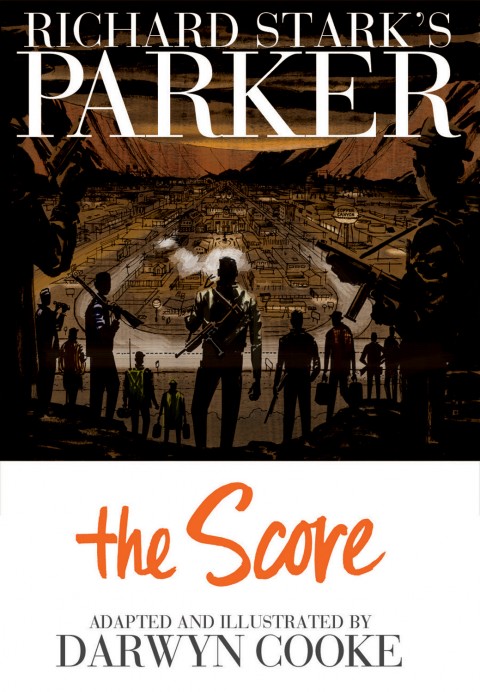
Somehow I missed that the second volume of Baltimore came out in June. It will soon be on the ‘to read’ pile along with the new Darwyn Cooke ‘Parker’ book The Score.

And just so you have ample advance warning: The Golden Age of DC Comics: 1935-1956 by Paul Levitz will be published by Taschen early next year:

See also: Sean T. Collins list of the 15 Essential Batman Graphic Novels at Rolling Stone.

Changing tack completely…

How it Felt to be There — Neal Ascherson reviews Ryszard Kapuściński: A Life by Artur Domosławski  (translated by Antonia Lloyd-Jones), for the LRB:

Domosławski has written a book which is three sorts of cautionary tale: about journalism engaged or disengaged, about the political maze through which intelligent Poles made their way in the later 20th century, about the endless capacity of human beings to believe their own fictions and keep secrets from themselves. He ends up still confident about Kapuściński’s stature as a writer, still attracted to the memory of him as a friend, but amazed at what he has found out. As one of Kapuściński’s former lovers said, ‘he was a complex man living in tangled times, in several eras, in various worlds.’

The brilliant Isaac Tobin, senior designer at University of Chicago Press, interviewed at From the Desk of…

Almost all book covers I design are secretly collaborations with Lauren [Nassef], especially the successful ones. She’s often both the source of the initial idea, and an invaluable editor and critic — she always sees the dozens of variations I go through before settling on a final design, and tells me what’s working and what isn’t.

My 2009 interview with Isaac is here.

The folks behind Designers and Books have announced Designers & Books Fair 2012 to be held  Saturday October 27, and Sunday October 28 at the F.I.T Conference Center in New York.

See also: nominations for the new 50 Books / 50 Covers, co-sponsored by Designers and Books, Design Observer and AIGA. There are some astonishingly good entries. My list for 2011 looks meagre by comparison.

Have a great weekend.

Comments closed

Midweek Miscellany

Paul Gravett on piecing together the early history of comics:

You’d think by now that the history of a medium as global and influential as comics would be fully researched and written, but this is not the case. In contrast to the more varied and international perspectives available on film or literature, the majority of English-language reference books on comics plough through the well-worn furrows of the 20th century American newspaper strip and comic book, re-affirming old “truths” and historical “facts”. Objectivity and lack of bias are practically impossible, because by putting into print your history, your version of the “facts,” your inclusions and omissions determine who and what are significant. In the process, almost inevitably, supposedly “minor” or “peripheral” figures and events can be overlooked.

Wading Through the Rubbish — Boyd Tonkin, literary editor for The Independent, on the need for taste-makers:

a healthy publishing landscape… should still leave room for strong-minded indies who publish a few books a year simply because a couple of committed individuals love them. Whether one mind or many makes the choice, what matters is that they pick the brightest and boldest in their field rather than drift with the current and follow the herd. This isn’t “elitism” but exactly the contrary: a respect for your readers, and a determination that they should not have to waste time by wading through industrial volumes of rubbish.

And finally…

Dead Oxonians — Adrian Wooldridge on the posthumous publishing careers of political philosopher Isaiah Berlin and historian Hugh Trevor-Roper, for Intelligent Life:

[The] mix of worldliness and unworldliness—familiarity with affairs of state coupled with philosophical detachment—holds the key to the continued appeal of both men. They chose to address big subjects rather than solve academic crossword puzzles. They wrote for the educated public, not just cloistered scholars. Berlin produced a stream of essays on great political thinkers ranging from German nationalists to Russian novelists. Trevor-Roper roamed across the centuries: though his first love was the 17th century, he also wrote about Hitler’s Germany, the rise of medieval Europe, and, in one of his liveliest books, an Edwardian fantasist, forger and sex maniac, Sir Edmund Backhouse.


Comments closed

Something for the Weekend

You Can’t Keep a Good Creator Down — An interesting piece by Noelene Clark on women in comics for the LA Times ‘Hero Complex’ blog:

a broader look at the world of comics and the women who work there reveals the industry is far more gender-balanced than the superhero fare suggests. Though women still make up a minority of creative talent at Marvel and DC, their influence is growing. And in comics at large, women are on even footing and gaining ground… the frequently spotlighted superhero genre is just a tide pool in an ocean of work — a tide pool that has somehow managed to delay the sea change undergone by the rest of the industry.

See also: Why DC and Marvel Will Never Truly Target Female Readers by Heidi Macdonald, for Comics Beat, and author Belinda Jack on the history of women readers at The Browser.

And finally…

A brief history of Olympic pictograms, at The Smithsonian design blog:

In 1972, a German designer named Otl Aicher refined Olympic pictograms into the concise, clean system that most people think of today as the symbols of the games… Slightly modified versions (and in some cases exact replicas) of the Aicher designs were used at subsequent Olympics as the standard of universal visual language, though in the early 1990s, some designers began moving away from the simplified standard, adding embellishments that referenced the culture of the city where the games were taking place.

You can read about the pictograms for London 2012 (about which, I will say nothing) at The Creative Review, and here’s a great short history of Olympic pictograms by Steven Heller for the New York Times:

Comments closed

Midweek Miscellany

A long interview with Darwyn Cooke about his latest Donald Westlake/Richard Stark adaptation, The Score (out this week if you’re interested).

Shadows and Fog — Jimmy Stamp on Batman and architecture, for ArchDaily:

Since its inception, Gotham City has been presented as the embodiment of the urban fears that helped give rise to the American suburbs, the safe havens from the city that they are. Gotham City has always been a dark place, full of steam and rats and crime. A city of graveyards and gargoyles; alleys and asylums. Gotham is a nightmare, a distorted metropolis that corrupts the souls of good men. In the excellent book, Woody Allen on Woody Allen, the famously nebbish auteur discusses his moody, Brechtian comedy Shadows and Fog, which takes place over the course of a single night in a vaguely European village. “Once you get out in the night, there is a sense that civilization is gone…You start to realize that the city is just a superimposed man-made convention… All the civilization that protects you and enables you to lie to yourself about life is all man-made and superimposed.”

In other words, civilization ends at night. And in Gotham City, it is always night.

Home of the Free — Mark Lamster on the role of the modern library, for Metropolis magazine:

The pressure to accommodate “other needs” is especially strong at public libraries, which are increasingly taking on civic functions that far exceed the historical mission of serving books to readers. “Libraries are the new cathedrals of our society. They’re very important sanctuaries,” says the architect Bing Thom, whose new public library in Surrey, British Columbia, a suburb of Vancouver, was designed as a space of communal engagement. “People are living in smaller and smaller spaces, so the library becomes the place you escape to for socialization, for solitude, to take a breath. It’s the last space in society that’s free. Even for the homeless. There is a sense of democracy; it is a common space we all share.”

The Worm Eaten Book — Jennifer Schuessler visits the summer Rare Book School at University of Virginia in Charlottesville, for The New York Times:

Rare Book School isn’t just about pondering jaw-dropping masterpieces of printing. What makes the experience unique, students say, is the chance to see — and touch — a huge variety of objects from the school’s own 80,000-item teaching collection, including many that have been folded, stained, waterlogged, written in, worm-eaten or sometimes completely disemboweled.

And finally…

Filthy Lucre — Tim Parks on the complicated relationship between money and writing, for the NYRB:

Writers can deal with a modest income if they feel they are writing toward a body of readers who are aware of their work and buy enough of it to keep the publisher happy. But the nature of contemporary globalization, with its tendency to unify markets for literature, is such that local literary communities are beginning to weaken, while the divide between those selling vast quantities of books worldwide and those selling very few and mainly on home territory is growing all the time.


Comments closed

Something for the Weekend

Do It Yourself — John Self, of the excellent Asylum blog, on the power of independent readers, at The Guardian:

if publishers and authors are limited in what they can do for a book online, who is left? They want to harness word of mouth, and power lies collectively in the independent readers – you and me. Can we make a difference when the bookselling world is full of outlets, online and off, which primarily sell what already sells, or can be related to a proven success (“It’s Fifty Shades of Grey meets Harry Potter!”)? If social media has inspired a new age of grassroots political activism, why not literary activism, too?

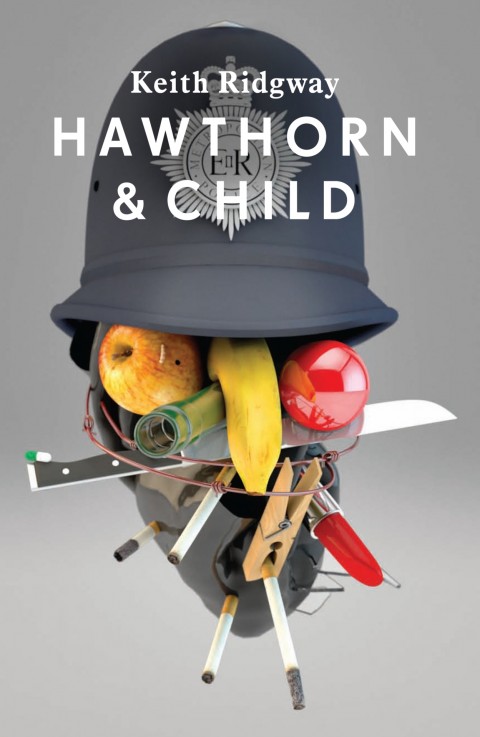
I picked up Keith Ridgway’s new book Hawthorn & Child almost entirely on the basis of John’s recommendation (I also read Colony by Hugo Wilcken, one of my favourite books of recent years, as a result of John’s review). The astonishing cover (pictured above) is by Tom Darracott by the way.

(Semi) Colonoscopy — Mary Norris on how to use the semicolon, at The New Yorker:

So the semicolon is exactly what it looks like: a subtle hybrid of colon and comma. Actually, in ancient Greek, the same symbol was used to indicate a question.

And it still seems to have a vestigial interrogative quality to it, a cue to the reader that the writer is not finished yet; she is holding her breath.

And finally…

Imaginary Buildings — Jimmy Stamp on the locations of 221B Baker Street, for The Smithsonian:

The mystery of 221B Baker Street is not one of secret passages or hidden symbols. Rather, it could be described as a sort of existential spatial riddle: how can a space that is not a space be where it is not? According to Arthur Conan Doyle’s stories, Sherlock Holmes and John Watson lived at 221B Baker Street from 1881 to 1904. But 221B Baker street did not exist in 1881, nor did it exist in 1887 when A Study in Scarlet was published and Baker Street house numbers only extended into the 100s. It was a purely fictional address – emphasis on was. Time marches on, Baker Streets are renumbered, and 221Bs are revealed…

Comments closed

Midweek Miscellany

Midnight Cowboy — Andy Martin, author of The Boxer and the Goalkeeper, on Sartre and Camus in New York:

When Sartre stepped off the plane in New York in January 1945, only months after the liberation of Paris, his head full of American movies, architecture and jazz, he might have expected to feel in his natural habitat — the pre-eminent philosopher of liberté setting foot in the land of freedom, a nation temperamentally and constitutionally addicted to liberty. Was there not already something of the existential cowboy and intellectual gunslinger in Sartre’s take-no-hostages attitude? Camus must have thought so in dispatching him to the United States.

Wave of Mutilation — Joan Acocella on Grimm’s fairy tales, for The New Yorker:

Grimm tales… feature mutilation, dismemberment, and cannibalism, not to speak of ordinary homicide, often inflicted on children by their parents or guardians. Toes are chopped off; severed fingers fly through the air… You get used to the outrages, though. They may even come to seem funny. When, in a jolly tale, a boy sees half a man fall down the chimney, are you supposed to get upset? When you turn a page and find that the next story is entitled “How Children Played Butcher with Each Other,” should you worry? Some stories do tear you apart, usually those where the violence is joined to some emphatically opposite quality, such as peace or tenderness. In “The Twelve Brothers,” a king who has twelve sons decides that, if his next child is a girl, he will have all his sons killed. That way, his daughter will inherit more money. So he has twelve coffins built, each with a little pillow. Little pillows! For boys whom he is willing to murder!

(As any parent will tell you, fairy tales really are most terrifying stories you can read to your kids…)

And finally…

Stuart P. Green,  author of 13 Ways to Steal a Bicycle, on theft law in the age of digital media, for the New York Times:

Illegal downloading is, of course, a real problem. People who work hard to produce creative works are entitled to enjoy legal protection to reap the benefits of their labors. And if others want to enjoy those creative works, it’s reasonable to make them pay for the privilege. But framing illegal downloading as a form of stealing doesn’t, and probably never will, work. We would do better to consider a range of legal concepts that fit the problem more appropriately: concepts like unauthorized use, trespass, conversion and misappropriation.

(via Nicholas Carr, who has some interesting commentary of his own here)

Comments closed

Something for the Weekend

Isolation — Martin Amis on J.G. Ballard’s novel The Drowned Worldat The Guardian:

Ballard gives The Drowned World the trappings of a conventional novel (hero, heroine, authority figure, villain), and equips it with a plot (jeopardy, climax, resolution, coda); but all this feels dutiful and perfunctory, as if conventionality simply bores him. Thus the novel’s backdrop is boldly futuristic while its mechanics seem antique (with something of the boys’-own innocence we find in John Buchan and CS Forester). In addition, Ballard’s strikingly “square” dialogue remains a serious lacuna. Here as elsewhere, his dramatis personae – supposedly so gaunt and ghostly – talk like a troupe of British schoolteachers hoisted out of the 1930s: “Damn’ shame about old Bodkin”, “Capital!”, “Touché, Alan”. (Cf DeLillo, whose dialogue is always fluidly otherworldly.) We conclude that Ballard is quite unstimulated by human interaction – unless it takes the form of something inherently weird, like mob atavism or mass hysteria. What excites him is human isolation.

(The jacket for the 50th anniversary edition, pictured above, was designed by Darren Haggar)

Avatars of Reaction — New York Times film critics A. O. Scott and Manohla Dargis discuss comic book movies:

A critic who voices skepticism about a comic book movie — or any other expensive, large-scale, boy-targeted entertainment — is likely to be called out for snobbery or priggishness, to be accused of clinging to snobbish, irrelevant standards and trying to spoil everyone else’s fun.

What the defensive fans fail or refuse to grasp is that they have won the argument. Far from being an underdog genre defended by a scrappy band of cultural renegades, the superhero spectacle represents a staggering concentration of commercial, corporate power. The ideology supporting this power is a familiar kind of disingenuous populism. The studios are just giving the people what they want! Foolproof evidence can be found in the box office returns: a billion dollars! Who can argue with that? Nobody really does.

Hmm… Isolation and misery… Really must try harder with this blogging lark…. Have a good weekend.

Comments closed

Midweek Miscellany

Literary prints by Evan Robertson, AKA Obvious State.

Chairman of the Bored — Bruce Handy on collecting boring books:

My hobby has two rules: I buy books only on the street. (Uniquely boring books must present themselves willingly; you can’t hunt them down.) And the titles must meet a standard of boring intrigue that I have a hard time putting into words, beyond “I know it when I see it.” This is where — if I may shed any pretense of modesty — taste and connoisseurship come into play.

Niche — Will Brooker, author of Hunting the Dark Knight, on comic books at The Browser:

[Comics] are a unique storytelling medium. They can tell a story in a way that no other medium can. But I’m not evangelical about comics, and I don’t have a problem if they’re a niche interest. There was a time in the eighties when everyone thought comics were going to break through. They were sold in bookshops. “Sequential art”, “post-textual literature” and all kinds of other pretentious terms were bandied about. I don’t think that’s necessary. Comics are their own thing, and work on their own terms, in different ways to novels and films.

See also: Superman: The High-Flying History of America’s Most Enduring Hero by Larry Tye reviewed for The New York Times.

And finally…

Steven Hyden on My Bloody Valentine album Loveless at Grantland:

Listening to Loveless is not unlike the sensation of having just endured a two-hour sonic hurricane, then feeling an intense yet melodic pounding in your eardrums for the next week. And I mean that in the most pleasant way imaginable. What took so long for Shields to find in the studio was the ecstatic pleasure point buried in the suffocating psychic evisceration caused by pure unadulterated volume. On most rock records, the music drowns out the lyrics; on Loveless, the music drowns out the music.

2 Comments

Something for the Weekend

Short and sweet today…

“All they do is show you’ve been to college” — Ben Dolnick on his love of the semicolon, at the New York Times:

And so, far from being pretentious, semicolons can be positively democratic. To use a semicolon properly can be an act of faith. It’s a way of saying to the reader, who is already holding one bag of groceries, here, I know it’s a lot, but can you take another? And then (in the case of William James) another? And another? And one more? Which sounds, of course, dreadful, and like just the sort of discourtesy a writer ought strenuously to avoid. But the truth is that there can be something wonderful in being festooned in carefully balanced bags; there’s a kind of exquisite tension, a feeling of delicious responsibility, in being so loaded up that you seem to have half a grocery store suspended from your body.

(You’ve surely read this by now, but…) Also in the NYT Tim Kreider on the ‘Busy’ trap:

Busyness serves as a kind of existential reassurance, a hedge against emptiness; obviously your life cannot possibly be silly or trivial or meaningless if you are so busy, completely booked, in demand every hour of the day… More and more people in this country no longer make or do anything tangible; if your job wasn’t performed by a cat or a boa constrictor in a Richard Scarry book I’m not sure I believe it’s necessary. I can’t help but wonder whether all this histrionic exhaustion isn’t a way of covering up the fact that most of what we do doesn’t matter.

And finally…

Busted — Leah Price, author of How to Do Things with Books in Victorian Britain, on the history of reading at The Browser:

Ernest Hemingway had this to say about James Joyce: “I like him very much as a friend and think no one can write better, technically. I learned much from him.” But if you look at Hemingway’s copy of Ulysses, which is kept today in a library in Boston, you see that the first and last pages are the only ones that have been cut. So you can’t always trust people to tell the truth about their own reading. What makes it fascinating and also frustrating to study is that reading is one of the most private things we do.

1 Comment

Midweek Miscellany

City Air Sets You Free — Mark Lamster interviews P.D. Smith about his new book City: A Guidebook for the Urban Age, for Design Observer:

It was never my intention to write an architectural history. Cities are much more than the sum of their architecture or infrastructure. A city is made great by its people. Nevertheless, you cannot ignore the structures and spaces of a city. Winston Churchill once famously said: “We shape our buildings and afterwards our buildings shape us.” Our urban environments undoubtedly shape us as people. That’s why between each of the eight sections in the book there are essays on more concrete features of the urban landscape, such as the Central Station, the City Wall, the Skyscraper or even the Ruins. But I hope that even here I don’t lose sight of the people who use these architectural spaces. After all, they are the life-blood of the city.

Pop Detritus — Peter Paphides reviews When Ziggy Played Guitar by Dylan Jones, for The Observer:

For many critics, Ziggy was the last desperate act of a craven opportunist. A New Yorker writer flown to see the Ziggy shows fretted that “Bowie doesn’t seem quite real”. But, as long as music journalism has existed, performers – be it Bowie in 1972 or Lana Del Rey in 2012 – have been docked points for their apparent lack of authenticity.

And, besides, it was those very notions of authenticity with which Bowie was playing when he created Ziggy. After several hapless reinventions, the only hit he had to show for his efforts was Space Oddity, but, as Jones points out, Ziggy Stardust was the result of a decade spent sifting through pop cultural detritus and working out which bits he could use to turn him into a pop star.

Don’t Believe the Type — Estimable Jon Gray on the recently revealed cover design for J.K. Rowling’s new novel:

JD Salinger famously had a clause written into his contract stating that no imagery could appear on his covers. Günter Grass will only allow his own drawings. The classic orange Penguins, the poetry covers of Faber: they tell us nothing other than this is a book of note, a book of importance. JK Rowling’s name is the important piece of information, the quality assurance mark, and it is stated very simply and boldly in the brightest and clearest way possible.

(Needless to say, Jon’s thoughts are more interesting that the cover itself).

Material World — An interview with mighty Coralie Bickford-Smith:

I always start by asking myself ‘what is the most effective set of book covers I can produce using just standard materials which are simple but incredibly effective to be within the usual budget constraints?’ To marry design with materials in the most considered and best way possible. So in a way it always starts with the materials so I can make my design suit that method of printing. With the cloth classics its was all about creating a book that would be loved and cherished and not throw away. The materials were the starting point. The foiling was a real struggle at first, the detail of the design cant be too intricate. So the patterns were all designed with this in mind so that the printers could reproduce the design easily. Every material has its limits and its all about getting to grips with those limits to produce an end product that looks effortless and deceptively simple.

My interview with Coralie is here.

And finally…

The Long History of the Espresso Machine

In the 19th century, coffee was a huge business in Europe with cafes flourishing across the continent. But coffee brewing was a slow process and, as is still the case today, customers often had to wait for their brew. Seeing an opportunity, inventors across Europe began to explore ways of using steam machines to reduce brewing time – this was, after all, the age of steam. Though there were surely innumerable patents and prototypes, the invention of the machine and the method that would lead to espresso is usually attributed to Angelo Moriondo of Turin, Italy, who was granted a patent in 1884 for “new steam machinery for the economic and instantaneous confection of coffee beverage.”

Great stuff… (see also: The Once and Future Coffeehouses of Vienna)

Comments closed