Skip to content

Category: Miscellany

Midweek Miscellany

Ghost Shapes — Writer Warren Ellis talks comics and, very briefly, his new novel Gun Machine at Robot Six:

Gun Machine is as much about the ghost shape of Manhattan’s previous settlements and roadways as it is about its modern architecture, and the invisible channels of wireless communication around which that structure now bends. I see — or at least I look for — the foundations of deep time, and the deals we do with it.

See also: A.V. Club’s review of Gun Machine:

In Ellis’ world, everything is all-caps, all the time, and any character who can ask for a cup of coffee in a way that doesn’t call for at least one exclamation point is a spoilsport. Gun Machine, Ellis’ second prose novel, is in exactly the same style and spirit as his comics; like his first novel, Crooked Little Vein, it gives the impression that Ellis didn’t write it as a comic only because pictures would have slowed down the action.

Sounds about right. The book is also reviewed at The New York Times(That fabulous cover for Gun Machine was designed by Keith Hayes designed by Oliver Munday with art direction by Keith Hayes by the way).

Be Still My Exploding Heart — Stephen Page, head of Faber & Faber, on the Penguin-Random House merger and what it means for the industry at large, at The Guardian:

Authors are talked about as brands in their own right, and this is correct. Publishers rarely achieve the status of becoming consumer brands of scale and significance. Is the next story for publishing going to be one dominated by global and local author and publisher brands, especially in niches? Authors and readers are at the centre of the world of books, and finding new ways to serve them will create further different structures. This merger may be seen as a starting pistol or perhaps an explosion in the heart of the old order dominated by the book trade.

Disposable by Design — Nicholas Carr on e-books and the apparent resilience of print books, at the Wall Street Journal:

From the start, e-book purchases have skewed disproportionately toward fiction, with novels representing close to two-thirds of sales. Digital best-seller lists are dominated in particular by genre novels, like thrillers and romances. Screen reading seems particularly well-suited to the kind of light entertainments that have traditionally been sold in supermarkets and airports as mass-market paperbacks… Readers of weightier fare, including literary fiction and narrative nonfiction, have been less inclined to go digital. They seem to prefer the heft and durability, the tactile pleasures, of what we still call “real books”—the kind you can set on a shelf. E-books, in other words, may turn out to be just another format—an even lighter-weight, more disposable paperback. That would fit with the discovery that once people start buying digital books, they don’t necessarily stop buying printed ones.

An alternative, more circumspect, version of the article can be found on Carr’s blog:

None of this means that, in the end, e-books won’t come to dominate book sales. My own sense is that they probably will. But, as we enter 2013, I’m considerably less confident in that prediction than I was a few years back, when, in the wake of the initial Kindle surge, e-book sales were growing at 200 or 300 percent annually. At the very least, it seems like the transition from print to electronic will take a lot longer than people expected.

And perhaps most interesting of all, Carr has posted a series of exchanges with Clay Shirky and Kevin Kelly about the post.

Covering some similar ground, only bleaker, Dennis Johnson’s striking post on the slow death of Barnes & Noble is also essential reading:

Perhaps the most disturbing thing about all this is the fact that, as with the demise of Borders, the demise of B&N has nothing to do with what its customers actually wanted, what’s best for mother literature or free speech, or anything other than made-up trends covering for killer capitalism. There’s still plenty of evidence that people like bookstores, for example, and even sales of hardcovers — let alone print books — are holding on. And so the lust for higher margins — whether from Godiva chocolates or ebooks — turned into fool’s gold for B&N. It’s perhaps a typical death in the Free Trade era, when companies lose all sight of their identity in the blinding light of the bottom line … but it’s the wrong death for a bookseller.

Somewhere in there, Johnson quotes this article by David Streitfeld in the New York Times, which makes the rather chilling point about a demise of Borders in 2011. Not only did it have a negative effect on the sale of print books, it was bad for e-books too. “Readers could no longer see what they wanted to go home and order.”

Sigh…

4 Comments

Something for the Weekend

Wondrous Horrors — Ariella Budick on the centenary of the 1913 Armory Show in New York, for the Financial Times:

Critics did not reject every European innovation. They nodded at the impressionists, puzzled respectfully over Cézanne, and tolerated Gauguin. But cubism blew their minds. The impact was not merely aesthetic. American writers perceived a defiant rejection of rules and a contempt for tradition – qualities they associated with violent political movements. Painters who blasted convention with their brushes gave comfort to bomb-throwing subversives. When critics invoked anarchy, it was not just a figure of speech.
See also: Rethinking the Armory in the New York Times:
New York viewers, including artists, to some degree knew what they were in for. Pictures of avant-garde art had been included, often with mocking commentary, in New York newspapers and magazines for years. And by no means were all Armory reviews pans; one critic wrote that he was grateful for “these shocks to our aesthetic sense.” Others were glad for a certain perspective the show offered: compared with avant-garde work from Europe, American art looked sane.
Making It Up — William Deresiewicz on the work of Geoff Dyer, for The New Republic:
Freedom from conventional and institutional expectations—freedom even from his audience—means that Dyer is also free to make it up, like jazz, as he goes along. Every book is different, and every book is different from everybody else’s books. Zona is a running commentary, almost shot-by-shot, on a single film. But Beautiful consists of a series of quasi-imagined episodes—vivid, textured, saturated with feeling—from the lives of the jazz greats. Out of Sheer Rage is memoir, travelogue, criticism—“about” Lawrence in the physical sense of the word: spinning around and around him with a manic, comic, centrifugal energy. The Ongoing Moment makes a poem of the history of photography by considering not artists or schools, technics or techniques, but, improbably, subjects (hats, benches, stairs): a ridiculous idea, it seems, until you figure out that Dyer’s real quarry is the relationships we have with those quotidian objects, the way they can be made to stand for the lives that move among them. “Spare me the drudgery of systematic examinations,” he writes in Out of Sheer Rage, “and give me the lightning flashes of those wild books in which there is no attempt to cover the ground thoroughly or reasonably.”
See also: Rose Mclaren on Zona for The White Review:
[Dyer] claims, ‘if I had not seen Stalker in my early twenties my responsiveness to the world would have been radically diminished’. He shares with his idol an artistic ideal of awareness, describing Tarkovsky’s aesthetic as a length of take demanding ‘a special intensity of attention’. The inverse dominates much contemporary culture where, ‘a lot of what’s being shown on the world’s screens is fit only for morons’ with the result that ‘there are more and more things from which one has to avert one’s ears and eyes’. Rubbish art that warrants ignorance. A bit broad-brush and heavy-handed, but its Dyer’s reason for writing. Against a social dystopia of willed numbness, Zona documents a profound engagement with an artwork. It is not so much homage to the film alone, but to the dialogue it inspires.

And finally…

What Is This Shit? — Brian Dillon interviews photographer and filmmaker William Klein:

I didn’t know how to do a book. I was just discovering photography and once I had all these pictures, I showed them to editors in New York and nobody thought it was worthwhile to do a book with these photographs. They said, “What is this shit?” I came back to Paris and discovered there was a series of travel books called Petite Planète. I called them up and got an appointment and I went to this office which looked like NASA. Chris Marker was there with a laser gun in his belt, and he saw the photographs and said, “We’ll do a book!” In fact he said, “We’ll do a book or I quit!”

Comments closed

Something for the Weekend

Minimal Realism — The first part of a Charley Harper retrospective at Codex99 (via Coudal):

Commercial ad work proved difficult for Harper. He was frustrated illustrating the “happy housewife” and began to tire of realism altogether, stating that it “revealed nothing new about the subject, never challenged viewers to expand their awareness, (and) denied me the freedom of editorializing.”

He began to experiment with a new style where perspective was replaced with hard-edged two-dimensional shapes reduced to only straight lines and curves and where shading and depth were replaced by overlapping color. To caricature and simplify at the same time. The idea was “…to push simplification as far as possible without losing identification.” He would eventually call it “minimal realism.” It was a style that would take him 30 years to perfect.

Magic Pencil — A lovely profile of illustrator Quentin Blake by Jenny Uglow, at The Guardian:

He was among a new wave of British illustrators who began work in the 1950s and 60s, an extraordinary flowering, benefiting from the greater availability of four-colour half-tone printing. The brilliant artists of that generation, each with their distinctive signature, still seem fresh. It’s extraordinary to find that Shirley Hughes, Judith Kerr and Peter Firmin are in their 80s, while Raymond Briggs, Helen Oxenbury, David McKee and Tony Ross were all born, like Blake, in the 1930s. A galaxy of later stars have followed and authors and illustrators have often formed notable partnerships: Oliver Postgate and Peter Firmin, Allan and Janet Ahlberg, Julia Donaldson and Axel Scheffler, and, of course, Dahl and Blake.

credit: Phil Fisk

Also at The Guardian: Alan Moore on Hollywood and his low-budget film Jimmy’s End (available for free online), at The Guardian:

“My main experiences in the past had been of the Hollywood variety, which was on many levels repulsive to me. Every film is a remake of a previous film, or a remake of a television series that everyone loved in the 1960s, or a remake of a television series that everyone hated in the 1960s. Or it’s a theme park ride; it will soon come to breakfast cereal mascots.

“But I’d always thought I liked the idea of a really cheap, little film. If you want to be a writer or an artist, all you need is a Biro and a Woolworths jotter; it’s a democratic medium. I love films that are made with almost no budget.”

And on a related note:

The Shit We Hate — Artist and illustrator Jamie Hewlett on a possible return to Tank Girl:

I started looking at [Tank Girl] and realised that, apart from the last three or four strips I drew in that 10 year period, pretty much 90% of it was shit. Really, it was. I spoke to [Tank Girl writer] Alan Martin, and he remarked on how it had been so successful, yet the execution on our part was so bad. I said that “now we’re in our forties, and I can draw much better, and you’re a much better writer, wouldn’t it be great to revisit Tank Girl, do a one-off graphic novel, but do a really good one, and really knock it out of the ball park?’ So we might do that next year. It’s a great character, so anarchic; just a tool for us to rant about all the shit we hate.

And finally…

Stranger than Science Fiction — History professor Michael Saler on Alan Turing, at the TLS:

Recent histories charting the intertwined origins of the nuclear age and the “digital universe” provoke the queasy feeling that our species is positioned precariously between atomic night and transhuman dawn. Ironically – and reassuringly – the principal instigators of this new era, such as Alan Turing and John von Neumann, showed themselves to be human, all too human, their fallibilities and resiliencies restoring a more grounded perspective about our future. The triumph of a Dr Strangelove or a Hal 9000 remains a possibility, but either scenario pales before the lived reality of their flesh-and-blood progenitors.

Comments closed

Something for the Weekend

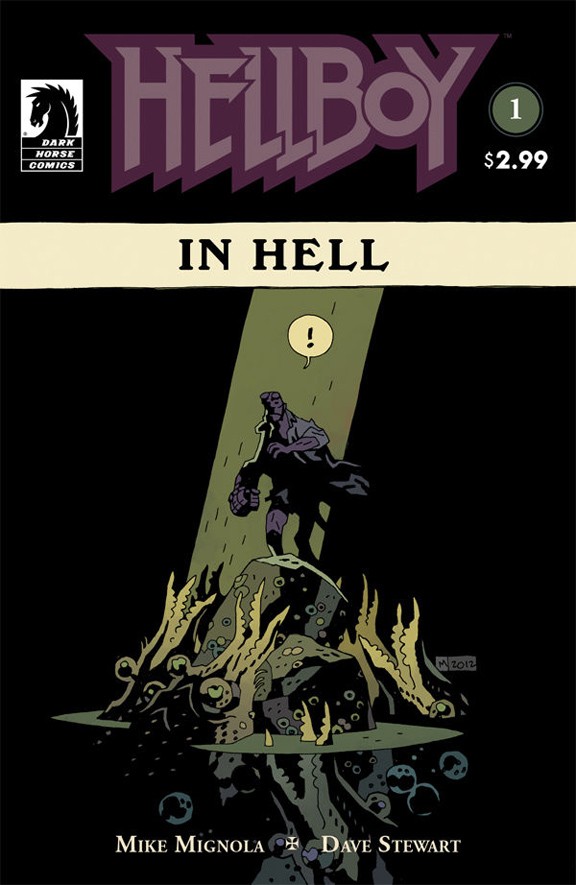
Folklore — Mike Mignola talks about drawing Hellboy again, at ComicsAlliance:

I do have a library. Very little of it is leather-bound. The folklore and mythology library, which is in my studio, is pretty tacky looking since it’s all picked out of used bookstores. I am a book guy but more and more I do use a computer to do certain research things. But there are 30-40, 50, maybe 100 books of folklore in there, most of which haven’t been read. I’ll look at a table of contents and go, “Wow there’s 30 to 40 different Hellboy stories in there.” It’s very comforting to know there’s a million stories to tell that I can pluck off the shelf for those days where it’s like, “Well, I got nothing!”

Suicide Watch — Steve Almond reluctantly reviews Building Stories by Chris Ware for The New Republic:

Ware is essentially a poet of solitude. He uses language and images to capture the private torments of unfulfilled lives. His characters drift in a sea of self-recrimination and unmet desire (not unlike the rest of us). They rarely find love, or resolution.

This bleak approach does yield a curious dividend, though. The occasional moments of grace explode off the page. At one point, we see his heroine cavorting with her daughter on their front lawn. “I remember Lucy landing on top of me, laughing…with the sun shining behind her suddenly life came into perfect focus,” she muses. “This was what it was all about … this very moment … the joyful reality of my daughter.” The girl’s lovely face, nearly life-size, beams at us from the middle of the page.

Of course, this idyll is shattered by the news that one of her friends has committed suicide. If Ware has one flaw, it’s his obvious discomfort with the notion that people—at least his people—might ever find an enduring happiness.

And, while were on the subject of comics…

Hannah Berry, author of the enjoyable Britten & Brülightly, writes about the independent comics scene in the Britain at the New Statesman. Berry’s second graphic novel Adamtine was published earlier this year in the UK by Jonathan Cape.

Also at the New Statesman, Hayley Campbell on the current state of British comics.

Meanwhile, back in the world of big grown-up publishing…

The Telegraph profiles Liz Mohn, “the woman behind media giant Bertelsmann” and, therefore, the monster that is Penguin Random House.

And finally…

Lubricated — Hunter Oatman-Stanford (how’s that for a moniker?) examines the nautical past of popular tattoos at Collectors Weekly:

“Many sailors are extremely superstitious,” says [C.W] Eldridge [founder of the Tattoo Archive], “so they would get specific tattoos to relieve this anxiety over their beliefs. There are stories of guys in the old, wooden-ship days who would get Christ’s head tattooed on their backs so if they got into trouble and had to take lashes, the person wielding the lash would be more sympathetic.”

The variety of designs matched each and every danger aboard a ship. “Sailors would get things like a pig and rooster on their feet to keep them from drowning,” Eldridge says. “They would have ‘Hold Fast’ tattooed on their knuckles so that when they were in the riggings, their hands would stay strong. They would get hinges on their elbows to keep them from having rheumatism and arthritis, and sometimes they would even get a little oil can tattooed above the hinge so that the hinges would stay lubricated.”

Comments closed

Something for the Weekend

Down the River — An interview with Sean Howe, author of Marvel Comics: The Untold Story, at The Phoenix:

Marvel is this narrative tapestry that all of these people have worked on and passed on. It’s sort of like television soap operas, but there’s something about that creative ownership that somebody has that’s not lasting, and the proprietary feeling that they have when something that they are a collaborator on doesn’t belong to them at all. It’s due to the way that Marvel ’s storytelling worked — Marvel Comics was this river that rushed by all these people, and they would throw their ideas into this river, and the river would just keep going on without them, it was bigger than any of them. And I think that Marvel is just an extreme example of that kind of thing which exists in the comic book industry.

See also: Sean Howe interviewed at Publishers Weekly; a review of the book at the A.V. Club; and for the (even) nerdier among you, a more critical review at The Hooded Utilitarian.

And on a semi-related note… Chris Ware interviewed by Tavi Gevinson for Rookie Magazine. It’s a little different from all the other interviews I’ve read with Ware recently:

Our memories are all we have, and even those we think of as “real” are made up. Art can condense experience into something greater than reality, and it can also give us permission to do or think certain things that otherwise we’ve avoided or felt ashamed of. The imagination is where reality lives; it’s the instant lie of backwash from the prow of that boat that we think of as cutting the present moment, everything following it becoming less and less “factual” but no less real than what we think of as having actually occurred.

Dead Comrades — D. J. Taylor on the writer Julian Mclaren-Ross, for The Guardian:

In strict category terms, the author of Bitten by the Tarantula (Maclaren-Ross’s titles nearly always leap up at you from the library catalogue) is a classic English literary bohemian in a tradition that goes back at least as far as Marlowe: one of those people who really do live their lives out of suitcases, whose books are ground out in a procession of rented rooms with the landlord’s boots resounding on the carpetless stair and whose best work appears in a brief window of opportunity before the milieu in which they operate rises up and drowns them. Certainly the form of Maclaren-Ross’s fiction seems intimately connected to the circumstances in which it was composed: written at night, Benzedrine tablets (“My pills”) to hand, in seedy west London hotels after a day spent bar-propping in the Soho drinking dens.

And finally…

Little SunJon Gray on his cover design for The Yellow World by Albert Espinosa, at Design Week:

The brief was: ‘read this amazing book and please give it an interesting cover’. I’m really lucky in that Jim Stoddart, the art director, gave me pretty much free-reign.
.. I thought that there was something appealing in the big yellow ball. Rather like Olafur Eliasson’s giant sun at Tate Modern a few years back. It’s warming and comforting on the eye. I also thought it would stand out against other books and without type would make you want to pick it up and find out more.

(via Theo Inglis)

Comments closed

Midweek Miscellany

It’s Complicated — Gabriel Winslow-Yost surveys the work of Chris Ware for the New York Review of Books:

Ware’s drawings are meticulous, even chilly, with flat, muted colors and the straight lines and perfect curves of an architectural rendering. The panels follow an orderly horizontal grid, but have a discomfiting tendency to occasionally shrink to near illegibility; or they might suddenly demand to be read from right to left, or even disappear entirely, to be replaced by pretty but unhelpful typography (“Thus,” “And so”), complicated diagrams, or plans for a paper model of one of the stories’ locations. Dreams and fantasies invade the story without warning—when Jimmy [Corrigan] first meets his father, we see him brutally murdering the sheepishly friendly man, while their desultory small talk struggles on.

Also at the NYRB: Zoë Heller’s review of Salman Rushdie’s preening new book Joseph Anton: A Memoir.

Chance Art — Rick Poynor on the photography of designer Herbert Spencer, at Design Observer:

As a photographer, Spencer seemed to delight in unraveling the order he spent his days as a designer attempting to create. His most telling and memorable images, those that seem most fully his own, show a world in which things fall apart, signs of official communication fray into visual poetry, and ordinary people assert their presence by inscribing streets, buildings and land with unofficial messages and marks.

And finally…

The Shadow Line — Sean O’Hagan interviews avant-garde filmmaker and founder of Film Culture magazine Jonas Mekas for The Guardian:

At the end of our talk, I ask him what he thinks of contemporary culture and how it compares to the creative iconoclasm that he was part of in 50s and 60s New York. He thinks about his answer for some time. “When the old forms began collapsing and falling away though exhaustion and repetition, a new sensibility is born. That is what happened back then and may be happening now.” He tells me how taken he is with the Joseph Conrad notion of the shadow line: a moment of great cultural change that occurs every so often, sweeping all that is old and exhausted out of the way. “It is overdue.”

Comments closed

Midweek Miscellany

Ruined… For Life — Yuka Igarashi on the consequences of copy-editing at Granta:

There is a danger to copy-editing. You start to read in a different way. You start to see the sentence as machinery. You focus on the gears and levers that connect words to one another; you hunt for the wayward semicolon, the unintentionally ambiguous phrase, the clunky repeated word. You even hope they appear, so you can kill them. You see them when they’re not even there, because you relish slashing your pen across the paper. It gets a little twisted.

As with any kind of technical knowledge or specialization, it is possible to take copy-editing too far, to be ruled by it, to not quite be able to shut it off when it ought to be shut off.

(As if to prove the point, the article itself is copy-edited in the comments)

The Undercoat of Modernity — Mathias Schreiber on Berlin in the ‘Golden Twenties’ for Der Spiegel:

Looking back on the period, playwright Carl Zuckmayer… who lived in Berlin from 1924 to 1933, wrote: “The arts blossomed like a meadow just before being mowed. This explains the tragic yet brilliant charm that is associated with this era, often seen in the images of poets and artists who died prematurely.”

The realization that this euphoria could not last undercoats the best works of art of these years with the metallic tone that soon became the trademark of artistic modernity. This applied, quite literally, to the refined simplicity of the anti-plush, steel-tube furniture of Bauhaus designer Marcel Breuer and the architecture of the same movement, fashioned from strictly functional steel skeletons… Metaphorically speaking, the tendency toward metallic, unadorned expression also applied to the literature of the period, and certainly to the objectivist collage technique employed by Alfred Döblin in his novel “Berlin Alexanderplatz” (1929). Döblin blends together the sound of wind, the rhythmic thud of the steam pile-driver, quotations from newspaper advertisements, stock market reports, soldiers’ songs, nursery rhymes and prostitutes’ patois with expressive, poetic flights of fancy, and injects all of these noises and fragments of language into the protagonist’s stream of consciousness… This first important big-city novel in the German language was also the first great 20th-century novel about the working classes.

And finally…

Purpose in the Wreckage — Simon Hattenstone’s endlessly quotable interview of media-shy musician Scott Walker, for The Guardian:

When [Walker] returned in 1995, it was as a fully fledged modernist composer. On the surface, there couldn’t have been a more unlikely transformation – imagine Andy Williams reinventing himself as Stockhausen. Yet in a way it was all of a piece. His latest album, Bish Bosch, is only his third in 17 years, all of them elaborate, epic and inaccessible. It is a post-apocalyptic opera of sorts, with blasts of rams’ horn, dog barks, scraping swords, machetes. The music nods at Gregorian chant, doffs its cap to Shostakovich, gives a thumbs up to industrial metal, and is uniquely Scott Walker. The lyrics reference sexual disease, brown dwarf stars, court jesters and dictators, all delivered in a strangulated baritone, as if Walker’s testicles were being squeezed. At times there’s a terrible beauty to his poetry (“Earth’s hoary/fontanelle/weeps softly/for a/thumb thrust”) while at others there’s a bloodthirstiness that could be straight out of Jacobean tragedy (“I’ve severed my reeking gonads, fed them to your shrunken face”). It’s brilliant and bonkers. The opposite of a guilty pleasure: a guilty torture.

And why not?

Comments closed

Midweek Miscellany

Accidental Effects — Rick Poynor on the street photography of designer Robert Brownjohn, at Design Observer:

Brownjohn tended to include enough of the setting to give a strong sense of the look and atmosphere of the place where he found the lettering or graffiti. The British capital’s dour post-war street texture was fascinating and meaningful to him. As an American and a recent arrival in London, he would have seen everything with the newcomer’s hungry and hypersensitive eye, whether the pictures were taken in a single day touring around town by taxi, as the story would have it, or in the course of several trips. Brownjohn shows the bricks, the stone, the doorways and window frames, the railings, the adjacent fixtures, the surrounding structure… [He] valued the accidental effects wrought by dilapidation, the elements, or human hands, in their own right, as a kind of visual music or poetry, irrespective of the formal design applications that these expressive details might go on to inspire.

Drowning in Film — Movie critic David Thomson, author most recently of The Big Screen, in conversation with Greil Marcus, at the LA Review of Books:

I have become more and more interested in the way different movies are like the water in a river. They’re constantly flowing into each other. Indeed, it’s a form that you can’t actually think of or describe as separate items. It’s the flow, it’s the sequence. And I think that we’re at a point in history where it’s not really as significant who makes what particular movies, it’s the constant flow. And like any flow of that kind, you say it’s like being carried down a river, and a lot of time perhaps you feel it’s on a sunny day and it’s very pleasant, but you can drown in a river. It seems that a lot of the culture, elements that I would hope to see maintained, are in danger of being drowned.

And finally…

Abnormal Activities — Patrick Ambrose interviews Iggy Pop for The Morning News:

Iggy Pop… obliterated the barrier between the artist and spectator. “I’m interested in being able to do that while maintaining the formality of the dinner engagement,” he says with a hearty laugh. “There has been a tremendous change in the cybernetics of rock and roll over the past 50 years. If you look back to the mid- to late-’50s, you’ve got maybe Elvis or Eddie Cochran playing on a flat-bed truck in a gas station parking lot with presumably 1,200 doomed teenagers dancing, chewing gum and knifing each other while religious leaders burn records and make racial slurs about the music. Now, you’ve got thousands of people obediently shuffling into these concrete civic centers to sponge up something in places where nothing really happens.”

Comments closed

Something for the Weekend

In Search of Lost Time — Jimmy Stamp on Chris Ware’s Building Stories, at Design Decoded:

If there’s a central theme to Building Stories, it is the passing of time – and our futile struggle against it. The comic book is the perfect medium to explore this idea. After all, what is a comic but sequential, narrative art? Unlike a photograph, a comic panel does not typically show a single moment in time but is, rather, a visual representation of duration. That duration might be the time it takes Superman to punch out a giant robot, the seconds that pass while a failed artist chops a carrot, or the years it takes for a single seed to travel around the world. In every comic book, time passes within the panel. More noticeably though, time passes between the panels. This is where the art of storytelling comes in. There are no rules in comics that standardize the duration of a panel or a sequence of panels. In Building Stories, sometimes milliseconds pass between panels, sometimes entire seasons, and sometimes even centuries can expire with the turn of the page.

See also: Mike Doherty interviews Chris Ware for the National Post.

Nuts — Jon Ronson, author of The Psychopath Test, interviewed at The Awl:

the stuff I was gravitating towards at the beginning was people who lived on the fringes of society and funny, absurd stories about the kind of crazy things that see us through. You know, belief systems that seemed kind of completely irrational to me. And I’ve got to admit, at the time, in my early 20s, I probably thought I was better than them. They were kind of nuts and I was, you know, sane and rational. But the older I get, the less I feel that. Now I feel completely on a par of irrationality with them.

And finally…

Cents — Damon Krukowski of Galaxie 500 and Damon & Naomi on musicians and streaming music services, at Pitchfork:

the sale of recorded music has become irrelevant to the dominant business models I have to contend with as a working musician. Indeed, music itself seems to be irrelevant to these businesses– it is just another form of information, the same as any other that might entice us to click a link or a buy button on a stock exchange.

As businesses, Pandora and Spotify are divorced from music. To me, it’s a short logical step to observe that they are doing nothing for the business of music — except undermining the simple cottage industry of pressing ideas onto vinyl, and selling them for more than they cost to manufacture.

Comments closed

Midweek Miscellany

Look Closer — Adrian Tomine talks about moving to New York, and his new book of drawings with The New Yorker:

I’m not one of those artists with an incredible imagination who can just make things up out of nothing, and I’m not the kind of person who would throw himself into some exciting or dangerous situation just to get material. So I tend to go about my normal, boring life, and just try to look at things a little more closely. And even though I’ve lived in New York for eight years now, I still feel like a recent transplant, and I think that’s a big influence on how I see and draw the city.

Invisible — Jeanette Winterson on Tove Jansson and the Moomins, for The Telegraph:

I keep the Moomin books in my study and if I am tinkering about preparing for work I will often open one at random and read a page – they are funny and subversive, (Hemulens of either gender only wear dresses). And playful. Whatever happened to playfulness? Why, as adults, is serious/superficial the boring binary of our lives?… Tove Jansson believed in happy endings… Not the Disney kind but more solid and ambiguous, which is a paradox, but more truthful than black-and-white solutions. Ever-after is what is invisible on the next page.

Approaching Zero — Michael Faber reviews How Music Works by David Byrne, for The Guardian:

Everyone knows that the music industry is in terminal decline. Unlike many doomsayers, however, Byrne feels the changed landscape is good for musicians. Even 20 years ago, any artist wishing to make a record needed a huge sum of money to pay for studio time (and thus needed a large corporation to loan it to him). A lucky few shifted the millions of units necessary to repay the industry’s investment, but the majority got hopelessly into debt. Nowadays, recording costs are “approaching zero”. Distribution costs in the digital era are also negligible compared to the days of physical warehousing. As long as artists can find ways of holding on to a fair percentage of their income (an impossible challenge in the heyday of the record companies), even modest sales can sustain a career. Indeed, says Byrne, “there have never been more opportunities for a musician to reach an audience.”

And finally…

A Short Lesson in Perspective — A fantastic essay by Linds Redding. First published in March of this year, this seems to have taken on a life of its own. If you work in a ‘creative industry’ and haven’t read it yet, make sure you read the whole thing:

The compulsion to create is unstoppable. It’s a need that has to be filled. I’ve barely ‘worked’ in any meaningful way for half a year, but every day I find myself driven to ‘make’ something. Take photographs. Draw. Write. Make bad music. It’s just an itch than needs to be scratched. Apart from the occasional severed ear or descent into fecal-eating dementia the creative impulse is mostly little more than a quaint eccentricity. But introduce this mostly benign neurosis into a commercial context.. well that way, my friends lies misery and madness.


Comments closed

Something for the Weekend

Comics Without Borders — a long interview with cartoonist Joost Swarte at The Comics Journal:

In the graphic field of comics I was inspired by Will Eisner’s Spirit. If I see these title pages, the constructions in his title pages, and what he does with the lettering, that was very interesting. And then another thing is, I love the older comics like Little Nemo and Lyonel Feininger. And I was interested also, because I studied industrial design… about the Dada people in Holland and Germany, and Bauhaus architecture and design world, in which there are almost no borders. I mean, people do whatever they like. Then you have the older artists like Tatlin. They designed their own clothes, they do architecture, they do flying machines, they do painting, they do everything. I mean, it was always nice to know that if you want to do different things, that you’re not standing alone. That somebody else did it, and they survived.

Losing Their Grip — Peter Aspen reviews three new books on cinema — The Big Screen by David Thomson, Do the Movies Have a Future? by David Denby, and Film After Film by J Hoberman — for the FT:

It is one of the most famous one-liners in the history of cinema, which also turned out to be an inadvertent prophecy. “I am big,” says the slighted Norma Desmond in Sunset Boulevard (1950). “It’s the pictures that got small.”

She had no idea. The past half-century has seen the pictures get smaller and smaller, to the point that we wonder if they can ever be big again. From television screen, to laptop, to smartphone, the ever-shrinking movies reach a greater part of the world than ever before. But what have we lost along the way?

Holberman’s book is given more in-depth consideration at the LA Review of Books.

And finally…

In the shit — book shopping with Michael Dirda at The Paris Review:

So this is how a man acquires 10,000-odd books, more than he could ever display or read. It’s a combination of maniacal persistence and utter nostalgic whimsy. You have to be willing to search high and low for a potential beauty, but most of the time you’ll take a Book Club hardcover of a book you don’t like if it reminds you of something from your past.

As if to illustrate the point, Dirda found a mass-market paperback of Black Alice, by Thomas Disch and John Sladek. Dirda was a friend of Disch until the sci-fi author killed himself in 2008. “He was a wonderfully cynical man,” Dirda said. “I have a first edition of this but I’ll get it anyway.”


Comments closed

Retromedia

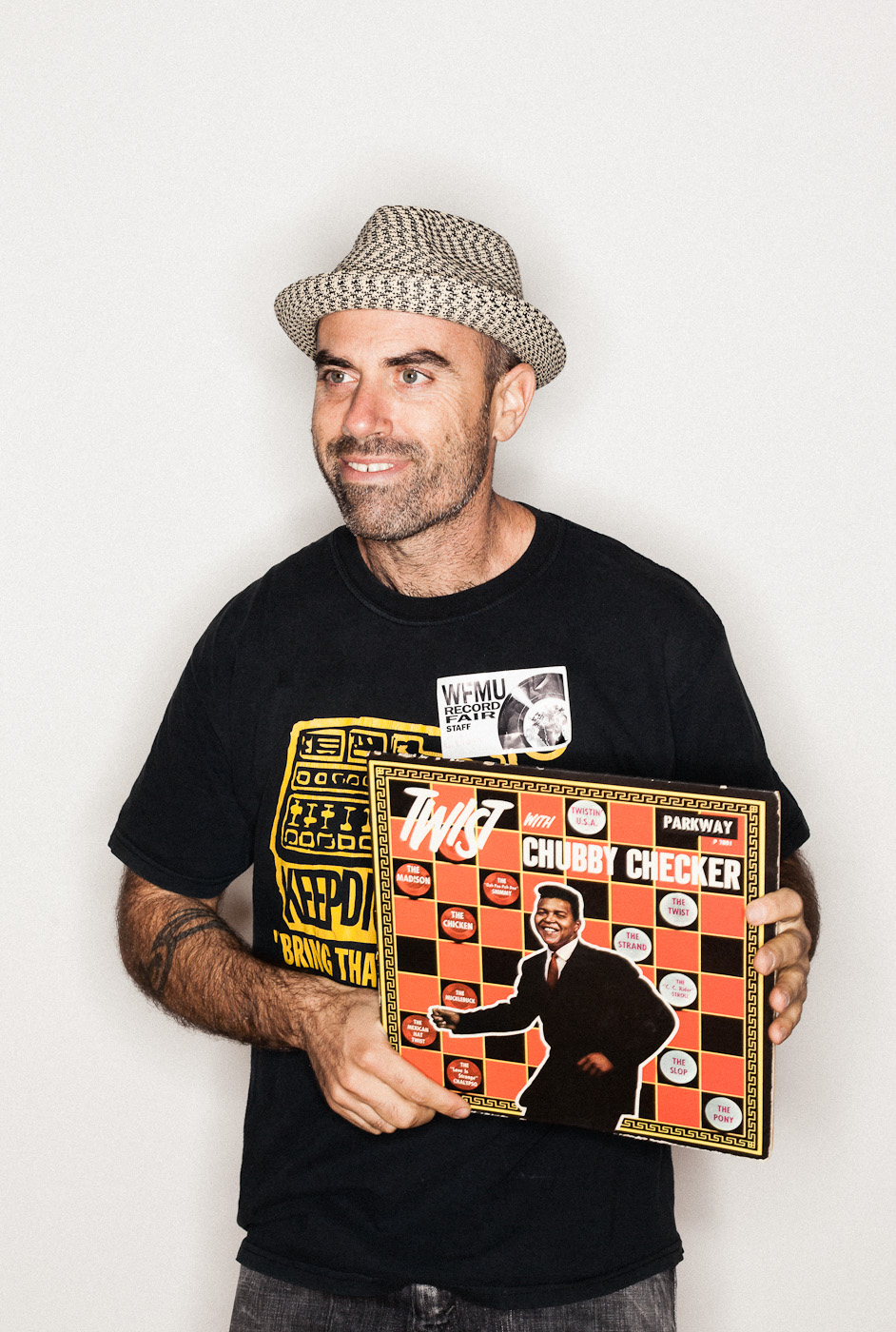
Digital formats are really convenient, but they are easily forgotten as well. If you ask anyone what was their first vinyl they bought they’ll probably remember that, but I don’t think a lot of people will remember what was their first mp3 download.

When you play a vinyl record it demands your attention and this is a way to connect to the music.  You have to take it out, you have to put it on the turntable, you have to put the needle on… These are all actions that demand attention from you and then you have to keep your attention and wait until the side is done and then you have to flip the record…

Photographer Eilon Paz, Dust and Grooves

A new short documentary from PBS Off Book on the attraction of physical formats in the digital age:

Eilon Paz successfully raised funding for a Dust and Grooves book with Kickstarter early this year.

See more of Eilon’s photos here.

Comments closed