Skip to content

Category: Miscellany

Something for the Weekend

Decaying Rabelaisians — An interesting look at the current state of French literature by Florence Uniacke for The Spectator:

Will Hobson, former contributing editor at Granta, says that fiction, philosophy, memoir and non-fiction (amongst other genres) are not clearly defined in France like they are in the UK, and this ‘super-genre’ doesn’t tend to sit well with English readers. The French philosophise, intellectualise, internalise, characterise and analyse; and in the mean time the storyline forgets to materialise. It’s not hard to believe that an English translation of The Roving Shadows by Pascal Guignard, winner of the Prix Goncourt in 2002, which was described as ‘a sequence of beginnings of novels, stories, landscapes and autobiographical fragments’, sold hardly any copies.

Lowered Expectations — Philip Lopate on essays and doubt, for the New York Times:

I like the freedom that comes with lowered expectations. In the area of literary nonfiction, memoirs attract much more attention than essay collections, which are published in a modest, quasi-invisible manner, in keeping with anticipated lower sales. But despite periodic warnings of the essay’s demise, the stuff does continue to be published; if anything, the essay has experienced a slight resurgence of late. I wonder if that may be because it is attuned to the current mood, speaks to the present moment. At bottom, we are deeply unsure and divided, and the essay feasts on doubt.

See also: Adam Kirsch on the ‘new essayists’ for The New Republic (which only reinforces my belief that I am the only person in the known world who was ambivalent about Pulphead and hasn’t the slightest interest in How Should A Person Be)

The Dream Book of Blank Pages — Andrew Gallix on unread (and unreadable) books for The Guardian:

There was a time when a learned fellow (literally, a Renaissance man) could read all the major extant works published in the western world. Information overload soon put paid to that. Since there is “no end” to “making many books” – as the Old Testament book Ecclesiastes prophesied, anticipating our digital age – the realm of the unread has spread like a spilt bottle of correction fluid. The librarian in Robert Musil’s The Man Without Qualities only scans titles and tables of contents: his library symbolises the impossibility of reading everything today. The proliferation of lists of novels that you must, allegedly, have perused in your lifetime, reflects this problem while compounding it. On a recent visit to a high street bookshop, I ogled a well-stacked display table devoted to “great” novels “you always meant to read”. We measure out our lives with unread books, as well as coffee spoons.

And finally…

A wonderful post by Charles Simic on Aperture Magazine, for the NYRB Blog:

In one of the older issues, Minor White had an essay called “What is Meant by ‘Reading’ Photographs” that made a big impression on me. He writes in it about hearing photographers often say that if they could write they would not take pictures. With me, I realized, it was the other way around. If I could take pictures, I would not write poems—or at least, this is what I thought every time I fell in love with some photograph in the office, in many cases with one that I had already seen, but somehow, to my surprise, failed to properly notice before. There is a wonderful moment when we realize that the picture we’ve been looking at for a long time has become a part of us as much as some childhood memory or some dream we once had. The attentive eye makes the world interesting. A good photograph, like a good poem, is a self-contained little universe inexhaustible to scrutiny.

Comments closed

Something for the Weekend

Deciphered — Designer Peter Saville on his designs for New Order, particularly Blue Monday and Power Corruption and Lies, at Upon Paper:

To me a record cover is part of the everyday, the now. And regularly there were phases of reference and quotation that – for whatever reason – I found relevant or pertinent. There were things going on in fashion or architecture that I would be aware of… things that I would take a reading from. I was interested in how the arts in general, but in particular the applied arts, were in some way evoking the mood, the appetite or the direction, the direction of the now. I always had a sense of what direction ‘the now’ was, it started with my own senses and then I would double-check and double-check to determine that what I was thinking was not merely insular. Around ’82 to ’83, I began to feel confident in my own sensibility.

Txtng teh Apclyps — The Guardian rock critic Alexis Petridis talks to  Nick Cave about this new album:

“Texting is apocalyptic on some level,” he muses, when the title of Push The Sky Away’s first single, We No Who U R is mentioned. “It’s a reduction of things. Maybe the last book, the last thing that ever gets written is just a bye, you know, goodbye in text speak.”

And finally…

Teju Cole on literature, Barak Obama,  dirty wars and drone strikes, at The New Yorker:

The plain fact is that our leaders have been killing at will.

How on earth did this happen to the reader in chief? What became of literature’s vaunted power to inspire empathy? Why was the candidate Obama, in word and in deed, so radically different from the President he became? In Andrei Tarkovsky’s eerie 1979 masterpiece, “Stalker,” the landscape called the Zona has the power to grant people’s deepest wishes, but it can also derange those who traverse it. I wonder if the Presidency is like that: a psychoactive landscape that can madden whomever walks into it, be he inarticulate and incurious, or literary and cosmopolitan.

Comments closed

Midweek Miscellany

Tell Me a Story From Before I Can Remember — A silkscreen poster of an ideal bookshelf of 100 books designed by Athens-based design studio KEIK Bureau.

Going Back to Bed — Jonathan Jones on the art of Robert Rauschenberg, for The Guardian:

Bed belongs to what is arguably the greatest series of works of art ever made in America. It is said to have been Johns who came up with the word “combines” to describe the works Rauschenberg started to assemble in 1954, putting together found photographs, newspaper clippings, fabrics, furniture, tyres and stuffed animals in intense configuations, all soaked and veiled in abstract expressionist paint. Thinking about them, I find myself struggling to find any match for what Rauschenberg achieved, not just in visual art, but in other arts, such as fiction. For what he created in these complex, tantalising, epic works was that elusive cultural totem, the “great American novel”.

Airstrip 1 — David Aaronovitch on George Orwell’s vision of a totalitarian future, for the BBC Magazine:

I was brought up in a house full of books, none of them by George Orwell.

Simone de Beauvoir was there, as was Sartre and Aldous Huxley and even Lenin. The last is actually a clue as to the absence of the first.

My parents were Communists. To them Orwell was on the other side of politics – someone whose principal writings were hostile to them and what they wanted to achieve….

Comments closed

TateShots: Kraftwerk

Guardian journalist Alexis Petridis on the first performance of KRAFTWERK — THE CATALOGUE 1 2 3 4 5 6 7 8 at the Tate Modern in London:

Comments closed

Something for the Weekend

Snowstorm…something, something… Snowstorm… Hmm, what? Oh right. Here we go…

Pick Up a Pearson — A profile of book designer David Pearson in the New York Times:

 The chillingly eloquent jacket of “Nineteen Eighty-Four” is the work of the British graphic designer David Pearson He is responsible for the design of four more books that have been reissued by Penguin in the Great Orwell series of paperbacks. From the horror movie typography on “Animal Farm” to the Vorticist-inspired illustration that Mr. Pearson commissioned from Paul Catherall for “Down and Out in Paris and London,” each of the covers exhibits the wit, thoughtfulness and ingenuity that have come to distinguish his work.

“David manages to combine respect for tradition with playfulness and a light touch,” said the graphic design historian Emily King. “He also has a brilliant understanding of the book as a physical object.”

Kvelling — Gerald Howard on the 50th anniversary of the New York Review of Books, at Salon:

Last week, my colleague at Doubleday came by my office with an austere-looking 11-by-15-inch broadsheet. Good God! It was a facsimile edition of the first issue of the New York Review of Books, Feb. 1, 1963. The advertising director and I sat there kvelling over this wondrously manifested printed object from another universe, with its Murderers Row of reviewers weighing in on many books that all these years later still matter, its old-school book ads with their quaint frontal appeals to the reader’s higher cultural aspirations…

The Literaries — A great essay Eddie Campbell about comics criticism at The Comics Journal:

Moving sideways at this point takes me to another recurring argument that falls within the jurisdiction of the present rant. I refer to the incessant debate over who authored Marvel Comics, was it Stan Lee or was it Jack Kirby?… The literaries are inclined to debate whether the furnishing of a plot is enough of a claim to authorship, or whether the real writer in this case was the artist. Once the argument gets started it can go in any direction, and is just as likely to deny that a plot was ever given in the first place, because it is obligatory that everybody who wasn’t there have an opinion and take sides. None of that has ever mattered, as far as I’m concerned, though I acknowledge that the ownership of successful movie franchises could make a difference to this party or that. But the movies do not interest me and I do not care. None of them have ever captured the thing that made Marvel comics exciting to me in 1965 when I discovered them for myself.

And finally…

Amazon Unpacked — A long, must-read piece at the FT on Amazon’s warehouse in the former mining -town of Rugeley, Staffordshire:

As online shopping explodes in Britain, helping to push traditional retailers such as HMV out of business, more and more jobs are moving from high-street shops into warehouses like this one. Under pressure from politicians and the public over its tax arrangements, Amazon has tried to stress how many jobs it is creating across the country at a time of economic malaise. The undisputed behemoth of the online retail world has invested more than £1bn in its UK operations and announced last year that it would open another three warehouses over the next two years and create 2,000 more permanent jobs. Amazon even had a quote from David Cameron, the prime minister, in its September press release. “This is great news, not only for those individuals who will find work, but for the UK economy,” he said.

People in Rugeley, Staffordshire, felt exactly the same way in the summer of 2011 when they heard Amazon was going to occupy the empty blue warehouse on the site of the old coal mine. It seemed like this was the town’s chance to reinvent itself after decades of economic decline. But as they have had a taste of its “jobs of the future”, their excitement has died down…

You can probably guess where it goes from there (but you should still read it)…

Comments closed

Monday Miscellany

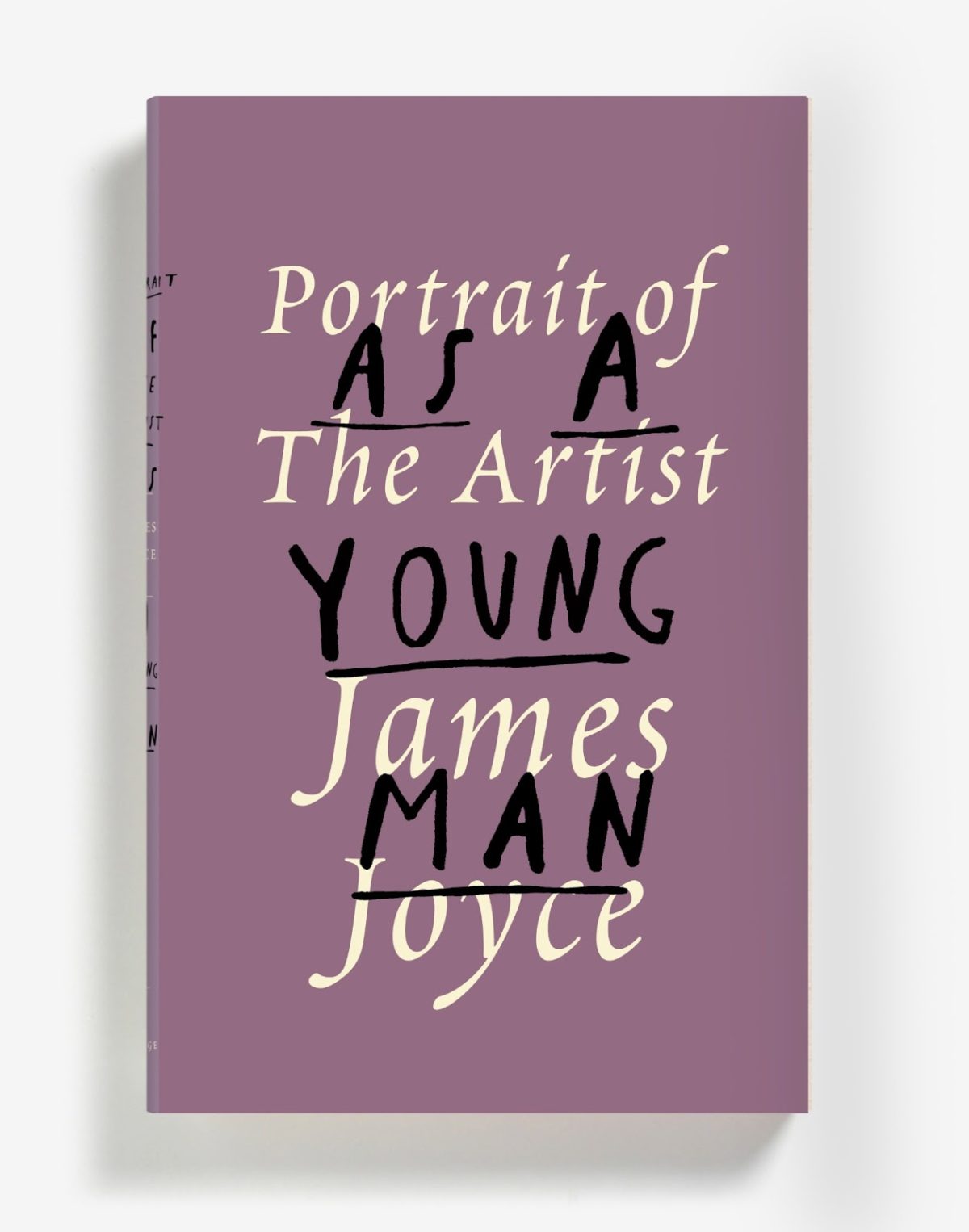
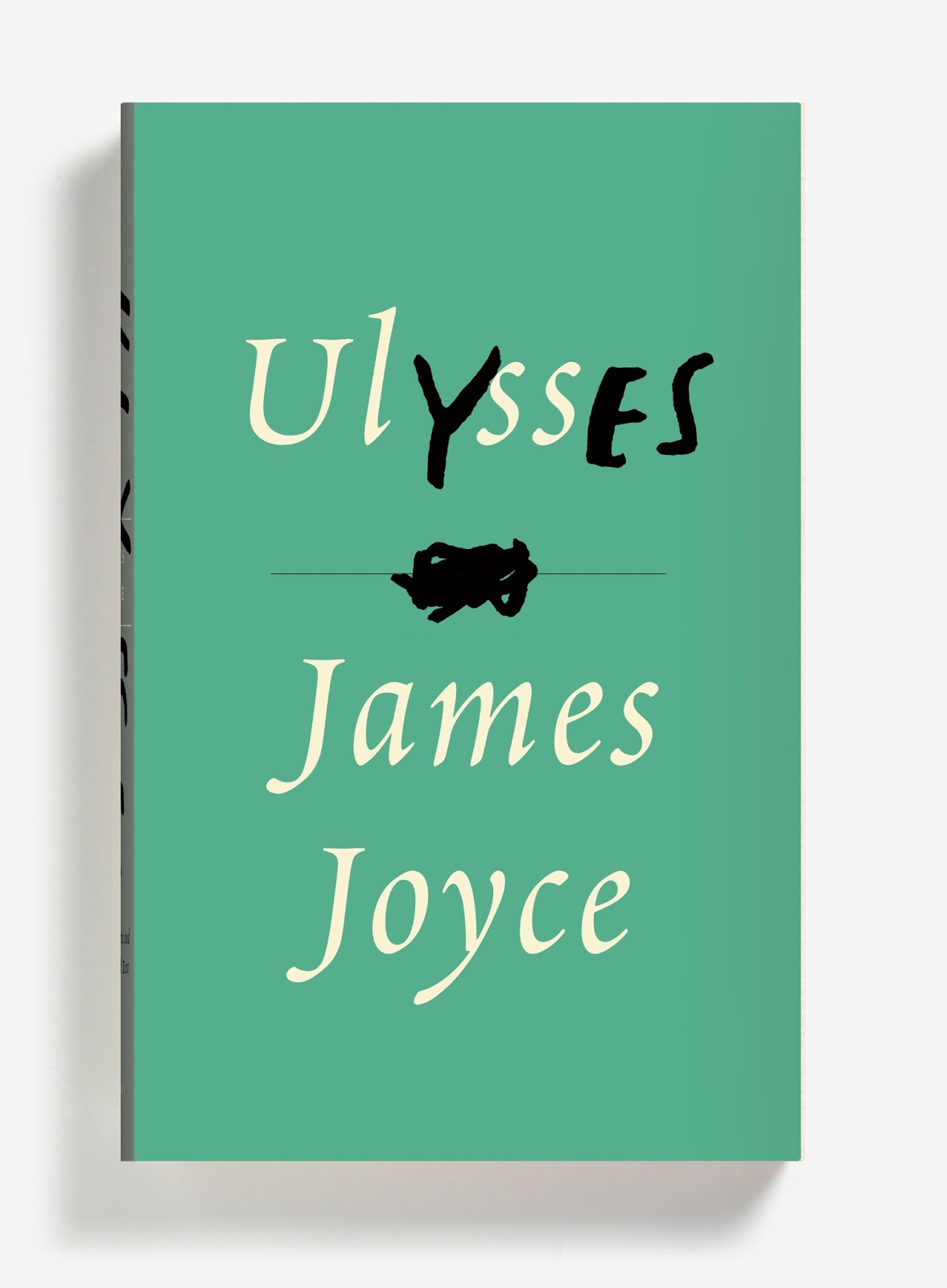
Three new James Joyce cover designs, and one extraordinary post by Peter Mendelsund.  Brilliant stuff…

The Box — Author Michael Chabon on the films of Wes Anderson at the NYRB Blog:

Anderson’s films have frequently been compared to the boxed assemblages of Joseph Cornell, and it’s a useful comparison, as long as one bears in mind that the crucial element, in a Cornell box, is neither the imagery and objects it deploys, nor the Romantic narratives it incorporates and undermines, nor the playfulness and precision with which its objects and narratives have been arranged. The important thing, in a Cornell box, is the box… All movies, of course, are equally artificial; it’s just that some are more honest about it than others. In this important sense, the hand-built, model-kit artifice on display behind the pane of an Anderson box is a guarantor of authenticity; indeed I would argue that artifice, openly expressed, is the only true “authenticity” an artist can lay claim to.

The Same Curious Brain — A profile of author and artist Oliver Jeffers, at the National Post:

Jeffers doesn’t just tell stories. He’s an artist — paintings, printmaking, collage — and a commercial and editorial illustrator, with clients ranging from Anthropologie and Weight Watchers to the Guardian and Newsweek. His monograph Neither Here Nor There, which was published last summer, is a collection of his non-children’s work — a bust of Darth Vader; a satellite crash-landed in a cornfield; a hammer nailed to a wall — though it still feels like part of the same universe. Jeffers prefers it this way.

“My books are all about telling stories, and a lot of my art is about asking questions,” he says. “But they’re equally extensions of the same curious brain.”

And finally…

The Spy Novelist Who Knows Too Much — a New York Times story about the decidedly nasty-sounding 83-year-old French pulp novelist Gérard de Villiers so implausibly bonkers it probably has to be at least partially true:

Last June, a pulp-fiction thriller was published in Paris under the title “Le Chemin de Damas.” Its lurid green-and-black cover featured a busty woman clutching a pistol, and its plot included the requisite car chases, explosions and sexual conquests. Unlike most paperbacks, though, this one attracted the attention of intelligence officers and diplomats on three continents… “It was prophetic,” I was told by one veteran Middle East analyst who knows Syria well and preferred to remain nameless. “It really gave you a sense of the atmosphere inside the regime, of the way these people operate, in a way I hadn’t seen before.”

And it gets better from there…

Comments closed

Midweek Miscellany

A bit late in the day on this, but the British edition of HHhH by Laurent Binet, designed James Paul Jones Senior Designer at Vintage Books, is quite something. The book was recently released in paperback in the UK.

And, if you’re curious, the North American edition designed by Rodrigo Corral looks like this:

The Language Policy — Further thoughts from Tim Parks on the role of editors, at the NYRB Blog:

As readers, it seems, we love to feel we are in direct, unmediated contact with an especially creative, possibly subversive mind and that we are getting all of its quirks and qualities unmediated and unmitigated by the obtusity of lesser folks perversely eager to return everything to the expected and mundane. This is no doubt why so little is said about editing even in the more learned papers, while nothing at all appears in the popular press, let alone at a promotional level. One cannot imagine, for example, a publisher launching an advertising campaign to boast that it has the most attentive copy editors in the business and can guarantee that everything you may read from its list has been properly purged of anything grammatically iffy, or foreign, or idiosyncratic.

Numbers — Rick Poyner on The Book of Numbers created by Herbert Spencer Spencer  in collaboration with his daughter, Mafalda:

The concept is simple enough. “We live in a world full of numbers: on houses and shops, on buses and motor cars, on magazines and packages, on stamps and labels, in fairgrounds and markets, on boats and aeroplanes, on road signs and posters,” write the Spencers. A series of photographs documents the occurrence of the numbers 1 to 100 going about their business somewhere out there in the world. Most numbers — seen on a showcard, a trash can, a hanging sign, a ceramic tile, a bus stop — receive their own images. In a few cases, such as house numbers and a set of maps, several consecutive numbers form a photogenic group within the same picture.

(It sounds fantastic).

And finally…

Colin Dickey on the haunted hotels of Los Angeles, at the Virginia Quarterly Review:

All hotels are haunted. It doesn’t matter which hotel; it’s already played host to a murder, an overdose, an accidental death with a story. You’re kidding yourself if you don’t see this, if you don’t recognize you sleep with ghosts. Every hotel staff has its stories, any cleaning woman or bellhop knows the score. In Wilkie Collins’ 1878 gothic novel The Haunted Hotel, an Italian villa is converted to a hotel shortly after it houses an unexplained, horrific tragedy. On opening night, a guest (“not a superstitious man”) takes Suite 14, and leaves hurriedly the following morning. The next night another couple take the suite; throughout the night the woman has horrifying dreams—awake, “afraid to trust herself again in bed,” she too makes excuses and leaves.

Assume, then, that every nightmare you’ve ever had in a hotel was a cry for help, some violence from the past reaching out to you.

Comments closed

Something for the Weekend

The Many Lives of Donald Westlake — Michael Weinrab on the work of Donald Westlake, for Grantland:

The Outfit is 213 pages, which is actually somewhat long by the standards of the early Parker novels. There are 24 Parker titles in all, and most of the early ones are tight little symphonies of spare and rigid prose, split into four distinct movements; they somehow manage to adhere to a rough formula and still blow your hair back every time. Their tone is brutal and unsentimental, and their themes are Nietzschean to the extreme: People act, without adverbial accompaniment, and the whys and wherefores are utterly beside the point. The protagonist is a career criminal, a sociopathic utilitarian who despises small talk. When someone asks him if he had a good flight to his destination, he thinks, This wasn’t a sensible question. He is concerned entirely with the successful execution of crimes and with his own self-preservation amid this process. One memorable chapter ends with the line, “He buried him in the cellar in the hole the kid had dug himself.”

The Parker novels, written by Westlake under pseudonym Richard Stark, have been republished by the University of Chicago Press, with covers designed by David Drummond.

Simulations  — Tim Maughan on Extreme Metaphors, a new collection of interviews with J.G. Ballard, at Tor.com:

You can perhaps argue that Ballard missed the big change that was to come just years after his death—the apparent crisis of global capitalism, the shift of industrial and financial production towards the east, and the tightening pressure on the suburban middle classes that this would result in. But the kicking back against these pressures, in the form of the online rebellion and well mannered protest of Anonymous and the Occupy movement, seem to fit perfectly into this description. Both are, in many ways, more of a simulation of a protest than an actual protest themselves—one involves doing little more than clicking a mouse, the other seemingly owing more to music festivals and camping than to hard-fought political resistance.

Let It Bleed — An interview with cartoonist Yoshihiro Tatsumi at Hazlitt:

The parents were really up in arms about these bad books. Manga at that time was different than it is now. It was friendly manga, so little kids could read it too… On the page you have the same number of panels, the people move from left to right and they’re all the same size and it all looks the same on the page… There was no movement or anything like that. We took inspiration from movies, doing zoom shots or close-ups. Using the camera. We wanted to use these techniques in manga, really violent movement. We were trying to move the panels in a realistic kind of way, to make work without lies, true work.

Tatsumi, Eric Khoo’s 2011 film based on Tatsumi’s memoir A Drifting Life, is currently showing at the Lightbox in Toronto.

And finally…

The Names Change But… The conclusion to Mark Medley’s fascinating series on House of Anansi, ‘A Publisher’s Year’, at the National Post:

“The truth about publishing is that publishing houses change their names and identities all the time. It’s the nature of this perilous trade. When I started in the business there was a Collins, and there was a Harper & Row. I can’t even remember when it became HarperCollins. There was Doubleday Canada, and all of its imprints, and there was a Random House, and all of its imprints…”

Publishers fail and new publishers emerge to take their place.

Comments closed

Midweek Miscellany

Patchwork — Artist Lilli Carré talks about her story collection Heads or Tails with Robot 6:

I wanted to include the majority of the short stories I’ve produced over the past five years, and so I went through all my stuff and arranged them not chronologically, but by how they each fed into each other. The book contains stories collected from anthologies, some new work, and a few pieces that I reformatted from small run mini-comics, artists books, and drawings that I’ve made over the years. My style changes quite a bit from project to project, so the book has a kind of patchwork quilt feel to it, but I wanted to make sure there was a solid thread between how one story feeds into the next.

The Activists — An interview with Dennis Johnson and Valerie Merians, founders of Melville House, at The Rumpus:

A lot of our early work was activist books… We were always kind of motivated in that way. When you have your own publishing house, you have to follow your own tastes, so we were publishing whatever we liked. We were also publishing a lot of translated fiction, because we felt that something that was important in the United States that was important then and still now, to combat that sort of insular feeling that we are all there is. To bring other writers and voices into the language, and get them exposed to new readers.

Nice — A lovely profile of Ben McFall who manages The Strand’s fiction section, in the New York Times:

 Mr. McFall grew up in Detroit, the only child of two schoolteachers, and he studied literature and music in college. He worked at a bookstore in Connecticut after graduation and then moved to New York in the mid-1970s to flourish as an actor, singer, poet and openly gay man. He took a job at the Strand in 1978.

“Back then, it was a cruel place; I was the first nice person to work here,” Mr. McFall said.

And finally…

Learn New Old Skills — An interview with type designer and calligrapher Seb Lester at Salon:

I’ve gone back to basics in recent years and placed a lot of emphasis on traditional tools… I have realized that calligraphy makes me a better type designer with digital tools and vice versa. There is a beautiful synergy between the two. There is also something very satisfying about making expressive marks and calligraphy has a humanity and expressive quality hard to capture with a computer. A personal motto at the moment is learn new old skills.


Comments closed

Something for the Weekend

Rubbish — Rachel Cooke on the artist Kurt Schwitters at The Guardian:

Merz doesn’t mean anything: it is a nonsense word (it comes from Commerzbank, an ad for which appears in one of his earliest collages). But after 1918 everything Schwitters made was Merz, whether it was periodical, painting or poem. He was a one-man movement. “The word denotes essentially the combination of all conceivable materials for artistic purposes,” he said. “And technically the principle of equal evaluation of the individual materials… A perambulator wheel, wire-netting, string and cotton wool are factors having equal rights with paint.” In other words, art could be made from the things most people regarded as rubbish. Almost overnight, he became a collagist.

There is a slide-show of Schwitters’ collages here.

Also: Merzman: The Art of Kurt Schwitters, is a fascinating 30-minute BBC Radio 4 documentary about the artist and his work in Britain.

The exhibition Kurt Schwitters in Britain opens at the Tate January 30, 2013.

Going Underground — The iconic London Underground typeface, designed by Edward Johnston in 1913, turns 100:

“Underground” — later known as “Johnston” — was circulated as a lettering guide for sign-painters and also made into wood and metal type for posters, signs, and other publicity materials used throughout London’s transport network.

Johnston himself only drew one weight of the typeface. He based its weight and proportions on seven diamond-shaped strokes of a pen stacked in a row. This gesture even shows up in the typeface itself, with the characteristic diamond used as the tittle of the “i” and “j”. He felt so strongly about the weight of the design that when another student of his agreed to create an accompanying set of bold capitals, Johnston wouldn’t speak to him for decades afterward.

And finally…

Fire Hose — James Gleick on the Library of Congress collecting and storage of Twitter messages, for the New York Review of Books:

This is an ocean of ephemera. A library of Babel. No one is under any illusions about the likely quality—seriousness, veracity, originality, wisdom—of any one tweet. The library will take the bad with the good: the rumors and lies, the prattle, puns, hoots, jeers, bluster, invective, bawdy probes, vile gossip, epigrams, anagrams, quips and jibes, hearsay and tittle-tattle, pleading, chicanery, jabbering, quibbling, block writing and ASCII art, self-promotion and humblebragging, grandiloquence and stultiloquence. New news every millisecond. A vast confusion of vows, wishes, actions, edicts, petitions, lawsuits, pleas, laws, proclamations, complaints, grievances. Now comical then tragical matters.

Call it what you will, the Twitter corpus now forms a piece of “the creative record of America” and therefore falls squarely within the library’s mission…


Comments closed

Midweek Miscellany

A great post on designer Josef Müller-Brockmann at I Love Typography:

A student from the back of the room shouted out a wish to see JMB’s business card. As JMB casually pulled the business card out of his coat pocket, there was a frenzy like fish at a pond when the morsels are tossed in. He was taken aback as we scurried around to take a peak at the card revealed; novice typographers eager to see his miniature piece of art. I still remember the card clearly. It was on light gray paper stock printed with a solitary color of cool gray ink. All content was in a singular sans serif face, all lowercase, and no punctuation to speak of other than the umlaut and hyphen in his distinguished name. No commas, no periods, no colons. All the elements on the card were restricted to the purest of necessary elements. In that small space he proved the mastery of minimalism; communication clearly achieved without the use of a period or a comma.

Thumbnails — An interview with book cover designer Isaac Tobin at the University of Chicago Magazine:

His approach to cover designs… hasn’t changed even as Kindles have sparked an ink and paper bonfire. Book covers always have had to work at reduced size, to be appealing from afar on a bookshelf or to make attractive catalog displays. “Things like color and shape,” Tobin says, “can do a lot to work from a distance or in a thumbnail.”

My 2009 interview with Isaac is here.

Tom Waits and Anton Corbijn are going to publish a limited edition book of their photographs.

And finally…

Holy Offset Press, Batman! — My favourite thing on the internet this week so far…  Marvel and DC superheroes printing comics (with art by Joe Kubert):


(thx Jacob!)

Comments closed

Something for the Weekend

Flavorwire asked a number of prominent designers — including Coralie Bickford-Smith, John Gall, Peter Mendelsund and Barbara deWilde —  to choose their favourite book covers designs from the previous year. I feel a slight tinge of regret that the cover for R.J. Palacio’s Wonder designed by Tad Carpenter didn’t make it on to my list

Mind-Boggling — Tom Spurgeon interviews Sean Howe, author of Marvel Comics: The Untold Story, at The Comics Reporter:

I worried that it would seem like the world’s longest wikipedia entry. There were so many things I wanted to include. I had a very good sense of what the narrative arc was. There’s a rise and fall, rise and fall, rise and fall structure here. If I were writing a play, I’d be failing miserably. But you can’t allay that stuff, you can’t recraft the narrative, without fictionalizing it. Having to get into everything that was going on as Marvel was commercially ascending, like in the early 1980s, I guess that I felt a responsibility to not over-summarize. I constantly worried that I was reciting too many facts as I went. Then I hear from people who are like, “Wow, that was a quick read. I wish you’d done more descriptions.”… Which boggles my mind.

From Psychopaths Lairs to Superhero Mansions — Charlotte Neilson on modern architecture in film, at ArchDaily:

We all know that psychopaths prefer contemporary design. Hollywood has told us so for decades. From the minimal lairs of Bond adversaries to the cold homes of dysfunctional families, modernist interiors scream emotional detachment and warped perspectives.The classic film connection between modern buildings and subversive values is well documented and, for the architectural community, quite regrettable. The modernist philosophy of getting to the essence of a building was intended to be liberating and enriching for the lives of occupants. Hardly fair then that these buildings are routinely portrayed with villainous associations.

And finally…

A (very) long review of Ryszard Kapuściński: A Life by Artur Domosławski at Dissent magazine:

Kapuściński’s genius was his dissection of comportments, his insight into politics that derived from conversations and observations of regular people. Clearly, his books were something other than traditional journalism, and he never claimed otherwise. Indeed, he was acclaimed in both Poland and the West precisely for offering a new kind of journalism. Domosławski relates the various criticisms, but suggests that the Catalan critic Luis Albert Chillón probably had it best when he wrote of Kapuściński creating a “formerly unknown symbiosis” combining “the information-gathering techniques that belong to investigative journalism, the art of observation that is typical of reportage, and a quest for a kind of poetic truth, which through a narrative mode that is closer to myths, legends and folk tales than to realistic novels, transcends the boundaries inherent in simple documentary truth.”


Comments closed