Skip to content

Category: Miscellany

Midweek Miscellany, Nov 26th, 2008

The Royal Mail British Design Classics: A set of first class stamps issued in January 2009 will commemorate ten icons of British design  including the Penguin paperback (pictured above).

“I wanted to put my money where my mouth is”booktwo’s James Bridle discusses Bookkake at 3:AM Magazine:

“I’m a huge fan of ebooks, and read this way regularly, but I don’t feel the reading experience they offer is yet on a sufficient par with traditional books to offer them at any great price, and I also don’t feel there’s much overlap between those looking for ebooks and those who’d pay for the paper edition.”

Risk has its rewards: Barney Rosset — US publisher of Beckett and Chekhov — discusses Grove Press and his struggles against censorship in a rebroadcast interview from 1991 on NPR’s Fresh Air. Rosset received the Literarian Award for his service to the literary community at the National Book Awards ceremony last week.

“The Best Business Books of 2008” — A slideshow of Fast Company‘s picks of the year:

“The titles that follow run the gamut of what Fast Company covers: Innovation, creativity, design, sustainability, technology, advertising and marketing, global business, and entertainment.”

It’s a cutely eclectic list for sure — including travel books and a novel (and mercifully there’s no Godin or Gladwell) — but it’s not, perhaps, quite as imaginative as they think it is…

30 Inspiring Flickr Groups on Typography: A wonderful list for type geeks compiled by designer David Airey (pictured: “Big Yellow Bookshop” by ultrasparky seen in the Typography and Lettering Flickr pool).

Comments closed
Midweek Miscellany, Nov 19th, 2008

“We’re from Kodak, Apple, Google, Yahoo”: The Guardian profiles Blurb — a publishing company with nobody from mainstream publishing — that specialises in high-quality, print-on-demand, photography books. Very, very, cool.

Good news and bad news for online retailers: Statcan found that more Canadians are shopping on the internet, placing almost $12.8 billion worth of orders in 2007, up 61% from 2005. ComScore, on the other hand, have just released their monthly retail e-commerce sales estimates, showing that online spending in October 2008 grew by only 1 percent over October 2007–the lowest monthly growth rate since they began tracking e-commerce in 2001.

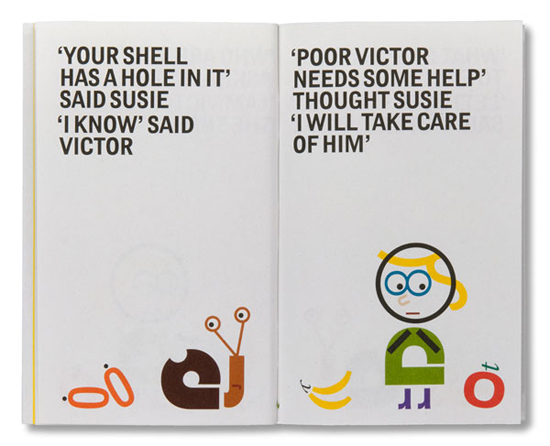
Victor & Susie: A brightly coloured “children’s book for adults” about Susie and Victor the snail, all drawn with letters and punctuation marks, published by Brighten The Corners (pictured). (via drawn)

“A kind of slow-motion suicide”: David Carr’s column for the New York Times looks at why firing their the most talented, experienced employees to cut costs backfired for Circuit City and will do the same for newspapers too:

“Right now, the consumer has all manner of text to choose from on platforms that range from a cellphone to broadsheet. The critical point of difference journalism offers is that it can reduce the signal-to-noise ratio and provide trusted, branded information. That will be a business into the future, perhaps less paper-bound and smaller, but a very real business.”

My take on this for book publishers (as it normally is): Publish less, publish better — quality matters. (via reveries)

Comments closed

Monday Miscellany

A bolt of electricity: PW polls publishers on the challenges and opportunities facing their digital publishing programs. It’s a fascinating glimpse of where the likes of Random House, Simon & Schuster, and Penguin are heading… A must read I would say…

Narrative medicine: Exposure to literature can influence how young doctors approach their clinical work according to the New York Times (via Guy Kawasaki):

“The idea of combining literature and medicine — or narrative medicine as it is sometimes called — has played a part in medical education for over 40 years. Studies have repeatedly shown that such literary training can strengthen and support the compassionate instincts of doctors.”

In need of a good editor: Book Lover Cynthia Crossen laments the decline of editorial rigour in the WSJ:

“Editors are the invisible heroes of the publishing industry, and as publishing companies cut corners, they cut editors… But without strong editors, writers are like cars with accelerators but no brakes”

Comments closed

Something for the Weekend

After a week of feeling gloomy about publishing, here are a few links to some less apocalyptic book-related stories that I’ve been reading:

“Your…fucking…book” : Author Michael Lewis, who just happened to chronicle Wall Street’s excess in the 80’s in his book Liar’s Poker, tries to figure out what the hell just happened for Portfolio magazine (via kottke):

“This was what they had been waiting for: total collapse… Lehman Brothers had vanished, Merrill had surrendered, and Goldman Sachs and Morgan Stanley were just a week away from ceasing to be investment banks. The investment banks were not just fucked; they were extinct.”

Did someone just say ‘Schadenfreude’? Well, I guess it is reassuring that there’s an industry more fucked than publishing… Anyway, Lewis is apparently writing a book about the whole financial crisis…

Contempt for the beautiful losers: Slate‘s Ron Rosenbaum goes to town on BuzzMachine’s Jeff Jarvis (author of the forthcoming book What Would Google Do?) taking in journalism, new media, publishing, the Frankfurt Book Fair, and “New Age boilerplate mysticism” of Paulo Coelho on the way:

“If Jarvis values books (and I can’t help think that despite all the digital bluster, he’s an intelligent guy who likes reading), do we just listen to the market and focus-group what we should print and give away, which is likely to result in all Coelho, all the time, with maybe a little bit of Jarvis thrown in?”

Inevitably you can already read Jarvis’ response on his blog. Despite all the overblown cattiness, it’s actually an interesting argument. (via fimoculous)

More Information Than You Require: Former literary agent turned author John Hodgman, best known for playing PC in those increasingly misfiring Apple commercials, interviewed by The Book Bench blog:

“I believe that by releasing ‘passing interest/low keepsake-value literature’ from the burden of physicality, you are actually releasing the words from their worst liability: the price and inconvenience of actual bookness.”

“Lord Death Man”: PowellsBooks.Blog previews  Chip Kidd’s latest pet project Bat-Manga! (pictured).

Comments closed

Monday Miscellany, Nov 10th, 2008

Think, study, then post: David D. Perlmutter, author of Blogwars, discusses slow blogging on the Oxford University Press blog:

“many of the bloggers I interviewed talked about the need to feed the blog that is, if you don’t put up 2 to 3 new posts a day you lose your audience. But fast anything, unless you’re competing in the Olympics, is not necessarily the road either to author or audience fulfillment.”

I love this idea, I’m just not very good at it or, perhaps, just a bit too good judging by the number of posts in my ‘drafts’ folder! Must try harder… (via the excellent ReadySteadyBlog by the way)

The business elite still love print according to a Folio magazine survey:

“Top American business executives spend a lot of time worrying about the volatile economic climate—and a lot of time consuming media, with a vast majority of them clinging to print.”

Ghosts in the House! Written and illustrated by Kazuno Kohara.

The Best Illustrated Children’s Books 2008:  a slide show of the New York Times picks (pictured).  The NYT‘s Children’s Books Special Issue is here.

A bitter-sweet love: writer Ellen Jordan discusses her coffee addiction in a essay in The Age:

“I wonder whether I’m afraid to write without coffee, afraid that every good sentence I’ve ever written came out of some mysterious alchemy of coffee and my mind. If I write with nothing, or with some pallid juice or herbal tea or decaf, will I discover that alone I have no talent?”

Comments closed

Midweek Miscellany, Nov 5, 2008

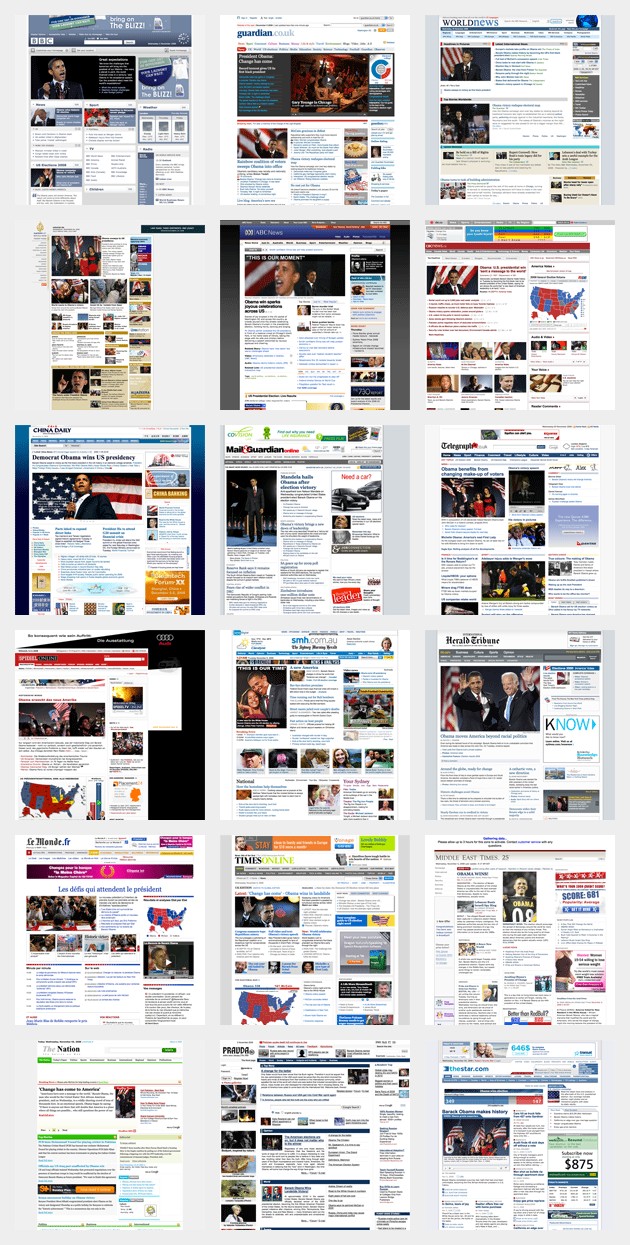
Konigi has posted a ‘small’ sampling of international front page newspaper coverage of the US Presidential Election (pictured) .   The US Sources are here. It’s hard not to be swept up in the excitement today. Breathtaking. (via SwissMiss)

“Publishing: Media’s Last Diehard?”: James Bridle (apt/booktwo)  has posts his v. interesting notes from a talk at the London School of Economics given by HarperCollins CEO Victoria Barnsley. More at The Bookseller.

“Seven hundred friends, and I was drinking alone”: Toronto author Hal Niedzviecki discovers the fickleness of Facebook friends in the New York Times (via DesignNotes).

Doubleday Dismissals Were Self-Inflicted: The New York Observer examines the recent lay-offs at Random House’s DoubleDay division and looks at the career of their publisher Steve Rubin (via Sarah Weinman).

Science Fiction and Fantasy editor Lou Anders interviewed on the Amazon blog Omnivoracious. What’s the hardest part of his job?

“Saying no to a piece of sheer brilliance because I know that the audience for it is about 200 people. I don’t for a minute believe that commercial and literary concerns are mutually exclusive … But not every worthy work has commercial potential. Trying to find books that fire on all cylinders means saying no to a lot of competent fiction that only fires on one or two. Being determined not to compromise on quality while still being commercially viable means that I am hunting in a very narrow bandwidth and have to read hundreds upon hundreds of submissions to find a very few prizes. I worry that a lifetime of saying no is bad for my karma, and have to remind myself that its the yes that the readers see and they are who I am serving.”

1 Comment

Monday Miscellany, Nov 3rd, 2008

The extraordinarily cool binding for Alfred Jarry’s Ubu Roi (Ubu the King), a collaboration between bookbinder Mary Reynolds and Marcel Duchamp, as seen at blog.rightreading (pictured).

Editor Chuck Adams interviewed in the November Poets & Writers Magazine. A very interesting–albeit very commercial–perspective:

“For too long, in New York, we’ve been in this culture of publishing what we like and not what readers want. Hopefully, we’ll come around to trying to understand what people really want to read so we can interest them in reading in the first place.

He also makes a very telling point about the problem of homogeneity of publishing:

“We don’t encourage a diversity of people in the business. We don’t. We just want more of the same because they’re the ones who can afford to work in it.”

I couldn’t agree more…

Not content with Bastards With Bookshops , Bastards With Bookshops 2,  and Yet More Bastards With Bookshops , Bookride has gleefully provided guidelines to help aspiring bastard-booksellers achieve their dream. Like they need the help… My personal favourite:

“Greet the customer with a glower, a scowl or a look of deep mistrust. If you are feeling generous a frosty ‘Good Morning! will suffice.”

Following Chapters-Indigo in Canada, Barnes and Noble have launched a social networking site ‘My B&N’ in the US.

Agent Kate Lee interviewed at HarperStudio’s 26th Story:

“I think the building or seeding of buzz online is important–as with film, music or TV, word of mouth is invaluable.  That buzz can come through building relationships with bloggers, writing posts that you then try to get linked to, starting up a social network or “fan” group, and/or creating original online content.  The main thing is just to be out there–be writing, be posting, be Twittering, be engaging in conversation with other people in the blogosphere.”

A fascinating half-hour interview with novelist John Le Carre from BBC Radio 4’s Front Row.

Comments closed

Monday Miscellany, Oct 27th, 2008

A day at the International Festival of Authors in Toronto and I’m running a wee bit behind, but–better late than never–here’s an evening edition of Monday Miscellany…

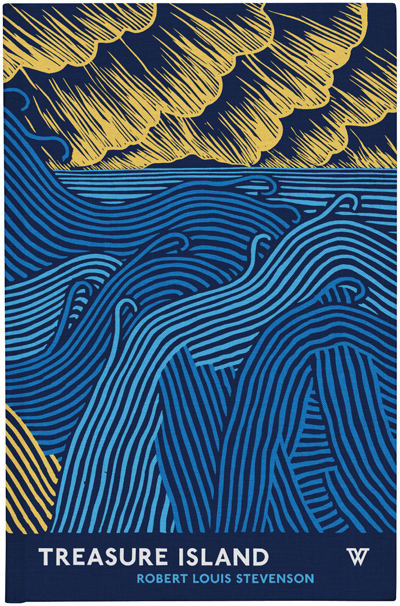
Ex-Penguin designer David Pearson  hopes to “reaffirm traditional methods of book production” with his new venture White Books according the Creative Review:

“Working on the premise that the ‘classics’ are usually the books that are treasured most, we’re aiming to create a package that stands a chance of ageing as gracefully as the writing within. Owing to the arrival of eBooks, many have prophesied the death of the printed word but we see this simply as an opportunity to turn the spotlight back on the traditional methods and to luxuriate in the craft and tactility of the physical book and the printed page.”

More on White Books at The Bookseller.

David Ulin sees a silver lining in the economic downturn (when am I allowed to start calling it a recession?) in the LA Times:

No more will publishers or writers have time or money for ephemera. During the Great Depression, even popular literature got serious: The 1930s saw the birth of noir. As the money dries up, so too, one hopes, does the gadabout nature of literary culture, the breathless gossip, all the endless hue and cry… [W]ith hard times upon us, it doesn’t seem too much to ask that this signal the start of a more stripped down, less self-absorbed period, in which we set aside the sound and fury and focus on the writing rather than the noise.

But this was the money quote for me:

“Don’t get me wrong: I’m all in favor of new technology, new delivery systems, new venues where the conversation about literature might take place. But the unrelenting insistence on newness has led down any number of blind alleys, perhaps most distressingly the ridiculous (and ongoing) print-versus-Web non-controversy, which has been promulgated almost exclusively by the least insightful people on both sides.”

Yes. Yes indeed.

Agent and former publisher Larry Kirshbaum at the HarperStudio’s The 26th Story:

“I would like to see publishers doing more marginal titles electronically — with creative Internet promotion —  as their test market, then go to print if there’s a sufficient response. This is not just a matter of ecology (e.g. avoiding waste), it’s promoting the idea that every book that is published physically will get significant attention by the publisher, the retailer and hopefully the consumer.”

Writer Al Alvarez’s awesome looking chair (pictured).

Author and controversial critic James Wood talks about his recent book How Fiction Works on KCRW’s Bookworm:

Comments closed

Midweek Miscellany, Oct 22th, 2008

Having skipped Monday (thanks Amazon grid!), here’s a bumper Midweek Miscellany for your (digested) reading pleasure…

Publishers put on a brave face on the economic downturn in Frankfurt according to the Washington Post (thanks for link Stephanie!):

“While luxuries are increasingly unaffordable, most people still have enough money to buy a book, and booksellers could even use the opportunity to stage a resurgence”

Traditional book binders John and Ardis Mankin featured in the San Diego Union Tribune (via Shelf Awareness):

“Our main machinery is our hands,” said Ardis, 74. “Technology can’t do what we do.”

The Serif Fairy (pictured) for the junior typographer in all of us (via Design Observer).

The Legendary Mr. Typewriter: Reveries on Martin K. Tytell the owner of the Tytell Typewriter Company, in Lower Manhattan who died, age 94, on September 11th, 2008. If I could  type for tuppence and wasn’t a pathological re-writer, I would definitely use a typewriter…

Books for Bibilophiles’   in The Observer:

“At a time when bibliophiles are an endangered species, these books about books tell us why it’s reading that makes us human”

Literary agent Pat Kavanagh, “doyenne of the London literary scene”, has died:

“She had the values of an earlier generation. People like Kingsley Amis loved Pat. She was old school but she never seemed jaded. We all thought she would always be there, that she would never retire.”

Jonathan Ross revisits Watchmen by Alan Moore and Dave Gibbons for The Times (via LinkMachineGo):

“But what makes this a genre-transcending bona fide masterpiece is that… Moore and Gibbons… manage to deliver a devastating critique that cuts to the very heart of the pitiful, timid male fantasy that is the superhero genre at its purest and worst: muscular men and busty women in tight costumes solving all the world’s problems with a well-placed punch”

Over and out…

2 Comments

Midweek Miscellany Oct 15th, 2008

Are New York publishers going through some kind of existential crisis?

A chill wind is blowing through publishing according to Leon Neyfakh in the New York Observer. He’s marginally less apocalyptic than some, but he’s still pretty gloomy:

“A frost is coming to publishing. And while the much ballyhooed death of the industry this is not, the ecosystem to which our book makers are accustomed is about to be unmistakably disrupted. At hand is the twilight of an era most did not expect to miss, but will.”

On the other hand…

Old-fashioned publishing is booming for Marvel according to Fortune Magazine:

“There’s a few interesting messages in this, not least of which is the reminder that new formats of media don’t necessarily replace old, and that some habits don’t change as quickly as people think.”

Former CEO Peter Olson  discusses his exit from Random House in Portfolio magazine:

“I think concerns about the book business dying are overdone. Storytelling—the generating of content for all kinds of media—is essential. Books play a key role.”

On a more cheery note…

Children’s Books That Designers Love: Kids books with “insanely cool typography” by  Bruni Munari and Cas. Opt. favourite Paul Rand (pictured).

Liz Thomson and Nicholas Clee, former editors of Publishing News and The Bookseller respectively, have launched BookBrunch an “information site and daily news service for the book industry.” (via Me And My Big Mouth)

Designer Stephen Bayley interviewed by his son Bruno for Vice Magazine. I rather liked this line:

“Heritage is important but you must also build the heritage of the future. The best idea ever on history was in an Italian novel The Leopard by Giuseppe Tomasi di Lampedusa, which was published posthumously. It had this line about the decline of a Sicilian dynasty: “If you want things to stay the same, they are going to have to change”. That is entirely my view. Without change everything is stultified.”

2 Comments

Monday Miscellany, Oct 13th, 2008

A belated Happy (Canadian) Thanksgiving and a belated Monday Miscellany (on Tuesday)…

An interesting  Q & A with George Jones, President and Chief Executive Officer of Borders Group, on HarperStudio’s The 26th Story Blog:

“I do not agree that it’s all doom and gloom in the book business… I think people are always going to want books…they will always want to be entertained and informed by books and I do not see that changing.  It’s true that the format books take may change over time and evolve, and the places where people buy books and how they access them have changed over time and will change further, but books themselves will always be part of our culture and our world in my opinion.”

Marketing in Tough Times. The American Booksellers Association ask successful booksellers to share their advice on marketing  during the economic downturn.

Book-lined stairs (pictured) designed by Levitate Architects for a space-challenged London apartment, as seen on the lovely Apartment Therapy (via image bookmarking site FFFFound).

50 of your favourite words on the BBC online magazine (as inspired by Ammon Shea’s book READING THE OED). I’m rather partial to ‘metanoia’ – “the act or process of changing one’s mind or way of life” – myself…

Comments closed

Monday Miscellany, Oct 6, 2008

‘Celebrity’ authors, including A.M. Homes and Jonathan Lethem, create “Flash Fiction” stories inspired by images from Diesel’s fall ad campaign (pictured). (Thanks Siobhan!)

Live and Learn: Heather Reisman. The founder and CEO of the Indigo chain of bookshops in Canadian Business magazine:

“I do believe a new paradigm of values is emerging. It rejects sweatshops. It is about fair trade and building family-friendly and environmentally friendly organizations. I think caring capitalism and sustainability will prevail. I know I sound optimistic, but why not?”

Why Are Literary Readings So Excruciatingly Bad? Michael Carbert in Maisonneuve Magazine:

“The only way to experience the kind of readings many of us are eager to attend is for everyone to demand more of themselves.”

Publisher as Brand? Kate Eltham of Electric Alphabet discusses HarperStudio and wonders whether publishers should spend time  and resources on their own brand identities. (via Tools of Change for Publishing)

Tech Tips for the Basic Computer User from David Pogue at the New York Times. A useful list that also just happens to start with an anecdote about a Book Editor…

LATE ADDITION:

Using Video Games as Bait to Hook Readers: Part two of Motoko Rich’s series on ‘The Future of Reading’ in the New York Times (click here for part one – Literacy Debate: Online, R U Really Reading?)

Comments closed