Skip to content

Category: Miscellany

Something for the Weekend

Traditional/Digital — An interview with book designer Sara Wood at nonslick (via Henry):

I’ve always used a variety of media, but my stand-by tools are my pencil (lately I’ve been using grease pencils as well), trace paper, my scanner, and a small library of textures that I bring into Photoshop. My work is most definitely a traditional/digital Frankenbaby. I like juxtapositions of smooth against rough, of lines that are refined against those that are just a little bit more spontaneous, and bringing my physical drawings into Photoshop gives me a great deal of flexibility for exploring that.

Literary Immersion — Writer and über-litblogger Maud Newton featured at From The Desks Of

For several years, Twain has been my standby when I’m really stuck.  I read him and remember that if I’m bored by what I’m writing, the reader will be, too. Basically, he reminds me to entertain myself first, and to assume that if I feel like what I’m writing is bullshit, the reader will see right through it.

The Colour of Cthulhu — Rick Poynor at Design Observer on the difficulty of visually realizing the work of H. P. Lovecraft:

Lovecraft has always posed a problem for anyone trying to turn the writer’s nightmares into visual imagery. The stories’ peculiar pleasure lies in the fully developed mythology that interconnects them, and in the morbidly refined vocabulary Lovecraft uses to evoke cosmic horrors too awful to describe, monstrous things from out of space and time too unfathomable to name, treading a fine line between an exquisitely apt descriptive style and embarrassingly purple prose. Lovecraft’s warped psychology and aberrant obsessions are best savored within the limitlessly accommodating theater of your own imagination. The risk with any attempt to make his spectral inventions literal and solid is that they will just look silly.

And finally…

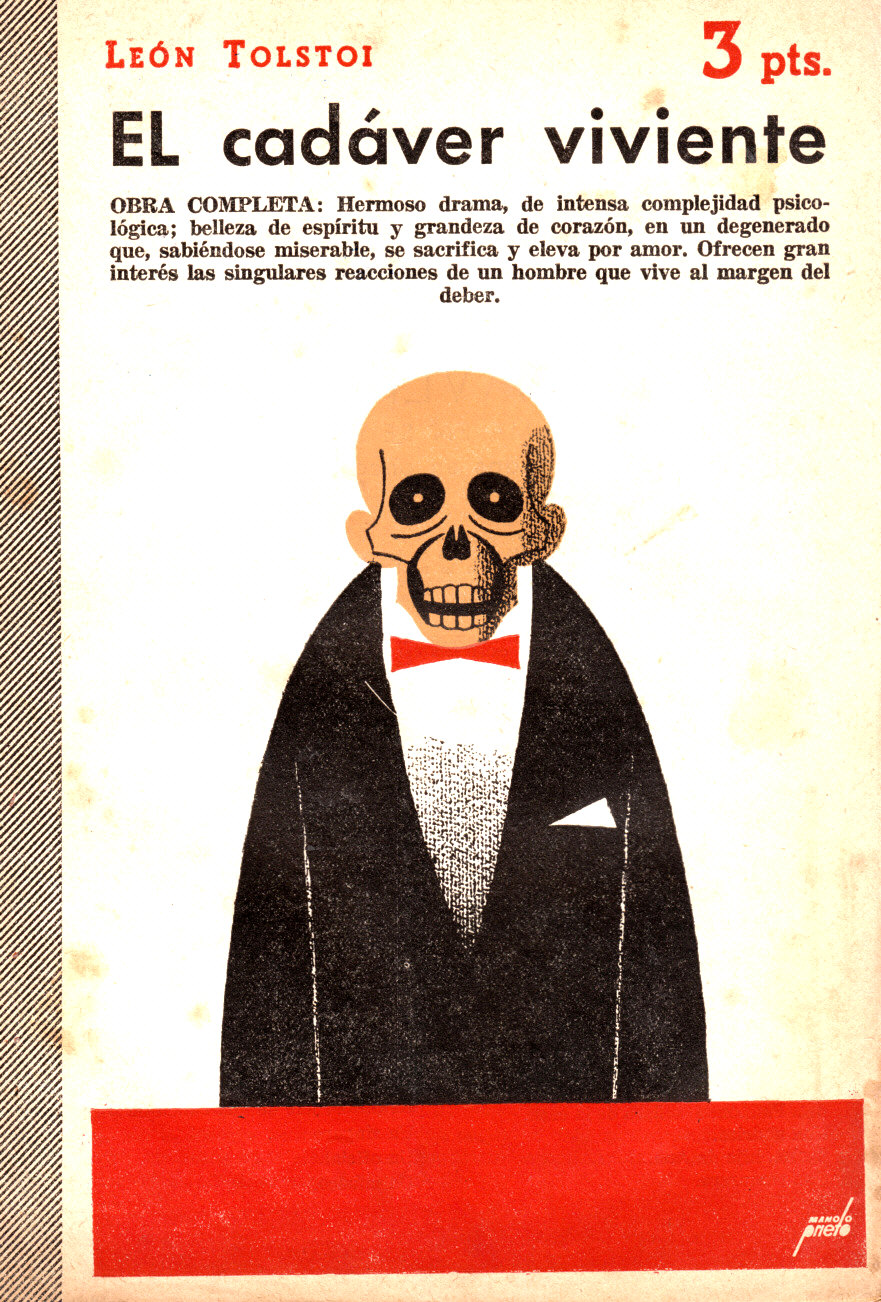
Some amazing vintage book cover designs from the 1940’s and 50’s by Spanish designer and illustrator Manolo Prieto (via Words and Eggs):

Comments closed

Midweek Miscellany

The Sentimentalists by Johanna Skibsrud has won the Giller Prize. Earlier this week The Globe and Mail profiled printer and publisher Gaspereau Press:

The house paper is Rolland’s Zephyr Antique Laid, which the Gaspereau website describes as “a creamy, sensual book paper.” The Quebec paper manufacturer Cascades makes it by special order for a handful of literary presses. Covers, meanwhile, are printed on Neenah Classic Laid from the U.S. papermaker Neenah. For the jacket of The Sentimentalists, Steeves selected a camel-hair colour to show off the cover illustration, a pencil sketch of a Vietnam soldier by Ontario engraver Wesley Bates who is a regular contributor at Gaspereau. Not coincidentally, The Sentimentalists has already won the Alcuin Society’s award for Excellence in Book Design in Canada.

(Well played Gaspereau, well played…)

Punk-As-Fuck — A fascinating history of Soft Skull Press, whose offices in New York closed last week:

“It will never be anything but a chronic uphill battle to run an indie publishing company,” says Johnny Temple, owner of Brooklyn-based indie publisher Akashic Books (and former Girls Against Boys bassist). “I think the efforts that Sander Hicks made when he started Soft Skull, and then Richard Nash after he took over, were pretty heroic in terms of trying to keep an independent publishing company with a radical vision afloat. Soft Skull was a company of righteous outsiders and has traditionally been a great home for people who don’t fit into mainstream society. What was particularly great was that Soft Skull has developed over time an international reputation. It wasn’t the only place for someone with a devoutly outsider sensibility, but it was one of the very best.”

MobyLives has a typically searing post on the closure of Soft Skull’s office in NYC. And while we’re on the subject, Publishing Perspectives has a Q & A with Richard Nash about his new venture Cursor.

Text for Nothing? — Ben Ehrenreich on Tom McCarthy and his novel C for The Nation:

In C, Nabokovian wordplay abounds. The characters not only have names, but each name is a web of echoes and allusions. So let Carrefax lead you to “carapace”—insects are important here—or to “caracole,” with its spiraling, cryptlike depths, even to deathly “catafalque.” Dig in deeper and you’ll find “fax,” of course, short for “facsimile” and denoting not only technology and transmission but replication—key concerns in C‘s cosmography. And in that prefix you might hear kara, Turkish for “black,” or perhaps even kar, Syldavian for “king” (Syldavian being the language spoken in the fictional Balkan nation of Syldavia, where, you may recall, brave Tintin foiled a Bordurian plot to steal King Ottokar’s scepter). Jam these associations together if you like—”black king of technological transmission” is not a bad descriptor for young Serge—or let the allusions drift and frolic, as McCarthy suggests in his Tintin study, as a “dynamic set of overlayings and cross-encodings…that resonate at levels far beyond that of any individual, re-encrypting themselves as they speak.”

And finally…

Raincoast Books has entered a team for this year’s Movember in support of Prostate Cancer Canada. If you would like to support Raincoast and/or “The Wagstache” (AKA my personal attempt to look like Daniel Plainview), you can follow our progress here. Any donations — big or small — are greatly appreciated.

Comments closed

Something for the Weekend

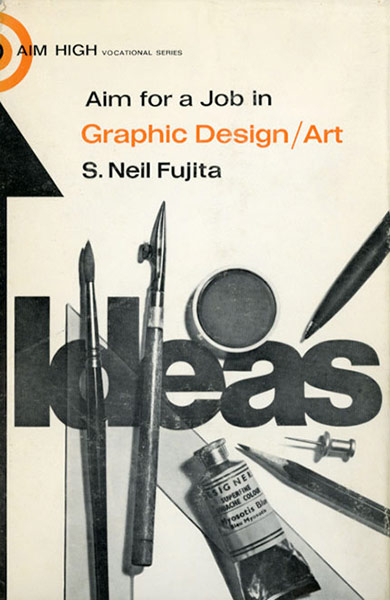
The Guardian‘s obituary for graphic designer S. Neil Fujita, who died last month aged 89, and a slideshow of his work, which included album covers for artists Dave Brubeck and Miles Davis, and book covers for John Updike, Truman Capote, and Mario Puzo.

The New York Times obituary, which ran in October, is here.

And a 2007 Steven Heller interview with S. Neil Fujita for AIGA is here.

Dead AirMike Doherty talks to Tom McCarthy about his most recent novel C for the CBC:

While researching the project, McCarthy was struck by the fact that Guglielmo Marconi and Alexander Graham Bell, the inventors of the radio and telephone, respectively, had originally sought to contact the dead. McCarthy dreamed up a character whose sister dies in early age; working as a radio operator later in life, he finds coded messages everywhere around him, perhaps from his sibling. McCarthy viewed this story as a Trojan Horse into which he could “smuggle” his “philosophical and avant-garde preoccupations,” in a “conventional Dickensian trajectory from birth to death in a historical setting. I thought, This is a winner. Surely some f—er’s going to publish this one!'”

You can find my conversation with Tom and book designer Peter Mendelsund about C here.

Pass NotesMobyLives talks to John Williams founder of online literary journal The Second Pass:

I found after leaving publishing that I was reading a lot of older books, some classics and some that I had just happened upon foraging at the Strand and other places. I thought there was room online to treat reading the way a lot of big readers actually do it, which is not to simply go straight through all the new releases but to haphazardly combine some new books with some old ones, some very popular books with some that have been out of print for decades. Plus, I was hearing a lot of moaning about the fate of books coverage in the age of the dying newspaper, and I thought trying to do something about it would be much more fun than talking about it (and much, much more fun than listening to other people talk about it). And it has been.

It just so happens that I will be chatting with John soon as well… Fingers crossed.

Comments closed

Midweek Miscellany

Pattern covers by Ray Fenwick for Houghton Mifflin Harcourt (thx Sio).

A look inside Graphic: Inside the Sketchbooks of the World’s Great Graphic Designers by Steven Heller and Lita Talarico at Fast Company.

Link Drop — A nice list of design blogs to sink your teeth into compiled by David Airey, author of Logo Design Love.

Photographs from Kevin Cumminsbook about Joy Division at Flavorwire.

Show Me The Money — Kevin Kelly, author of What Technology Wants and co-founder of Wired, talks to PW:

For readers, this is the best time in history. There’s never been more selection, more media types, or quality books. There’s never been more backlist books available. This is a high point for readers. For publishers, though, it is a low point, as their businesses are in transition. But I’m very optimistic, because in my research, money follows attention. Wherever attention flows, money follows.

And finally…

Telling Stories About Superweapons — In an awesome  (if slightly sprawling clearly-has-too-much-time-on-his-hands-and-might-be-bonkers) post, Christian Thorne, associate professor of English at Williams College, discusses Godzilla, Iron Man II and weapons of mass destruction (via Coudal):

Tony Stark is the Japanese scientist of the American Empire, the inventor who will not share his invention, the engineer who withholds the newest technology of death so that only he can command it: “You can’t have the suit. … I’m not giving you the suit. … You’re not getting the suit.” What the new movie shares with Godzilla is the notion that the perfect and ethical weapon would have to be entirely singular—there would literally only be one of them—and so would not be available for manufacture: a permanent prototype, forever in beta. By investing the killer armor with artisanal qualities, as though ICBMs could be blacksmithed, they suggest that the weapon’s uniqueness could be maintained into the future, since it is the hallmark of any handcrafted object that it is in some strict sense unrepeatable. That’s a fantasy, yes, but it’s an unsettled one; unease is simply built into its scenario. The conceit of an unshareable weapon comes with a worry automatically attached, which is simply that one will become two. Arms proliferate, and then so do anxieties, in their wake.

3 Comments

Midweek Miscellany

Bespoke — Richard Weston, AKA Ace Jet 170, on the book designs for the soon-to-be-launched Bespoke Editions:

Bespoke Editions is a one-off edition press; offering beautiful custom-made classic books, printed on demand and hand-finished to order. Personalised and unique, each edition will be made using specially selected cover papers and finishes… The editions will be in a Demy format and the page layouts will be based on the Van de Graaf Canon. After a set of tests, we’ve settled on the beautiful Hoefler Text for the typesetting and each title page will feature a carefully chosen typographic ornament that has some relevance to the particular book.

All Programs Considered — Bill McKibben on the new public radio for The New York Review of Books (via the always astute Edward Nawotka at Publishing Perspectives):

[I]n one sense this is the perfect moment to be a young radiohead. It’s like 1960s and 1970s cinema, with auteurs rewriting the rules. New technology lets you make radio programs cheaply: Pro Tools sound-editing software has now replaced much of the equipment used in big, expensive studios. Listening is even cheaper: the iTunes store has thousands of podcasts… available for free download in a matter of seconds. “It’s a transformative and exciting moment, a huge revolution,” says Sue Schardt, executive director of the Association of Independents in Radio.

But there’s one problem, and that’s the economics of this new world. Radio is now cheap to make, true, but the people who make it still need to live. And it’s very hard to get paid anything at all…

Sounds awfully familiar…

The beautiful Ligature Loop and Stem poster at For Print Only:

Aside from being a purely creative outlet devoid of typical restrictions… one of the goals for anything produced under the Ligature, Loop & Stem moniker is that it educates as well as inspires. This piece scratched an itch for us in wanting to have a quick reference for letterform characteristics — in essence, so we can all speak the same language when talking about type.

A Pointy Tool — David Carr  talks to the founders of The Awl for The New York Times (via Kottke):

“My friends keep talking to me about how they want to start a Web site, but they need to get some backing, and I look at them and ask them what they are waiting for,” Mr. Sicha said. “All it takes is some WordPress and a lot of typing. Sure, I went broke trying to start it, it trashed my life and I work all the time, but other than that, it wasn’t that hard to figure out.”

And finally…

Tintin Gets Scalped — An annotated page from Charles Burn’s new graphic novel X’ed Out at New York Magazine (via Bookslut):

Nitnit’s name—and shock of hair—betray his origins. “Golden Books put out six of the Tintin books in English. This was before I could read, but I was looking at them very carefully. The books’ endpapers were filled with images from other Tintin stories that hadn’t been translated. I studied these endlessly. There was a little sentence on the back of each book that said, ‘Look for future titles.’ I kept looking but they never came.”

Comments closed

Something for the Weekend

EquationsLauren Panepinto’s stunning op-art covers for a new trilogy of novels by Simon Morden, published by Orbit. From the Orbit blog:

These online cover images truly don’t do the packages justice — each book has a single bright colour and in the printed version that will actually be a fluorescent ink. Spot gloss lamination and subtle embossing will heighten the effect of the illusions and make them very nice objects to pick up and stare at — they really draw you in when you see them in person. Here they are separately, and larger, to really start to mess with your eyes…

I immediately thought of Bridget Riley when I saw these…

In Praise of Big Cities — Typographer Erik Spiekermann, author of Stop Stealing Sheep, on cities for blueprint Magazine:

I hardly ever go out; I love to eat at home and can think of nothing worse than a weekend house in the country somewhere. All I would ever need to take my mind off things is right outside. It’s actually a long time since I’ve been to a theatre or the opera, but I wouldn’t want to live in a place that has neither. The thought of all this activity happening outside my front door makes living here attractive. There are lots of cafes, and they always seem to be busy, full of people who seem to neither have a home nor an office to go to. Coffee shops have been described as the perfect place to be out in public while on your own and a good reason to leave your house while avoiding fresh air. I don’t need to go there, but the thought that I could at anytime is enough to avoid feeling lonely.

Iambik — Hugh McGuire walks the talk and launches a new audiobook company with an eclectic collection of literary fiction from independent presses.

And finally…

Good Ideas — Nora Young interviews Steven Johnson, author of Where Good Ideas Come From, for CBC Radio’s Spark:

CBC Radio Spark: Steven Johnson

1 Comment

Midweek Miscellany

Mode of Transportation by VSA Partners for Mohawk Fine Papers, seen at For Print Only.

Convergence — Richard Nash on the Frankfurt Book Fair, the book business, and enhanced e-books:

The reality is that the lack of audio and video in book is a feature, not a bug. All art forms are defined as much by what they exclude as by what they include, by what is left out as much as what is put in, by performing addition by subtraction, by less being more. The rules of haiku, of villanelle, of science fiction all exist to describe what is disallowed so as to give the freedom of not-everything-being-possible to the artist. Which, again, is not to say artists ought not create transmedia works. They should, and will. It is instead to say that when frightened publishers start scheming to create them in cahoots with third-party vendors we can safely say that this is a policy designed not to create desirable consumer products nor to create art but to create a survival pod for the publisher. What problem does the enhanced eBook solve?

(While not exactly a fan of enhanced e-books myself, I have no doubt that some people would be equally critical if publishers weren’t experimenting in this area).

Daniel Justi’s new font Ataxia is now available from You Work from and MyFonts. My interview with Daniel is here.

And finally…

A neat book trailer for John Lanchester’s Whoops! Why Everyone Owes Everyone and No One Can Pay (I.O.U. in Canada and the US) with animated segments by Yum Yum London (who made the wonderful short Parallel Parking):

(h/t the funniest man who-used-to-work-at-Penguin, Alan Trotter)

Comments closed

Something for the Weekend

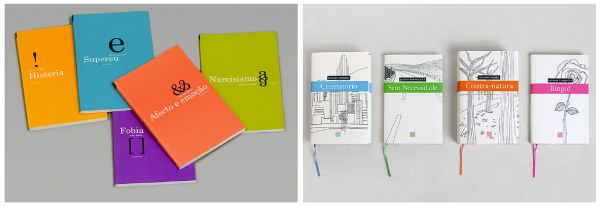
The stunningly beautiful book design work of FBA, a graphic design consultancy based in Coimbra, Portugal, seen at Cosa Visuales.

The Cosa Visuales post also introduced me to Spined, the design blog of Spanish graphic designer Álex Durana. Worth a look.

Wall of SoundAlex Ross, music critic for The New Yorker and author of The Rest is Noise and Listen to This, talks about his workspace at From The Desks Of…

My study is stereotypically overstuffed with books and CDs. On the desk I keep well-thumbed reference works—the Chicago Manual of Style, Strunk’s Source Readings in Music History, and Paul Griffiths’s Penguin Companion to Classical Music—together with two books that my spirits when sagging: the Wallace Stevens collection Palm at the End of the Mind and William James’s The Varieties of Religious Experience. I leaf through Stevens in search of a fresh word or rhythm I can apply somewhere on the page: for me, he’s the supreme magician of the modern English language. I look to James for philosophical guidance—he shows the way out of ideological traps and abysses.

Also of interest: Designer Jarrod Taylor, shares an annotated photo of his desk in the art department of HarperCollins, New York.

But speaking of The New Yorker… James Surowiecki on what we can learn from procrastination:

The idea of the divided self, though discomfiting to some, can be liberating in practical terms, because it encourages you to stop thinking about procrastination as something you can beat by just trying harder. Instead, we should rely on what Joseph Heath and Joel Anderson, in their essay in “The Thief of Time,” call “the extended will”—external tools and techniques to help the parts of our selves that want to work. A classic illustration of the extended will at work is Ulysses’ decision to have his men bind him to the mast of his ship. Ulysses knows that when he hears the Sirens he will be too weak to resist steering the ship onto the rocks in pursuit of them, so he has his men bind him, thereby forcing him to adhere to his long-term aims. Similarly, Thomas Schelling once said that he would be willing to pay extra in advance for a hotel room without a television in it.

And finally…

Jackasses and pirate-loving Monkeys — Author and illustrator Lane Smith talks (apparently to himself) about the charming It’s a Book (via The Second Pass):

I like arranging and rearranging books on my bookshelves. In other words, I am a nerd.

Not to say that I’m not excited by the new technologies and reading devices introduced (it seems) nearly every month, I am. But I’m sure on some level I’ll always be a traditional book guy. Then again I’m the kind of guy who still watches silent movies and listens to vinyl.

Unlike Grandpa (me), today’s kids are whip smart and tech savvy. I know eventually everything will be digital and kids won’t even know from a regular old book book and that’s fine. Truthfully? The reason I made the book? Certainly not to “throw down the gauntlet” as one critic has stated. Naw, I just thought digital vs. traditional made for a funny premise.

Comments closed

Midweek Miscellany

A new monograph on Japanese un-brand MUJI to be published by Rizzoli later this month (via Swiss Legacy).

Finishing Touches — Type foundry Hoefler & Frere-Jones on the little details that make their typefaces:

In the middle of Gotham, our family of 66 sans serifs, there is a hushed but surprising moment: a fraction whose numerator has a serif. So important was this detail that we decided to offer it as an option for all the other fractions, a decision that ultimately required more than 400 new drawings. Why?…[I]t’s something that we added because we felt it mattered. Even if it helped only a small number of designers solve a subtle and esoteric problem, we couldn’t rest knowing that an unsettling typographic moment might otherwise lie in wait.

And on the subject of typography… A handy PDF chart for mixing typefaces (via Smashing Magazine)

Blade Runner Will Prove Invincible — Philip K. Dick on Blade Runner, the film adaptation of Do Androids Dream of Electric Sheep, in a letter to the production company (via Coudal):

The impact of BLADE RUNNER is simply going to be overwhelming, both on the public and on creative people — and, I believe, on science fiction as a field… Science fiction has slowly and ineluctably settled into a monotonous death: it has become inbred, derivative, stale. Suddenly you people have come in, some of the greatest talents currently in existence, and now we have a new life, a new start… My life and creative work are justified and completed by BLADE RUNNER. Thank you… It will prove invincible.

And by coincidence, not only did I just watch the director’s cut of Blade Runner again just the other day (for approximately the bazillionth time), it was recently announced that Blade Runner director Ridley Scott would be producing a 4-part TV adaptation of The Man in the High Castle for the BBC. Awesome.

Deceptively SimpleThree Percent’s Chad W. Post on OR Books innovative publishing model:

The OR Books business model is deceptive in its simplicity. In many ways, it’s a throwback to a time before supply-chain intermediaries permanently altered the bookselling business—a time when publishers were also printers and bookstores. It’s a model that—if successful in the long run—thrives on both satisfying the needs of customers and maximizing the publisher’s return.

And finally…

Part One of Eleanor Wachtel’s interview with John le Carré about his new book Our Kind of Traitor for CBC Radio’s Writers & Co.:

Writers and Co. John Le Carre Interview

Comments closed

Grand Openings: Fight Club

In a 5 part series of video essays for Moving Image Source called ‘Grand Openings’, critics Aaron Aradillas and Matt Zoller Seitz analyze the credit sequences of David Fincher’s films.

Part 3 in the series looks at Fincher’s adaptation of Chuck Palahniuks Fight Club:

(vis @mdash)

Comments closed

Something for the Weekend

More Than Words — Yves Peters takes a typographical look at the winners of British Book Design and Production Awards 2010 for FontFeed. The winners all look wonderful, but, as Peters notes, it is a shame that only the publishers are credited, not the designers of the books.

An Archaeology of Business Cards — Penguin book designer Coralie Bickford-Smith discusses her workspace and her work with From the Desk Of…:

Right now I’m in the middle of designing a 20-book series, as well as sundry standalone titles, and my desk is usually a mess of ideas and scribbles on innumerable scraps of paper. There’s a whole archaeology of business cards, post-it notes and other treasures under there. I like to be surrounded by the current proofs to make sure the designs are working and that any tweaks are made in time for the final print. I like my desk – it’s my own tiny world in a big office.

My Q & A with Coralie is here.

Reading the ProcessThe New Yorker’s Book Bench interviews book designer Rodrigo Corral:

Reading is always part of the process when we’re working on a book jacket or cover for fiction. I read, I take notes, I take breaks. I’ll stop on the title, re-read it, and think about how it plays into the book and its overall message and intent. It’s rare to be able to illustrate the tone of the entire story by only depicting one moment from the book, so I prefer using a new image or design that I feel represents the story accurately.

The Rejection of Literalism — Steven Heller talks about his biography of designer Alvin Lustig Born Modern* with Imprint:

I did not get the impression that Lustig went into the book jacket biz with a literary bent. He did, however, have the temerity to try just about anything. And since, as a kid, he was interested in designing his way, he just, well, designed his way. So, I guess “confidence” is the right word. It was ballsiness. He had a vision—wherever it came from—and he pursued it. He was largely self-taught.
And, also via Imprint

Design Dossier: Graphic Design for Kids by Pamela Pease published by Paintbox Press, seen at The Daily Heller.

12 Reasons to be Excited About Publishing’s Future — Following up an earlier post about the love of books, Digital Book World‘s Guy LeCharles Gonzalez asks book industry folks why they’re excited about publishing.

And finally…

Help Me Destroy Public Radio” — Alec Baldwin channels Jack Donaghy for his “Do Not Pledge To Public Radio” pledge drive promo for NPR.

* Born Modern is published by Chronicle Books, who are distributed in Canada by my employer Raincoast Books.

1 Comment

Midweek Miscellany

The Man With the Getaway Face — Cartoonist Darwyn Cooke talks The LA Times’ Hero Complex blog about his latest Richard Stark (AKA Donald Westlake) adaptation, The Outfit, released this month:

With the first book, I was really trying to get Don Westlake’s worldview across to people. The story had already been told several times in films… and what-have-you, but it had never been told down the line, so it was really important for me to do that. With “The Outfit,”  I was able to sort of step back and say, ‘OK, the plan is we’re doing four books here; are there ways I can make this one stronger in terms of how it relates to the three other books?’ We don’t have, say, 20 books to get our readers acquainted with this entire world, so are there things that I can do here to help in that regard? So I changed a few things. And to be honest, I fixed a couple  of tiny problems with the story that I think Donald would have giggled about if I had brought them up. ‘Oh, geez, good point…

And on the subject of Richard Stark, David Drummond recently posted the final 3 covers (there are 18 in total) for the University of Chicago Press’ Parker reissues  (mentioned previously here):

Where the Wind Blows — Stephen Page, CEO of Faber & Faber, outlines the challenges facing existing book publishers at The Guardian:

Publishers perform roles that writers need. The question now is whether writers will continue to turn to existing publishers to perform these tasks, and whether they believe they offer value. Some authors will bypass publishers (some always have) but among most authors and agents I deal with, there is no appetite to do so, because publishers continue to perform essential roles for writers in both the physical and digital worlds (editorial, marketing, distribution, and so on). However, urgent questions are rising about how a successful 21st-century publisher ought to look and function, and whether existing publishers can adapt quickly enough…

A Hipster Never Teaches  a Square Anything — Over at Good, Lexicographer Mark Peters looks at the origins of the word “hipster” and why, these days, nobody admits to being one:

“Hipster” first popped up in 1940, and The Historical Dictionary of American Slang’s first use includes the statement that “A hipster never teaches a square anything.” The OED’s early examples include semi-definitions such as “know-it-all” (1941) and “man who’s in the know, grasps everything, is alert” (1946). Those descriptions sound groovy, but in the HDAS’s definition of “hipster,” we can find the seed that grew into today’s widespread hipster-phobia: “A person who is or attempts to be hip, esp. a fan of swing or bebop music.” It’s that attempting—especially in clumsy, transparent ways—that make the hipster horrible.

And finally…

What Batman Taught Me About Being a Good Dad — The headline tells you just about all you need to know about Adam Rogers post for The Atlantic (what dad doesn’t secretly believes that Batman is full of very important life lessons?), but hey…

I am trying to build a good human being here, someone who will make the world better for his presence. Because I don’t know any other way to do it, that means I’m building a little geek… I want him to think that these stories have weight, that they mean something; they are our myths. I give my son comics and cartoons and episodes of Thunderbirds because I want him to understand right and wrong, and why it’s important to fight the dark side of the Force. The mantras spoken in this corner of pop culture are immature, but they have power: With great power comes great responsibility. Truth, justice, and the American Way. The weed of crime bears bitter fruit. No evil shall escape my sight.

secretly
Comments closed