Skip to content

Category: Books

Some Recent Book Covers of Note

I haven’t posted a lot of book covers recently, so to amend the situation here’s a completely unscientific selection of a few designs that have caught my eye recently:

Middle C by William Gass; Design by Gabriele Wilson

Sorry Please Thank You by Charles Yu; Design by Cardon Webb

On the Map by Simon Garfied; Design by Roberto de Vicq

Me and the Devil by Nick Tosches; Design by Keith Hayes

Lionel Asbo by Martin Amis; Design by Jamie Keenan

The Flamethrowers by Rachel Kushner; Design by Charlotte Strick

London Underground by Design by Mark Ovenden; design by Matthew Young

The Silence of Animals by John Gray; designer unknown (image: Animalia N.1 by Carnovsky)


NB: You can find more book cover designs at The Accidental Optimist and my Pinterest.

Comments closed

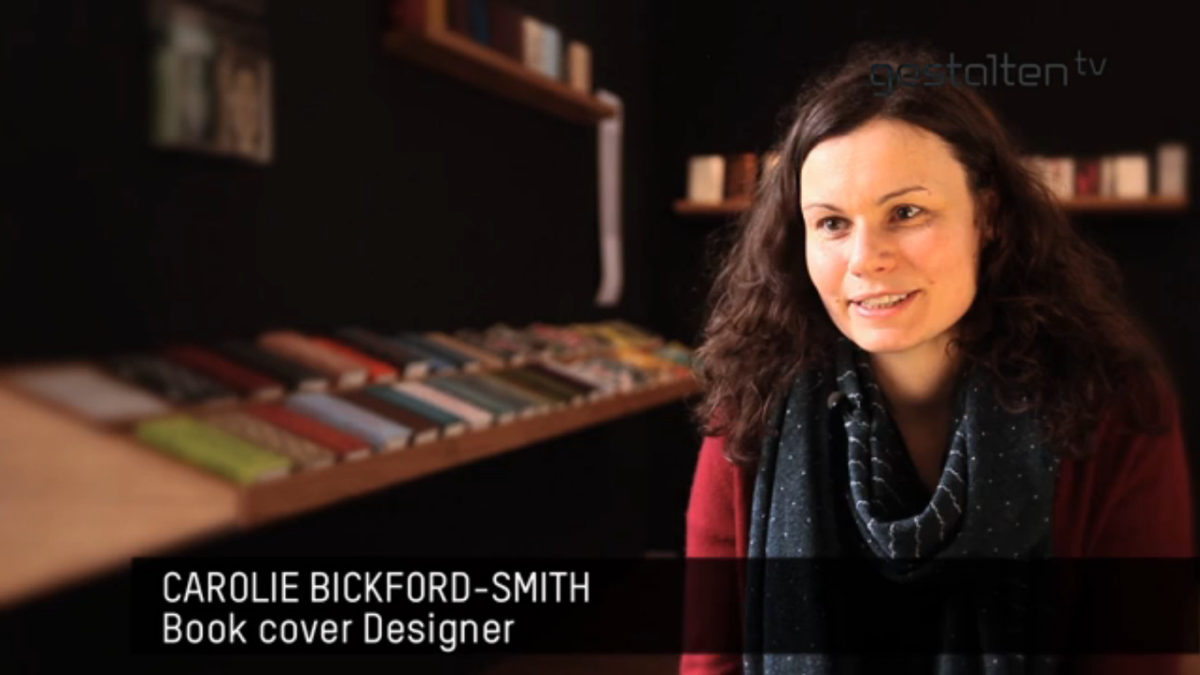
Carolie Bickford-Smith—A Series Woman

In this new interview with Gestalten.tv, Penguin Press designer Coralie Bickford-Smith talks about her love of books, her design process and the importance of research:

[vimeo 65388307 w=500]

Coralie’s work is featured in Fully Booked: Ink on Paper, published earlier this year by Gestalten.


You can read my 2009 interview with Coralie here.

1 Comment

Massimo Vignelli Makes Books

Massimo Vignelli discusses his approach to book design:

[vimeo http://vimeo.com/64811872 w=500]

The video was produced by Pentagram’s Michael Bierut and Aron Fay for Mohawk’s “What Will You Make Today?” campaign, and is accompanied by a limited edition journal that reproduces Vignelli’s grid from the film.

Comments closed

Something for the Weekend

Excitingly Wrong — An interview with Peter Mendelsund at Porter Square Books:

I am always interested by anything graphical that strikes me as (this is difficult to put into words) excitingly wrong. There is a cool-factor to certain images that lie just on this side of disagreeable…pictorial effects that make me think “this will bother a lot of unimaginative people.” Whenever I see something like that, a piece of art or graphic design that has that special kind of wrongness about it, I think “I need to do something like this myself.” Attendant to this is always the feeling of “in the future, this will be done a lot.” In other words, today’s ugly is tomorrow’s beautiful.

Lurking Menace — Ostensibly reviewing David Bowie Is, the catalogue for the current V & A exhibition, and Bowie’s new album, The Next Day, Ian Buruma looks back at the performer’s career at the NYRB:

[Bowie] drew his inspiration from anything that happened to catch his fancy: Christopher Isherwood’s Berlin of the 1930s, Hollywood divas of the 1940s, Kabuki theater, William Burroughs, English mummers, Jean Cocteau, Andy Warhol, French chansons, Buñuel’s surrealism, and Stanley Kubrick’s movies, especially A Clockwork Orange, whose mixture of high culture, science fiction, and lurking menace suited Bowie to the ground. Artists and filmmakers have often created interesting results by refining popular culture into high art. Bowie did the opposite: he would, as he once explained in an interview, plunder high art and take it down to the street; that was his brand of rock-and-roll theater.

This Movie is About Hope — Film Comment has a transcript of Steven Soderbergh’s San Francisco International Film Festival ‘State of Cinema Address’:

 The simplest way that I can describe it is that a movie is something you see, and cinema is something that’s made. It has nothing to do with the captured medium, it doesn’t have anything to do with where the screen is, if it’s in your bedroom, your iPad, it doesn’t even really have to be a movie. It could be a commercial, it could be something on YouTube. Cinema is a specificity of vision. It’s an approach in which everything matters. It’s the polar opposite of generic or arbitrary and the result is as unique as a signature or a fingerprint. It isn’t made by a committee, and it isn’t made by a company, and it isn’t made by the audience. It means that if this filmmaker didn’t do it, it either wouldn’t exist at all, or it wouldn’t exist in anything like this form.

Read the whole thing. It reminded me of William Goldman’s famous comment about Hollywood in Adventures in the Screen Trade: “nobody knows anything.”

See also: At the New York Times film critic A. O. Scott looks at Soderbergh’s ‘Twitter narrativeGlue.

And finally…

Just to the Right of Karl Marx — At the Financial Times, Julia Hobsbawn remembers her father, the historian Eric Hobsbawn:

The cemetery plot, situated as my husband Alaric wryly pointed out later “just to the right of Karl Marx”, had been freshly dug…  My mum Marlene had bought the plot in an expensive and expansive act of love several years earlier. She is 81 and was my father’s unsung muse for 50 years, dealing constantly with demands on his time from students, publishers, editors and broadcasters while acting as his general reader…

My dad was pleased knowing that he would end up there. Highgate Cemetery’s east wing is full of iconoclasts from the intelligentsia. I can picture him, glasses pushed up over his high forehead, peering longsightedly at the guide produced by the Friends of Highgate Cemetery Trust about its history, hoovering up the text and filleting it for us in an exact and pithy way. “Ah yes,” he might say, energised like a freshly charged battery by what he had just read, “you see what is really interesting about this is…”

Comments closed

Midweek Miscellany

I was locked a conference room last week looking at books coming out in the fall, so tI have a lot of catching up to do…

At the Financial Times, Andrew O’Hagan on the influence of other art forms on writers:

Writing novels is quiet work: it can reveal astonishments but it doesn’t usually proceed from them. Maybe that is why novelists are so often attached to second art forms that wear their physicality or their beauty outwardly. Ernest Hemingway considered bullfighting an art form and, indeed, he thought writers should be more like toreadors, brave and defiant in the face of death. For Japanese novelist Yukio Mishima it was the art of the samurai – he loved the poise, the nobility, the control, tradition, all things you would say of good prose – and he died in a ritual self-killing. But most novelists take their influence seriously without letting it take over. They are emboldened by a love of opera, as were Willa Cather and the French novelist George Sand, or by modernist painters, as Gertrude Stein was, each of these brilliant women finding in the spaciousness and drama of the other art form an enlarged sense of what they themselves were setting out to deal with on the little blank page.

And at The Guardian, O’Hagan talks to six novelists, including Kazuo Ishiguro and Sarah Hall, about their passion for a second art forms.

And on a somewhat related subject… Charlotte Higgins profiles painter Leon Kossoff for The Guardian:

His father, a first-generation immigrant from Ukraine, owned a bakery round the corner in Calvert Road; he was one of seven siblings. It was “absolutely not”, he says, an artistic household. “Painting didn’t exist in my family.” What drew him to art as a boy was finding himself, almost without knowing how he had got there, in the National Gallery. “At first the pictures were frightening for me – the first rooms were hung with religious paintings whose subjects were unfamiliar to me.” Later they became old friends: Kossoff spent a long period visiting the National Gallery before opening hours, working from the old masters, making not copies but what you might call translations.

An exhibition of Kossoff’s drawings and paintings of London opens at the Annely Juda Gallery May 8th.

Shuffle — At the Center for Fiction, Dawn Raffell interviews Renata Adler:

I always shuffle. And there, the computer is just a disaster because the only thing I’ve ever been compulsively neat about is typing. I type with two fingers, and so I would always make a mistake near the end of the page, and since White Out is no use, I would throw the thing out and start again at the beginning. Then along came the computer and I thought it was going to help because you can move everything around all the time and you can change every sentence 50 different ways in seconds. But that’s exactly what I don’t want, because then what was I doing? If the computer can shift everything in a split-second, then what am I doing here? That’s what I used to do so carefully. One of the things that’s almost comically a problem is AutoCorrect, and what AutoCorrect thinks I’m saying.

The Amanda Palmer Problem‘ — Nitsuh Abebe at Vulture:

The web offers an opportunity to fall into the open arms of fans, in ways that weren’t available before. Here’s the catch: The web also makes it near-impossible to fall into the arms of just one’s fans. Each time you dive into the crowd, some portion of the audience before you consists of observers with no interest in catching you. And you are still asking them to, because another thing the web has done is erode the ability to put something into the world that is directed only at interested parties… Telling the world all about your life can look generous to fans and like a barrage of narcissism to everyone else.

Also from New York Magazine, the faintly ridiculous ‘At Home with With Claire Messud and James Wood‘:

“There’s been a great deal of closely spaced difficulty to sort through,” she says. “You know that Katherine Mansfield story, ‘The Fly’?” It’s about a fly being slowly drowned in ink. “Well, I am the fly. Every time I hope that things will get better, somebody drops another inkblot on me. So it seems to me if there were a divine lesson it would be to stop hoping that the blots will cease, and instead to come to terms with it … At some point you have to think, All right, it’s not as if someone is promising you something easier or better. You have to be grateful to get it done at all.”

Wood talks about his recent collection of essays, The Fun Stuff, at The Spectator, and Messud’s new novel The Woman Upstairs, was published by Knopf this week

Comments closed

Tom Gauld Book Covers

The esteemed Tom Gauld recently posted a delightfully bonkers new cover illustration for Stevyn Colgan’s book Constable Colgan’s Connect-O-Scopeand I thought it was about time we had a retrospective of Tom’s book covers around here:

The Three Musketeers by Alexandre Dumas (2007)

The Tribes of Britain by David Miles (2006)

Strange Eventful Histories by Shiamin Kwa (2012)

Stories by Neil Gaiman and Al Sarrantonio (2011)

Shadow Show edited by Sam Weller and Mort Castle (2012)

Family Fang by Kevin Wilson (2011)

The Damned Busters by Matthew Hughes (2011)

Costume Not Included by Matthew Hughes (2012)

Hell To Pay by Matthew Hughes (2013)

Nobrow #6 by various (2012)

Goliath by Tom Gauld (2012)

And finally, Tom’s new book You’re All Just Jealous of My Jetpack has just been published:

You can read my Q & A with Tom here.

(full disclosure etc., Tom’s two most recent books, Goliath and You’re Just Jealous of My Jetpack, are published in North America by Drawn & Quarterly and distributed in Canada by my employer Raincoast Books)

Comments closed

Midweek Miscellany

Keeping it Simple — Gilbert Hernandez who has two new books out, Julio’s Day and Marble Season, talks about his work at the LA Times Hero Complex blog:

“What I’m really trying to do is streamline my work, to make it an easier read,” he said. “I’ve always admired newspaper comic strips that are very simple and direct, don’t have a lot of dialogue, don’t have a lot of exposition. When I look back at a lot of the comics that are overwritten, like the beloved old Marvel comics, I edit them in my head, to see how modern readers might become more interested in following them. When I look at my old stuff, like ‘Poison River’ and the early ‘Palomar’ stuff, I sometimes think it’s too dense to enjoy. For me, anyway.”

Mechanics — Tom Whipple on algorithms for Intelligent Life:

What has changed is what algorithms are doing. The first algorithm was created in the ninth century by the Arabic scholar Al Khwarizami—from whose name the word is a corruption. Ever since, they have been mechanistic, rational procedures that interact with mechanistic, rational systems. Today, though, they are beginning to interact with humans. The advantage is obvious. Drawing in more data than any human ever could, they spot correlations that no human would… Their strength is that they can take in that information in ways we cannot quickly understand. But the fact that we cannot understand it is also a weakness.

Cardboard Boxes — At The New York Times, Dwight Garner on packing up his family’s favourite picture books:

In the past, when I’ve had to pack my personal library, what I’ve boxed are talismans of intense yet essentially private experience. Picture books aren’t like this. When you’re putting away these square, dog-eared, popcorn-butter-stained things, you’re confronting an entire cosmos of collective memory… They occupy places in our family’s shared consciousness as indelibly as do summer vacations, trips to the hospital or injured birds cared for in cardboard boxes.

And finally (but most importantly)…

A profile of Kim Gordon at Elle Magazine:

Sonic Youth is not just revered within the indie rock world; it’s an indelible part of American pop-cultural history, a sort of byword for tasteful and progressive art that’s also popular. “She was a forerunner, musically,” says Kathleen Hanna, of the riot grrrl band Bikini Kill and later the dance-rock group Le Tigre. “Just knowing a woman was in a band trading lead vocals, playing bass, and being a visual artist at the same time made me feel less alone.” Hanna met Gordon when she came to a Bikini Kill show in the early ’90s. “She invited my band to stay at her and Thurston’s apartment,” Hanna says. “As a radical feminist singer, I wasn’t particularly 
well liked. I was in a punk underground scene dominated by hardcore dudes who yelled mean shit at me every night, and journalists routinely called my voice shrill, unlistenable. Kim made me feel accepted in a way I hadn’t before. Fucking Kim Gordon thought I was on the right track, haters be damned. It made the bullshit easier to take, knowing she was in my corner.”

(Tasteful is not a word I would necessarily use in association with Sonic Youth, but hey… )

3 Comments

Something for the Weekend

Making Bird Noises — Dwight Garner profiles novelist John Le Carré, for the New York Times:

In his lesser books, le Carré’s prose can thin out perilously, but at his best, he’s among the finest writers alive. There’s a reason Philip Roth has called “A Perfect Spy,” le Carré’s 1986 autobiographical work of fiction, “the best English novel since the war.” The Times of London ranked him 22nd on a list of the 50 greatest writers since 1945. His books are less about espionage than they are about human frailty and desire; they’re about how we are, all of us, spies of a sort.

See also: Mark Lawson reviews Le Carré’s latest, A Delicate Truth, for The Guardian.

(Pictured above: the cover to the US edition, illustrated by Matt Taylor)

And while we’re at it… James Campbell reviews Kurt Vonnegut: Letters edited by Dan Wakefield, which has just been released in the UK:

[Anatole] Broyard was scarcely wrong to say that Vonnegut’s reputation suffered a blow with each new book; he is a classic example of a writer whose renown endures through the success of a single novel. Yet the tone was ever recognisable, and even lesser-known books – SlapstickDeadeye DickHocus Pocus – sold well. In response to a question from a reader in 1991 about the relationship of his style to “jazz and comedians”, he replied: “I don’t think about it much, but now that you’ve asked, it seems right to say that my writing is of a piece with nightclub exhibitionism … lower class, intuitive, moody, and anxious to hold the attention of a potentially hostile audience.”

New England — Alan Moore talks to Pádraig Ó Méalóid about League of Extraordinary Gentlemen, Nemo: Heart of Ice, his unfinished novel Jerusalem, and his Lovecraftian work-in-progress Providence:

with Providence, what I am doing is, I’m looking as much at American society in 1919 as I am looking at Lovecraft, in terms of my research, and I am connecting up Lovecraft’s themes, and Lovecraft’s personality, to a certain degree, with the tensions that were then incredibly evident in American society… It’s starting from – if Lovecraft’s characters, if Lovecraft’s monsters, if Lovecraft’s locales actually existed in A Real World, then what would they really be like, and what would the world be like?

In part two of the interview, Moore discusses his recent film projects and other work.

Who? — Steven Heller talks to Unit Editions Adrian Shaugnessy about Jurriaan Schrofer (1926-90): Restless Typographer at Imprint. It’s a rather short interview, but there are some lovely illustrations!

Any finally…

Still my favourite thing on the internet this week:

Phillip Marsden’s one-page comic strip ‘Hipster Hairdo’ for Off Life #4 (PDF).


Comments closed

Something for the Weekend

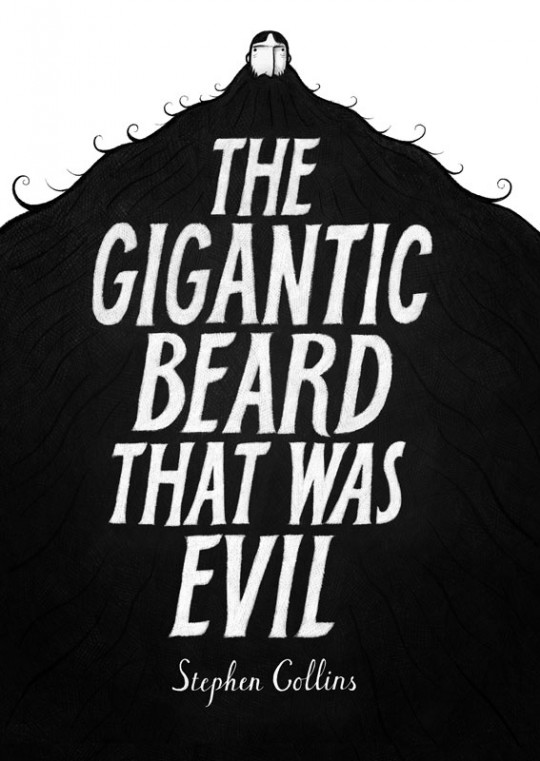
The Gigantic Beard That Was Evil by Stephen Collins is out next month. The launch party is at Gosh in London (but I just wanted to post the cover because it is fantastic).

Belief in the Writer — Mark Danner talks to Robert Silvers, founding editor of the New York Review of Books, at New York Magazine:

I believe in the writer—the writer, above all. That’s how we started off: admiring the writer. We organized the New York Review according to the writers we admired most: Edmund Wilson, Wystan Auden, Fred Dupee, Norman, Bill, Lizzie, Mary among them. Each of them had a confident sense of their own prose, and it meant a great deal to them—the matter of a comma, a semicolon, a word—and it does to our writers today. And so, when it comes to making a change, we should not do it without their permission. If a moment comes at some point where we see something should be improved, we don’t just scribble it in but call them up wherever they are. And that is, I think, crucial.

Consternation — Renata Adler, whose novels Speedboat and Pitch Dark have just been reissed by NYRB Classics, in conversation at The Believer:

it used to be one way a young writer made it in New York. He would attack, in a small obscure publication, someone very strong, highly regarded, whom a few people may already have hated. Then the young writer might gain a small following. When he looked for a job, an assignment, and an editor asked, “What have you published?” he could reply, “Well, this piece.” The editor might say, “Oh, yeah, that was met with a lot of consternation.” And a portfolio began. This isn’t the way it goes now. More like a race to join the herd of received ideas and agreement.

But, too mean versus too nice? I don’t know. Nice criticism is good when it tells you something. A lot of negative “criticism” isn’t criticism at all: it’s just nasty, “writerly” cliché and invective.

Isolation — Antonia Quirke reviews the movie Oblivion for the Financial Times. The movie itself sounds immediately forgettable, but this is spot on:

It’s the sense of isolation in good science fiction that we really dig. Studios refuse to get it into their skulls, but audiences have tremendous patience for the sci-fi blues – long lonely sequences with things feeling a bit lost or off, followed by a little bit of tension and action. We don’t really need much more.

And finally…

Who can resist academic hoaxes? When Dickens Met Dostoevsky:

It is not only that the apparent practice of submitting articles under fictitious names to scholarly journals might well have a chilling effect on the ability of really existing independent scholars to place their work. Nor is it just the embarrassment caused to editors who might in an ideal world have taken more pains to check the contributions of Stephanie Harvey or Trevor McGovern, but who accepted them in good faith, partly out of a wish to make their publications as inclusive as possible. The worst thing here, if they are fictitious, is a violation of the trust that remains a constitutive element of the humanities. There is, it seems to me, a fundamental difference between posting partisan, anonymous reviews on Amazon, where there is no assumption of proper evaluative standards or impartiality, and placing similar reviews or hoaxing articles in academic journals, which are still the most hallowed sites for the development and transmission of humanistic ideas. The former is a cheap act of virtual graffiti; the latter may be the closest a secular scholar can come to desecration.

The whole thing is bonkers.

(Next you’ll be telling me Sherlock Holmes didn’t meet Sigmund Freud).

1 Comment

Midweek Miscellany

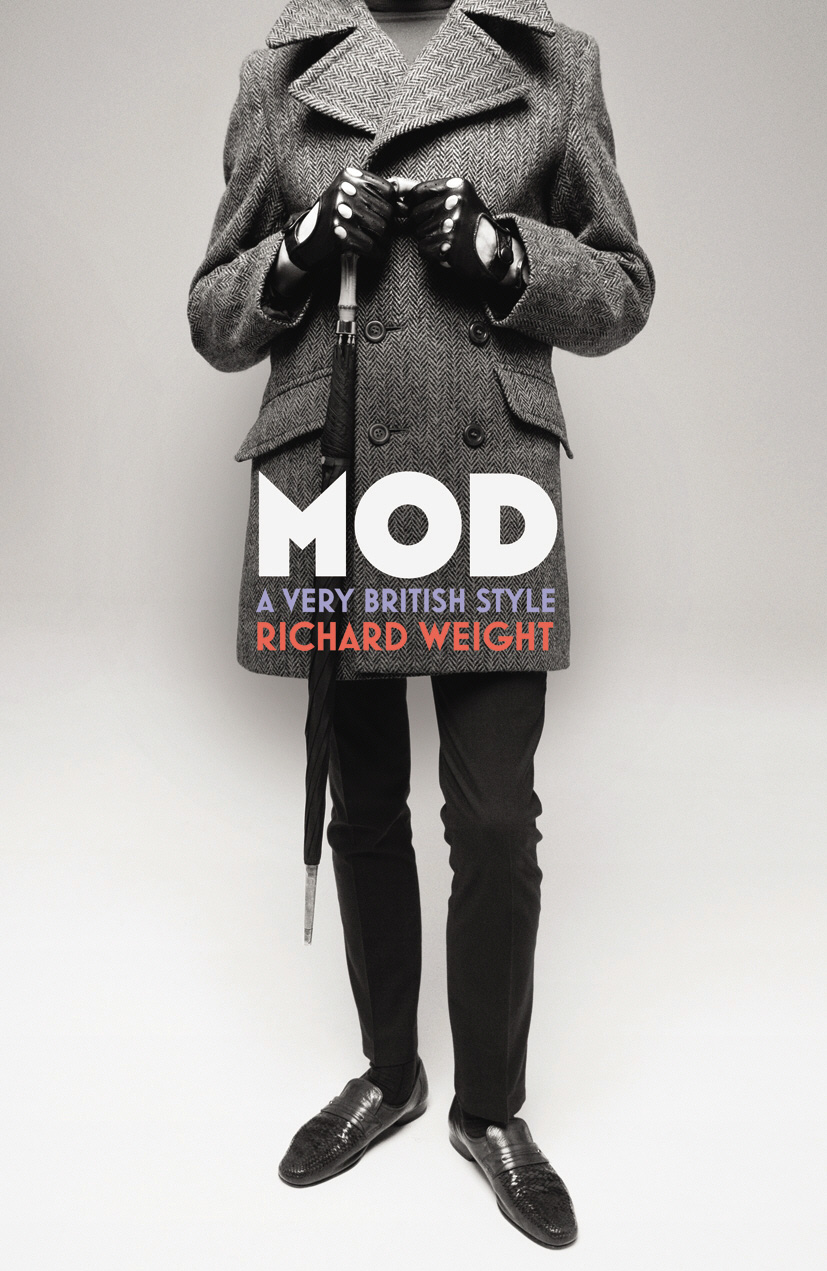
Ian Thompson reviews Mod: A Very British Style by Richard Weight for The Observer:

Mod’s first choice of music was jazz, Richard Weight reminds us. Miles Davis in particular became a fashion icon for blue-eyed soul brothers everywhere in Britain. The photograph of Davis on the cover of his celebrated 1958 Milestones album – Sta-Prest trousers, button-down Ivy League shirt – became a sort of mod pin-up. Mods (“modernists”) were among the first white Britons to embrace west-coast jazz, which had been galvanized by the Birth of the Cool sessions led by Davis in New York from 1949-50.

See also: Gavin James Bower’s review for The Independent.

It is What it is  — Five designers, Craig Mod, Rodrigo Corral, Michael Fusco, John Gall, and Jon Gray, on the books that inspire them, at the Virginia Quarterly Review.

Here’s Mr. Gall:

The clearest explanation of a good cover that I have ever heard came from Michael Beirut. I was a guest invited to critique a book-cover project he had given to his Yale students. As I was struggling to express some notion about why a particular concept may or may not be working, he got right to the point: “It has to look like what it is.” Indeed.


The Darkness — Sarah Weinman profiles Canadian author and illustrator Jon Klassen (I Want My Hat Back, This is Not My Hat, and The Dark) for Maclean’s:

Klassen’s style shies away from sentimentality. Instead it shows young children the consequences of bad behaviour through the prism of humour, a technique that hearkens back to books for children by the likes of Shel Silverstein and Roald Dahl.

And finally…

On the Exaggerated Reports of a Decline in British Fiction at the White Review:

Our peculiar creed is mortally suspicious of untrammelled aestheticism, endlessly asserting the primacy of content over form. In accounts of British writing, even now – long after such a thing could be anything other than a rather quaint anachronism of an old culture war – the avant-garde features as a kind of bogeyman. One whose dandified aestheticism belies a questionable politics, a moral compass gone awry; who must be beaten back by decency and common sense. Literary experiment still tends to be perceived as a pernicious form of French ‘flu: of course we should still be bloody grateful for the English Channel, separating, as it does, steady, dependable old Blighty from that kind of thing.

1 Comment

Midweek Miscellany

Work / Life — An interview with the brilliant Louise Fili, designer and former art director of Pantheon Books, at The Great Discontent:

Everybody wanted to use standard fonts, but I just wasn’t satisfied doing that. I didn’t realize this until years later, but what I was really doing was developing type treatments for the title of the book and approaching it more like a logo. I wanted each book to have its own personality and that couldn’t be achieved with standard fonts. Again, I was lucky because it was appropriate to do that for the types of books I was working on. The other thing to note is that I was collaborating with a lot of really talented illustrators and made a concerted effort to combine the type and image together. I also tried to encourage illustrators to create their own type. I would sketch it out for them and then ask them to actually draw it so it would become part of the illustration, which makes for a stronger design, whether it’s a book cover or logo.

Colour and Intention — Claire Cameron interviews Sam Garrett about his translation of The Dinner by Herman Koch, for the LA Review of Books:

The words a writer uses not only have a dictionary definition, but also a color and an intention. To pin those down, the translator has to sniff around. From the first to the final word of a translation, you’re leading the reader along a path to a destination. The color is what keeps the reader hopping; the intention is the scent that keeps the translator on the right path.


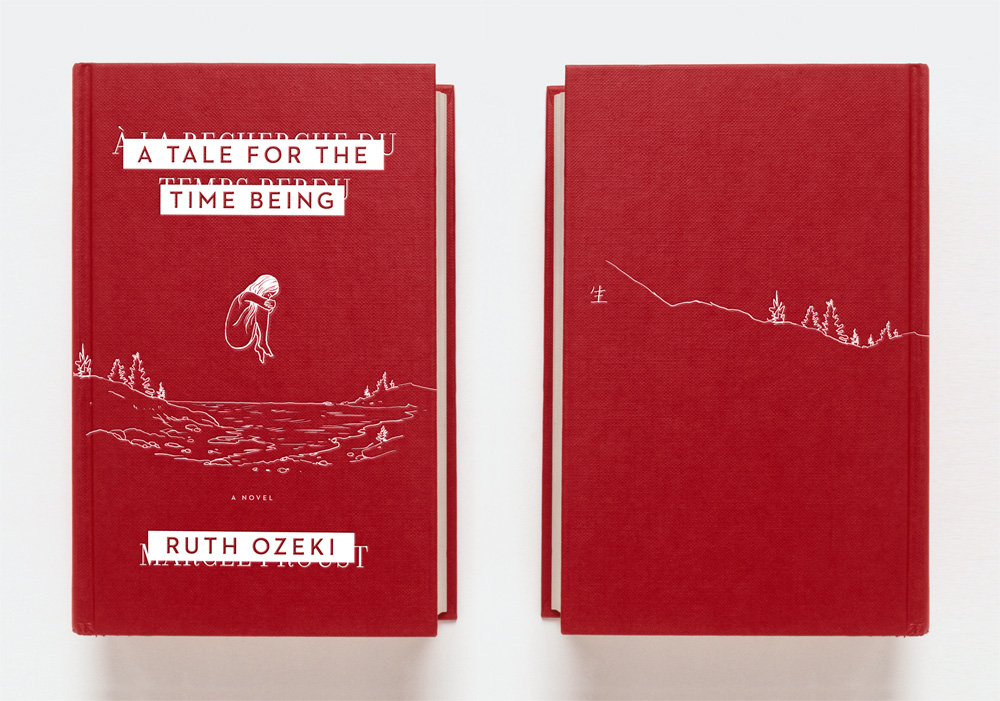
Negotiations — Jim Tierney explains his design process for the cover of Ruth Ozeki’s A Tale for the Time Being:

I decided to run with the first concept that popped into my head: a very simple and tactile facsimile of the red Proust notebook, embossed with an illustration of Nao, floating spectrally above the rocky coast of British Columbia. I think this design is all about questions: How did this book get here? Was it lost intentionally, or by accident? Is Nao alive or dead? Is she even real?

Minimal designs like this is always a hard sell in cover meetings, and it was immediately rejected as too quiet and precious-looking. Loud, colorful, and commercial are popular adjectives in modern book marketing, but it’s always fun to start off negotiations with something a little more obscure.

And finally…

Welcome back from near-death Dan Mogford. Please don’t do that again.

Comments closed

Out of Print

Out of Print, a documentary by Vivienne Roumani about “the turbulent and exciting journey from the book through the digital revolution,” will première at  the Tribeca Film Festival on April 25th:

[vimeo http://vimeo.com/54234607 w=480]

The film features interviews with Scott Turow, Ray Bradbury, and Amazon.com founder and CEO Jeff Bezos among others.

Comments closed