Skip to content

Category: Books

New Book Covers by Jacob Covey and Others

 Laura Warholic by Alexander Theroux; design by Jacob Covey

In Case We Die by Danny Bland; design by Jacob Covey

The Devil’s Workshop by Jáchym Topol; translated by Alex Zucker; Design by Telegramme Studio

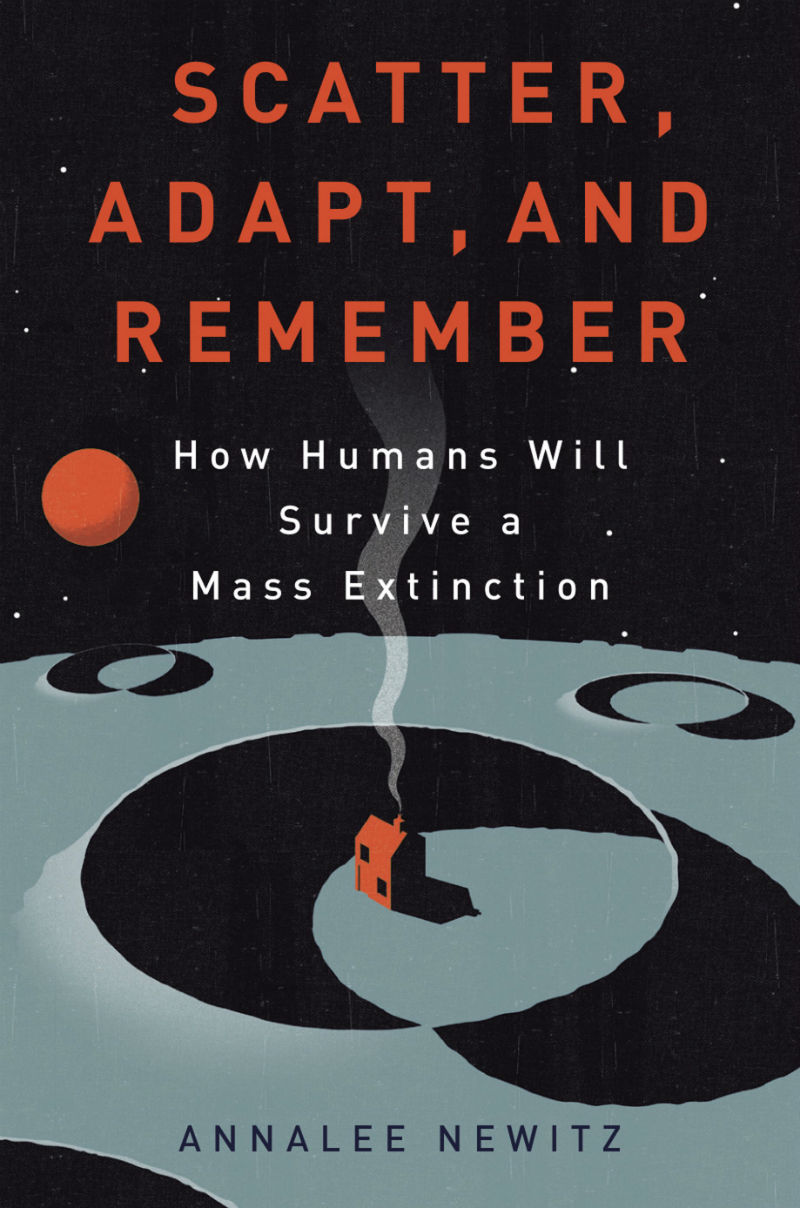
 Scatter, Adapt, and Remember by Annalee Newitz; design by Emily Mahon, illustration by Neil Webb

Americanah by Chimamanda Ngozi Adichie; Design by Abby Weintraub

Comments closed

Dennis Hopper: 2% Brilliance, 98% Horseshit

“I am just a middle-class farm boy from Dodge City and my grandparents were wheat farmers. I thought painting, acting, directing, and photography were all part of being an artist. I have made my money that way. And I have had some fun. It’s not been a bad life.”–Dennis Hopper


Peter L. Winkler discusses his book Dennis Hopper: The Wild Ride of a Hollywood Rebel,  and the life  and work of the actor with John Wisniewski at the Los Angeles Review of Books:

Hopper was an aesthete, and his interest in films was for their visual values, not their narrative. I recently discovered a podcast with writer Ann Louise Bardach, who Hopper had commissioned to rewrite the screenplay for the film Backtrack (1990) (a.k.a.Catchfire), which he directed and starred in, and which costarred Jodie Foster as a Jenny Holzer­–like artist on the run from the mob. Bardach said that Hopper took her to Taos and Santa Fe, New Mexico to scout locations for the film where Foster’s character would hide out, and he would point out artistic landmarks like Georgia O’Keeffe’s former home or Mabel Dodge Luhan’s home, which Hopper once owned, and insist she incorporate them in the screenplay. That’s what he really cared about.

Los Angeles Review of Books

Comments closed

Inside Random House: “The Art of Cover Design”


Part a series of videos about the workings of Random House, The Art of Cover Design features interviews with an impressive roster of designers: Marysarah Quinn, Robbin Schiff, Chip Kidd, Peter Mendelsund and Christopher Brand…

2 Comments

“I don’t care any more.”


Tom Gauld on the mystery of Dan Brown.


Comments closed

Writers & Company: John le Carré


CBC Radio’s Writers & Company have broadcast a brand new interview with John le Carré:

 CBC Writers and Company: John le Carre 2013 mp3

Writers & Company

Comments closed

The Open Book by Bob Staake


A young reader goes on an adventure in this charming wordless comic by Bob Staake for the New York Times.

Publishers Weekly recently posted an interview with Staake about his new book, Bluebird, which is also wordless:

I love writing visually, and wordlessly, because this is was how I read books as a kid. I didn’t really read, but I was a voracious page turner. Nothing would delight me more than pulling out old National Geographics and encyclopedias and looking through the pictures. For years, I have said that this is how children learn how to read. They don’t read, they look. Parents sometimes denigrate the importance of looking in favor of reading the words. It is just as important.

Great stuff.

Comments closed

A Ballardian Obsession with Materials


In what is presumably an excerpt from his new book Stuff Matters, materials scientist and engineer Mark Miodownik describes how his obsession with materials began with being attacked on the London Underground:

I was right about one thing: he didn’t have a knife. His weapon was a razor blade wrapped in tape. This tiny piece of steel, not much bigger than a postage stamp, had easily cut through five layers of my clothes, and then through the epidermis and dermis of my back in one swipe. When I saw the weapon in the police station later, I was mesmerised. As the police quizzed me, the table between us wobbled and the blade sitting on it wobbled too. In doing so it glinted in the fluorescent lights, and I saw that its steel edge was still perfect, unaffected by its afternoon’s work.

This was the birth of my obsession with materials – starting with steel. I became sensitive to its presence everywhere. I saw it in the tip of the ballpoint pen I was using to fill out the police form; it jangled on my dad’s key ring while he waited, fidgeting; later that day it sheltered and took me home, covering the outside of our car in a layer no thicker than a postcard. When we got home I sat down next to my parents at the kitchen table, and we ate soup together in silence. I even had a piece of steel in my mouth. Why didn’t it taste of anything?

There is something almost Ballardian about the connections Miodownik draws between materials and violence (car accidents, improvised weapons) and, of course, culture:

The fundamental importance of materials is apparent from the names we have used for stages of civilisation – the Stone Age, Bronze Age and Iron Age. Steel was the defining material of the Victorian era, allowing engineers to create suspension bridges, railways, steam engines and passenger liners. The 20th century is often hailed as the Age of Silicon, after the breakthrough in materials science that ushered in the silicon chip and the information revolution. Yet this is to overlook the array of other new materials that revolutionised modern living.

Architects took mass-produced sheet glass and combined it with structural steel to produce skyscrapers that invented a new city life. Product and fashion designers adopted plastics and transformed our homes and dress. Polymers were used to produce celluloid and brought about the biggest change in visual culture for 1,000 years, the cinema. The development of aluminium alloys and nickel superalloys enabled us to build jet engines and fly cheaply, thus accelerating the collision of cultures. Medical and dental ceramics allowed us to rebuild ourselves and redefine disability and ageing.

The Guardian

Comments closed

Françoise Mouly: In the Service of What the Artist is Saying

In a follow up to his short Q & A with Françoise Mouly and her partner Art Spiegelman for the National Post, David Balzer has a fascinating full-length interview with Mouly, publisher of Toon Books and art editor of the New Yorker, at Hazlitt:

I think that if you set out with a scripted outcome, you don’t succeed. I’m acting out things that work on me. I spent most of my terribly unhappy childhood years immersed in books. I found early on that it was a great way to escape any kind of arguments with my parents or emotional upheaval. I loved reading and being lost in a book. I trained as an architect. As an architect you’re part of a team and no architect can build a house by themselves. But a bookmaker can make a book all by themselves. And an author: look at my husband’s book, or Marjane Satrapi’s Persepolis—she manages to convey a very rich world, and her personality is very well expressed in a book that shows her handwriting, that has a sense of her.

In a way I got a very classical education growing up in France in the sixties, and learning Latin, Greek, French and English. But I’m well versed in the technological part of the 21st century. The common denominator for me is stories, narrative structure. That’s how I understand things. I find them, books, the right recipient for something that is both complex and nourishing. I watch movies and enjoy them; I watch, you know, The Wire and TV shows, but still, the stories I read in books inhabit my brain in a special way. Those characters are very present in my thinking. And children’s books are a very real part of how I think. So I find it a privilege to actually be in communication, to leave a trace of something that’s actually going to be read.

Hazlitt

Comments closed

Another Hipster In The Business: God Help Me

CBC Radio’s The Sunday Edition profiles Sarah McNally, owner of McNally-Jackson in Soho, New York:

McNally-Jackson opened in December 2004, just as mega booksellers Barnes and Noble and Borders were expanding and online booksellers were rapidly gaining ground. More than 1,000 independent bookstores stores, one in every two, closed down. But Sarah McNally was cocky and figured she could make it… The lessons Sarah McNally learned as a daughter of booksellers on the Canadian prairies continue to help her survive in the Manhattan jungle.

Listen to the audio.

Comments closed

More Recent Book Covers of Note

Seeing as it’s a long weekend in Canada, and The Independent, The New York Times, The Atlantic, and countless other fly-by-night operations are jumping on the book design blog train (and doing it far better than me, damn it), here’s another round of recent covers that have caught my eye (just so you know who’s boss):

 419 by Will Ferguson; Design by Dan Mogford

The Antidote by Oliver Burkeman; Design by Scriberia

Coin Locker Babies by Ryu Murakami; Design by David Pearson

The Enchanted Wanderer by Nikolai Leskov; Design by Peter Mendelsund

Gun Guys: A Road Trip by Dan Baum; Design by Jason Booher

The Private Life: Why We Remain in the Dark by Josh Cohen; Design by FUEL

Watergate by Thomas Mallon; Design by Evan Gaffney

What the Family Needed by Steven Amsterdam; Design by Jen Heuer

1 Comment

Something for the Weekend

They Call it Madness — Jess Nevins  reviews the H.P. Lovecraft collection The Classic Horror Stories for the L.A. Review of Books:

Lovecraft was not the best of his era in any of the genres he wrote in. Clark Ashton Smith was a better stylist. Algernon Blackwood wrote better horror. Olaf Stapledon wrote better science fiction. Yet it is Lovecraft who has been canonized with a Library of America edition, who has provided the source material for academic writings, comic books, and even game shows like Jeopardy, and who has been assimilated by capitalist culture to the point that there are plushies made of his characters.

One would never have guessed this fate for Lovecraft at the time of his death in 1937…

Nevins has been heroically annotating all of The League of Extraordinary Gentlemen series by Alan Moore and Kevin O’Neill and, most recently, compiled notes to the very Lovecraftian Nemo: Heart of Ice (pictured above). But before you get sucked in, be warned: the annotations have a kind of Borgesian horror all of their own.

(And while were on the subject of Lovecraft and comics, you could do worse than picking up I. N. J. Culbard’s adaptations of The Mountains of Madness and The Case of Charles Dexter Ward published by SelfMadeHero)

Also at the LA Review of Books, Michael Nordine on enigmatic filmmaker Terrence Malick:

Malick has the rare distinction of becoming a celebrity — at least in part — for rejecting the notion of celebrity. At a time when we’re given a direct line into our favorite stars’ streams of consciousness via the social media avenue of our choosing, the 69-year-old continues to let his films speak for themselves. When he was nominated for Best Director at the 1998 Academy Awards, the picture that appeared onscreen was of a chair with his name on it; at last year’s ceremony, a different on-set photo from the same production was used. Each new project of Malick’s is said to come with a contractual stipulation that no photos of him may be used in the film’s promotional materials. No matter: people have repeatedly proven able and willing to create an image of their own. That this picture is incomplete at best and may well be wholly inaccurate matters little. Now more than ever, it seems we still can’t conceive of a famous person who doesn’t want to be famous, and even caricatures are more satisfying than a note reading “not pictured” in the celebrity yearbook.

And finally…

David Berry in conversation Art Spiegelman and Françoise Mouly at the National Post. Here’s Mouly’s take on RAW:

Basically, there were no venues for comics, and I just thought, “Well, I can do it myself.” The idea was to show people what actually could be done … that it wasn’t so much a style that was one answer to where comics should go, but was more that each person had their own voice.

Comments closed

Something for the Weekend

Arresting Charm — Writer and artist Howard Chaykin on the late Carmine Infantino who died April 4th:

My best friend Michael Abramowitz was a huge fan of Carmine’s, and I held and hold his tenure on The Flash from 1956 to 1965 in great affection. Infantino’s Flash was infused with a sleek modernism absent from other work of the period, a look and sensibility utterly different from that of his peers. His work was profoundly two dimensional, apparently uninterested in deep space. He frequently used the lower panel border as his horizon, with figures standing on that line, creating an effect somewhat like a stage apron, with flat shapes serving to represent middle and deep distance. It sounds odd, and it was, but it had an arresting charm. Infantino’s work, viewed today, is far more sophisticated, but also more emotionally detached, than that of his colleagues.

You can see more Carmine Infantino covers at The Golden Age blog.

Accidental Publishing — A feature on Seattle’ comics publisher Fantagraphics in Publishers Weekly:

The Fantagraphics publishing program began “almost by accident” in 1981, according to Groth, and over the last three decades has grown to feature some of the most critically acclaimed comics artists in the U.S. and from around the world. The Fantagraphics list includes the work of the Hernandez brothers (Love and Rockets), Daniel Clowes (EightballGhost World), Chris Ware (The ACME Novelty Library), and Jim Woodring (Frank, Weathercraft) and has grown to include multi-volume archival reprint projects such as R. Crumb’s The Complete Crumb Comics and Charles Schulz’s Peanuts. By championing the comics medium and the creators it has published, Fantagraphics has been instrumental in raising the profile of graphic fiction as an art form that transcends the superheroes and monsters that established the medium so many decades ago.

The Only Kind of Geography — Writer Alan Moore on psychogeography and, in particular, his work with Eddie Campbell on From Hell (via LinkMachineGo):

My approach, in keeping with Theophile Gautier’s elegant definition of Decadent literature as being capable of plundering from the most ancient past or the most recent ‘technical vocabularies’ (which is also a good working definition of postmodernism), would be to see the current model of psychogeography as evolving from and thus essentially containing earlier versions of the practice, making these original techniques available to modern artists as important tools within their repertoire. For example, one need not subscribe to any nebulous New Age conceptions with regard to ‘ley lines’ to appreciate that Brecon visionary Alfred Watkins’s idea of linking geographic points into a web of sightlines could have modern application if regarded as a linkage of ideas, as in both Iain Sinclair’s work and in my own From Hell.

Psychic Garburator — Margaret Atwood on dreams at the NYRB Blog:

Most dreams of writers aren’t about dead people or writing, and—like everyone else’s dreams—they aren’t very memorable. They just seem to be the products of a psychic garburator chewing through the potato peels and coffee grounds of the day and burping them up to you as mush. If you keep a dream journal, your mind will obligingly supply you with more dreams and shapelier ones, but you don’t always want that, nor can you necessarily make any sense of what you may have so vividly dreamt. Why, for instance, did I dream I had surged up through the lawn of Toronto’s Victoria College and clomped into the library, decomposing and covered with mud? The librarian didn’t notice a thing, which, in the dream, I found surprising. Was this an anxiety dream? If so, which anxiety?

See also: Leon Neyfakh on Margaret Atwood at Technology at The New Republic.

And finally…

An interview with Patti Smith at LA Weekly:

I’m much too self-centeredly ambitious to simply be content with the transfer of success from one realm to another. I would rather write or record something great and have it overlooked than do mediocre work and have it be popular. My goals are really work-oriented. I don’t stay in one discipline because it’s more lucrative than another. In fact, the most successful thing I ever did was Just Kids, for which I had absolutely no expectations. I just wanted to do a beautiful little book that would give Robert [Mapplethorpe] to the people. And then it became a global success. It’s so funny, because Robert always cared about me becoming successful, while I never did. It’s almost like he was suddenly saying, “Dammit, Patti, you’re gonna be successful, even if I have to make it happen!” I always laugh when I think that my greatest success came through Robert.

Comments closed