Skip to content

Category: Books

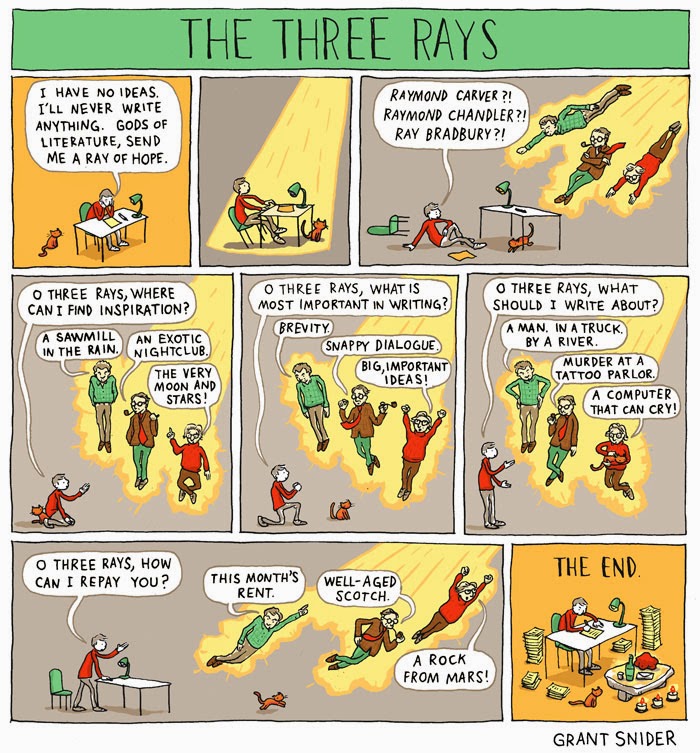
The Three Rays by Grant Snider

threerays-blog

Grant Snider’s latest comic for the New York Times Book Review.

Comments closed

Recent Covers of Note February 2014 Edition

It’s almost March and I’ve just realised that I haven’t posted very many book covers this year. To make up for this lapse, here are ten of my favourite covers from the last few months:

all-our-names
All Our Names by Dinaw Mengestu; design by Isabel Urbina Peña

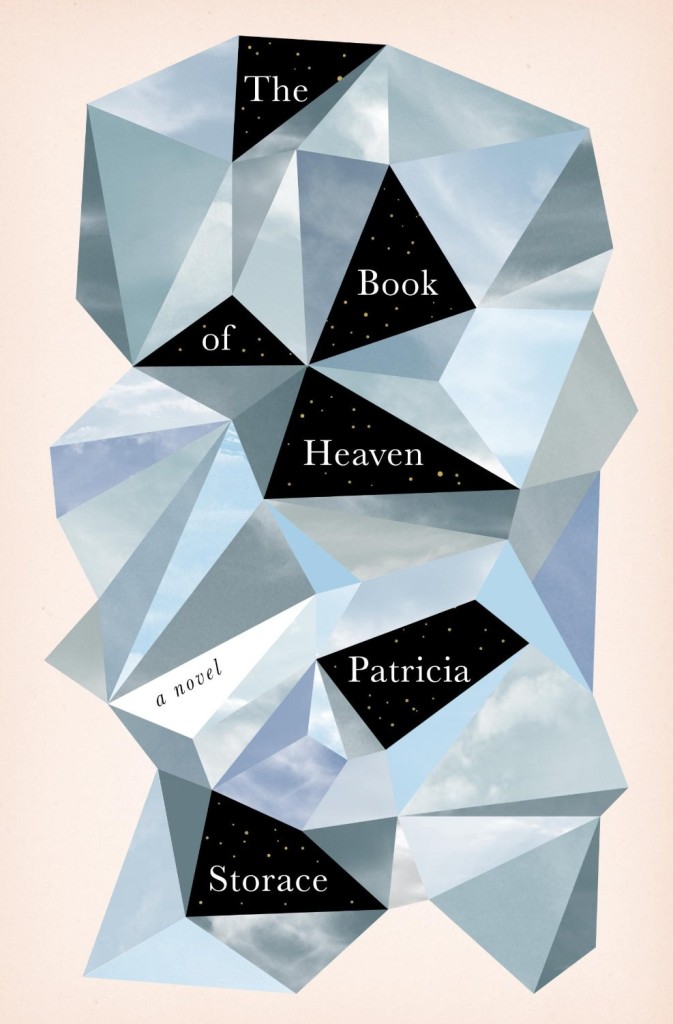
book-of-heaven
The Book of Heaven by Patricia Storace; design by Linda Huang

corpse-exhibition
The Corpse Exhibition by Hassan Blasim; design by Jason Ramirez

the-erl-king
The Erl King by Michel Tournier; design by Leo Nickolls

my-life-middlemarch
My Life in Middlemarch by Rebecca Mead; design by Elena Giavaldi

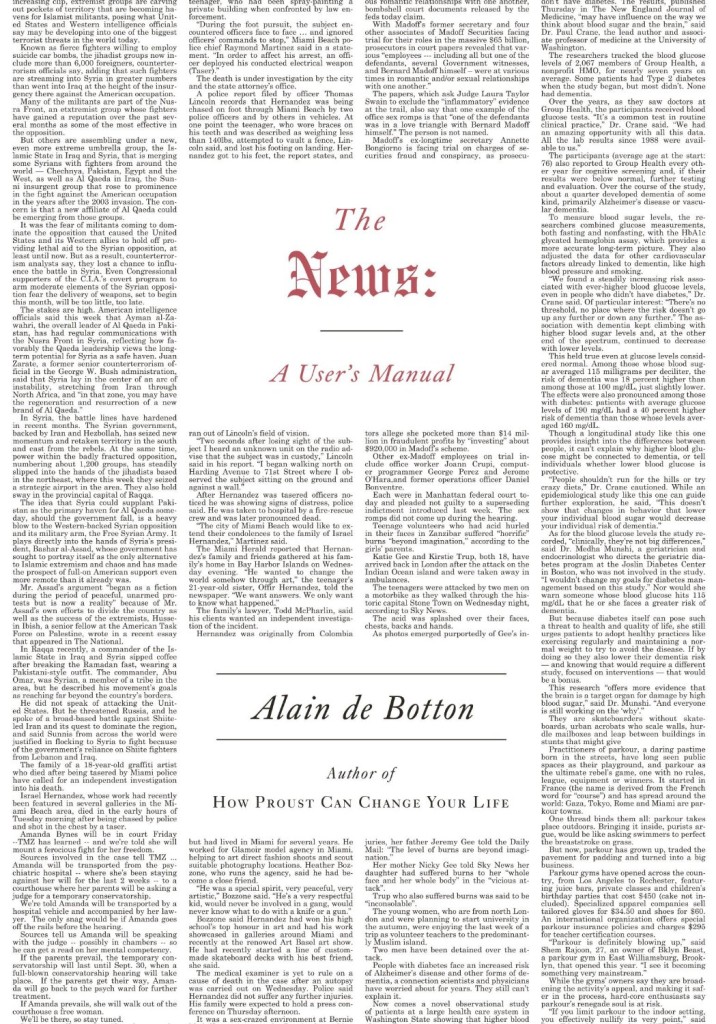
the-news
The News: A User’s Manual by Alain de Botton; design by Matt Dorfman

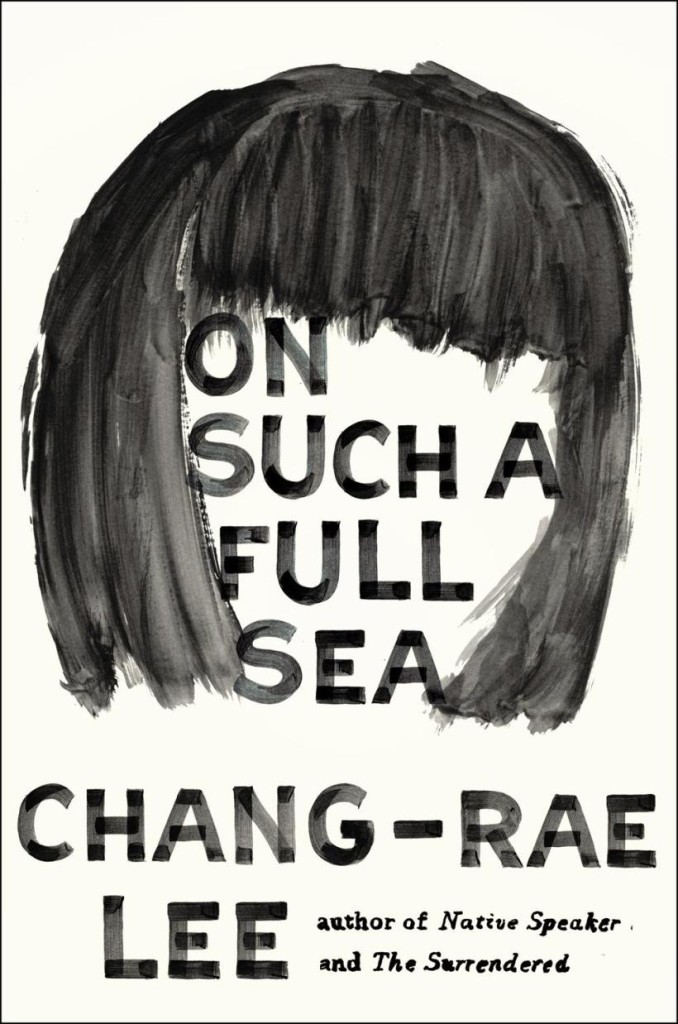
such-a-full-sea
On Such a Full Sea by Chang-Rae Lee; design by Helen Yentus, lettering Jason Booher

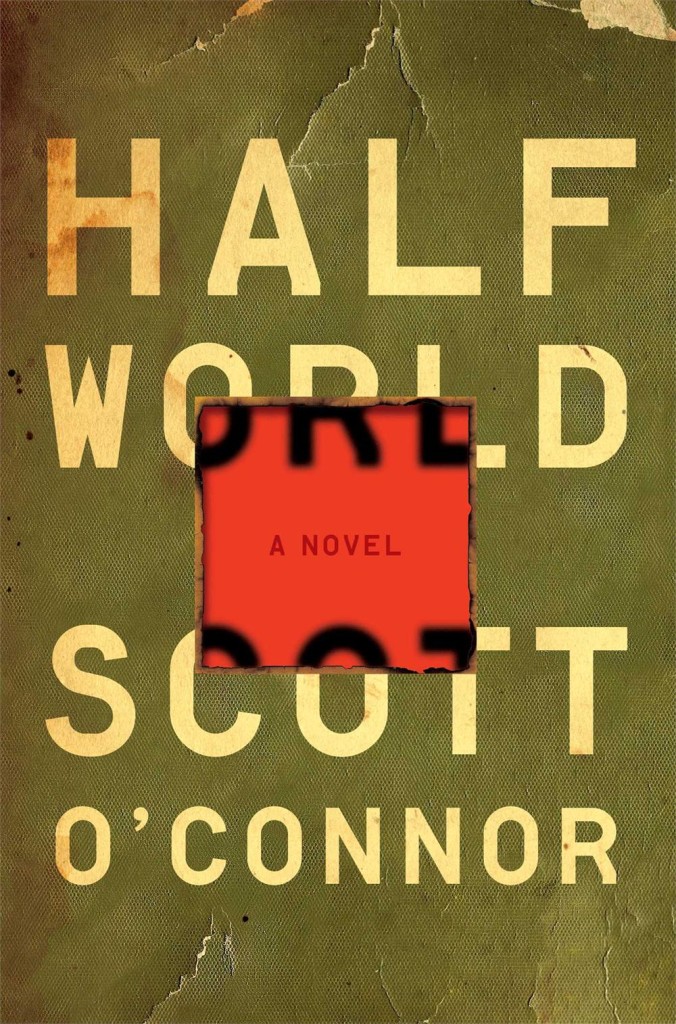
half-world
Half World by Scott O’Connor; design by Christopher Lin

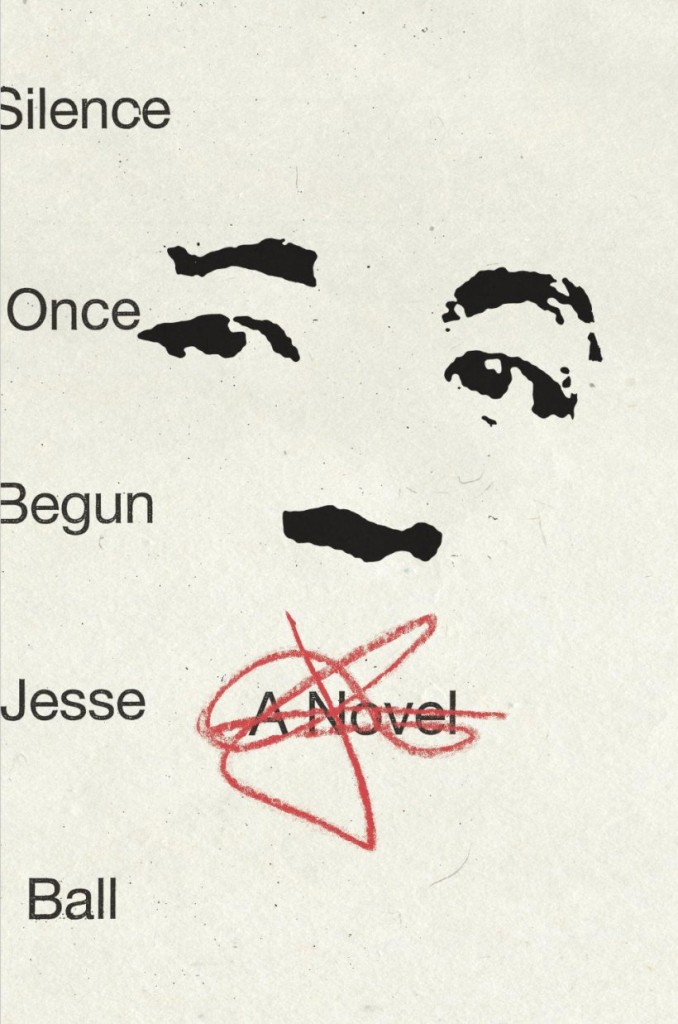
silence-once-begun
Silence Once Begun by Jesse Ball; design by Peter Mendelsund

visionist
The Visionist by Rachel Urquhart; design by Keith Hayes

If you’d like to see more book covers, you can follow my Pinterest board or check out the ‘Book Design’ category at The Accidental Optimist.

3 Comments

Eve Babitz: Muse and Writer

Lili Anolik on the stranger-than-fiction life of Eve Babitz, “an irresistible hybrid of boho intellectual and L.A. party girl”, for Vanity Fair:

Eve Babitz’s claims to fame rest, in large measure, on her claims on the famous. She’s the goddaughter, of course, of one of the most influential composers of the 20th century. Then there’s that photograph of the chess match with Marcel Duchamp, Eve contemplating her next move without so much as a fig leaf for cover. And what about the series of Adams, better known than the original, some of them, to whom she offered her forbidden fruit? Jim Morrison, Steve Martin, Ed Ruscha, J. D. Souther, Stephen Stills, Glenn Frey, Harrison Ford, Warren Zevon, Ahmet Ertegun all took a bite at one time or another.

If that were her whole story, however, Eve wouldn’t be a whole story. She’d be a footnote. A minor figure of glamour in America’s cultural history. A groupie with a provocative pedigree. She’d be Edie Sedgwick, basically: so relentless a companion to celebrity that she became a bit of one herself, the spotlight just naturally spilling over onto her, making her luminous, too. But she’s not. Eve is Edie cut with Gertrude Stein and a little Louise Brooks thrown in.

Why?… Eve could write.

(pictured above: Eve Babitz, chessboard, and Marcel Duchamp, photograph by Julian Wasser, 1963)

Comments closed

Worse than Wal-Mart?

In an excerpt from his new book, Mindless: Why Smarter Machines Are Making Dumber Humans, Simon Head compares the labour practices of Amazon and Walmart:

Amazon equals Walmart in the use of monitoring technologies to track the minute-by-minute movements and performance of employees and in settings that go beyond the assembly line to include their movement between loading and unloading docks, between packing and unpacking stations, and to and from the miles of shelving at what Amazon calls its “fulfillment centers”—gigantic warehouses where goods ordered by Amazon’s online customers are sent by manufacturers and wholesalers, there to be shelved, packaged, and sent out again to the Amazon customer…

…With Walmart’s and Amazon’s business model, the workplace practices that raise employee productivity to very high levels also keep employees off balance and thus ill placed to secure wage increases that match their increased output. The “cult of the customer” preached by both corporations is a scented smoke screen thrown up to hide this fact. Apart from the model’s intensive use of IT, there is not much to distinguish its methods from those of the primitive American and European capitalism of the late nineteenth and early twentieth centuries.

UPDATE: George Packer, continuing his series about Amazon, touches upon a similar topic in a new post for The New Yorker:

[T]hese companies are everywhere and nowhere, ubiquitous in our lives but with no physical presence or human face. They are regarded by many users as public resources, not private corporations—there for us—and their own rhetoric furthers this misperception: Facebook’s quest for a “more open and connected world”; Google’s motto, “Don’t be evil,” and its stated mission to “organize the world’s information and make it universally accessible and useful”; Amazon’s ambition to become “Earth’s most customer-centric company.” Because these endeavors seem to involve no human beings, no workers, other than ourselves—the supposed recipients of all the benefits—it takes an effort to realize that the tech economy is man-made, and that, as with the economies that preceded it, human beings have the capacity to shape and reform it for the public good. It would be easier to remember this if every time you clicked “BUY,” searched for an article, or texted a friend your screen flashed the face of a worker who once held a job that made way for your seamless online experience.

Comments closed

The New US and UK Murakami Covers

murakami-us
It’s just been announced that Haruki Murakami’s next novel, Colorless Tsukuru Tazaki and His Years of Pilgrimage, will be published on August 12th in the UK and US by Harvill Secker and A. A. Knopf respectively.  The cover of the US edition is above, the UK edition below.
murakami-uk-2


I would assume that the US cover is designed by Chip Kidd (correct me if I’m wrong); please let me know if you know who Suzanne Dean designed the UK cover (thank you @BookCovrs).

Comments closed

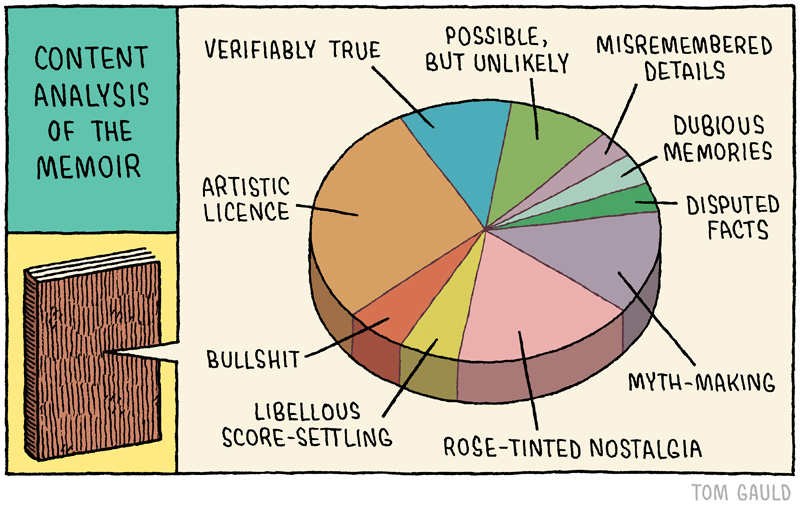
Content Analysis of the Memoir by Tom Gauld

memoir-tom-gauld
Tom Gauld

(My memoir will be largely myth-making, dubious memories, and bullshit. Maybe some artistic license too… )

Comments closed

Cheap Words: George Packer on Amazon

The book folks have surely seen this already, but at The New Yorker George Packer takes a long hard look at Amazon:

Before Google, and long before Facebook, Bezos had realized that the greatest value of an online company lay in the consumer data it collected. Two decades later, Amazon sells a bewildering array of products: lawnmowers, iPods, art work, toys, diapers, dildos, shoes, bike racks, gun safes, 3-D printers. Amazon’s code of corporate secrecy is extreme—it won’t confirm how many Seattle employees it has, or how many Kindle e-readers have been sold—so it’s impossible to know for sure, but, according to one publisher’s estimate, book sales in the U.S. now make up no more than seven per cent of the company’s roughly seventy-five billion dollars in annual revenue.

Origins, though, leave lasting marks, and Amazon remains intimately tangled up in books. Few notice if Amazon prices an electronics store out of business (except its staff); but, in the influential, self-conscious world of people who care about reading, Amazon’s unparalleled power generates endless discussion, along with paranoia, resentment, confusion, and yearning. For its part, Amazon continues to expend considerable effort both to dominate this small, fragile market and to win the hearts and minds of readers. To many book professionals, Amazon is a ruthless predator. The company claims to want a more literate world—and it came along when the book world was in distress, offering a vital new source of sales. But then it started asking a lot of personal questions, and it created dependency and harshly exploited its leverage; eventually, the book world realized that Amazon had its house keys and its bank-account number, and wondered if that had been the intention all along.

It’s very comprehensive piece and well worth taking the time to read all the way through. At the LA Times Jacket Copy blog, Carolyn Kellog spoke to Packer about how the article came about:

Packer… included a suggestion from super-agent Andrew Wylie that publishers stop selling their books to Amazon altogether. Does Packer think that’s viable? “It’s a pretty radical solution, if you think about what it would do to their sales” he said. “I don’t know enough to agree or disagree.”

But in terms of telling the story, it was helpful. “It seemed like a way to jolt the picture productively. When you’re been an industry for a long time, you can’t imagine things differently. Maybe publishers need to think disruptively and not be victims.”

UPDATE: Packer has posted a short, but interesting, follow-up essay, ‘Amazon and the Perils of Non-Disclosure, at The New Yorker:

To Amazon, any piece of information could give its competitors an advantage. But what if those competitors’ main advantage is the walled-off, impenetrable nature of the company? If Amazon were just selling clothes, this might not be a potentially fatal flaw. But, as I wrote, the company has become a book publisher and a production company, and its owner has bought a major newspaper. Amazon is up to its neck in the world of culture, where nothing good can be done without a little light and air. The fact that Bezos visited his newspaper last month with more stealth than George W. Bush flying into Baghdad—a visit that was so well hidden even from people at the famously wide-open Post that I managed to break the story in these pages—struck me as particularly bizarre. Why not just show up? Because secrecy is in Amazon’s marrow. I’m certain that, sooner or later, this is going to create problems for Bezos’s newspaper, and I’m fairly sure that one reason for the failure of Amazon’s trade-publishing arm has to do with its isolation from the larger publishing world. If editors can’t gossip, speak to reporters, and pick up intel, they’re less likely to spot new talent and incubate ideas. They’re also less likely to be trusted by writers. Book culture and non-disclosure agreements are inimical.

 

1 Comment

The Bee’s Knees


Sara Wood kindly let me know that fellow designer Steve Attardo has not only started his own freelance studio NinetyNorth Design, but also delivered this rather fine jacket design for Laline Paull’s forthcoming novel The Bees.

The book’s publisher Ecco has put together a rather nice trailer based on Steve’s cover design. It was conceptualized by Ecco’s art director Allison Saltzman and animated by Justin Cassano:

Comments closed

Rachel Kushner on Images

Author Rachel Kushner discusses her novel The Flamethrowers (now out in paperback), and the importance of images to her work, with The Quietus:

I’m inspired by visual art and film… Whether or not I’m writing about those mediums directly, as I sometimes do in Flamethrowers, I’m always thinking about images… I always wanted to have images in a book, and with [The Flamethrowers], after I got to have my choice of the image on the North American cover, I got a little bold, and asked about putting images inside. My editor said yes, so I quickly put together a short list of ideal visual passages. I didn’t want anything that would illustrate the narrative. I wanted, instead, images as kind of pauses, or counterpoints, but that would complicate, function in a relation, but not an obvious one. There’s a Richard Prince image, and he’s a shadow presence over the course of the book (one of the characters is also the name of Prince’s alter-ego, John Dogg). There’s a photograph by Aldo Bonasia, of a riot and police tear-gassing the rioters, in Italy. There’s a still from the movie Wanda, which figures in the book…

Funnily enough, I have feeling that Scribner have actually stuck closer to the hardcover for the front of the US paperback edition and slapped needless award stickers all over it, but I prefer the restraint of the version above left. The cover on the right is the UK paperback — a vast improvement on that mystifying hardcover).

Comments closed

The 10 Best Spanish Book Covers 2013

Odisea

Ferran López and friends asked journalists, publishers and other designers for their favourite book covers of 2013. You can see the full list on Ferran’s Tumblr. (Pictured top: Design: Odisea; design by Manuel Estrada)

1 Comment

The Chelsea Hotel: Dream Palace or Trauma Ward?

Peter Conrad reviews Inside the Dream Palace: The Life and Times of New York’s Legendary Chelsea Hotel by Sherill Tippins for The Observer:

In the seething, druggy summer of 1969, a room in the Chelsea hotel gave me my first view of New York. The establishment – a Queen Anne folly with a rooftop pyramid on West 23rd Street, opened in 1884 – was not quite the dream palace of Sherill Tippins’s title: it struck me more as a trauma ward. Pimps and pushers loitered in the lobby; a transvestite dispensed room keys behind a shield of bulletproof glass; a trip upstairs in the elevator could get you high in more ways than one, given the captive cloud of pot fumes in the clanking box. The marble stairwell resounded to the ululations of resident rock bands, and once in a corridor I collided with shaggy Janis Joplin, awash in a swill of Librium, tranquillisers and heroin topped up by Southern Comfort, as she staggered towards the overdose that killed her a year later. I had never felt so grubby, so at risk, or so excited.

Comments closed

I Am Not a World Improver: Mies van der Rohe and Building Seagram

Christopher Turner reviews Building Seagram by Phyllis Lambert and Mies van der Rohe by Franz Schulze and Edward Windhorst for February’s London Review of Books:

Mies had dreamed of building skyscrapers since the early 1920s when, as a young architect in Berlin recently returned from the war, he’d been seduced by images of the thrusting New York skyline. Influenced by the utopian futurism of Paul Scheerbart, author of Glasarchitektur, Mies proposed a 20-storey tower completely sheathed in glass. It would have loomed over Berlin like an enormous faceted crystal: each wall was positioned at a slight angle to reflect and refract the light. He was fond of quoting St Augustine – ‘beauty is the radiance of truth’ – and wanted to celebrate rather than disguise structural form. ‘Only skyscrapers under construction reveal the bold constructive thoughts,’ Mies wrote, ‘and then the impression of the high-reaching steel skeletons is overpowering.’ In his glass tower, the bones of the building, with their cantilevered floor slabs, would have been visible through a shimmering, crystalline skin.

The glass skyscraper was, as Schulze and Windhorst put it, ‘beyond the threshold of constructability’ (and would only be possible in the 1970s – Mies was fifty years ahead of his time), but it was intended less as a realistic proposal than a radical, modernist statement. It would thrust him to the forefront of the European avant-garde.

Comments closed