Skip to content

The Casual Optimist Posts

Shirley Tucker on Book Design

The Bell Jar by Sylvia Plath was first published in 1963 under the pseudonym Victoria Lucas. To mark the book’s 50th anniversary, Faber & Faber have posted a series of fascinating video interviews with Shirley Tucker, who designed the cover of their original 1966 edition.

After studying graphic art at the Royal College, Tucker spent several years working in Penguin’s design department, then headed by the distinguished German designer Hans Schmoller. She joined Faber in 1959 and worked alongside another great German emigre typographer, Berthold Wolpe (who created the Albertus typeface used on many of Faber’s typographic covers). Tucker worked in Faber production department until her retirement in 1987.

Shirley Tucker on Designing Book Covers:

Shirley Tucker on her Favourite Faber Covers:

Shirley Tucker on Berthold Wolpe:

1 Comment

Something for the Weekend

The Many Lives of Donald Westlake — Michael Weinrab on the work of Donald Westlake, for Grantland:

The Outfit is 213 pages, which is actually somewhat long by the standards of the early Parker novels. There are 24 Parker titles in all, and most of the early ones are tight little symphonies of spare and rigid prose, split into four distinct movements; they somehow manage to adhere to a rough formula and still blow your hair back every time. Their tone is brutal and unsentimental, and their themes are Nietzschean to the extreme: People act, without adverbial accompaniment, and the whys and wherefores are utterly beside the point. The protagonist is a career criminal, a sociopathic utilitarian who despises small talk. When someone asks him if he had a good flight to his destination, he thinks, This wasn’t a sensible question. He is concerned entirely with the successful execution of crimes and with his own self-preservation amid this process. One memorable chapter ends with the line, “He buried him in the cellar in the hole the kid had dug himself.”

The Parker novels, written by Westlake under pseudonym Richard Stark, have been republished by the University of Chicago Press, with covers designed by David Drummond.

Simulations  — Tim Maughan on Extreme Metaphors, a new collection of interviews with J.G. Ballard, at Tor.com:

You can perhaps argue that Ballard missed the big change that was to come just years after his death—the apparent crisis of global capitalism, the shift of industrial and financial production towards the east, and the tightening pressure on the suburban middle classes that this would result in. But the kicking back against these pressures, in the form of the online rebellion and well mannered protest of Anonymous and the Occupy movement, seem to fit perfectly into this description. Both are, in many ways, more of a simulation of a protest than an actual protest themselves—one involves doing little more than clicking a mouse, the other seemingly owing more to music festivals and camping than to hard-fought political resistance.

Let It Bleed — An interview with cartoonist Yoshihiro Tatsumi at Hazlitt:

The parents were really up in arms about these bad books. Manga at that time was different than it is now. It was friendly manga, so little kids could read it too… On the page you have the same number of panels, the people move from left to right and they’re all the same size and it all looks the same on the page… There was no movement or anything like that. We took inspiration from movies, doing zoom shots or close-ups. Using the camera. We wanted to use these techniques in manga, really violent movement. We were trying to move the panels in a realistic kind of way, to make work without lies, true work.

Tatsumi, Eric Khoo’s 2011 film based on Tatsumi’s memoir A Drifting Life, is currently showing at the Lightbox in Toronto.

And finally…

The Names Change But… The conclusion to Mark Medley’s fascinating series on House of Anansi, ‘A Publisher’s Year’, at the National Post:

“The truth about publishing is that publishing houses change their names and identities all the time. It’s the nature of this perilous trade. When I started in the business there was a Collins, and there was a Harper & Row. I can’t even remember when it became HarperCollins. There was Doubleday Canada, and all of its imprints, and there was a Random House, and all of its imprints…”

Publishers fail and new publishers emerge to take their place.

Comments closed

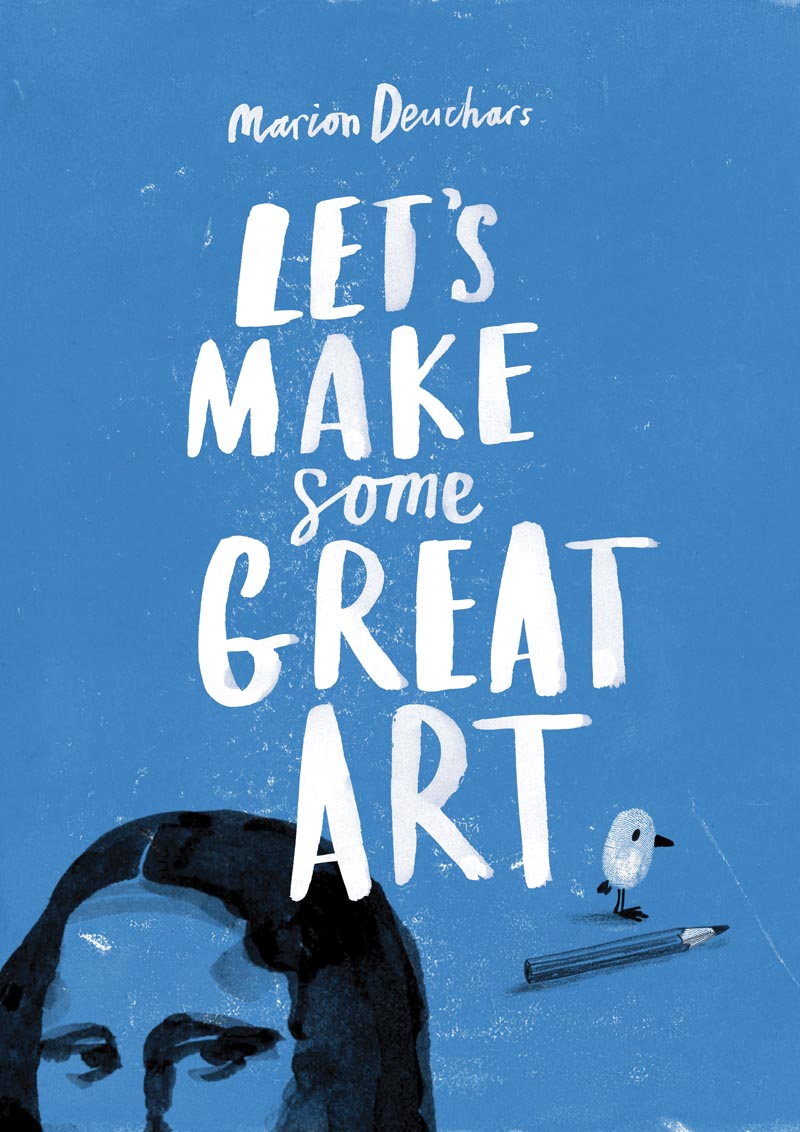
Marion Deuchars, who has created books for Laurence King as well as book covers for the likes of Canongate, Orion and Penguin, talks about working in illustration in this short film by Chris Thomas:

Comments closed

Midweek Miscellany

Patchwork — Artist Lilli Carré talks about her story collection Heads or Tails with Robot 6:

I wanted to include the majority of the short stories I’ve produced over the past five years, and so I went through all my stuff and arranged them not chronologically, but by how they each fed into each other. The book contains stories collected from anthologies, some new work, and a few pieces that I reformatted from small run mini-comics, artists books, and drawings that I’ve made over the years. My style changes quite a bit from project to project, so the book has a kind of patchwork quilt feel to it, but I wanted to make sure there was a solid thread between how one story feeds into the next.

The Activists — An interview with Dennis Johnson and Valerie Merians, founders of Melville House, at The Rumpus:

A lot of our early work was activist books… We were always kind of motivated in that way. When you have your own publishing house, you have to follow your own tastes, so we were publishing whatever we liked. We were also publishing a lot of translated fiction, because we felt that something that was important in the United States that was important then and still now, to combat that sort of insular feeling that we are all there is. To bring other writers and voices into the language, and get them exposed to new readers.

Nice — A lovely profile of Ben McFall who manages The Strand’s fiction section, in the New York Times:

 Mr. McFall grew up in Detroit, the only child of two schoolteachers, and he studied literature and music in college. He worked at a bookstore in Connecticut after graduation and then moved to New York in the mid-1970s to flourish as an actor, singer, poet and openly gay man. He took a job at the Strand in 1978.

“Back then, it was a cruel place; I was the first nice person to work here,” Mr. McFall said.

And finally…

Learn New Old Skills — An interview with type designer and calligrapher Seb Lester at Salon:

I’ve gone back to basics in recent years and placed a lot of emphasis on traditional tools… I have realized that calligraphy makes me a better type designer with digital tools and vice versa. There is a beautiful synergy between the two. There is also something very satisfying about making expressive marks and calligraphy has a humanity and expressive quality hard to capture with a computer. A personal motto at the moment is learn new old skills.


Comments closed

John Hodgman’s Advice for Writers

Author and former literary agent John Hodgman (That Is All) gives disarmingly sincere tips on how to make it as a writer:

Comments closed

Something for the Weekend

Rubbish — Rachel Cooke on the artist Kurt Schwitters at The Guardian:

Merz doesn’t mean anything: it is a nonsense word (it comes from Commerzbank, an ad for which appears in one of his earliest collages). But after 1918 everything Schwitters made was Merz, whether it was periodical, painting or poem. He was a one-man movement. “The word denotes essentially the combination of all conceivable materials for artistic purposes,” he said. “And technically the principle of equal evaluation of the individual materials… A perambulator wheel, wire-netting, string and cotton wool are factors having equal rights with paint.” In other words, art could be made from the things most people regarded as rubbish. Almost overnight, he became a collagist.

There is a slide-show of Schwitters’ collages here.

Also: Merzman: The Art of Kurt Schwitters, is a fascinating 30-minute BBC Radio 4 documentary about the artist and his work in Britain.

The exhibition Kurt Schwitters in Britain opens at the Tate January 30, 2013.

Going Underground — The iconic London Underground typeface, designed by Edward Johnston in 1913, turns 100:

“Underground” — later known as “Johnston” — was circulated as a lettering guide for sign-painters and also made into wood and metal type for posters, signs, and other publicity materials used throughout London’s transport network.

Johnston himself only drew one weight of the typeface. He based its weight and proportions on seven diamond-shaped strokes of a pen stacked in a row. This gesture even shows up in the typeface itself, with the characteristic diamond used as the tittle of the “i” and “j”. He felt so strongly about the weight of the design that when another student of his agreed to create an accompanying set of bold capitals, Johnston wouldn’t speak to him for decades afterward.

And finally…

Fire Hose — James Gleick on the Library of Congress collecting and storage of Twitter messages, for the New York Review of Books:

This is an ocean of ephemera. A library of Babel. No one is under any illusions about the likely quality—seriousness, veracity, originality, wisdom—of any one tweet. The library will take the bad with the good: the rumors and lies, the prattle, puns, hoots, jeers, bluster, invective, bawdy probes, vile gossip, epigrams, anagrams, quips and jibes, hearsay and tittle-tattle, pleading, chicanery, jabbering, quibbling, block writing and ASCII art, self-promotion and humblebragging, grandiloquence and stultiloquence. New news every millisecond. A vast confusion of vows, wishes, actions, edicts, petitions, lawsuits, pleas, laws, proclamations, complaints, grievances. Now comical then tragical matters.

Call it what you will, the Twitter corpus now forms a piece of “the creative record of America” and therefore falls squarely within the library’s mission…


Comments closed

Midweek Miscellany

A great post on designer Josef Müller-Brockmann at I Love Typography:

A student from the back of the room shouted out a wish to see JMB’s business card. As JMB casually pulled the business card out of his coat pocket, there was a frenzy like fish at a pond when the morsels are tossed in. He was taken aback as we scurried around to take a peak at the card revealed; novice typographers eager to see his miniature piece of art. I still remember the card clearly. It was on light gray paper stock printed with a solitary color of cool gray ink. All content was in a singular sans serif face, all lowercase, and no punctuation to speak of other than the umlaut and hyphen in his distinguished name. No commas, no periods, no colons. All the elements on the card were restricted to the purest of necessary elements. In that small space he proved the mastery of minimalism; communication clearly achieved without the use of a period or a comma.

Thumbnails — An interview with book cover designer Isaac Tobin at the University of Chicago Magazine:

His approach to cover designs… hasn’t changed even as Kindles have sparked an ink and paper bonfire. Book covers always have had to work at reduced size, to be appealing from afar on a bookshelf or to make attractive catalog displays. “Things like color and shape,” Tobin says, “can do a lot to work from a distance or in a thumbnail.”

My 2009 interview with Isaac is here.

Tom Waits and Anton Corbijn are going to publish a limited edition book of their photographs.

And finally…

Holy Offset Press, Batman! — My favourite thing on the internet this week so far…  Marvel and DC superheroes printing comics (with art by Joe Kubert):


(thx Jacob!)

Comments closed

Oliver Jeffers: Picture Book Maker

A lovely new video about Oliver Jeffers and how he creates his picture books:

Comments closed

Something for the Weekend

Flavorwire asked a number of prominent designers — including Coralie Bickford-Smith, John Gall, Peter Mendelsund and Barbara deWilde —  to choose their favourite book covers designs from the previous year. I feel a slight tinge of regret that the cover for R.J. Palacio’s Wonder designed by Tad Carpenter didn’t make it on to my list

Mind-Boggling — Tom Spurgeon interviews Sean Howe, author of Marvel Comics: The Untold Story, at The Comics Reporter:

I worried that it would seem like the world’s longest wikipedia entry. There were so many things I wanted to include. I had a very good sense of what the narrative arc was. There’s a rise and fall, rise and fall, rise and fall structure here. If I were writing a play, I’d be failing miserably. But you can’t allay that stuff, you can’t recraft the narrative, without fictionalizing it. Having to get into everything that was going on as Marvel was commercially ascending, like in the early 1980s, I guess that I felt a responsibility to not over-summarize. I constantly worried that I was reciting too many facts as I went. Then I hear from people who are like, “Wow, that was a quick read. I wish you’d done more descriptions.”… Which boggles my mind.

From Psychopaths Lairs to Superhero Mansions — Charlotte Neilson on modern architecture in film, at ArchDaily:

We all know that psychopaths prefer contemporary design. Hollywood has told us so for decades. From the minimal lairs of Bond adversaries to the cold homes of dysfunctional families, modernist interiors scream emotional detachment and warped perspectives.The classic film connection between modern buildings and subversive values is well documented and, for the architectural community, quite regrettable. The modernist philosophy of getting to the essence of a building was intended to be liberating and enriching for the lives of occupants. Hardly fair then that these buildings are routinely portrayed with villainous associations.

And finally…

A (very) long review of Ryszard Kapuściński: A Life by Artur Domosławski at Dissent magazine:

Kapuściński’s genius was his dissection of comportments, his insight into politics that derived from conversations and observations of regular people. Clearly, his books were something other than traditional journalism, and he never claimed otherwise. Indeed, he was acclaimed in both Poland and the West precisely for offering a new kind of journalism. Domosławski relates the various criticisms, but suggests that the Catalan critic Luis Albert Chillón probably had it best when he wrote of Kapuściński creating a “formerly unknown symbiosis” combining “the information-gathering techniques that belong to investigative journalism, the art of observation that is typical of reportage, and a quest for a kind of poetic truth, which through a narrative mode that is closer to myths, legends and folk tales than to realistic novels, transcends the boundaries inherent in simple documentary truth.”


Comments closed

TateShots: Kurt Schwitters ‘Merz Barn’

I didn’t know that influential German artist Kurt Schwitters spent the last years of his life in exile in England’s Lake District creating something called the ‘Merz Barn’. Did you?

Schwitters started constructing the original ‘Merzbau’ (pictured above) inside his Hannover studio in the 1920’s and continued to work on it until he fled Nazi Germany in 1937. The Merzbau itself was later destroyed in an Allied bombing raid in World War II.

The uncompleted ‘Merz Barn’ that Schwitters began building near Elterwater in the Lake District is much less well-known. The latest TateShots video visits this only surviving example of Schwitters’ Merz environment:

(I’m not entirely sure how or why radio presenter Tom Ravenscroft (son of the late John Peel) is involved, but if you don’t listen to his weekly music show on BBC, you should probably take a listen… if you like that sort of thing.)

1 Comment

The ABC of Architects

This is wonderful: an animated alphabetical list of the most important architects with their best known building:

Comments closed

Midweek Miscellany

Ghost Shapes — Writer Warren Ellis talks comics and, very briefly, his new novel Gun Machine at Robot Six:

Gun Machine is as much about the ghost shape of Manhattan’s previous settlements and roadways as it is about its modern architecture, and the invisible channels of wireless communication around which that structure now bends. I see — or at least I look for — the foundations of deep time, and the deals we do with it.

See also: A.V. Club’s review of Gun Machine:

In Ellis’ world, everything is all-caps, all the time, and any character who can ask for a cup of coffee in a way that doesn’t call for at least one exclamation point is a spoilsport. Gun Machine, Ellis’ second prose novel, is in exactly the same style and spirit as his comics; like his first novel, Crooked Little Vein, it gives the impression that Ellis didn’t write it as a comic only because pictures would have slowed down the action.

Sounds about right. The book is also reviewed at The New York Times(That fabulous cover for Gun Machine was designed by Keith Hayes designed by Oliver Munday with art direction by Keith Hayes by the way).

Be Still My Exploding Heart — Stephen Page, head of Faber & Faber, on the Penguin-Random House merger and what it means for the industry at large, at The Guardian:

Authors are talked about as brands in their own right, and this is correct. Publishers rarely achieve the status of becoming consumer brands of scale and significance. Is the next story for publishing going to be one dominated by global and local author and publisher brands, especially in niches? Authors and readers are at the centre of the world of books, and finding new ways to serve them will create further different structures. This merger may be seen as a starting pistol or perhaps an explosion in the heart of the old order dominated by the book trade.

Disposable by Design — Nicholas Carr on e-books and the apparent resilience of print books, at the Wall Street Journal:

From the start, e-book purchases have skewed disproportionately toward fiction, with novels representing close to two-thirds of sales. Digital best-seller lists are dominated in particular by genre novels, like thrillers and romances. Screen reading seems particularly well-suited to the kind of light entertainments that have traditionally been sold in supermarkets and airports as mass-market paperbacks… Readers of weightier fare, including literary fiction and narrative nonfiction, have been less inclined to go digital. They seem to prefer the heft and durability, the tactile pleasures, of what we still call “real books”—the kind you can set on a shelf. E-books, in other words, may turn out to be just another format—an even lighter-weight, more disposable paperback. That would fit with the discovery that once people start buying digital books, they don’t necessarily stop buying printed ones.

An alternative, more circumspect, version of the article can be found on Carr’s blog:

None of this means that, in the end, e-books won’t come to dominate book sales. My own sense is that they probably will. But, as we enter 2013, I’m considerably less confident in that prediction than I was a few years back, when, in the wake of the initial Kindle surge, e-book sales were growing at 200 or 300 percent annually. At the very least, it seems like the transition from print to electronic will take a lot longer than people expected.

And perhaps most interesting of all, Carr has posted a series of exchanges with Clay Shirky and Kevin Kelly about the post.

Covering some similar ground, only bleaker, Dennis Johnson’s striking post on the slow death of Barnes & Noble is also essential reading:

Perhaps the most disturbing thing about all this is the fact that, as with the demise of Borders, the demise of B&N has nothing to do with what its customers actually wanted, what’s best for mother literature or free speech, or anything other than made-up trends covering for killer capitalism. There’s still plenty of evidence that people like bookstores, for example, and even sales of hardcovers — let alone print books — are holding on. And so the lust for higher margins — whether from Godiva chocolates or ebooks — turned into fool’s gold for B&N. It’s perhaps a typical death in the Free Trade era, when companies lose all sight of their identity in the blinding light of the bottom line … but it’s the wrong death for a bookseller.

Somewhere in there, Johnson quotes this article by David Streitfeld in the New York Times, which makes the rather chilling point about a demise of Borders in 2011. Not only did it have a negative effect on the sale of print books, it was bad for e-books too. “Readers could no longer see what they wanted to go home and order.”

Sigh…

4 Comments