Skip to content

Tag: Penguin

Midweek Miscellany, July 8th, 2009

A-TypeThe Independent has a nice look at book design and Faber & Faber’s Eighty Years of Book Cover Design by Joseph Connolly:

You could argue that the current renaissance in book design came about thanks to Penguin, always the most design-savvy of publishers. In 2004 they produced their first series of Great Ideas – small paperback editions of classic, mostly philosophical texts. They had highly tactile covers and used bold period typography to give a sense of when and where each book was coming from. The following year we got Penguin by Design, an illustrated history of 70 years of Penguin covers, and then, in 2007, Seven Hundred Penguins, a two-inch-thick collection of the best covers, shown life-size, one to a page. For seasoned haunters of second-hand bookshops, this particular item was as thrilling as a similar-sized brick of Class A drugs.

JRSM has more on the Faber book at Caustic Cover Critic.

5 Easy Pieces — Dave Daley discusses his site  Five Chapters,  which publishes a short story in 5 parts over the course of a week, with Ron Charles at the Washington Post‘s Short Stack blog:

“I write passionate notes to writers I admire. And I tell them about the site and why I think it’s a good place for them to be. Here’s an audience of story-lovers and book buyers… The short story is just ideal for our attention spans these days.”

Rogue Agent — Scott Esposito talks to Denise Oswald, the new Editorial Director Soft Skull, for The Quarterly Conversation:

Soft Skull is like a rogue agent—who wouldn’t want to work there? It’s exciting. I’ve always loved their shoot from the hip / take no prisoners attitude and the house’s commitment to embracing the outspoken and the contrarian, the marginal and the disenfranchised. Their books are thoughtful and deeply engaged on a ground level with the world we live in. Yet there’s always room for something elegant and literary or naughty and fun, which is a very satisfying balance at the end of the day because it helps one from becoming too self-serious.

Coffee and Memory — On topic close to my heart, research from the University of Florida has shown that caffeine both prevents and reverses symptoms of Alzheimers in mice, which, according to Donald Clark, just goes to show coffee is cognitively good for you:

Coffee has… long fuelled learning, whether it be through the direct stimulation of the brain, increasing attention, improving memory, preventing dementia or providing a social context for debate and work. It’s something we coffee drinkers have always instinctively known!

Comments closed

Monday Miscellany, June 29th, 2009

Gestalten’s Naïve: Modernism and Folklore in Contemporary Graphic Design, edited by Robert Klanten and Hendrik Hellige,  reviewed at The Designer’s Review of Books.

Served — Jeremy Ettinghausen, Penguin UK’s Digital Publisher, explains the rationale for their new (v. cool sounding) project for kids We Make Stories:

[A]s the debate about the value and price of digital content rages on, I’m testing out a new mantra on my suspicious colleagues; services not content. The idea, ill-formed as it is in my head, is that while we might continue find it a challenge to get consumers to pay for digital content, we might be able to use our skills, expertise and experience to create services that people will pay for. Services are what we do for writers, so perhaps there might be services we can create for readers.

Proof I think — were it still needed — that not all the most interesting book stuff is being generated in Seattle.

Friction — Laura J. Murray’s excellent critique of Brett Gaylor’s documentary RiP: A Remix Manifesto for Culture Machine (PDF). Murray’s comments about a copyright  ‘war’ and choosing ‘sides’ certainly resonated with me:

I’m not on any side, because I’m not in a war. Such language is a) a kneejerk echo of the Hollywood/recording industry message, b) offensive to anyone who has ever experienced a blood and guts war, and c) a joke to those who are not already convinced of the importance of remix. But most importantly, it is, d), an unproductive way of framing our current copyright challenges, because it suggests that the debate won’t end until one side has achieved total victory.

Amen.

The State of the Union — A big sprawling spaghetti post from the the chaps at Three Guys and One Book (loosely) about the state of publishing from the perspective of readers (mostly). I don’t agree with all of it by any means, but some of it sticks…

Less, But Better — A profile and brief interview of design hero Dieter Rams at BBH Labs. Just FYI — If I ever write a publishing manifesto (ha!), it will be called Less, But Better: A Publishing Manifesto. And just for the hell of it, here are Dieter Rams 10 principles of good design:

  1. Good design is innovative
  2. Good design makes a product useful
  3. Good design is aesthetic
  4. Good design helps us to understand a product
  5. Good design is unobtrusive
  6. Good design is honest
  7. Good design is durable
  8. Good design is thorough to the last detail
  9. Good design is concerned with the environment
  10. Good design is as little design as possible

Most, if not all, of these principles could be applied to publishing. Who (or where?) is publishing’s Dietar Rams?

And finally…

Big Gold Dream — Michael Fusco’s great redesigns for the Pegasus Classic Crime reissues of Chester Himes seen (of course) at FaceOut Books. Michael Fusco has some more great cover designs on his website.

(And a quick side note to publishers and designers — it was impossible to find decent hi-res image of these covers. If you want people share your brilliant work, you need to work on this. Ideally I want images that are at least 400px x 600px)

1 Comment

Something for the Weekend, June 26th, 2009

2009 Penguin Design Award — Peter Adlington’s abstract design for The Secret History by Donna Tart (pictured above) took 1st place. More on the Penguin Blog.

The Good Design Book — Christopher Simmons, graphic designer and principle at the San Francisco-based design firm MINE, records the progress and process of writing and designing his new book on design (via Unbeige). The whole concept reminded me that I should also mention the crowdsourced Smashing Magazine Book.

OK, Go — Kassia Krozser, Kirk Biglione, and Kat Meyer (and an unnamed “veteran of the book industry”), put their money where their collective mouth is, and launch digital publisher Quartet Press (and they’re accepting submissions).

The Debrief — Organizer Hugh McGuire pens his personal thoughts on BookCamp Toronto for Book Oven.

One of the most powerful things about BookCamp, compared with other events I’ve been to, is that this was not just a grassroots group. There was high-level engagement from the publishing industry, with publishers, editors, senior VPs, production managers, marketers, and interns, and everything in between. It was great to see the honest debate and conversation being lead by these insiders, who are truly grappling with the future of their business and their passion.

And VANTAP‘s Sean “Crazy Horse” Cranbury  adds his 2 cents on #bcto09 at the Books on The Radio blog, and teases BookCamp Vancouver.

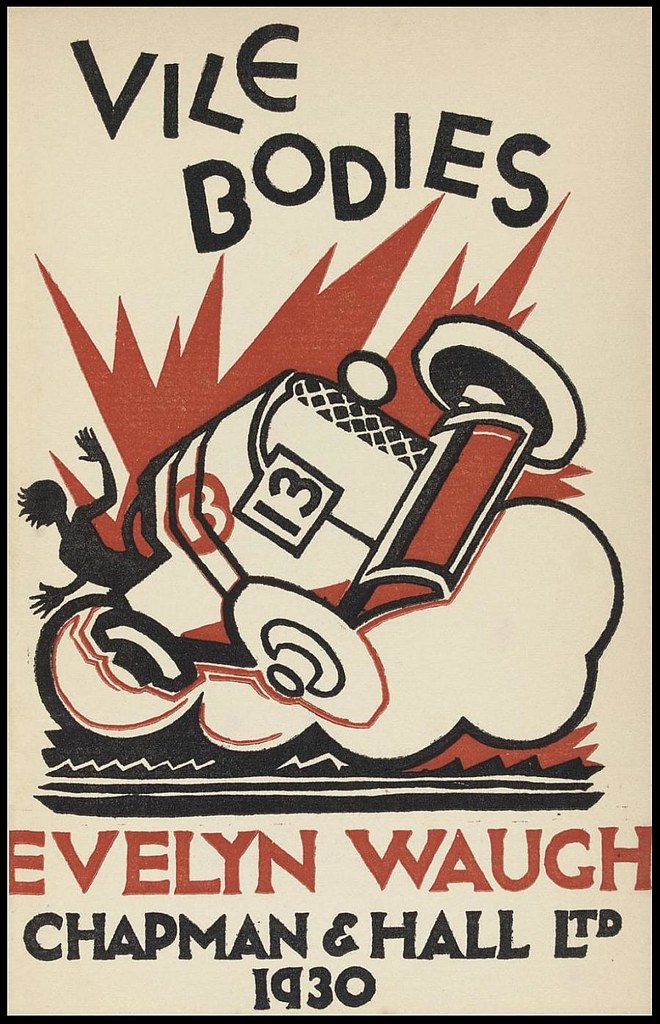
Vile Bodies — The 1930 first edition cover of Evelyn Waugh’s second novel seen at BibliOdyssey.

And last, but not least…

Apples and Oranges — The article about the evolution of Amazon by Adam L. Penenberg, author of the forthcoming Viral Loop: How Social Networks Unleash Revolutionary Business Growth, that launched a great Twitter chat with @FastCompany and yesterday’s ’26 Things…’ list (which could have easily been twice as long). 

Comments closed

Somthing for the Weekend, May 8th, 2009

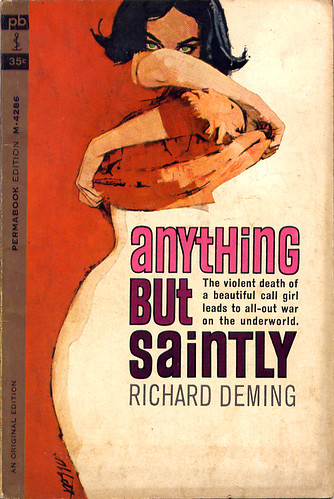
Anything But Saintly — More pulp goodness seen at The Old-Timey Paperback Book Covers Flickr pool.

The Decline and Fall of Books — Nicholas Clee, editor of Book Brunch, dons “The End is Nigh” sandwich-board in The Times:

A Gutenberg-style revolution is not… expected in the next few months. But if you are a lover of well-stocked bookshops, then you should enjoy them while you can.

Poets Ranked by Beard Weight — Or why I <3 the internet (via eightface).

Penguin Automaton made by artist-maker Wanda Sowry to celebrate Penguin’s 70th anniversary and available from Art Meets Matter . Apparently winding the handle “causes the Penguin to drink from a mug, its flippers to waggle and a piece of 70th Birthday cake to rise magically from the table” (via the lovely tweeps at New Directions ).

Good Typography is Invisible, Bad Typography is Everywhere — Stephanie Orma talks to five acclaimed designers about the art of type in the SF Examiner. Interesting to see some conflicting/contrasting opinions in the mix…

7 Habits of Highly Effective People I Know — A nice list from Noisy Decent Graphics Ben Terrett.

Comments closed

Monday Miscellany, April 27th, 2009

Every battle is won before it is even fought — Amazon acquires Stanza. Like just about everyone else, I was completely blindsided by this. But should we have seen it coming?

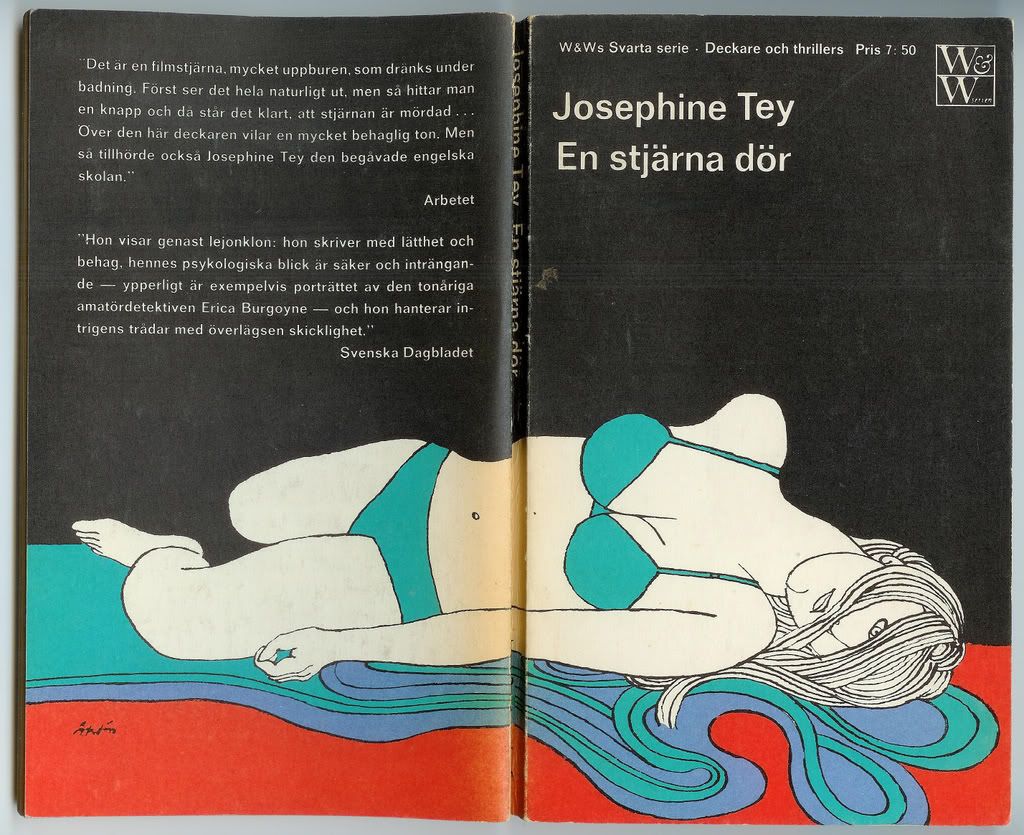
The Black Series — Paperback covers from 1960’s Swedish crime series “Svarta serien”  illustrated by Per Åhlin seen at Martin Klasch’s blog.

100 Books on Typography — Compiled by Charles Nix president of the Type Directors Club (via Design Observer).

Writing Without Words — Stefanie Posavec’s gorgeous visualizations of text and the writing styles of various authors (via @Ashbury&Ashbury).

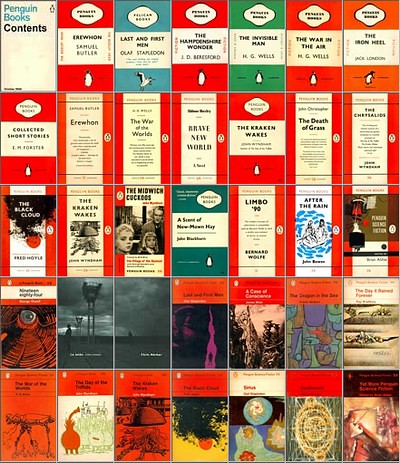
The Art of Penguin Science Fiction—  James Pardey is creating an archive of Penguin science fiction cover designs. If I have one complaint it’s that you can’t see larger versions of the covers, but otherwise it is brilliant (via Ace Jet 170).

Comments closed

Something for the Weekend, March 27th 2009

Alternative MangaEric Skillman on designing a template for Top Shelf’s AX: Alternative Manga series at his blog Cozy Lummox.

FiledBy — a social network for authors and their readers, co-founded by Peter Clifton and Mike Shatzkin.

Extended Grey Skies — Henry Sene Yee on designing the cover of David Cullen’s  Columbine:

In the end, I didn’t want to say anything or felt the need to frame the book in any Point-of-View. What really needs to be said? The Publisher had already set the tone for me. As far as the cover copy, there was no author’s name, no descriptive subtitle, no high school, just the word COLUMBINE on the front cover. That said it all.

Router — Jeremy Mickel on the year-and-a-half process of designing his first typeface at I Love Typography:

Several designers have told me how important it is to have a specific use and point size in mind. The idea is that if you try and design a font that’s good for everything, it might not be REALLY good at anything. But if the font works really well for one specific use, then it can probably work well for lots of others.

In search of Chandler — Editorial Assistant Anna Kelly recounts her search for the original jackets of Raymond Chandler’s The Big Sleep, Farewell, My Lovely, The Little Sister, The Lady in the Lake, and The Long Good-bye for Hamish Hamilton’s new reissued editions. Chandler died 50 years ago this week.

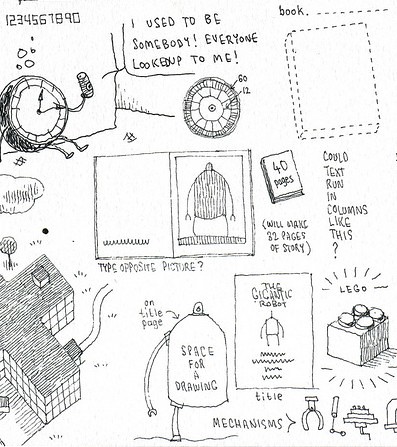
And finally, I’ve mentioned Tom Gauld’s Flickr page previously but,  honestly, it’s so good who cares? Tom’s just uploaded some of his sketchbooks and needless to say they’re genius. You can see Tom’s books at Cabanon Press.

2 Comments

Something for the Weekend, Feb 21th, 2009

Corpoetics — The text from the websites of  “well-known brands and corporations” remixed and rearranged into strangely engaging and enigmatic poetry by Nick Asbury (photo above from Ace Jet 170). I rather like the one taken from Scottish Widows:

Here in an Edinburgh coffee house,
their futures became history.
Meet the latest widow.

Copies of Corpoetics available for £5 (plus p&p) from Nick Asbury’s website, and all proceeds go to the National Literacy Trust, an independent charity dedicated to changing lives through literacy.

A Q&A With Four Young Editors — Just a fantastic, fascinating conversation between Richard Nash (Soft Skull), Lee Boudreaux (Ecco), Alexis Gargagliano (Scribner), and Eric Chinski (FSG) in the latest issue of Poets & Writers. It’s long. Make some coffee, grab a snack and devote some time to it. Well worth it. Honestly.

In Defense of Readers — Mandy Brown, Creative Director at W. W. Norton & Company,  on designing websites for readers:

Despite the ubiquity of reading on the web, readers remain a neglected audience… Readers flourish when they have space—some distance from the hubbub of the crowds—and as web designers, there is yet much we can do to help them carve out that space.

And last, but by no means least… Coralie in ConversationThe Caustic Cover Critic interviews Penguin’s super-talented book designer Coralie Bickford-Smith.

1 Comment

The Back of My Head

The Caustic Cover Critic has posted some amazing book covers by the legendary Saul Bass that are just too good not to share:

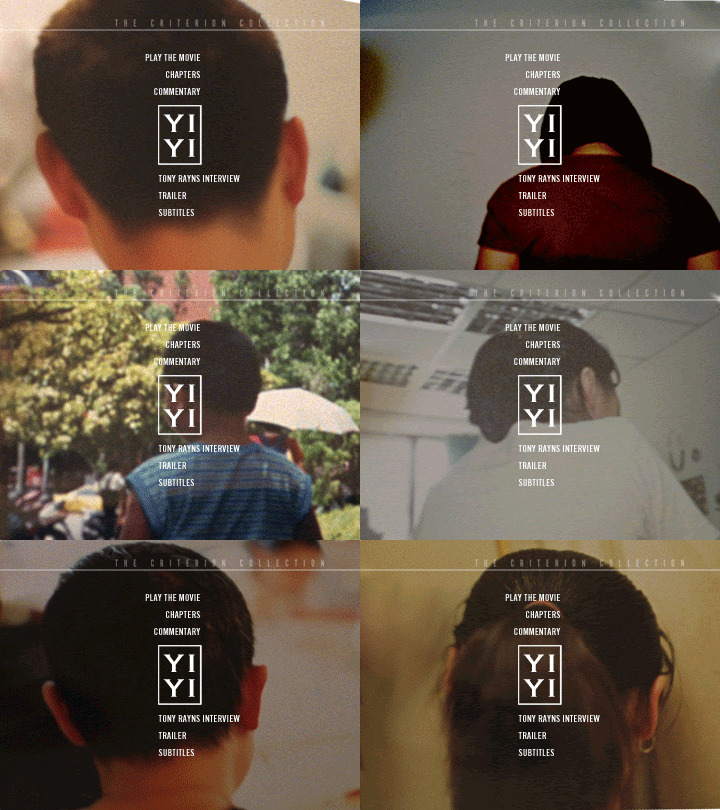
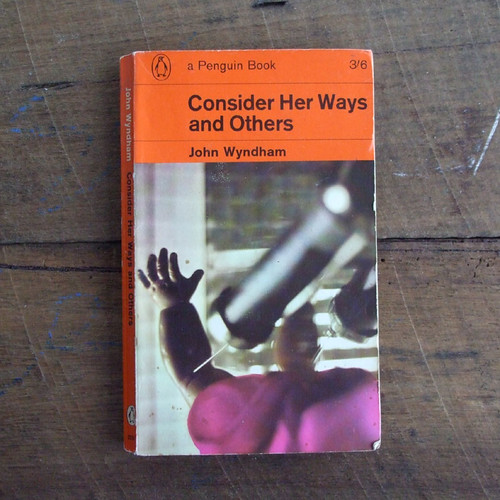
I love the covers adapted from Bass’ movie posters for the Penguin editions of Saint Joan and Anatomy of a Murder, but this cover of Preminger: An Autobiography (pictured) is less well known. And it was nice to be reminded of the movie Yi Yi in which 8-year-old Yang-Yang makes it his mission to lovingly photograph the back of people’s heads…

…And in looking an image for Yi Yi, I came across a rather lovely post by designer Eric Skillman about creating the DVD edition for Criterion Collection:

The actor who played Yang Yang was obviously no longer available, so we had find a back-of-head double. We found a photographer (the talented Andre Constantini), who led us to a young model named Brian, the back of whose head was a fine match for Yang Yang.

Eric also designs books as it turns out. His blog looks great! A day of nice finds.

3 Comments

The e-book Revolution Favours the Agile (But Deep Pockets Help)

The publishing industry is finally turning toward “mass digitization”, Matthew Shaer reports in The Christian Science Monitor .

But “it’s not the bigger houses, such as Macmillan or HarperCollins, that are moving the fastest” he says. It is agile independent presses — who can make decisions quickly  and are “more open-minded when it comes to distribution and marketing” — that are “making the most extensive restructuring efforts” according to Schaer.

Independent presses are undoubtedly innovating — necessity is the mother of invention after all — and I would really love to believe that they can steal a march on the big publishers in the “e-book revolution”. Unfortunately I just don’t think it’s true. Or, at least, that simple.

Even if you ignore the Schaer’s assertion that the “typical” independent press can make quick decisions “without much internal friction” (in theory yes, in practice I’m not so sure), the ability to adapt is not just about a “fast and light ethos”, it is also about resources. It actually takes a great deal of time and expertise — often in short supply at small presses — to put a digital program in place. And although the cost of creating, marketing, and selling e-books may be low once the infrastructure is there, getting to that point requires a lot investment.

Soft Skull’s ambitious aim to have its entire list available digitally by the end of the year is a huge step for an independent publisher. But the two publishers Schaer specifically identifies as being behind the times are, in fact, already on this track. In November last year, Pan Macmillan made books available for the Stanza e-book reader for iPhones, and they currently offer a large, large number of downloads in different formats from their  web site, as do  HarperCollins .

In fact, ALL of the other major publishers — Random House, Penguin, and Simon & Schuster — offer e-books to download from their web sites in the US. Not that you would know from Schaer’s article.

And HarperCollins has been trailblazing with creative online initiatives in the past year. They set up Authonomy, a community site for writers, and are launching BookArmy, which Victoria Barnsley, chief executive of HarperCollins UK, describes as a “social networking site organised around books and authors.” . They’ve collaborated with if:book London and Apt to create an online, annotated version of Doris Lessing’s The Golden Notebook , and in December they released a charming online video, This Is Where We Live, to celebrate the 25th anniversary of their 4th Estate imprint, that quickly went viral.

In April 2008, HarperCollins also acquired The Friday Project — originally set up to find  web based material and turn it into books — as an “incubator for fostering new talent, and finding new markets.”

And let us not forget HarperStudio who may not be offering e-books yet, but have firmly established themselves on online.

Penguin have not been idle either. In December, Penguin US launched Penguin 2.0 to boost their web presence with an iPhone app and other downloads. Penguin in the UK — who sponsored in the recent BookCamp on technology and the future of the book — not only offer over 1,000 e-books on their website, they have an online dating service (no, really), and have created SpineBreakers, a web site with teenage contributors. And there is, of course, the ever-popular Penguin Blog.

The same day as Penguin 2.0 was announced, PW also reported that Random House would be partnering with Stanza and making select titles available for iPhones, and in January, Simon & Schuster relaunched their website with all the whistles-and-bells — such as blogs and author videos (outlined by PW here) — that one would expect from a publisher who knows their audience is online.

Of course none of  these strategies is perfect and the major publishers still have work to do on their e-books programs (there have been complaints about the  pricing in particular), but this is a period of experimentation and, with the best will in the world, it’s simply absurd to suggest, that the big publishers are “dinosaurs” who “think people are just sitting down in leather chairs and reading hardcopy books.”

Independent publishers may have “the most to gain from electronic publishing” as Richard Nash of Soft Skull says, and I genuinely hope that e-books usher in a renaissance of independent publishing. But the big publishers are not blind to the possibilities that technology is opening up and they have the resources to move quickly and boldly, and, in some cases at least, they are doing so. Let’s just give credit where it is due.

1 Comment

Midweek Miscellany, Jan 21st, 2009

The Books are alright — Montreal’s Hugh McGuire (of LibriVox and Book Oven) on the Penguin-sponsored BookCamp in London:

If the amount of thought and enthusiasm generated that day — and evening — is any indication, I think we’re going to be OK. The book is alive and well, even if defining “book” is becoming more complicated; and the publishing business, bracing itself for the biggest shake-up since the paperback, will come out the other end, transformed certainly, but alive nonetheless.

Cuts Were Necessary — The New York Observer on Marcus Dohle the new CEO of Random House (previously described as “dapper, but mildly off-putting”):

Now, the feeling among both literary agents and executives who used to work at Random House seems to be that Mr. Dohle inherited a rotten, bloated thing when he took over last May, and though one can wish it hadn’t gone the way it did, there simply was no reversing the damage done by his predecessor, Peter Olson, without forcing the publishers who’d survived his thoughtless 10-year reign to make some hard calls.

Rotten and bloated. Nice.

How to Publish in a Recession — a wide-ranging interview with Declan Spring, senior editor at New Directions, at Conversational Reading (via Ready Steady Blog):

We’re not beholden to stock owners, our overhead is pretty small, and we always count on just a pretty small profit every year anyway. Our staff has worked here for many years, mostly the same folks for twenty years, who are devoting much of their lives to the mission of ND. We see it as a profit-making business, but we are also realistic and dedicated to the cause. That makes it easier in this climate.

And speaking of New Directions… Any excuse (really) to post another book jacket by Alvin Lustig (pictured).

Comments closed

More Vintage Penguins and Pelicans

Ace Jet 170 has just posted about a “brilliant and odd” vintage Penguin paperback design by Herbert Spencer (pictured):

And, what with the link yesterday to Things magazine’s collection of vintage Pelican covers, I thought I should also link to Ace Jet 170’s growing Penguin/Pelican Flickr collection.

Ace Jet 170

Ace Jet 170’s Penguin/Pelican Flickr Collection

UPDATE

Also: The Penguin Paperback Spotters’ Guide Flickr Pool

Comments closed

Something for the Weekend Jan. 9th, 2009

Curation, Appeciation, Organization: The Book Cover Archive goes live with “cross-indexed meta data” (and blog)! LOVE this. Nice work fellas. (via SwissMiss)

Skinny tight jeans and mild panic: The Scotsman profiles Canongate’s Jamie Byng.

Almost half of Canadians can’t name a single Canadian author according to the hand-wringing National Post… Or to put it another way, over half of Canadians CAN actually name a Canadian author? It could be worse (really)…

Canadian booksellers manage a “late holiday rally” in December reports PW:

Retailers large and small were unanimous in their opinion that books proved to be an excellent recession gift, with the value proposition of books being improved in part by fact that the actual price of books have fallen relative to U.S. prices.

A .38 shell for independent bookshops: The Guardian‘s Stuart Evers considers consumer apathy and the imminent closure of the Murder One bookshop on Charing Cross Road in London:

These kinds of shops are facing a long, bloody battle – and one which, without significant reinforcements, they are likely to lose. As we hear of the travesty of another brilliant independent going down, we’ll mourn the loss, wring our hands and damn Amazon and the supermarkets and Waterstone’s. Yet perhaps the most important detail we’ll probably keep under wraps: the last time we actually spent any money there.

Hapless Houghton Mifflin Harcourt reinstate editor Drenka Willen after Noble prize-winner Günter Grass intervenes.

Nostalgic book covers a hit for Penguin in Australia— 50 titles released with covers in the original orange-and-cream designs are selling strongly:

“They are instantly recognisable and have an emotional pull… Most people or their parents have got second-hand or old Penguins at home that have the same livery. But it’s not only pulling on that nostalgic lever, it’s also got that retro coolness. We’ve found that younger readers have been really drawn to them.”

“To say his work was inspirational is an understatement”: The New York Times profiles the late Barney Bubbles  whose iconic album cover designs (for the likes of Elvis Costello, Ian Dury, and The Damned) are celebrated in Paul Gorman’s new book “Reasons to Be Cheerful: The Life and Work of Barney Bubbles” published by Adelita (pictured).

Comments closed