Skip to content

The Casual Optimist Posts

Midweek Miscellany

Finding a Cover for The Girl With the Dragon Tattoo — A WSJ article and slideshow on the cover design process for the bestselling novel by Steig Larsson:

For three months, Peter Mendelsund, a senior designer at Knopf, prepared nearly 50 distinct designs…  Mr. [Sonny] Mehta ultimately endorsed the vivid yellow jacket with the swirling dragon design: “It was striking and it was different.”

Peter Mendelsund has some further thoughts about the cover, Wittgenstein, David Foster Wallace, and design in a great post on his blog JACKET MECHANICAL:

Due to many factors (the mechanisms of the approval process; design’s fundamentally commercial aspects…) when one examines the field of design, one cannot help but come to the conclusion that good design must be, above all, likeable.

Design is too intimately entangled with matters of taste (to use Wittgenstein’s word) to be demanding enough to be Art. I have to say that in my years in the field, I’ve yet to be made to cry by a work of design. I’ve yet to be forced to view the world differently due to a work of design. I’ve yet to be really, truly gripped by a work of design. I know it’s deeply self-defeating to say this, yet, the best design has only ever evoked in me the feeling of “that’s cool.”

And on the subject of book cover design…

Creative Problem Solving — Macmillan Designers and art directors Susan Mitchell, Charlotte Strick, and Henry Sene Yee discuss the state of book cover design at FSG‘s new Work in Progress blog:

We’re interpreting or packaging other people’s ideas. If someone gives me a manuscript, I interpret it. That’s problem solving… I’m not just here to create something beautiful. Sometimes I’m here to be a plumber. I love that aspect—I can fix things. I’ll make it balance, whatever it is.

Still Reading? — Patrick Kingsley on the art of slow reading for The Guardian:

Still reading? You’re probably in a dwindling minority. But no matter: a literary revolution is at hand. First we had slow food, then slow travel. Now, those campaigns are joined by a slow-reading movement – a disparate bunch of academics and intellectuals who want us to take our time while reading, and re-reading. They ask us to switch off our computers every so often and rediscover both the joy of personal engagement with physical texts, and the ability to process them fully.

Also in The Guardian

Unwanted — A 12-page comic strip tale of unwanted immigrants by Joe Sacco, author of Safe Area Gorazde, Footnotes in Gaza, and Palestine

…And on a not unrelated note: Publishing Perspectives looks at comics and graphic novels in the Middle East and how they are pushing at cultural boundaries.

And finally…

Bob Stein of The Institute for the Future of the Book interviewed by On The Media:

The western version of the printing press is invented in 1454. It takes 50 years for page numbers to emerge. It took humans that long to figure out that it might be useful to put numbers onto the pages.

What is slightly curious about this interview is that Stein acknowledges the essentially unpredictable messiness of the future, and yet it doesn’t seem to stop him…

Comments closed

The Pleasures and Sorrows of Work

Jamie Keenan’s inspired cover for The Pleasures and Sorrows of Work by Alain de Botton, published by Vintage:

Image courtesy of Vintage and Anchor Books Art Director John Gall.

(Via @Pieratt and Book Cover Archive)

Comments closed

Finding the Unique Visual Story

The latest Gestalten.tv video podcast is a conversation with New York Times Graphics Director Steven Duenes and Graphics Editor Archie Tse. Duanes and Tse talk about creating daily images, diagrams, charts, and interactive media for the newspaper, and providing the clearest possible visualization of data:

Comments closed

Something for the Weekend

The Trouble With Amazon — Colin Robinson, co-publisher at OR Books (so perhaps not entirely neutral), on the internet retailer for The Nation:

The accumulated effect of Amazon’s pricing policy, its massive volume and its metric-based recommendations system is, in fact, to diminish real choice for the consumer. Though the overall number of titles published each year has risen sharply, the under-resourcing of mid-list books is producing a pattern that joins an enormously attenuated tail (a tiny number of customers buying from a huge range of titles) to a Brobdingnagian head (an increasing number of purchasers buying the same few lead titles), with less and less in between.

And, on a not unrelated note…

What’s Wrong With Music Business — A fascinating  interview with Tom Silverman, founder of Tommy Boy Records, at Wired. I’m usually really skeptical about comparisons between the music industry and book publishing, but there’s lots of good stuff here for book folks:

[T]he premise of technology being the great democratizer and allowing more artists to break through than before — actually, we’ve seen the opposite effect. Fewer artists are breaking than ever before, and fewer artists who are doing it themselves are breaking through than ever before. Back in the early ’80s, when the cellphone was first invented, there were more artists breaking on their own, with no technology, than they are now, with technology. Why is that the case? And what can change to open the gates again, to allow artists to break through, whether on their own or with help?… [S]ocial networks have been a really big disappointment in terms of moving the needle in either exposure or sales in any meaningful way. There are a lot of myths in technology that everybody wants to believe, because everybody wants things to get better.

The Little Coincidence That Haunt Your Life — An interview with Alan Moore, author of From Hell, V for Vendetta, Watchmen et al,  at The Quietus:

One of the academics at this conference was saying that he was working on a book which was about Watchmen as a post-9/11 text. I can see what he means to a degree. One of my friends over there… said he’d been talking to some people on Ground Zero on September 12, 2001 and he was asking them if they were alright and what it had been like. Two of them, independently of each other, said that they were just waiting for the authorities to find a giant alien sticking half way out of a wall…

…There was that atmosphere of a cataclysmic event happening in New York, which I don’t think had been depicted previously… even in science fiction terms it was perhaps unimaginable! Yes, you do find that a lot of odd, little coincidences like that haunt your life.

Double Take — Tom McCarthy, author of Remainder, Tintin and the Secret of Literature, and C, discusses Hitchcock, his preoccupation with doubles and the exact meaning of “MacGuffin”, with BBC Radio 4’s The Film Programme (via Lee Rourke).

And finally…

Blogs are dying says The Economist. Oh no they’re not, says Cory Doctorow in The Guardian.

The real question, however, is whether Publishers Weekly starting their own blog, PWxyz, is evidence for the prosecution or the defense… (Sorry, that’s a little mean-spirited. It’s great PW have started a blog even if it feels a somewhat belated)…

Have a great weekend.

2 Comments

Interview with Rich Roat, House Industries

A design:related interview Rich Roat, co-founder of House Industries, about starting a foundry, type trends, and the future of type design on the web:

Comments closed

Waiting for “Superman”

After posting about Newsweek‘s report on education and declining creativity in America yesterday, this amazing animated infographic created by Buck for the documentary Waiting for “Superman” seems awfully relevant:

Made by David Oscar-winning filmmaker David Guggenheim (An Inconvenient Truth), Waiting for “Superman” is a documentary about the American public education system and how it is failing kids. You can watch the trailer here.

(via The Donut Project)

1 Comment

The Creativity Crisis

Newsweek reports on research that shows, for the first time ever, American creativity is declining:

With intelligence, there is a phenomenon called the Flynn effect—each generation, scores go up about 10 points. Enriched environments are making kids smarter. With creativity, a reverse trend has just been identified and is being reported for the first time here: American creativity scores are falling…

The potential consequences are sweeping. The necessity of human ingenuity is undisputed. A recent IBM poll of 1,500 CEOs identified creativity as the No. 1 “leadership competency” of the future. Yet it’s not just about sustaining our nation’s economic growth. All around us are matters of national and international importance that are crying out for creative solutions, from saving the Gulf of Mexico to bringing peace to Afghanistan to delivering health care. Such solutions emerge from a healthy marketplace of ideas, sustained by a populace constantly contributing original ideas and receptive to the ideas of others.

(via More Intelligent Life)

1 Comment

Midweek Miscellany

The portfolio of Julia Hastings, Art Director of Phaidon Press (via It’s Nice That).

Rarefied Content — Alan Rapp on the future of photography books at Imprint:

[A]rguably the independently published photo book is flourishing. You can see this from the increasing popularity of on-demand printing services such as Blurb, Lulu, and MagCloud , as well as the number of successful and well-published photographers who have launched their own publishing ventures, such as Alec Soth, Richard Renaldi, and Shane Lavalette (a practice which itself has a long pedigree, from Alfred Stieglitz to Ralph Gibson). Yet this kind of kaleidoscopic output creates another issue—who but the most ardent follower can keep abreast of this vast dispersion of small-scale publishing?

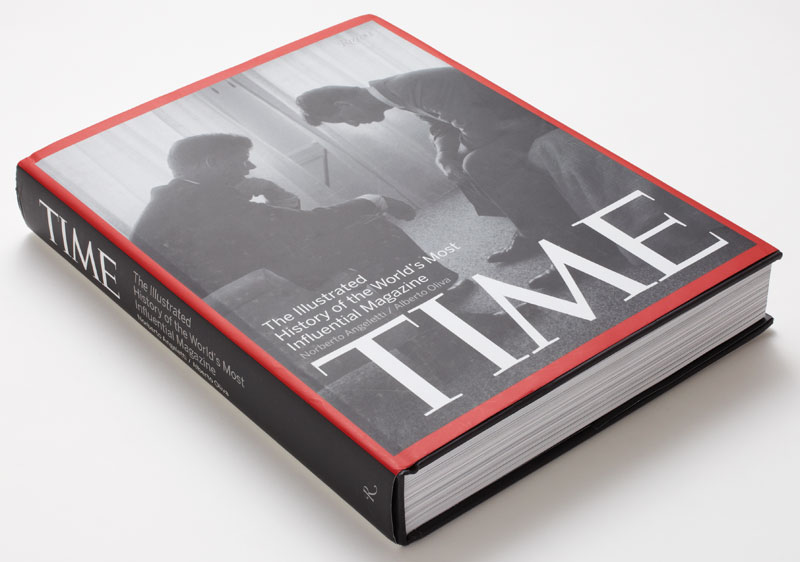
The Illustrated History of Time designed by Luke Hayman at Pentagram:

And finally…

The trailer for the animated adaptation of Shaun Tan‘s The Lost Thing (via The Art Department | Irene Gallo):

I’ve posted this before, but here’s a short documentary about making the film:

The Lost Thing website.

Comments closed

Penguin 75: Q & A with Paul Buckley and Christopher Brand

Launched with 10 titles by Allen Lane in 1935, Penguin Books turns 75 this year. To commemorate the anniversary, Executive VP Creative Director Paul Buckley has compiled Penguin 75, a collection of 75 book covers from the Penguin US archive.

Penguin 75 is an inside look at the Penguin design process with candid and irreverent commentary from authors, designers, editors and artists as well as Penguin Art Directors Darren Haggar and Roseanne Serra and Buckley himself. Filled with the kind of distinctive illustrative covers that are now associated with Penguin US, the book is wonderful slice of American book cover design. As Karen Horton recently noted in her interview with Buckley for design:related:

Penguin 75… is less about the history of the old orange-spined paperbacks and more about the relationships Creative Director Paul Buckley helped to facilitate in the last decade between publisher, editor, author, and designer.”

I was lucky enough to talk to Paul and the book’s designer Christopher Brand about Penguin 75 last week.

How did Penguin 75 come about?

PB: I’ve always had a mix of fascination, disdain, and understanding, for what my staff and I go through in trying to get our work approved, as well as what the editors and publishers are dealing with on their end. Of course all people whose work is subjective go through some sort of approval process — and it’s not easy for the folks on the other end of the situation either; the ones saying “this is just not right”. As it’s something we do not hear much about (other than at some industry function), I thought it would be interesting to put some of these stories together in book form.

And how did you get involved in the project, Chris?

CB: I was working on staff at Penguin at the time. I let Paul know that I would be interested in working on it when he first mentioned the project to everyone. I mostly work on covers but I’ve had the chance to work on a few interiors before this one.

What criteria did you use to choose the covers?

PB: There were different sets of criteria; the most obvious being that they had to be Penguin paperbacks, as we had decided to use this project in conjunction with our 75th Penguin imprint anniversary. Another criteria was that I wanted to show recent Penguin work, so nothing older than 10 years or so. Then it came down to a combination of which covers look great and also have an interesting story associated with them, as well as trying to get a mix of intriguing authors and designers in there — not just your obvious fiction darlings, but a true microcosm of the publishing world and art world.
The covers are very different from the iconic Penguin paperback covers. Do you think the book shows a different side to Penguin’s design history?

PB: Of course. Penguin UK does a gorgeous job of tapping into the Penguin archive and history, and while I like to go there from time to time, I’m very interested in Penguin’s future in a different sort of way. The beautiful Penguin by Design is just not who I am, and if I tried to do a version of that, two things would happen — I’d fail as my heart would not be in it, and no one would buy it as it’s already out there in a few books. This is not to say that I’m not a huge fan of Penguin’s design history — I am, but I see it as a place to tap into occasionally, while still moving the brand forward — as nothing creative can remain as it was, nor should it if it wants to stat vital in it’s own day. But we do maintain Penguin’s age old love of illustrated and well crafted covers.

Do you have a sense that Penguin US has a design sensibility that is separate from the Penguin UK tradition?

PB: Whether you’re UK or US, it’s still Penguin tradition, so I don’t define it as you do. Both sides are very proud of Penguin, it’s history, it’s cache, it’s values — and both sides have built Penguin into what it is today, and what it stands for. So while we are separate entities that bring different things to the table, the overall strive to keep the quality bar set very high is paramount to either side.
Was it hard to choose just 75 covers?

PB: Unbelievably hard. That ate up the first month or so, just getting it down to 75, who was left in, who was left out, who on staff has five covers in, while another has only one or two, is it a good mix visually and editorially of this and that, etc etc.

Chris, did you have a say in any of the selections?

CB: Paul did an initial edit and went through tons of the books. Once he narrowed it down I helped a little bit with figuring out what we should put in, but mostly I would come to Paul later on when were trying to lay out the book. If we couldn’t get enough content for one of the books then we would have to find another one to put in. Or, if Paul wanted to add more books toward the end then we had to figure out what to subtract. I was more involved when it affected the design.

Were there any covers or comps that you wanted to include but couldn’t?

PB: By the nature of only utilizing 75 covers / series, things have to be left out. So yes, but only for that reason.

Penguin 75 includes contributions from authors and editors as well as designers, but I notice you left out Sales & Marketing!

PB: I did not leave out sales and marketing any more than I left out elves and leprechauns… I simply did not have any real sales and marketing stories. The Penguin marketing director, John Fagan, is hands down the best marketing director in the universe — we all know the horror stereotype stories of the marketing director killing this and that just to hear their own voices in the room, but John is so much an integral part of our team and loves what we are doing with our packaging; so unless he really thinks we’re missing something, he’s incredibly supportive; and when he does have something to say, he still manages to do it in a kind and intelligent way. Our sales team also leaves that stereotype behind. Trust me, you see in the book that I’m not pulling any punches and I made sure no one else in the book did either — so if I had great Penguin sales and marketing stories, you’d be reading them.

As a designer, were you surprised by any of the  comments from authors and editors about the cover designs, Chris?

CB: The range of comments from the authors was pretty surprising. Some were very thoughtful and you could tell they appreciate and understand book cover design. Other authors weren’t very happy with their covers and they made that pretty clear.

Was it fun to design a book about book design?

CB: More than anything, it was just fun for me to be working on the interior of a book instead of just the cover. It was a nice change.

Were there any unique challenges?

CB: The biggest challenge was that Paul and I were working on this book, but at the same time we both had full time jobs at Penguin. Paul tried to clear my plate for me a bit, but we both still had a lot of other responsibilities to deal with. Another thing that was hard was that we were sort of doing this whole thing on the fly. We were responsible for not just designing the book but gathering all of the content and all of the things that we needed to design the book (the comments, the hi-res art, etc.). We had to get everything together as we went and this stuff trickled in throughout the process.

On a design level, there was a lot of information to organize. It was challenging to come up with a system for everything. We had comments from that authors and designers, then there were comments from the art directors that we created another system for, all of the credit information for each book, we were showing alternative designs for some covers. There was a lot to think about.

Did you try to take account of Penguin’s design history while working on your design?

CB: I did take Penguin’s history into account at the beginning when we were figuring out what the layout should look like. I used Gill Sans throughout the book, but it’s pretty small and doesn’t feel overwhelmingly “Penguin”. I tried some things that were more in the style of older Penguin covers, but in the end we went with something more modern.

Was it strange to design a book that includes some of your own work?

CB: It was a little strange at first, but many of the covers in the book were designed by my co-workers so a lot of the work was very familiar to me.

So, did the book make you reconsider any of your own designs, or your design process?

PB: I’d love to sound thoughtful and say “yes” and expound on some brilliant new design wisdom — but the answer is “no”. All of the entries in this book are well known to me, and most have been for years. Putting them all down in one place just made me feel proud of what my department does — but I’ve always been incredibly proud of my team. If anything, it made me reconsider what it takes to put a book together, and see editors and authors in a more favorable light.

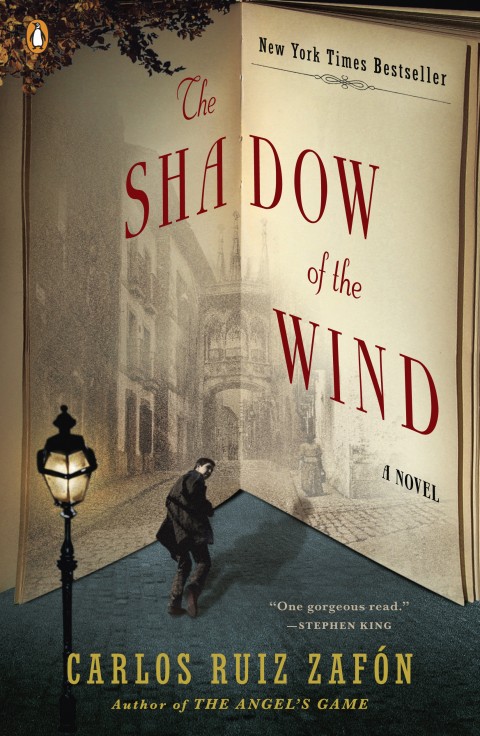
And, Chris, I have to ask… How does it feel to be immortalized on the cover of The Shadow of the Wind by Carlos Ruiz Zafón?

CB: It was an amazing opportunity. I think this only the beginning of my modeling career.
Thanks Paul and Chris!

Images:

  1. Penguin 75 cover, design by Paul Buckley
  2. Penguin “Graphic Classics”:
    The Dharma Bums | Art Director: Paul Buckley |  Illustrator/Designer: Jason
    The Portable Dorothy Parker | Art Director: Paul Buckley | Illustrator/Designer: Seth
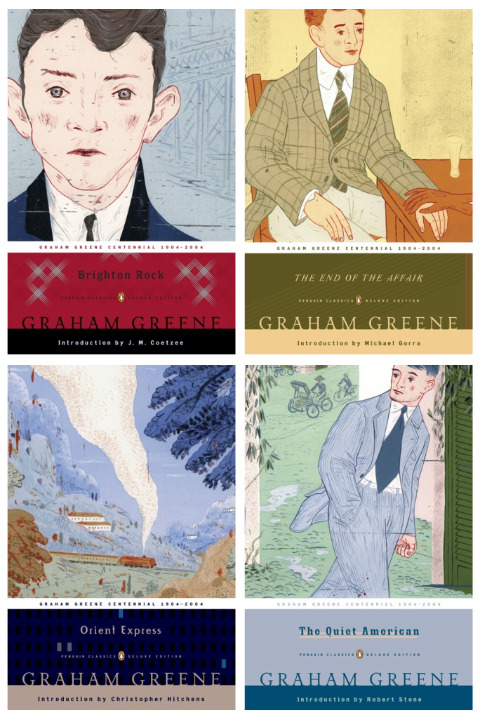
  3. Graham Greene Backlist | Designer/Art Director: Paul Buckley | Illustrator Brian Cronin
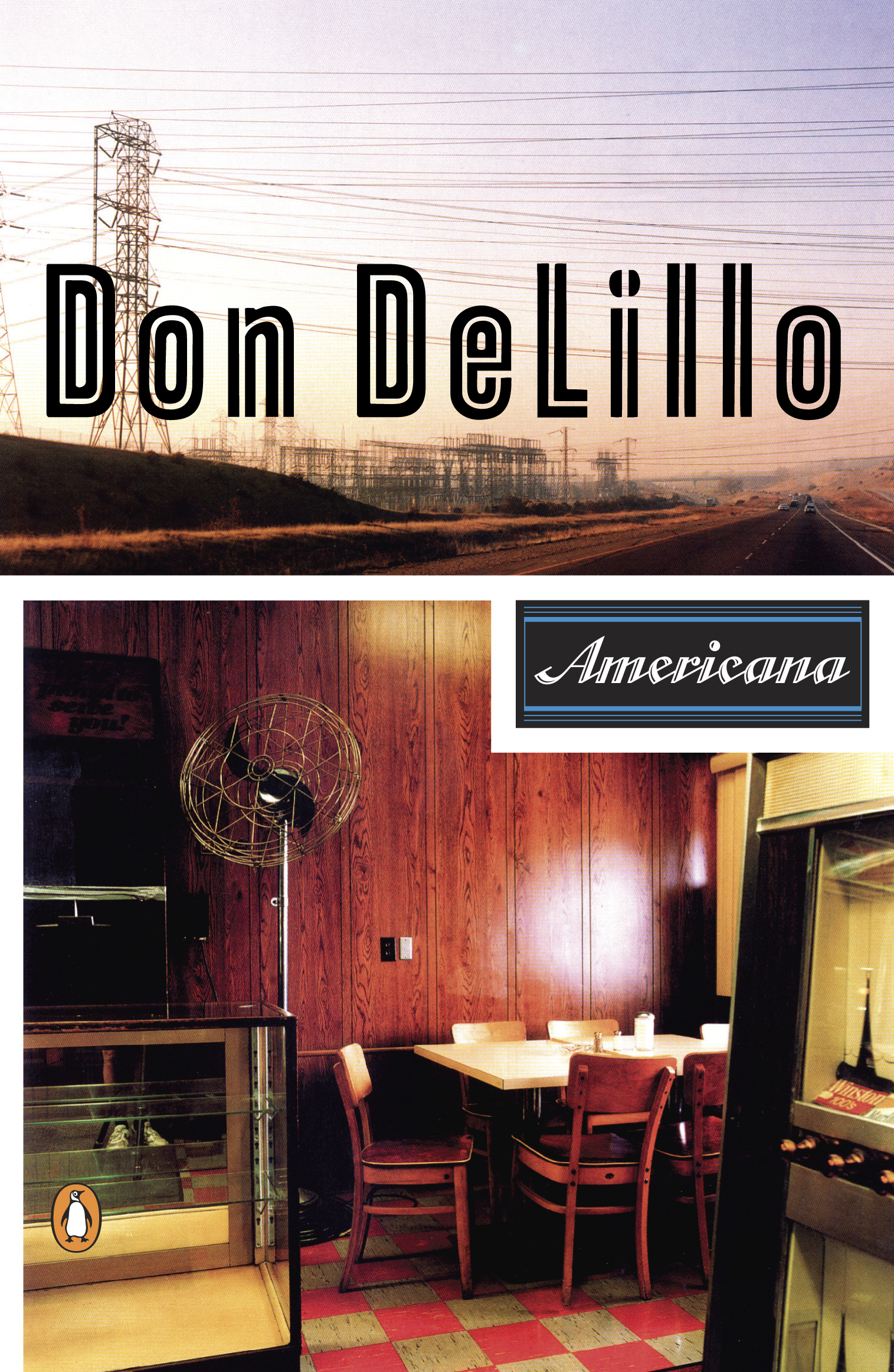
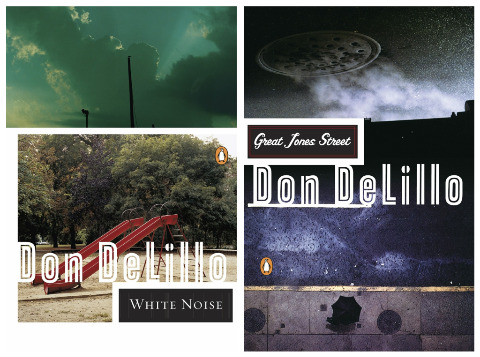
  4. Don Delillo Backlist:
    Americana
    | Designer/Art Director: Paul Buckley | Photos: Jeff Brouws
    White Noise | Designer/Art Director: Paul Buckley | Photos: Jason Fulford
    Great Jones Street | Designer/Art Director: Paul Buckley | Photos: Hugues Colson (top), Tom Zimberzoff (bottom)
  5. Emporium and unused image | Designer/Art Director: Paul Buckley | Illustrator: Viktor Koen
  6. Special Topics in Calamity Physics | Designer/Art Director: Paul Buckley
  7. Pages 220 – 223  Penguin 75 | Designer: Christopher Brand
  8. Pages 244 – 247 Penguin 75 | Designer: Christopher Brand
  9. There Once Lived a Woman Who Tried To Kill Her Neighbor’s Baby | Designer: Christopher Brand | Illustrator: Sam Weber | Art Director: Roseanne Serra
  10. The Jewish Messiah | Designer: Christopher Brand art Rodrigo Corral Design | Art Director: Darren Haggar
  11. The Shadow of the Wind | Designer: Tal Goretsky | Art Directors: Darren Haggar and Paul Buckley
4 Comments

You Can’t Judge A Book By It’s Cover

As it’s Friday, and with thanks to David Gee who sent this my way, a little something for journalists who can’t let sleeping clichés lie:

Have a great weekend.

1 Comment

Somthing for the Weekend

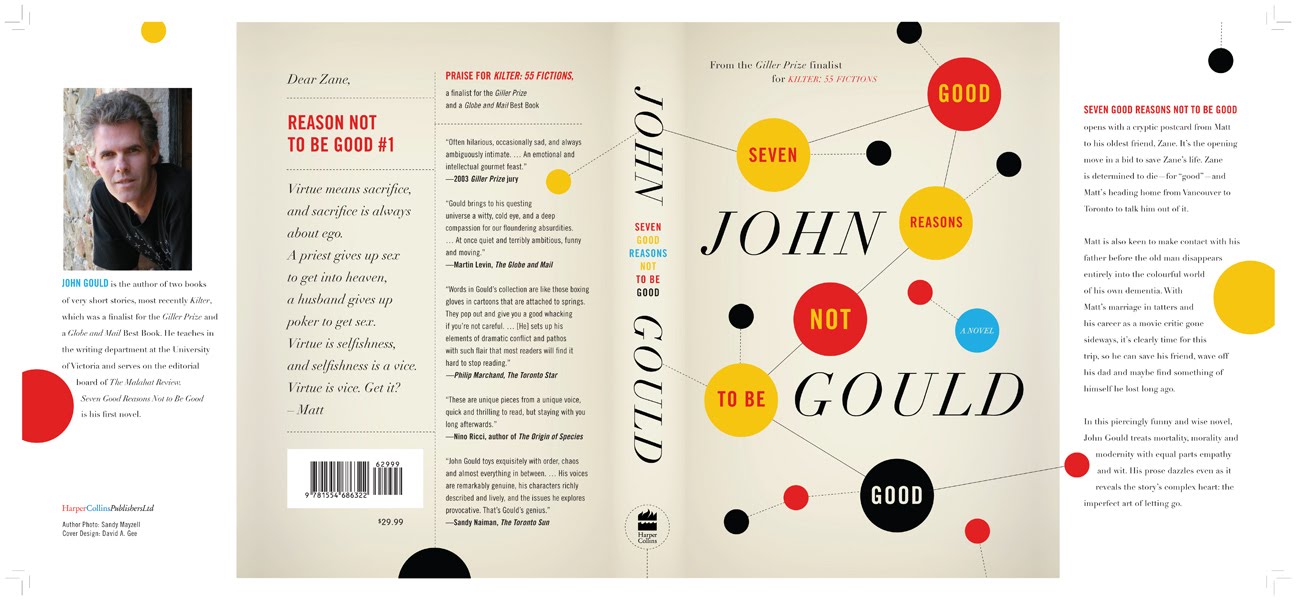
“Spot gloss on the molecules” — David Gee’s cover for 7 Good Reasons Not To Be Good by John Gould.

Going Back — Artistic Director Michael Salu on the creating the cover of the new issue of Granta magazine:

For this concept to work, we needed to strive for authenticity – to create the physical object ourselves. The typefaces would need to be sourced, traditionally hand-set and photographed to give the cover the depth that the issue deserves. For this I approached St Bride Printing Library, which has long been a place of fascination and wonder for me. My first visit to the library – with its oil, wood and metal, its smell of history – made a huge impression on me.

The Connoisseurs — Peter and Charlotte Fiell, who recently ended their 15-year tenure as heads of the design branch of Taschen, talk about their new publishing venture Fiell at More Intelligent Life:

What is design? It’s the forethought that goes into the making of man-made things. It’s films, pharmaceuticals, airplanes, chairs, tape recorders … it’s the world of stuff. It’s huge, so everybody should have a big interest. It’s not some avant-garde, highly expensive niche. We want to make money by publishing books that sell, but we’re in the business of promoting ideas, culture, taste, connoisseurship. If you want to make a difference you want to get into as many people’s heads as you can and change their opinion. The secret is to strike this balance between making your books appealing to learned type readers, while at the same time, making them useful and interesting to novice readers. Our aim is to make books as appealing to teenagers in Tokyo as architects in Amsterdam.

(Above: Spreads from Tools for Living: A Sourcebook of Iconic Designs for the Home by Charlotte and Peter Fiell)

Designing In Order To  Eat — Chris Ware’s introduction to Penguin 75 excerpted at GQ magazine:

Book designers, you should know, have to be ready to create something new, exciting, and original almost every day in order to eat, and a certain degree of burnout smokes out the weaker specimens; I can’t imagine coming up with cover after cover without at some point resorting to an out-of-breath take, intentional or not, on someone else’s great idea. This urge toward ever-freshness brings the profession perilously close to that of fashion, and the worst examples of such greet us at the grocery store checkout among the tabloids, gum, and ring pops. But the best of it, those that last, have recently been appearing from Penguin (yes, Penguin, not just the bearer of boring spring break assignments anymore!), following a path led by designer Paul Buckley into beautiful new ways of graphically proffering the written word.

The excerpt is accompanied by a slideshow of covers from the book. My interview with Paul Buckley and designer Christopher Brand about Penguin 75 will be up early next week.

And Finally… The book cover design Tumblr (via Alan Trotter’s ≥ notes)

1 Comment

Midweek Miscellany

The Good, The Bad…design:related‘s Karen Horton (also Art Director at Little, Brown and Co.) interviews Paul Buckley, Creative Director of Penguin US, about his new book Penguin 75: Designers, Authors, Commentary (The Good, The Bad…):

Everyone was asked to keep their comments to 100 words or less, and though there are a few exceptions that I let run long, my own included, most contributors stuck to my request. As to the sarcasm, there are plenty of good natured jabs throughout the book as I was very clear with the participants that this was a true opportunity to let it all out – if you hate your cover, please by all means tell us about it; that is the point of this book.

You can read my interview with Paul from September last year here, and I’m hoping to chat with him and designer Christopher Brand about Penguin 75 soon. Fingers crossed.

Rewound and Remixed — Tom McCarthy, author of Remainder and C, interviewed in The Times:

If McCarthy… presents a radically fresh prospect for the future of the novel, it is probably, paradoxically, because he has instinctively ignored contemporary literature almost completely. He would argue, in fact, that it is only by immersing oneself in all that has gone before that any contemporary novelist has even the faintest chance of coming up with something new. “I don’t think most writers, most commercial middlebrow writers, are doing that,” he says. “I think they’ve become too aligned with mainstream media culture and its underlying aesthetic of ‘self-expression’. I see what I’m doing as simply plugging literature into other literature. For me, that’s what literature’s always done. If Shakespeare finds a good speech in an older version of Macbeth or Pliny, he just rips it and mixes it.”

See also: My Q & A with Peter Mendelsund and Tom McCarthy about the cover design of C.

Paywalls vs. Potential — Clay Shirky interviewed in The Guardian. This has been much linked to elsewhere because of Shirky’s comments about the online “paywall” at the aforementioned The Times, but I actually Michael Wolff’s Vanity Fair article on Rupert Murdoch from October last year is more interesting on this point. See also: John Gapper’s op-ed “Murdoch must become an elitist” in the Financial Times (registration required).

Necessary Agent — Jofie Ferrari-Adler, senior editor at Grove/Atlantic, on literary agents and their relationship with book editors in Poets & Writers Magazine. It’s an interesting article, although — just for the record — not everything that goes pear-shaped in the publishing process is the fault of the Sales & Marketing department…

And finally…

Cats Without Dogs — At some point I will shut up about Jason… Until then, you might be interested to know he has just started a blog…

Comments closed