Skip to content

The Casual Optimist Posts

Midweek Miscellany

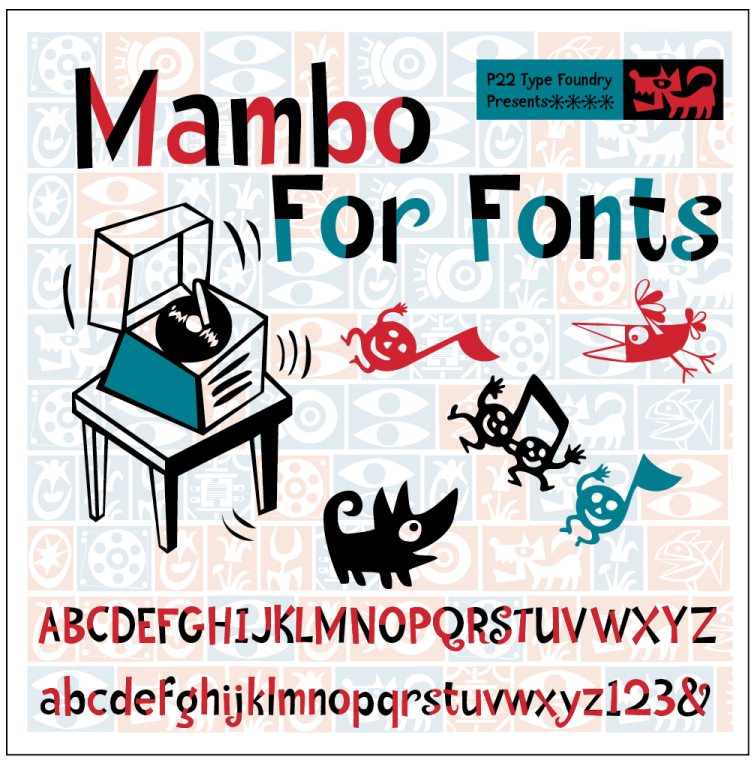
Mambo for Fonts — Flora Mambo is a new font from the P22 Type Foundry based on Jim Flora’s hand-lettering for the 1955 Mambo For Cats RCA Victor album cover.

Character — Type designer Matthew Carter profiled in The Boston Globe:

Around 1994, he started developing Verdana, a revolutionary font for having prevailed over technical constraints of that time, like coarse computer screen resolution. To hear Carter recall it, it was a pivotal moment: People were on the brink of reading as much — or more — on screen than on paper. And that transition has had a profound effect on the design process.

Carter also talks about his work in this short video for the Globe (via Eightface):


The Paris Review has made it’s entire interview archive — from the 1950’s to the present — available online (via The NY Observer).

An Education — James Bridle of BookTwo and Bookkake interviewed at Publishing Perspectives:

“There’s still a reluctance in the industry to give [e-books] their own space. They are still subsidiary to the traditional book forms… There still an incredible lack of understanding about them and the people who are doing the educating are Apple and Amazon, which means they are taking the market very quickly and we’re kind of letting them do that.”

The Likely Lads — Authors Lee Rourke (Canal) and Tom McCarthy (Remainder, C) in conversation at The Guardian.

And finally…

Writers from The Guardian and Observer newspapers talk about the books that sparked their passion for literature:

Comments closed

Smith and Vignelli

As is no doubt clear from recent blog posts, I have a huge amount of respect for the work of designer Massimo Vignelli and so I really enjoyed this recent interview with Debbie Millman for the new series of Design Matters.

Vignelli, however, does not want for ego, and so I was struck how humble British designer and cycling enthusiast Paul Smith is in this fascinating and inspiring conversation with designer Mike Dempsey by comparison:

Paul Smith Interview

Egos aside, it interesting that the lives and careers Smith and Vignelli seem share some unlikely common threads — from their early apprenticeships and life-long partners, to their sense of design, tradition, and detail.

Comments closed

Two

The Casual Optimist turns two today. Hardly a major milestone by all accounts, but I did want to take the opportunity to thank everyone who has supported the blog over the last couple of years.

The Casual Optimist is still here because of all of the people who have told me to me stick with it. I genuinely appreciate all the people who have given me pep talks and lent technical assistance; the designers who have given me the benefit of the doubt and agreed to be interviewed; the folks who have reached out via email, Twitter and Facebook; and, of course, the countless bloggers and journalists who keep me in material.  Hopefully you all know who you are…

Lastly, it is also my wedding anniversary this week and I can’t thank  I. A. A. enough for her continued patience and understanding over the last eight years.  I don’t say that enough.

10 Comments

This Must Be the Place

BYUN is the first film in a series called This Must Be the Place by Lost & Found. The series explores the idea of home — what makes them, how they represent us, and why we need them.  I can’t wait to see the rest of the series…

(via Coudal)

1 Comment

Once Upon a Time

An amazing book trailer for an amazing pop-up book by illustrator Benjamin Lacombe:

(via Daily Design Discoveries)

3 Comments

Something for the Weekend

Thanks for the CBC Books blog for including The Casual Optimist in their list of 10 ‘Book Blogs We Appreciate’ earlier this week. It is always nice to be appreciated — I only hope I can live up to the billing… :-)

The Story of Eames Furniture — Written and designed by Marilyn Neuhart together with her husband John, who both worked with the Eames Office from the 1950’s until 1978, the year Charles Eames’s died. Published later this month by Gestalten, the book comes in two full-colour volumes with a slipcase.

The Future of the Future — William Gibson interviewed in The Atlantic:

I think that our future has lost that capital F we used to spell it with. The science fiction future of my childhood has had a capital F—it was assumed to be an American Future because America was the future. The Future was assumed to be inherently heroic, and a lot of other things, as well… I’m not going all Sex Pistols, shouting No Future!—I’m suggesting that we’re becoming more like Europeans, who have always retrofitted their ruins, who’ve always known that everyone lives in someone else’s future and someone else’s past.

Respect for the UsersJay Rosen‘s inaugural lecture to incoming students at Sciences Po école du journalisme in Paris earlier this month:

The Web effortlessly records what people do with it. Therefore it is easy to measure user behavior: what people are interested in, what they are searching for, clicking on, turning to… right now. What should a smart journalists do with this “live” information?… [Y]ou should listen to demand, but also give people what they have no way to demand because they don’t know about it yet. In fact, there is a relationship between these things.  The better you are at listening to demand, the more likely it is that the users will listen to you when you say to them: you may not think this is important or interesting, but trust me… it matters. Or: “this is good.” Ignoring what the users want is dumb in one way; editing by click rate is dumb in a different way. Respect for the users lies in between these two.

And finally…

Graphic designer James Patrick Gibson talks to Babelgum about his photoblog New Type York , an archive of images of typographic artifacts — signs, directions and building inscriptions — around New York City (via DesignRelated):

Comments closed

Homage to the Square

A short documentary about the artist and educator Josef Albers, author of the seminal Interaction of Color and widely regarded as the father of modern colour theory:

The film is the first part of ‘The Full Spectrum’ a three-part series on colour produced earlier this year by Dwell Magazine.

(via Swiss Legacy)

Comments closed

Massimo Vignelli — A Short Documentary

It is turning into something of a mini Massimo Vignelli week at The Casual Optimist. Here is John Madere’s short documentary about the designer, mentioned briefly on Wednesday:

3 Comments

The Desk

The Desk is a fascinating mini-documentary about our complex relationships with our workspace. It features commentary from experts Alice Twemlow, Eric Abrahamson, Massimo Vignelli, David Miller, Kurt Andersen, Søren Kjær, Alfred Stadler, Jennifer Lai, and Ben Bajorek:

Created by Imaginary Forces for L Studio, The Desk first episode in a series called ‘Lines’  that looks at the design of everyday objects and they affect us. Other episodes include The High Heel, The Lens, The Elevator,  and The Parking Structure.

(via Brandon Schaefer)

Comments closed

Let’s REDU

A video on the current state of education and REDU (Rethink / Reform / Rebuild Education), a campaign designed to expand and encourage conversation around education reform:

(via SwissMiss)

Comments closed

Midweek Miscellany

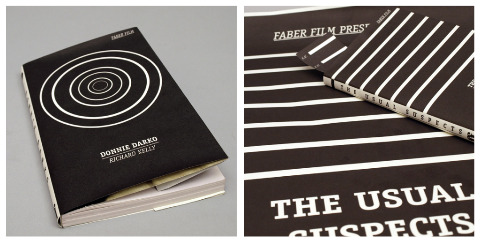
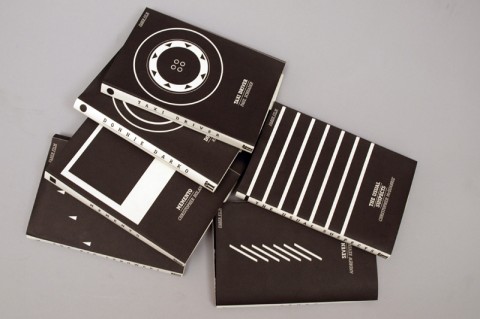
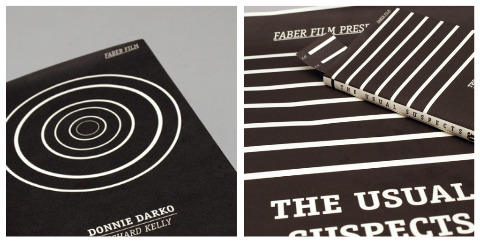
Another great set of designs for the 2009 D&AD student award brief for typography sponsored by Faber and Faber, this time by Rinse Design (via Cosa Visuales). See also: Ed Cornish’s designs for the brief.

Phaidon have relaunched their website and it is really rather nice (via FormFiftyFive).

The Imaginary PresentMike Doherty interviews William Gibson about his new novel Zero History for The National Post:

In his earlier books, Gibson says, he aimed to devise “futures that felt as though they were filled with designed artifacts, as indeed they would be. I can’t think of too many science fiction writers who’d bother trying to do that.” In the [new] series, his devotion to design has gone into overdrive, reflecting the idea that “everything is ‘designer,’ ” even though “with most things, you’ll never know the name of a designer.”

PopMatters also spoke to the author about the new book.

Code — Jennifer Egan, author of A Visit From the Goon Squad, reviews Tom McCarthy’s C for The New York Times:

[McCarthy] aligns disparate things into larger patterns full of recurring images: analogies between the human body and earth, and machinery; hums and whirs; film screens; bowels and tunnels; electric circuits; cauls and other silken membranes. These repetitions come to feel like the articulation of a larger code — as if, were readers to plot their exact positions throughout the novel, they would discover a hidden message.

What Ever Happened to Reading Properly? — ReadySteadyBlog’s Mark Thwaite on critics misreading of  Gabriel Josipovici’s What Ever Happened to Modernism?:

It’s interesting that Josipovici’s book which, in many ways, is both a call to read more carefully and an enquiry into why reading carefully is beyond so many cultural gatekeepers, has been read so sloppily by so many of its critics… Josipovici doesn’t invoke marginal or avant-garde writers, nor praise typographical or narrative playfulness over stale traditionalism, but rather brings us back to canonical writers (a good part of his essay is taken up with Wordsworth) and allows us to see what was at stake for those artists in their work, and what is at stake for us as readers.

And finally… It’s Vignelli week at Design Observer:
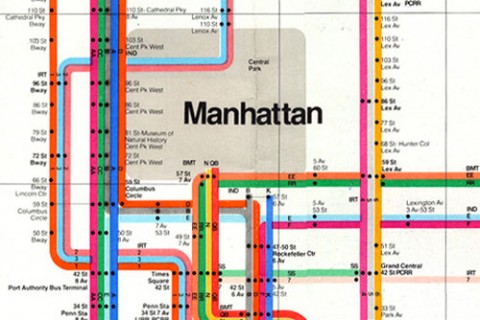
Debbie Millman’s 2007 interview with Massimo Vignelli (excerpted from her book How To Think Like a Graphic Designer):

I’m interested in “essence” — my major aim is really to get to the essence of the problem. And just throw away everything that’s not pertinent to it. At the end of a project, my work should be the projection of that experience, the essence of effect. It’s a habit that you get into… The essence is what is left when there’s nothing else that you can throw away.

Michel Bierut profiles Lella Vignelli:

Massimo has often defined their working relationship like this: “I’m the engine, and Lella is the brakes.” The first time I heard this as a young designer, it was clear to me which was more important. If you were a designer, wouldn’t you want to be the engine, powerful, propulsive, driving forward? It was only years later that I remembered something my high school driving instructor once said: “You don’t get killed in a car accident because the car won’t start. You get killed because the breaks fail.”

And, there is an interesting, beautifully shot, video interview with Massimo Vignelli by photographer John Madere here.

There will surely be more good stuff as the week progresses…
Comments closed

The Gutenberg Variations

Beautiful paintings of books and bookshelves by artist Stanford Kay:

(via This Isn’t Happiness)

1 Comment