Skip to content

The Casual Optimist Posts

Midweek Miscellany

I’m something of skeptic when it comes to Nick Hornby (to put it politely) but the “Ministry of Stories” is, despite its Orwellian moniker, clearly a well intentioned venture, and the design of its Hoxton Street Monster Supplies storefront by We Made This is pretty stellar.

There is more on the Ministry of Stories, which is based on David Eggers 826 project, at The Guardian.

Elsewhere…

Largehearted Boy is doing everyone a favour by aggregating every online “Best of 2010” book list he can find.

AND Design Observer’s contributing writers recommend books for the holidays. While The Bygone Bureau asks some stellar bloggers for their Best BLOGS of 2010.

The Daily Cross Hatch has a four-part interview with Love & Rockets cartoonist Jaime Hernandez:

There are teachers and there are doers—I’m a doer. I don’t know how this stuff happens, it just spills out of me, it’s that kind of thing.

After a while, I’ll think about it and say, “oh, that’s how I do it.” But I couldn’t stand in front of a class and tell them how to do it.

[part one] [part two] [part three] and [part four]

And finally…

A fantastic animated Batman short by Spanish illustrator Javier Olivares:

(via The Ephemerist)

Comments closed

Jonathan Franzen, Writers & Co.

The J-Franz, author of Freedom, talks to Eleanor Wachtel for CBC Radio’s Writers & Company:

Writers & Co Jonathan Franzen Mp3

Comments closed

Patti Smith and Jonathan Lethem in Conversation

Artist Patti Smith, author of Just Kids, in conversation with Jonathan Lethem, author of Chronic City, earlier this year:

(via MobyLives)

Comments closed

Mr Smith’s Letterpress Workshop

The Creative Review visits the South London studio of independent letterpress printer Kelvyn Smith:

Smith’s work is being shown as part of the Reverting To Type exhibition at the Standpoint Gallery in London, opening December 10th (mentioned previously here).

(via Coudal / Acejet 170)

1 Comment

Reverting to Type

Curated by Graham Bignell & Richard Ardagh, Reverting to Type at the Standpoint Gallery in London will showcase the work of twenty contemporary letterpress practitioners from around the world:

Reverting To Type runs from December 10th–24th and continues January 4th–22nd, 2011. The Creative Review has more on the exhibition here.

Comments closed

Tom McCarthy, Writers & Co.

Tom McCarthy, author of C, interviewed by Eleanor Wachtel for CBC Radio’s Writers & Company:

Writers & Co Interview with Tom McCarthy Mp3

Comments closed

Back from Vancouver

I was in Vancouver last week for the Raincoast Books Spring 2011 sales conference. It snowed (see above) and I heard about a lot of new titles I’m looking forward to seeing next year (I can’t wait to get my hands on a finished copy of Into the Wilds by illustrator Nigel Peake for example). I also caught up with some old friends, stayed up too late, and managed to get sick. Needless to say, I’m a bit behind with this internet thing. I will be trying to catch up this week, but things are likely to be a bit wonky around here for the next few days (and I apologise if I owe you an email). Thanks for your patience…

Comments closed

Midweek Miscellany

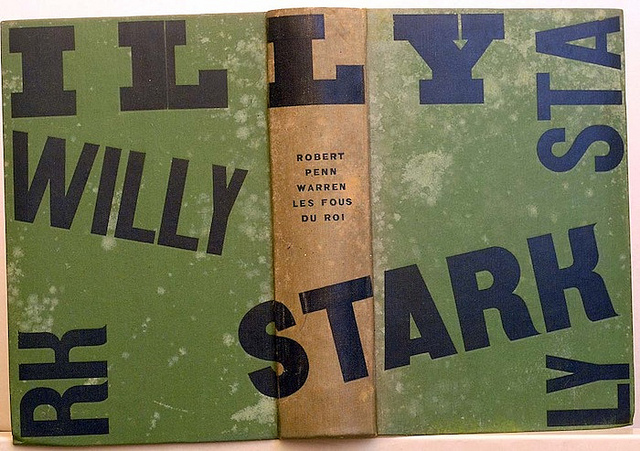
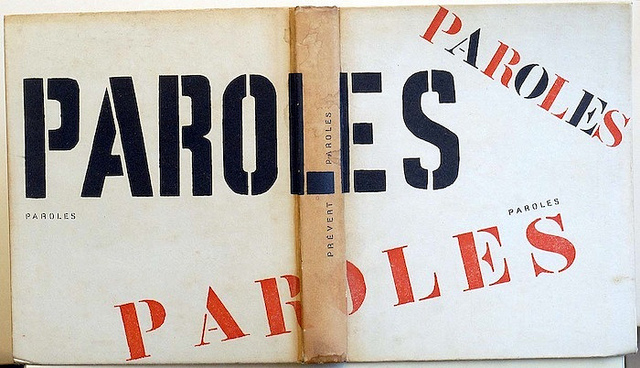
Some lovely vintage French book covers on Flickr, courtesy of Alexis Orloff (via Words & Eggs).

Cultural Change — A really interesting analysis of the current state of publishing by John B. Thompson, author of Merchants of Culture, at The Brooklyn Rail:

Readers and consumers have many different values, and beliefs, and preferences and you will see some be very happy to read on electronic devices of one kind or another. Others will remain wedded to print on paper and will want books in that form. There are deeply embedded cultural practices around writing and reading and these are not going to change quickly and easily. There are people who believe that technology sweeps all before it, and that technology is really the driving force of social change. I don’t take that view. I regard that as a technological fallacy—the view that technology is a driving force of social change. I think technologies are always embedded in social, cultural context and what technologies get taken up depends on a variety of factors that shape people’s practices and beliefs. There are many examples of technologies that went nowhere…

Getting Paid — Cartoonist and illustrator Colleen Doran on the pirating of her comics (via Richard Curtis):

Creators and publishers can’t compete with free and the frightening reality is that even free isn’t good enough.   Pirates aggregate content in ways creators and legit publishers can’t. Why go to dozens of web pages for entertainment when you can go to a pirate and get everything you want? There’s no connection to creators as human beings who work hard and make money from that work, and who need income from past work to finance future work.

Distribution is the only concern. Readers care about the gadget that gives them the goods, and have no connection to the goods at all, or who made them.  But without desirable content, there’s nothing to distribute.

Everyone gets paid — manufacturers of computers, iPads, electricity, bandwidth — everyone except the creators of content.

And finally…

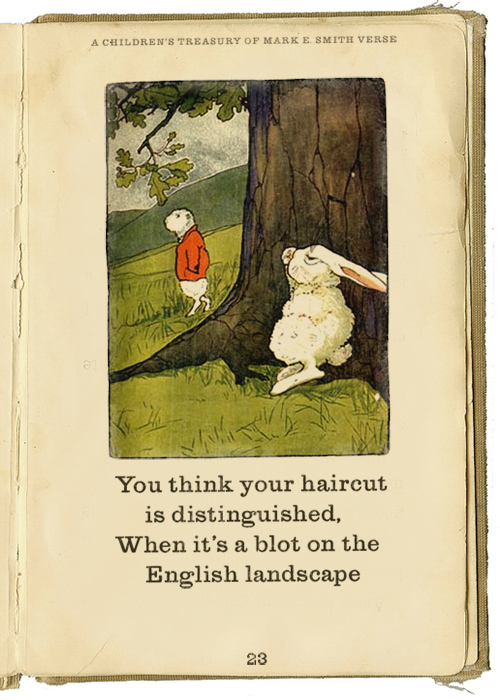
A Children’s Treasury of Mark E. Smith Verse (via the awesome A Journey Round My Skull):

Comments closed

In Vancouver…

…normal service will resume shortly.

Comments closed

The Bends

The Guardian has posted an transcript of this year’s Andrew Olle Lecture given by their editor Alan Rusbridger. The subject of his talk was “The Splintering of the Fourth Estate”, and even in its edited form, it is a long and fascinating read that covers movable type, the BBC,  Rupert Murdoch, social media, pay walls, collaborative journalism and more. It’s essential reading…

It’s developing so fast, we forget how new it all is. It’s totally understandable that those of us with at least one leg in traditional media should be impatient to understand the business model that will enable us magically to transform ourselves into digital businesses and continue to earn the revenues we enjoyed before the invention of the web, never mind the bewildering disruption of web 2.0.

But first we have to understand what we’re up against. It is constantly surprising to me how people in positions of influence in the media find it difficult to look outside the frame of their own medium and look at what this animal called social, or open, media does. How it currently behaves, what it is capable of doing in the future.

On one level there is no great mystery about web 2.0. It’s about the fact that other people like doing what we journalists do. We like creating things – words, pictures, films, graphics – and publishing them. So, it turns out, does everyone else.

For 500 years since Gutenberg they couldn’t; now they can. In fact, they can do much more than we ever could.

(via Jay Rosen)

Comments closed

Something for the Weekend

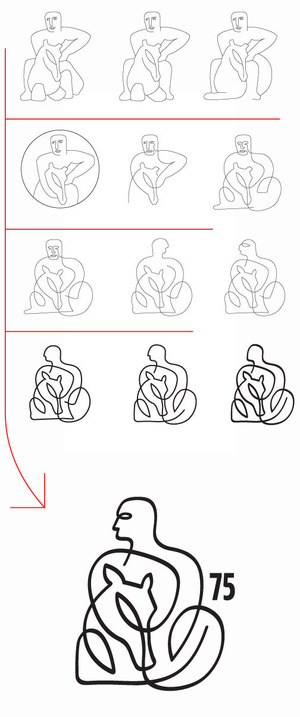
New Directions celebrates its 75th anniversary in 2011 and to mark the occasion, creative director at large Rodrigo Corral commissioned illustrator Felix Sockwell to redesign their iconic colophon by Heinz Henghes.  Sockwell writes about the redesign process (and vomiting!) here (via MobyLives).

Drowned in Sound — You have a few days left to listen to the BBC Radio adaptation of J.G. Ballard’s The Drowned World.

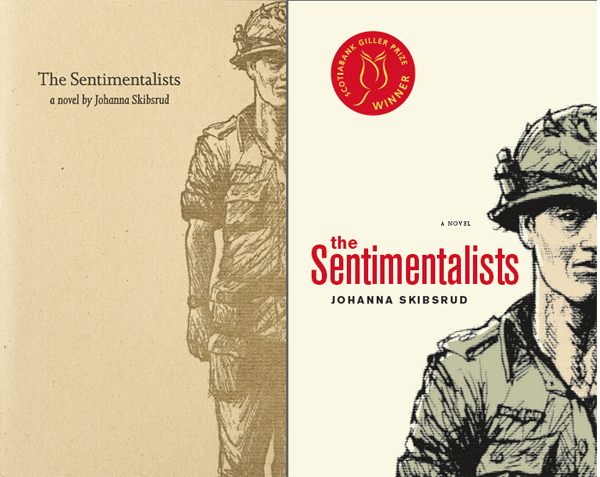
Rewiring — Peter Cocking, art director at Douglas & McIntyre, on designing a new cover for Johanna Skibsrud’s debut novel The Sentimentalists, winner of the Giller Prize and first published by artisan publisher Gaspereau Press:

I felt that the existing cover was to some extent a brand for the book — it appeared in the media quite a bit. It’s different from what we would do in that it’s — and I mean no disrespect to Andrew [Steeves, co-publisher of Gaspereau Press] — but it’s a more literary small-press treatment. It’s very appropriate to the way they publish the book, but it was clear, of course, that we were going to try and push this out into the marketplace in a much wider way. So it seemed to me that the idea was to take what they had, because people might remember this as the cream-yellow book with the solider, and make it a little more contemporary, trade-friendly, a little more aggressive as it were. It wasn’t so much a design from scratch, the way I would normally approach a novel. The way I would describe it is I didn’t build the house, I repainted it, did some new wiring.

And finally…

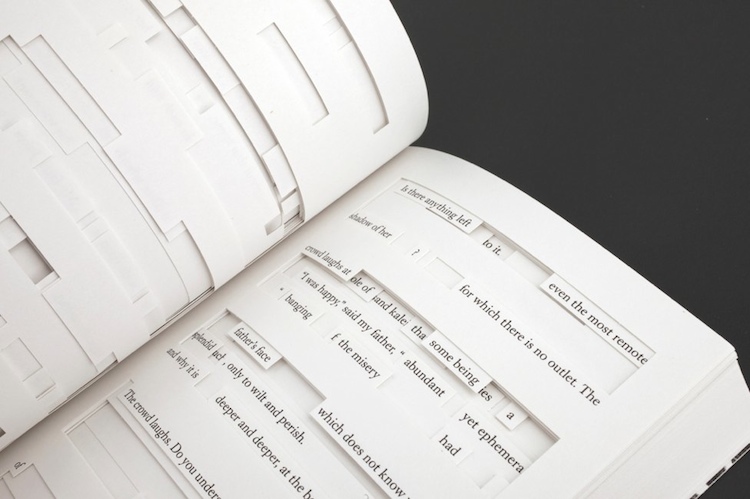
Jonathan Safran Foer’s “unmakeable” book Tree of Codes published by Visual Editions and printed by Belgian publisher and printer Die Keure, seen at Fast Company.
Comments closed

Linotype: The Film

Linotype: The Film is a work-in-progress documentary about the revolutionary Linotype typecasting machine.   Director Doug Wilson has just released a new trailer for the film:

You can help fund the Linotype: The Film at Kickstarter.

Comments closed