CBS News looks at the past, present, and future of book covers, and talk to Knopf’s Associate Art Director Peter Mendelsund and some guy called Chip Kidd:
Comments closed
Books, Design and Culture
CBS News looks at the past, present, and future of book covers, and talk to Knopf’s Associate Art Director Peter Mendelsund and some guy called Chip Kidd:
Comments closed

I’ve not been entirely convinced by all of the artists’ books covers I’ve seen coming out the Never Judge…? show at StolenSpace in London (to be fair, I’ve not been to the exhibition in person), but Gary Taxali’s design for The Confederacy of Dunces is just great. I believe this edition will be available from Penguin UK in April 2011. There’s more on the exhibition at Creative Review.
What Font Should I Use? — Smashing Magazine’s 5 principles for choosing and using typefaces.
The Collectors — NPR on e-readers, data collection and personal privacy (via MobyLives):
Most e-readers, like Amazon’s Kindle, have an antenna that lets users instantly download new books. But the technology also makes it possible for the device to transmit information back to the manufacturer.
“They know how fast you read because you have to click to turn the page,” says Cindy Cohn, legal director at the nonprofit Electronic Frontier Foundation. “It knows if you skip to the end to read how it turns out…”And it’s not just what pages you read; it may also monitor where you read them. Kindles, iPads and other e-readers have geo-location abilities; using GPS or data from Wi-Fi and cell phone towers, it wouldn’t be difficult for the devices to track their own locations in the physical world.
(It’s also worth noting, as Steven W. Beattie does, that this all applies equally (if not more so) to Kobo’s new Reading Life app.)
Not Just a Stereotype — Michael Bhaskar, Digital Publishing Manager at Profile Books, offers some final thoughts on 2010 at Book Brunch, dispelling a few myths along the way:
Like many groups, publishers are easily stereotyped, and like such groups too, they find that the media usually plays along with the stereotype rather than discovering the nuances behind it. So we hear about a slightly staid world of boring pedants, blinking helplessly at the on-rushing lights of the digital juggernaut and eagerly burrowing their way back to the 1950s… But this isn’t the industry I know. Far from being terrified of digital, publishing has actually already become well adapted to the digital world.
In his recent study of publishing, Cambridge academic John Thompson makes the point that, from the industry’s point of view, much of the digital transition has already taken place. In the workflows of most publishers the only time we see printed material is at the very end of the process… The day to day reality of a publishing house is one of dealing with digital products…
Wave of Information — Gary Shteyngart, author of Super Sad True Love Story, in conversation with Robert Birnbaum for The Morning News:
Sure the novel has survived. Television, radio, telegraph, film—just about anything that has been thrown at it. It’s a very durable form. And the novels are getting better and better. I am shocked at the quality of literature. What I worry about more than anything is—maybe this anecdotal “living in New York”—is the exhaustion of people… The difficulty people have of opening up a book after a day of being bombarded with bits of information, most of it useless. And much, if redundant, certainly information that is ceaseless. Ceaseless waves of it. You come home, the quest for narrative is still there—you want narrative. What’s the water-cooler discussion going to be about? It’ll be about Mad Men, which you can sit there and passively take in—it’s a wonderful show—as opposed to something that requires a mass of concentration and effort. That’s my fear. Who knows, maybe it’s completely unfounded.
And finally…

Carolyn Kellogg chooses her 13 favourite bookplates from Etsy for the LA Times ‘Jacket Copy’ blog (pictured above: Skull and Crossbones bookplates by rxletterpress).
1 Comment
 Beautiful typographic notecards by Chicago-based designer Tom Davie.
The King of Comps — The prolific Ian Shimkoviak, one half of The Book Designers, interviewed at Caustic Cover Critic:
Every designer has their way of doing things… For me, I start with 3 sketches and as I work on those it will lead to other potential solutions and then I see something online or on a walk or in a magazine and it seems like it could work well for that project too and it just goes on and on. Things also happen unexpectedly. Something happens almost by accident and it looks interesting and somehow works.
No Layout — described as “a digital library for independent publishers, focusing on art books and fashion magazines.” (via Michael Surtees)
Warmblooded — NPR talks to independent booksellers, including Rebecca Fitting and Jessica Stockton Bagnulo of Greenlight Books in Brooklyn, about the future of bookstores:
“I kind of feel like we’re coming to end of the age of dinosaurs and there’s all these warmblooded animals running around instead,” [Fitting] says…
For her part, Bagnulo sees the chains’ woes — and the recent news that Google is entering the e-book market — as something of an opportunity.
“The potential is for there to be two trends,” she explains. “Digital content — which is ubiquitous and everywhere — and the local, boutique, curated side. And the chain stores unfortunately don’t have the advantage in either of those areas. I mean, they can’t carry every book in the world in their store, and they don’t have the same emotional connection to their neighborhood that a local store does.”
And finally…
Author Umberto Eco on WikiLeaks and how technology advances crabwise (and sounding weirdly like William Gibson) for Presse Europ:
1 CommentSo how can privy matters be conducted in future? Now I know that for the time being, my forecast is still science fiction and therefore fantastic, but I can’t help imagining state agents riding discreetly in stagecoaches along untrackable routes, bearing only memorised messages or, at most, the occasional document concealed in the heel of a shoe. Only a single copy thereof will be kept – in locked drawers. Ultimately, the attempted Watergate break-in was less successful than WikiLeaks.
I once had occasion to observe that technology now advances crabwise, i.e. backwards. A century after the wireless telegraph revolutionised communications, the Internet has re-established a telegraph that runs on (telephone) wires. (Analog) video cassettes enabled film buffs to peruse a movie frame by frame, by fast-forwarding and rewinding to lay bare all the secrets of the editing process, but (digital) CDs now only allow us quantum leaps from one chapter to another. High-speed trains take us from Rome to Milan in three hours, but flying there, if you include transfers to and from the airports, takes three and a half hours. So it wouldn’t be extraordinary if politics and communications technologies were to revert to the horse-drawn carriage.
Peter Mendelsund, Associate Art Director at A.A. Knopf, talking about the design of The Millennium Trilogy boxed set:
Comments closed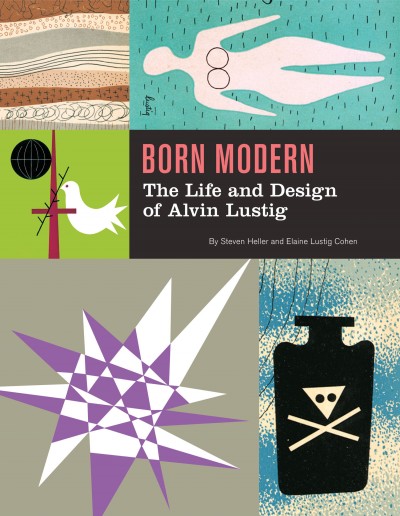 Past and Present — An excerpt from Born Modern: The Life and Design of Alvin Lustig by Steve Heller and Elaine Lustig Cohen at Design Observer*:
Lustig’s designs fluidly shift from past to present. For his early “experimental” work he built upon an armature of old technologies… and techniques…, which evolved through new technologies… into unprecedented styles… Toward the end of his life, his typography turned into a playful amalgam of vintage letters composed in contemporary layouts with vibrant colors. In “Personal Notes,” he wrote, “As we become more mature we will learn to master the interplay between past and present and not be so self-conscious of our rejection or acceptance of tradition. We will not make the mistake that both rigid modernists and conservatives make, of confusing the quality of form with the specific forms themselves.”
The Authentic — Chuck Klosterman, author most recently of Eating the Dinosaur, profiles Jonathan F., author of Freedom, for GQ Magazine:
It’s a present-day problem: There’s just no escaping the larger, omnipresent puzzle of “reality.” Even when people read fiction, they want to know what’s real. But this, it seems, is not Franzen’s concern. He disintegrates the issue with one sentence.
“Here’s the thing about inauthentic people,” he says on the train, speaking in the abstract. “Inauthentic people are obsessed with authenticity.”
Telling Stories — Nicholas Carr, author of The Shallows, on interactive storytelling:
The ability to write communally and interactively with computers is nothing new… Digital tools for collaborative writing date back twenty or thirty years. And yet interactive storytelling has never taken off. The hypertext novel in particular turned out to be a total flop. When we read stories, we still read ones written by authors. The reason for the failure of interactive storytelling has nothing to do with technology and everything to do with stories.
Footnotes — Part one of a long interview with journalist and cartoonist Joe Sacco, author most recently of the remarkable Footnotes in Gaza, at Art Threat (via Drawn):
[T]he biggest influence on me journalistically speaking has been George Orwell. I don’t know if you’re familiar with the book Road to Wigan Pier, but Orwell spent time in the industrial areas of Britain during the depression and took a room with a miner, lived with miners. He went down into the mine shaft with the miners. His ability to go to these places and really look at things from a ground level, that was impressive to me. And for other reasons too: because he was so dedicated to his work, and he felt that his work was sort of bigger than himself as a human being. I appreciated that dedication.
Part two will run on Monday apparently…
And finally… Superhero WikiLeaks:
 (Thanks Shawn)
*Born Modern is published by Chronicle Books and is distributed in Canada by my employer Raincoast Books.
Comments closed Little Nemo meets David Lynch — Mark Medley interviews Charles Burns, author of Black Hole and X’ed Out , for The National Post:
Whereas Black Hole, which takes place in the early 1970s, examines the dread and confusion of adolescence using the tropes of a horror film, X’ed Out, which is set in the late 1970s at the height of punk music, is an exploration of young adulthood and the anger, uncertainty and experimentation that comes with aging.
“I definitely started out wanting to do my punk story,” says Burns, 55. “As typically happens, you start with one idea and it spreads.”
A House Full of Books — The LA Times book critic David L. Ulin on the gift of books:
We have a rule in our house: My wife and I will always pony up for books. It’s not even a subject of discussion — if either of our kids wants a book, we will buy it, no questions asked. This is equally true of the books we have at home, which are equally available to everyone, regardless of subject matter or degree of difficulty. Whatever else they are, after all, books are gifts (for the mind, the eye, the hand), which makes it downright uncharitable to deny them to anyone.
This, I should say, is how I was raised too, in a house full of books, by parents who put a premium on the written word. I was allowed to pick up everything — and often did. When I was in third grade, I checked out “War and Peace” from the school library (I was looking for the longest book in the world), and although I never actually opened it, I remain thrilled by the idea that no one told me not to try.
Don’t Know What They’re Missing — The Economist profiles type designer Matthew Carter:
Mr Carter doesn’t own an iPad, Kindle, or other reading device, as he is waiting for them to mature. (He does own an iPhone.) He frets that, as things stand, reading devices and programs homogenise all the tangible aspects of a book, like size or shape, as well as font. They are also poor at hyphenation and justification: breaking words at lexically appropriate locations, and varying the spacing between letters and between words. This may sound recondite but it is a visual imprint of principles established over the entire written history of a language. “Maybe people who grow up reading online, where every book is identical, don’t know what they’re missing.”
On a sort of related note… Mashable talks to designer Susan Kare about her icon designs for the original Apple Macs.
And finally (as we’re talking about typography)…

Jean-Luc — A free display typeface in two styles designed by Atelier Carvalho Bernau to celebrate Jean-Luc Godard’s 80th birthday.
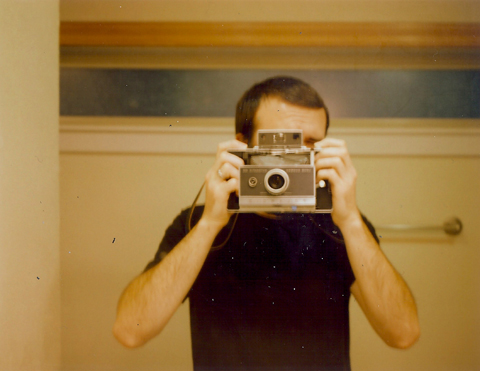 Sometimes it can take me a little while to feature a designer on The Casual Optimist. Such is the case with Oregon-based book designer Jason Gabbert.
I was impressed with Jason’s work with Charles Brock and — at that time — Nate Salciccioli (interviewed here) back when Faceout Studio was still known as the DesignWorks Group. But neither the time or the topics ever seemed to be completely right. Then, earlier this year, Jason announced he was branching out on his own and going freelance. What better excuse could there be for an Q & A?
Jason and I corresponded by email. I think it was worth the wait…
How did you get into book design?
I was first introduced to book design my senior year of high-school. My family has been involved with publishing since I can remember and that led to me receiving an internship with a publisher in town. From that internship I was brought on as an intern to the brilliant Faceout Studio, which specializes in book cover design. The internship ended up turning into a full time design position. And now I’m doing my own thing.
Why did you decide to go freelance?
After working at Faceout Studio several years I began to realize that my passions were driving me to going freelance for myself. Different people work well in different environments and I wanted to try a new one out.
Was it a difficult decision?
The decision was a difficult one to make. A good beer and Jedi Knights helped with that though! The economy was screaming at me to stay where I was at, while my passions were screaming the opposite. In the end, my family and I (through stressful nights, prayer, and the counsel of those we trust) decided that this would be the best decision for me to establish my own personal creative integrity.
Could you describe your design process?
I think my process is more like a choose your own adventure book than a guide. But, broadly speaking, I like to gather as much information as possible on what I am designing, then I try and think of the simplest and most striking way to communicate the content’s key idea or ideas. After that I start doing random things (image searching, font searching, looking at different inspirations, etc…) hoping I’ll find a good way to showcase that key idea.
What are your favourite books to work on?
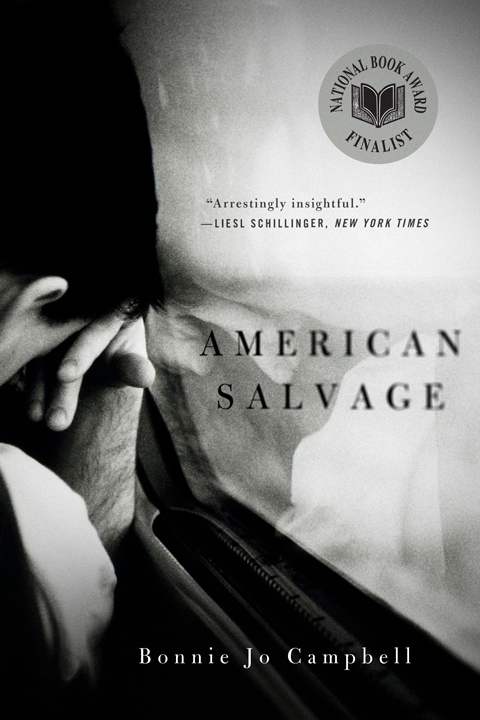
That’s a hard one. Off the top of my head, my favorite books are probably the more academic. Books with deep content that is just begging to be simplified to a cover.
What are the most challenging?
The most challenging books for me are often those that have been written a hundred different ways by a hundred different authors (though I am sure authors have their reasons for reintroducing these ideas). It is very difficult to keep coming up with new solutions for old ideas… but in the end, we are problem solvers… and avoiding cliché is one of the greatest challenges of all.
Do you have any recent favourites?
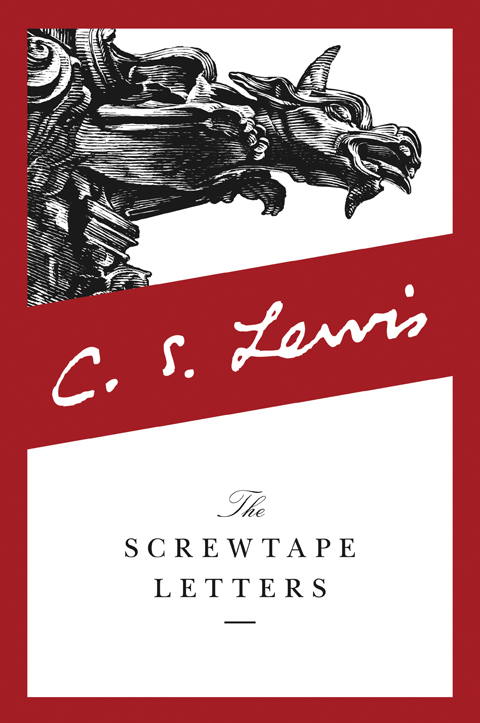
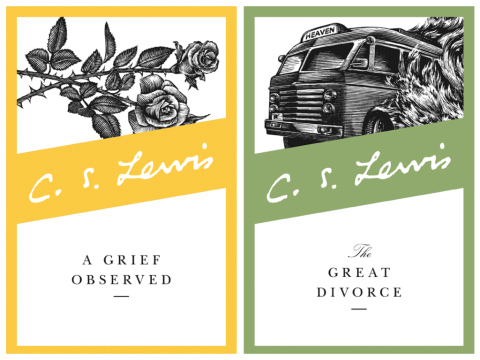
Of my own? That’s tough. I think one of my most recent favorites was the C.S. Lewis series I was able to work on. That was a dream project, and I was happy to be involved. In the end I wasn’t able to direct the illustrations themselves, but simply being able to come out with an effective format to communicate Lewis’s academic side was a privilege. I also have several academic books I’ve enjoyed working on.
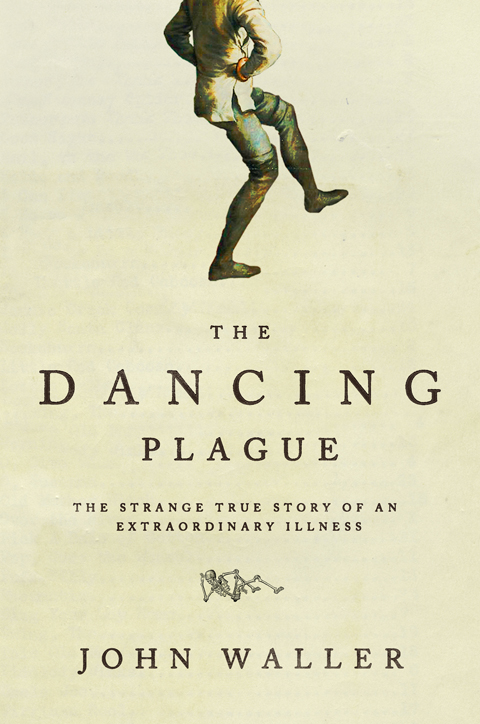
Do you discern any current trends in American book cover design?
I’m sure there are trends flying by all the time. The beautiful thing about book cover design is that there are so many designers out there with so many different ways to solve a problem. I also think that trends that exist are changing faster all the time (though you would have to talk to a cover design veteran to know for sure). The cover design industry is growing its online presence, we see new things and change our approaches all the time.
Do you think that the Pacific Northwest has different design sensibility from New York and the East coast?
I’m sure it does, though I can’t recall any differences off the top of my head. I think I pull my inspiration from many similar sources as the East coast does. I don’t get as many inspirations in person, but I see many of the same things. I don’t go putting mountains, trees, and fish on every design I make… or do I…?
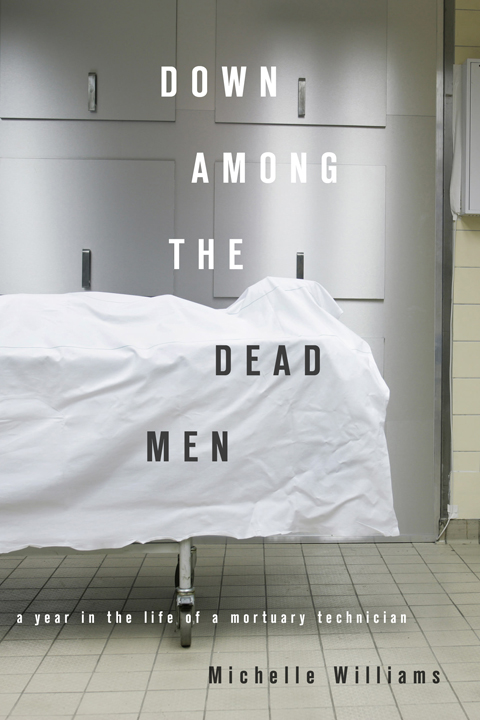
Where do you look for inspiration, and who are some of your design heroes?
I live on the internet. Blogs and online portfolios are my friend. My design heroes vary and are many. During this freelance transition I have had great encouragement from Henry Sene Yee and Peter Mendelsund… designers I have great respect for. The list is much longer than those two though.
Who else do you think is doing interesting work right now?
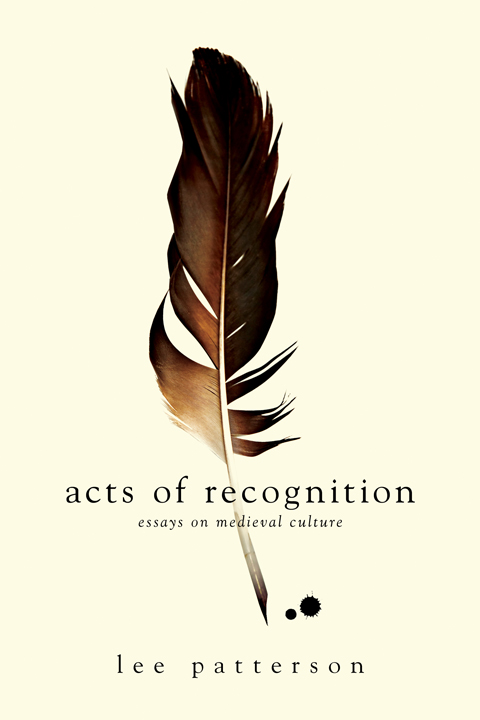
So many! I’ve been impressed with how many designers are creating fresh and intelligent works. Specifically, I’d probably want to tip my hat to the University of Chicago Press, they have been doing a ton of brilliant work.
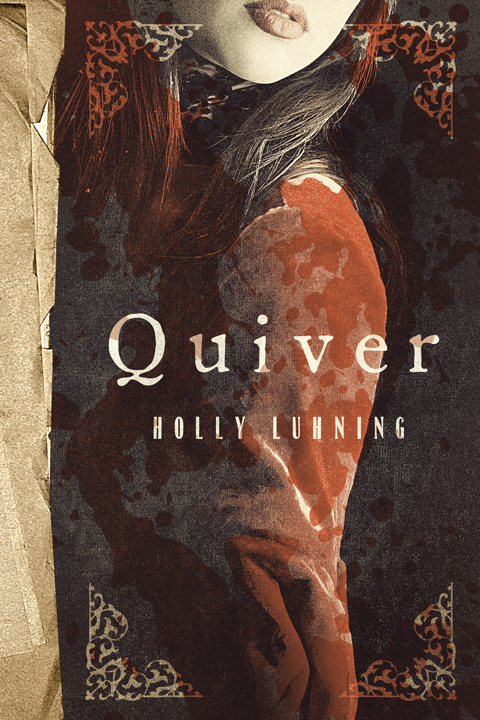
What does the future hold for book cover design?
Change. Who knows what changes… but things will always change. We should always be seeing how we ourselves can also change to meet new challenges. I believe people will always read and books will always need to be identified by some graphic element.
Thanks Jason!
5 CommentsStefan Sagmeister outlines the creative process behind his short film projects at 99%:
(via Brain Pickings)
1 Comment Limits and Boundaries — Peter Mendelsund, associate art director at Knopf, discusses his cover design for Jo Nesbø’s The Snowman with The New Yorker’s ‘The Book Bench’:
[O]ften my favorite jackets are the ones done after repeated rounds of failure and rejection. There’s something to be said for the desperation that rejection engenders in me. Sometimes, when the process feels most intractable and hopeless, a kind of last-ditch clarity appears. That being said, it’s also nice when you get it on the first stab.
And on the subject of super-talented book designers… A short Q &A with Coralie Bickford-Smith, Penguin senior cover designer, at 10 Answers.
I, Reader — Alexander Chee on e-books and life spent reading for The Morning News:
Many ponderables remain regarding the e-book. At a personal level, I am someone who has read books in poor light for decades without hurting my vision (despite what my mother claimed), and I’m keeping, well, an eye on that—the iPad gives me headaches in ways reading on paper never did. As a writer and former bookseller, I understand the e-book’s imperfections and limits, and monitor the arguments that it will end publishing or save it, and potentially kill bookstores, which would kill something in me, if it were to happen. But I also believe that the book as we know it was only a delivery system, and that much of what I love about books, and about the novel in particular, exists no matter the format. I’ve lately been against what I see as the useless, overly expensive hardcover, and I admit I enjoy the e-book pricing over hardcover pricing. Still, I’ll never replace the books on those shelves, and there’ll always be books I want only as books, not as e-books, like the new Chris Ware, for example, which would be pointless on an e-reader. This really is just a way for me to have more.
Rage Against the Machine — Onnesha Roychoudhuri’s long and much talked about article on Amazon for the Boston Review:
What happens when an industry concerned with the production of culture is beholden to a company with the sole goal of underselling competitors?…
The conceit is that that $9.99 price tag is what the market demands. But in this case Amazon is the market, having—with no input from its suppliers—already dictated the price and preempted the standard fluctuations that competition and improved efficiency impose on prices…
Cheap books are easy on our wallets, but behind the scenes publishers large and small have been deeply undercut by the rise of large retailers and predatory pricing schemes. Unless publishers push back, Amazon will take the logic of the chains to its conclusion. Then publishers and readers will finally know what happens when you sell a book like it’s a can of soup.
 Talking About My Generation — The LA Times’ David L. Ulin on Gary Trudeau’s 40: A Doonesbury Retrospective:
[T]he trick, the secret of “Doonesbury,” that, in its topicality, its ongoing dailiness, it is really about something more profound. Trudeau highlights that in his introduction: “It’s not about Watergate,” he writes of the collection, “gas lines, cardigans, Reaganomics, a thousand points of light, Monica, New Orleans, or even Dubya.” No, indeed, although such elements do show up here, more important are the people, the dance of generations, their humanity. This is where “Doonesbury” is at its most compelling…

Andrew Kuo, who creates off-beat music infographics for The New York Times, talks about his new book of personal work, What Me Worry (published by The Standard), at Interview Magazine (thx PMac!).
2 CommentsMark Adams, Managing Director of Vitsœ, discusses Dieter Ram’s 10 principles of good design and the elegant 606 Universal Shelving System with Cool Hunting:
And for those of you who just need to see a little more of the 606 Universal Shelving System (and who doesn’t?) here is a short film of it in action:
(via The Fox is Black)
1 Comment