Skip to content

The Casual Optimist Posts

Hitchcock and the History of Movie Trailers

If you are still stewing over last night’s lacklustre Oscars (or even if your not), take a listen to Terry O’Reilly’s entertaining history of movie trailers for The Age of Persuasion. He kicks it off with this genius trailer for Alfred Hitchcock’s The Birds:

And, for it’s worth, movie trailers were originally created to get people OUT of theatres, not into them. Brilliant.

Listen to The Age of Persuasion podcast:

CBC RADIO: AOP GOES TO THE MOVIES

Comments closed

Something for the Weekend

Luc Sante, author of Low Life: Lures and Snares of Old New York, has posted an amazing selection of vintage French photographic noir book covers at John Gall’s blog Spine Out.

On the Defensive — Sam Lipsyte, author of The Ask, on teaching creative writing in The Financial Times:

When you teach creative writing, you are already on the defensive. People love to poke you in the chest and cry, “But you can’t teach writing!” This is precisely what I think about automobile driving but I let them rant while I rub the sore part where they poked me. I don’t know why people get so worked up about this subject. Nobody has asked them to teach creative writing or even to learn it. Apprenticeship, the sharing of history and technique, has always been a central feature of art-making. Yet people cling to a romantic idea of the self-made genius toiling away in a garret or napping undisturbed in a sleep module.

Books on Wheels — A really lovely article about bookmobiles from the Smithsonian Magazine:

Bookmobiles, the man said, had been a fundamental inspiration while growing up in rural Mississippi in the mid-1960s. The public library had been closed to blacks—but the bookmobile stopped right on his street, a portal into the world of literature.

The gentleman was W. Ralph Eubanks: today an acclaimed author, and Director of Publishing for the Library of Congress… “The librarians did not care that I was barefoot, and wearing a pair of raggedy shorts. All they cared about was that I wanted to read—and to help me find something I would enjoy reading.”

Eubanks’ story is just one example of the pivotal role bookmobiles have played in literary culture, and individual lives, for more than 150 years.

Strides at The Strand — Nancy Bass Wyden, co-owner of The Strand bookstore in New York, interviewed in The Daily Beast:

We have taken strides to grow with our customers and listen to their needs. When customers started requesting New York Times bestsellers, we started carrying new books and featuring them on tables in the front of the store; when customers started talking about the Internet, we got online; when Amazon and B&N.com became “competitors,” we partnered with them.

And finally…

The Trial — Judith Butler in the LRB on the implications of the ongoing and complex legal battle in Tel Aviv over several boxes of Kafka’s original writings:

Had the works been destroyed, perhaps the ghosts would not be fed – though Kafka could not have anticipated how limitlessly parasitic the forces of nationalism and profit would be, even as he knew those spectral forces were waiting.

Comments closed

Midweek Miscellany

The reluctant Daniel Clowes has a website. What the hell?

The Day The Movies Died — Mark Harris, author of the fantastic Pictures at the Revolution, on Hollywood blockbusters and the death of the great American movie. A really good read:

Which brings us to the embarrassing part. Blaming the studios for everything lets another culprit off too easily: us. We can complain until we’re hoarse that Hollywood abandoned us by ceasing to make the kinds of movies we want to see, but it’s just as true that we abandoned Hollywood. Studios make movies for people who go to the movies, and the fact is, we don’t go anymore—and by we, I mean the complaining class, of which, if you’ve read this far, you are absolutely a member. We stay home, and we do it for countless reasons… The urgency of seeing movies the way they’re presumably intended to be seen has given way to the primacy of privacy and the security of knowing that there’s really almost no risk of missing a movie you want to see and never having another opportunity to see it. Put simply, we’d rather stay home, and movies are made for people who’d rather go out.

You Can’t Learn Taste — A profile of Richard Russell, boss of London-based independent record label XL Recordings,  in The Guardian:

This, after all, is a label that is thriving in an industry that is supposed to be dying.

“It’s not dying . . . it’s changing,” says Russell. “But then it always has been, as is the whole world. I just don’t think about the future at all. It’s not my responsibility.”

Really? He doesn’t have a strategy?

“Yeah – put good records out. That’s it. I’m sure there are people thinking about stuff like copyright and downloading, but . . . you don’t want an author to be thinking about Kindles and shit like that, do you? I mean, we do our best, but we definitely don’t offer any solutions for the music industry.”

And there’s the problem. You can’t learn taste.

Also in The Guardian, Barry Miles, author of London Calling: A Countercultural History of London Since 1945, chooses his top 10 books about London’s counterculture.

And finally…

Alan Arkin’s video for his new book, An Improvised Life, published next month by Da Capo:

Nice.

(via Jacket Copy)

Comments closed

What is Graphic Design?

To explain what graphic design is, the UK’s Design Council talked to well known British graphic designers, including Neville Brody, about their work for a series of short videos:

The other films in the series can be found here.

(via FormFiftyFive)

Comments closed

Edward Gorey

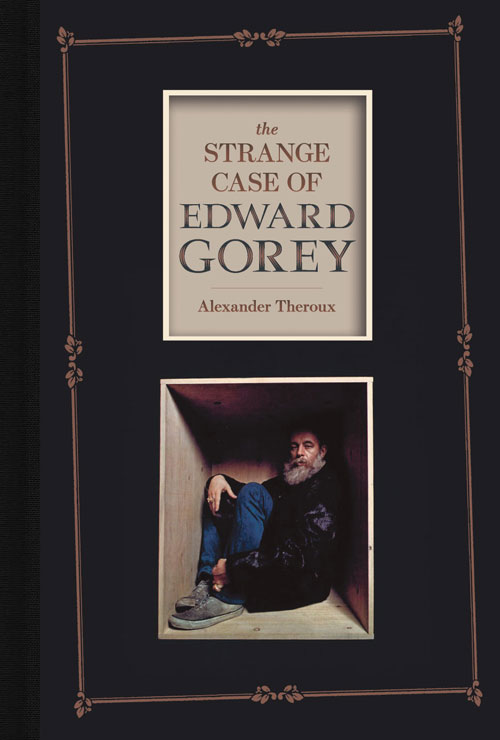
Alexander Theroux, author of The Strange Case of Edward Gorey (recently revised and republished by Fantagraphics), talks to NPR’s Weekend Edition Sunday about the writer and illustrator Edward Gorey, who would have been 86 years old today:

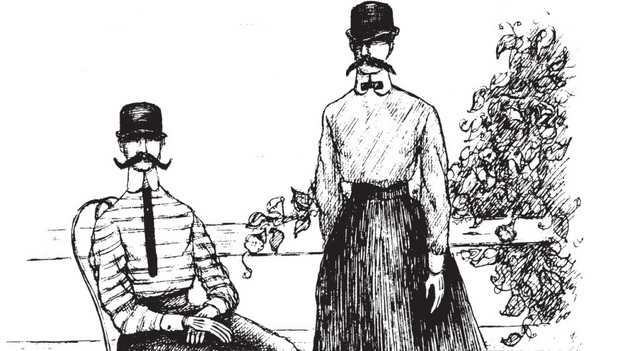
Violence is the essential Gorey ingredient. It is used in his books with such off-hand wit and inevitability that, having become his signature, if it were suddenly missing, you would begin to worry or at least feel you are being fobbed off by work not of the master’s hand.

NPR THE WEEKEND EDITION: THE LIFE OF EDWARD GOREY

Theroux also talks about his peculiar friend with Tom Spurgeon at The Comics Reporter:

I was telling someone the other day, there a division in the 20s and post WWI era, especially growing up in England. I think Gorey inherited this. There were the athletes, the muscular types — on one side of the tennis court, as it were. Then there were these kind of fey, bright young things on the other side of the tennis court. There has always been a kind of mocking, derisive look that they took regarding each other. I think Gorey grew out of that kind of gay interest, that fascination with ’20s movies, ’20s styles; there’s a tradition, I think. He was unhappy in the military and when he was at Harvard he was always in an artsy world. He went to the ballet every night in New York. He was almost a caricature of that Ronald Firbank type of character. He was very fey. He didn’t hide any of that.

Comments closed

Penguin Great Food | Coralie Bickford-Smith

The Creative Review has an early look at three of the covers for Penguin’s Great Food paperback series to be released in April.

Designed by the wonderful Coralie Bickford-Smith, each cover draws on a decorative ceramic style relevant to the period of the writing.

Meanwhile, in new article for Fast Company Coralie talks about the inspiration behind her book covers:

“I want these books to be cherished like the literature inside,” says Bickford-Smith of her obsessive attention to detail. “If something is well considered, it will entice. People want to explore it, feel it. That design shines through and connects.”

And, if you missed it, my Q & A with Coralie from 2009 is here.

2 Comments

Something for the Weekend

Punching Through the Din — designer Jim Northover on the exhibition of Saul Bass movie posters at Kemistry in London.

This is the End — Sarah Weinman on chronicling the end of the chain bookstore era:

But maybe what really happened was as simple as this: chain bookstores were never supposed to last as long as they did, and have reached their natural end point after twenty years. Publishing in general has enough struggle with scale, either being too small and prone to great risk and failure, or too big and beholden to larger entities who want greater and greater annual profits. Whatever possessed us to think bookstores could operate this way? Why is the art of bookselling supposed to be conflagrated with abundance, with excess and with millions of square feet?

And on a somewhat related note…

The Cost of Keeping Authors Alive –Boyd Tonkin for The Independent (via MobyLives):

Dirt-cheap e-books benefit the very rich – and the very dead. They might also help new authors to find a foothold and win an audience – although, on that logic, newcomers should think about showcasing their work for nothing. Many do. But the almost-free digital novel hammers another nail into the coffin of a long-term literary career. Who cares? Readers should, if they cherish full-time authors who craft not safe genre pieces but distinctive book after distinctive book that build into a unique body of work.

(see also: Margaret Atwood at TOC)

Kick Ass Annie — An interview with Anne Koyama, the founder and operator of Toronto-based Koyama Press, at Design Feaster:

I look at all kinds of artwork, films, architecture, photography and typography. I subscribe to a lot of art/artist’s blogs. I like to walk around cities and try to really see the details of things around me (which is more difficult than you may think for someone possessed of a short attention span). I carry a little point-and-shoot camera often. Of course, all of the artists I work with inspire me and I seem to find a few artists each week that I’d like to work with if I had the funds.

And lastly…

Meet the Classics — A Brazilian ad campaign to promote Penguin Classic Books (via This Isn’t Happiness).

1 Comment

Margaret Atwood : The Publishing Pie

Author Margaret Atwood used to come by the bookstore where I worked in Toronto. It was always slightly surreal selling books to her, but certainly no more so than watching her on YouTube (YouTube!) deliver a great keynote speech at O’Reilly’s recent TOC Conference:

Atwood expands on her talk in this interview with Gretchen Giles:

3 Comments

Midweek Miscellany

Risky Business — Cartoonist Adrian Tomine talks about his new book Scenes From An Impending Marriage, which originally started life as a mini-comic for his wedding guests, with More Intelligent Life:

I probably first started thinking about publishing it when a copy appeared on eBay. I assumed that since it was only given to close friends and family, that would never happen, but I was wrong. And like I said, since I was slowly adding pages to the book, I eventually found myself with 50 or 60 pages worth of material, and I just proposed the idea to my publisher. If he had declined, I would’ve happily filed it away…

AND Adrian and his wife Sarah Brennan talk about the new book with NPR’s All Things Considered.

(For the record, Scenes From An Impending Marriage is distributed in Canada by my employer Raincoast Books).

Sunny-Side — Jonathan Lethem talks to Carolyn Kellogg at The LA Times about decamping from Brooklyn to Southern California. There is more of their conversation at TimesJacket Copy blog:

I’ve only probably reviewed seven or eight novels. It’s really problematic. I’m gregarious with writers; I like novelists. I don’t want my sympathies to cause me to write a review that’s in any kind of bad faith, nor do I want to destroy some pleasant, even if it’s slight, collegial feeling. I try to review the dead guy — Bolaño — or the biography of the dead guy, because I like being in the conversation. Sometimes I look at what Updike did at the New Yorker. I don’t know if many people have the temperament, let alone the incredible set of skills he brought to that, the versatility, the endless curiosity, to identify with so many different kinds of novelists who were not doing what he does.

The Price of Zero — David Carr on media companies and unpaid contributors for The New York Times:

For those of us who make a living typing, it’s all very scary, of course. It’s less about the diminution of authority and expertise, although there is that, and more about the growing perception that content is a commodity, and one that can be had for the price of zero… For the media, this is a Tom Sawyer moment. “Does a boy get a chance to whitewash a fence every day?” he says to his friends, and sure enough, they are soon lined up for the privilege of doing his chores. That’s a bit like how social networks get built. (Just imagine if Tom had also schooled them in the networking opportunities of the user-generated endeavor: “You’re not just painting a fence. You’re building an audience around your personal brand.”)

And finally…

In the Age of Screens — A serialized essay about contemporary book discovery and reading by Chad W. Post, publisher of Open Letter Books, editor of  the Three Percent blog:

[W]e’ve stripped away all the institutions that supported the ways in which most outsiders found their literature, leaving texts to float untethered in the ether, there to be found… There is no serendipity… And yet, for the long-term benefit of society, we need people to have—and be exposed to— ideas from the out-of-­nowhere.

The complete essay is available as a PDF.

we’ve
stripped
away
all
the
institutions
that
supported
the
ways
in
which
most
outsiders
found
their
literature,
leaving
texts
to
float
untethered
in
the
ether,
there
to
be
found
.
.
.
Comments closed

James Gallager | Cutting Edges

Here’s an interview with the New York-based artist James Gallagher, curator of an exhibition of contemporary collage called Cutters (currently on display at the West Cork Arts Centre in Ireland, February 7th-March 12th) and co-editor of the book  Cutting Edges published by Gestalten:

The book include collages by John Gall, Art Director at Vintage and Anchor Books, who actually mentioned the work of James Gallagher in our recent Q & A.

1 Comment

Edmund de Waal | Writers and Company

The Hare with Amber Eyes: A Hidden Inheritance, Edmund de Waal’s memoir about his extraordinary Jewish family and an inherited collection of ornamental Japanese carvings called netsuke, was on many of last year’s “best-of” lists and is high on my current ‘to-read’ list. The author talks about the book with Eleanor Wachtel on CBC Radio’s Writers & Company:

CBC Radio Writer’s & Co: Edmund de Waal Mp3

Edmund de Waal, who is also a successful ceramicist, is also profiled in The Guardian:

De Waal and his netsuke have been much discussed over the past seven or eight months, but even now he is “completely taken aback” by the success of a book which is an “odd matrix of personal obsessions”. (We talk in the upstairs room of his south London studio – downstairs are three kilns, his wheel and a bag of clay, ready for him to get to work in the afternoon.) Yet that it is so personal and springs from these obsessions (Japan, objects, memory), drawing on his expertise as a potter, is surely a clue to its enormous appeal. How things are made and handled, he writes, and what happens to them “has been central to my life for more than 30 years”.

Comments closed

Something for the Weekend

Steven Heller, editor of I Heart Design and author/editor of countless other books about design, at 10 Answers.

And Steven Heller is one of the designers featured in BBC Radio documentary I Heart Milton Glaser about the iconic I (Heart) NY logo and the designer who created it (go listen now because it’s only available for a few more days).

Print and the City –a fascinating look at whether movable type printing presses were the drivers of economic growth in cities by Jeremiah Dittmar (via The Browser):

[C]ities in which printing presses were established 1450-1500 had no prior growth advantage, but subsequently grew far faster than similar cities without printing presses… Cities that adopted print media benefitted from positive spillovers in human capital accumulation and technological change broadly defined. These spillovers exerted an upward pressure on the returns to labour, made cities culturally dynamic, and attracted migrants.

In the pre-industrial era, commerce was a more important source of urban wealth and income than tradable industrial production. Print media played a key role in the development of skills that were valuable to merchants. Following the invention printing, European presses produced a stream of math textbooks used by students preparing for careers in business.

The Savage Marketplace — A really interesting and thoughtful survey of the current state of book editing in the UK by Alex Clark , with contributions from Diana Athill, Blake Morrison, Jeannette Winterson and others, for The Guardian:

[W]hat saps the spirit are the manuscripts that leave you with the question: why did no one sit down with the writer and point out where this isn’t working? Why didn’t a red pen mark the hackneyed phrase, or the stock character, or the creaky dialogue? And, sometimes, why didn’t someone deliver the unfortunate verdict: this simply isn’t ready yet, and may never be?

And finally, if you’re in London… Kemistry Gallery have an exhibition of film posters by Saul Bass from the BFI archive, February 17th to March 17th:

SOME GOOD NEWS FROM THE WORLD OF BOOKS.

Comments closed