Skip to content

The Casual Optimist Posts

Wim Crouwel | Dutch Profiles

Designer Wim Crouwel talks about his career, his use of the grid and the creation of the New Alphabet in this interesting 10-minute documentary for Dutch Profiles:

Dutch Profiles is a series of short documentaries about architects, graphic, product and fashion designers working in the Netherlands. The series is new to me, but past films that caught my eye include profiles of architect Rem Koolhaas, graphic designer Irma Boom, and cartoonist Joost Swarte.

(via iloveboeken)

Comments closed

Making Businessweek

Here’s a neat (if slightly irreverent) time-lapse video showing Businessweek magazine being put together over the course of a week:

And Bonus points to the @bizweeksgraphics team for using French Disko by Stereolab as the soundtrack.

(via Kottke)

Comments closed

Edward St Aubyn | Open Book

Author Edward St. Aubyn talks to Mariella Frostrup about his brilliant, funny, and very, very harrowing semi-autobiographical novels for BBC Radio’s Open Book:

BBC RADIO OPEN BOOK: Edward St. Aubyn

At Last, Edward St. Aubyn’s new novel, and the conclusion of the Melrose series, is being published next month.

Comments closed

Midweek Miscellany

Designer Catherine Casalino discusses her cover design for Darren Shan’s Procession of the Dead at Faceout Books.

50 / 50 — An interesting Design Observer piece by Ernest Beck on the controversy around AIGA’s 50 Books/50 Covers and the changing roles of book designers:

“The design aspect hasn’t changed, but it will,” notes [Chris] Sergio, who like other book designers believes that books and covers will endure in both print and electronic versions. “Digital versus print is a zero-sum argument,” he says. “These roads are not mutually exclusive. If anything, we want to see more competition and more critical exploration [of book design]. That’s why it would have been a shame to blend it all down into one big thing.”

Paula Scher, a partner at Pentagram Design, agrees that book design — in whatever form — is important because people still relate to visual imagery. “It’s the emotional connection,” she says. “People still remember record covers although nobody has records anymore.” Book jackets matter, whether they are on a piece of paper or in an electronic version, she continues “because when none of it matters because it’s digital or nobody does it or it doesn’t save the planet, then we murder our own craft and give excuses to be mediocre and lower standards bit by bit.”

Indelible Replicas — Author Philip Ball (Unnatural: The Heretical Idea of Making People) reviews The Information by James Gleick for The Observer:

Robert Burton, the Oxford anatomist of melancholy, confessed in 1621 that he was drowning in books, pamphlets, news and opinions. All the twittering and tweeting today, the blogs and wikis and apparent determination to archive even the most ephemeral and trivial thought has, as James Gleick observes in this magisterial survey, something of the Borgesian about it. Nothing is forgotten; the world imprints itself on the informatosphere at a scale approaching 1:1, each moment of reality creating an indelible replica.

Also in The Observer

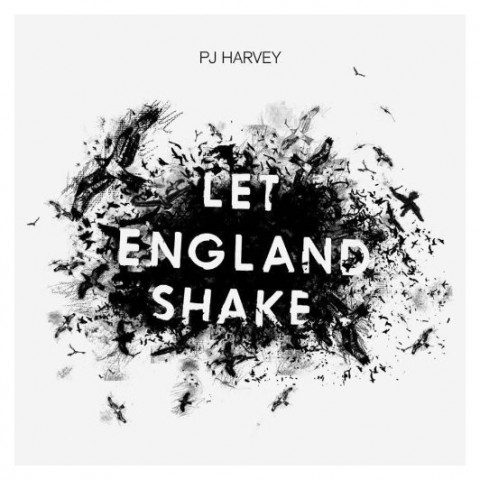
P. J. Harvey on writing and her new album Let England Shake (via A Piece of Monologue):

“I certainly feel like I’m getting somewhere that I wanted to get to as a writer of words. I wanted to get better, I wanted to be more coherent, I wanted there to be a greater strength and depth emotionally, and all these things require work – to hone something, to get rid of any superfluous language. I’m inspired by the other great writers I go back to and read again and again, and think how did they do that?”

Such as? She indicates a volume of Harold Pinter’s poetry that she has brought with her. “Pinter leaves me speechless. Just unbelievable. A poem like ‘American Football’ or ‘The Disappeared’. TS Eliot of course. Ted Hughes. WB Yeats. James Joyce.” She leans forward, freshly excited. “Just that feeling of reading something profound and having your breath quite literally taken away by the end of a piece. I’m reading John Burnside’s poems at the moment. Do you know his work? I’m getting that feeling – just reaching the end of every poem, going ‘Oh my God!'” She clutches her chest and laughs. “And all of these writers offer me a greater understanding of what it is to be alive, and that is such an incredible thing art can do for other people. It made me want to try and get close to this strange, mysterious thing that people can do with words.”

And finally…

The Local Grammar Nazi — Robert Lane Greene, author of You Are What You Speak, on the fluidity of language:

It’s certainly easier to know one set of rigid rules than to develop a fingertip-feel for the nuances of syntax, word choice and mechanics. This is why the book “Elements of Style” is such a hit. William Strunk and E.B. White’s canonised system for language use is short and sharply worded. Read, memorise and you need never think again… Readers are taught any number of things, such as when to use “that” instead of “which” and how one should never begin a sentence with “However, …”. But such guidelines should be understood as the authors’ preferences, not grammatical commandments.

Writing in English offers far more room for manoeuvre than some may realise… A lot of people don’t like this fluidity. Life is tricky in a world without rules. Fortunately, language does have rules, but they are more like bedrock principles than a detailed set of by-laws covering every do and don’t. A good usage dictionary should explain the principles, not simply command.

Comments closed

If You Haven’t Saved By Now… | Lauren Panepinto

Lauren Panepinto, Creative Director at Orbit, whose Making of a Book Cover video was such a hit last year, has made a new video about creating the graphic optical illusions she originally intended to use in the design of the Simon Morden’s Equations of Life trilogy:

The no less stunning final covers actually look like this:

Comments closed

Bricks | Stuart Bache

British designer Stuart Bache was art director on this lovely cover for the forthcoming novel Bricks by Leon Jenner. The epic cover illustration is by Jorn Kaspuhl, who also illustrated the book.

There is a really nice sense of something both classic and yet contemporary about this design, which seems appropriate for the book from what I can gather.  Stuart’s work has, of course, appeared on previously on The Casual Optimist, and you can read my short interview with him here.

Bricks itself is actually about a bricklayer who remembers a past life as a Druid at the time of the Roman invasion of Britain. It was — if I remember correctly — originally released by the author a few years ago as an online audio book. No doubt someone will correct if I am wrong.

Comments closed

Something for the Weekend

Visual Vocabulary — An interesting interview with book designer Peter Mendelsund at Czech Position:

I definitely take into account the author’s native culture, though whether I choose to adopt something stylistic from this culture depends on the vagaries of the particular project. There are times when one wants to accentuate the universal aspects of a writer’s work; and there are times when one wants to situate an author in a specific time and place… With Kafka, I would argue that his greatness lies in the universality of his ideas, that his writing transcends time and place… Conversely, with many other writers, nationality is at the core of their work — their great subject is place and contextual identity. They may write about Czech-ness, or English-ness, etc. These are the books where it makes the most sense to bring the local artistic tropes and visual cues to bear. For what it’s worth, I love delving into the visual vocabulary of different cultures.

The Casual Optimist interview with Peter is here, and you can read my 2-cents on his Kafka redesigns here.

The Polish Club50 Watts asks you to design the Polish edition of your favourite book. $400 is up for grabs.

Living by Dying — Ben Ehrenreich, author of The Suitors and Ether (forthcoming), on the death of the book in the new Los Angeles Review of Books:

For the record, my own loyalties are uncomplicated.  I adore few humans more than I love books.  I make no promises, but I do not expect to purchase a Kindle or a Nook or any of their offspring.  I hope to keep bringing home bound paper books until my shelves snap from their weight, until there is no room in my apartment for a bed or a couch or another human being, until the floorboards collapse and my eyes blur to dim.  But the book, bless it, is not a simple thing… [W]hat could it mean for the book to die?  Which sort of book?  And what variety of death?  What if the book had only ever lived by dying?

A World Made of Stories — James Gleick, author of The Information, on memes:

In the competition for space in our brains and in the culture, the effective combatants are the messages. The new, oblique, looping views of genes and memes have enriched us. They give us paradoxes to write on Möbius strips. “The human world is made of stories, not people,” writes the novelist David Mitchell. “The people the stories use to tell themselves are not to be blamed.” Margaret Atwood writes: “As with all knowledge, once you knew it, you couldn’t imagine how it was that you hadn’t known it before. Like stage magic, knowledge before you knew it took place before your very eyes, but you were looking elsewhere.” Nearing death, John Updike reflected on

A life poured into words—apparent waste intended to preserve the thing consumed.

Fred Dretske, a philosopher of mind and knowledge, wrote in 1981: “In the beginning there was information. The word came later.” He added this explanation: “The transition was achieved by the development of organisms with the capacity for selectively exploiting this information in order to survive and perpetuate their kind.” Now we might add, thanks to Dawkins, that the transition was achieved by the information itself, surviving and perpetuating its kind and selectively exploiting organisms.

Cull or be Culled — NPR’s Linda Holmes on how we are missing everything:

You used to have a limited number of reasonably practical choices presented to you, based on what bookstores carried, what your local newspaper reviewed, or what you heard on the radio, or what was taught in college by a particular English department. There was a huge amount of selection that took place above the consumer level. (And here, I don’t mean “consumer” in the crass sense of consumerism, but in the sense of one who devours, as you do a book or a film you love.)

Now, everything gets dropped into our laps, and there are really only two responses if you want to feel like you’re well-read, or well-versed in music, or whatever the case may be: culling and surrender.

And on a related note…

Lester Bangs’ Basement — Bill Wyman on collecting and scarcity at Slate:

Lester Bangs, the late, great early-rock critic, once said he dreamed of having a basement with every album ever released in it… [T]he Internet today is very much like [that]. In its vastness, cacophony, and inaccuracy, it’s also very reminiscent of Borges’ Library of Babel. Just as that library contained books made up of every possible combination of letters, in the corners of the Internet I’m concerned with here you can find similar chaos: The song “Let It Be” by the Beatles, sure, but also mislabeled as by the Stones, by the Kinks, by the Hollies, by the “Battles” … and also with, of course, those same labels attached to entirely different songs (like “Let It Bleed”).

Anyway, is it enough?

For some, the enjoyment of art or culture has fetishistic aspects. To them, being a fan is about something more than just experiencing the art. There will always be collectors, fixating on the physical objects, like the great LP jackets from the 1960s and 1970s… And there will always be people who can’t be happy unless they have something regular fans don’t. Indeed, a friend of Bangs’, long after he died, said to me that the unspoken corollary in Bangs’ mind to his fantasy was that no one else would have access to it.

Happy Easter.

Comments closed

Designing for Joy


CBC Radio’s Nora Young
interviews Ingrid Fetell, a designer, researcher, and writer, based in New York who focuses on the “aesthetics of joy” and the emotional relationships between people and things:

CBC RADIO SPARK: Ingrid Fetell, Designing for Joy

Comments closed

Midweek Miscellany

How Much Is It Worth? — Ivan Brunetti on teaching, and his book Cartooning: Philosophy and Practice, at The Comics Journal:

To me, art is not about talent, it’s about hard work. It’s about developing one’s intelligence, thoughtfulness, and sensitivity. To some degree, the potential for these things seems to vary, implying they are perhaps innate, but I think anything can be nurtured (or neglected). Something might not come easy, but it can be learned. It’s matter of will, desire, determination, and hard work. How much is it worth to you? The definition of what is considered “talent” or “skill” keeps changing. I say if one develops him or herself as a human being, then art can follow. If no adequate form exists, the artist will create a new one.

The Attention Age — More from Peter Osnos at The Atlantic, this time on book reviews:

The challenge for authors and publishers — as with so much else in our information and entertainment environment — is to catch the attention of the people at all these enterprises who choose among the cascade of books that arrive every day. I am reminded of hearing Esther Dyson observe over a decade ago that we no longer live in the information age, we live in the attention age. The notion that merit alone assures acclaim was never really valid, especially in non-fiction, but it is certainly not true today.

Getting Pregnant — Film critic Roger Ebert on being “well-read”:

At the end of the day, some authors will endure and most, including some very good ones, will not. Why do I think reading is important? It is such an effective medium between mind and mind. We think largely in words. A medium made only of words doesn’t impose the barrier of any other medium. It is naked and unprotected communication. That’s how you get pregnant. May you always be so.

Contempt — David Simon, creator of The Wire, interviewed by Bill Moyers for Guernica:

[T]he guys who are running newspapers over the last twenty or thirty years have to be singular in the manner in which they destroyed their own industry. It’s even more profound than Detroit in 1973 making Chevy Vegas and Pacers and Gremlins and believing that no self-respecting American would buy a Japanese car. Except it’s not analogous, in that a Nissan is a pretty good car and a Toyota is a pretty good car. The Internet, while it’s great for commentary and froth, doesn’t do very much first-generation reporting at all. The economic model can’t sustain that kind of reporting. They had contempt for their own product, these people… [F]or twenty years, they looked upon the copy as being the stuff that went around the ads. The ads were God. And then all of a sudden the ads were not there, and the copy they had contempt for. They had actually marginalized themselves.

And I love this response to being called “the angriest man in television”:

It doesn’t really mean much. The second-angriest guy is, you know, by a kidney-shaped pool in L.A. screaming into his cell phone because his DVD points aren’t enough. But I don’t mind being called that. I just don’t think it means anything. How can you have lived through the last ten years in American culture and not be? How can you not look at what happened on Wall Street, at this gamesmanship that was the mortgage bubble, that was just selling crap and calling it gold? Or watch a city school system suffer for twenty, twenty-five years? Isn’t anger the appropriate response? What is the appropriate response? Ennui? Alienation? Buying into the great-man theory of history—that if we only elect the right guy? This stuff is systemic. This is how an empire is eaten from within.

Comments closed

100 x 100: IBM Centennial Film

Moving chronologically from the oldest person to the youngest, 100 x 100 features one hundred people presenting the achievements of IBM recorded in the year they were born. The film gives a brief history of the company and features — as you might expect for the company that worked so closely with Paul Rand — some lovely typography:

Comments closed

On Being Wrong

“Wrongologist” Kathryn Schulz, author of Being Wrong: Adventures in the Margin of Error, makes the case for embracing our fallibility at TED:

Comments closed

Mad Women | The Age of Persuasion

Terry O’Reilly’s radio show Age of Persuasion is always a fascinating half-hour of social history regardless of whether you are interested in advertising or not.

In this recent episode, O’Reilly looks at the great women of the advertising world, including the first advertising woman ever, the woman who created the first images of wives as “Happy Homemakers”, the woman who revolutionized the retail business, and the female creative director who inspired the “I Love New York” campaign.


Comments closed