
With the release of MetaMaus later this fall, Art Spiegelman discusses comics and the original two volumes of Maus with Michael Silverblatt in an archive interview for Bookworm in 1992:
Comments closedBooks, Design and Culture

Photojournalist Don McCullin is internationally renowned for his images of conflict. But a new exhibition of his photographs at Tate Britain focuses on three other aspects of his work: his first foreign assignment in divided Berlin in 1961; documentary work on homelessness in East London in the late 60s, and landscape works, both urban, and rural from the 1970s to the present day.
In this short interview, McCullin talks about the exhibition and his sadness a being known only as a war photographer:

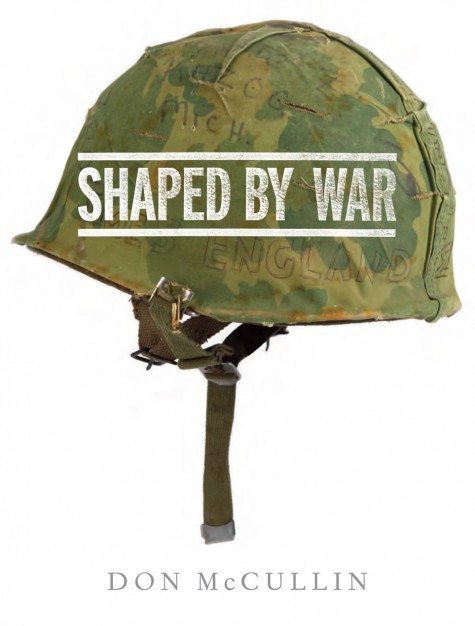
If (like me) you are not able to visit the exhibition, a retrospective of McCullin’s work is available from Jonathan Cape, while his photographs of social deprivation are collected in the 2007 book In England. A selection of his war photographs, shown at The Imperial War Museum last year, can be seen in the exhibition catalogue Shaped by War.
(via Simon Armstrong)
Comments closedSuperhybridity — Tom Payne reviews Retromania by Simon Reynolds for The New York Times:
It’s not so much the selling-out that saddens Reynolds. Rather, it’s our ready acceptance that the past is our only future: that after postmodernism, with its weary, overinformed view that there is nothing new to say, comes something called “superhybridity.” Superhybridity, a concept borrowed from an art magazine, exists because the Internet can bring whatever we want into our hard drives, so that we can sample it or mash it up: no culture, from any time or place, can be remote from us.
Anger — In light of the recent riots in Britain, Chris Arnot looks at the legacy of Alan Sillitoe (Saturday Night and Sunday Morning) with the author’s son David:
Something about the sudden switch from menace to charm, coupled with that jack-the-lad swagger, briefly brings to mind Arthur Seaton, the antihero of Saturday Night and Sunday Morning… Arthur had already shrugged off the collectivist values of the postwar years. He was “trying to screw the world … because it’s trying to screw me.”
“Currently my head is empty. I am on holiday.” — Wim Crouwel at Designers & Books.
The Weird Outsider — A long profile of Jared Lanier, author of You Are Not A Gadget, in the New Yorker:
Like an innovative painter who alternately courts and scorns the establishment, Lanier often seems torn between embracing and repudiating his newly influential status. As we drove, he mentioned, with some pride, that he had been “banned” from the TED conferences last year, after publishing an essay about the narcissistic nature of the event in a London magazine. (A spokesperson for TED said that Lanier is welcome at the conferences.) He purported to be similarly unimpressed by Davos, the economic conference, which he has attended “a billion times.” “At one point, I was in an elevator with Newt Gingrich and Hamid Karzai,” he said. “There are really only so many times you want to be in that situation.”
And finally…
Writer Chuck Klosterman interviews Bill James, inventor of sabermetrics — the “ideological engine” behind Moneyball, Michael Lewis’ book on baseball — and author of a new book Popular Crime: Reflections on the Celebration of Violence, for Grantland:
This line is fascinating if you’re interested in crime fiction:
The whole idea of Sherlock Holmes is dangerous because it encourages people to think that — if they’re intelligent enough — they could put all the pieces together in absolute terms. But the human mind is not sophisticated enough to do that. People are not that smart. It’s not that Sherlock Holmes would need to be twice as smart as the average person; he’d have to be a billion times as smart as the average person.
But this is just great:
Comments closedThere were so many terrible things done by kings and emperors and everyday normal people that are just incomprehensible today. The historian Suetonius writes about how Nero — beyond the many thousands of people he killed in his official duties— liked to sneak out of the palace at night and murder people in the streets, purely for entertainment. Now, whatever you may think of our recent presidents, it’s pretty safe to say they didn’t do that.

Designed by the brilliant Michael Salu, the cover for Diana Athill’s forthcoming collection of letters, Instead of a Book, features a stunning portrait of the author by acclaimed British photographer Rankin (co-founder of Dazed & Confused in case you were wondering).

To coincide with the release of the new book in October, Granta are also reissuing paperback editions of Athill’s books Stet, Yesterday Morning and Instead of a Letter with cover designs incorporating Rankin’s photographs.
I don’t think I have made any secret of my love of Stet, Athill’s book about her time as an editor at Andre Deutsch. But I have always been disappointed by the discouraging cover on the tatty copy on my bookshelf, and it makes me incredibly happy to finally see an edition that seems to capture something of Athill’s personality.

Athill’s writing is unflinching and it is remarkable to see that reflected in Rankin’s stark portraits. According to Michael, who art directed series and designed all the covers, “the idea was to not to shy away from age and experience, but to celebrate it and Diana’s distinct personality.” Certainly, it is hard not to be taken by the keenness of Athill’s eyes. One gets the sense she does not suffer fools gladly. There is something of a retired headmistress about her. But I love how in the photograph for Instead of a Letter, Rankin captures Athill’s thumb hooked under her necklace. The author doesn’t appear to be particularly aware that she’s doing it, but it is beautiful and poignant touch.

The type is set in Gill Sans. Of course.
Comments closed
I was reading about Clint Eastwood’s 1971 film Dirty Harry this week for a long, much overdue (now almost mythical) post I’m supposed to be writing, and so I have to share A. O. Scott’s video review of the movie for The New York Times:
Comments closed
Author and comics writer Grant Morrison talks about superheroes and his new book Supergods with NPR’s All Things Considered:
NPR ALL THINGS CONSIDERED: Grant Morrison Supergods
Comments closed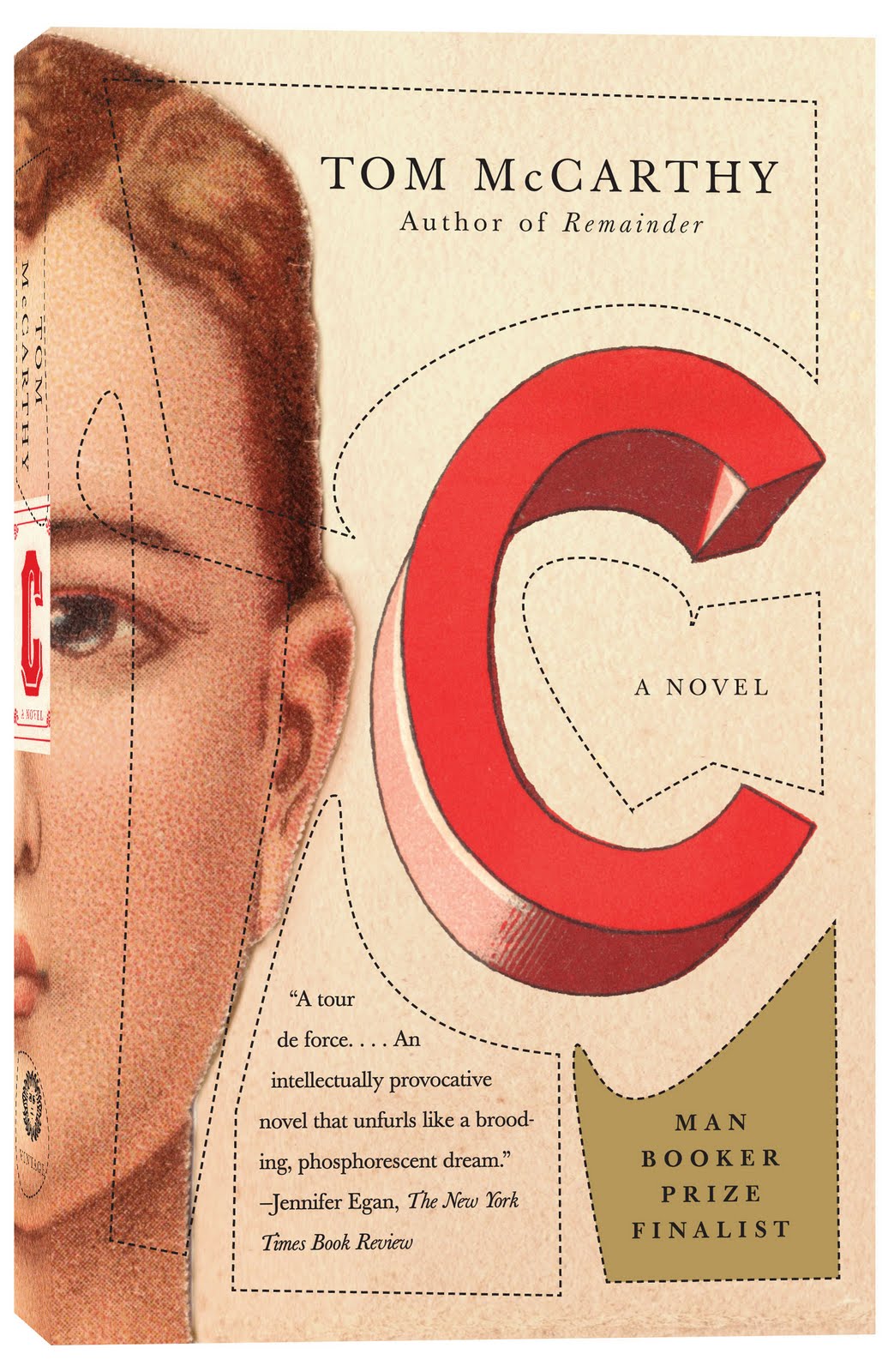 John Gall’s new cover for the paperback edition of C by Tom McCarthy. It can’t have been easy following this monster of cover.
NPR listeners pick their 100 favourite science fiction and fantasy books. On first glance, it looks like a diverse and wide-ranging selection.

Downloadable issues of De Stijl from 1917 to 1920. They’re in Dutch of course, but still! (via Coudal).
And finally…
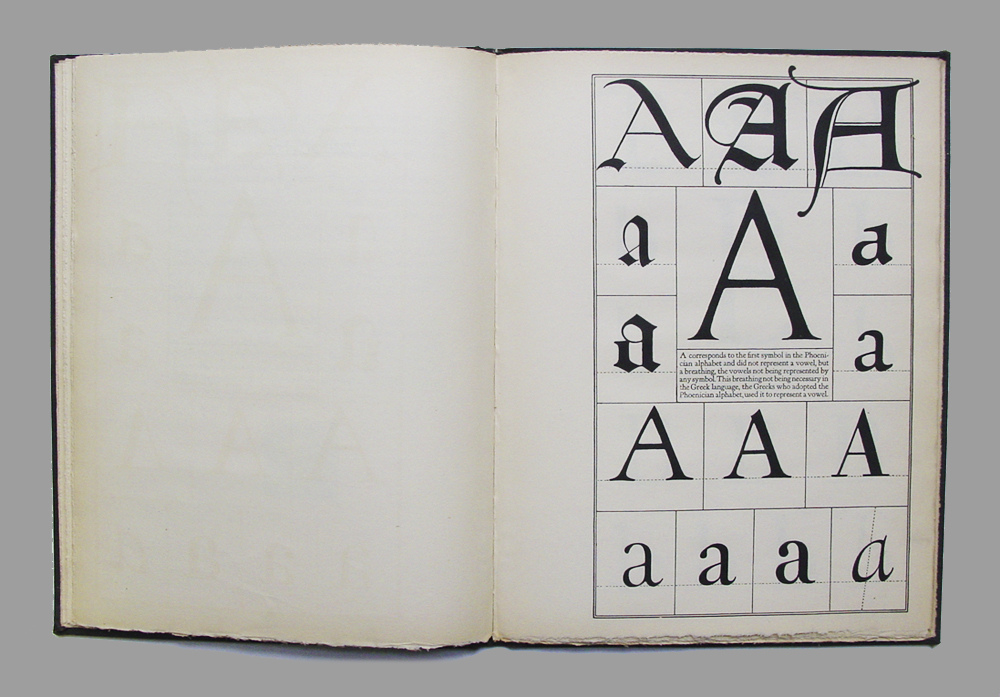
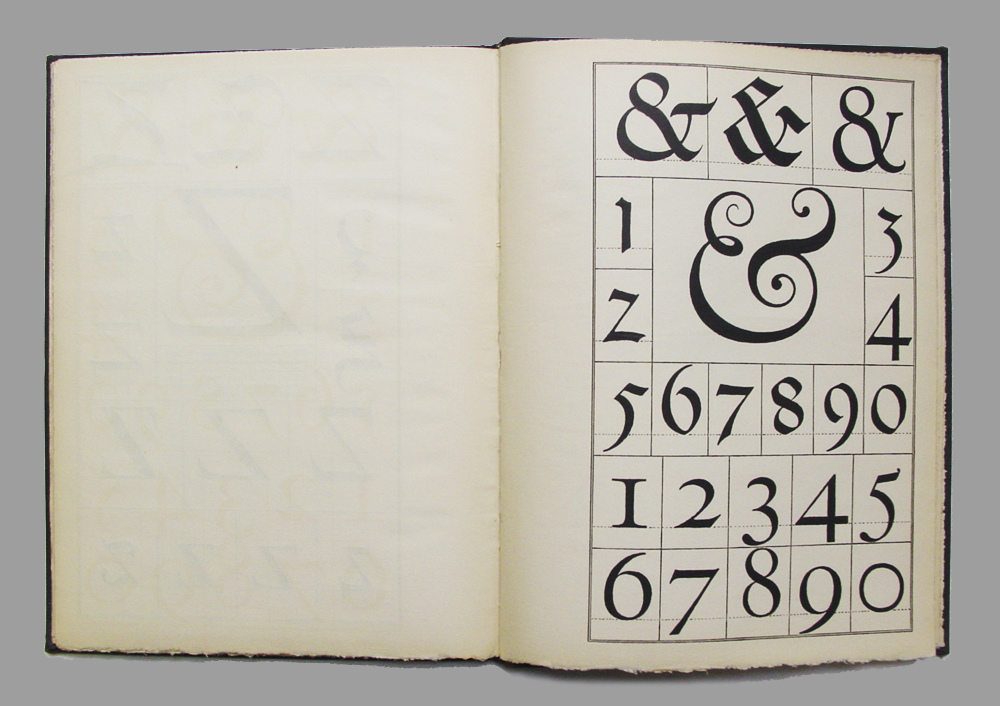
Eye Magazine has a nice feature on Frederic W. Goudy’s 1918 book The Alphabet: Fifteen Interpretative Designs.
Comments closed
A profile of calligrapher DeAnn Singh at The LA Times:
When the producers of “Mad Men” needed a note in cursive and a signature from Don Draper, they turned to Singh. “Something masculine and from the 1950s” was the request, though they eventually decided that the missive be typed…
Ask her about computers, and she’ll tell the story of Steve Jobs.
Before the founding of Apple and the development of the Macintosh, Jobs dropped out of Reed College and studied calligraphy with artist Lloyd Reynolds. If he hadn’t taken that class, he has said, personal computers might not have come with a variety of fonts.
Fantasy Modernism — Lev Grossman talks to the A.V. Club about The Magician King, the sequel to his 2009 novel The Magicians:
I have this theory about modernism and fantasy, which I’ll do in 30 seconds.
They came into being at the same time, which is very interesting. They were both reactions to the disasters of World War I and the electrification of cities, and urbanization, and the rise of the automobile, the end of that twilight world of the Victorians. They both are reactions to that in different ways. Modernism went very inside and delved into the interior lives of people. Fantasy externalized all that in these fantastical, magical, metaphorical landscapes. I thought, “Well, what if you did both the inside and the outside at once?” I tried to combine those foci of fantasy and modernism into one kind of writing. It sounds like I’m writing a dissertation on my own work, but, you know, you end up thinking about what you’re doing. That’s the kind of thing I thought.
See also: Alexander Chee reviews the book for NPR.
Prussian Pedantry — Susie Harries’ new biography of scholar Nikolaus Pevsner, best known for his 46-volume series The Buildings of England, reviewed by George Walden for The Observer:
For us at least the conflict of national intellectual styles he represented was hugely beneficial. The irony of a “Prussian pedant” lecturing the English on Englishness, for which he was mocked, resolves itself in the fact that, together with Gombrich in art history and Weidenfeld in publishing, Pevsner was one of a golden generation of German/Austrian Jewish refugees who did much to give their adopted country the bottom it prided itself on already possessing.
And for those of you not interested in a county-by-county guide to the wonders of English architecture (what’s wrong with you?), Pevsner also wrote the seminal Pioneers of Modern Design: From William Morris to Walter Gropius. First published in 1936, a revised and expanded edition will be available (in the UK at least) in September.
And finally…
Everyone is an Auteur — Guardian correspondent Fiachra Gibbons meets Jean-Luc Godard:
“I am not an auteur, well, not now anyway,” he says as casually, as if it was like giving up smoking. “We once believed we were auteurs but we weren’t. We had no idea, really. Film is over. It’s sad nobody is really exploring it. But what to do? And anyway, with mobile phones and everything, everyone is now an auteur.”
Oh Jean-Luc…
Comments closed
In a great interview for Design Observer, UK publisher Laurence King discusses the future of design publishing with Mark Lamster:
Illustrated book publishers, and in particular art publishers, need bookshops to survive, especially the increasingly rare specialist ones where there are discerning buyers who understand art, architecture and design. I think that these need to be treated with a great deal of care by publishers because all too often they serve as shop windows for Amazon. They are more important to us than sales through them indicate. It would be great if they could use their reputations and expert knowledge to become competitive with Amazon on-line. But I dread the day when art publishers have to set up loss-making showrooms to exhibit our books, just because we went on being tough with the specialist booksellers. At the same time, booksellers need to reinvent themselves quite fast, which is obviously difficult.
Laurence King published Bibliographic: 100 Classic Graphic Design Books — one of my favourite visual books from the last couple of years — in 2009, and later this fall, they’re publishing a huge, long-awaited, monograph on designer Saul Bass. Can’t wait.

Full disclosure: Laurence King is distributed in Canada by my employer Raincoast Books.
Comments closedNew York Times film critic A. O. Scott revisits Robert Altman’s 1970 film MASH:
The film was based on MASH: A Novel About Three Army Doctors by former military surgeon Richard Hooker, first published in 1968.
Comments closed
As follow up to yesterday’s post, here’s Mike Dempsey in conversation with industrial designer Kenneth Grange in a fascinating interview for the RSA from 2009:
RCA: Kenneth Grange 2009 Interview
Comments closed