In this short film, Nicholas Kennedy proprietor of Trip Print Press in Toronto talks about the process of printing with letterpress and running a print shop:
(via Tania)
Comments closedBooks, Design and Culture
In this short film, Nicholas Kennedy proprietor of Trip Print Press in Toronto talks about the process of printing with letterpress and running a print shop:
(via Tania)
Comments closedIn the latest Design Matters interview, Debbie Millman talks to Fast Company’s design editor Linda Tischler about the current state of American design and how services like Kickstarter are changing the way designers work:
DESIGN MATTERS: Linda Tischler, Fast Company mp3
Comments closedThe Dark Room — Filmmaker Grant Gee talks to BookForum about his new film Patience, which explores the work of author W.G. Sebald and his book Rings of Saturn:
There is one reference in an essay he wrote about Kings of the Road by Wim Wenders. He opens the essay with an interesting recollection of watching the film. He’s that generation; he’s absolutely of Wenders’ generation. Once you know that, you can feel the similarities between Wenders and Sebald, but Sebald willfully took himself away from that culture. I think of Sebald more as a photographer. There’s a quote I read somewhere where says he wasn’t very interested in school and he spent most of his time in the darkroom of the school’s photography lab. And there is something—I’m not sure if I’ve made this up or imagined it—about the way images work in his book: it feels to me like a black-and-white print developed under a red light, like it comes up out of whiteness, and if you leave it there it will black out in the tray.
Baggage — David Cronenberg talks to FilmComment about A Dangerous Method, his film on Freud, Jung and Sabina Spielrein:
I don’t care what baggage people think I will bring to the movie. I don’t have that baggage. Once I decide on a project, I am honorable about how I treat it. I am not trying to put some false Cronenbergian imprint on it. Let’s just do the movie. Part of the project was the resurrection of the people and the era. That means it has to be as accurate as possible. I want the people to be as alive as they can be. I want to be able to smell them and hear them in a way that we can’t. It’s a matter of affection. I would like to have known them. That’s the only agenda I have—to honor the accuracy of these people and what they said.
And on the subject of Freud… Comic book creators discuss how mainstream comics portray women and how things can be improved at Comics Alliance. An interesting read.
And finally…

SUPERTYPE! — A collection of vintage comic book mastheads from the man who brought you 4CP and Comic Book Cartography (via Subtraction).
Comments closedAnimator James Curran has created a wonderful unofficial title sequence for Steven Spielberg’s The Adventures of Tintin , featuring elements from each of the 24 books (love this):
(via Quipsologies)
1 CommentAs a follow-up to yesterday’s post about paper-cut artist Rob Ryan, here’s a short film about Etsy itself from PBS Arts Off Book:
Comments closedArt or Death — Art Spiegelman on books, comics and technology at Publishers Weekly:
I would say that, in the future, the book will be reserved for things that function best as a book. So, if I need a textbook that’s going to be out of date because of new technological inventions, you’re better off having it where you can download the supplements or the update. If you’re going to read a quick mystery novel to keep you amused while you’re traveling, it’s fine.None of this is about the business model. It has to do with the boutique nature of a book, the idea that, as McLuhan put it, when a technology is replaced by another technology, the previous technology either becomes art or it dies.
See also: Jeet Heer reviews MetaMaus for the Globe and Mail:
One way to explain the achievement of MetaMaus is to imagine a great architect like Frank Gehry offering a guided tour to one of his classic buildings, opening up the original plans, explaining the solutions he came up with for each problem. Such an act of self-exegesis is immensely rewarding, even if the creator’s genius is as enigmatic as ever.
And, on the subject of comics… A short interview with Alan Moore in Metro:
At the moment I feel an awful lot of my comic career is behind me, particularly all of the superhero stuff – the stuff that’s owned by American corporations. I want to distance myself from that, so the stuff I’m proudest of is what I own: From Hell, Lost Girls, The League Of Extraordinary Gentlemen. I don’t read my earlier work because there are too many unpleasant associations with it. I don’t have a copy of Watchmen in the house. I’m glad the work is out there in the world, having an effect, but it’s like I’ve gone through a messy divorce.
Immersion — Author Neal Stephenson talks about writing and his new novel REAMDE at Full Stop:
I would say that people who like to engage with the details of the historical era or the technical concepts might find [my] books especially rewarding to read. For me it’s a pretty straightforward thing—you know, what readers are paying for, what they’re buying and what I’m selling is a particular kind of experience: essentially one of getting immersed in another world. And it could be a very different world (as in a science fiction book), it could be the history of our world, or it could just be a story that takes place today, like Reamde. And a way to do that — a way to create that feeling of immersion and get the reader feeling like they’re really there — is to supply a lot of details that convey a feeling of immediacy.
See also: REAMDE reviewed by Laura Miller for The Guardian.
And finally…

Filmmaker Gary Hustwit talks about his latest design documentary, Urbanized, with Print Magazine:
I love all the interviews in all the films, that’s why they are in the film. But there are definitely some that people respond to when they watch the film. Most of all Enrique Peñalosa, who is the former mayor of Bogota. He’s got some great lines in the film, like “There’s no constitutional right to parking.” He’s really charismatic and has some really common sense ideas about using the city as a tool to create equality, democracy and social equity. I also got to interview Oscar Niemeyer, the legendary Brazilian modernist architect. He’s about to turn 104 and is the oldest living architect in the world. He’s got his grandchildren working in his office. That was a big honor for sure.

London-based paper-cut artist Rob Ryan talks about his work and his recently released book A Sky Full of Kindness in this short film for to Etsy:
Comments closed
In this interview for CBC Radio show Spark, Ted Striphas, associate professor in the Department of Communication & Culture at Indiana University and author of The Late Age of Print, talks to Nora Young about algorithmic culture and the social implications of leaving discovery and serendipity to complex math:
CBC RADIO SPARK: Ted Striphas on Algorithmic Culture
Striphas has written a series of posts about algorithmic culture on his blog (also called The Late Age of Print funnily enough).
Comments closed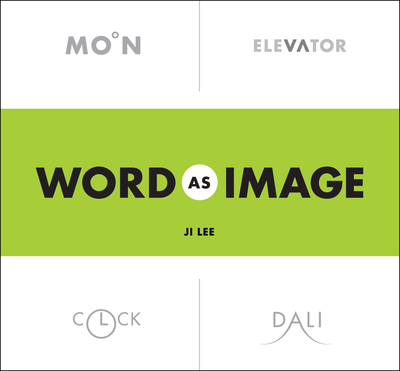
Ji Lee, former Creative Director at Google Creative Labs, has created this wonderful animated short to promote his new book Word as Image:
The book collects together almost 100 of Lee’s illustrations. Each image is created out of a word, using only the letters in the word itself. Only the graphic components of the letters are used without adding outside elements.
(via Swissmiss)
4 CommentsAt some point I will stop blogging interviews with Art Spiegelman, but I’m still enjoying listening to him talk about his career, so here he is answering questions about MetaMaus on NPR’s Talk of the Nation:
“I wanted all the flaws to be on a one-to-one relationship with the reader so that it would feel more like looking at a diary, although it’s a forged diary, as you get to see when you’re looking at all the sketches and preliminary work.
“It wanted to have that feeling of handwriting. So I was working on stationery with a fountain pen and [correcting] with typewriter correction fluid. And I wanted it to feel like a manuscript because that would allow a kind of intimacy to it, and it would keep me from frill and decoration in the drawing.”
NPR TALK OF THE NATION: ‘MetaMaus’: The Story Behind Spiegelman’s Classic
Comments closed

Innovation Starvation— SF author Neal Stephenson at World Policy Journal on why the big stuff doesn’t get done:
SF has changed… from the 1950s (the era of the development of nuclear power, jet airplanes, the space race, and the computer) to now. Speaking broadly, the techno-optimism of the Golden Age of SF has given way to fiction written in a generally darker, more skeptical and ambiguous tone. I myself have tended to write a lot about hackers—trickster archetypes who exploit the arcane capabilities of complex systems devised by faceless others.
Believing we have all the technology we’ll ever need, we seek to draw attention to its destructive side effects. This seems foolish now that we find ourselves saddled with technologies like Japan’s ramshackle 1960’s-vintage reactors at Fukushima when we have the possibility of clean nuclear fusion on the horizon. The imperative to develop new technologies and implement them on a heroic scale no longer seems like the childish preoccupation of a few nerds with slide rules. It’s the only way for the human race to escape from its current predicaments. Too bad we’ve forgotten how to do it.
See also: Stephenson’s new book REAMDE reviewed by The A.V. Club and the NY Times.
Stealing from Dr. Strange — Lev Grossman, author of The Magicians and The Magician King, talks to Graphic Novel Reporter about comics:
Watchmen (and, just as much, Miracleman) changed everything for me. [Alan] Moore attacked and undermined everything that was sacred about the superhero story, and in the process he wrote the greatest superhero story that had ever been written. I never forgot that. A lot of those lessons show up in The Magicians: When you question the basic assumptions of a genre, you make that genre stronger, not weaker.
Also, I steal a lot from Dr. Strange.
And on the subject of comics… Ruth Franklin reviews MetaMaus by Art Spiegelman for The New Republic:
This writer is not Elie Wiesel or Primo Levi, though his work, like theirs, is based in testimony. He is not Piotr Rawicz or H.G. Adler, though he shares their interest in viewing real events through a filter of surrealism. He is not Thomas Keneally, though his work has a quality of the “nonfiction novel” about it; nor is he W.G. Sebald, though his books, like Sebald’s, have been described as a mix of fiction, documentary, and memoir. He is Art Spiegelman, and he has done more than any other writer of the last few decades to change our understanding of the way stories about the Holocaust can be written.
Edges — Nicholas Carr, author of The Shallows, on what remains of books:
One of the essential characteristics of the printed book, as of the scribal codex that preceded it, is its edges. Those edges, as John Updike pointed out not long before he died, manifest themselves in the physical form of bound books – “some are rough-cut, some are smooth-cut, and a few, at least at my extravagant publishing house, are even top-stained” — but they are also there aesthetically and even metaphysically, giving each book integrity as a work in itself. That doesn’t mean that a book exists in isolation — its words, as written and as read, form rich connections with other books as well as with the worlds of nature and of men — but rather that a book offers a self-contained experience. The sense of self-containment is what makes a good book so satisfying to its readers, and the requirement of self-containment is what spurs the writer to the highest levels of literary achievement. The book must feel complete between its edges.
And finally…

In The Wall Street Journal, Lee Marshall looks for Fellini’s Rome:
Comments closedSometimes Fellini’s Rome and Felliniesque Rome live in close proximity. The apartment that Federico and Giulietta shared (Via Margutta, 110) is on a small, charming street where Truman Capote once lived and Puccini composed. There’s not much to see except a plaque on the building with caricatures of the pair and a commemorative poem in Roman dialect. But notice the number on the door of the palazzo: above the 110, it says “Già 113″—formerly 113—a very Felliniesque address.

From its abstract roots in Cubism to the political and counter culture movements of Dada and Punk, collage has always been a product of its environment. With the rise of 24 hour media cycles, social networks and search engines, contemporary culture has effectively rendered print media obsolete, creating a virtual boom in discarded paper ephemera for collage artists to examine and reinvent. Through these discarded remnants collage artists have become the archivists and activists of this post modern age, paralleling the frenetic pace in which we live while exposing the voyeuristic and often disjointed nature of popular culture.
If you’re going to be in New York at the end of this month, you might want to check out All That Remains, an exhibition of international collage at the Ugly Art Room in Brooklyn. Among the exhibitors is one John Gall, art director at Vintage/Anchor Books. You can read my interview with John about his collage here.
UGLY ART ROOM PRESENTS: ALL THAT REMAINS
October 21st – November 19th, 2011
Ugly Art Room (via Picture Farm)
338 Wythe Ave, Brooklyn, NY 11211
Opening Reception: 7-9pm, Friday, October 21st, 2011
Comments closed