Skip to content

The Casual Optimist Posts

Midweek Miscellany

The cover for Hope: A Tragedy by Shalom Auslander designed by John Gall.

The Invisible Man — Lee Konstantinou, author of Pop Apocalypse, reviews Art Spiegelman’s MetaMaus for the LA Review of Books:

[T]here is something obsessive about MetaMaus, which says as much about the price of success in the contemporary literary marketplace — and its attendant culture of celebrity authorship — as it does about its subject. When a book like Maus makes a big impact, we often condemn its creator never to move on to new projects. MetaMaus give evidence that Spiegelman has endured a fate not unlike that of Ralph Ellison after he published Invisible Man in 1952. Like Ellison, Spiegelman has rightly earned enormous praise, and, also like Ellison, he has become his own best interpreter. But just as Ellison produced no major work after Invisible Man other than the unfinished, posthumously published Juneteenth…, Spiegelman has yet to produce a work of comparable depth and sophistication to Maus.

The Road — Julie Bosman on the future of Barnes & Noble for The New York Times:

If something were to happen to Barnes & Noble, if it were merely to scale back its ambitions, Amazon could become even more powerful and — well, the very thought makes publishers queasy.

“It would be like ‘The Road,’ ” one publishing executive in New York said, half-jokingly, referring to the Cormac McCarthy novel. “The post-apocalyptic world of publishing, with publishers pushing shopping carts down Broadway.”

…Without Barnes & Noble, the publishers’ marketing proposition crumbles. The idea that publishers can spot, mold and publicize new talent, then get someone to buy books at prices that actually makes economic sense, suddenly seems a reach. Marketing books via Twitter, and relying on reviews, advertising and perhaps an appearance on the “Today” show doesn’t sound like a winning plan.

See also: B & N won’t sell books from Amazon Publishing and Amazon’s Revenue Slumps.

And finally…

The fascinating first article in a year-long series on the inner-workings of Canadian publisher House of Anansi Press by Mark Medley for the National Post:

A significant amount of time is spent discussing paperback editions of books that recently came out in hardcover. “Right now, we’re seeing the market is really and truly paperback and e-book,” [publisher] MacLachlan says. “So, we have some hardcovers that we thought would [sell] in the fall that haven’t gone as well as they should. And so, rather than wait a whole year to reintroduce the book into the marketplace, let’s do a paperback edition sooner than later.”

Comments closed

Better Bookshelves by Grant Snider

Another lovely webcomic for book nerds by Grant Snider:

(I need the childproof bookshelves)

Comments closed

Animated Futura Specimen

A lovely animated short featuring Paul Renner’s geometrically elegant sans-serif typeface Futura:

(via Nice Type)

1 Comment

Hand und Werk

Some lovely letterpress action to ease you through your day:

(via Coudal)

1 Comment

Something for the Weekend

Typographica’s favourite typefaces of 2011 (pictured above: A2 Beckett designed by Henrik Kubel for A2-TYPE).

The Coroner`s Report — John Banville reviews The Complete Poems by Philip Larkin for The Guardian:

A “Complete Poems” is a death certificate and memorial combined. After the Selected and the Collected, the Complete marks the poet’s official demise and at the same time erects a carven monument designed to outlast the ages. In the case of this mighty volume of the all of Larkin, there is something too of the coroner’s report.

A twopart interview with William Gibson, author of Distrust That Particular Flavor, in the Wall Street Journal.

And finally…

Go Outside — Ian Leslie responds to criticism of his essay on serendipity:

The inherent limits of older formats like newspapers or bookstores are a feature as well as a bug. They make things a bit difficult for us, and because of that they often push us towards unsought-for discoveries.The modern internet makes each of us like a rich man in his mansion who has the finest food flown in from every corner of the world and whose favourite singers and artists come and perform for him in his bedroom at a moment’s notice. He has a nagging feeling that he ought to go outside and experience the city and its manifold surprises first-hand. Nothing is stopping him from doing so. But it feels like such an effort.


Comments closed

Midweek Miscellany


Everyday Epic — Tom Spurgeon interviews Tom Gauld at The Comics Reporter:

I find that when I’m drawing I’m quite happy to come up with larger than life, epic things but when I write things tend to be more down to earth. The contrast between greatness and everyday reality is something which interests me.

You can find my interview with Tom here. His new book Goliath is out in March.

I Am Lousy Copywriter — A list by legendary adman David Ogilvy, author of Confessions of an Advertising Man, at Letter of Note:

If all else fails, I drink half a bottle of rum and play a Handel oratorio on the gramophone. This generally produces an uncontrollable gush of copy.

My Name is Tyranny — Mike Doherty interviews William Gibson about his new book, Distrust That Particular Flavor, for Salon:

I very seldom compose anything in my head which later finds its way into text, except character names sometimes – I’m often very much inspired by things that I misunderstand. Have you ever seen Brian Eno’s deck of Oblique Strategies? One of them is “Honor thy error as a hidden intention.” That’s my favorite. [At a] hotel in New York a couple of days ago, the young woman who checked me in said what sounded to me like, “Thank you, sir; my name is Tyranny. If there’s anything you need …” For the rest of the day, I was thinking of young, benevolent female characters with the first name “Tyranny.”

And finally…

Tiptoeing Through a Sickroom — Luc Sante on Patti Smith for The New York Review of Books:

Her memoir Just Kids (2010), the account of her friendship with the photographer Robert Mapplethorpe, has been justly celebrated. It is delicate and affectionate as it tells of their adventures in a New York City bohemia that now seems a century removed, of the endurance of their relationship despite his realization that he was gay, of their separate pursuits of fame, of his illness and death. It is almost too literary for its own good, since her choices of word and phrase always come down on the genteel side of the ledger: “perhaps” rather than “maybe,” “rise” rather than “stand,” “yet” rather than “but,” “one” rather than “you.” There’s hardly a contraction, outside the dialogue, in the entire book. But despite the fact that this sort of talk is patently not the way she expressed herself at the time, and that it sounds more effortful than natural on the page, it does cover the book with an appropriate hush—it sounds like someone tiptoeing through a sickroom.


Comments closed

The Fantastic Flying Books of Mr. Morris Lessmore

Inspired by the Wizard of Oz, Buster Keaton movies, and a whimsical love of books, The Fantastic Flying Books of Mr. Morris Lessmore is an award-winning 15 minute animated short by William Joyce, Brandon Oldenburg and Moonbot Studios:

The film is one of five animated shorts nominated for an Oscar this year,  and there is an interactive version of the story available for the iPad from the app store.

1 Comment

Something for the Weekend

Adrift in the World — Tim Parks on fiction and place for the NYRB Blog:

If there is a problem with the novel, and I’m agreed with [David] Shields that there is, it is not because it doesn’t participate in modern technology, can’t talk about it or isn’t involved with it; I can download in seconds on my Kindle a novel made up entirely of emails or text messages. Perhaps the problem is rather a slow weakening of our sense of being inside a society with related and competing visions of the world to which we make our own urgent narrative contributions; this being replaced by the author who takes courses to learn how to create a product with universal appeal, something that can float in the world mix, rather than feed into the immediate experience of people in his own culture.

The Degree-Zero of Typeage — The “un-Google-able” Jenny Hendrix on Tintin for LA Review of Books:

Hergé himself described Tintin as the “degree-zero of typeage — a typographic vanishing point.” The formulation suggests Samuel Beckett, and there is indeed something Beckettian about Tintin. In French, appropriately, the phrase “faire tintin” means something approximating “to go without” or “to be frustrated.” Tintin may be a reporter, motivated, like any good journalist, by the hint of a good story, but only in his very first of his 24 adventures does he actually file copy. He was born 15, and supposedly stays that way, though it is hard to imagine he’s any age at all. He has no last name, no parentage and no past, no desires and no sexual identity. Even his appearance has little to say about him: his face is just a circle, with two black dots for eyes and a black, semi-circular wedge of mouth. He could be anyone, and frequently is…

Super-Punch — The New York Times reviews ‘Printing for Kingdom, Empire & Republic: Treasures From the Archives of the Imprimerie Nationale’, an exhibition of historical steel punches, copper matrices, and typefonts at the Grolier Club in New York:

[T]hese exquisite artifacts… offer a reminder, in the ethereal era of bitmapping, that type was once the tangible province of engravers and metal casters who labored in unforgiving but enduring media. To make a C with a cedilla, for example, involved a lot more effort and thought than holding down the Option key on your Mac. A comma-shaped steel appendage had to be lashed with string to the bottom of the C punch to produce a new matrix.

“People are practically printing books with their smartphones,” Mr. Fletcher said, in a tone suggesting that he did not think this was such a good idea. “It’s much more gratifying to be able to touch something and find out it’s real, rather than a matter of bits and bytes.”

Comments closed

What were you raised by Wolves? by Vera Brosgol

Cartoonist Vera Brosgol has posted her startling, wordless mini-comic What Were You Raised by Wolves? online. Read it in its entirety here.

(via Robot 6)

Comments closed

Midweek Miscellany

Psycho-Drama — Pat Kirkham reassesses the collaboration between Saul Bass and Alfred Hitchcock for Design Observer:

The entire Bass/Hitchcock collaboration deserves to be better known, partly because of the sheer quality of the work, partly because it offers an interesting case study of the complex interchange between film and design, and partly because of the controversy surrounding Bass’s contribution to what is arguably the most famous scene in U.S. cinema — the shower scene in Psycho. Serious discussion of Bass’s contribution to the shower scene — a fascinating collaboration, from novel and script to musical score — remains problematic, not least because issues of authorship are far from dead in many academic disciplines, design history and film studies included.

Portmanteau — William Gibson’s new collection of non-fiction, Distrust That Particular Flavorreviewed in The New York Times:

Everything he notices seems to be a this grafted onto a that. In these essays, we see a man fascinated by objects and places containing their own contradictions. It makes sense, then, that Gibson’s novels have helped promote several portmanteau words and neologisms, like “cyberspace,” into widespread English use. This is the essence of Gibson-think — anything can be a kind of portmanteau, a glued-­together paradox.

See also: Gibson interviewed in The National Post (who get bonus points for their “Neuromantic” headline) and The Globe and Mail.

And finally…

What You Want, But Not What You Need — An interesting article by Ian Leslie, author of Born Liars, on serendipity:

[T]here is a reason why Amazon is successful and bookshops are closing: in a world of infinite choice, efficiency is hard to resist. The pleasures of the bookshop or the library are easily outgunned by the knowledge that we can order or download a book instantly, or find the information we’re looking for within seconds. Serendipity, on the other hand, is, as Zuckerman says,  “necessarily inefficient”. It is a fragile quality, vulnerable to our desire for convenience and speed. It also requires a kind of planned vagueness. Digital systems don’t do vagueness very well, and our patience with it seems to be fading.

Comments closed

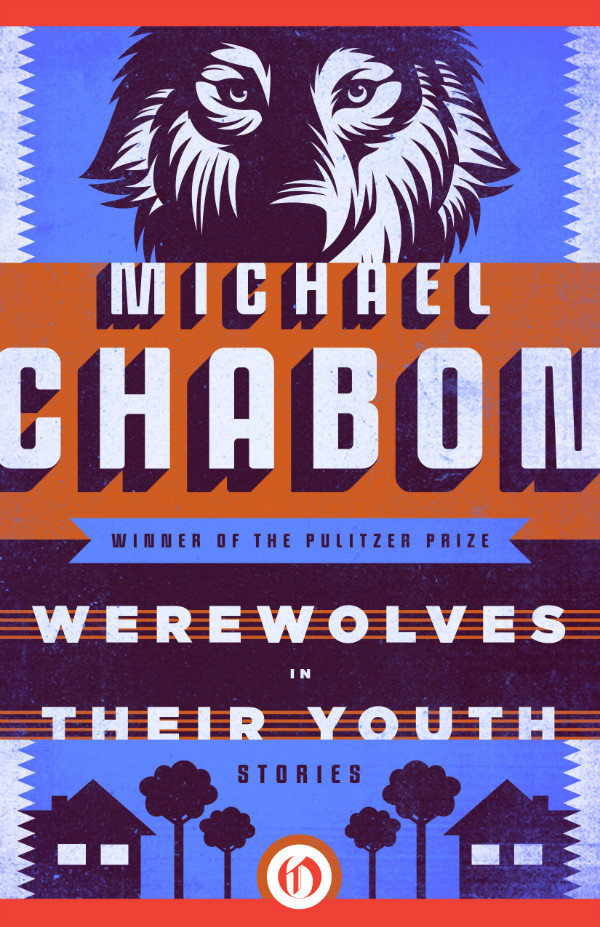
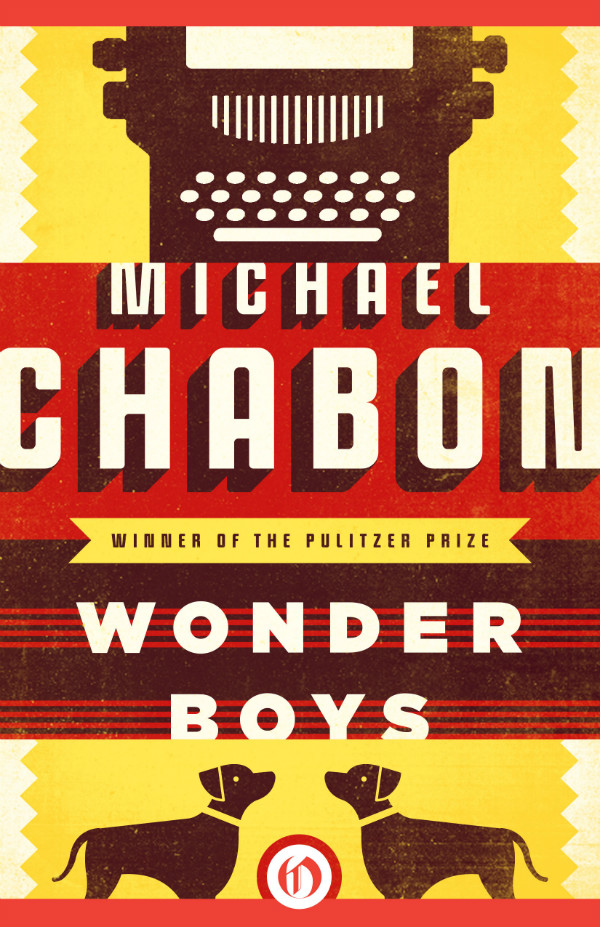
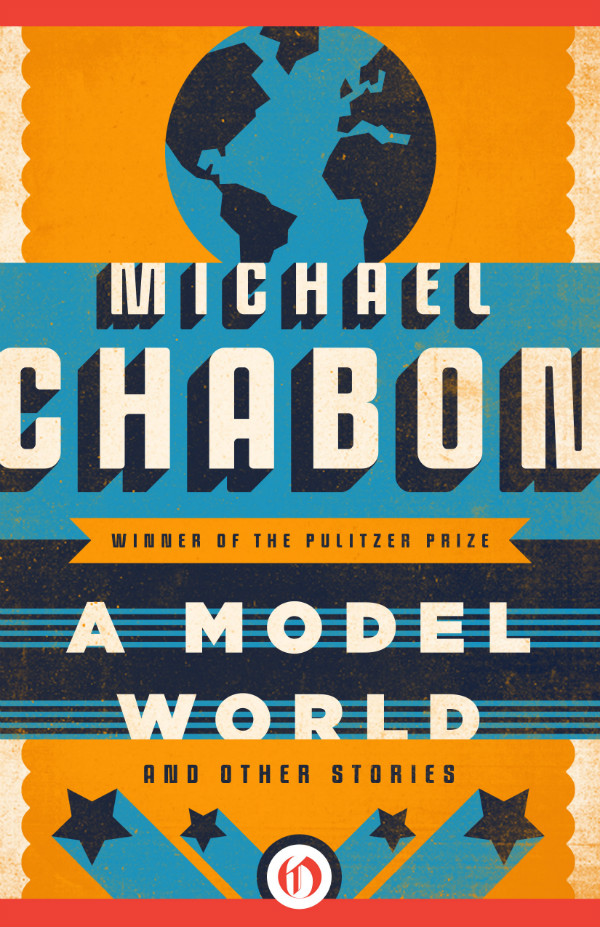
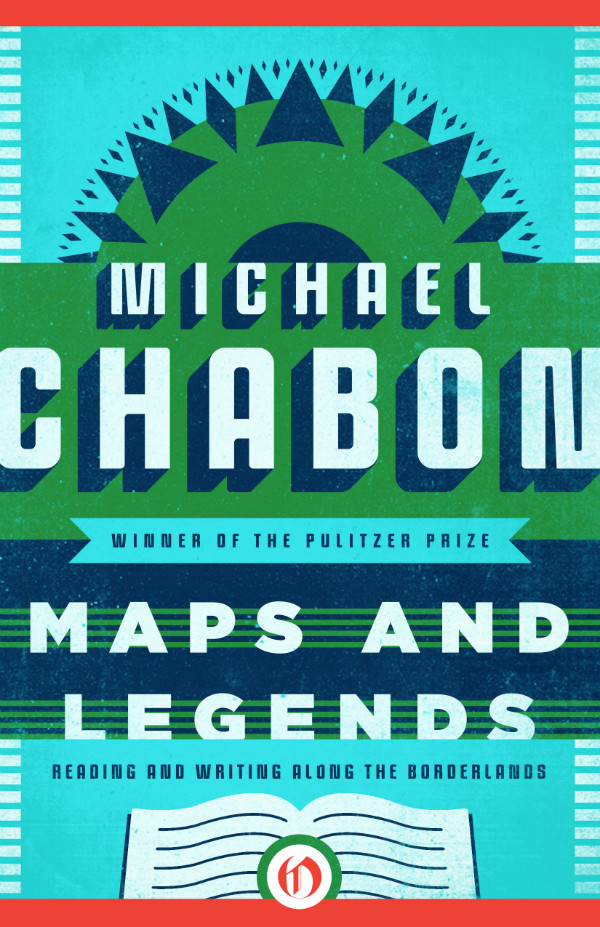
Chabon by Connie Gabbert

These stunning Michael Chabon covers are the work of Oregon-based designer Connie Gabbert. Although evocative in some way of faded ink, old-time letterpress, silkscreened posters and linocuts illustrations, interestingly these designs will never see actually see print themselves.

Connie knew from the start that they would be e-books and would not go to press, but apparently the design process was not that different, at least not to begin with. “It’s when the covers are approved that the process feels different,” she says. “There is no spine to build, no back cover copy, no print files to prepare. It is a bit sad to know that I won’t see the finals printed, but it’s also interesting to be a part of the e-book industry and to see the packaging exist only online.”

According to Connie, the challenge was actually making the approved cover direction work for the other four titles in the series. “The first approved cover was for Wonder Boys, and from there, I had to come up with new color palettes and new imagery for the rest of the series,” she says. “The goal was to make them look unified but individually unique. I really liked how Richard Bravery achieved this with his Chabon series, keeping the type in a fixed location, while the imagery changed from cover to cover… [T]he first stab at these covers was hand-lettered. While I love working illustrated type into cover designs, the final type feels very fitting for Chabon and the covers that he already has. I’m not often asked to create masculine covers, so it was a fun change of pace.”

You can read more about Connie’s type choices for these covers at Fonts in Use, and see more of her work on her website and design:related.

Comments closed

Something for the Weekend

Fabulous Fury — Evie Nagy reviews Tarpé Mills & Miss Fury: Sensational Sundays 1944–1949 for The LA Review of Books:

Though Mills ostensibly hid her gender and wrote a high-adventure comic rife with guy stuff like smuggling, espionage, mad science, and gruesome murders, Miss Fury has much in it that seems designed to appeal to women as well. For one thing, the outfits are fabulous. As Robbins suggests, Mills clearly took great pleasure in dressing Marla, scheming villainess Erica Von Kampf, and other characters in elaborate gowns, lingerie, and smart but finely detailed sportswear. Modern superhero comics tend to focus on the intricacies of high-tech costumes at the expense of civilian clothes; Miss Fury, by contrast, is midcentury clothes porn.

Fucking Great — British film director Beeban Kidron remembers Magnum photographer Eve Arnold who died recently aged 99:

She was an early adopter of colour – favouring a thick negative with rich hues and simple compositions – and she ruthlessly edited her own work with a wicked sense of humour. “It’s not that we’re so great, it’s that the others are so fucking mediocre.”

See also:

A slide show of Eve Arnold’s work at The Guardian.

Eve Arnold remembered in The Guardian, The Telegraph, The Financial Times, The New York Times and The Economist.

The best Typefaces of 2011 from FontShop and the most popular fonts of the year from MyFonts.

Forward! — Stephen Page, chief executive of Faber & Faber, writing for The Guardian on the way ahead in publishing:

[T]he men and women engaged in publishing need to be bold and exuberant. This is an extraordinary age for writing and reading, and it seems to me that this endeavour will go better if it’s done with a sense of purpose and pleasure, rather than defensively. It won’t turn out well for everyone currently in the business, but so what? If publishing is useful and creates value then it will be of value, whoever is doing it.

And finally…

A lovely profile of  Peter Hardwicke, one of the last traditional signwriters in London’s East End, in Spitalfields Life:

I am an old school signwriter that likes to talk directly to the client to select the fonts and the colours. I’ve found it a rewarding way to work, dealing with independent shopkeepers. I like to look at the built environment and choose fonts that are sympathetic to the architecture and the surrounding cityscape. I look at the other shops and I do research…I think people are bored with computer generated artwork…even my younger clients, they’d rather have it  done professionally than use stick on letters – it shows they’ve got taste.

You can find an earlier profile of Peter here and see an archive of his work on Flickr. (Thx Monique)


Comments closed