Skip to content

Tag: tom mccarthy

Bookworm: Tom McCarthy on Satin Island

satin island design john gall

Author Tom McCarthy talks to Bookworm about his latest novel Satin Island:

KCRW Bookworm: Tom McCarthy on Satin Island mp3

The rather splendid cover for the US paperback edition published earlier this year by Vintage (pictured above) was designed by John Gall.

Comments closed

At the Bookbinders

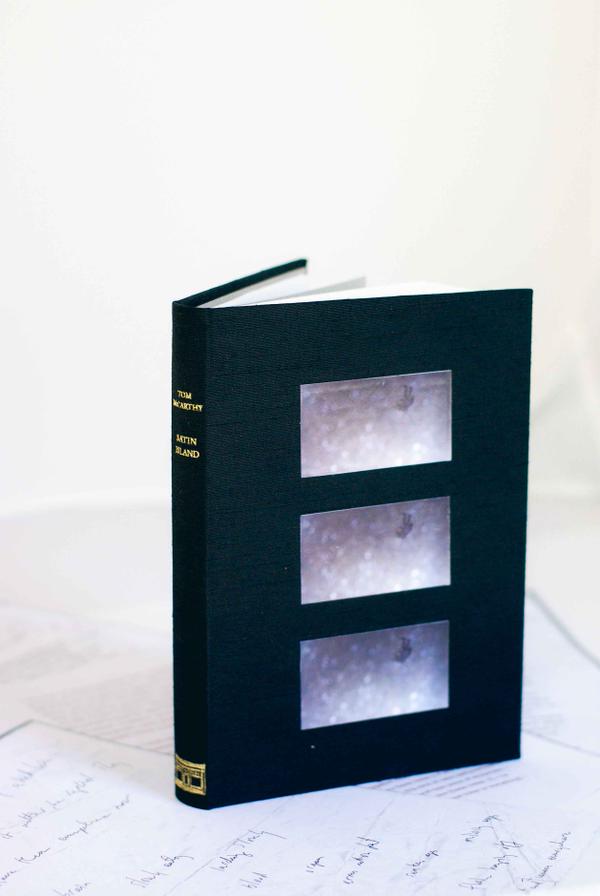
satin island limited editionThe London Review Bookshop visit Shepherds bookbinders in London to watch them put together a special limited edition of Tom McCarthy’s Man Booker Prize shortlisted novel Satin Island (yours for only £185):

Comments closed

Front Row: The Art of Book Cover Design


BBC Radio 4’s Front Row talks to Suzanne Dean, creative director at Random House UK, about the art of book cover design. Dean, who was very publicly thanked by Julian Barnes for her work on his book The Sense of an Ending, has been responsible for more Booker-winning covers than any other designer apparently.

Host John Wilson also chats with designer Matthew Young about the relaunched Pelican Books, while authors Ian McEwan, Tom McCarthy and Audrey Niffenegger, and Telegraph books editor Gaby Wood, share their thoughts on what makes a good book cover.

BBC Radio 4 Front Row: The Art of Book Cover Design mp3

Comments closed

Midweek Miscellany

The Forger — Tom McCarthy (whose novel Men in Space has finally been published by Vintage in the US) at Interview Magazine.

People in Business — An interview with Dennis Johnson, publisher of Melville House, at The Economist:

I think it’s very obvious to people that we care about the packaging of our books. I think people know that if we care about the outside of our books then we probably care about the inside of them, too. I recently read a survey that said 39% or 40% of people who bought books on Amazon looked at them in a bookstore first. They could know everything about the book online short of having seen it, but still the physical object had enough meaning to them to want to see it first. That resonates, happily, with the fact that Valerie [Merians] and I came into this not as publishers but as artists. The object means a lot to us.

Parallels — Authors Geoff Dyer (Zona) and John Jeremiah Sullivan (Pulphead) in conversation at Work in Progress.

And finally…

Britain’s Original Information Revolution — Adam Nicolson, author of The Gentry, on a collection of English books dating back to the 17th century:

 We may think we are in the middle of a communications revolution: Flickr, Twitter, Facebook, YouTube, Hulu, iTunes… But all of them are, in their ways, secondary phenomena. Some of them are image-based, post-literate, but none would work without the foundations of a much deeper communications revolution which swept across Europe 400 years ago.

The 17th century is when the Europeans started to write: letters, diaries, journals, notebooks, account books, commonplace books, business correspondence, pamphlets, posters, chapbooks, newspapers. It was the first communications revolution, which both spawned and reflected the most revolutionary century we have ever had.

Comments closed

Something for the Weekend

Jacob Covey’s stunning cover for Nancy Is Happy: Complete Dailies 1943-1945 due in March 2012 from Fantagraphics.

Anxiety and Time — Adam Roberts, author of By Light Alone, on science fiction at The Browser:

The common belief that SF is in some sense “about” the future isn’t wholly wrongheaded. One feature of 19th and 20th century science fiction is that it is fascinated with time in a deep way. Time only opens up, as a wholly new dimension to be imaginatively explored, at the very end of the 18th century. It’s a puzzle, actually, why this should be. [The critic] Darko Suvin thinks it has something to do with the French Revolution. But before about 1800 people almost never wrote stories set in the future, and then after 1800 lots of people did just that. SF as a mode of projecting oneself into the to-come connects powerfully with human concerns in the way that specific prophesy – pedantic, fiddly, bound to be wrong – doesn’t.

Writing Machines — Tom McCarthy on technology in The Guardian:

I must belong to the only generation of writers who’ve written with all three of inkpen, typewriter and computer. It definitely matters: the technology colours not only the rhythm but the whole logic of what you write. Think of Kafka’s obsession with writing machines: the harrow that inscribes the law onto the skin in In the Penal Colony or the mysterious writing desk in Amerika: writing technologies themselves are imbued with terrifying and sacred dimensions, and become the subject, not just the medium, of the story. I used to have a beautiful old German typewriter, that you had to throw your fingers at and the keys would smash into the roller. It felt like a machine-gun or something.

And finally…

Brian Appleyard on Andy Warhol for Intelligent Life magazine:

Warhol now endorses a way of life. One simple technology—silk-screen printing—dominated his career. But it was enough to show today’s technology-laden, hyper-connected youth that they could do it too. With the instant publication of digital pictures and videos, anybody can become a cyber-Warhol, swimming in the great ocean that pop imagery has become. Apple’s Photo Booth software reduces the whole thing to a single click—just by selecting “pop art” under “effects” you can change your face into a very credible Warhol multiple self-portrait. Andy, in death, is a generation’s mentor.

Comments closed

Midweek Miscellany

On Record — Rick Poynor at Design Obsever waxes all lyrical about Continuum’s 33 1/3 music series:

The best 33 1/3 titles… have an urgent personal mission, even obsession, and they tunnel deep down into an album’s defining moment and milieu: dark sixties Los Angeles in Forever Changes, isolated seventies Berlin in Low, creative nineties Athens, Georgia in In the Aeroplane over the Sea… Usually around 30,000 words, these detailed studies are hugely challenging to research and write. Continuum has let it be known that a batch of previously announced titles has been canceled after initial high hopes: the authors just couldn’t deliver.

Movies on Paper — Tom McCarthy, author of Tintin and the Secret of Literature (as well as Remainder and C), reviews Steven Spielberg’s The Adventures of Tintin: The Secret of the Unicorn:

Tintin was always premised on a set of implicit borrowings and relocations from one medium to another. Hergé’s earliest strip-cartoons were billed as “movies” on paper; creatively, he was as indebted to the films of Buster Keaton and Harold Lloyd as to the novels of Jules Verne or the illustrated poems of Benjamin Rabier (which, long forgotten now, featured a tuft-headed boy called Tintin-Lutin and his dog). Hergé’s remarkable achievement with the Tintin series was to pluck all these elements from their original contexts and join them together, holding them in perfect equilibrium, in a new, hybrid format whose conventions (speech-bubbles joined with left-to-right action, for example) he established in the very act of assembly.

McCarthy loathes the movie by the way.

See also: Nicholas Lezard getting really quite upset about it.

(If you’re wondering why the British are so bothered by the Speilberg’s movie, my take on it is that we view Tintin as an eccentric, quintessentially British hero — not unlike T.E. Lawrence — rather than a Belgium one, and Spielberg is well… just so American. Or it might just be a shit movie.)

And finally…

Gum-Chewers of the World (Unite and Take Over) — Canadian cartoonist Seth on being awarded the Harbourfront Festival Prize at the International Festival of Authors in Toronto:

I’ve always believed the comics medium was capable of genuine subtly and grace and complexity… and of telling stories that would appeal to an adult mind. Stories that reflect real human experience. That said, it didn’t look too likely that the literary world or the art world…or even the mainstream pop culture was likely to cut the comic book much slack. Comics were considered entertainment for the gum-chewers of the world. Kid junk at worst – nerd culture at best.

Comments closed

Midweek Miscellany

A short interview with Tom McCarthy, author of Remainder and C, in The Guardian.

Heart of Darkness — William Deresiewicz on Harold Bloom and his new book The Anatomy of Influence: Literature as a Way of Life:

I started to develop the Heart of Darkness theory of the Yale English department. Conrad’s novel is about colonialism and racism and the shadowed reaches of the human heart, but it is also a dissection of bureaucracy. My first clue came when I realized that my chairman was a perfect double for the manager of the Central Station, that creepy functionary who has “no genius for organizing, for initiative, or for order even,” who “could keep the routine going—that’s all.” But what clinched it was the recognition of the role that Bloom played in the paradigm. Bloom was Mr. Kurtz… Bloom, like Kurtz, ignored the rules and was strong enough to impose his own. Bloom, like Kurtz, was the shadowy genius who had sequestered himself in his private domain and was managing to produce, by methods however “unsound,” more material than all his colleagues put together… Bloom, like Kurtz, was a legend, a rumor, a vaguely malevolent presence (or absence) to be spoken of in awed and envious tones. What was not to like?

Paying For It — Nicholas Carr, author of The Shallows, on paywalls and the transformation of the newspaper business:

The newspapers that will survive, and perhaps even thrive, in the years to come will be those that are able to offer the most distinctive products and to tailor those products to a variety of consumption modes, spanning payment methods and devices, in a way that maximizes revenues and optimizes readership. And because an online news site is not a perfect substitute for a printed paper for either readers or advertisers – I cancelled my paper subscription a couple of years ago but ended up resubscribing after realizing that I was missing something – print editions will likely remain a crucial element in the mix indefinitely.

Browsing or Browsers? — The Economist neatly summarizes the effects of digitization on publishing:

Perhaps the biggest problem, though, is the gradual disappearance of the shop window. Brian Murray, chief executive of HarperCollins, points out that a film may be released with more than $100m of marketing behind it. Music singles often receive radio promotion. Publishers, on the other hand, rely heavily on bookstores to bring new releases to customers’ attention and to steer them to books that they might not have considered buying. As stores close, the industry loses much more than a retail outlet. Publishers are increasingly trying to push books through online social networks. But Mr Murray says he hasn’t seen anything that replicates the experience of browsing a bookstore.

And on a related note, The Toronto Review of Books,  edited by former bookselling colleague Jessica Duffin Wolfe, launched this week.

Comments closed

Something for the Weekend

The Technological Sublime — Rick Poyner on the science fiction artist Chris Foss and Hardwarea new book collecting his work, at Design Observer:

These visionary images have a stillness, a control of atmosphere and a mood of mystery and wonder, even when something huge, alien, imponderable and beyond our terrestrial grasp is taking place. Foss loves the paintings of J.M.W. Turner and his finest pictures, often from the 1970s, seem as much concerned with ambience and painterly effect — they are cosmic cousins of Turner’s Rain, Steam and Speed, at least in spirit — as with the engineering of the vast structures they depict. They are also early visual encapsulations of what came to be known in the 1990s as the technological sublime. The vertiginous sense of awe, wonder, poetry and terror that people experienced in nature, when opening their senses to the sky, mountains, forests, rivers or oceans, could now be felt when contemplating the frightening immensity of a machine’s harnessed power, the magical effectiveness of electricity, or the boundless matrix of digital connection.

(Pictured above: Chris Foss, The Bloodstar Conspiracy by Stephen Goldin and E. E. “Doc” Smith, Panther, 1978)

Those Who Can… — Eric Olsen, journalist, editor and co-author of We Wanted To Be Writers, discusses writing and picks 5 books on the subject:

There are always ways that you can help a writer along. You’re not going to take a mediocre writer and turn him or her into a great writer, and there are also some things that can’t be taught, like the basic desire to be a writer. That seems to be a given. You’re not going to make someone want to be a writer. Sometimes what goes on in a writing workshop is that you convince the writer that he doesn’t want to be a writer. That is a kind of teaching too…

 The Source Code of Our Being — Tom McCarthy, author of Remainder and C, on the influence of Freud:

As a writer, I’m in love with Freud. I can’t imagine any serious writer not being. Freud, ultimately, concerned himself not with the mind, nor with the individual, but with the question of meaning’s emergence in the world, and of the mechanisms through which this emergence takes place. What, according to him, are these mechanisms? Why, they’re substitution and elision, condensation and displacement, metaphor, metonymy — in short, the very mechanisms at work in a poem or a novel. For Freud, if you want to understand mental and social life you don’t take a biopsy of a murderer’s brain or observe groups of people in a room: you study Antigone and Hamlet. That’s why his case-histories read like Gothic novels. It’s why his best patients are fictional characters like Jensen’s Norbert and Goethe’s Werther. And it’s why his preferred model for memory is a mystic writing pad.

And finally…

A short film homage to author Jorge Luis Borges by Ian Ruschel:

Comments closed

Something for the Weekend

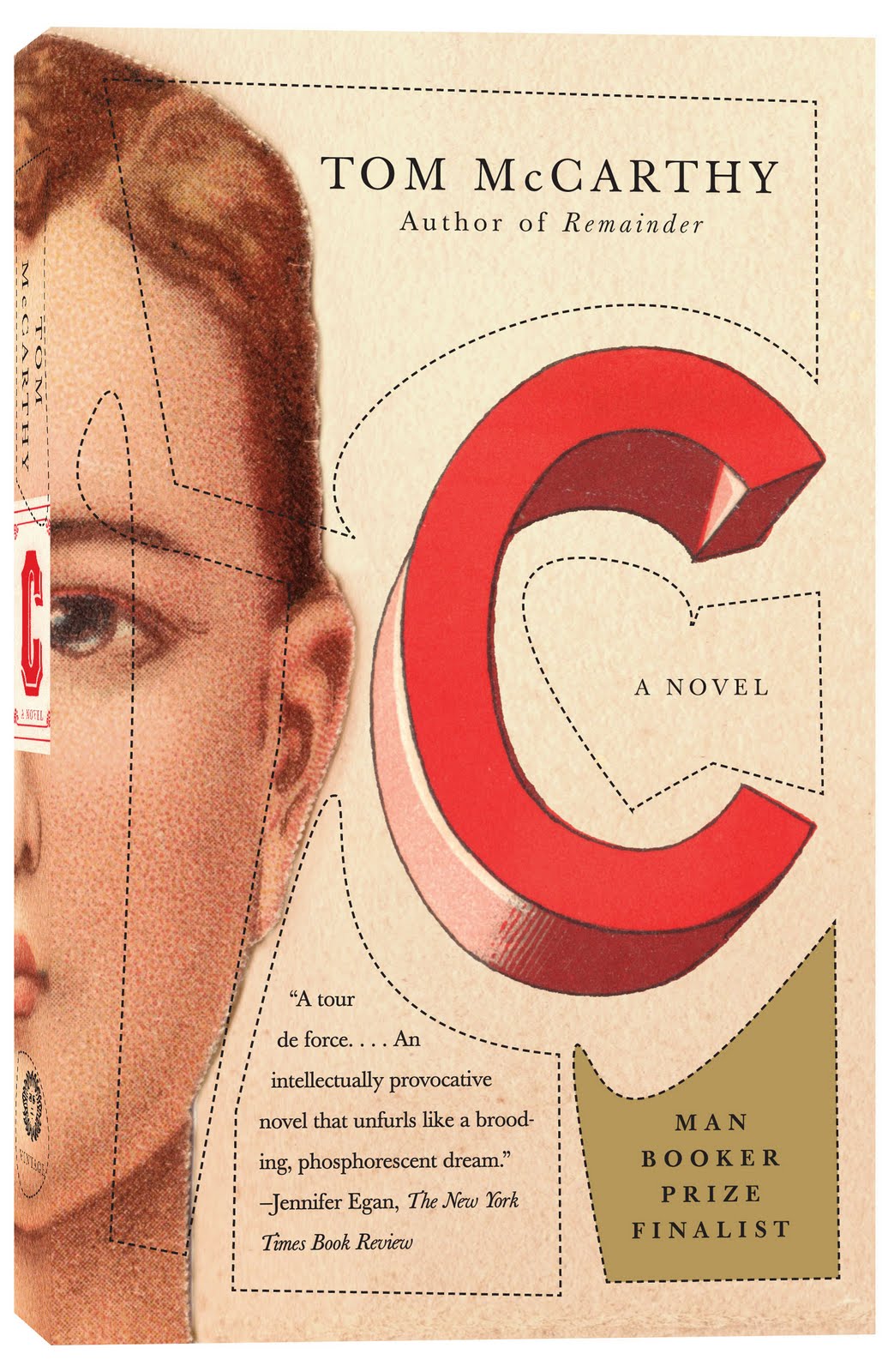
John Gall’s new cover for the paperback edition of C by Tom McCarthy. It can’t have been easy following this monster of cover.

NPR listeners pick their 100 favourite science fiction and fantasy books. On first glance, it looks like a diverse and wide-ranging selection.

Downloadable issues of De Stijl from 1917 to 1920. They’re in Dutch of course, but still! (via Coudal).

And finally…

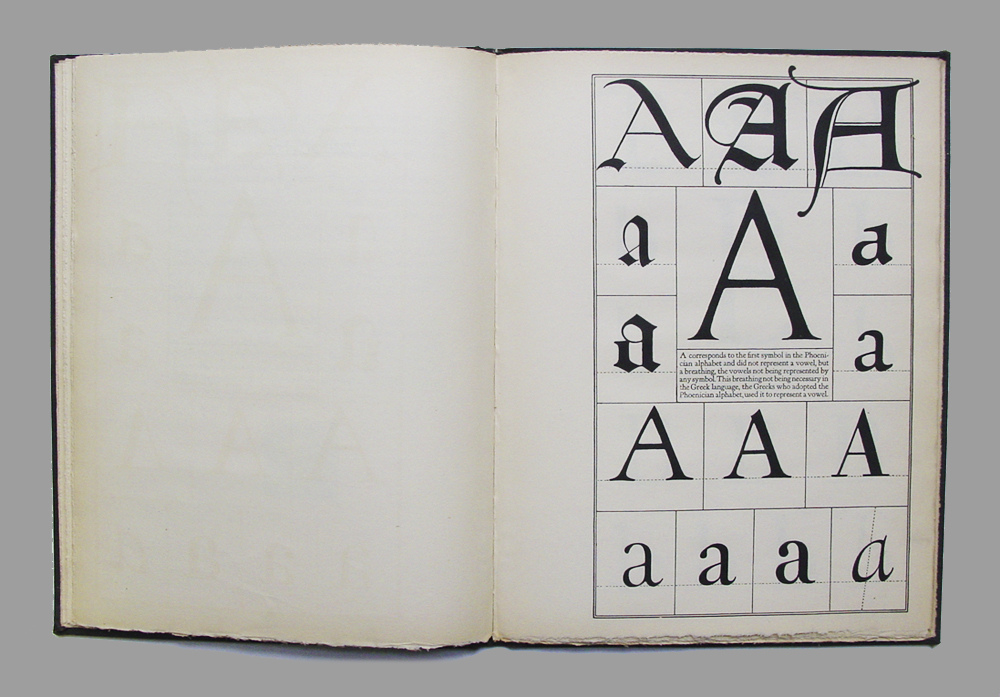
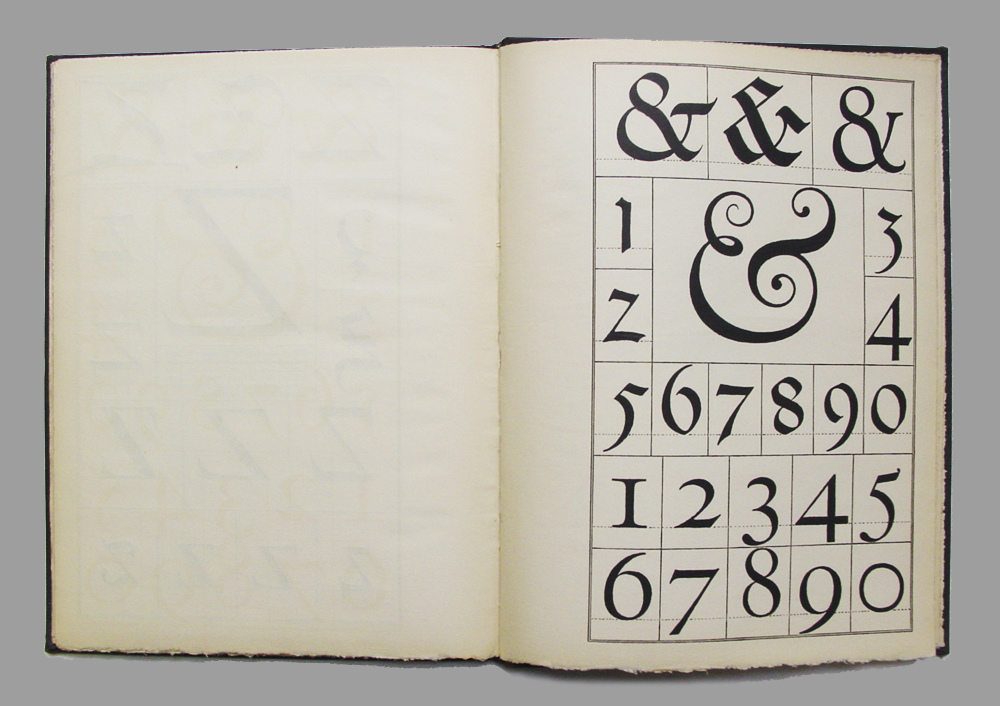
Eye Magazine has a nice feature on Frederic W. Goudy’s 1918 book The Alphabet: Fifteen Interpretative Designs.

Comments closed

Something for the Weekend

An interview with Toronto based lettering designer Ian Brignell at The Case and Point:

I’m influenced by just about everything, but I especially like the work that was done on packages from the 19th and early 20th century. I also enjoy amateur hand-lettered signs, since they often contain very quirky and original details that I would never think of. I have to mention that during college I saw a book with some examples of Herb Lubalin’s lettering work, and this was one of the moments that really made me want to pursue lettering for a living.

All Things Considered — An interview with Nate Burgos about his Rare Book Feast video project:

I enjoy writing about anyone and anything which interest me on my design-related blog, an all-people-and-things-considered destination. Then there’s tweeting, lots of it. Twitter is newsprint. Designer Lorraine Wild said, “You have to be interested in culture to design for it.”

Dull But DurableThe Guardian‘s Justin McGuirk on Soviet design and a new book on the subject called Made in Russia by Michael Idov:

There were some genuinely classic designs… The Lomo camera, with its super-saturated film, is still hugely popular in an otherwise digital world. The avos shopping bag, essentially a string vest with handles, was ubiquitous and remains far preferable to plastic bags, just as the collapsible portable cup is preferable to millions of plastic and polystyrene ones. The ribbed drinking glass, meanwhile, and the Saturna and Raketa vacuum cleaners, simply lasted for ever. We may mock Soviet design, but there are lessons to heed from it. Durability, for one. In our disposable culture, rapid replacement cycles have almost inured us to the idea that nothing lasts. Such is the price, apparently, of free enterprise and consumer choice.

Secretly Young — John le Carré’s keynote speech at the Think German Conference earlier this month (via Bookslut):

I was young when I started writing about George Smiley — twenty-eight — and Smiley was already old, a proxy father. But Smiley’s journey through the novel, despite his age, is the journey of a young man’s self-discovery. Underneath his inconspicuous exterior, he is a sensitive man still growing up, still looking for answers, and for the experience that delivers them.

In short: he is secretly young.

And Smiley’s private journey — from this first novel, right through to his last — for me at least, with the advantage of hindsight and no longer the responsibility of writing about him — is a single Bildungsroman that leads him through disappointments, mistaken loves, failures and occasional successes, to some kind of ultimate maturity: that is to say, to the point when he discovers that the object of his life’s search is neither the absolute enemy of his imagination, nor the absolute answer to his quest.

See also: Tom McCarthy, talks about his novels Remainder and C, and his life in Prague and Berlin before becoming a published writer, at The Days of Yore:

Your book is being held up as, you know, avant-garde, or as an anti-novel, or as anti-realist… None of these seem quite right. My understanding of the avant-garde is as a historical thing, it had a moment and it has an implication for now, but it’s almost like saying, “Are you leading the French revolution?” “No!” [Laughs.] If you pay too much attention, then when you sit down to write you’ve been primed to think: “Okay, so I’m being avant-garde; how do I be avant-garde?”

I don’t know exactly where I’m going next, but I don’t think it’ll be anything that blatantly looks either avant-garde or not avant-garde or realist or not realist.

And finally, seeing as it’s Friday…

A Pixaresque animated homage to the late Dave Stevens to mark the 20th anniversary of the film adaptation of his comic The Rocketeer:

(via Robot 6)

Comments closed

Favourite New Books of 2010

Ducking in just under the wire, here is my list of favourite of new books of the year. It’s not meant to represent the “best” of 2010. Rather, it’s a completely unscientific, very subjective list of books (arranged in alphabetical order) that I enjoyed. As I mentioned in my previous post, I found compiling the list a bit of a challenge and yet, for all that, there’s an air of withering predictability about the selections. There are no surprises. But even if this wasn’t a particular stellar year for reading, there were still lots of books I was excited about and that can only be a good thing.

I should also mention, for the sake of disclosure and all that, the top 10 includes one book distributed by Raincoast Books in Canada, and the list of honourable mentions refers to a couple of other titles I have helped promote in some minor capacity. They’re included here because I actually like them, not for any nefarious marketing reasons, but I guess you’ll just have to take my word for that. In any case, all these titles are identified with an asterisk…

And with that out of the way, on to the list!

Born Modern: The Life and Work of Alvin Lustig*
Elaine Cohen Lustig & Steven Heller

Chronicle Books
ISBN 9780811861274
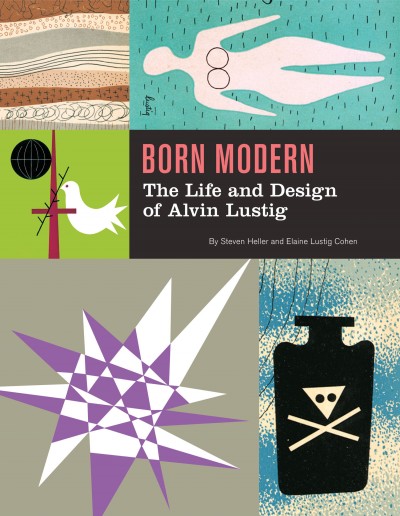
I am a little embarrassed to start this list with a title distributed by Raincoast, but it comes first alphabetically and, I can honestly say tat Born Modern was the book I was most looking forward to this year. And I was not the only person excited about the book. When I tweeted about it from the Raincoast sales conference, the response was immediate. Almost every North American book designer I’ve ever spoken to cites Lustig — who designed covers for New Directions Press in the 1950’s — as an influence. The book designer’s book designer, then… A must-have.

C
Tom McCarthy
Knopf
ISBN 9
780307593337

Tom McCarthy’s C was, as mentioned previously, one of the defining books of the year for me, standing — perhaps unfairly — opposite the ubiquitous Freedom. If I am honest though, I liked it less than McCarthy’s previous novel, the starkly compact Remainder (one of my favourite books of the last 10 years). At times, the sprawling, crawling C felt like it was held together with the sticky-tape of McCarthy’s singular intellect (a thought reaffirmed by seeing him in conversation with Douglas Coupland in Toronto). But somehow, in the end,  it still works in some sort of baffling, gorgeous way.

The book was also perfect excuse to finally talk to Knopf cover designer Peter Mendelsund for the blog. The Q & A with Peter and Tom about C is here.


The City and the City
China Miéville
Del Rey
ISBN 9780345497529

I am cheating a little by including The City and the City because it was first published in 2009. It was, however, published in paperback in 2010, and as that’s how a lot of us still buy our fiction, I’m bending the rules to include it.

The novel itself is essentially a detective story, but what lifts out of the ordinary is the imaginary space in which it takes place. Architecture, geography and maps are clearly important to Miéville, but where, for example, Perdido Street Station creates a fantastically baroque city of ghettos and towering alien architecture, The City and the City is only slightly off-kilter — familiar but unsettling — and the book is even better for it.

Joy Division
Kevin Cummins
Rizzoli

ISBN 9780847834815

This was my Christmas present (thank you Mrs C.O.!) and it is — pretty obviously I would think — for fans only. Still, I’m guessing there’s quite a few out there. In any case, the book is a collection of beautiful black and white photographs of Joy Division and the late Ian Curtis by Manchester-born photographer Kevin Cummins. It includes Cummins’ iconic pictures for the NME of the band standing on a snowy bridge in Hulme, Manchester, as well as photographs of live performances and the band back stage. The book was stylishly designed — with more than a whiff of Peter Saville — by London design agency Farrow.

Just Kids
Patti Smith
Ecco
ISBN 9
780060936228

Other than owing a copy of Horses,  I can’t say that I’m particularly familiar with the work of Patti Smith, or Robert Mapplethorpe for that matter (other than the sort of stuff must people know about his art, and that he was connected to Sam Wagstaff, no relation). But, it doesn’t really matter. Smith’s memoir about her relationship with Mapplethorpe is a touching and self-deprecating look at their early years together in New York and their adventures in the art/music scene of the late 1960’s and early 1970’s.

Memories of the Future
Sigizmund Krzhizhanovsky, translated by Joanne Turnbull
NYRB
ISBN 9781590173190

I am definitely cheating by including this in the list as it was published in 2009. That said, it was published late in 2009, I missed it, and it’s too good not to be in this year’s top 10.

The book itself  is a collection of seven short stories written between 1922 and Krzhizhanovsky’s death in 1950,  all of which were suppressed by Soviet censors. The stories are reminiscent of Gogol’s short fiction and Bulgakov’s novellas, and suffice to say, they’re all bonkers. But in a good way. I loved the story Quadraturin about the man who gets lost in his black, ever-expanding apartment, and the strange time travel title story which concludes the book.

Penguin 75: Designers, Authors, Commentary (the Good, the Bad…)
Paul Buckley

Penguin
ISBN 9780143117629

Seeing as I spend so much time talking about cover design, I would be remiss if I didn’t include Penguin 75 in my top 10. Released to celebrate Penguin’s 75th anniversary, it’s a surprisingly diverse and candid look at the recent cover designs from Penguin’s US outpost in New York.  I talked about Penguin 75 with art director Paul Buckley and book designer Christopher Brand here.

Parker: The Outfit
Darwyn Cooke

IDW
ISBN 9781600107627

The previous book in Darwyn Cooke’s Richard Stark adaptations, The Hunter, was on last year’s list, so perhaps it is hardly surprising that the sequel, which I think is better,  is in this year’s top 10 as well. In new book, the formidable Parker — now with a new face — turns the tables on ‘the Outfit’, who quickly wish that they’d let sleeping dogs lie. Cooke seems in more confident form with this adaptation and the result is a stylish and fast-paced noir that looks incredibly cool. My pithier Advent Book Blog pitch for The Outfit is here.

The Shallows
Nicholas Carr
W.W. Norton & Co.
ISBN 9780393072228

I had a frisson of recognition reading Carr’s description of internet affected attention spans and I doubt I was the only one who thought “oh god, that’s happening to me” while reading The Shallows. The book is too long — a shorter book would’ve been even more effective — but it is still compelling. Carr doesn’t say technology is wrong, but reminds us that for all its benefits, we should be mindful of the consequences and what we might be losing.

Werewolves of Montpelier
Jason
Fantagraphics

ISBN
9781606993590

I wrote about my love for Jason’s comics when Werewolves of Montpellier was about to be released earlier this year, and the book itself didn’t disappoint. Ostensibly the book is about a thief called Sven who disguises himself as werewolf to rob people’s apartments and incurs the wrath of the town’s actual werewolves. It is, however, as much about friendship, identity, loneliness, and, ultimately, Sven’s unrequited love for his neighbour Audrey. In a lovely one-page scene, Audrey stands behind Sven, hugging his shoulders.  “Do women come from another planet?” she asks. “Yes, women come from another planet,” Sven replies. The whole book is achingly brief, but Werewolves of Montpellier is possibly my favourite Jason book to date.

Honourable Mentions

American Trademarks edited by Eric Baker and Tyler Blick*
Footnotes In Gaza by Joe Sacco (December 2009)
I.O.U.: Why Everyone Owes Everyone and No One Can Pay by John Lanchester (published in the UK as Whoops!)
KENK by Richard Poplak and Nick Marinkovich*
Large Scale: Fabricating Sculpture in the 1960’s and 1970’s by Jonathan Lippincott*
The Lost Rolling Stones Photographs: The Bob Bonis Archive, 1964-1966 by Larry Marrion
The Rocketeer: The Complete Collection by Dave Stevens (December 2009)
Shirley Craven and Hull Traders: Revolutionary Fabrics and Furniture 1957-1980 by Lesley Jackson (October 2009)

So there you go. If  this hasn’t met your requirements, Largehearted Boy is aggregating every online “best of 2010” book list he can find, and Fimoculous is aggregating all of the lists related to 2010 in categories ranging from ‘Advertising’ through to ‘Words’. That should keep you busy…

Happy New Year!

aggregates all of the lists related to 2010aggregated all of the lists related to 2010)
Comments closed

A Year in Reading 2010

2010 was a year of losing battles and one of the first casualties was time for personal reading. The moments I did have were snatched on the subway and, if I could keep my eyes open, last thing at night. I often found myself unwittingly rereading chapters I had read the previous day, or worse, that very morning. The difficulty this week of compiling a list of my favourite books of the year — and the predictability of that list (to be posted soon) — made it very clear that not only did I read less than previous years, I rarely strayed off the beaten path.

The year was thus defined, for better or worse, by two big novels that were in some senses polar opposites: C by Tom McCarthy and Freedom by Jonathan Franzen. If C was modern experimental novel masquerading as an early 20th century bildungsroman, Freedom was a Victorian drama in modern dress. It felt like “Two Paths for the Novel” all over again.

Someone cleverer than me observed C “was surrounded by the sort of buzz and static which it contained and described.” But while the buzz amplified C to the Booker shortlist, the hype around Freedom and Franzen seemed to diminish the book. It was so ludicrously overpraised, and subsequently criticized and shunned, that it was almost impossible to evaluate fairly.

OTHER FICTION

Like just about everyone else, I started 2010 reading Stieg Larsson, but now, with 2011 just around the corner, The Girl Who Kicked the Hornet’s Nest remains unfinished, my bookmark at Chapter 6.

I loved the architecture and weird psycho-geography at the heart of the mysterious The City and the City (published in paperback this year) and went on to read China Miéville’s earlier, equally architectural, novel Perdido Street Station.

I was also happy to belatedly discover that Phillip Kerr had resurrected his Bernie Gunther Berlin Noir detective series. Better late than never…

Sadly neither The Imperfectionists by Tom Rachman nor Zero History by William Gibson really added up to more than the sum of their (occasionally really quite good) parts.

I simply abandoned Justin Cronin’s clunker The Passage.

Better was Canal, Lee Rourke’s L’Étranger in London. I wasn’t entirely convinced by it, but an off-beat novel about urban ennui and existential violence was a welcome change of pace. Rourke is no doubt an author to watch.

Canal had the added virtue of being short, something of  a rare and undervalued quality these days. In fact almost all of the fiction I enjoyed the most this year — the icily beautiful The True Deceiver by Tove Jansson, the bonkers Memories of the Future by Sigizmund Krzhizhanovsky, and the lyrical The Blue Fox by Sjon — were short. And not actually published in 2010.

Colony by Hugo Wilcken, also short and published in 2007, was unquestionably my favourite novel of the year. Drawing its title from Kafka’s The Penal Colony (and, in turn, Joy Division’s song Colony), the book seemed to me more like a post-modern Conrad, or perhaps Camus trying his hand at a Boy’s Own Adventure. Needless to say, I’m looking forward to Wilcken’s next novel…

NONFICTION

I waited too long to read Patti Smith’s wistful and self-depreciating memoir Just Kids, but I was charmed by it nonetheless. I was less enthralled with Bob Dylan in America by Sean Wilentz. I was not, I suspect, the target audience however…

Jared Lanier’s You Are Not a Gadget: A Manifesto and Nicholas Carr’s The Shallows both raised intelligent concerns about development of the internet. I was less convinced by Lanier’s polemic than Carr’s tweedier defense of long-form reading, but neither were as reactionary as they were sometimes characterized, and both offered interesting insights whether one agreed with them or not.

The subjective magazine-style reportage of War by Sebastian Junger and the gossipy Game Change by John Heilemann and Mark Halperin were both signals of what we can expect from nonfiction in future.  But both were troubling, especially War, which felt both narcissistic and yet, at the same time, voyeuristic and exploitative. Neither book properly addressed the complications of embedded insider journalism.

Both War and Game Change were, at least, entertaining. That cannot be said of Bob Woodward’s less than electrifying Obama’s Wars. There is something to be said for detailing events in chronological order, but that doesn’t make it any more readable. Worse, perhaps, I didn’t gain any greater insight into what had happened.

COMICS

Even though Dan Clowes is the godfather of the miserable asshole, it is now such a common trope in indie comics that despite his undeniable virtuosity I was somewhat disappointed by the uncompromising Wilson. It was, however, unfair of me to expect Clowes to be anyone other than Clowes, and just about everyone whose opinion I respect tells me I am wrong about this book, so don’t take my word for it.

KENK took up a lot of my professional time this year so I was glad to see it get such a positive critical response and I’m hopeful that it will finally see a US release in 2011.

Having a short attention span, I enjoyed the latest installment of Hellboy, and its gothic spin off Sir Edward Grey Witchfinder, but continued to be underwhelmed by Mignola’s plodding BPRD series.

Like just about every other nerd in Toronto I read the 6th and final installment of Bryan Lee O’Malley’s Scott Pilgrim series (now handily available as a box set). I also finally read Jeff Smith’s epic Bone from cover to cover and revisited The Rocketeer stories by the late Dave Stevens, which were collected, at long last, in a slim hardcover edition at the end of last year.

I loved The Outfit, the latest installment of Darwyn Cooke’s adaptations of Richard Stark’s Parker stories (my Advent Book Blog recommendation this year), and Jason’s strange and delightful Werewolves of Montpelier.

Footnotes In Gaza (published late in 2009) left me depressed, but thoroughly in awe of Joe Sacco.

THE ONES I DIDN’T GET TO (BUT MEANT TO)

The list of new books that I had every intention of reading this year but didn’t is far, far, too long. Here, however, are a few of the books (in no particular order) that I intend to get to sooner rather than later: Matterhorn by Karl Marlantes, Our Tragic Universe by Scarlett Thomas, Super Sad True Love Story by Gary Sheyngart, A Visit From the Goon Squad by Jennifer Egan, Every Man Dies Alone by Hans Fallada,  Boxer, Beetle by Ned Beauman, Kraken by China Miéville, What Ever Happened to Modernism? by Gabriel Josipovici, The Hare With Amber Eyes by Edmund Dewaal, A History of the World in 100 Objects by Neil MacGregor, Just My Type: A Book About Fonts by Simon Garfield, Set to Sea by Drew Weing and H.P. Lovecraft’s At the Mountains of Madness adapted by Ian Culbard. There are no doubt many, many more… I would love to hear what you read and enjoyed this year and what I should add to the list of books for 2011…

2 Comments