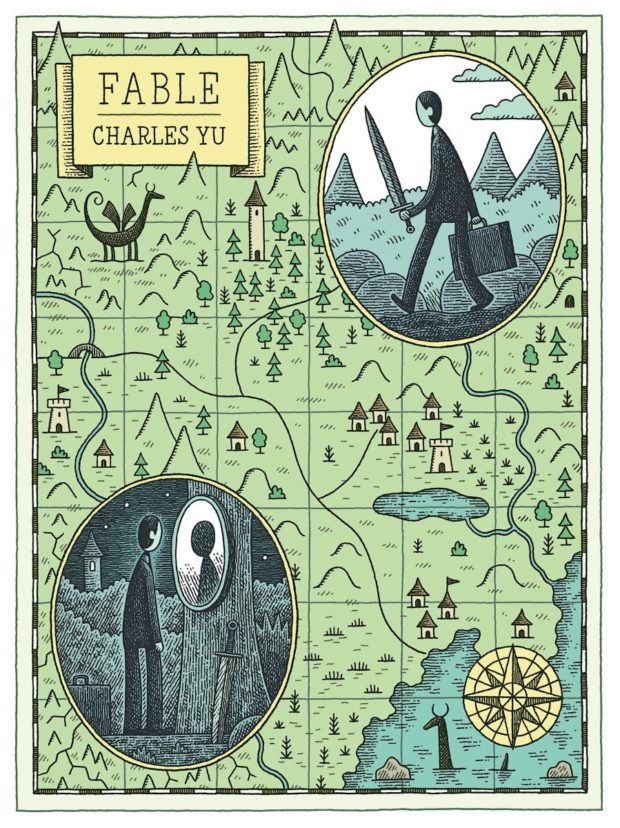
Not an actual book cover, but a new Tom Gauld illustration for a Charles Yu (Sorry Please Thank You) short story in The New Yorker.
Tom has also just joined Instagram if that’s your thing.
Comments closedBooks, Design and Culture
Not an actual book cover, but a new Tom Gauld illustration for a Charles Yu (Sorry Please Thank You) short story in The New Yorker.
Tom has also just joined Instagram if that’s your thing.
Comments closedIllustrator Roman Muradov has drawn a beautiful adaptation of Lydia Davis’s (very) short story ‘In a House Besieged’ — originally published in the collection Break It Down (1986) — for The Paris Review:
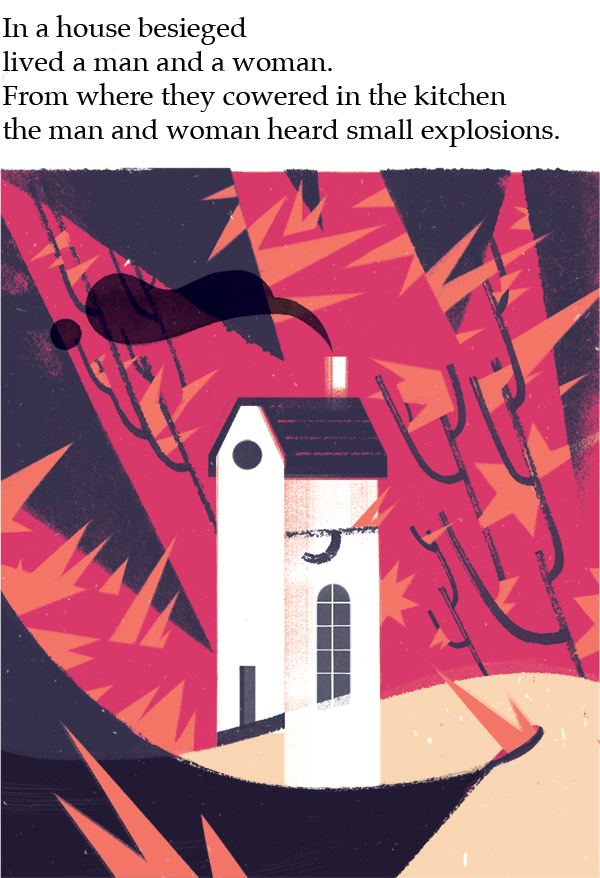
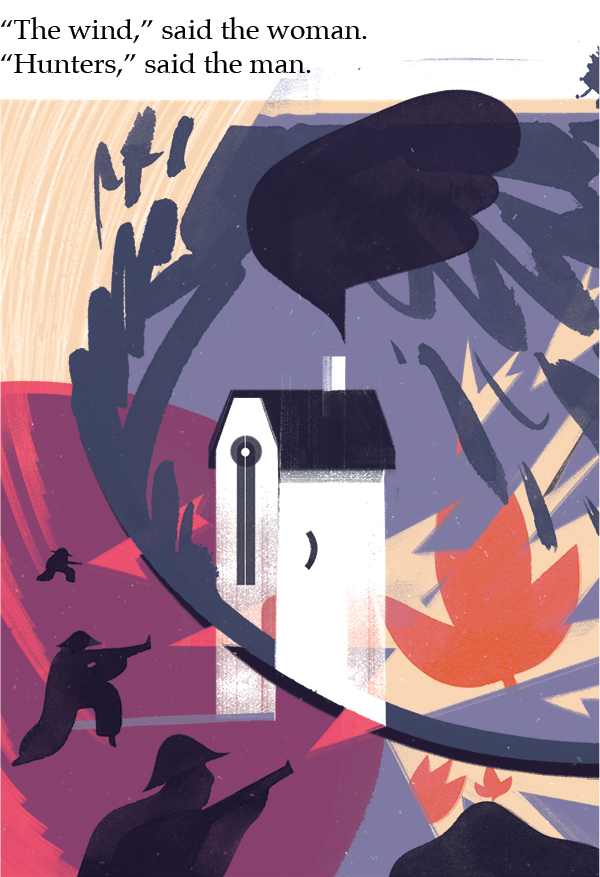
You can read the rest of the story here.
Comments closed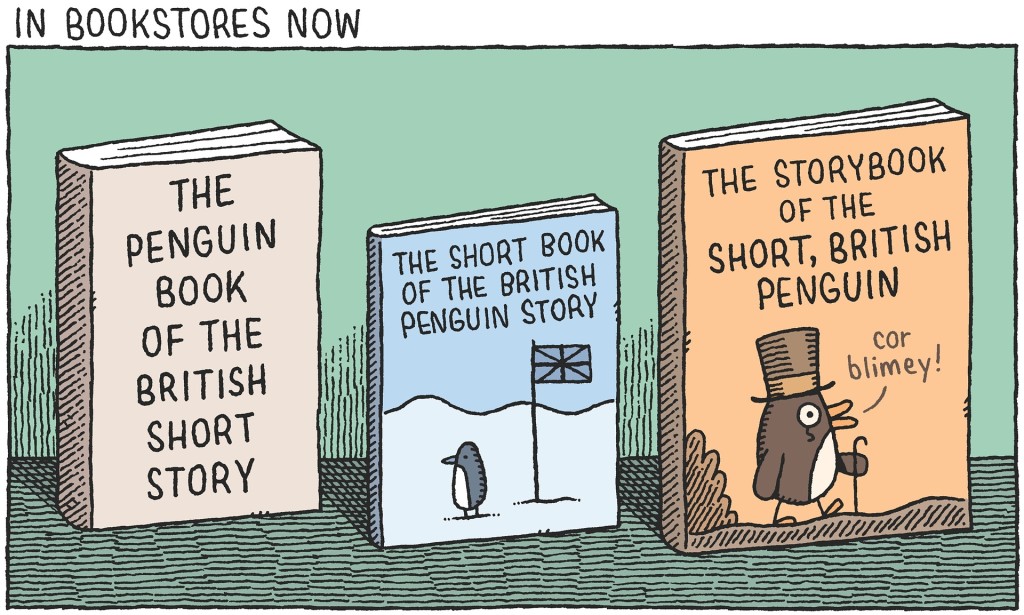
Cor Blimey! Tom Gauld for The Guardian.
And, if you’re curious, the rather splendid covers for the actual two volumes of The Penguin Book of the British Short Story were designed by Matthew Young:


Colors fill up your mind too much with all sorts of muddled stuff. Colors are too sweet a muddle, nothing more. I love things in one color, monotonous things. Snow is such a monotonous song. Why shouldn’t a color be able to make the same impression as singing? White is like a murmuring, whispering, praying. Fiery colors, like for instance Autumn colors, are a shriek. Green in midsummer is a many-voiced song with all the highest notes. Is that true? I don’t know if that is right. Well, the teacher will surely be so kind as to correct it.

At The New Yorker, Ben Lerner considers the writing of Robert Walser:
There is the typically Walserian statement “I love things in one color, monotonous things.” Praise for the monotonous, the uniform, the mundane, the insignificant—such sentiments are everywhere in Walser’s work, and maintain a crucial ambiguity. On the one hand, they are expressions of poetic attunement to those aspects of the world we too readily overlook, and for which writers concerned with heroic exploits often have no time. On the other hand, Walser’s celebration of the monotonous or uniform returns us to his fascination with subservience, with relinquishing all personality to imposed order: “Modestly stepping aside can never be recommended as a continual practice in strong enough terms.”
The force of Walser’s writing derives from this simultaneous valorization of irreducible individuality and of sameness, smallness, interchangeability.
Lerner has written the introduction to a new NYRB collection of Walser short stories, A Schoolboy’s Diary and Other Stories, translated by Damion Searls.
Comments closed
In an interview for the New Yorker, Haruki Murakami’s longtime translator Jay Rubin talks about the work of the Japanese author (whose new book 1Q84 has just been published) and his own work as a translator:
New Yorker Outloud: Translating Murakami mp3
The New Yorker also published a Murakami short story, Town of Cats, translated by Rubin, in September.
Comments closed
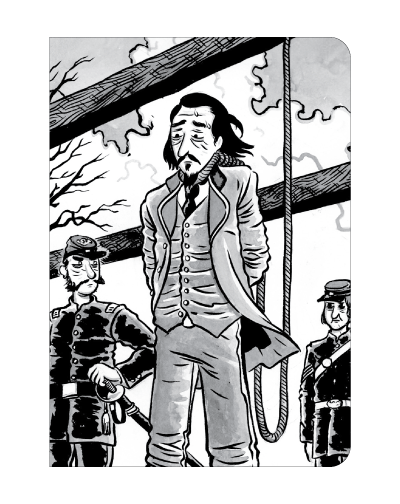
Good Ink, a new imprint of Portland’s Scout Books, have announced a new collection called American Shorts. Each pocket-sized volume in the series pairs a contemporary illustrator with a classic American short story. The first releases are An Occurrence at Owl Creek Bridge by Ambrose Bierce, illustrated by François Vigneault; Rip Van Winkle by Washington Irving, illustrated by Bwana Spoons; and The Jelly Bean by F. Scott Fitzgerald, illustrated by Vanessa Davis. (Pictured below, an illustration by François Vigneault for An Occurrence at Owl Creek Bridge).
Misery Loves Company — Edward St Aubyn, whose most recent novel At Last was released in May, interviewed in The Guardian:
The curious thing about St Aubyn’s novels is the way they counterpoint personal suffering and social comedy: it is misery lit recast by Evelyn Waugh. The upper class into which he was born and which failed to protect him is mercilessly skewered, including Princess Margaret, who does a brilliant comic turn in Some Hope, the third volume in the trilogy. “For some reason I can’t really analyse, I alternate between those two things,” St Aubyn says, “and I feel that to stay with just one of them would somehow be false. But the rhythm is completely instinctive. I’ve just had enough of the anguish, so I move on.”
Also in The Guardian: Anthony Clavane, author of Promised Land: A Northern Love Story, selects 10 novels about football (or soccer if you must).
And because it’s Friday (and an otherwise light news day), here’s Yowie and the Magpie, a great piece of animated storytelling made for Film London / UKFC Pulse Digital Shorts:
Comments closed
Holly MacDonald is Assistant Art Director at Bloomsbury in London. She has some of her own lovely cover designs on her blog.
Losing the Knack — Stephen King talks about his creative process and the current state of short fiction at The Atlantic:
I’ve got a perspective of being a short-story reader going back to when I was 8 or 9 years old. At that time there were magazines all over the place. There were so many magazines publishing short fiction that nobody could keep up with it. They were just this open mouth going “Feed me! Feed me!” The pulps alone, the 15- and 20-cent pulps, published like 400 stories a month, and that’s not even counting the so-called “slicks” — Cosmopolitan, American Mercury. All those magazine published short fiction. And it started to dry up. And now you can number literally on two hands the number of magazines that are not little presses that publish short fiction… You don’t see people on airplanes with their magazines folded open to Part 7 of the new Norman Mailer. He’s dead of course, but you know what I mean. And all of these e-books and this computer stuff, it kind of muddies the water and obscures the fact that people just don’t read short fiction. And when you fall out of the habit of doing it, you lose the knack, you lose the ability to sit down for 45 minutes like you can with this story and get a little bit of entertainment.
Also at The Atlantic: Peter Osnos, founder of Public Affairs Books, on how publishing has changed since 1984.
No Comment — Khoi Vinh, former-Design Director for NYTimes.com, writing on his own blog Subtraction about how comments and blogging are changing:
Comments closed[B]logging in the style that I cherish — the Blogger/MovableType/WordPress.org style, you might say, where each blog is a kind of an independent publication — now feels somewhat like a niche activity practiced by relatively few, where it once seemed like a revolutionary democratization of publishing. What seems more lively, more immediate and more relevant right now is what I might call ‘network blogging’ — content publishing that’s truly integrated into a host network like Tumblr or Twitter, that’s not just on the network, it’s of the network too. It’s simpler, faster, more democratic than what came before. It’s not my preferred style of blogging, but it’s hard to acknowledge that it’s not incredibly exciting in very different ways.
Part of this change, I think, is a decline in commenting… [T]here are much more absorbing content experiences than independent blogs out there right now: not just Tumblr, but Twitter and Facebook and all sorts of social media, too, obviously, and they’re drawing the attention that the ‘old’ blogs once commanded. Moreover, these social networks allow people to talk directly to one another rather than in the more random method that commenting on a blog post allows; why wouldn’t you prefer to carry on a one-on-one conversation with a friend rather than hoping someone reads a comment you’ve added to a blog post…?