Skip to content

Tag: Reading

Midweek Miscellany

Survival Training — Colson Whitehead, author of Zone One, on watching horror flicks and b-movies, in science fiction edition of The New Yorker:

It was survival training. “A Clockwork Orange,” which I saw several times on HBO before I was ten, taught me more about not opening my door to strangers than a hundred school-assembly lectures. I never talked much in educational settings, so it is unlikely that I asked my mother, “What are they doing to that woman?” during my introduction to Stanley Kubrick, but, had I inquired, I’m sure she would have said, “It’s a comment on society, son.”

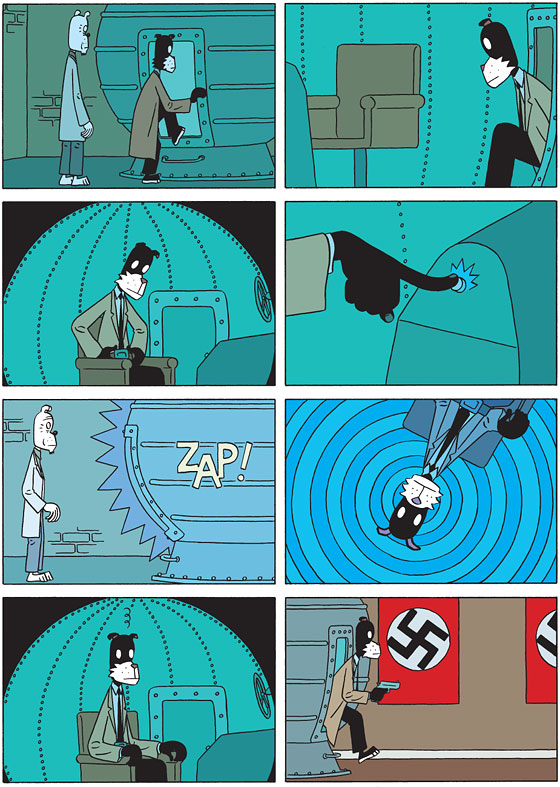
See also: Laura Miller on the first fictional space aliens, William Gibson on science fiction and Tomorrow, and cover illustration by Daniel Clowes (pictured above).

And on a related note: Nobel Prize-winning economist Paul Krugman talks science fiction at Wired.com:

I read Foundation back when I was in high school, when I was a teenager, and thought about the psychohistorians, who save galactic civilization through their understanding of the laws of society, and said “I want to be one of those guys.” And economics was as close as I could get. Those are pretty unique novels — they really are structured nothing like even the great bulk of science fiction, because they are about how social science can be used to save humanity.

Terrifying French children’s books.

And finally… An interesting interview with The New York Times media columnist David Carr (and star of the documentary Page One) at Talking Points Memo:

The tools of production are at hand for everyone. I used to hire a lot of young people when I was the editor of Washington City Paper, and you used to have them show you the clips and see where else you worked. Show me what you’ve made with your own bare little hands. That, I think, is super important. People say, “You should’ve been here for the good old days.” I think that’s crazy. Yeah, it’s a little harder, but you have so many more tools at your disposal to story-tell. It’s cool to be in a business where you still learn. You don’t have to be able to code yourself, but you have to know what coding is. You should be able to work in Final Cut Pro. WordPress should be second-nature. I think, in generational terms, being able to produce and consume content at the same time.

Comments closed

Something for the Weekend

A busy week for John Gall, Art Director at Anchor/Vintage: he unveiled a beautiful new website, and his design for the paperback boxed set of 1Q84 by Haruki Murakami (pictured above). My Q & A with John is here.

Los Angeles Review of Books also has a swanky new website.

Let’s Not Get Carried Away — Harvard professor Ann Blair, author of Too Much To Know, on the history of information at The Browser:

“Reading” covers a wide range of practices. Medieval scholasticism, for example, favoured a ponderous kind of reading of difficult Latin texts done by a few qualified scholars with pen in hand to comment on them. This kind of reading typically took place in a library or study with access to many other learned books. Novel reading was very different when it developed, especially in the 18th century – novels were viewed as engrossing and escapist entertainment, which was typically enjoyed in a nice comfy chair. Interestingly, this kind of reading, which we try to encourage in our children today, worried people in the 18th century. Wouldn’t girls especially get carried away by flights of fancy? People thought it important to control reading. For instance, it was considered better to have girls read in a circulating library since a public setting imposed limits on how far they could get carried away. So some of the fears parents have today about kids playing video games used to apply to reading.

And finally…

Howard Jacobson on Wisden’s Cricketer’s Almanack for the Independent:

What a wonderful thing is Wisden, that lovely, lozengy, yellow-jacketed, Bible-shaped and Bible-weighted cricketers’ almanack, 1,500 pages deep, in which the averages of batsmen and bowlers and wicketkeepers, English and not-English, male and female, living and dead, are collated with a mystic punctiliousness that proves beyond argument the existence of God. You want to see the Divine Watchmaker at work on the mathematics of life? Then read Wisden.

Comments closed

Midweek Miscellany

Insufficiently Bored — An essay by author Toby Litt on technology and reading (and writing) at Granta:

Proposition: ‘The human race is no longer sufficiently bored with life to be distracted by an art form as boring as the novel.’

Perhaps novels will continue, but instead of the machine it will be the connectivity that stops, or becomes secondary.

What we’re going to see more and more of is the pseudo-contemporary novel – in which characters are, for some reason, cut off from one another, technologically cut off. Already, many contemporary novels avoid the truly contemporary (which is hyperconnectivity).

Rereading All Over Again — Bharat Tandon reviews On Rereading by Patricia Meyer Spacks and Second Reading by Jonathan Yardley for the TLS:

[If] rereading… teaches us anything, it is that the conjunctions between readerly and textual lives will always be unpredictable and promiscuous ones. “What did you make of that book?”, runs the conventional phrase. As we revisit the objects of our reading, like recognizable but weathered landmarks, there can be no full going back, because we are not exactly the same people we were; but the consolation of rereading is the knowledge that we are these different people in part because of what those books have made of us.

Artwork Confidential — An interview with Daniel Clowes about the first retrospective museum exhibition of his work, “Modern Cartoonist: The Art of Daniel Clowes, and the accompanying monograph at Publishers Weekly:

[T]he work wasn’t created to be seen on a wall. The final artwork is the book. But I collect original artwork. It has a meaning to me that goes beyond the printed page. It’s the only [kind of] artwork you can see on a wall that you may already have a personal relationship with. If you read the story that that artwork comes from, you have a connection to it in a way you don’t have with a painting or something that’s only intended to be seen in that context. That made it interesting to me. There’s something about that final piece as an artifact of the printed work that gives it a certain value and magic. My goal with both [the exhibition and the book] is to get people interested in the work and then to read the books. If that is achieved, then both of these will have been a success.

And finally…

Six Degrees of Aggregation — A really fascinating history of the Huffington Post at the CJR:

Huffington Post, they understood, was not an enterprise whose core purpose was the creation of works of journalism—as significant or mundane as that can be. It was in the content business, which created all sorts of possibilities of what it could gather and, with a new headline and assorted tags, send back out, HuffPost’s logo affixed. Content would come to mean original reporting by Sam Stein or Ryan Grim from Washington, as well as Alec Baldwin’s blog, Robert Reich’s rants about the forsaking of the American worker, a “Best Retro Bathing Suits” slide show, “Why Women Gladly Date Ugly Men,” David Wood’s Pulitzer Prize-winning 10-part series on wounded veterans, “Nine Year Old Girl’s Twin Found Inside Her Stomach,” campaign dispatches from the Off The Bus citizen journalists, “Angelina and Brad Wow at Cannes,” and “Multitasking Wilts Your Results and Relationships”—as well as Nico Pitney’s blogging on the violence after the disputed 2009 Iranian presidential elections and the 111,000 comments it generated. Because comment was content, too.

Comments closed

Midweek Miscellany

A.S. Byatt by reviews Peter Carey’s latest novel The Chemistry of Tears for the Financial Times.

Also at the FT: Jennie Erdal, author of The Missing Shade of Blue, on philosophical novels:

The more novels I read at university, the more I felt that fiction was where truth was to be discovered. I seemed to experience Melville’s “shock of recognition”; which is to say re-cognition, for it was there already, waiting to be reawakened – the knowledge that some things, not least what it is that makes us human, can never be adequately expressed in conventional philosophical prose.

Scheduling Time to Stare Out of the Window — Clay Shirky on boredom (via Nicholas Carr):

It was only later that I realized the value of being bored was actually pretty high. Being bored is a kind of diagnostic for the gap between what you might be interested in and your current environment. But now it is an act of significant discipline to say, “I’m going to stare out the window. I’m going to schedule some time to stare out the window.” The endless gratification offered up by our devices means that the experience of reading in particular now becomes something we have to choose to do.

No Friends But Empty Chairs — Michael Dirda on Philip Larkin for The New Criterion:

As Alan Bennett observed, the poet acted sixty all his life and made a profession of it. Larkin certainly had absolutely nothing going for him physically, being tall and stooping, bald, deaf, overweight, with an occasional stammer, multiple chins and inch-thick spectacles. As if this weren’t enough, he generally wore dark, ill-fitting suits or—when on holiday—prissy shorts or a checked tweed sport coat. (A famous picture shows him in such a coat, sitting primly next to a sign that says “England.”) He wasn’t joking when he said, “Deprivation is for me what daffodils were for Wordsworth.”

And finally…

Generation Intern — Tim de Lisle on the appointment of 37 year-old Lawrence Booth, “the youngest [editor] in living memory”, to the helm of Wisden Cricketers’ Almanack:

Today’s young journalists have become Generation Intern, condemned to do one not-quite-job after another. Lawrence’s story offers hope, and some lessons. Be professional and adaptable. Embrace both print and web. Don’t fret if you get laid off. Hold your nerve and keep your voice. Write a piece as crisply as you write an email.

2 Comments

Q & A with Jason

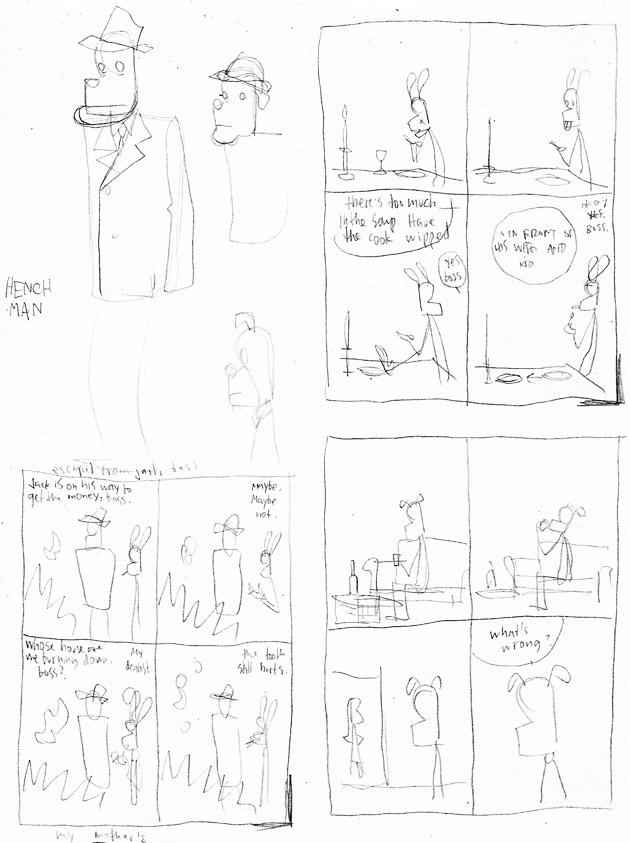
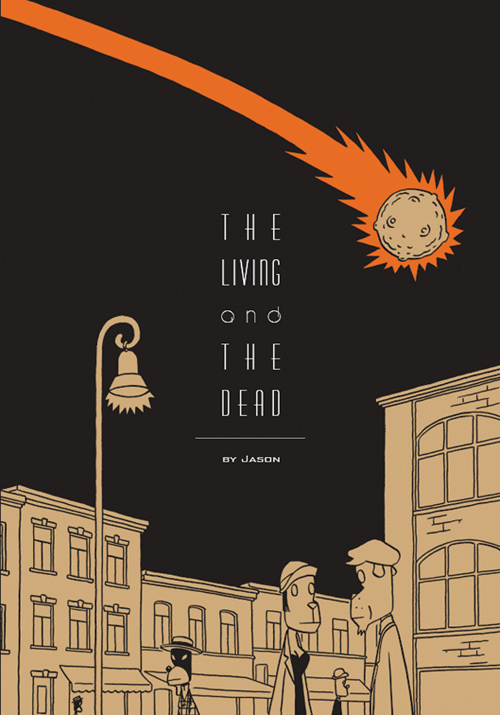
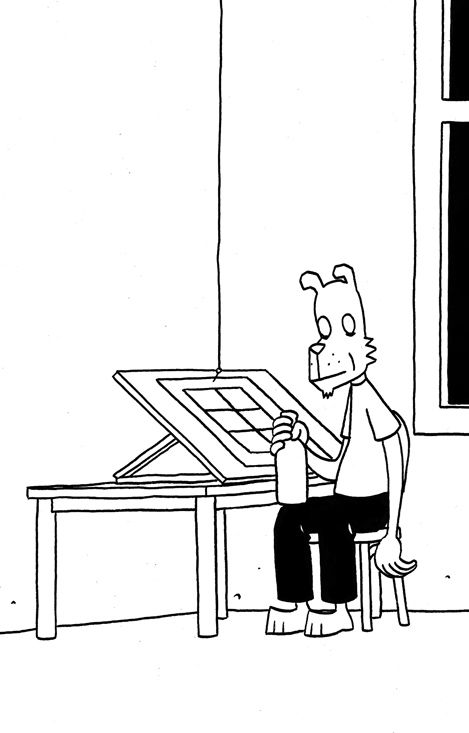
I’ve written about Norwegian cartoonist Jason for The Casual Optimist before and his work appears here with unerring regularity — if you are a frequent reader you are no doubt already familiar with it.

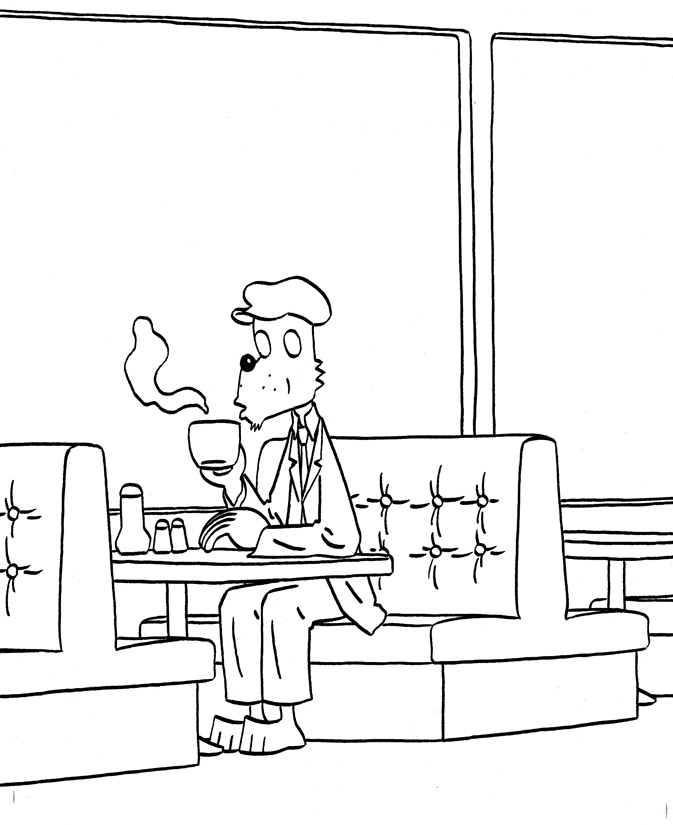
Like British cartoonist Tom Gauld who I interviewed early this year, Jason’s comics are immediately identifiable. You cannot mistake them for the work of someone else. And again, like Tom, Jason’s work references both the pop and the high-brow: zombies and werewolves on the one hand; Hemingway and the Beats on the other. The result is both original and off-beat. His protagonists are like renegades from a Max Fleischer cartoon who’ve inadvertently wandered into a Jim Jarmusch movie… Anthropomorphic animals smoking cigarettes, drinking coffee, talking about French actresses. Action and slapstick wrestle with ennui and loneliness.
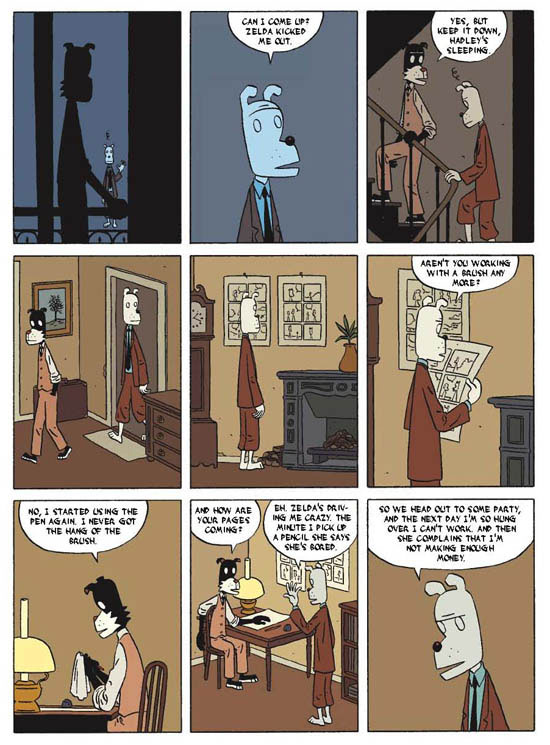
Jason, whose work has been translated into Swedish, Spanish, German, Italian and French, currently lives in Montpellier, France. He was kind enough to talk to me in English. His new short story collection Athos in America will be published in December by Fantagraphics.
 

When did you first start drawing cartoons?

Around age 13, I guess. And then at age 16 I started selling cartoons and one page strips to a Norwegian humour magazine. I did that through high school.

Did you always want to be a professional cartoonist?

No, it was a hobby. To become a cartoonist in Norway was not much of an option. I went to art school to become an illustrator, but my career never took off, so I kept doing comics. I met other cartoonists in Oslo, there was sort of a little scene. And then I moved to France to be closer to the French comic book industry. I did books that were translated into English, French plus some other languages, and the last seven or eight years I’ve been able to have an income almost exclusively from doing comics.
How did you become involved with your US publisher Fantagraphics?

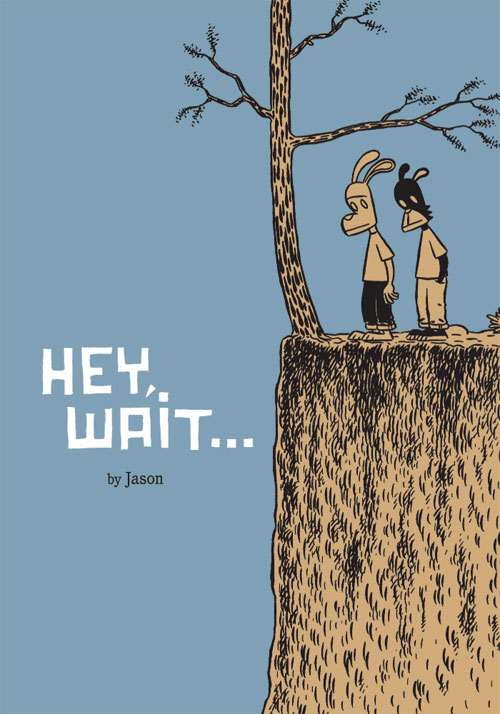
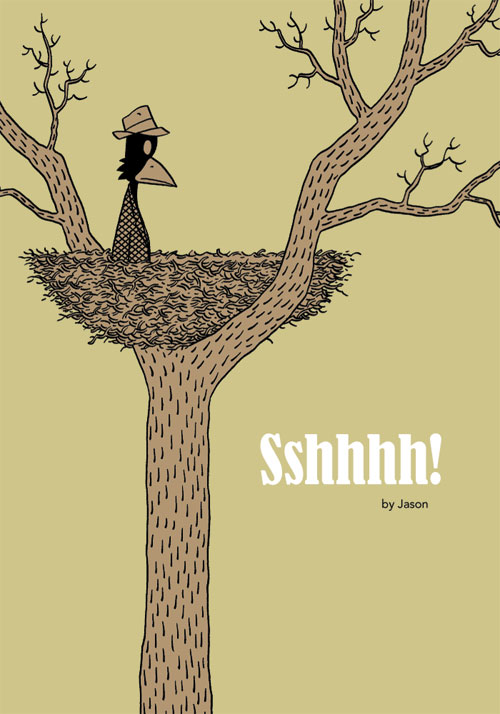
We sent — that is me and my Norwegian publisher, Jippi — we sent Hey, Wait… to Fantagraphics. I’m still not quite sure if Kim Thompson read our submission or if he had already read the French version, but anyhow, they decided to publish the book, and then later Shhh! And The Iron Wagon. And for some strange reason, the books seem to sell okay, so I’m still published by them. [Hey, Wait…, Shhh! and The Iron Wagon are collected in the book What I Did]
Briefly, could you describe your working process?

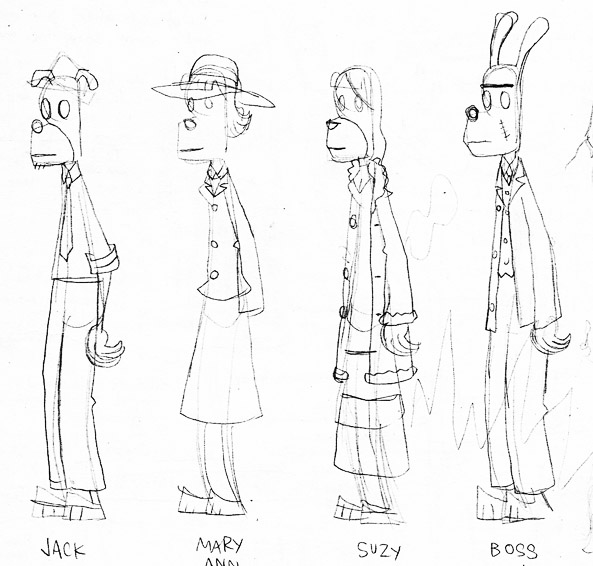
I have ideas in my brain, just lying there, that I sometimes think about. This can last years. Then suddenly I can get ideas for dialogues. I write this down. It’s maybe four or five pages. I can start working on those, and at the same time think about what’s going to happen next. I don’t write a full script. It’s based on improvisation. I write pieces of dialogue. Or sometimes I sketch out the pages first, the images, and write the dialogue after. I usually work on nine or ten pages at the same time, pencil a bit here , then ink it, and then pencil a bit there and ink that. It’s the completely wrong way of doing it, by the way, but it seems to be the only way I can work.
Your work often references classic movies. What are some of your favourite films?

How much room do you have? I like Fred Astaire and Ginger Rogers films, film noir, Brian De Palma, John Ford, especially The Searchers and Howard Hawks, especially Rio Bravo, Buster Keaton, Laurel and Hardy. Paris, Texas, Down by Law, Animal House, Blues Brothers, Fanny and Alexander, Five Easy Pieces, The Last Picture Show, Miller’s Crossing, Roman Holiday, On The Waterfront, Life of Brian. Days of Heaven by Terrence Malick is probably my favourite film.
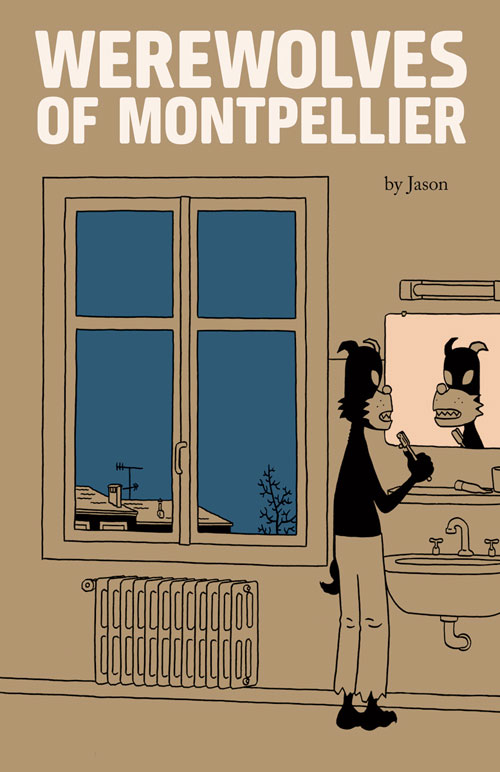
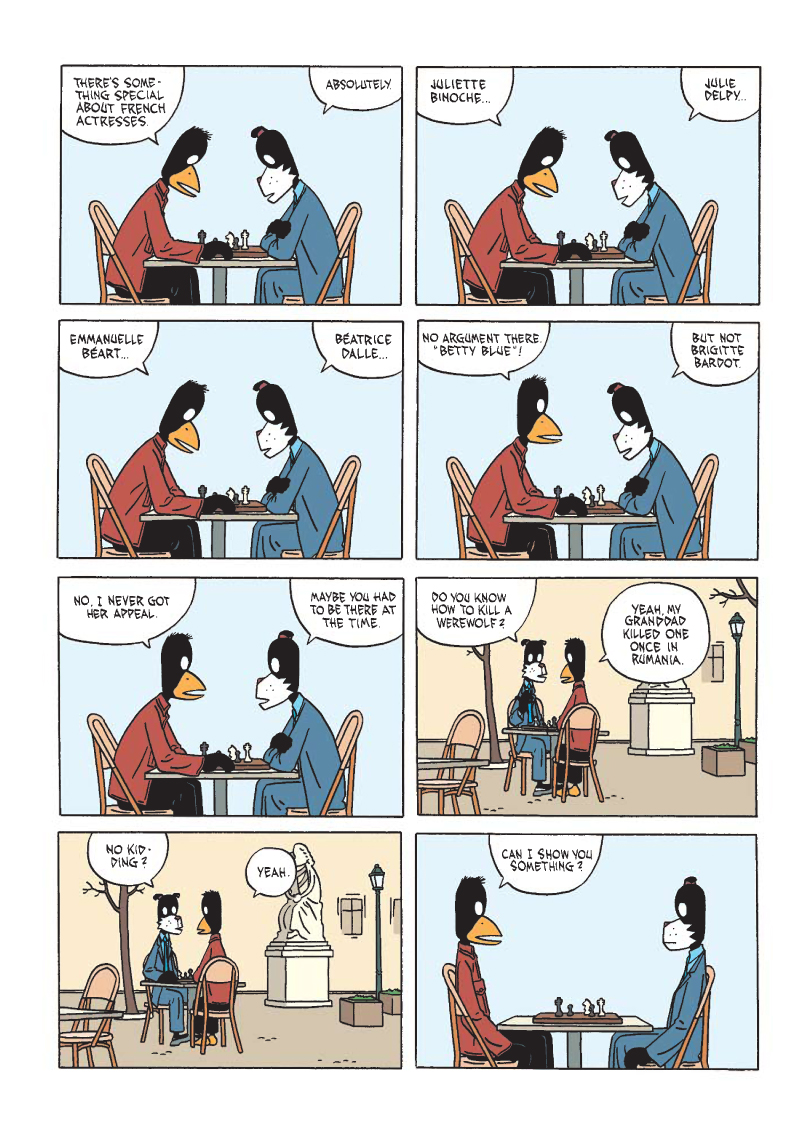
In your recent book Werewolves of Montpellier, one of the characters says they don’t understand the appeal of Brigitte Bardot. Really?

Yes, really! What, you like her? She just looked a little stupid to me. I find Catherine Deneuve a lot more appealing, or Emmanuelle Beart and Julie Delpy to stick with French actresses.
You recently post a list of your 5 favourite Tintin books. Has Hergé been an influence on your work?

Yes, very much so. It was one of the first cartoonists that appealed to me. I borrowed his albums at the library as a kid. I started drawing my own cartoons. And I think you can have a much worse teacher than Hergé. It’s not really the clear line that is the most important thing, even if that is part of what I like with him, it’s more the very clear storytelling that you find in his books. On page three you’re hooked. I think you can read his books in a foreign language, in Russian, and still understand the story and enjoy it. I don’t re-read the books that often, but I often take them out, my favourite albums like The Broken Ear and The Shooting Star, and just look at the drawings.

What do think about the new Steven Spielberg adaptation?

I’ve only seen the trailer. It doesn’t look that bad. I don’t want to just completely rule it out, like its a sacrilege and that Spielberg has no right to adapt Hergé. Not sure about the computer animation, but the original plan was apparently live action with a computer animated Terry [Milou/Snowy], and I think I really would have hated that. And the European animation films, based on each album, are just terrible. Everything that is exciting and funny in the albums are completely lost in the animation films. So I don’t think the Spielberg film can be any worse.
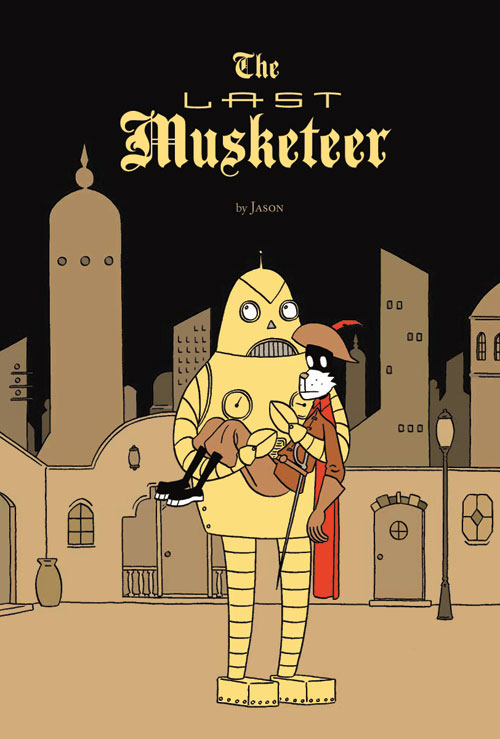
Who are some of your other creative heroes?

Jim Jarmusch, Hal Hartley, Wes Anderson, Aki Kaurismäki. Jaime Hernandez, Jim Woodring, Daniel Clowes, Chester Brown.

Who else do you think is doing interesting work right now?

There are two Argentinian cartoonists I like, Liniers and Pablo Holmberg. The French cartoonist Christophe Blain. Calef Brown’s children books. I like the Mutts books by Patrick McDonnell. I’m not sure if it’s necessarily «interesting», but I find them appealing. It’s like the last, good newspaper strip. I like the old newspaper strip collections: Captain Easy, Prince Valiant, Little Orphan Annie, Gasoline Alley.
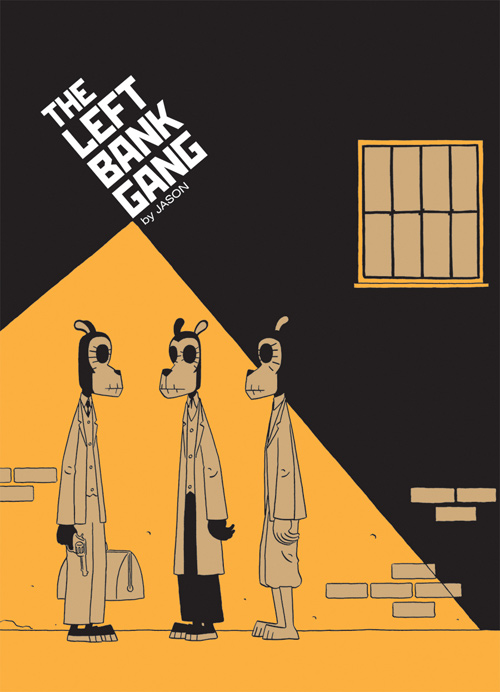
What books have you read recently?

This summer I read The Selected Letters by Jack Kerouac, Off The Road by Carolyn Cassady. I tried to read The Subterraneans by Kerouac, but gave up. I read Chronicles by Bob Dylan, Positively 4th Street by David Hadju and A Freewheelin’ Time by Suze Rotolo. I also read Dave Van Ronk’s memoirs, The Mayor of MacDougal Street, so I look forward to the new film by the Coen brothers, based on his life. What else? Blood Meridian by Cormac McCarthy, Last Night in Twisted River by John Irving and Freedom by Jonathan Franzen. I’m currently reading Volume 1 in The Letters of Ernest Hemingway.
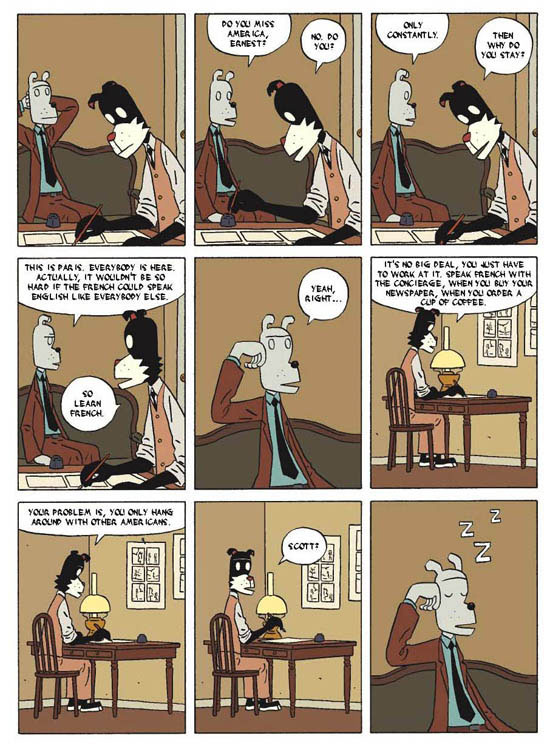
What are a few of your favourites books?

Well, Hemingway. The Sun Also Rises and A Farewell to Arms, his short stories. Bukowski, mostly his novels, but I’ve also started reading his poetry. Raymond Carver and Tobias Wolff. Lorrie Moore, her short stories. Kelly Link. There’s a British writer I like, Rupert Thomson. John Fante, especially Ask The Dust, John Steinbeck, especially East of Eden and Grapes of Wrath, Cormac McCarthy, especially The Road and No Country for Old Men. Raymond Chandler and other old pulp writers like Charles Willeford and David Goodis. I like Elmore Leonard. Paul Auster. John Irving. Every four or five years I re-read Cider House Rules, Garp and Hotel New Hampshire.

Are there any stories you would like to illustrate?

Yes, there are one or two books I’d like to adapt to comics. But I’ll probably wait until I’ve run out of ideas myself.
Do you worry about the future of books and print?

No. I don’t know. The bike didn’t disappear when the car came. There are hopefully room for both books and electronic media. Personally I’ll stick with paper. I’ve no interest in reading on a screen. And I’ll be dead in 40 years anyhow. How much can they screw it up by then?

Thanks Jason!
 

6 Comments

Live and Breath Imagination

In this lovely video for Crane.tv, Sylvia Whitman, manager of Shakespeare & Co. and daughter of founder George Whitman, talks about the storied Parisian store and the wonder of good independent bookshops:

(via Port Magazine)

Comments closed

Whither the Library?

Going to the library is one of my earliest memories. I don’t remember much about the books, but I remember the building — its steps and its smell — and I remember the funny pinkish orange library tickets for children. I think I could take out three books at once.

I also remember that the library was not that close to where we first lived. We must have gone on the bus. It was surely an adventure for me, but a pain for my parents.

We’re more fortunate now. My family and I can walk to the library. It takes about 5 minutes — longer if we are distracted by a friendly dog or the need to jump off a wall.

I borrow picture books and music for their kids; books, comics, DVD and CDs for me. I request most of things from the library website. I can do it whenever something comes to mind or I read about it online. The books (and it is mostly books if I am honest) come from libraries across the city and I get a call at home when they arrive at my branch. I don’t know how many books I can borrow at once — I’ve never hit my limit (not for lack of trying, however) — but I must have at least 7 or 8 things out at the moment. It is an amazing service.

Our library is always busy — no matter the time of day — with people of all ages and from all walks of life. Some, like me, are borrowing books, movies or music. Others are reading newspapers and magazines. Some are making use of the programs that the library runs. Some are using the only computers they probably have any access to.

But here in Toronto, as in many towns and cities in the UK and US, library cuts are now being seriously discussed by politicians who do not appreciate their value to neighbourhoods and who apparently wouldn’t recognise Margaret Atwood on the street. It is hard to imagine they have visited to a library recently, let alone made use of its services.

On yesterday’s CBC news show The Current there was a lengthy and interesting discussion of libraries and their future. Contributors included librarian Ken Roberts, local councillor Sarah Doucette, and Julia Donaldson, the UK’s Children’s Laureate and author of The Gruffalo:

CBC RADIO THE CURRENT: Whither the Library?

If you live in Toronto, you can sign an online petition in support of the public library system here.

Comments closed

Midweek Miscellany

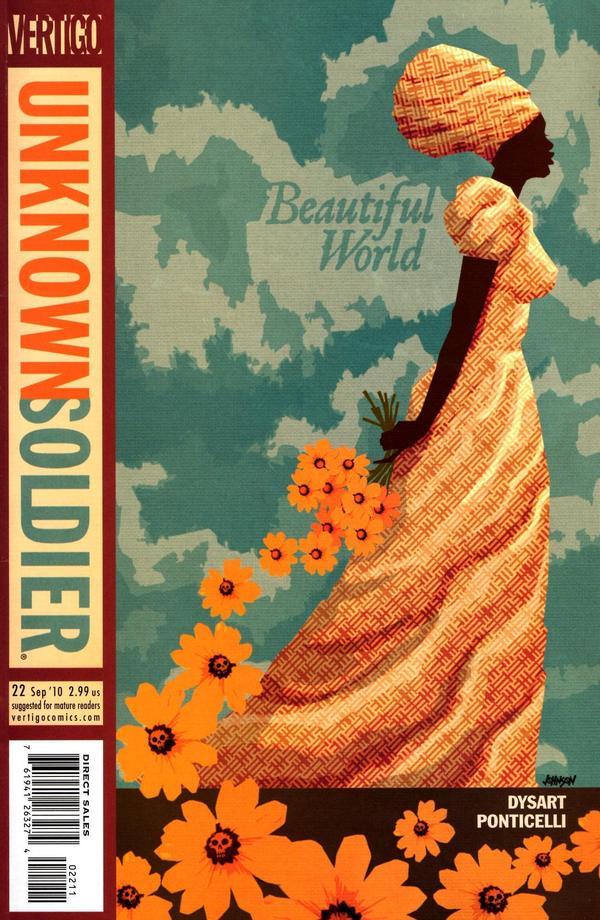
Kelly Thompson chooses her favourite 52 comic book covers from the past year on her blog 1979 Semifinalist. The cover above is by Dave Johnson for Unknown Soldier #22. Other personal favourites of mine on the list include the very retro Deadpool Pulp #4 by Jae Lee, and Hellboy: The Fury # 1 by Mike Mignola (you just can’t go wrong with a big axe really…)

And if you don’t read Kelly’s regular three sentence or less drunken demolitions of Marvel and DC covers you really are missing out. “Motherfucking gangbusters.”

Comics Dwindling Gene Pool — Alan Moore talks about the latest instalment of The League of Extraordinary Gentlemen, Century: 1969, and more with The Guardian:

These days, the majority of the comic book audience is 40-somethings who are not necessarily interested in comic books as a medium or panel progression or sequential narrative. They are probably interested in Wolverine. There is a large nostalgic component in there and there’s nothing wrong with it. But if those people then begin to influence the books themselves or increasingly the movies or the television series then they will want their story to refer to stories that they remember. It becomes very incestuous and over a few decades you get a very limited dwindling gene pool. And you get stories that have become weak through inbreeding.

And sticking with comics for a moment… Eric Reynolds talks about comics and Fantagraphics’ Mome Anthology in a four-part interview The Daily Cross Hatch:

Putting comics online is definitely of interest to myself and all of us at Fantagraphics, for sure. We know that that’s only going to continue to grow. It has certain advantages and disadvantages. But I don’t know if I necessarily want to edit an online anthology, per se. I don’t know why… I know if it’s just that I enjoy the tactile pleasures of print, or what, but—and this is my own personal preference—it doesn’t seem to quite exist when it’s on the Internet, which is quite paradoxical. The Internet has the potential to reach a lot more people that print, in this day and age, and yet, you don’t have that physical object to hold as proof that you did what you did.

Meanwhile, if you are looking for some ‘serious’ books for your vacation, the indefatigable Largehearted Boy is doggedly aggregating online summer reading lists for the year.

While at Slate Robert Pinsky explains  how not to write a book review (whether you’ve read the book in question or not).

And finally (in the likely instance you haven’t seen these yet)…

Cardon Webb’s clever designs for a new series of Oliver Sacks paperbacks from Vintage (via John Gall).


Comments closed

Something for the Weekend

Potential for Infection — A lovely essay by Alan Bennett on books, libraries, and bookcases, in the LRB:

‘Books Do Furnish a Room’, wrote Anthony Powell, but my mother never thought so and she’d always put them out of the way in the sideboard when you weren’t looking. Books untidy, books upset, more her view. Though once a keen reader herself, particularly when she was younger, she always thought of library books as grubby and with a potential for infection – not intellectual infection either. Lurking among the municipally owned pages might be the germs of TB or scarlet fever, so one must never be seen to peer at a library book too closely or lick your finger before turning over still less read such a book in bed.

Not A Sexy Trend Story — Dennis Johnson’s scathing must-read post on the Borders bankruptcy (and the way it is being reported) at MobyLives:

[T]his is a story that has become about some desired and sometimes advertiser-driven trend, and not the more complex reality — which is that what’s happened is not good for either print or digital books.

If there’s anything to take away from the Borders story, it’s this: It doesn’t at all represent that fewer people want to buy print books. It represents that fewer big corporations want to sell them.

19th Nervous Breakdown — Jonathan Ross reviews Supergods: Our World in the Age of the Superhero by Grant Morrison for The Guardian:

Shaving your head before dragging up in full fetish gear and wolfing down a magic mushroom omelette may well open the door to another realm, or give you access to demons and guardian angels. I have never tried it so I can’t say with absolute certainty. But I am pretty sure that what Morrison was experiencing and is describing is a cross between a nervous breakdown and a common-or-garden trip.

See also: David Itzkoff reviews the book (less sympathetically) for The New York Times.

And on a related note… Joe Carducci reviews Absolute Dark Knight by Frank Miller for the LA Review of Books.

And finally…

Typographical reference guide FontBook is now available on the  iPad:

Comments closed

Midweek Miscellany

Line o’ Type — John Hendel celebrates 125 years of Linotype at The Atlantic:

A German immigrant named Ottmar Mergenthaler invented [Linotype] in the 1880s and continued to promote and expand its use until dying in Baltimore in 1899. The Linotype’s power involved transferring a line of text (typed with meticulous care by a Linotypist onto a special 90-key keyboard) to a sheet, creating a “line o’ type” that could be rapidly printed onto many subsequent pages, thanks to the genius of matrices and hot metal.

A Good English ButlerDwell Magazine spends 30 minutes with designer Dieter Rams:

Never forget that a good product should be like a good English butler. They’re there for you when you need them, but in the background at all other times. Besides a few millionaires in London, most of us don’t have butlers.

The butlers of today are our products and our furniture.

And on a related note… Erik Spiekermann talks about typography and crowd-sourcing a logo for human rights with Deutsche Welle:

Typography is the famous crystal goblet – you drink the wine, you don’t think about the glass. I can make things a little bit warmer or colder, or squarer or rounder, but I am a servant to the words… I like to say, typography is like air – you only talk about it when it’s bad. It’s taken for granted, but we would certainly miss it if it wasn’t there.

Lying LiarsIan Leslie, author of Born Liars: Why We Can’t Live Without Deceit, on the connection between lying and storytelling:

[T]here is a gushing river of verbal creativity in the normal human mind, from which both artistic invention and lying are drawn. We are born storytellers, spinning narrative out of our experience and imagination, straining against the leash that keeps us tethered to reality. This is a wonderful thing; it is what gives us our ability to conceive of alternative futures and different worlds. And it helps us to understand our own lives through the entertaining stories of others. But it can lead us into trouble, particularly when we try to persuade others that our inventions are real. Most of the time, as our stories bubble up to consciousness, we exercise our cerebral censors, controlling which stories we tell, and to whom. Yet people lie for all sorts of reasons, including the fact that confabulating can be dangerously fun.

See also: Cynthia Crossen on the allure of unreliable narrators for the WSJ:

Today, unreliable narration does seem to be in vogue. Could that be because so many people are chronicling their lives online now, and we can see how unreliable most personal narratives are? As David Fromkin wrote in his history of civilization, “The Way of the World,” “Life is a story that each of us tells to his or her self; and it therefore is a tale told by an unreliable narrator.”

And finally…

Author Umberto Eco on the books we haven’t read for The Guardian:

There are more books in the world than hours in which to read them. We are thus deeply influenced by books we haven’t read, that we haven’t had the time to read… And yet I’ve a fairly accurate notion of what I haven’t read. I have to admit that I only read War and Peace when I was 40. But I knew the basics before then. The Mahabharata – I’ve never read that, despite owning three editions in different languages. Who has actually read the Kama Sutra? And yet everyone talks about it, and some practise it too. So we can see that the world is full of books that we haven’t read, but that we know pretty well.

Comments closed

Something for the Weekend

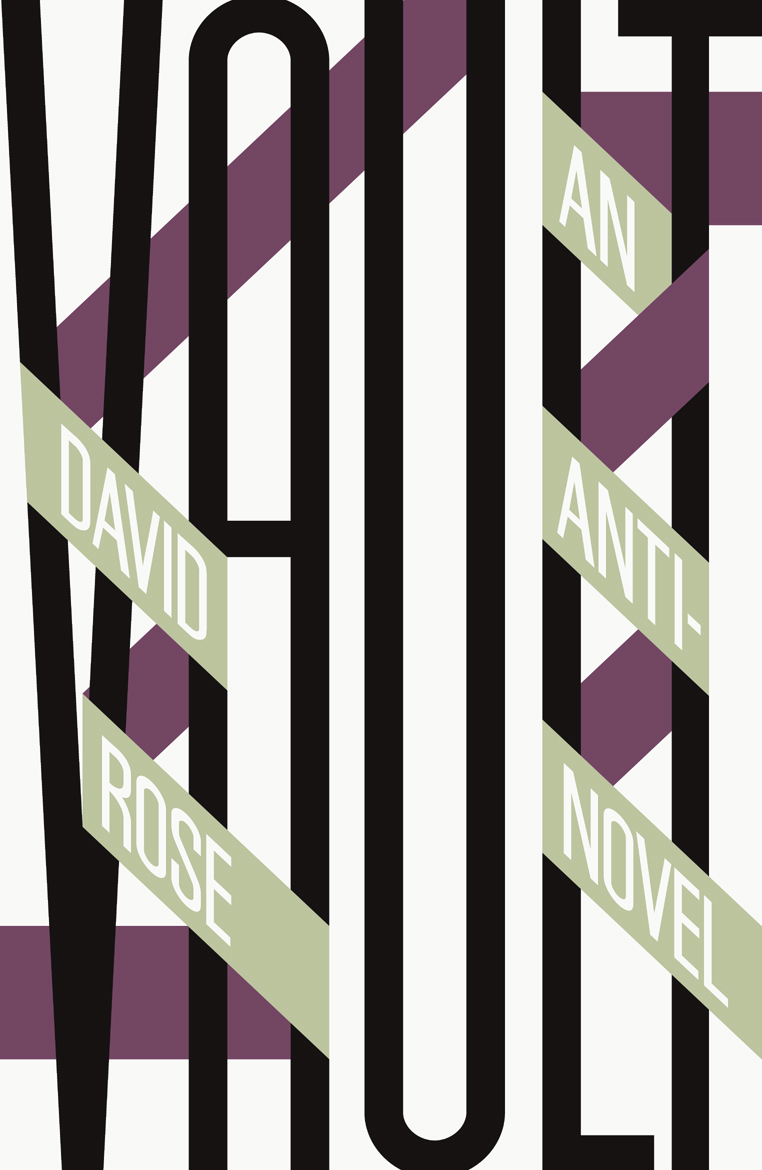
A distinctively typographic cover by David Pearson for Vault by David Rose, new from Salt Publishing.

Giving Up Irony — John Self reviews Edward St. Aubyn’s At Last:

The author’s background, like Patrick’s, is of inherited wealth; perhaps it is this which enables him to treat his characters mockingly and sympathetically at the same time. His brittle, witty prose evokes comparisons with Evelyn Waugh, whose snobbish attraction to the upper classes, looking in on them from without, contrasts with St Aubyn’s cool-eyed appraisal. The phrase “a handful of dust”, quietly slipped into At Last, could be an acknowledgement of the similarities and contrasts.

Patrick is like his creator, not just in his background, but in his stylistic weaknesses:

“It’s the hardest addiction of all. Forget heroin. Just try giving up irony, that deep down need to mean two things at once, to be in two places at once, not to be there for the catastrophe of a fixed meaning.”

The Architecture of the Secret Lair — Mark Lamster for Design Observer:

The Bin Laden compound makes an interesting contrast with the secret modern lairs created for Bond villains by the legendary production designer Ken Adam. These have routinely been described as unrealistic, insofar as they could never be built without drawing attention. It’s curious now, in retrospect, to think that it was fear that kept the local population from Dr. No’s island hideaway (which was just off British and American territory). Though Bond films make us think of visual extravagance, the most visually arresting set from the film was the rather raw interrogation room, with its cross-beam, ocular ceiling. What was in Osama’s basement?

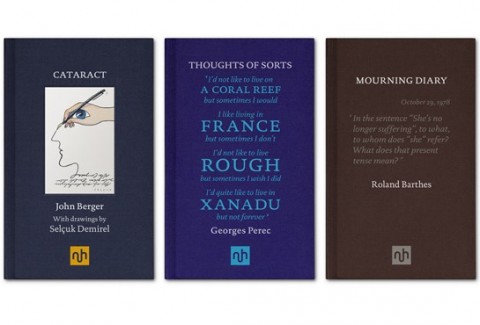
Notting Hill Editions, a new publishing imprint devoted to the essay, launches this month with books by from John Berger, Georges Perec and Roland Barthes among others. The typographic covers were designed by Garvin Hirst at Berlin-based design consultancy Flok.

And finally…

The Burden of Entertainment — Woody Allen discusses five books that still resonate with him:

The Catcher in the Rye has always had special meaning for me because I read it when I was young – eighteen or so. It resonated with my fantasies about Manhattan, the Upper East Side and New York City in general.

It was such a relief from the other books I was reading at the time, which all had a quality of homework to them. For me, reading Middlemarch or Sentimental Education was work, whereas reading The Catcher in the Rye was pure pleasure. The burden of entertainment is on the author. Salinger fulfils that obligation from the first sentence on.

Reading and pleasure didn’t go together for me when I was younger. Reading was something you did for school, something you did for obligation, something you did if you wanted to take out a certain kind of woman. It wasn’t something I did for fun. But Catcher in the Rye was different. It was amusing, it was in my vernacular, and the atmosphere held great emotional resonance for me. I reread it on a few occasions and I always get a kick out of it.

new publishing imprint launching in May, which is dedicated to revitalising and celebrating the essay.
1 Comment

Midweek Miscellany

How Much Is It Worth? — Ivan Brunetti on teaching, and his book Cartooning: Philosophy and Practice, at The Comics Journal:

To me, art is not about talent, it’s about hard work. It’s about developing one’s intelligence, thoughtfulness, and sensitivity. To some degree, the potential for these things seems to vary, implying they are perhaps innate, but I think anything can be nurtured (or neglected). Something might not come easy, but it can be learned. It’s matter of will, desire, determination, and hard work. How much is it worth to you? The definition of what is considered “talent” or “skill” keeps changing. I say if one develops him or herself as a human being, then art can follow. If no adequate form exists, the artist will create a new one.

The Attention Age — More from Peter Osnos at The Atlantic, this time on book reviews:

The challenge for authors and publishers — as with so much else in our information and entertainment environment — is to catch the attention of the people at all these enterprises who choose among the cascade of books that arrive every day. I am reminded of hearing Esther Dyson observe over a decade ago that we no longer live in the information age, we live in the attention age. The notion that merit alone assures acclaim was never really valid, especially in non-fiction, but it is certainly not true today.

Getting Pregnant — Film critic Roger Ebert on being “well-read”:

At the end of the day, some authors will endure and most, including some very good ones, will not. Why do I think reading is important? It is such an effective medium between mind and mind. We think largely in words. A medium made only of words doesn’t impose the barrier of any other medium. It is naked and unprotected communication. That’s how you get pregnant. May you always be so.

Contempt — David Simon, creator of The Wire, interviewed by Bill Moyers for Guernica:

[T]he guys who are running newspapers over the last twenty or thirty years have to be singular in the manner in which they destroyed their own industry. It’s even more profound than Detroit in 1973 making Chevy Vegas and Pacers and Gremlins and believing that no self-respecting American would buy a Japanese car. Except it’s not analogous, in that a Nissan is a pretty good car and a Toyota is a pretty good car. The Internet, while it’s great for commentary and froth, doesn’t do very much first-generation reporting at all. The economic model can’t sustain that kind of reporting. They had contempt for their own product, these people… [F]or twenty years, they looked upon the copy as being the stuff that went around the ads. The ads were God. And then all of a sudden the ads were not there, and the copy they had contempt for. They had actually marginalized themselves.

And I love this response to being called “the angriest man in television”:

It doesn’t really mean much. The second-angriest guy is, you know, by a kidney-shaped pool in L.A. screaming into his cell phone because his DVD points aren’t enough. But I don’t mind being called that. I just don’t think it means anything. How can you have lived through the last ten years in American culture and not be? How can you not look at what happened on Wall Street, at this gamesmanship that was the mortgage bubble, that was just selling crap and calling it gold? Or watch a city school system suffer for twenty, twenty-five years? Isn’t anger the appropriate response? What is the appropriate response? Ennui? Alienation? Buying into the great-man theory of history—that if we only elect the right guy? This stuff is systemic. This is how an empire is eaten from within.

Comments closed