Skip to content

Tag: random house

On Toni Morrison’s Rejection Letters

Melina Moe, curator of literature at Columbia University’s Rare Book & Manuscript Library, has written a lovely piece for the Los Angeles Review Books on the rejection letters Toni Morrison wrote while an editor at Random House:

Morrison’s rejections tend to be long, generous in their suggestions, and direct in their criticism. The letters themselves—generally one, two at most, exchanged with a given writer—constitute an asymmetrical archive. On one end of each communiqué is the ghost of a submitted manuscript … On the other is a rejection from Morrison, sometimes brusque yet typically offering something more than an expression of disinterest—notes on craft, character development, the need for more (or less) drama. But also: Autopsies of a changing, and in many ways diminishing, publishing industry; frustrations with the tastes of a reading public; and sympathies for poets, short story writers, and other authors drawn to commercially hopeless genres.

The observations on publishing are fascinating and a reminder that some things never change:

Morrison’s letters are unexpectedly forthcoming. Often, she supplements her rejections with diagnoses of an ailing publishing business, growing frustrations with unimaginative taste, the industry’s aversion to risk-taking, and her own sense of creative constraint working at a commercial press (especially in the late 1970s and early ’80s; Morrison left editorial work to be a full-time novelist in the early 1980s). They sketch a “road not taken” in mainstream publishing, as experimental volumes, poetry, and short story collections were increasingly treated as suspect investments of editorial time and publishing house resources. Current market conditions made for “a losing proposition for the publisher and a hopeless one for short story writers,” Morrison informed one author, and unless they were penned by famous novelists, short story collections were “almost like the publication of poetry”—that is, “practically impossible to make a profit from.” In another, lengthy letter from 1977, Morrison outlined how the economics of a book project depended on the mechanisms of distribution. It wasn’t just that casual readers didn’t buy short story collections, but that the major institutions responsible for generating widespread enthusiasm and name recognition were also uninterested: “Book clubs do not make offers for collections of short stories; mass paperback houses do not make offers for collections of short stories by single authors and so we are left with the hope that ten or fifteen thousand people will go into a bookstore and ask for a particular author by name.” The rejection concludes with Morrison’s admission that “[t]here is no point in my being other than honest with you, you should continue to publish in magazines and if you ever decide to write a novel, I’d be delighted to look at it.”

Comments closed

Five Designers, One Illustrator, Two Letterers and More Than a Hundred Versions of a Jacket

hausfrau

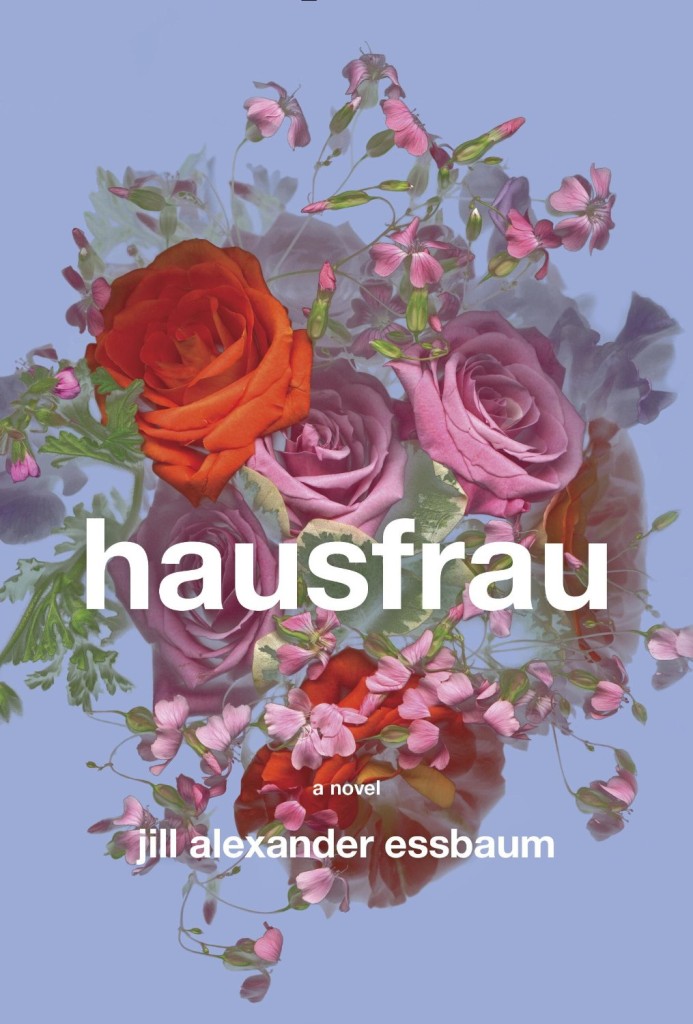
If you’ve ever wondered quite how many iterations a cover can go through before the final one is chosen, this video cycles through a multitude of design ideas for the US edition of Hausfrau by Jill Alexander Essbaum published by Random House this month:

“I worked with five designers, one illustrator and two letterers on more than a hundred versions of the jacket,” Robbin Schiff, executive art director at Random House, told Mashable. “The final design, with its stark Swiss typography against the moody and lush floral grouping, conveys a sensual but claustrophobic atmosphere”.1

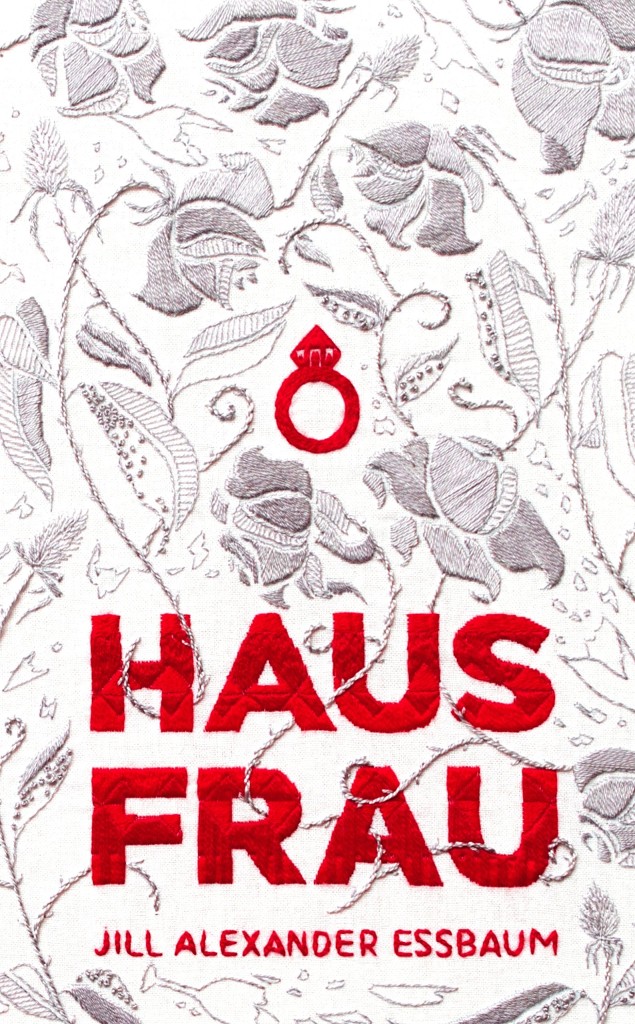
And, if you’re interested, you also read about the cover of the UK edition created by Maricor/Maricar (pictured below) on the Picador Blog. The whole process sounds a little less… fraught.

hausfrau-UK

UPDATE: Thank you to the folks at Random House for letting me know that the final cover for the US edition was designed by the talented Gabrielle Bordwin. The video was created by Caroline Teagle.

1 Comment

Q & A with Isabel Urbina Peña

Untitled-2

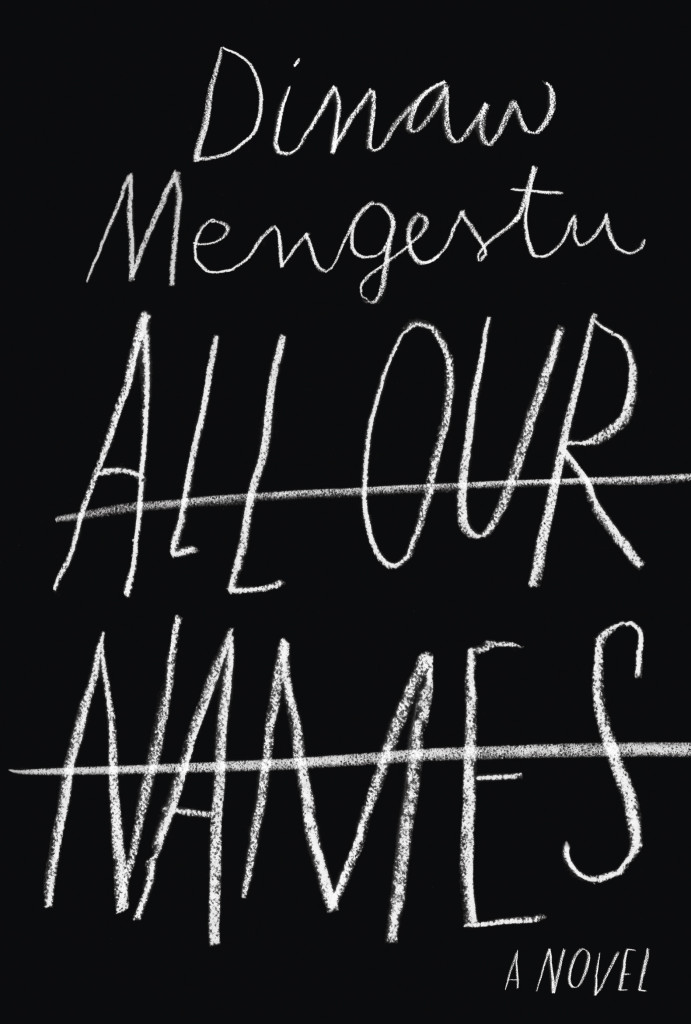
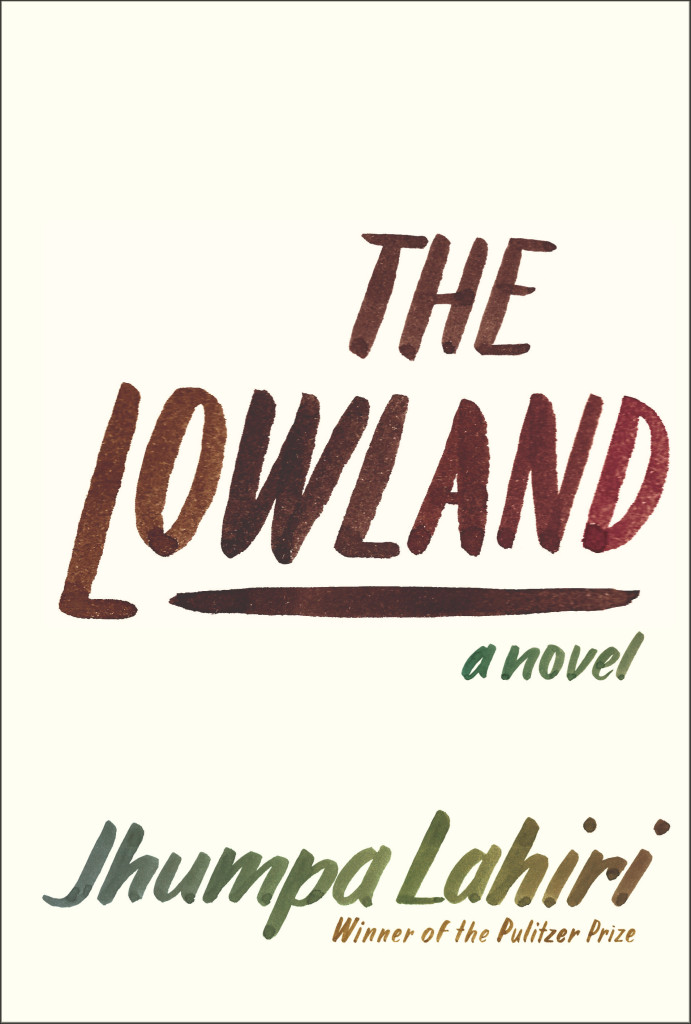
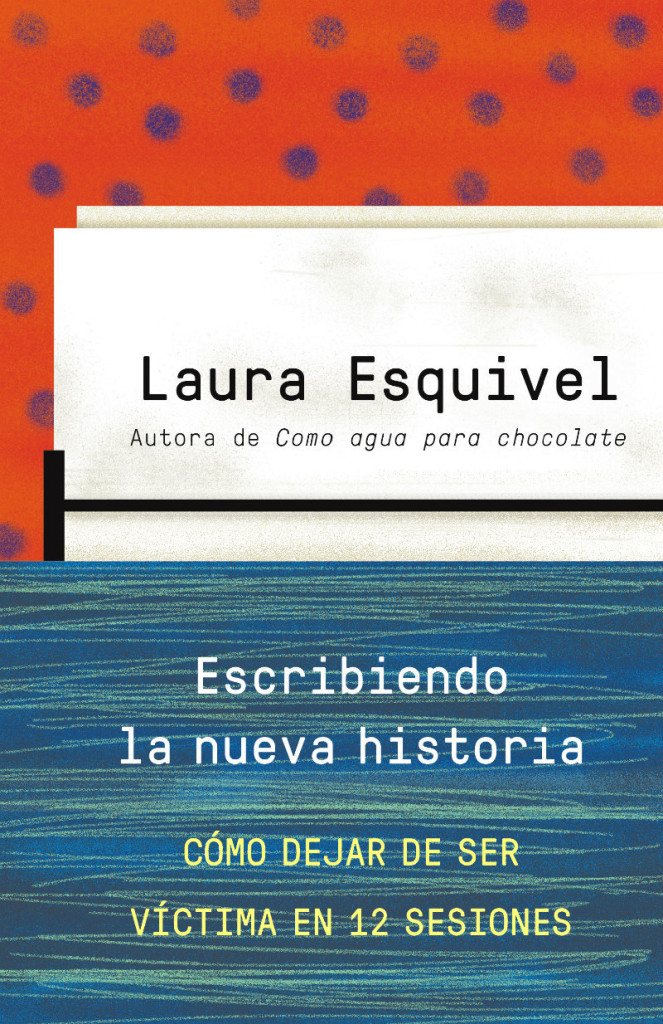
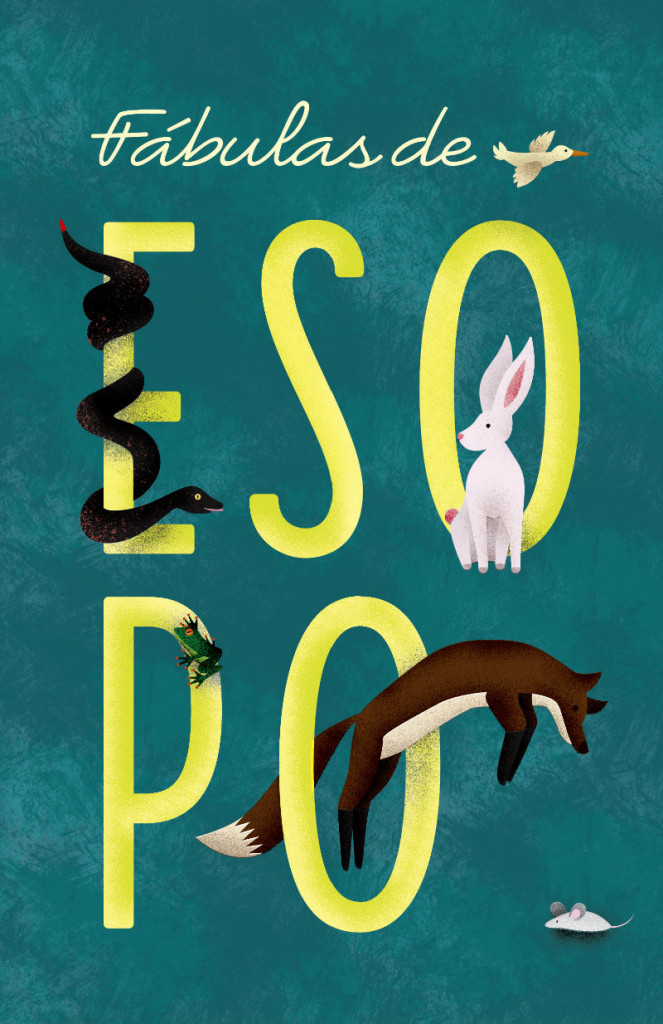
If you’ve walked into a North American bookstore recently, or you’ve been paying attention to the book reviews on this side of the Atlantic, you will have no doubt seen the stylish black cover for All Our Names by Dinaw Mengestu with its distinctive chalkboard lettering. Or perhaps you remember the hand-lettered cover for the Knopf edition of The Lowland by Jhumpa Lahiri? It was one of my favourite covers of the past year. Both are the work of Venezuelan designer Isabel Urbina Peña. Now based in New York City, Isabel is a cover designer for Random House and creator of a typographic zine called Rants from a Stranger.

Since relaunching her website earlier this year, Isabel’s cover designs have been featured on numerous blogs already (including here), but I was thrilled to have the opportunity to talk to her earlier this month about her work and career in greater depth.

Isabel and I corresponded by email. Here is our conversation:

Untitled-3

Do you remember when you first became interested in design?

I think because of my parents, art was in my life since I can remember. But, when I was in 7th grade there was a big boom of internet start-ups in Venezuela and I remember clearly “deciding” that I wanted to be a graphic designer then…I was 13 and the concept of what graphic design was at the time was probably wrong, but that moment definitely steered me in this direction. Also, there was a moment in my “foundation year” in college where one of my type teachers talked about how the “typographer” was present in the page, but invisible to the reader and that just flipped a switch in my brain.

Is anyone else in your family creative?

Both of my parents are architects and they really motivated my sister and me creatively while growing up.

We spent half of our childhoods going to museums, plays, as well as ceramic, poetry and creative writing classes. My dad also paints and belongs to a drawing circle. When I was little he would sit with me and walk me through art books or give me a canvas and ask me to paint from inspiration, or even from some big painting like Van Gogh’s sunflowers. Paul Klee, Gauguin and Chagall are a few of the artists that I discovered through them when I was six or seven… I have to say my mind was blown, I still cherish those moments.

Untitled-2

Were there a lot of books in your house growing up?

A ton. My dad also reads a LOT… So he wanted me to be “a reader.” I would get books for Christmas, birthdays, holidays, regular days…no Nintendo growing up… believe me that was tough, haha. He really sparked a love for reading and I would find new material everywhere; at my grandma’s I would read through all my uncle’s adventure books; at garage sales I started picking up Penguin paperbacks because they looked so simple and literary. Reading felt like something my dad and I shared, but it was also mine to discover.

Did you study design in Venezuela?

Yes, I studied at a small school called ProDiseño. Until very recently the “campus” was literally a two-flight house with a tub and a living room. Classes were really small, so everyone knew each other. The school started after a group of 80 students from IDD (Instituto de Diseño Neumann) left to start their own school. Neumann was founded by a large group of European immigrants who taught them design through the Bauhaus principles. Prodiseño had a very strong inclination towards clean, conceptual design. Everything had a purpose and “a why.” The content always came first; then the form. It was a very special experience and it prepared me to do anything (design, typography, illustration, animation, motion graphics…) and most importantly taught me to learn how to “think.” It was a very complete, Renaissance-style education.

Untitled-4

Is there a strong arts/design community in Caracas?

Definitely, though it is a rather small one compared to New York City, it is very interesting.

There are a lot of events that support the arts and design and mostly DIY culture. A lot of self-proposed shows and collectives that put on parties with great visuals and self-produced posters. Also, a lot of zines and self-published publications are popping all over town.

How is living in New York different?

Well, New York is different in every way: from the variety of people you meet to the cultural experiences that are available to you. Living here, for me, has been a rich experience loaded with references of all kinds, and motivation. If anything it makes me expect more from myself and aim higher.

How long have you lived there?

This is my 6th year in New York, but it honestly feels like I just got here. Of course, I’ve learned so much and evolved, but it feels like it never gets old.

escribiendolanuevahistoria_web

Does what’s going on in Venezuela worry you?

YES, I am glad you asked.

I am extremely worried by what’s going on in Venezuela and I think not enough people know about our situation. Protests started almost two months ago and people are being murdered and attacked on the streets daily and there doesn’t seem to be any change in the attitude of the current government. The truth is the people have the right to protest for the many problems that Venezuelan people are dealing with right now (the extreme insecurity they live in, the rapidly increasing inflation rates, the scarcity of many basic necessities and the extreme corruption, just to name a few) and the way that the government is handling this protests is, just, criminal. There are human right violations occurring left and right and even though there is proof (video and photos) for a lot of these events, the government is turning a blind eye and not doing anything to impart justice. Instead they focus their efforts in bullying opposition leaders and undermining the people’s rights. It is very, very sad and scary for all Venezuelan people and unfortunately change won’t come easily… but Venezuelans are still fighting hard, hopefully with a brighter future awaiting for all.

Can you describe your process for designing a book cover?

I start by reading the book and the TI (Title Info) sheet, getting familiar with the author and his backlist, if there is one. I take a bunch of notes and list ideas while and after I’m reading. I try to list everything—you never know when the “silliest” idea will spark something good. I’ll do a mood board and sketch a selection of these ideas in small (2 x 3 inches or so) detailed thumbnails with pencil and paper. Depending on the book, developing these ideas might be on or off the computer. I do a lot of paperback-size pencil sketches to define a lot of the lettering shapes and details.

Sometimes I will ink and do minimal clean up in the computer and sometimes I digitize the lettering in a font editing software and make the comps. Once I do that, I usually present a range of “developed” ideas and looks to my art director. We discuss if we need to adjust or tighten anything and then show the editors.

fabulasdeesopo_web

What are your favourite kinds of projects to work on?

Honestly, I am quite new at this, and I try to get the most out of any project. Figuring out what best represents the book I’m working on is one of the things I enjoy the most. That said, I really love doing all the cover art from scratch, and creating a “unique” design with custom lettering and illustrations.

Can you tell me about your zine “Rants from a Stranger”?

Rants from a Stranger is a self-published “booklet” inspired by zines, graphic novels, comics and the DIY culture. I like to call it a “typographic novel,” though it doesn’t really qualify as a graphic novel because of its length, and it is more on the zine realm. I love type and lettering and this was the perfect excuse to hand-letter more and produce a periodical self-published piece where I had full control of the creative direction.

I thought it would be fun and different to develop a series of “comics” without illustrations and solely use lettering as the “characters” of the story. So far there are two black and white issues and the third issue (special edition, in color) is coming out in late April as a collaboration with a very talented musician and artist from Venezuela, Mariana Martin Capriles, aka Mpeach. I’m really excited about this issue because of our collaboration, and also because it comes with a paper record player and a flexi EP record of her new song, “Boogaloo Mutante.”

Who are some of your design heroes?

Gerd Leufert, Gego (Gertrude Goldschmidt) and Nedo Mión Ferraro were very important figures in my formation as a designer and I still look through their books every time I have a chance. Their students, now well known graphic designers, and former teachers of mine, like Álvaro Sotillo, Gabriela Fontanillas and Carlos Rodríguez have always inspired me through their impeccable work and dedication.

Doyald Young’s lettering work take my breath away, and old school type designers like W.A. Dwiggins and Frederic Goudy are daily inspirations.

Who do you think is doing interesting work right now?

So many brilliant folks out there! Freddy Arenas, my super talented other half, does amazing motion graphics and illustration.

In the cover design world, my co-workers are doing great stuff, all the time. Linda Huang, Joan Wong, Pablo Delcán, Kelly Blair, Megan Wilson, Peter Mendelsund, Carol Carson, Stephanie Ross… From the type, design, art and illustration world Jesse Ragan, Village, Kris Sowersby, OCD, Steve Powers (ESPO), Sergio Barrios, Wayne WhiteCraig Ward, Alex Trochut, Elizabeth Carey Smith, Gustavo Dao, Suzi Sadler, Ryan Bernis, Priyanka Batra, Sasha Prood, Ping Zhu, Victo Ngai, Elana Schenkler, Geoff McFetridge, Nobrow Press, quite a mix…

I could keep going…

What advice would you give a designer starting their career?

Try harder. I think it’s really important to be critical of your own work and be able to accept its faults. Always, strive for more and be hungry. At the same time, embrace your mistakes, learn from them and move on to the next project. I am a big fan of tweaking and fixing til the end of days… but sometimes you just have to learn to let go of projects and keep going. Erik van Blokland said to our Cooper Type class (regarding typeface design), “Release early and release often; recognize what you did wrong in the project and try again.” I remind myself to do that everyday.

I think you should always try to work in what you love and feel passionate about. Even if it means reinventing yourself and making up your own projects in your spare time. This is where the good work will be. Don’t be afraid to make changes and try different things if you need to.

Untitled-10

What’s in your ‘to read’ pile?

I’m currently reading Americanah by Chimamanda Ngozi Adichie and Inter Views by James Hillman. I really want to read Dissident Gardens by Jonathan Lethem, My Age of Anxiety by Scott Stossel and The Goldfinch by Donna Tartt from this past season.

Someday, I’d love to re-read Cortazar’s Hopscotch (Rayuela) and all of Jorge Luis Borges.

The list goes on…

Do you have system for organizing your books?

Ha, no. I used to be very organized and had them alphabetically, color code them, etc… Those days are over… Nowadays, I move them around pretty often and they stay wherever they land.

Do you have a favourite book?

Not really a favourite single book, but I do have an influential shortlist: Virginia Woolf’s The Waves, L’Étranger by Albert Camus, Cuentos de Amor, Locura y Muerte by Horacio Quiroga, Piedra de Mar by Francisco Massiani, Ficciones by Jorge Luis Borges, Oscar Wilde’s Collection by Siruela (Biblioteca de Babel).

Thanks Isabel!

4 Comments

Little Failure: It’s Funny and It’s True


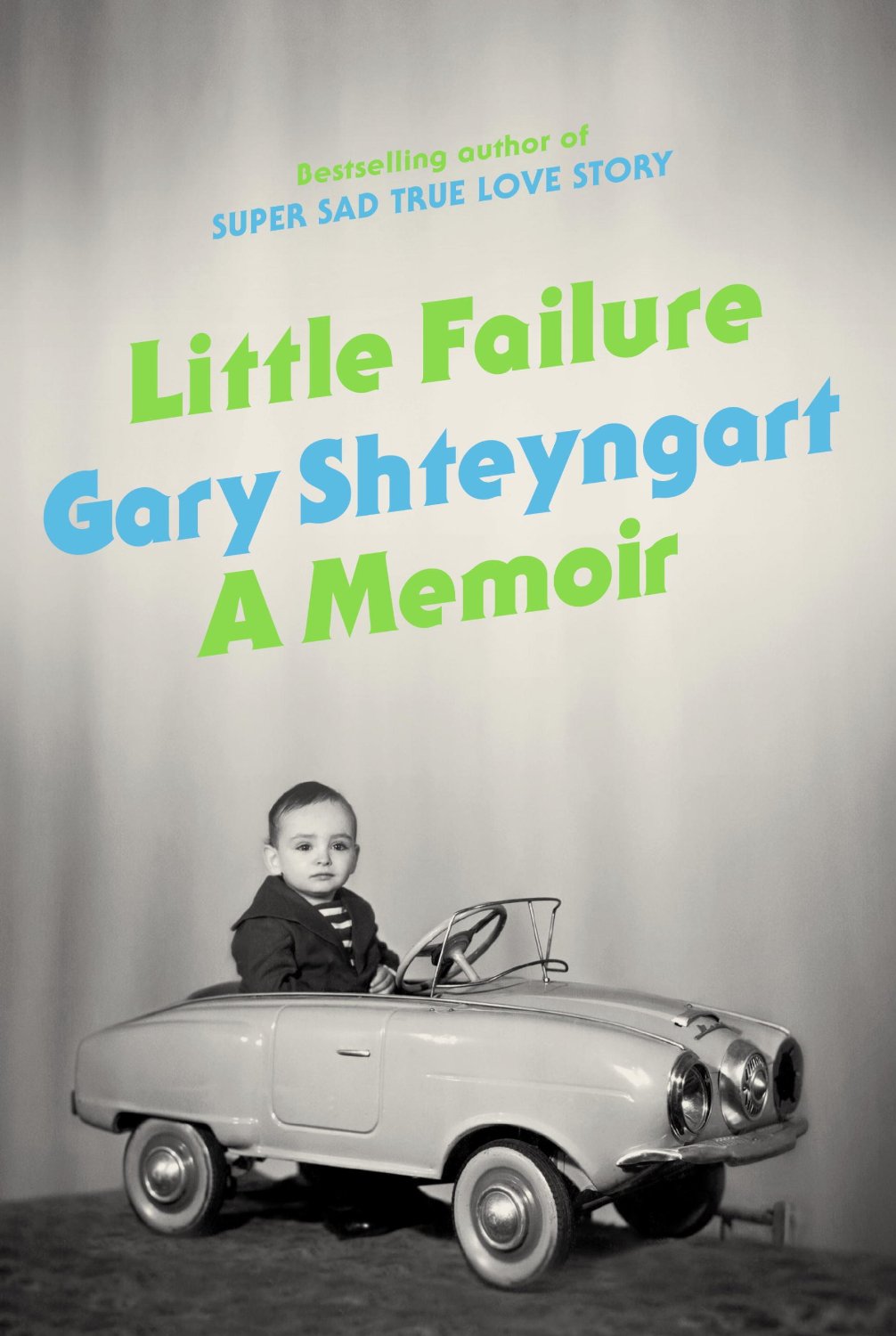
Surely just about everyone has seen this already, but in case you missed it, the new video for Gary Shteyngart’s forthcoming memoir Little Failure, which features James Franco as his husband and Jonathan Franzen as his therapist, is pretty great:

The video also stars David Ebershoff, Rashida Jones, Sloane Crosley, and Alex Karpovsky.

2 Comments

Inside Random House: “The Art of Cover Design”


Part a series of videos about the workings of Random House, The Art of Cover Design features interviews with an impressive roster of designers: Marysarah Quinn, Robbin Schiff, Chip Kidd, Peter Mendelsund and Christopher Brand…

2 Comments

Something for the Weekend

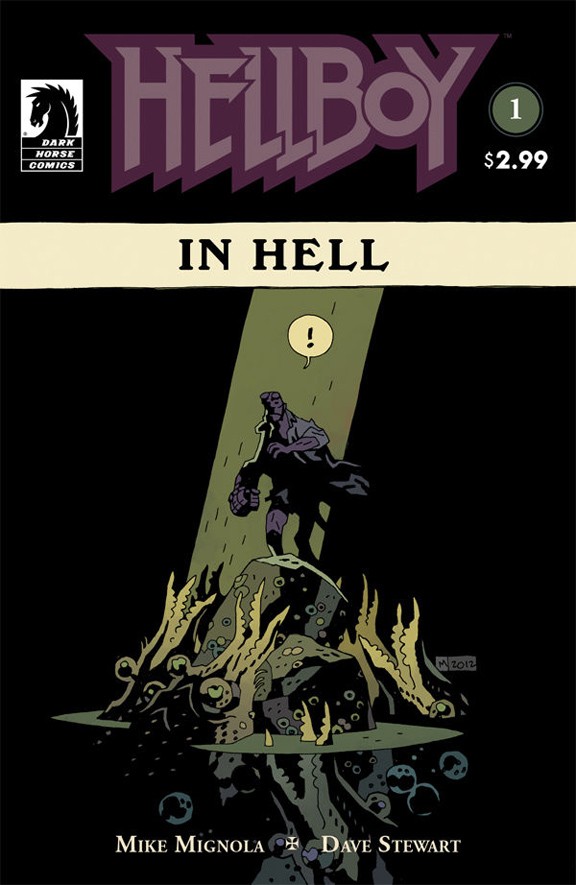
Folklore — Mike Mignola talks about drawing Hellboy again, at ComicsAlliance:

I do have a library. Very little of it is leather-bound. The folklore and mythology library, which is in my studio, is pretty tacky looking since it’s all picked out of used bookstores. I am a book guy but more and more I do use a computer to do certain research things. But there are 30-40, 50, maybe 100 books of folklore in there, most of which haven’t been read. I’ll look at a table of contents and go, “Wow there’s 30 to 40 different Hellboy stories in there.” It’s very comforting to know there’s a million stories to tell that I can pluck off the shelf for those days where it’s like, “Well, I got nothing!”

Suicide Watch — Steve Almond reluctantly reviews Building Stories by Chris Ware for The New Republic:

Ware is essentially a poet of solitude. He uses language and images to capture the private torments of unfulfilled lives. His characters drift in a sea of self-recrimination and unmet desire (not unlike the rest of us). They rarely find love, or resolution.

This bleak approach does yield a curious dividend, though. The occasional moments of grace explode off the page. At one point, we see his heroine cavorting with her daughter on their front lawn. “I remember Lucy landing on top of me, laughing…with the sun shining behind her suddenly life came into perfect focus,” she muses. “This was what it was all about … this very moment … the joyful reality of my daughter.” The girl’s lovely face, nearly life-size, beams at us from the middle of the page.

Of course, this idyll is shattered by the news that one of her friends has committed suicide. If Ware has one flaw, it’s his obvious discomfort with the notion that people—at least his people—might ever find an enduring happiness.

And, while were on the subject of comics…

Hannah Berry, author of the enjoyable Britten & Brülightly, writes about the independent comics scene in the Britain at the New Statesman. Berry’s second graphic novel Adamtine was published earlier this year in the UK by Jonathan Cape.

Also at the New Statesman, Hayley Campbell on the current state of British comics.

Meanwhile, back in the world of big grown-up publishing…

The Telegraph profiles Liz Mohn, “the woman behind media giant Bertelsmann” and, therefore, the monster that is Penguin Random House.

And finally…

Lubricated — Hunter Oatman-Stanford (how’s that for a moniker?) examines the nautical past of popular tattoos at Collectors Weekly:

“Many sailors are extremely superstitious,” says [C.W] Eldridge [founder of the Tattoo Archive], “so they would get specific tattoos to relieve this anxiety over their beliefs. There are stories of guys in the old, wooden-ship days who would get Christ’s head tattooed on their backs so if they got into trouble and had to take lashes, the person wielding the lash would be more sympathetic.”

The variety of designs matched each and every danger aboard a ship. “Sailors would get things like a pig and rooster on their feet to keep them from drowning,” Eldridge says. “They would have ‘Hold Fast’ tattooed on their knuckles so that when they were in the riggings, their hands would stay strong. They would get hinges on their elbows to keep them from having rheumatism and arthritis, and sometimes they would even get a little oil can tattooed above the hinge so that the hinges would stay lubricated.”

Comments closed

Q & A with Barbara deWilde

It would be hard to overstate the impact of Barbara deWilde on contemporary book cover design. Along side Carol Devine Carson, Chip Kidd and Archie Ferguson, Barbara’s designs not only defined the bold, visual aesthetic now commonly associated with Knopf, but helped reinvent American book cover design in the 1990’s.

Barbara left book publishing in 2000 to become the design director of Martha Stewart Living — where she successfully implemented a redesign of the magazine (which gave the world the Hoefler Frere-Jones font Archer, thank you very much) — but returned to Knopf  seven years later and created more characteristically distinctive book cover designs, including the jacket for the Pulitzer Prize winning novel A Visit From the Goon Squad by Jennifer Egan. And yet, not resting on her laurels, Barbara recently changed direction once more. Now studying interaction design full-time at the School of Visual Arts, it seemed the perfect time to look back at Barbara’s work as a book cover designer and to talk to her about what’s next…

Barbara and I corresponded by email.

Do you remember when did you first become interested in design?

I wanted to be an artist, but my parents forbid me to pursue art as a major. My act of defiance was to be an Education major, but to take as many art classes as my schedule could hold. I was taking a Ceramics class and the work area was in an open yard beneath the Graphic Design studio. As I worked into the night, I saw that the lights were always on, in fact, they were never turned off, even long into the night. I had to find out what they were doing up there…

You’re an established designer; why did you decide to go back to school?

I was a bit embarrassed to make this move back to school, but now I can honestly say it was the best thing that I could have done for myself as a designer. In fact, I can’t tell you the number of people who have been enquiring about how to make a similar move. Two years ago I wanted to make the move to working digitally, but there was a barrier to doing this professionally. I’m at too high a level in my design to be be paid to learn. I could have approached the shift by taking on an interactive project and figuring out the digital component like most autodidacts, but I found that I didn’t even know the language of software creation. There is no singular programming language, there’s no silver bullet…learn this software and you’ll understand all. The landscape is changing all the time. I spoke to a lot of people in the digital publishing world and made a list of skills that I would have to acquire. I found that some of the skills could be acquired through continuing education, and some were available online, but most were not available unless you entered a program. There are only a handful of Interaction Design programs in the U.S. and 2 are in New York. I thought if I took off for 2 years and got the degree I would have everything in one place and also get that piece of paper (like in the Wizard of Oz) that attests that I know this field. I’ve never had a graduate degree, so I jumped.

What interests you about Interaction Design?

I find it very humbling. You are designing with the medium of human behavior. As an interaction designer one needs to be more observant and less dictatorial, but most importantly it requires a methodical approach to design. I am extremely intuitive. In the past I have found my way to a design solution by feeling it. The intuitive approach is fine if you work primarily with yourself or with one other person. When you work on building a service, a website, let’s say, or an interactive mobile product, you are working with a team of people. You need a common language, models, and writing skills. The collaborative nature of the work and the relentlessness of content and tasks makes an intuitive approach, if not obsolete, at least secondary.

Are you still designing book covers?

Yes, I love them. I hope I can still work on a few every year. Now, they are my guilty pleasure.

Could you describe how you approach a new design project?

I read whatever I’m given. I try to understand what the usual expectation for a book in the genre is and ditch it…or try my best to stay miles away from it. I don’t start working at my desk until I have some model in my head of what the book is going to look like. I usually make a thumbnail sketch which is totally unrecognizable to anyone but me.

What are your favourite projects to work on?

I like anything that’s well written. I can tell you what I don’t like to work on…anything in the category of “chick lit.” I’m not great at thrillers, but I like working on them occasionally.

How is your approach to art direction different from your own design process?

I art direct projects that I understand, but that I don’t have an aptitude to design. I’m not an illustrator or a photographer, but I do both sometimes. When a book requires a real skill set, I love to hire people. I think an art director is most helpful when they have a vision, can communicate it, and give feedback. Otherwise, they’re useless in the role.

What do you look for in a designer’s portfolio?

Life is boring, make my day… show me something that I wish that I had created. I’d rather see three drop dead great pieces than a couple of great ones and then fifteen mediocre things. It makes me question which designer I’m going to get when I hire you, the great one or the middle-of-the-road one.

Do you see any prevalent trends in contemporary book design?

There’s a lot of illustration now, a lot of charm. I don’t see much ugly stuff, it’s all very masterful. I like ugly, raw work.

What challenges do book designers face currently?

Publishing execs are always grumbling about not making enough money, but lately I think they really believe it. The economics of the publishing model are being challenged by the internet and that turns publishers from idealists to technocrats. That downward pressure always hurts production and design. In addition, whenever a publishing house becomes risk averse, their designers’ choices are limited.

Do women designers have the same creative opportunities as their male colleagues?

Absolutely not…nor do their female writing counterparts. Titles are assigned by the vision of the art director. Usually there is a gender mapping… girl book: girl designer. The publicity budgets are smaller for female writers as are the print runs and the reviews. Meg Wolitzer called it “The Second Shelf.”

What advice would you give a designer starting their career?

At this point, a design student has software and the world has problems…go! There has to be a pretty compelling reason to work for someone else. I would encourage designers to be entrepreneurial.

Where do you look for inspiration, and who are some of your design heroes?

I have print design heroes, like Peter Saville, Francesco Franchi, and Yomar Augusto, and interaction design heroes like Nick Felton and the guys who started Kickstarter: Perry Chen, Yancey Strickler, and Charles Adler.

What books have you read recently?

I just finished Bring Up the Bodies by Hilary Mantel (which I loved) and now I’m reading a book published in 1883 on making candy. It’s called the Frye’s Practical Candy Maker. The stack near my bed has the Steve Jobs biography, Colum McCann, Let the Great World Spin, the new Richard Ford, and Katherine Boo’s Behind the Beautiful Forevers.

Do you have a favourite book?

My last favourite book always changes. Right now it’s a three way tie between Wolf Hall; Blood, Bones, and Butter; and Olive Kitteridge. My favourite book of all times is Suttree by Cormac McCarthy.

What is ‘What the Book’?

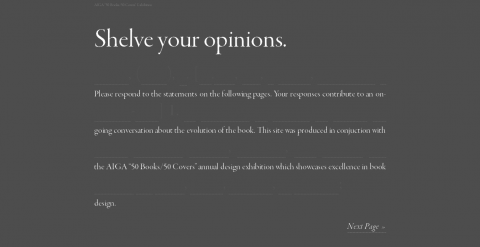
WhattheBook.org is a website that was made in conjunction with the last exhibition at the AIGA of 50 Books/50 Covers. The show had been an annual destination for the best of book and book jacket design but has ended. The AIGA reasoned that the show was no longer relevent, that book design is easily curated and shared on the internet through various blogs, and that it only served the New York elite not the wider national membership.

Within the AIGA gallery I created a 12 foot wide book shelf that allowed visitors to shelve a book, essentially “vote,” for how they feel about the shift in books from physical objects to digital. A red book meant that you agreed and a black book meant that you disagreed. An example of one of the statements is “I silently judge people by their bookshelves.” Agree or disagree. The website runs through the same list of statements and you can vote online. The last part asks the visitor to define what “book” means now that the physical constraints don’t always apply.

We’ve collected nearly 1700 definitions and I’m in the midst of trying to make a visualization of them… and a part 2 to the website. It was the perfect transition project from my old world of book jacket design to interaction design.

What does the future hold for book cover design?

I’m a pragmatist. James Bridle describes the book not in its physical model (pages or no pages) but in its temporal model. What that means is that a book functions first as an advertisement , second as a reading experience, and third as a souvenir. Now eBooks make lousy advertisements, so-so readings experiences, and lousy souvenirs. But some publishers are now selling nearly 60% of each title in eBook form.

So, despite the flaws, people are opting for price and convenience. As a designer, I would ask how my work functions within this model and if it doesn’t how could it in the future? I answered the question by leaving print to learn digital design. I felt there were more creative opportunities elsewhere. (I know I didn’t answer the question.)

Thank you, Barbara!

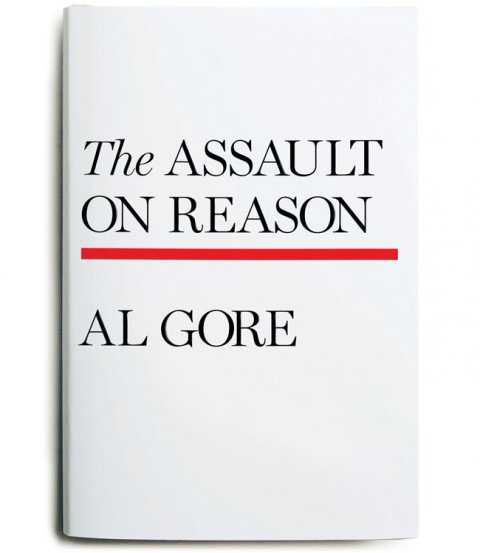
The Assault on Reason

Image 1 of 12

3 Comments

C. S. Richardson | Quill and Quire

In the first of a new podcast series from Quill and Quire, web editor Sue Carter Flinn talks with C. S. Richardson, vice-president and creative director at Random House Canada, about his 30-year career in book design:

Quillcast: C. S. Richardson mp3

Comments closed

Something for the Weekend

The charming illustrated cover for John Waters’ new memoir Role-Models by Eric Hanson, who also happens to be the author of A Book of Ages. Art direction on Role-Models by Susan Mitchell at FSG I believe.

And while we’re on the subject of nice book covers…

Isaac Tobin, senior designer at University of Chicago Press, talks to FaceOut Books about his witty cover for Adrian John’s Piracy. You can read my interview with Isaac here.

On the Dohle — PW takes a (slightly fluffy) look at Marcus Dohle’s first two years at the helm of Random House.

Allen Lane to Amazon — A nice audio slide-show history of British publishing in the 20th century at The Guardian.

And speaking of Allen Lane…

Puffin by Design: 70 Years of Imagination (1940 – 2010) seen at The Penguin Blog.

And Simon Houpt on Penguin’s 75th anniversary and their iconic brand in today’s The Globe & Mail:

Until a couple of days ago, Keir Hardie had no idea how many Penguin books he owned. For years he’d been collecting them informally, picking up a few at a time at second-hand shops. “Like a lot of fans, I grew up in a house with Penguin Books on the shelves,” he wrote in an e-mail this week, from his home in Inverness, Scotland. It was the books’ iconic design, he explained, that first grabbed his eye. “There was never much of a pattern to anything else, but the uniformity of the Penguins made them stand out.”

Indeed.

Comments closed

Q & A with Ferran López, Random House Mondadori

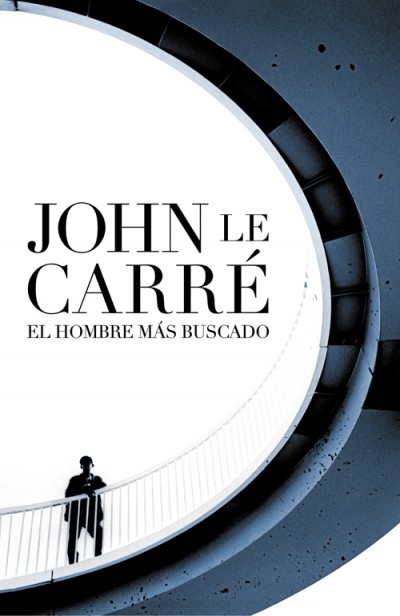
I came across the work of graphic designer Ferran López after stumbling on his wonderful book cover blog The Jacket Museum.

Based in Barcelona, and currently working at Random House Mondadori — the Spanish-language joint publishing and distribution venture between Random House and Italian publisher Mondadori — Ferran’s eye for typography and background in photography is evident in his sharp book cover designs.

Although I want to interview more designers who work outside of Canada, UK and US at The Casual Optimist, the opportunity doesn’t often present itself because of my almost total inability to speak any other languages. But when I noticed that Ferran publishes his blog in both English and Spanish, there was absolutely no excuse not to speak to him!

I’m really happy to be able to include Ferran’s answers in both English and Spanish in this interview, but I have also posted all the questions and answers in just Spanish for those who would prefer to read it that way.

And I do want to say a big thank you to Ferran for both his patience and for providing the translation…

How did you get into book design?

Merely by chance. Although my training is photography and I was a photographer for many years, more and more my jobs were getting closer to the world of graphic design. At the end of the year 2000 I was working as a freelance designer and moonlighting doing digital photography manipulation and retouching. Around this time I met Marta Borrell, the Art Director at Random House in Spain (before the joint-venture with Mondadori). She was looking for a graphic designer to work in-house on trade book cover design. Even though I had never tried book design, I was enthusiastic about the idea because I love books. Marta liked my portfolio and my enthusiasm. She took a chance on me and (I like to think) it turned out all right! We have been working together for a decade now.

Casi por casualidad. Mi formé como fotógrafo, aunque desde hace muchos años mi trabajo, por vocación, fue acercándose cada vez más al diseño gráfico. A finales de 2000 trabajaba como diseñador free-lance y en manipulación digital de fotografía. Fue entonces cuando conocí a Marta Borrell, la directora de arte de Random House en España (por aquel tiempo previo a la joint-venture con Mondadori) que estaba buscando un diseñador para la división de libros Trade. A pesar que nunca había trabajado con libros estaba entusiasmado con la idea, ¡me encantan los libros!. A Marta le gustó mi portfolio y mi entusiasmo.  Apostó por mi y creo que la cosa resultó bien. Llevamos ya una década trabajando juntos.

Briefly, could you tell me about working at Random House Mondadori?

It reminds me of a sequence from Billy Wilder‘s “One, Two, Three”. The pace is frantic and the procedures are complex at times, but, although it sounds like a cliché, it is impossible to think of a team of better professionals. Almost everyone in the workplace is young (even the CEO is younger than me!) and this translates into passion. There are 13 of us In the Art Department and sometimes we seem like family or better yet a clan. We suffer a lot, but always together! Just kidding! But at times, when someone is under a lot of pressure or creatively blocked, there is always someone to lend a hand, or at least have a coffee break with.

Se parece mucho a una secuencia de «Uno, Dos, Tres» de Billy Wilder. El ritmo es frenético, los procesos a menudo complicados pero, aunque suene a cliché, es imposible imaginar un equipo de mejores profesionales. Es una empresa joven (¡Hasta la Consejera Delegada es más joven que yo!) y creo que eso se traduce en entusiasmo.

En el departamento de diseño somos 13 personas, a veces parecemos una familia o incluso un clan. Sufrimos mucho, pero siempre juntos. Es broma; pero a veces cuando alguno de nosotros está bajo mucha presión o bloqueado siempre hay alguien con quien compartir el proceso, consultar o al menos con quien tomar un café.
What is your current role there?

At the moment, I am responsible for the Design of the Trade Commercial and the Paperback divisions. In the Paperback Division my job is basically coordination and support. As a designer, my job is mainly centered in book covers for Commercial Trade, bestsellers, novels and mass-market non-fiction for the “Plaza & Janés” and “Grijalbo” imprints.

Also, since its establishment in 2004, I’m also in charge of the “Caballo de Troya” imprint, an experiment: a small independent publisher within a huge publishing company.

Actualmente soy responsable de Diseño de las divisones Trade Comercial y Bolsillo. En la división de bolsillo mi función principalmente es estratégica y de apoyo. Como diseñador mi trabajo se centra en las cubiertas de los libros de Trade Comercial: best-seller, novelas y no ficción de carácter masivo, en los sellos Plaza & Janés y Grijalbo.

También, desde su fundación en 2004 me encargo de Caballo de Troya, casi un experimento: un pequeño sello independiente que vive dentro de un gran grupo editorial.

Approximately how many covers do you work on a season?

About 100 new books a year.

Unas cien novedades al año.

Could you describe your design process?

I don’t follow the same procedure with every book. Some times, I read the briefing and I start visualizing the cover, the message, the photo or the illustration that seems to fit the book. Other times, I need to read, comment, draw, write, web-surf, look out the window and make several trips to the coffee machine to obtain what I want to transmit visually. At times, nothing seems to work and then I begin creating an idea by a typographical approach to unblock myself.

No sigo el mismo proceso con todos los libros. A veces, tal como leo el briefing, empiezo a visualizar la portada, el mensaje, la fotografía o la ilustración que a mi parecer encaja. Otras veces necesito leer, comentar, dibujar, escribir, navegar, mirar por la ventana y hacer varios viajes a la cafetera para conseguir saber lo que quiero que visualmente transmita. En algunas ocasiones ningún método parece funcionar y entonces para desbloquear empiezo a creando la imagen desde la aplicación tipográfica.

What are your favourite books to work on?

Novels where I can’t help getting infatuated with one of its characters. Also books where I can give the cover a hidden meaning or a wicked twist. And finally, those low stream books with a small print-run where I can use daring images.

Aquellas novelas en los que me enamoro perdidamente de alguno de sus protagonistas (a veces es inevitable), los libros en los que se puede esconder una segunda lectura o un giro perverso en la portada y finalmente aquellos libros minoritarios con un corto tiraje que permiten utilizar imágenes más arriesgadas.

What are the most challenging?

Books with complex plots and/or multiple sub-plots. Those where the parties involved in the process of approval (editors, marketing staff, sales, etc.) have diverse ideas of what should the cover reflect. And off course, those books which the sales expectations are extremely high…The pressure is on!

Los libros con tramas laberínticas o con múltiples mensajes y subtramas. Aquellos en los que las distintas partes implicadas en el proceso de aprobación tienen visiones muy distintas de lo que debe comunicar la portada. Y por supuesto aquellos en los que las expectativas de venta son muy altas: The pressure is on!

When you’re working on translated books, do you look at the US or UK covers, or do you try to avoid them?

We always take the original cover into consideration. When a new book comes up, we review the original cover with its editor and the marketing department to see if it would work in Spain. With some authors, for instance, Stephen King or Terry Pratchett, we don’t even consider changing it — their fans would never forgive us. In any case, whether we use the original covers or not, they always help us as guide to which way we want to go.

German and Italian cover versions are always good reference.

An interesting example is the case of Ken Follet’s “World Without End”. We had both US and UK editions and I designed an adaptation combining the best elements of both. Now, we have the best of them all!

Siempre tenemos en cuenta la portada original. Cuando se presenta el libro valoramos en conjunto con edición y marketing si la portada puede funcionar o no en nuestro mercado. Con algunos autores, como Stephen King o Terry Pratchett ni siquiera nos planteamos el cambio, sus seguidores no nos lo perdonarían. En cualquier caso, utilicemos la portada original o no, siempre nos sirven de guía. Las ediciones alemanas e italianas también son dos buenos referentes.

Como caso curioso, para la edición española de «El mundo sin fin»  de Ken Follet compramos la portada estadounidense y la británica e hice una adaptación combinando lo mejor de ambas. ¡Ahora nuestra portada es la mejor!

Where do you look for inspiration and who are some of your design heroes?

Design books, movie and TV series imagery. Supermarket shelves and flea markets. Second hand book shops and record stores. Obviously on the Web (piece of cake!). Besides book cover design blogs, Ffffound!, But Does it Float, Grain Edit and Some Random Dude are among my favourites.

Spain’s very own Daniel Gil is perhaps responsible that I am working in this field. When it comes to contemporary designers there is a bunch of good ones: Rodrigo Corral, Henry Sene Yee, David Wardle, John Gall, Juan Pablo Cambariere, Peter Mendelsund, Darren Haggar…My list goes on…

En los libros, en el cine y en las series de televisión. En las estanterías del supermercado y en los mercadillos. En las tiendas de discos y libros de segunda mano. En Internet (¡es tan fácil!); además de los blogs de diseño editorial, Ffffound!, But Does it Float, Grain Edit y Some Random Dude son mis sitios favoritos.

El español Daniel Gil es quizás el principal responsable de que ahora mismo yo esté haciendo esto. En cuanto a los contemporáneos hay un buen grupo de excelentes diseñadores: Rodrigo Corral, Henry Sene Yee, David Wardle, John Gall, Juan Pablo Cambariere, Peter Mendelsund, Darren Haggar… Es imposible no dejarse alguno…

What does the future hold for book cover design?

Obviously, things in this field are going to change, but I cannot imagine how. It is completely unforeseeable. In any case, I think covers will always be a great vehicle to sell books, no matter what the medium is. We will just have to wait and see how it will affect our way of working, our tools and our approach.

Las cosas van a cambiar, de eso no me cabe duda, pero me cuesta imaginar como. Es imprevisible.

En cualquier caso creo que las portadas seguirán siendo un argumento excelente para vender libros, sea cual sea el soporte. Si esto es así habrá que ver como afectará a nuestra manera de trabajar, nuestras herramientas y nuestros procesos.

Thanks (gracias!) Ferran!
8 Comments

Q & A with Ferran López, Random House Mondadori (Spanish)

This is the Spanish language version of The Casual Optimist interview with Ferran López, designer at Random House Mondadori and curator of book cover blog The Jacket Museum.

¿Cómo llegaste a ser diseñador de libros?

Casi por casualidad. Mi formé como fotógrafo, aunque desde hace muchos años mi trabajo, por vocación, fue acercándose cada vez más al diseño gráfico. A finales de 2000 trabajaba como diseñador free-lance y en manipulación digital de fotografía. Fue entonces cuando conocí a Marta Borrell, la directora de arte de Random House en España (por aquel tiempo previo a la joint-venture con Mondadori) que estaba buscando un diseñador para la división de libros Trade. A pesar que nunca había trabajado con libros estaba entusiasmado con la idea, ¡me encantan los libros!. A Marta le gustó mi portfolio y mi entusiasmo.  Apostó por mi y creo que la cosa resultó bien. Llevamos ya una década trabajando juntos.

¿Puedes describir brevemente cómo es un día de trabajo en Random House Mondadori?

Se parece mucho a una secuencia de «Uno, Dos, Tres» de Billy Wilder. El ritmo es frenético, los procesos a menudo complicados pero, aunque suene a cliché, es imposible imaginar un equipo de mejores profesionales. Es una empresa joven (¡Hasta la Consejera Delegada es más joven que yo!) y creo que eso se traduce en entusiasmo.

En el departamento de diseño somos 13 personas, a veces parecemos una familia o incluso un clan. Sufrimos mucho, pero siempre juntos. Es broma; pero a veces cuando alguno de nosotros está bajo mucha presión o bloqueado siempre hay alguien con quien compartir el proceso, consultar o al menos con quien tomar un café.

¿Cuál es tu función allí?

Actualmente soy responsable de Diseño de las divisones Trade Comercial y Bolsillo. En la división de bolsillo mi función principalmente es estratégica y de apoyo. Como diseñador mi trabajo se centra en las cubiertas de los libros de Trade Comercial: best-seller, novelas y no ficción de carácter masivo, en los sellos Plaza & Janés y Grijalbo.

También, desde su fundación en 2004 me encargo de Caballo de Troya, casi un experimento: un pequeño sello independiente que vive dentro de un gran grupo editorial.

Aproximadamente, ¿En cuantas portadas trabajas en una temporada?

Unas cien novedades al año.

¿Podrías describir tu proceso al diseñar?

No sigo el mismo proceso con todos los libros. A veces, tal como leo el briefing, empiezo a visualizar la portada, el mensaje, la fotografía o la ilustración que a mi parecer encaja. Otras veces necesito leer, comentar, dibujar, escribir, navegar, mirar por la ventana y hacer varios viajes a la cafetera para conseguir saber lo que quiero que visualmente transmita. En algunas ocasiones ningún método parece funcionar y entonces para desbloquear empiezo a creando la imagen desde la aplicación tipográfica.

¿Que libros son tus favoritos para trabajar?

Aquellas novelas en los que me enamoro perdidamente de alguno de sus protagonistas (a veces es inevitable), los libros en los que se puede esconder una segunda lectura o un giro perverso en la portada y finalmente aquellos libros minoritarios con un corto tiraje que permiten utilizar imágenes más arriesgadas.

¿Cuales son los que plantean un reto mayor?

Los libros con tramas laberínticas o con múltiples mensajes y subtramas. Aquellos en los que las distintas partes implicadas en el proceso de aprobación tienen visiones muy distintas de lo que debe comunicar la portada. Y por supuesto aquellos en los que las expectativas de venta son muy altas: The pressure is on!

Cúando trabajas en libros extranjeros, ¿Miras la portada original o prefieres evitarla?

Siempre tenemos en cuenta la portada original. Cuando se presenta el libro valoramos en conjunto con edición y marketing si la portada puede funcionar o no en nuestro mercado. Con algunos autores, como Stephen King o Terry Pratchett ni siquiera nos planteamos el cambio, sus seguidores no nos lo perdonarían. En cualquier caso, utilicemos la portada original o no, siempre nos sirven de guía. Las ediciones alemanas e italianas también son dos buenos referentes.

Como caso curioso, para la edición española de «El mundo sin fin»  de Ken Follet compramos la portada estadounidense y la británica e hice una adaptación combinando lo mejor de ambas. ¡Ahora nuestra portada es la mejor!

¿Dónde buscas inspiración y cuales son tus «Héroes del diseño»?

En los libros, en el cine y en las series de televisión. En las estanterías del supermercado y en los mercadillos. En las tiendas de discos y libros de segunda mano. En Internet (¡es tan fácil!); además de los blogs de diseño editorial, Ffffound!, But Does it Float, Grain Edit y Some Random Dude son mis sitios favoritos.

El español Daniel Gil es quizás el principal responsable de que ahora mismo yo esté haciendo esto. En cuanto a los contemporáneos hay un buen grupo de excelentes diseñadores: Rodrigo Corral, Henry Sene Yee, David Wardle, John Gall, Juan Pablo Cambariere, Peter Mendelsund, Darren Haggar… Es imposible no dejarse alguno…

¿Qué crees que reserva el futuro para el diseño editorial?

Las cosas van a cambiar, de eso no me cabe duda, pero me cuesta imaginar como. Es imprevisible.

En cualquier caso creo que las portadas seguirán siendo un argumento excelente para vender libros, sea cual sea el soporte. Si esto es así habrá que ver como afectará a nuestra manera de trabajar, nuestras herramientas y nuestros procesos.

Thanks (gracias!) Ferran!
Comments closed

More than…

In a recent op-ed for The NY Times, ‘There’s More to Publishing Than Meets the Screen’, Jonathan Galassi, president of Farrar, Straus & Giroux, asked:

Are e-books a new frontier in publishing, a fresh version of the author’s work? Or are they simply the latest editions of the books produced by publishers like Random House?

This is essentially a more articulate framing of a question I asked here a couple of weeks ago. But unsurprisingly Galassi offers a far more compelling defence of Random House than I could manage:

[S]hould another company be able to issue e-book versions of Random House’s editions without its involvement? An e-book version of Mr. Styron’s “The Confessions of Nat Turner” will contain more than the author’s original words. It will also comprise Mr. Loomis’s editing, as well as all the labor of copy editing, designing and producing, not to mention marketing and sales, that went into making it a desirable candidate for e-book distribution. Mr. Styron’s books took the form they have, are what they are today, not only because of his remarkable genius but also, as he himself acknowledged, because of the dedicated work of those at Random House.

I think the point here is that books are often a collaboration between author and publisher, and in this sense publishers add value — or, at least, they did in the past. Galassi’s example is Styron, but we now know that Raymond Carver’s editor Gordon Lish was instrumental in defining the author’s trademark style. No doubt there are other high profile examples…

As Peter Ginna, director of Bloomsbury Press, points out in this post, and in a comment on my post here, there are definitely some issues around royalty payments that Random House need to address. But while e-books are little more than converting the file format of a work, I do have some sympathy for Random House’s argument about rights.

2 Comments