Skip to content

Tag: Miscellany

Something for the Weekend

Slim pickings in a week in which book nerds obsessed about the implications of the rumoured Apple tablet (and PS – if anyone else describes it as the fucking ‘unicorn’ it’s clobberin’ time…), while in a completely unrelated move (snarf!), Amazon announced it was going to allow iPhone style apps to be uploaded and sold on the Kindle (begging the question when does the Kindle become the Pontiac Aztek?) and — faster than you can say bait and switch — they offered self-published authors improved royalties.

But, anyway, here’s more fun stuff for your weekend pleasure…

What To Leave Out? — I Love Typography‘s favourite fonts of 2009, including the lovely Phaeton and Biographer (pictured above), as well as Jos ‘exljbris’ Buivenga’s  Calluna.

The big graphic novels of 2010 according to Publishers Weekly.

And finally… I’ve been meaning to link to this for ages, at least in part so I could post Erik Mohr‘s cover for Monstrous Affections by David Nickle

Horror Stories — Waaaaay back in November The National Post chatted with the publishers and authors from dark fiction specialists ChiZine Publications :

[W]e wanted to produce beautiful, well-written books. Books you wanted to pick up — and when you did, you wouldn’t be disappointed by what was inside. Essentially, books we ourselves wanted to read…

Genre fiction is notorious for having cheesy, sloppily executed covers with no sense of design or what is attractive to potential book buyers. We’ve been incredibly lucky that Erik has made our books look so good. And by “good” I sometimes mean “disturbing.”

Maybe what we’ve managed to do with CZP is to find a niche that wasn’t being filled…or maybe we created our own niche.


Comments closed

Midweek Miscellany

Catcher in the Rye — Illustration and hand-lettering by Toronto-based Darren Booth (self-directed project). Darren has done a rather fine Lord of the Flies cover as well.

The Catastrophist — Chris Hitchens on J.G. Ballard in The Atlantic:

For most of his life, our great specialist in catastrophe made his home in the almost laughably tranquil London suburb of Shepperton, the sheltered home of the British movie studios. He obviously relished the idea of waking one day to find himself the only human being on the planet, to explore a deserted London and cross a traffic-free Thames, to pillage gas stations and supermarkets and then to drive contentedly home.

Read the Printed Word!

I Pledge to Read The Printed Word — Buttons from readtheprintedword.org

“A Day Pass to Fucking Narnia” —  Paul Carr’s ‘Anticipating the Apple Tablet: When Journalism becomes Fan Fiction’ at TechCrunch:

I get that an Apple tablet is big news. I agree with those who say that Apple’s product launches deserve more attention than those from other companies as their products tend to be ‘game-changers’… But until the official launch announcement comes, I would rather not hear another word about Apple and their tablet. Not because it isn’t news – but because so many of the journalists anticipating the launch have dropped any sense of responsibility to their readers and replaced it with cloying fanboyism.

(Please note the funny, if slightly schoolboy, URL of the post)

And finally…

A rather fine new cover by David Drummond.

5 Comments

Something for the Weekend

Salu, Bonjour! — The Caustic Cover Critic features the awesome work of designer Michael Salu. The typography is great.

And speaking of typography…

KnockoutThe New York Times profile type jedis Hoefler & Frere-Jones:

Sitting in their New York studio in the charmingly ramshackle Cable Building, designed in 1892 by the flamboyant Beaux-Arts architect Stanford White, Mr. Hoefler and Mr. Frere-Jones are engaging advocates for their craft. They met in 1989, when they were working independently and found themselves hunting for the same antique typography books. “We’ve given up now because the prices have gone crazy,” said Mr. Frere-Jones. “Between us we own so many that if there’s something we don’t have, it’s either an uninteresting variation or there’s only one in the world and it costs $20,000.”

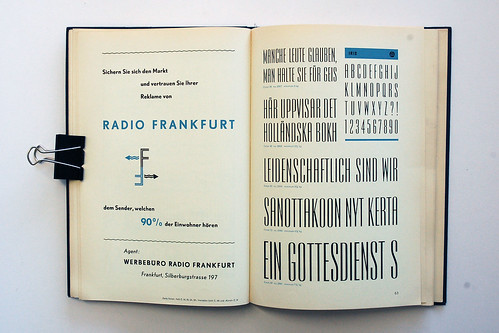
Schriftenkatalog — Beautiful pages from a 1960’s Dutch type catalogue on Flickr (via Inspire Me)

And… The history of the ampersand at the Webdesigner Depot (thanks Nic).

A Guide to Online Publicity (For Dummies) — Freelance writer, editor and blogger Lindsay Robertson’s common sense — but on the money — “do’s and don’ts” for flacks like me approaching bloggers like er… me (via Kottke).

And finally…

Two lovely posts at The Silver Lining featuring the work of Elaine Lustig Cohen: Part 1 and Part 2. There are more Elaine Lustig Cohen book covers at ephemera assemblyman and there is an amazing Flickr pool devoted to the design work of Alvin and Elaine Lustig here.

1 Comment

Something for the Weekend

Megan Wilson‘s new cover design for An Education by Lynn Barber.

Of a Certain Blockheadedness — Scott McLemee on the internet’s “gigantic plot” to get him to write for free:

The idea that new media has somehow abolished the old hierarchical structuring of the field (making everything level and equal and rhizomatic and whatnot) is only half right, at best. The hierarchies aren’t as well-marked as they used to be but they aren’t gone. Talk of an “army of amateurs” is at this point persuasive only to people who enlist without paying any attention to the fine print.

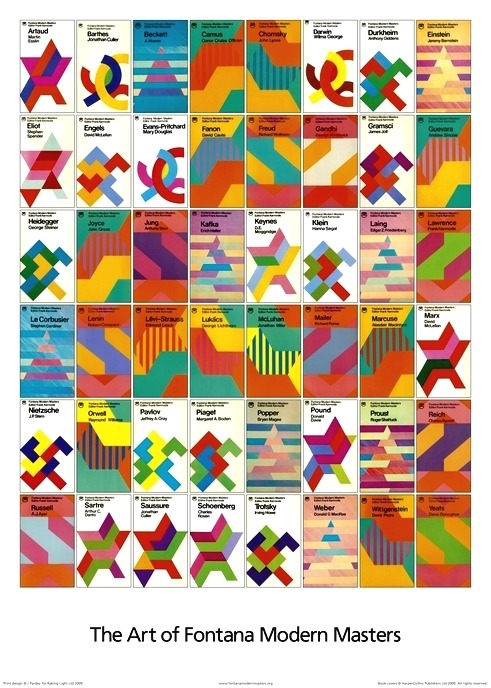
The Art of Fontana Modern Masters — Much linked to elsewhere, James Pardey (of the The Art of Penguin Science-Fiction site mentioned here) has new project on the Op-Art inspired Fontana Modern Masters book cover designs. He’s also written about the series for Eye (via Ace Jet 170 and Daily Discoveries on Design).

The New SleeknessAmi Greko and Pablo Defendini (and other “bookish types”) try to fill a hole in publishing punditry. Having tried that myself and failed horribly, I can only wish them good luck.

Around The World with the Bodoni Family — A beautiful new 60-page book by graphic designer Teresa Monachino seen at The Creative Review. Each letter of the alphabet is printed in Bodoni to illustrate a place beginning with that letter.

Wave of Mutilation — Tom McCarthy, author of Remainder, on the films of David Lynch in the New Statesman. Yes, it is as weird and unlikely as it sounds (via 3:AM):

Try to count the instances of deformity in Lynch’s work, or of people being deformed on camera, and you’ll lose count pretty quickly…  Deformity, for Lynch, is not simply thematic: it is instrumental. In his films, what the continual, almost systematic replacement of body parts and faculties by instruments – crutches, wheelchairs, hearing aids and ever weirder apparatuses sometimes as large as rooms – produces is a whole prosthetic order, a world of which prosthesis is not just a feature, but a fundamental term, an ontological condition.

Information Wants to be Valued — Ian Grant, Managing Director of Encyclopaedia Britannica, at BookBrunch:

The new online world has given book publishers good reason to review everything that they do, from what to publish to how to run their businesses. It is a noisy call to new action and fresh efforts, but publishers are well-placed to respond. The core skills we have had for generations – imagining our users, creating shapely products that meet their needs, and identifying the transfer of value that results in a sale, are precisely the skills that make good publishing online successful and satisfying. Information does not “want to be free”; customers want to be inspired and satisfied.

And finally: It seems I’m not the only one who doesn’t take predictions about the book industry entirely serious… Laurence Hughes over at the Huffington Post:

Some time in the next decade, someone will download both The Bible and The Satanic Bible to their e-reader, triggering the Final Conflict and ushering in Armageddon and the End of Days. Expect a slight dip in book sales during the thousand-year reign of the Antichrist.

2 Comments

Something for the Weekend

The Pox and the Covenant — A nice new entry in the “metacover” category from DWG‘s midfield general Jason Gabbert.

Book Publishers Have Reason to Resist Amazon — Columnist John Gapper in the Financial Times (via MobyLives):

The idea that book publishers are failing to act in their own interests because they somehow do not want to serve their customers, or because they do not “get” electronic distribution ignores the business reality they face… In any case, why is it illogical for publishers to defend their own business interests against those of Amazon, which is a public company trying to extend leverage over them to benefit its own shareholders?

Not Saving The Newspaper Business Any Time SoonThe Awl does the math on McSweeney’s gorgeous newspaper project The San Francisco Panorama. Hint: it doesn’t quite add up. Although that’s probably wasn’t the point. (via Sarah Weinman. Who else?).

The 50 Best Comic Book Covers of 2009 at Complex — Something for everyone here, including the wonderful Gorey-esque cover pictured above by Skottie Young (via Veer).

The Tempest Wakens — a short web comic for Tor’s Cthulhu Christmas, by the awesome Teetering Bulb team Kurt Huggins and Zelda Devon.

Comments closed

Midweek Miscellany

Eye, Eye! — The Creative Review looks at the vibrant work of printing studio/small press Nobrow.

It’s an Anagram! — Indigo’s e-book initiative Shortcovers has become ‘Kobo’. Much fuss has been made about the name (and the slightly iffy redesign), but what’s more interesting is that Kobo is being spun-off from its parent company in an attempt to expand its global reach… The intrepid Mark Bertils and PW have more on the international angle; Wired think Amazon should be worried; and The National Post have a good Q&A with Kobo CEO Michael Serbinis…

Collector’s Items — Vote for your favourite Nabokov cover from John Gall‘s set of individually commissioned redesigns for Vintage.

The Decade of Dirty DesignSteven Heller, author of Handwritten and New Vintage Type (to name just a couple) on the “anti-digital” Oughts (via Charles Brock):

With the increase of the D.I.Y. sensibility, with renewed emphasis on “making things from scratch,” designers were feeling a need to make physical (not virtual) contact with their materials and outcomes…

[Perhaps less “anti-digital” than “post-digital“? Any thoughts designers?]

And finally…

ryan-tym

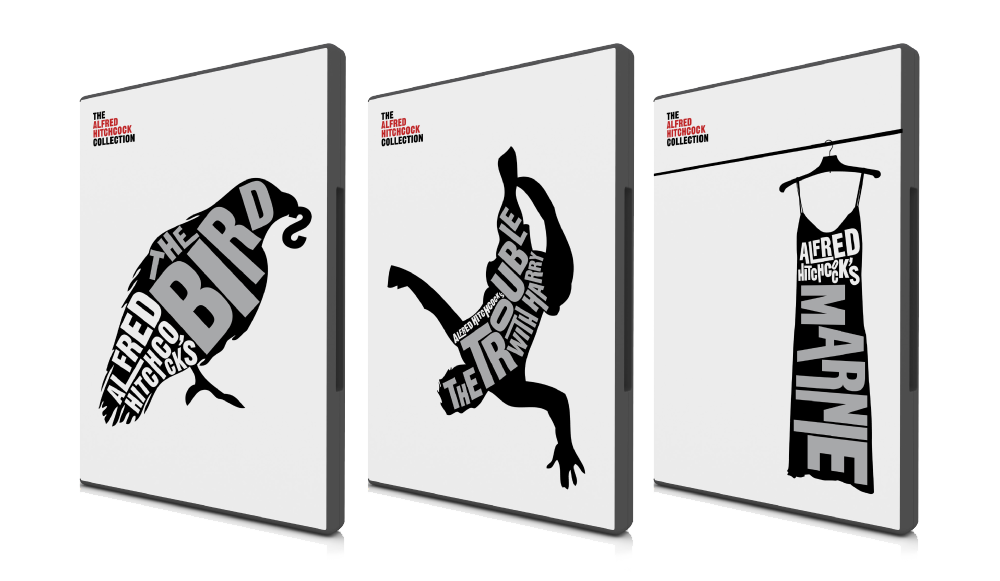
The Hitchcock Collection — a self-initiated project by London-based graphic designer Ryan Tym (via FormFiftyFive):

After recently purchasing a badly designed Alfred Hitchcock
DVD box set, I set to work on creating my own collection of
original covers. Each design features an iconic image related
to the film it represents and includes a bold typographic
title.

I would love to see Ryan design some book covers… Wouldn’t you?

3 Comments

Monday Miscellany

Kitsune Noir Poster Club — Artists Frank Chimero, Mark Weaver, Jez Burrows, Cody Hoyt and Garrett Vander Leun reinterpret their favourite books as prints for Kitsune Noir . (Frank Chimero’s Slaughterhouse Five is pictured above).

And on the subject of posters…

Penguin US have made the jacket art from Graphic Classic Editions of Moby Dick and White Noise, designed by Tony Millionaire and Michael Cho respectively, available as posters.

From Trolls to Truth — Author Ursula K Le Guin reviews Tove Jansson’s The True Deceivers (available in the US from NYRB Books) for The Guardian:

On the patronising assumption that books for children are nice, ie morally bland and stylistically infantile, critics, reviewers and prize juries often dismiss those who write them as incapable of writing seriously for adults… Anyone familiar with Jansson knows it would be unwise to dismiss her or patronise her work on any grounds. Her books for children are complex, subtle, psychologically tricky, funny and unnerving; their morality, though never compromised, is never simple. Thus her transition to adult fiction involved no great change. Her everyday Swedes are quite as strange as trolls…

Quote/Unquote Bookends designed by Eric Janssen (via SwissMiss).

And lastly…

In my total blogging tardiness, Bookslut (inevitably) beat to the punch on this, but Simon Reynolds column on the music of the decade for The Guardian has so much resonance for books and the book industry:

“The fragmentation of rock/pop has been going on as long as I can remember, but it seemed to cross a threshold this decade. There was just so much music to be into and check out. No genres faded away, they all just carried on, pumping out product, proliferating offshoot sounds. Nor did musicians, seemingly, cease and desist as they grew older; those that didn’t die kept churning stuff out, jostling alongside younger artists thrusting forward to the light. It’s tempting to compare noughties music to a garden choked with weeds. Except it’s more like a flower bed choked with too many flowers, because so much of the output was good. The problem wasn’t just quantity, it was quantity x quality. Then there was the past too, available like never before, competing for our attention and affection. The cheapness of home studio and digital audio workstation recording, combined with the wealth of history that musicians can draw on and recombine, fuelled a mushrooming of quality music-making. But the result of all this overproduction was that “we” were spread thin across a vast terrain of sound.”

(Update: links to Tove Jansson’s The True Deceiver added)

Comments closed

Something for the Weekend

It’s been a slightly shite week in the book trade this week.

Amidst the plethora of end of year/decade “Best of…” lists and gift guides, it was announced that Kirkus and Editor & Publisher Magazine are going to close (are we surprised? No); B&N’s Nook e-reader turned out to be not be quite as good as it was cracked up to be (are we surprised? No); and Simon & Schuster, Hachette, and HarperCollins upset the usual suspects (for all the usual reasons — only Moby Lives seemed to get that it might be about something else) by announcing their decision to hold back the release of a few e-book editions (are we surprised? No)… Is any of this particularly interesting? No. (Although — for the record — I am grateful to the WSJ‘s Jeffrey A. Trachtenberg  for reporting on the e-book developments, and to indefatigable Largehearted Boy for compiling a comprehensive list of Best of… lists)…

So needless to say, there isn’t much about the book industy in today’s links. Ah well…

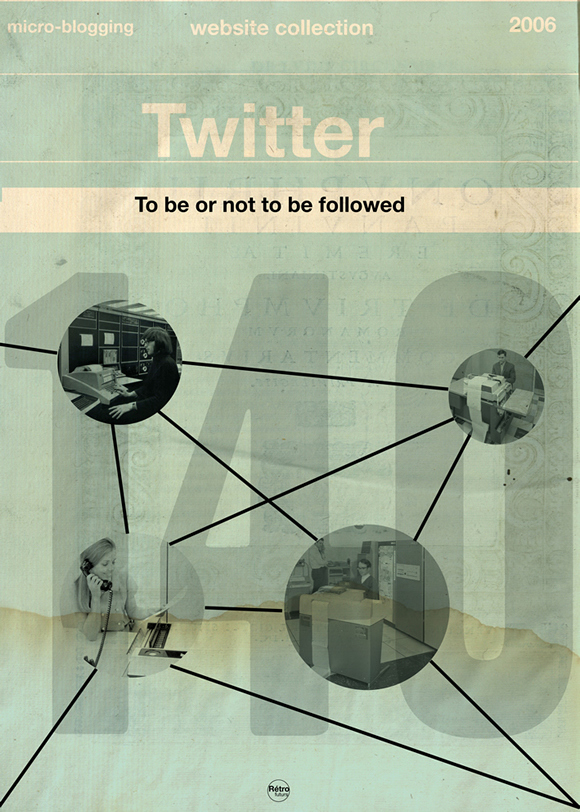
Another addition to the weirdly brilliant (or brilliantly weird?) vintage book/pop culture mash-up phenomenon:  Web Services Book Covers by French illustrator Stéphane Massa-Bidal AKA Hulk4598, or Rétrofuturs. They’re sort of like Olly Moss meets Cristiana Couceiro. (First seen at Design You Trust and then just about everywhere else this morning).

The Sixties — Another fantastic new cover by Henry Sene Yee for Picador’s BIG IDEAS // small books series.

Type for the Tube — an interesting history of Edward Johnston’s typeface for the London Underground from its design to current usage.

And finally…

F is For Fail — A really charming “alphabetical odysessy through the creative process” by Brent Barson (via the lovely Aqua-Velvet):

Can I go home yet?

(Have a great weekend!)

3 Comments

Midweek Miscellany

Well, oh shit. Go fuck yourself — The pugnacious George Lois in BlackBook magazine:

The design was the idea. I don’t design, if you know what I mean. If you want Andy Warhol being devoured by his own fame in a can of Cambell’s soup, you just put the can there and you have him drowning in it. Case closed.

You’re knocked down by the idea, and the fact that it’s got complete clarity visually. Don’t complicate it with busy work.

That’s the way I do everything. If I was a doing a magazine, it’s not a question of if I’d be having more white space. It’s a question of every third or fourth spread I’d make a spread that would take your breath away — or piss you off. Or something.

“Yoda” — An interview with Dieter Rams at More Intelligent Life (Thanks Ben S.):

We have enough products. If you look at the market you have ten or 20 coffee makers that basically look all the same, doing all the same thing: they are making coffee. We don’t need 20 of these things, we need one good one.

Less, But Better… Less, But Better… [REPEAT].

The View From TorontoNational Post book critic Philip Marchand (formerly of the Toronto Star) talks to Conversations in the Book Trade:

I’m not sure how much “trouble” literature is in. The age of Tennyson was the last period in literature when “serious” literature found a mass market. Ever since, we’ve had a very small minority of readers for “serious” stuff, and a fairly large audience for thrillers, romance novels, detective novels, and so on. Then there’s the Da Vinci Code phenomenon in which everybody, from your dentist to your car mechanic, is reading a certain book – in order to be able to join in discussions about the book on social occasions, if for no other reason.

Frontmatters — Alex Camlin, Creative Director at Da Capo (interviewed here), has started a blog! Yay Alex!

This is Display! — Another site (along with the Alvin Lustig archive) that probably should have been on yesterday’s list of inspiring websites, Display is a “curated collection of 59 (and growing) important graphic design books, periodicals and ephemera.”

Comments closed

Something for the Weekend

Gosh! — Limited edition Footnotes in Gaza bookplate by Joe Sacco for Gosh! Comics in London (seen at The Ephemerist).

There is also an interesting interview with Joe Sacco about his new book on the BBC World Service’s The Strand.

How To Be An Artist — Criterion designer Eric Skillman discusses his design process for Eddie Campbell‘s Alec: The Years Have Pants published by TopShelf.

And Eddie Campbell is interviewed by USA Today about the book.

Imaginary Worlds — PW Comics Week talks to Helen McCarthy, author of The Art of Osamu Tezuka: God of Manga:

I don’t know if it’s his themes that make his work timeless, so much as his breadth of interest. He was interested in everything and everyone that lives. He gives every character in his works the respect of allowing them to exist as real individuals; whether they’re likeable or not, they’re real. I think that’s the quality that makes animation director Hayao Miyazaki resemble him most strongly, that insistence that nobody is a stereotype or a cipher, that everybody has equal validity whether they’re a ‘nice’ person or not. Personally, I love his approach to women. He treats them exactly like normal human beings, and so few writers really do that, even in these allegedly liberated times.

There is also a short interview with the author in the WSJ.

Is Publishing Dead? (PDF) — An good interview with Sarah Nelson, former editor-in-chief at PW and now book director for O, The Oprah Magazine, from the 2009 PubWest Conference (via GalleyCat):

I don’t think that digital, per se, is the culprit. I don’t even think that Google, per se, is the culprit. I think that there are a lot of people in publishing who look to those things, to Google, to eBooks, to Amazon and say that they are the devil, and they are killing our business. I think it’s not that simple. I think that publishers need to think about the business model in which they operate and to give advances – and… it’s less true of the small and medium sized publishers, and for that reason, they’re in better shape than some of the big guys – but when you’re giving several million dollar advances on books, you are destined to lose money. And that is only going to become more true if more books are read digitally, because the amount of money you’re going to make on a digital book is a lot less than the amount of money you’re going to make on hardcover.

Judging 2009 by its Cover — Amazon (somewhat ripping our friend at The BDR) have started a Best Book Cover of the Year poll. Please vote for something worthy.

And, as you’ve no doubt seen, Ben has chosen his top 10 covers of the decade at the Book Cover Archive Blog.

And last (but by no means least)…

Advent Books — Crazy Sean Cranbury of Books on the Radio, and Book Madam Julie Wilson have a Christmas book project:

The idea behind it is simple: authors, publishing professionals, bloggers, and booksellers will write short enthusiastic recommendations of their favorite books that have been published in the last year.  We’ll publish a few of these every day, including pics and links for the books… It’s what we’re calling the Digital Handsell 3.0.  Just in time for the Holiday Season.

I don’t think my selection will come as surprise to anyone who reads this blog regularly, but apparently it’s controversial.

2 Comments

Midweek Miscellany (Paul Auster Edition), November 25th, 2009

The award-winning Folio Society edition of The New York Trilogy by Paul Auster and illustrated by Tom Burns has just about blown my mind. MUST. HAVE.

James Wood on the novels of Paul Auster in the The New Yorker:

Auster is a compelling storyteller, but his stories are assertions rather than persuasions. They declare themselves; they hound the next revelation. Because nothing is persuasively assembled, the inevitable postmodern disassembly leaves one largely untouched. (The disassembly is also grindingly explicit, spelled out in billboard-size type.) Presence fails to turn into significant absence, because presence was not present enough. This is the crevasse that divides Auster from novelists like José Saramago, or the Philip Roth of “The Ghost Writer.”

(Personally speaking I think I prefer Auster’s interesting awkward failures over the portentous bludgeon prose of Philip Roth, but that’s just me…)

And, if you haven’t had enough Auster for one post, he’s also interviewed in New York Magazine.

The Making of Fantastic Mr. Fox designed by Angus Hyland — New work from Pentagram for Rizzoli.

Covers from Cleethorpes — A brief, but funny, interview with designer David Pearson at It’s Nice That.

“We Like Lists Because We Don’t Want to Die” — Umberto Eco interviewed in Der Spiegel:

The list is the origin of culture. It’s part of the history of art and literature. What does culture want? To make infinity comprehensible. It also wants to create order — not always, but often. And how, as a human being, does one face infinity? How does one attempt to grasp the incomprehensible? Through lists, through catalogs, through collections in museums and through encyclopedias and dictionaries.

An Innocent Abroad — Journalist and cartoonist Joe Sacco (Palestine, Safe Area Gorazde) interviewed about his new book Footnotes in Gaza in The Observer:

I’m a nondescript figure; on some level, I’m a cipher. The thing is: I don’t want to emote too much when I draw myself. The stories are about other people, not me. I’d rather emphasise their feelings. If I do show mine – let’s say I’m shaking [with fear] more than the people I’m with – it’s only ever to throw their situation into starker relief.

And on the speaking of comics…

Paul Gravett, author of multiple books on the art form, interviewed by Dazed & Confused:

I like the control I have when reading a comic. I’ve grown impatient and disenchanted with the tropes of a lot of movies and TV, their conventional angles and cuts, their manipulation through music, lighting, special effects and above all, the efforts of acting to make me emote. Comics struggle to make us feel anything at all… They often don’t work that brilliantly, but when they do, the impact of fixed, unephemeral, often hand-drawn images can really surprise me. It’s a primal, even primitive medium, as old as our first cave paintings, and it is still being invented and discovered.

2 Comments

Midweek Miscellany, November 18th, 2009

Lusting After Lustig — Designers Charles Brock and Tim Green share their collection at FaceOut Books.

While Amazon announced the Kindle will be available in Canada this week, The New York Times looks at reading on phones:

Many people who want to read electronic books are discovering that they can do so on the smartphones that are already in their pockets — bringing a whole new meaning to “phone book.” And they like that they can save the $250 to $350 that they would otherwise spend on yet another gadget.

No. Shit.

But, on the subject of e-books… Steve Haber, the president of Sony’s digital reading division, talks to TechFlash (via TeleRead).

A History of 16 Science Fiction Classics, Told In Book Covers at i09 (including the brilliant cover for A Clockwork Orange pictured above and yet more covers for 1984).

A Winter’s Tale — Ali Smith (The Accidental) on The True Deceiver by Finnish author Tove Jannson, creator of the Moomins:

If the Moomins are Jansson’s most celebrated legacy – a community of inventive, big-nosed, good-natured beings who survive, again and again, the storms and existentialism of a dark Scandinavian winter through simply being mild, kind, inclusive and philosophical – what will happen when a real community is put in its place? What will the outcome be when Jansson tackles, naturalistically, the life of a tiny hamlet in a dark, wintry landscape – and in a book so close to real local life that the original Swedish publication carried a disclaimer saying it was in no way based on any real place, nor its characters on anybody living?

You had me at “existentialism of a dark Scandinavian winter.”

The Genius — The awesome Tom Gauld interviewed at It’s Nice That. Limited edition letterpress prints of Tom’s Characters for an Epic Tale are available now.

And finally…

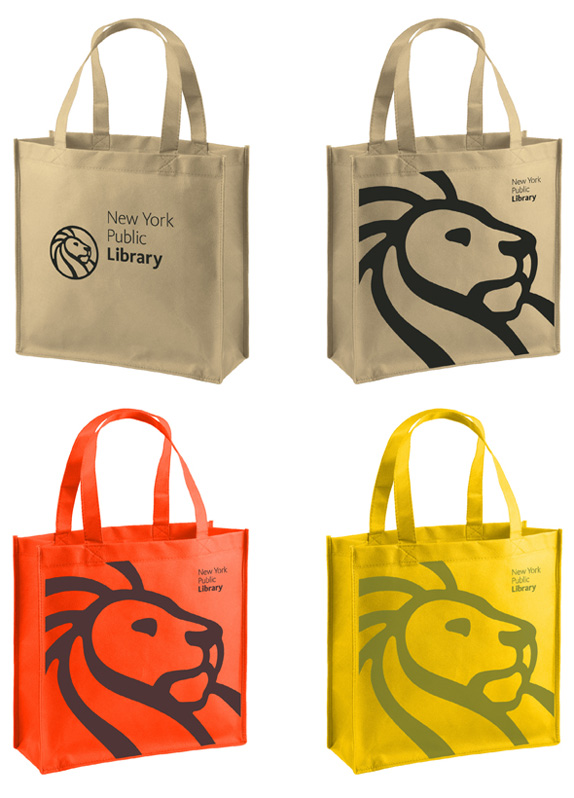
UnderConsideration’s Brand New looks at the new logo for The New York Public Library (via Daily Discoveries on Design)

Comments closed