Skip to content

Tag: letterpress

Midweek Miscellany

EndGrain — A “directory and aggregator for wood type and letterpress works and information on the web.” Lovely.

Crash — Iain Sinclair (author, most recently, of Hackney, That Rose-Red Empire — just out in paperback by the way) on JG Ballard’s artistic legacy:

A late moralist, he practised undeceived reportage, not prophecy: closer to Orwell than HG Wells. Closer to Orson Welles than to either. Closer to Hitchcock. Take out the moving ­figures on staircases that go nowhere and stick with hollow architecture that co-authors subversive drama

Picture Book Report — 15 artists create illustrations inspired by their favourite books. Pictured below: Kali Ciesemier‘s take on Sabriel by Garth Nix. I’m also looking forward to Robot Johnny‘s take on The Hitchhiker’s Guide to the Galaxy (via The Art Department).

Indigo 2.0Canadian Business magazine on Indigo and their digital book division Kobo:

“Kobo has been across the smartphone space from the beginning,” says Lisa Charters, senior vice-president and director of digital for Random House Canada. “And that unique offering is really important to us as publishers, because we want consumers to have all options to read e-books, and not necessarily have to purchase a $300 device.”

What’s more, says New York publishing consultant Mike Shatzkin, “they beat Google into the cloud.” Kobo’s library system is based in cloud computing. When you buy a Kobo book, it resides on Kobo’s servers and you access it via your device of choice. So when you squeeze in 20 pages of The Lost Symbol on your laptop in the morning, and later that day open the Kobo application on your BlackBerry, Kobo automatically plops you down on page 21.

Interesting stuff, although I do wish journalists could stay away from the Gutenberg clichés (and Dan Brown. Barf).

And finally…

Reserve Window Design — “We hired our good friend John Downer, who is a professional sign painter & typographer, to fly to LA to do gold leaf lettering on our store window & transom. Glass gilding is becoming a lost art that only a few dozen people in the United States still know how perform” (via We Love Typography):

4 Comments

The Complex of All of These

3000 (ish) photos of Abigail Uhteg making 35 books over a 2 month period at the Women’s Studio Workshop in Rosendale, NY:

(via Jacket Copy amongst others…)

Comments closed

Midweek Miscellany, November 4th, 2009

Fluid — John Gall discusses his brilliant cover design for the Vintage edition of Tom McCarthy’s Remainder, which is still one of my favourite novels of the last few years.

Hamilton Wood Type Catalog No.14 (1899-1900) at Unicorn Graphics’ Wood Type Museum. I quietly obsessed with slab-serifs right now so this is like crack (via Draplin Design Co.).

And The Beat Goes On — Sarah Weinman (much missed at GalleyCat) is writing about publishing for AOL’s money and finance news blog DailyFinance.

Gigantic Robot — Awesome cartoonist and illustrator Tom Gauld has a new website (to accompany his excellent Flickr photostream).

BOOM! — PW talks to Mark Waid, Editor-In-Chief of independent comics publisher BOOM! Studios:

We’re great at getting a focused message out. Because we don’t publish eighty comics a month, our inestimable marketing department does a great job of making every title important in the marketplace and every launch an event. We’re also better than the big guys at taking risks because we don’t have stockholders to answer to, or lenders who would call us crazy… We’re very much a writer-driven, idea-driven company. We start with the story first (with a talented writer) and focus on getting that right.

30 Conversations on Design — Designers, including luminaries such as Massimo Vignelli, Erik Spiekermann, Ellen Lupton and Paula Scher, answer two questions: “What single example of design inspires you most?” and “What problem should design solve next?”

Unheimlich — Sam Leith argues for scary kids books in The Guardian (confession: I’m mostly linking to this story so I could type “unheimlich” which — rather disappointingly — means “unhomely” rather than “the act of undoing the heimlich manoeuver”).

And finally…

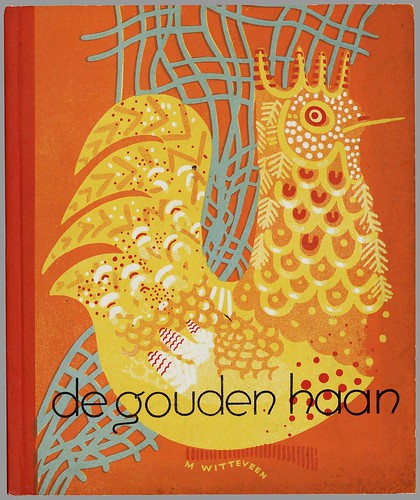
Dutch Picture Books 1810 – 1950 at BibliOdyssey (above: ‘De Gouden Haan’ by Marietje Witteveen, 1940).

‘De Gouden Haan’ by Marietje Witteveen, 1940
Comments closed

Midweek Miscellany, August 12th, 2009

Typographic book covers by Ed Cornish for the 2009 D&AD student award brief for typography (via We Made This).

Tools of the TradeThe Montreal Gazette talks to Hugh McGuire about Book Oven and the new self-publishing landscape:

Call it Self-publishing 2.0. And it’s one of the fastest-growing sectors of the book world, which is itself enjoying a nice growth period despite the recession and the glut of competing media choices.

“Like in any other media, when you the make tools of publishing easy, people will take advantage of it,” said Hugh McGuire, founder of Montreal self-publishing start-up Book Oven. “It’s just now coming into public consciousness.”

It is troubling however that the photograph accompanying the article suggests that Hugh only rents the top-half of his office space!

Richard Green’s redesigns for ten of Penguin’s classic romance thrillers seen at Noisy Decent Graphics.

Dirty Stories — Eric Reynolds, Marketing Director for the Seattle-based art comics publisher Fantagraphics, interviewed in PW:

The book industry has been in a state of flux for at least a year or two years. I think that’s going to continue as everyone adapts to the larger challenges that print media is facing, and that’s going to affect anybody that publishes in print. It comes down to electronic delivery and the shrinking book market in general and just how you navigate these sorts of things… Without making it sounds like we’re totally awesome, we face the same problems that any understaffed, under-funded company does, but we’re streamlined, and there’s not a lot of fat to be cut.

Ornament — Doug Clouse and Angela Voulangas, authors of The Handy Book of Artistic Printing (published by Princeton Architectural Press), have created a nice website and blog for their book about letterpress type.

(I do love this book, but for the sake of full disclosure I should stress that PAPress are distributed in Canada by my employer Raincoast Books).

1 Comment

Midweek Miscellany, June 10th, 2009

#BCTO09BookCamp Toronto organiser Mark Bertils’ stream of links about the event at his blog Index//mb. There is also a  list of related press at the BookCamp wiki. I will try and organise my jumble of thoughts about BookCamp sometime… soon… (ish).

The Book Seer — A nice little web project from James Bridle and the chaps at Apt Studio. Tell it what you’ve read and it will suggest what to read next based (currently) on LibraryThing and Amazon recommendations. James has more about the project at Times Emit.

Cultural Life — An interview with Granta magazine’s newly appointed acting editor John Freeman:

We need to expand how we define what it means to publish great writing. This means reaching readers in the way that they want to hear from us. Such as having a print edition for people who treasure the beauty of text and the photo essays on the page; having a dynamic website for those who want to read us online; having a Kindle or iPhone-compatible edition for people who want to read stories in the palm of their hand; sending out links by twitter to readers who want to know the moment new stories appear; hosting events and conversations and parties for people who want to interact with the magazine in person. The challenge is to make sure that none of these respective endeavors cheapens or reduces the complexity and integrity of the work we publish.

Passion and Daring — Ben Myers at The Guardian is heartened by  Canongate winning  publisher of the year.

Frightening But Cute — Illustrator Axel Scheffler,  talks about drawing the much-loved Gruffalo in a video interview also for The Guardian. Which reminds me — I’ve been meaning to link to Terrible Yellow Eyes for a while. It’s a collection of artwork inspired by Where the Wild Things Are (Robert van Raffe‘s contribution to the project pictured below).


Plastic Banality — Author Warren Ellis’ unique take on the “dubious virtues” of  e-books in Wired. Not for the sensitive or the faint of heart:

[W]hen print was king, we would speak of “reaching an audience”. We would talk of doing these things via advertising, or appearances – which were when you’d show up somewhere in the real world, deface books with ink and communicate using small mouth noises… This has changed in fairly savage ways. The complex net of processes designed to take your money and give it to me is kind of ragged, what with newspapers collapsing and the concept of authority being passed… to, in 2009, a Twitter post from the sainted Stephen Fry. It was great to get a review in a music paper (remember those?) and it was amusing to see Oprah recommending Cormac McCarthy’s The Road to housewives, but here’s the new audience mediation: Stephen Fry popping up on your bloody iPhone to tell you he’s enjoying reading The Watchmen graphic novel.

And finally…

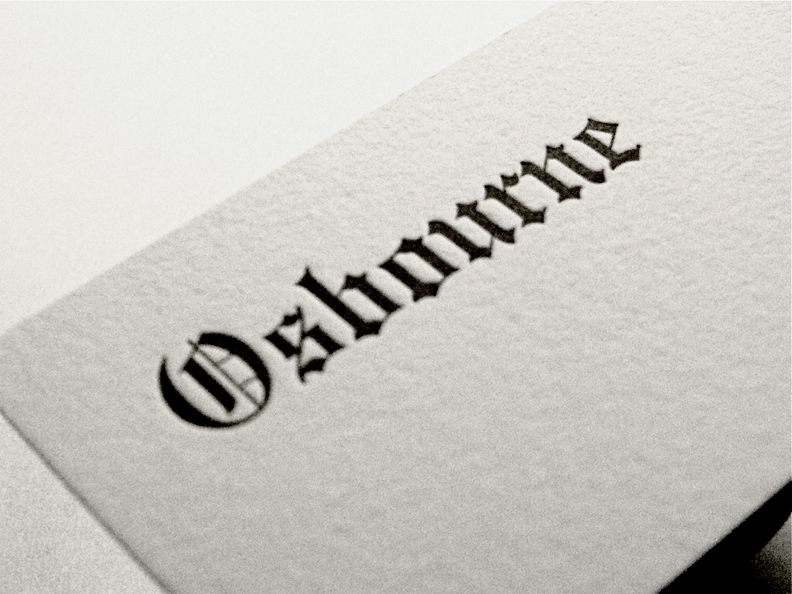
I’m rather charmed by The Mandate Press’ customizable letterpress calling cards. I have always wanted a business card set in blackletter… But what literary theme should they add to their list I wonder?

You can see more of The Mandate Press’ lovely work on Flickr (via The Strange Attractor)

Comments closed

Something for the Weekend, June 5th, 2009

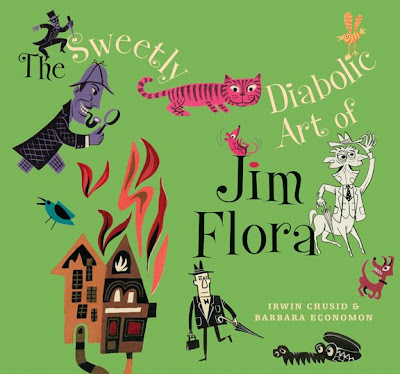
Sweetly Diabolic — A new Jim Flora compendium from Fantagraphics.

I really, truly, wasn’t going to link to any BEA autopsies — and there are plenty out there — but on the eve of BookCamp Toronto I thought Brian O’Leary’s post seem pertinent:

It would be more than nice, more than fun, more than illuminating, if we as an industry could use events like BEA as less an opportunity to predict the future and more a forum in which to examine the options. Okay, piracy is bad, but.. what if it helped sell books? Okay, we love long-form fiction and we think it should survive, but what if the people who read it now just stopped? Okay, a trade publisher provides value in choosing and curating content, but what if the world turned upside down and everyone were a writer, a publisher, a reader… Wouldn’t that be really cool?

Fingers crossed for tomorrow… Follow along on Twitter. The event account is @BookCampTO. The hash-tag is #bcto09.

Access of Evil — More on Google’s big e-book adventure at Business Week. The ‘news’ is that Google will be offering online access to e-books rather than downloads. Which, if I understand it correctly, is what Shortcovers does already. Not that anyone is giving them credit for it.

The ALPHABET chest of drawers by Kent and London, inspired by vintage printing blocks: “The perfect place to file everything from A-Z!” (via source of all good things swissmiss).

The George Orwell Archive at the BBC (via The Book Depository blog):

For two years, between 1941 and 1943, George Orwell – real name Eric Blair – was BBC staff member 9889, hired as a Talks Producer for the Eastern Service to write what was essentially propaganda for broadcast to India.

From recruitment to resignation, this collection of documents reveals the high regard in which Orwell was held by his colleagues and superiors and his own uncompromising integrity and honesty.

The Wickedest Man in the World — Jake Arnott, author of The Long Firm, on how the very real Aleister Crowley became the archetypal fictional 20th century villain. Sadly Arnott doesn’t mention that Oliver Haddo, W. Somerset Maugham’s literary Crowley, appears in the latest League of Extraordinary Gentlemen adventure.

The Future of Mainstream Media — a fascinating article about the success of National Public Radio (NPR) by Josh Catone for Mashable:

NPR’s amazing growth over the past 10 years prompted FastCompany magazine in March to call NPR the “most successful hybrid of old and new media,” and wonder if NPR could be the savior of the news industry. [T]hey owe that success to the culture of open access and audience participation that they’ve cultivated over the past decade.

And… OK I just can’t not link to Design Assembly‘s post about design-hero Wim Crouwel’s ISTD lecture.

Note: if you want me to link to your site, you just need to include a brilliant photograph of Wim Crouwel looking cool as f*ck and then use a genius soccer analogy:

“(For me) a grid is like a football pitch. You see a beautiful game of football, and then you see a not so beautiful one, but it all takes place on the same pitch”.

Yes. I am a cheap date.

4 Comments