Skip to content

Tag: illustration

Joe Sacco: Putting the Reader in the Picture

Cartoonist Joe Sacco discusses his new illustration/book The Great War in an interview at Salon:

I think every medium has its strengths. But I think illustrated work puts the reader directly into a picture. You open up, let’s say, a comic book, and I’ve drawn a Palestinian refugee camp — you’re inside it, and with the multiple images, you’ll hopefully get an idea of the atmosphere. As a cartoonist, you’re concentrating on giving visual information — especially in the background — that can be conveyed by multiple images. And things follow the reader around. You know, the architecture will follow the reader from one panel to another, so it becomes part of the atmosphere that the reader is imbibing. With the written word, you can describe the architecture, but you’re not going to keep mentioning it as a figure is walking down the street, you’re not going to keep mentioning what the background is. With comics you can do that.

Comments closed

The Great War by Joe Sacco

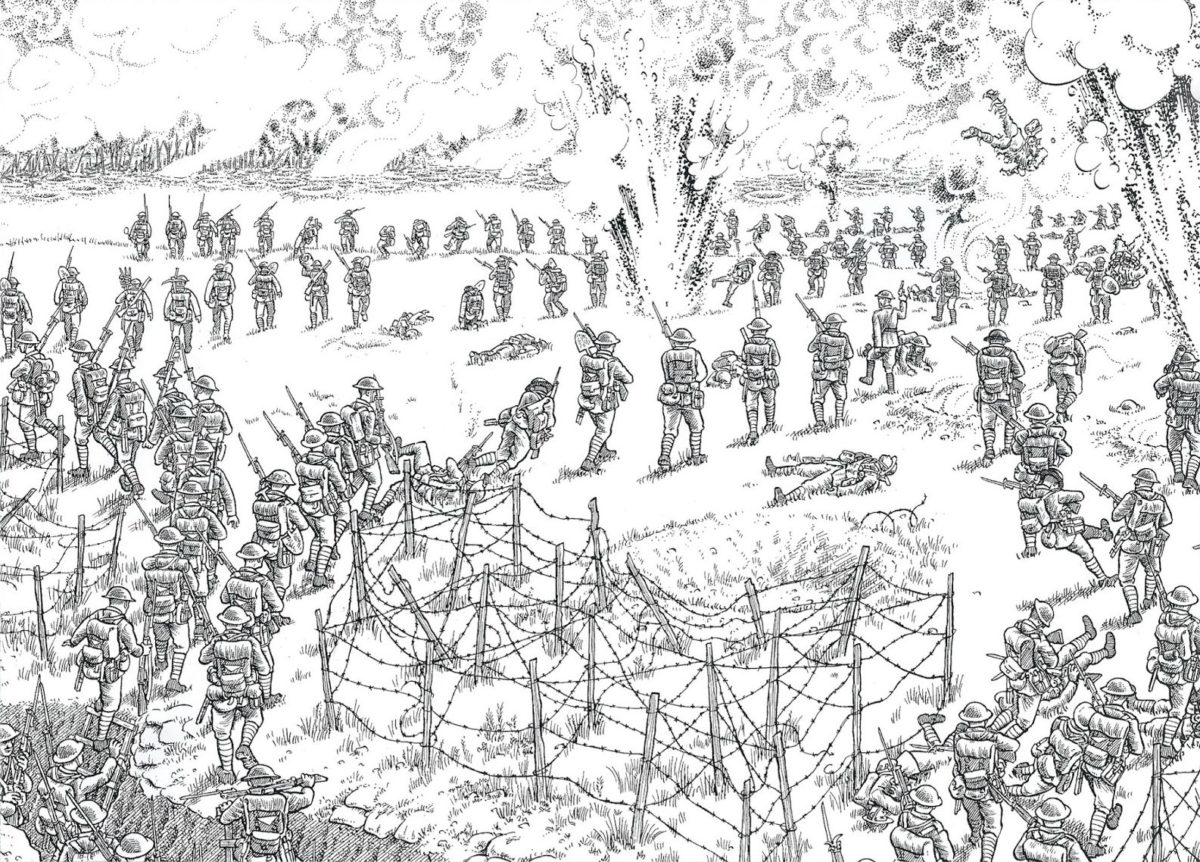
Joe Sacco talks to The New Yorker about his new accordion book The Great War, which folds out to create a twenty-four-foot-long panorama of the Battle of the Somme:

When we first talked about my drawing a panorama of the Western front, the idea seemed static. But immediately I thought of the Bayeux Tapestry… which has a narrative. William the Conqueror in France is getting ready for the invasion; they’re building the boats; they’re crossing the English Channel; then there’s the Battle of Hastings, and you basically read it left to right. It just came to my mind that I could show soldiers marching up to the front, going to the trenches, going over the top, and then returning after they’ve been wounded, back through the lines to the casualty-clearing station behind the front. So it seemed like a very simple idea, and to be honest, I just wanted to draw. On a visceral level, it was just a pleasure to think only in terms of drawing.

It was a relief not to think about words, and to do a different kind of research. I did a lot of image research and I actually had to read a lot of books, because sometimes prose takes you where photography never went. I would read and get images in my head, and it was just a matter of putting them down. I’ve spent a lot of time doing journalism, and I still am interested in it, but I think the artist side of me wants to sort of come out now. And that’s what the Great War was to me, letting myself go in that direction.

Sacco talks more about the work in this video for publisher W. W. Norton:

1 Comment

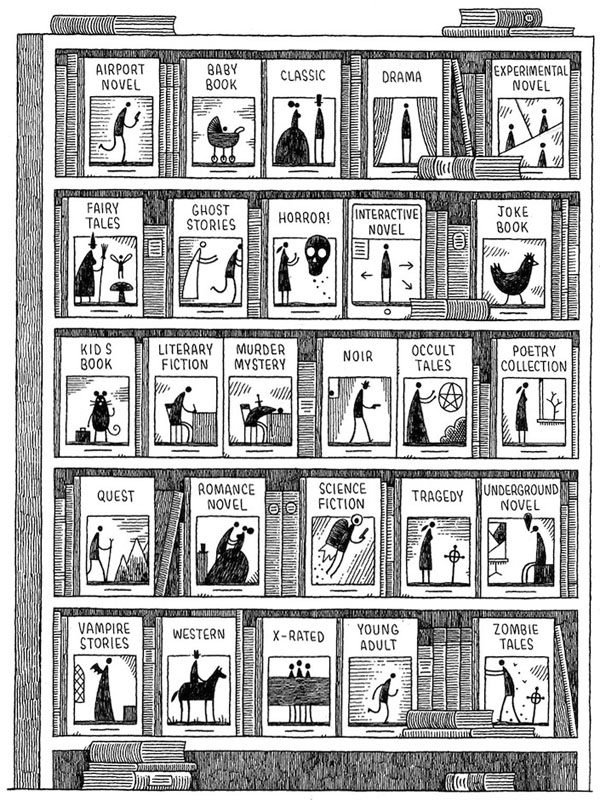
An Alphabet of Books by Tom Gauld

Tom currently also has a new ‘A Noisy Alphabet‘ print for sale.

Comments closed

Out of Skin by Emily Carroll


Just in time for Halloween and clocks going back, Canadian artist Emily Carroll has posted a chilling new webcomic called Out of Skin. Although it can be read a standalone story,  Carroll says on her blog that she considers it “part of a trilogy in terms of setting & theme” with her earlier comics His Face All Red and Margot’s Room, both of which are well worth reading if you haven’t doesn’t already.

Happy Halloween!

Comments closed

Q & A with Luke Pearson

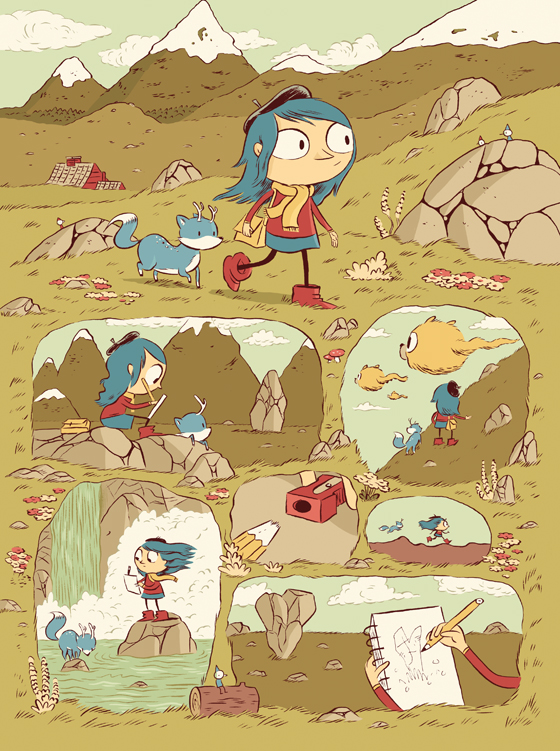
I’ve been a fan of Luke Pearson‘s work since picking up a copy of Hilda and the Midnight Giant from Nobrow Press a year or so ago. The beautiful illustrations, quality printing and oversize format gave it the exotic feel of the comics albums British school kids used to sneak back from vacations in France (and maybe still do?). Despite my immediate sense of nostalgia, the comic itself was fresh, different and delightfully free of cynicism. I read it over and over with my kids, and then savoured it on my own after they were asleep.

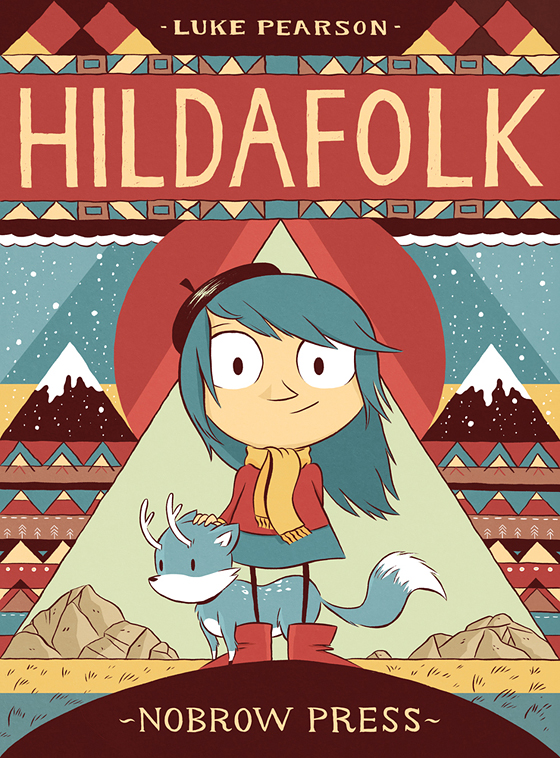
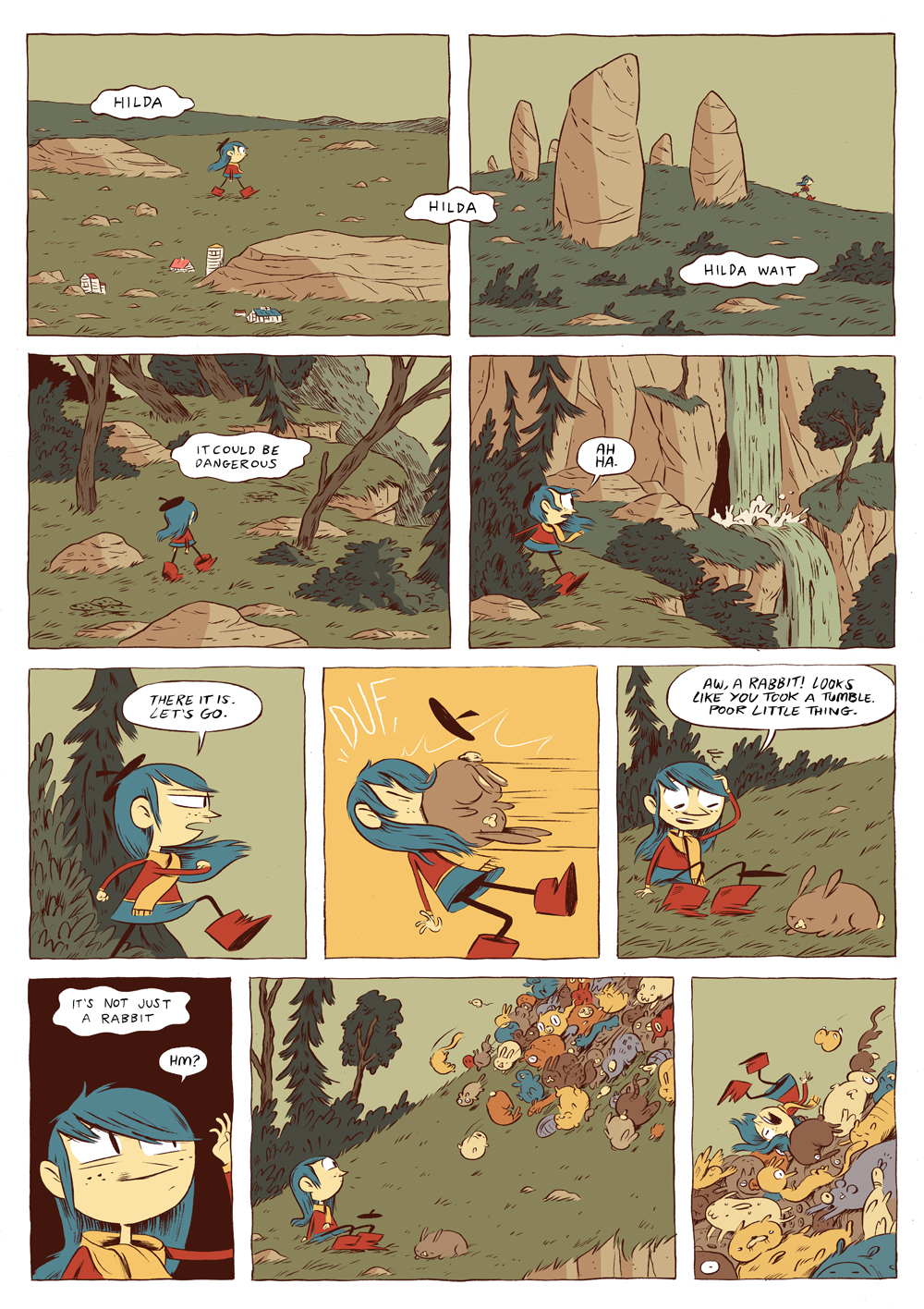
Happy to find a kids comic that adults could also love, I quickly went back and found a copy of Hildafolk (recently reissued in hardcover as Hilda and the Troll) and bought Hilda and the Bird Parade as soon as it was published. While seemingly drawing inspiration from Northern European stories and Tove Jansson’s magical Moomin books, Hilda’s world has it’s own, unique mythology — a strange wood man, truculent elves, troll rocks, sea spirits, salt lions, flying furballs, and lonely, ancient giants. The wide-eyed and blue-haired child and her mother are a curious and reassuring modern presence in this old and magical world. The fantastical is everyday to them — something to be fitted around work and school. Their problems are the problems of the real world — where to live, how to make friends with the neighbours, how to do the right thing…
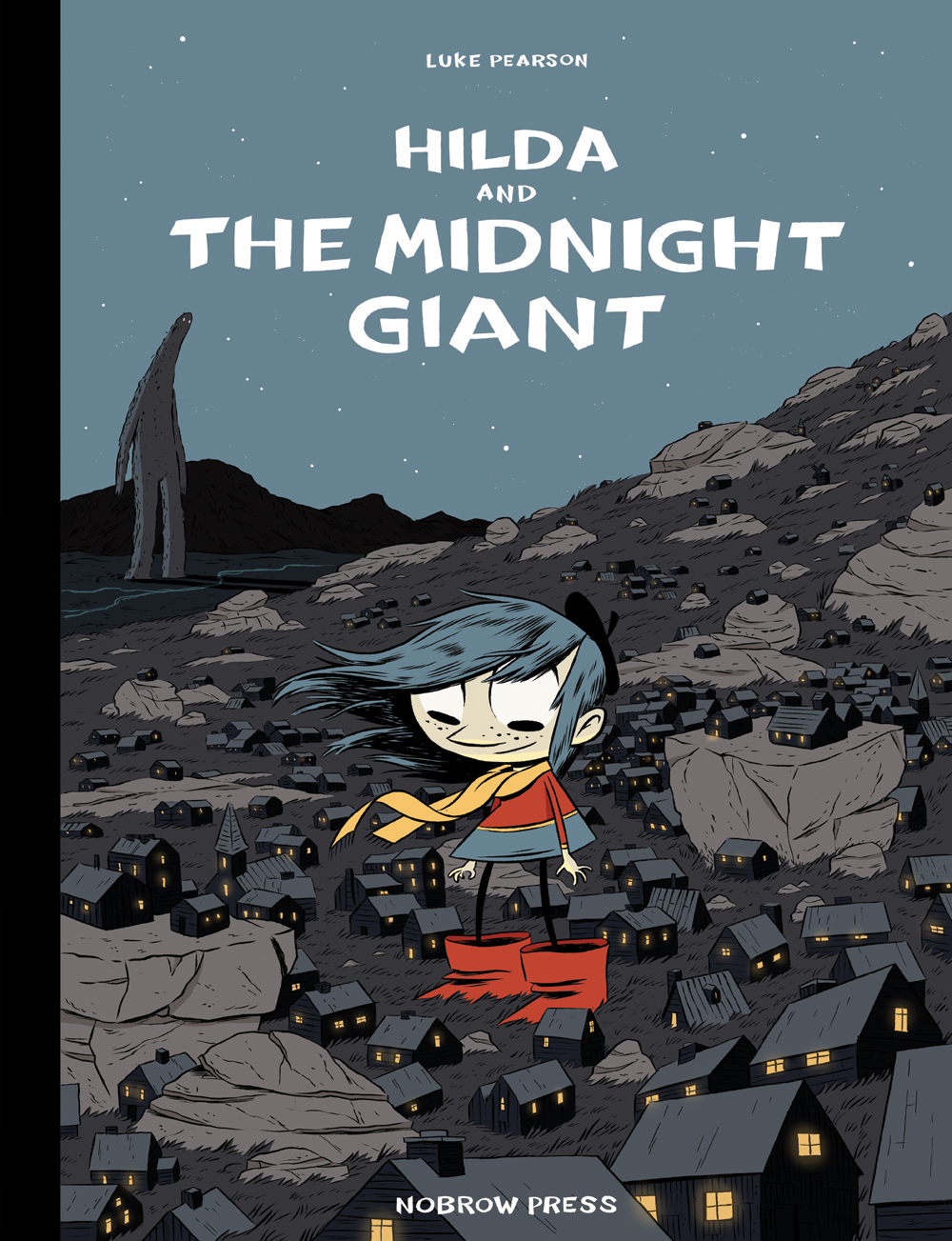
This juxtaposition of the modern and the magical is also evident in Luke’s comics for adults. But where the Hilda comics are unabashedly bright and joyful, the adult comics are filled with melancholy and sadness. Like Kevin Huizenga‘s Glenn Ganges comics, the fantastical in Luke’s adult comics is shadowy, nightmarish, and all the more unsettling for its appearance in mundane, familiar settings. The monsters and ghosts in stories like like You Mustn’t Be Afraid (included in the anthology Nobrow 7: Brave New Worlds), and the full-length graphic novel Everything We Missare the personal demons (sometimes scary, sometimes familiar) of the world weary, not the new friends of a child in unexplored territory. But for all their apparent differences, at their heart the Hilda stories and Luke’s adult comics are fundamentally about the same things: people, relationships, and about understanding one’s place in the world.

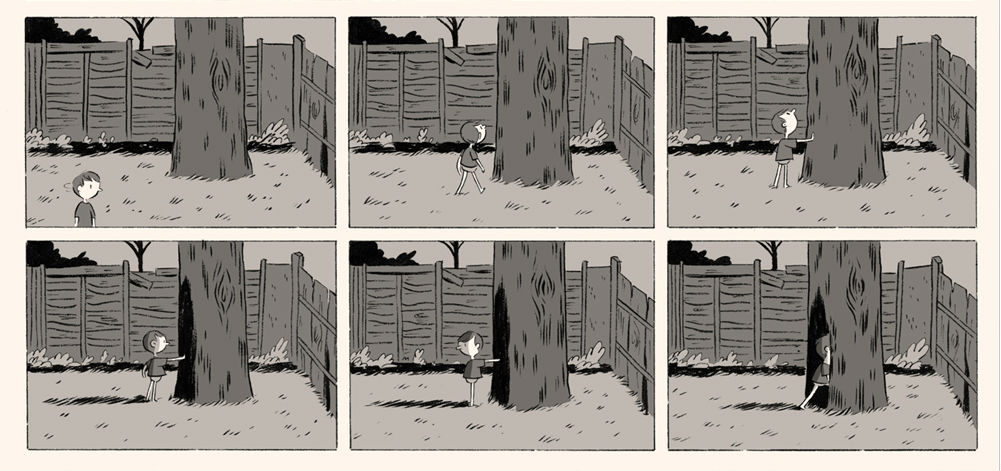
I recently spoke to Luke for the Raincoast Blog about ‘The Boy Who Drew Cats,’ his wonderful contribution to the newly published kids anthology Fairy Tale Comics. Here, we talk about his influences, his comics and his book cover illustrations. We corresponded by email.
When did you first start drawing comics?

When I was very young. I think I probably started drawing speech bubbles as soon as I figured out how to draw people. I used to draw comics about a character called Super Rabbit and show it to my grandparents.

Did you always want to be a professional cartoonist?

I probably did at some point when I was a child. It was obviously something I always thought about, but I was only really familiar with the smallest selection of comics and was entirely ignorant to how the industry worked, so it seemed like a crazy, unachievable dream to ever expect to get to that point. I eventually wound up going to university to study illustration and going into that I was prepared to basically just try and be an illustrator and it was only through the process of that that I remembered that comics were something that I still liked doing and that it was actually weird that I wouldn’t be doing them.
What was the inspiration for the Hilda books?

I draw really heavily on Scandinavian folklore (particularly Icelandic and Norwegian) for the Hilda comics. I got hooked on that initially from researching Icelandic folktales for a map project we were set at university. I really liked how strange and low-key they were. Not much happens and then the weirdest thing will happen, but it’s described really plainly and matter-of-factly and then it will end really abruptly. I tried to fuse some of the stuff I’d read for that with memories from an earlier family holiday to Norway which had a big effect on me and set a bunch of ideas in motion that for a long time I had nothing to do with.
The series has drawn comparisons to Tove Jansson beloved Moomin stories. Has Jansson been an influence on your work?

The 1990 tv series was my first exposure and I always felt like it was key in the shaping of my psyche somehow. I came relatively late to discovering the full breadth of what she did. If I had to choose to have an idol, I guess she would be it, maybe. So obviously she is a big influence on me, as a cartoonist, illustrator and a writer. I always feel a bit weird about any comparison though, because I can’t tell if it’s meant kindly or if it’s more like ‘I can see where you steal your ideas’. Hilda was designed very self consciously, at least initially, to resemble a kinder Little My.
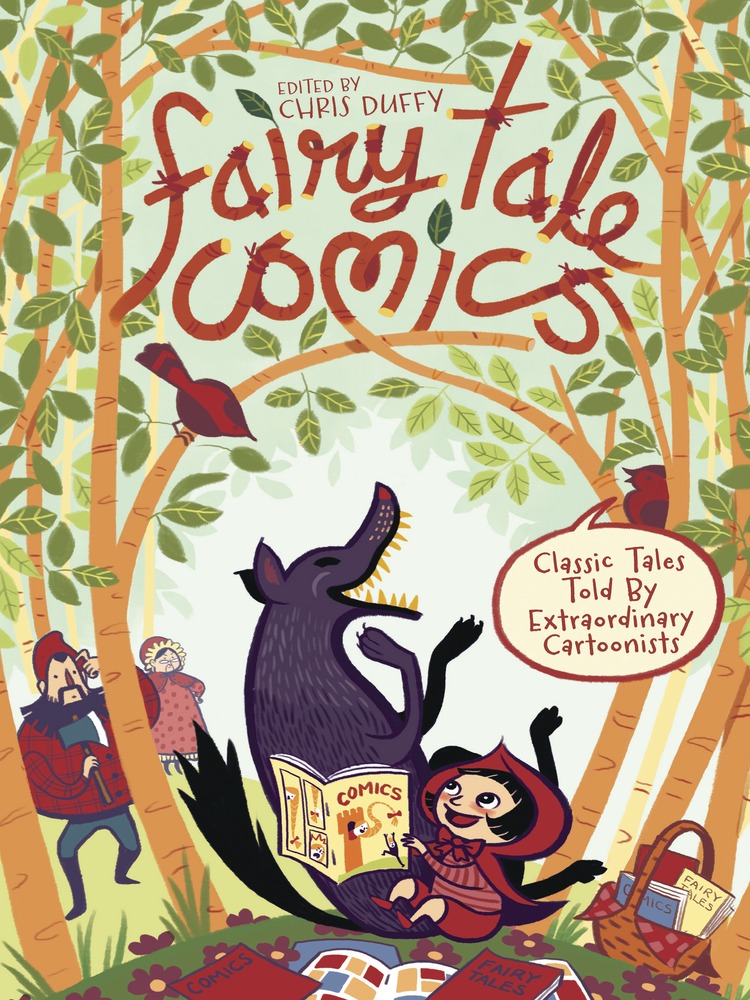
Your contribution to Fairy Tale Comics, ‘The Boy Who Drew Cats’, has a similar magical quality to Hilda. What attracted you to the story?

It was actually one of a couple of stories suggested to me by Chris Duffy, who edited the book. I liked how far removed it felt from the kind of Brothers Grimm stories that I generally think of when I think ‘fairytales’. It’s more like a horror story with a lot of weird details that seemed fun to me. I liked the Japanese setting. I was also completely unfamiliar with it so I didn’t have to feel the weight of past interpretations on me as I adapted it.
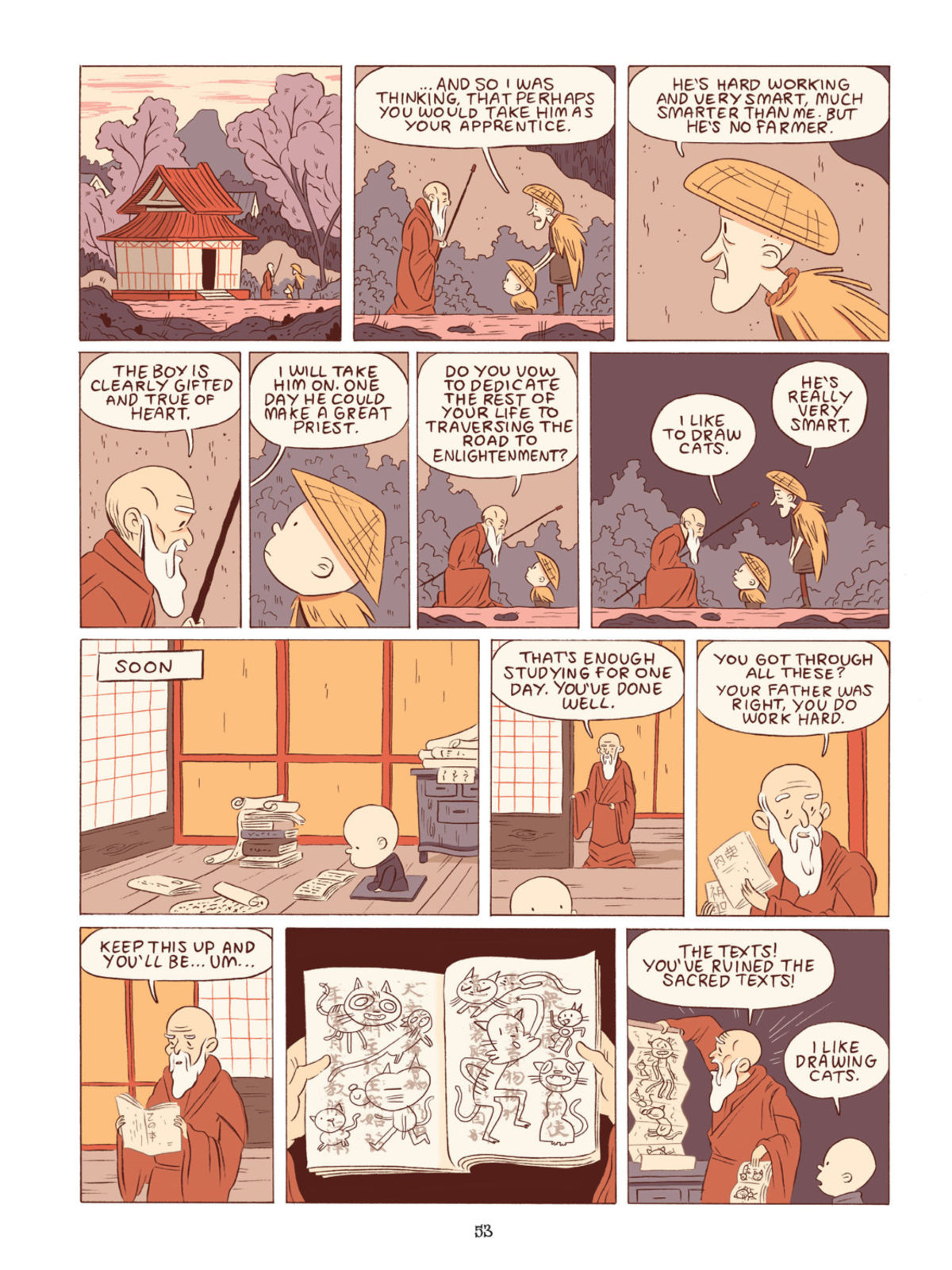
I love that the child at the centre of ‘The Boy Who Drew Cats’ looks a lot like Harold from ‘Harold and the Purple’ Crayon. Has Crockett Johnson been an influence on your work?

Actually no! I’m not super familiar with Crockett Johnson’s work at all. He actually started off as Charlie Brown and then I pulled his features around a bit.
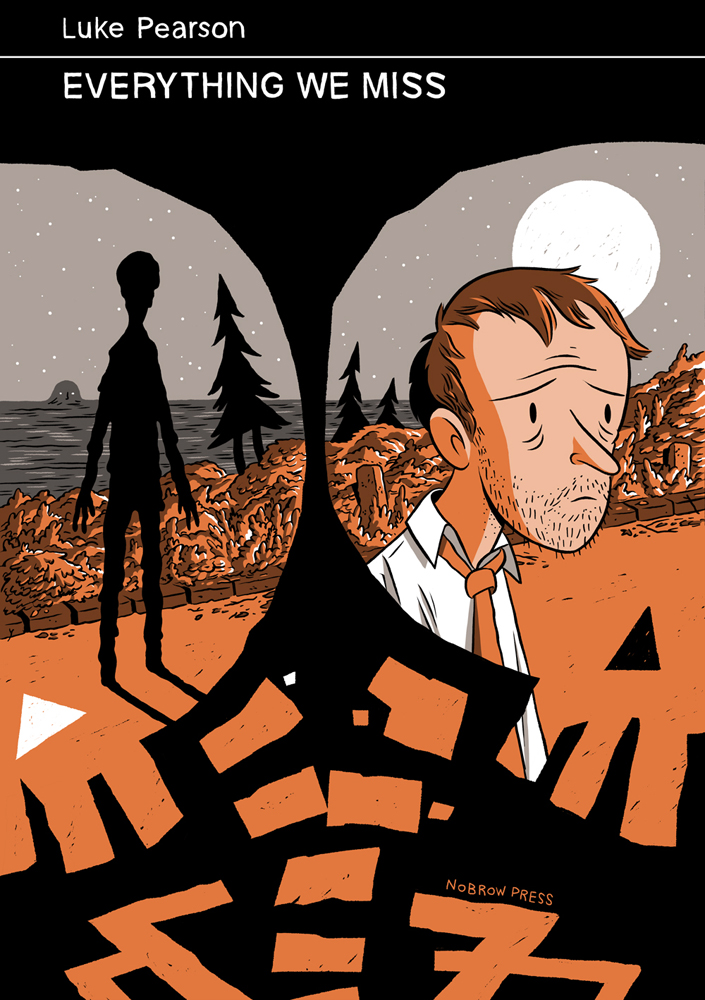
Do you approach your comics for kids differently from your adult comics?

I think this is the only kids comic I’ve done that isn’t a Hilda comic. Usually I’d point out that I draw my kids comics (Hilda) in a different style to how I tend to draw my adult stuff. I guess really I’m just talking eyes here. Hilda is full colour with big eyes and my other comics tend to be limited colour with dot eyes. This is full colour with dot eyes so I guess it sits in the middle. Less superficially, I’d say I try to be really clear in regards to storytelling and try and wrap things up neatly with my children’s work.

Briefly, could you describe your working process?

I generally draw and ink on paper, scan, colour in photoshop. I switch between brush pens, brushes, fineliners and dip pens. I don’t have any particular paper that I always use. I’m starting to enjoy occasionally inking in photoshop now, which I’m just using a wacom tablet for.
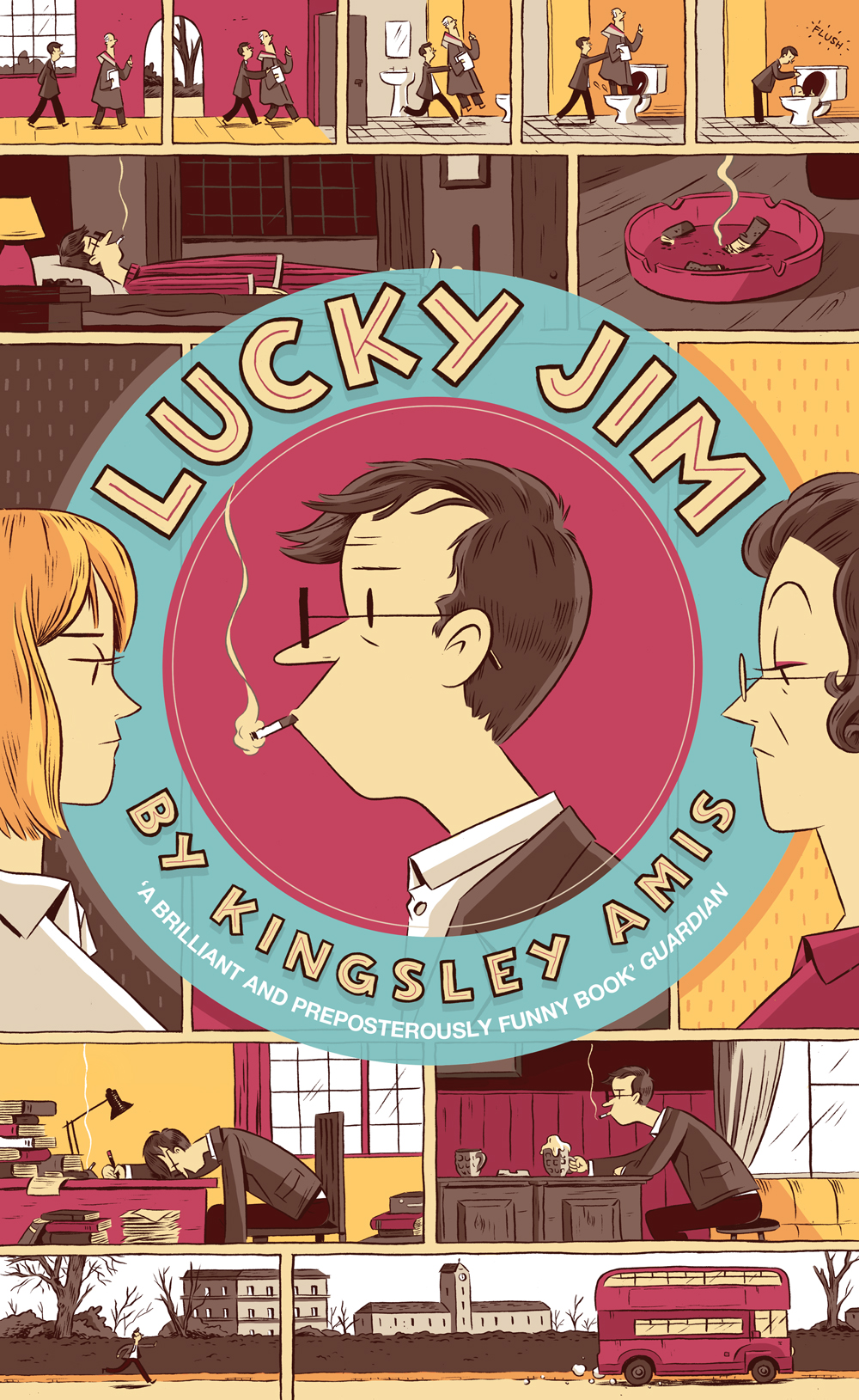
How is illustrating a book cover different from drawing comics?

Other than involving the same technical skills, it’s different in every way. I guess you are kind of trying to ‘tell a story’ with a cover, but really you just want to create an image that’s striking, intriguing, aesthetically pleasing and somehow captures the tone of the book. I’d say it feels a lot easier than a comics page, because you can just spend all your time fine tuning and perfecting this one thing until it’s ready, rather than having to worry about fifteen different images and making sure they all look good and all fit on the page and make sense when read one after the other. That said, it’s a totally different thing and requires different skills.

Are there any books you would love to illustrate?

Watership Down or something by Franz Kafka. I wouldn’t want to do them in the style I draw my comics though. My taste in book covers is not quite in sync with the ones I’ve actually drawn.

What have you read recently?

I just finished reading Tenth of December by George Saunders. I just bought a couple of collections of Michael Dougan comics which I really like.

How did you get involved with Adventure Time?

I got an email asking if I wanted to take a storyboard test, which I took and I guess they liked it. There’s no interesting story there really. I’ve boarded on two episodes so far, ‘Candy Streets’ and ‘Frost & Fire’ and should be doing some more some time soon.
Where do you look for inspiration, and who are some of your cartooning heroes?

I try to just pay attention to things and take everything in as inspiration in some way or another. But you know, I also just look at tumblr and stuff like every one else does. Some of my heroes are Tove Jansson, Chris Ware, Osamu Tezuka, Gene Deitch and Philippa Rice.

Who else do you think is doing interesting work right now?

Loads of people, but the more I list the more I feel like I’m missing out. My favourite cartoonist right now is Anatola Howard.

Have you thought about creating web-comics?

Yes, but I can’t see myself ever having a dedicated site for a specific regularly updated comic. I usually put my shorter comics online if I can and I wish I could do that more often. I can definitely see myself doing a regularly updated thing for a limited period of time at some point.

Do you worry about the future of books and print?

I can’t say it’s ever kept me up at night.

Thanks Luke!
2 Comments

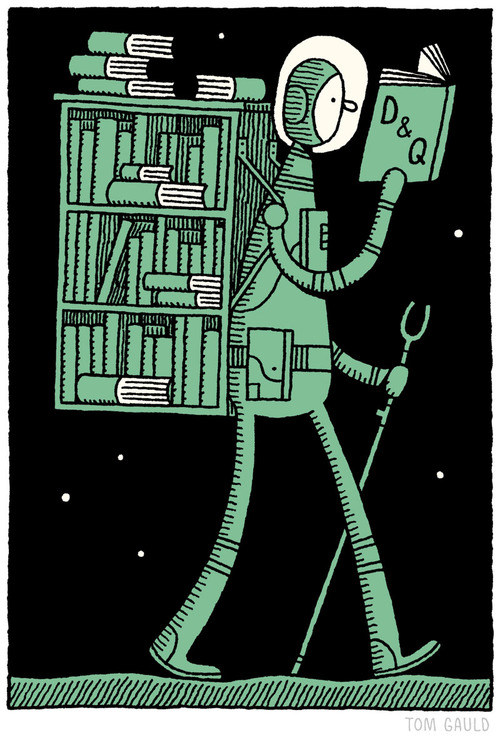
Tom Gauld Totes


Tom Gauld drew this bookish astronaut to go on tote bags for his Canadian publisher Drawn & Quarterly. I’m reliably informed that the bags are available from D+Q at conventions and from their store in Montreal.

Comments closed

New Book Covers by Jacob Covey and Others

 Laura Warholic by Alexander Theroux; design by Jacob Covey

In Case We Die by Danny Bland; design by Jacob Covey

The Devil’s Workshop by Jáchym Topol; translated by Alex Zucker; Design by Telegramme Studio

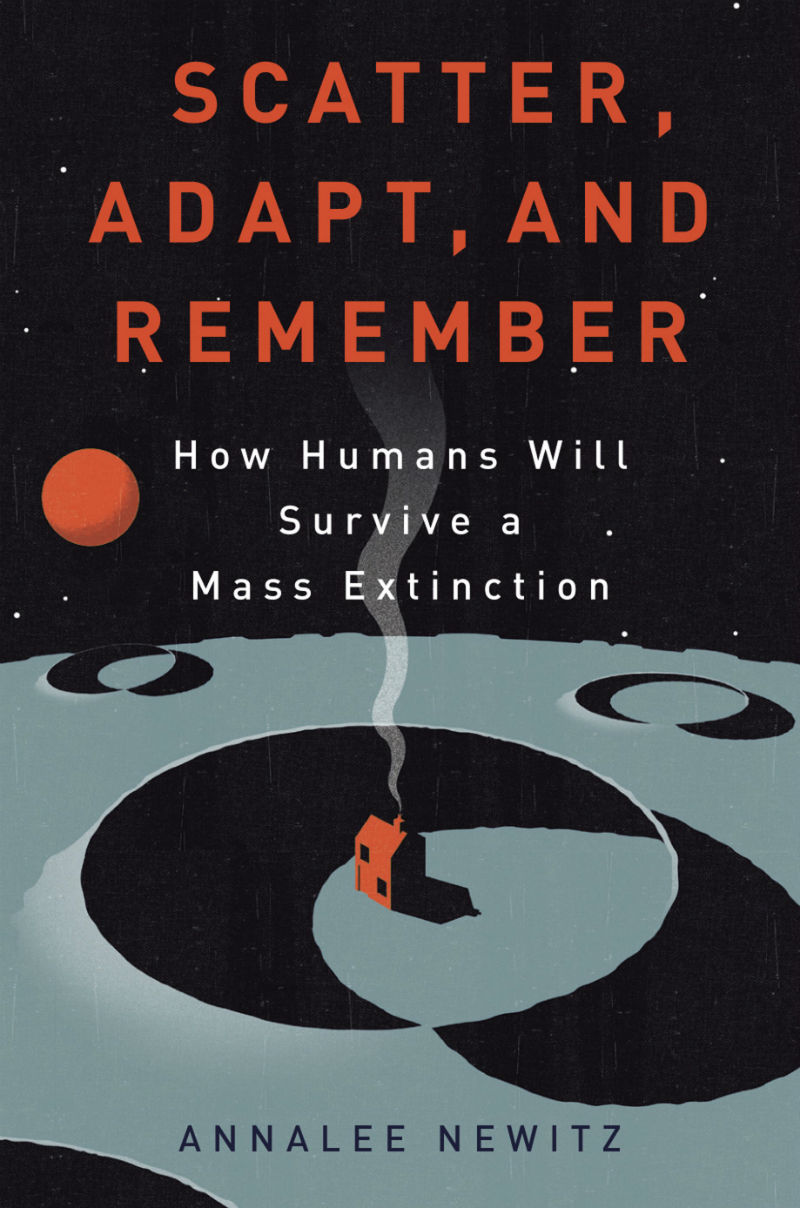
 Scatter, Adapt, and Remember by Annalee Newitz; design by Emily Mahon, illustration by Neil Webb

Americanah by Chimamanda Ngozi Adichie; Design by Abby Weintraub

Comments closed

The Open Book by Bob Staake


A young reader goes on an adventure in this charming wordless comic by Bob Staake for the New York Times.

Publishers Weekly recently posted an interview with Staake about his new book, Bluebird, which is also wordless:

I love writing visually, and wordlessly, because this is was how I read books as a kid. I didn’t really read, but I was a voracious page turner. Nothing would delight me more than pulling out old National Geographics and encyclopedias and looking through the pictures. For years, I have said that this is how children learn how to read. They don’t read, they look. Parents sometimes denigrate the importance of looking in favor of reading the words. It is just as important.

Great stuff.

Comments closed

Tom Gauld Book Covers

The esteemed Tom Gauld recently posted a delightfully bonkers new cover illustration for Stevyn Colgan’s book Constable Colgan’s Connect-O-Scopeand I thought it was about time we had a retrospective of Tom’s book covers around here:

The Three Musketeers by Alexandre Dumas (2007)

The Tribes of Britain by David Miles (2006)

Strange Eventful Histories by Shiamin Kwa (2012)

Stories by Neil Gaiman and Al Sarrantonio (2011)

Shadow Show edited by Sam Weller and Mort Castle (2012)

Family Fang by Kevin Wilson (2011)

The Damned Busters by Matthew Hughes (2011)

Costume Not Included by Matthew Hughes (2012)

Hell To Pay by Matthew Hughes (2013)

Nobrow #6 by various (2012)

Goliath by Tom Gauld (2012)

And finally, Tom’s new book You’re All Just Jealous of My Jetpack has just been published:

You can read my Q & A with Tom here.

(full disclosure etc., Tom’s two most recent books, Goliath and You’re Just Jealous of My Jetpack, are published in North America by Drawn & Quarterly and distributed in Canada by my employer Raincoast Books)

Comments closed

Midweek Miscellany

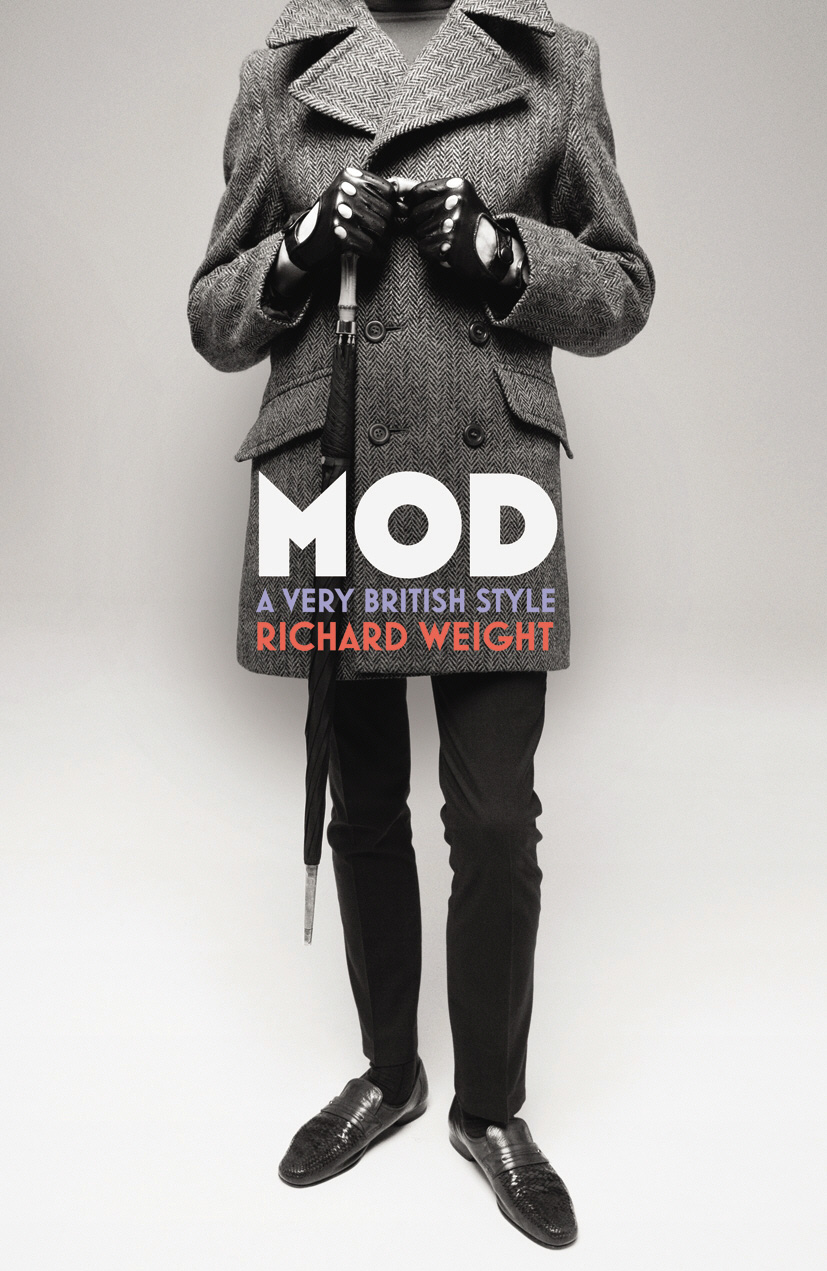
Ian Thompson reviews Mod: A Very British Style by Richard Weight for The Observer:

Mod’s first choice of music was jazz, Richard Weight reminds us. Miles Davis in particular became a fashion icon for blue-eyed soul brothers everywhere in Britain. The photograph of Davis on the cover of his celebrated 1958 Milestones album – Sta-Prest trousers, button-down Ivy League shirt – became a sort of mod pin-up. Mods (“modernists”) were among the first white Britons to embrace west-coast jazz, which had been galvanized by the Birth of the Cool sessions led by Davis in New York from 1949-50.

See also: Gavin James Bower’s review for The Independent.

It is What it is  — Five designers, Craig Mod, Rodrigo Corral, Michael Fusco, John Gall, and Jon Gray, on the books that inspire them, at the Virginia Quarterly Review.

Here’s Mr. Gall:

The clearest explanation of a good cover that I have ever heard came from Michael Beirut. I was a guest invited to critique a book-cover project he had given to his Yale students. As I was struggling to express some notion about why a particular concept may or may not be working, he got right to the point: “It has to look like what it is.” Indeed.


The Darkness — Sarah Weinman profiles Canadian author and illustrator Jon Klassen (I Want My Hat Back, This is Not My Hat, and The Dark) for Maclean’s:

Klassen’s style shies away from sentimentality. Instead it shows young children the consequences of bad behaviour through the prism of humour, a technique that hearkens back to books for children by the likes of Shel Silverstein and Roald Dahl.

And finally…

On the Exaggerated Reports of a Decline in British Fiction at the White Review:

Our peculiar creed is mortally suspicious of untrammelled aestheticism, endlessly asserting the primacy of content over form. In accounts of British writing, even now – long after such a thing could be anything other than a rather quaint anachronism of an old culture war – the avant-garde features as a kind of bogeyman. One whose dandified aestheticism belies a questionable politics, a moral compass gone awry; who must be beaten back by decency and common sense. Literary experiment still tends to be perceived as a pernicious form of French ‘flu: of course we should still be bloody grateful for the English Channel, separating, as it does, steady, dependable old Blighty from that kind of thing.

1 Comment

Midweek Miscellany

Toy Monkeys — Steven Heller interviews Canadian artist and illustrator Gary Taxali for Imprint:

Illustration is in rapid flux. How pictures are being used defies what we traditionally knew about illustration. Many artists are empowered by new digital media. Yet I sense a fear about the continued life of a still picture. People were talking about how illustrations needed to “move” two years ago. That’s not illustration, that’s animation. Most illustrators can’t animate. The timeless power of a still image will never leave the human psyche despite what new gadgets can accomplish.

(pictured above: I Love You, OK? by Gary Taxali, published by teNeues)

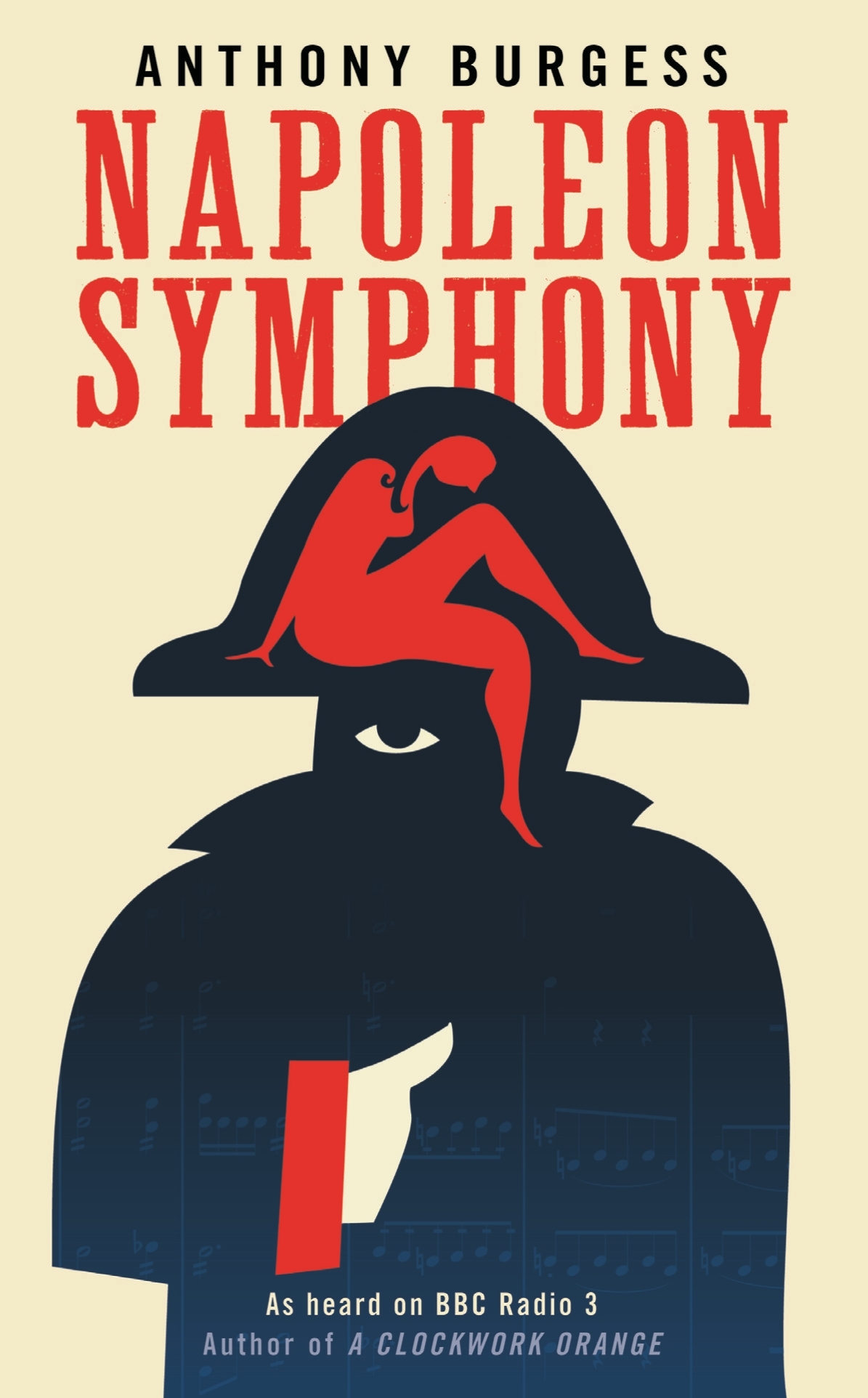
Stanley Kubrick’s 1972 rejection letter to Anthony Burgess, at Letters of Note:

I earnestly hope that our all too brief friendship will survive me telling you that the MS is not a work that can help me make a film about the life of Napoleon. Despite its considerable accomplishments, it does not, in my view, help solve either of the two major problems: that of considerably editing the events (and possibly restructuring the time sequence) so as to make a good story, without trivializing history or character, nor does it provide much realistic dialogue, unburdened with easily noticeable exposition or historical fact.

As Shaun Usher, editor of Letters of Note, points out: “Burgess was undeterred, and Napoleon Symphony was published as a novel in 1974. Kubrick’s movie, however, failed to materialise.”

Strange Places — Owen Hatherley reviews Museum without Walls by Jonathan Meades, for the London Review of Books:

What Meades does most often is praise things, especially things that are habitually ignored: he is surely our greatest exponent of what the Russian Formalists called ostranenie, ‘making-strange’. Architecture, as an art form, isn’t quite mundane enough to be made strange, and for that reason Meades would seldom recognise his writing as being about ‘architecture’ as such. Rather, it is about Place, somewhere architecture happens, at times in a very dramatic way, but doesn’t necessarily have the leading role. Architects take non-art, ‘the rich oddness of what we take for granted’, the mutability, detritus and accident that define truly worthwhile Place, and replace them with something static and unchangeable. However, unlike Iain Sinclair or the London ‘psychogeographers’… Meades does not fetishise the spaces between. ‘I have to admit to a fondness for pitted former rolling stock dumped in fields and for abandoned filling stations,’ he writes. ‘But man cannot live by oxidisation alone. It’s not a question of either atmospheric scrappiness or gleaming newbuild. It’s a question of both/and. It’s a question of the quality of the atmospheric scrappiness, the quality of the newbuild.’

And finally…

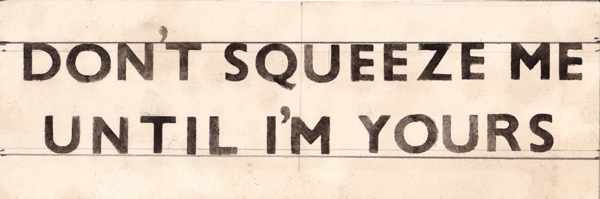
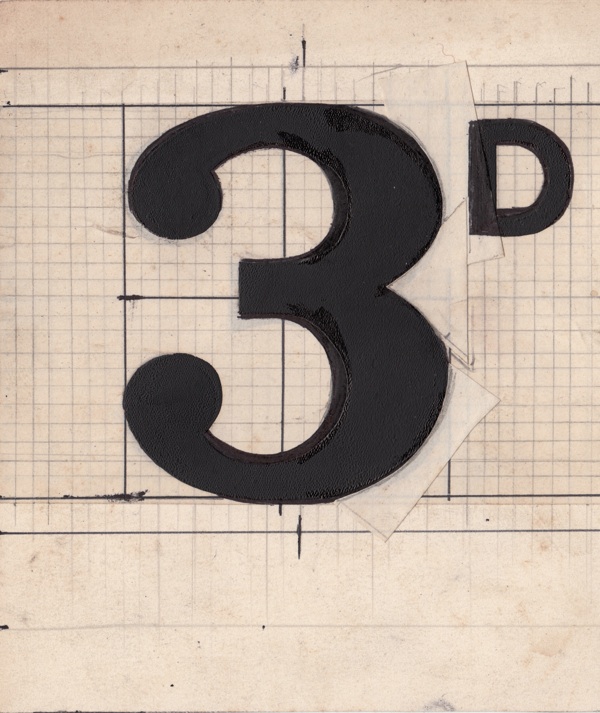
The best thing I’ve seen in ages… Roy Gardner’s designs for the sales tickets in his store Gardners’ Market Sundriesmen on Commercial St in Spitalfields, London:

No doubt knocking up these sales tickets was all in day’s work to Roy Gardner – just one of the myriad skills required by a Market Sundriesman – yet a close examination of his elegant graphic designs reveals he was also a discriminating and creative typographer.

Comments closed

Illustration on Off Book

Illustrators Steven Guarnaccia, Yuko Shimisu, Sean Murphy and Molly Crabapple talk about their work on the latest episode of PBS Off Book:

Comments closed