Skip to content

Tag: film

Cartier-Bresson: “photographs are like a Chekhov short story”

On the New York Times Lens blog today there is first part of an interview with the photographer Henri Cartier-Bresson. Conducted by journalist and filmmaker Sheila Turner-Seed in Cartier-Bresson’s Paris studio in 1971, the interview was apparently for a film-strip series on photographers produced for Scholastic:

I’m not interested in documenting. Documenting is extremely dull and I’m a very bad reporter. When I had an exhibit at the Museum of Modern Art in 1946, my friend, Robert Capa, told me, “Henri, be very careful. You must not have a label of a surrealist photographer. If you do, you won’t have an assignment and you’ll be like a hothouse plant. Do whatever you like, but the label should be ‘photojournalist.’ ”

All my training was surrealism. I still feel very close to the surrealists. But Capa was extremely sound. So I never mentioned surrealism. That’s my private affair. And what I want, what I’m looking for — that’s my business. Otherwise I never would have an assignment. Journalism is a way of noting — well, some journalists are wonderful writers and others are just putting facts one after the other. And facts are not interesting. It’s a point of view on facts which is important, and in photography it is the evocation. Some photographs are like a Chekhov short story or a Maupassant story. They’re quick things and there’s a whole world in them.

By a strange coincidence I recently stumbled across a video of Cartier-Bresson talking about his work (via A Piece of Monologue I think). There appears to be at least some overlap between the film and Turner-Seed’s interview at the Times, so I assume it originated with her? (More knowledgeable people, please feel free to chime in!)

Sheila Turner-Seed’s daughter Rachel Seed (also a photographer) is working on a personal documentary about her mother called A Photographic Memory.You can donate to the project on Kickstarter.

(pictured above: Cartier-Bresson photographed by Dmitri Kessel)

Update: The second part of Sheila Turner-Seed’s interview with Cartier-Bresson is now available on the New York Times Lens blog.

Comments closed

Something for the Weekend

They Call it Madness — Jess Nevins  reviews the H.P. Lovecraft collection The Classic Horror Stories for the L.A. Review of Books:

Lovecraft was not the best of his era in any of the genres he wrote in. Clark Ashton Smith was a better stylist. Algernon Blackwood wrote better horror. Olaf Stapledon wrote better science fiction. Yet it is Lovecraft who has been canonized with a Library of America edition, who has provided the source material for academic writings, comic books, and even game shows like Jeopardy, and who has been assimilated by capitalist culture to the point that there are plushies made of his characters.

One would never have guessed this fate for Lovecraft at the time of his death in 1937…

Nevins has been heroically annotating all of The League of Extraordinary Gentlemen series by Alan Moore and Kevin O’Neill and, most recently, compiled notes to the very Lovecraftian Nemo: Heart of Ice (pictured above). But before you get sucked in, be warned: the annotations have a kind of Borgesian horror all of their own.

(And while were on the subject of Lovecraft and comics, you could do worse than picking up I. N. J. Culbard’s adaptations of The Mountains of Madness and The Case of Charles Dexter Ward published by SelfMadeHero)

Also at the LA Review of Books, Michael Nordine on enigmatic filmmaker Terrence Malick:

Malick has the rare distinction of becoming a celebrity — at least in part — for rejecting the notion of celebrity. At a time when we’re given a direct line into our favorite stars’ streams of consciousness via the social media avenue of our choosing, the 69-year-old continues to let his films speak for themselves. When he was nominated for Best Director at the 1998 Academy Awards, the picture that appeared onscreen was of a chair with his name on it; at last year’s ceremony, a different on-set photo from the same production was used. Each new project of Malick’s is said to come with a contractual stipulation that no photos of him may be used in the film’s promotional materials. No matter: people have repeatedly proven able and willing to create an image of their own. That this picture is incomplete at best and may well be wholly inaccurate matters little. Now more than ever, it seems we still can’t conceive of a famous person who doesn’t want to be famous, and even caricatures are more satisfying than a note reading “not pictured” in the celebrity yearbook.

And finally…

David Berry in conversation Art Spiegelman and Françoise Mouly at the National Post. Here’s Mouly’s take on RAW:

Basically, there were no venues for comics, and I just thought, “Well, I can do it myself.” The idea was to show people what actually could be done … that it wasn’t so much a style that was one answer to where comics should go, but was more that each person had their own voice.

Comments closed

Something for the Weekend

Excitingly Wrong — An interview with Peter Mendelsund at Porter Square Books:

I am always interested by anything graphical that strikes me as (this is difficult to put into words) excitingly wrong. There is a cool-factor to certain images that lie just on this side of disagreeable…pictorial effects that make me think “this will bother a lot of unimaginative people.” Whenever I see something like that, a piece of art or graphic design that has that special kind of wrongness about it, I think “I need to do something like this myself.” Attendant to this is always the feeling of “in the future, this will be done a lot.” In other words, today’s ugly is tomorrow’s beautiful.

Lurking Menace — Ostensibly reviewing David Bowie Is, the catalogue for the current V & A exhibition, and Bowie’s new album, The Next Day, Ian Buruma looks back at the performer’s career at the NYRB:

[Bowie] drew his inspiration from anything that happened to catch his fancy: Christopher Isherwood’s Berlin of the 1930s, Hollywood divas of the 1940s, Kabuki theater, William Burroughs, English mummers, Jean Cocteau, Andy Warhol, French chansons, Buñuel’s surrealism, and Stanley Kubrick’s movies, especially A Clockwork Orange, whose mixture of high culture, science fiction, and lurking menace suited Bowie to the ground. Artists and filmmakers have often created interesting results by refining popular culture into high art. Bowie did the opposite: he would, as he once explained in an interview, plunder high art and take it down to the street; that was his brand of rock-and-roll theater.

This Movie is About Hope — Film Comment has a transcript of Steven Soderbergh’s San Francisco International Film Festival ‘State of Cinema Address’:

 The simplest way that I can describe it is that a movie is something you see, and cinema is something that’s made. It has nothing to do with the captured medium, it doesn’t have anything to do with where the screen is, if it’s in your bedroom, your iPad, it doesn’t even really have to be a movie. It could be a commercial, it could be something on YouTube. Cinema is a specificity of vision. It’s an approach in which everything matters. It’s the polar opposite of generic or arbitrary and the result is as unique as a signature or a fingerprint. It isn’t made by a committee, and it isn’t made by a company, and it isn’t made by the audience. It means that if this filmmaker didn’t do it, it either wouldn’t exist at all, or it wouldn’t exist in anything like this form.

Read the whole thing. It reminded me of William Goldman’s famous comment about Hollywood in Adventures in the Screen Trade: “nobody knows anything.”

See also: At the New York Times film critic A. O. Scott looks at Soderbergh’s ‘Twitter narrativeGlue.

And finally…

Just to the Right of Karl Marx — At the Financial Times, Julia Hobsbawn remembers her father, the historian Eric Hobsbawn:

The cemetery plot, situated as my husband Alaric wryly pointed out later “just to the right of Karl Marx”, had been freshly dug…  My mum Marlene had bought the plot in an expensive and expansive act of love several years earlier. She is 81 and was my father’s unsung muse for 50 years, dealing constantly with demands on his time from students, publishers, editors and broadcasters while acting as his general reader…

My dad was pleased knowing that he would end up there. Highgate Cemetery’s east wing is full of iconoclasts from the intelligentsia. I can picture him, glasses pushed up over his high forehead, peering longsightedly at the guide produced by the Friends of Highgate Cemetery Trust about its history, hoovering up the text and filleting it for us in an exact and pithy way. “Ah yes,” he might say, energised like a freshly charged battery by what he had just read, “you see what is really interesting about this is…”

Comments closed

Out of Print

Out of Print, a documentary by Vivienne Roumani about “the turbulent and exciting journey from the book through the digital revolution,” will première at  the Tribeca Film Festival on April 25th:

[vimeo http://vimeo.com/54234607 w=480]

The film features interviews with Scott Turow, Ray Bradbury, and Amazon.com founder and CEO Jeff Bezos among others.

Comments closed

Monday Miscellany

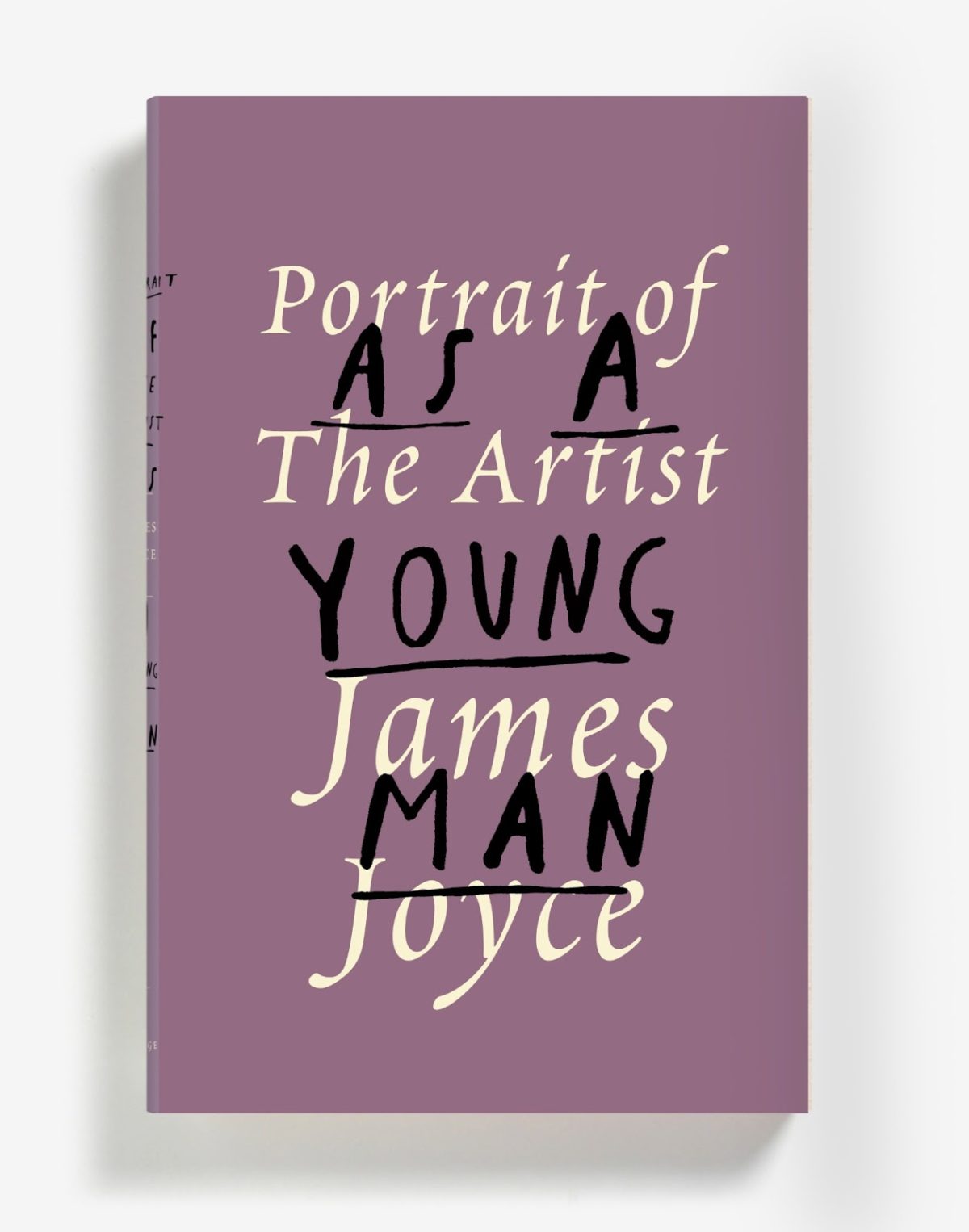
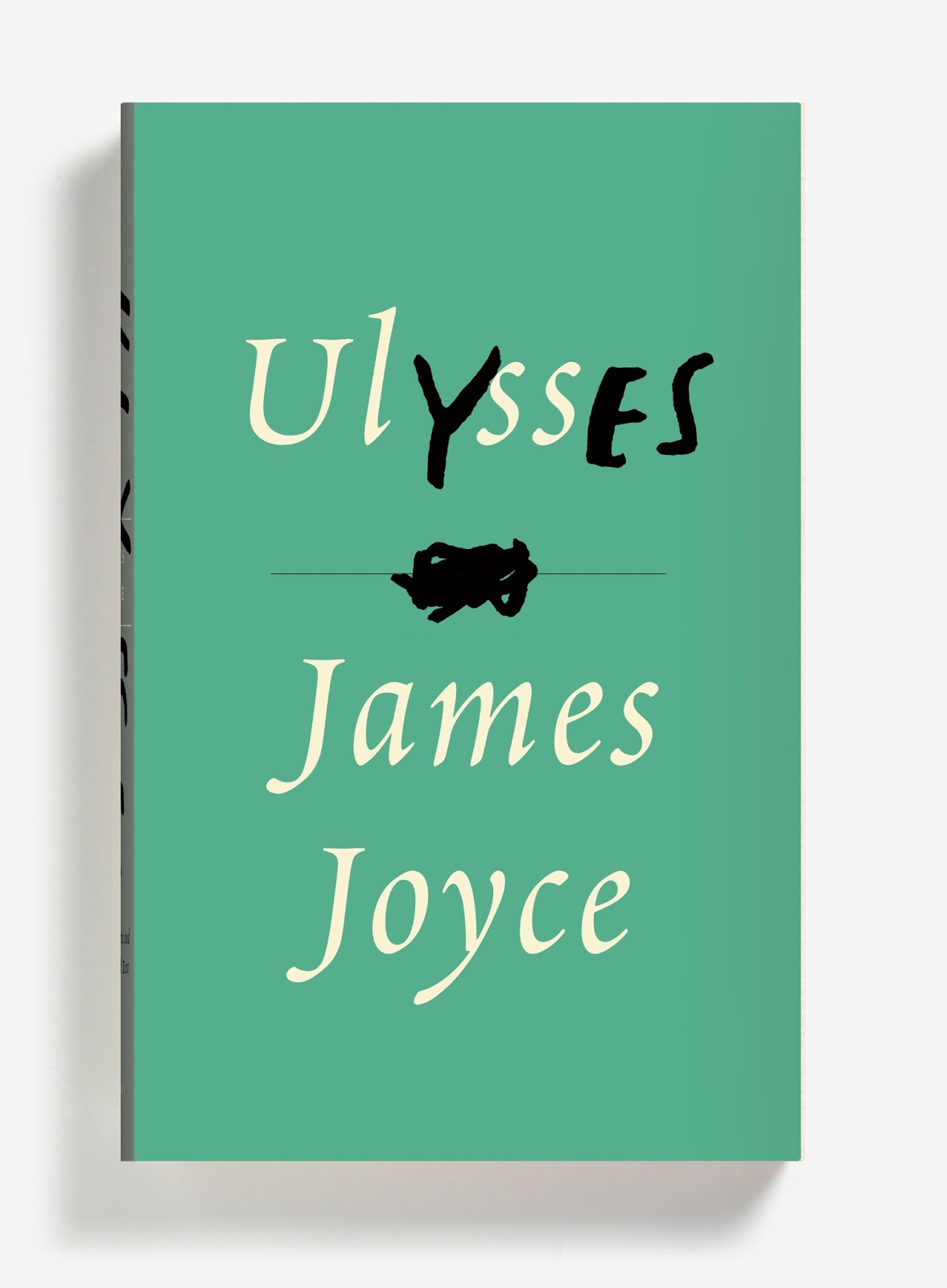
Three new James Joyce cover designs, and one extraordinary post by Peter Mendelsund.  Brilliant stuff…

The Box — Author Michael Chabon on the films of Wes Anderson at the NYRB Blog:

Anderson’s films have frequently been compared to the boxed assemblages of Joseph Cornell, and it’s a useful comparison, as long as one bears in mind that the crucial element, in a Cornell box, is neither the imagery and objects it deploys, nor the Romantic narratives it incorporates and undermines, nor the playfulness and precision with which its objects and narratives have been arranged. The important thing, in a Cornell box, is the box… All movies, of course, are equally artificial; it’s just that some are more honest about it than others. In this important sense, the hand-built, model-kit artifice on display behind the pane of an Anderson box is a guarantor of authenticity; indeed I would argue that artifice, openly expressed, is the only true “authenticity” an artist can lay claim to.

The Same Curious Brain — A profile of author and artist Oliver Jeffers, at the National Post:

Jeffers doesn’t just tell stories. He’s an artist — paintings, printmaking, collage — and a commercial and editorial illustrator, with clients ranging from Anthropologie and Weight Watchers to the Guardian and Newsweek. His monograph Neither Here Nor There, which was published last summer, is a collection of his non-children’s work — a bust of Darth Vader; a satellite crash-landed in a cornfield; a hammer nailed to a wall — though it still feels like part of the same universe. Jeffers prefers it this way.

“My books are all about telling stories, and a lot of my art is about asking questions,” he says. “But they’re equally extensions of the same curious brain.”

And finally…

The Spy Novelist Who Knows Too Much — a New York Times story about the decidedly nasty-sounding 83-year-old French pulp novelist Gérard de Villiers so implausibly bonkers it probably has to be at least partially true:

Last June, a pulp-fiction thriller was published in Paris under the title “Le Chemin de Damas.” Its lurid green-and-black cover featured a busty woman clutching a pistol, and its plot included the requisite car chases, explosions and sexual conquests. Unlike most paperbacks, though, this one attracted the attention of intelligence officers and diplomats on three continents… “It was prophetic,” I was told by one veteran Middle East analyst who knows Syria well and preferred to remain nameless. “It really gave you a sense of the atmosphere inside the regime, of the way these people operate, in a way I hadn’t seen before.”

And it gets better from there…

Comments closed

Midweek Miscellany

A bit late in the day on this, but the British edition of HHhH by Laurent Binet, designed James Paul Jones Senior Designer at Vintage Books, is quite something. The book was recently released in paperback in the UK.

And, if you’re curious, the North American edition designed by Rodrigo Corral looks like this:

The Language Policy — Further thoughts from Tim Parks on the role of editors, at the NYRB Blog:

As readers, it seems, we love to feel we are in direct, unmediated contact with an especially creative, possibly subversive mind and that we are getting all of its quirks and qualities unmediated and unmitigated by the obtusity of lesser folks perversely eager to return everything to the expected and mundane. This is no doubt why so little is said about editing even in the more learned papers, while nothing at all appears in the popular press, let alone at a promotional level. One cannot imagine, for example, a publisher launching an advertising campaign to boast that it has the most attentive copy editors in the business and can guarantee that everything you may read from its list has been properly purged of anything grammatically iffy, or foreign, or idiosyncratic.

Numbers — Rick Poyner on The Book of Numbers created by Herbert Spencer Spencer  in collaboration with his daughter, Mafalda:

The concept is simple enough. “We live in a world full of numbers: on houses and shops, on buses and motor cars, on magazines and packages, on stamps and labels, in fairgrounds and markets, on boats and aeroplanes, on road signs and posters,” write the Spencers. A series of photographs documents the occurrence of the numbers 1 to 100 going about their business somewhere out there in the world. Most numbers — seen on a showcard, a trash can, a hanging sign, a ceramic tile, a bus stop — receive their own images. In a few cases, such as house numbers and a set of maps, several consecutive numbers form a photogenic group within the same picture.

(It sounds fantastic).

And finally…

Colin Dickey on the haunted hotels of Los Angeles, at the Virginia Quarterly Review:

All hotels are haunted. It doesn’t matter which hotel; it’s already played host to a murder, an overdose, an accidental death with a story. You’re kidding yourself if you don’t see this, if you don’t recognize you sleep with ghosts. Every hotel staff has its stories, any cleaning woman or bellhop knows the score. In Wilkie Collins’ 1878 gothic novel The Haunted Hotel, an Italian villa is converted to a hotel shortly after it houses an unexplained, horrific tragedy. On opening night, a guest (“not a superstitious man”) takes Suite 14, and leaves hurriedly the following morning. The next night another couple take the suite; throughout the night the woman has horrifying dreams—awake, “afraid to trust herself again in bed,” she too makes excuses and leaves.

Assume, then, that every nightmare you’ve ever had in a hotel was a cry for help, some violence from the past reaching out to you.

Comments closed

Something for the Weekend

Wondrous Horrors — Ariella Budick on the centenary of the 1913 Armory Show in New York, for the Financial Times:

Critics did not reject every European innovation. They nodded at the impressionists, puzzled respectfully over Cézanne, and tolerated Gauguin. But cubism blew their minds. The impact was not merely aesthetic. American writers perceived a defiant rejection of rules and a contempt for tradition – qualities they associated with violent political movements. Painters who blasted convention with their brushes gave comfort to bomb-throwing subversives. When critics invoked anarchy, it was not just a figure of speech.
See also: Rethinking the Armory in the New York Times:
New York viewers, including artists, to some degree knew what they were in for. Pictures of avant-garde art had been included, often with mocking commentary, in New York newspapers and magazines for years. And by no means were all Armory reviews pans; one critic wrote that he was grateful for “these shocks to our aesthetic sense.” Others were glad for a certain perspective the show offered: compared with avant-garde work from Europe, American art looked sane.
Making It Up — William Deresiewicz on the work of Geoff Dyer, for The New Republic:
Freedom from conventional and institutional expectations—freedom even from his audience—means that Dyer is also free to make it up, like jazz, as he goes along. Every book is different, and every book is different from everybody else’s books. Zona is a running commentary, almost shot-by-shot, on a single film. But Beautiful consists of a series of quasi-imagined episodes—vivid, textured, saturated with feeling—from the lives of the jazz greats. Out of Sheer Rage is memoir, travelogue, criticism—“about” Lawrence in the physical sense of the word: spinning around and around him with a manic, comic, centrifugal energy. The Ongoing Moment makes a poem of the history of photography by considering not artists or schools, technics or techniques, but, improbably, subjects (hats, benches, stairs): a ridiculous idea, it seems, until you figure out that Dyer’s real quarry is the relationships we have with those quotidian objects, the way they can be made to stand for the lives that move among them. “Spare me the drudgery of systematic examinations,” he writes in Out of Sheer Rage, “and give me the lightning flashes of those wild books in which there is no attempt to cover the ground thoroughly or reasonably.”
See also: Rose Mclaren on Zona for The White Review:
[Dyer] claims, ‘if I had not seen Stalker in my early twenties my responsiveness to the world would have been radically diminished’. He shares with his idol an artistic ideal of awareness, describing Tarkovsky’s aesthetic as a length of take demanding ‘a special intensity of attention’. The inverse dominates much contemporary culture where, ‘a lot of what’s being shown on the world’s screens is fit only for morons’ with the result that ‘there are more and more things from which one has to avert one’s ears and eyes’. Rubbish art that warrants ignorance. A bit broad-brush and heavy-handed, but its Dyer’s reason for writing. Against a social dystopia of willed numbness, Zona documents a profound engagement with an artwork. It is not so much homage to the film alone, but to the dialogue it inspires.

And finally…

What Is This Shit? — Brian Dillon interviews photographer and filmmaker William Klein:

I didn’t know how to do a book. I was just discovering photography and once I had all these pictures, I showed them to editors in New York and nobody thought it was worthwhile to do a book with these photographs. They said, “What is this shit?” I came back to Paris and discovered there was a series of travel books called Petite Planète. I called them up and got an appointment and I went to this office which looked like NASA. Chris Marker was there with a laser gun in his belt, and he saw the photographs and said, “We’ll do a book!” In fact he said, “We’ll do a book or I quit!”

Comments closed

Midweek Miscellany

It’s Complicated — Gabriel Winslow-Yost surveys the work of Chris Ware for the New York Review of Books:

Ware’s drawings are meticulous, even chilly, with flat, muted colors and the straight lines and perfect curves of an architectural rendering. The panels follow an orderly horizontal grid, but have a discomfiting tendency to occasionally shrink to near illegibility; or they might suddenly demand to be read from right to left, or even disappear entirely, to be replaced by pretty but unhelpful typography (“Thus,” “And so”), complicated diagrams, or plans for a paper model of one of the stories’ locations. Dreams and fantasies invade the story without warning—when Jimmy [Corrigan] first meets his father, we see him brutally murdering the sheepishly friendly man, while their desultory small talk struggles on.

Also at the NYRB: Zoë Heller’s review of Salman Rushdie’s preening new book Joseph Anton: A Memoir.

Chance Art — Rick Poynor on the photography of designer Herbert Spencer, at Design Observer:

As a photographer, Spencer seemed to delight in unraveling the order he spent his days as a designer attempting to create. His most telling and memorable images, those that seem most fully his own, show a world in which things fall apart, signs of official communication fray into visual poetry, and ordinary people assert their presence by inscribing streets, buildings and land with unofficial messages and marks.

And finally…

The Shadow Line — Sean O’Hagan interviews avant-garde filmmaker and founder of Film Culture magazine Jonas Mekas for The Guardian:

At the end of our talk, I ask him what he thinks of contemporary culture and how it compares to the creative iconoclasm that he was part of in 50s and 60s New York. He thinks about his answer for some time. “When the old forms began collapsing and falling away though exhaustion and repetition, a new sensibility is born. That is what happened back then and may be happening now.” He tells me how taken he is with the Joseph Conrad notion of the shadow line: a moment of great cultural change that occurs every so often, sweeping all that is old and exhausted out of the way. “It is overdue.”

Comments closed

The Disappearance of Darkness

In this documentary short, Toronto-based photographer Robert Burley talks about his project documenting the demise of the photographic industry since 2005:

The photographs from the project are collected in the book The Disappearance of Darkness published by Princeton Architectural Press earlier this month.

(Note: Princeton Architectural Press are distributed in Canada by my employer Raincoast Books)

Comments closed

Midweek Miscellany

Accidental Effects — Rick Poynor on the street photography of designer Robert Brownjohn, at Design Observer:

Brownjohn tended to include enough of the setting to give a strong sense of the look and atmosphere of the place where he found the lettering or graffiti. The British capital’s dour post-war street texture was fascinating and meaningful to him. As an American and a recent arrival in London, he would have seen everything with the newcomer’s hungry and hypersensitive eye, whether the pictures were taken in a single day touring around town by taxi, as the story would have it, or in the course of several trips. Brownjohn shows the bricks, the stone, the doorways and window frames, the railings, the adjacent fixtures, the surrounding structure… [He] valued the accidental effects wrought by dilapidation, the elements, or human hands, in their own right, as a kind of visual music or poetry, irrespective of the formal design applications that these expressive details might go on to inspire.

Drowning in Film — Movie critic David Thomson, author most recently of The Big Screen, in conversation with Greil Marcus, at the LA Review of Books:

I have become more and more interested in the way different movies are like the water in a river. They’re constantly flowing into each other. Indeed, it’s a form that you can’t actually think of or describe as separate items. It’s the flow, it’s the sequence. And I think that we’re at a point in history where it’s not really as significant who makes what particular movies, it’s the constant flow. And like any flow of that kind, you say it’s like being carried down a river, and a lot of time perhaps you feel it’s on a sunny day and it’s very pleasant, but you can drown in a river. It seems that a lot of the culture, elements that I would hope to see maintained, are in danger of being drowned.

And finally…

Abnormal Activities — Patrick Ambrose interviews Iggy Pop for The Morning News:

Iggy Pop… obliterated the barrier between the artist and spectator. “I’m interested in being able to do that while maintaining the formality of the dinner engagement,” he says with a hearty laugh. “There has been a tremendous change in the cybernetics of rock and roll over the past 50 years. If you look back to the mid- to late-’50s, you’ve got maybe Elvis or Eddie Cochran playing on a flat-bed truck in a gas station parking lot with presumably 1,200 doomed teenagers dancing, chewing gum and knifing each other while religious leaders burn records and make racial slurs about the music. Now, you’ve got thousands of people obediently shuffling into these concrete civic centers to sponge up something in places where nothing really happens.”

Comments closed

Something for the Weekend

Comics Without Borders — a long interview with cartoonist Joost Swarte at The Comics Journal:

In the graphic field of comics I was inspired by Will Eisner’s Spirit. If I see these title pages, the constructions in his title pages, and what he does with the lettering, that was very interesting. And then another thing is, I love the older comics like Little Nemo and Lyonel Feininger. And I was interested also, because I studied industrial design… about the Dada people in Holland and Germany, and Bauhaus architecture and design world, in which there are almost no borders. I mean, people do whatever they like. Then you have the older artists like Tatlin. They designed their own clothes, they do architecture, they do flying machines, they do painting, they do everything. I mean, it was always nice to know that if you want to do different things, that you’re not standing alone. That somebody else did it, and they survived.

Losing Their Grip — Peter Aspen reviews three new books on cinema — The Big Screen by David Thomson, Do the Movies Have a Future? by David Denby, and Film After Film by J Hoberman — for the FT:

It is one of the most famous one-liners in the history of cinema, which also turned out to be an inadvertent prophecy. “I am big,” says the slighted Norma Desmond in Sunset Boulevard (1950). “It’s the pictures that got small.”

She had no idea. The past half-century has seen the pictures get smaller and smaller, to the point that we wonder if they can ever be big again. From television screen, to laptop, to smartphone, the ever-shrinking movies reach a greater part of the world than ever before. But what have we lost along the way?

Holberman’s book is given more in-depth consideration at the LA Review of Books.

And finally…

In the shit — book shopping with Michael Dirda at The Paris Review:

So this is how a man acquires 10,000-odd books, more than he could ever display or read. It’s a combination of maniacal persistence and utter nostalgic whimsy. You have to be willing to search high and low for a potential beauty, but most of the time you’ll take a Book Club hardcover of a book you don’t like if it reminds you of something from your past.

As if to illustrate the point, Dirda found a mass-market paperback of Black Alice, by Thomas Disch and John Sladek. Dirda was a friend of Disch until the sci-fi author killed himself in 2008. “He was a wonderfully cynical man,” Dirda said. “I have a first edition of this but I’ll get it anyway.”


Comments closed

Something for the Weekend

A rather brilliant cover for The Yellow World by Albert Espinosa, reminiscent of a Matisse cut-out or a Paul Rand illustration, designed by Jon Gray.

The Sickly Glow — John Banville, author most recently of Ancient Light, reviews The Big Screen by David Thomson, for The Guardian:

Thomson worries that something happened to the cinema around the time of Jaws, something cynical, sinister and perhaps even fatal. Part of the fun of Jaws and the other mindless thrills-and-spills imitations that it spawned, he says, “is that the commotion meant nothing. The sensation eclipsed sensibility”. This is the contentious heart of The Big Screen. The deadening process that, according to Thomson, set in the 1970s has now spread across the billions of tiny screens that infest the world, the combined sickly glow of which must be visible from outer space. Watching has become mere gaping, open-mouthed and slow-breathing. “Facebook already takes our earnest admissions about ourselves and trades them for advertising.”

You can read a short interview with Thomson about the book at The Arts Desk:

I went through a stage, particularly when I was teaching, of saying, “Well, these are the great filmmakers, let us explore them as if they were Charles Dickens or Van Gogh or someone like that.” The auteur theory. And now I’ve got to a stage where I sort of feel that every film is more like other films than anything else. Films are all alike, because the technology is more important. The director is fading away – you don’t think to ask who directs television, and yet television today in America is at a very good stage. So I’ve become increasingly interested in the technology, and what that has done to shape the format.

And on a somewhat glummer note… David Denby, movie critic at The New Yorker and author of Do the Movies Have a Future?, on the economics of Hollywood, at The New Republic:

Most of the great directors of the past—Griffith, Chaplin, Murnau, Renoir, Lang, Ford, Hawks, Hitchcock, Welles, Rossellini, De Sica, Mizoguchi, Kurosawa, Bergman, the young Coppola, Scorsese, and Altman, and many others—did not imagine that they were making films for a tiny audience, and they did not imagine they were making “art” movies, even though they worked with a high degree of conscious artistry. (The truculent John Ford would have glared at you with his unpatched eye if you used the word “art” in his presence.) They thought that they were making films for everyone, or at least everyone with spirit, which is a lot of people. But over the past twenty-five years, if you step back and look at the American movie scene, you see the mass-culture juggernauts, increasingly triumphs of heavy-duty digital craft, tempered by self-mockery and filling up every available corner of public space; and the tiny, morally inquiring “relationship” movies, making their modest way to a limited audience. The ironic cinema, and the earnest cinema; the mall cinema, and the art house cinema.

Viva Hate — Keith Gessen, founding editor of n+1, on Kingsley Amis and Philip Larkin, at The New Statesman:

They had been brought together by their mutual hatred of the universe, which for a while did a fine job of confirming their feelings about it by rejecting and ignoring them. As they began to find their way in the world it became a little harder to hate it, at least with the same intensity. And so their letters to each other dwindled: What was there to say?

They were rescued by the 1960s. Amis and Larkin managed to greet the transformations, disturbances and new thinking with shared hostility. It brought them a whole gamut of things to hate.

And finally…

Lunch with painter Frank Auerbach, at the Financial Times:

It’s funny, this business of a vocation. One starts from a motive one hardly comprehends. In the school holidays I was an office boy – I found the idea of going into an office horrifying. As a painter, I thought there would be bohemianism, freedom, and there was, but gradually the practice of art took over. As Auden says, in any crisis, the break-up of a relationship, the response is to flee to the arms of the muse. At art school you know at least as many talented students as those who became painters, but they get off the train at some point. I met Stephen Spender once, I expected a poet with a vocation but I found a civilised man, gregarious, leading a varied, entertaining, virtuous life – for whom poetry was only one of the facets. He said one of his dreams was to be a poet, the other to have a lovely life, go to France, know lots of people.
Comments closed