Skip to content

Tag: Faber

Missed Things: Thursday

Covers for The Invincible Iron Man No. 20 and 21 by Salvador Larroca and Frank D’Armata, with design by Rian Hughes (seen at the website of the author Matt Fraction). Is it just me, or do these have a whiff of Marber’s Penguin Crime series about them? Or is it more like Olly Moss?

Grey Overcoat Music —  3:AM Magazine‘s Lee Rourke talks to photographer Kevin Cummins about his new book Manchester: Looking for the Light through the Pouring Rain (published by Faber & Faber), which documents 30 years of the Manchester’s music scene. 

The Guardian also has a slide show of  photographs by Cummins (above: Ian Curtis, 1979).

And if you’re interested in Factory Records and the Manchester music scene you might also be interested in The Haçienda: How Not to Run a Club by New Order bassist Peter Hook (published by Simon & Schuster) also reviewed in The Guardian.

The Lost Pleasure of Browsing — Charles Rosen for the New York Review Blog:

I realize that mail order shopping has been going on for a long time, but have always thought that this destroys one of the pleasures of civilized life. I do not understand how one can buy clothes without trying them on, and as for books, the individual book should seduce and inspire you to buy it.

Spelling “Theatre” the British Way — Andy Ross talks to New Yorker page OK’er Mary Norris about copy editing “America’s most prestigious literary magazine” at The Red Room:

The main thing here is to respect the writer. The writers don’t have to do everything we want them to—we make suggestions. The ideal would be to give an editor a proof and have all your suggestions meet with approval. Sometimes you notice that your suggestions have not been taken, so if something bothers you, you try again. Sometimes you wear them down, sometimes you cave.

I have been on both sides of the process, as a writer and as a query proofreader. Being edited sometimes felt like having my bones reset on a torture rack. I don’t ever want to do that to a writer, but I probably have from time to time.

And bless The New Yorker for using double consonants before suffixes — “traveled” is barbaric.

And finally…

Illusive: Contemporary Illustration Part 3 published by Gestalten looks rather fine.

http://blogs.nybooks.com/post/212201723/the-lost-pleasure-of-browsing
Comments closed

Midweek Miscellany September 16th, 2009

Rejected Covers by Klas Ernflo — Typography to make you weep (with either joy or envy). (via ISO50)

Poet of Desolate Landscapes — Author Jonathan Lethem on J.G. Ballard in the New York Times:

[V]ery few writers I’ve encountered, even those I’ve devoted myself to, have burrowed so deeply in my outlook, and in my work, where I find myself recapitulating Ballardian patterns not for their beauty (though they are beautiful) but for their tremendous aptness in attempting to confront the dying world before me, and inside me.

Ira Glass on the Internet and Public Radio — The host of NPR’s This American Life talks to Jesse Brown for a TVO Search Engine podcast (is it just me, or is there something gently life affirming about the fact Ira Glass doesn’t know who Chris Anderson is?)

“Well, it’s still more fun than a lot of other jobs” — Over at The Barnes & Noble Review, Daniel Menaker, author and former Executive Editor-in-Chief of Random House and fiction editor of The New Yorker, discusses — with bracing candour I might add — publishing and the role of book editors (don’t read if you are even slightly depressed):

[T]he tectonically opposing demands on publishing — that it simultaneously make money and serve the tradition of literature — and its highly unpredictable outcomes and its prominence in the attention of the media have made it a kind of poster adult for capitalism and the arts in crisis.

All awfully close to bone, and yet somehow Menaker also misses something vital about publishing and the opportunities that are arising…

Slovakian Book Covers — More amazing stuff from the genius A Journey Round My Skull (above: Binding illustration for Moji přátelé milionáři by Bernt Engelmann, 1968)

No-Man’s Land — A little late to the party, but over at  The Atlantic, technology journalist Kevin Maney looks at why the future might not be so bright for the Kindle (and he doesn’t even mention the iPhone):

Life, it turns out, is a series of tradeoffs between great experience and high convenience... Most successful products and services aim for one or the other, but not both. Products and services that offer neither tend to fail.

That’s why, despite all the great press it’s gotten, Amazon.com’s Kindle may be in trouble: in aiming to provide both a great experience and supreme convenience, it has achieved neither.

And lastly…

Words on Film — Designer Ed Cornish discusses his fantastic, but unused, cover designs for the 2009 D&AD student award brief for typography (sponsored by Faber and Faber) at FaceOut Books (because I haven’t linked to FaceOut for about 5 minutes right?).

1968, binding illustration for Moji přátelé milionáři by Bernt Engelmann
Comments closed

Midweek Miscellany, July 8th, 2009

A-TypeThe Independent has a nice look at book design and Faber & Faber’s Eighty Years of Book Cover Design by Joseph Connolly:

You could argue that the current renaissance in book design came about thanks to Penguin, always the most design-savvy of publishers. In 2004 they produced their first series of Great Ideas – small paperback editions of classic, mostly philosophical texts. They had highly tactile covers and used bold period typography to give a sense of when and where each book was coming from. The following year we got Penguin by Design, an illustrated history of 70 years of Penguin covers, and then, in 2007, Seven Hundred Penguins, a two-inch-thick collection of the best covers, shown life-size, one to a page. For seasoned haunters of second-hand bookshops, this particular item was as thrilling as a similar-sized brick of Class A drugs.

JRSM has more on the Faber book at Caustic Cover Critic.

5 Easy Pieces — Dave Daley discusses his site  Five Chapters,  which publishes a short story in 5 parts over the course of a week, with Ron Charles at the Washington Post‘s Short Stack blog:

“I write passionate notes to writers I admire. And I tell them about the site and why I think it’s a good place for them to be. Here’s an audience of story-lovers and book buyers… The short story is just ideal for our attention spans these days.”

Rogue Agent — Scott Esposito talks to Denise Oswald, the new Editorial Director Soft Skull, for The Quarterly Conversation:

Soft Skull is like a rogue agent—who wouldn’t want to work there? It’s exciting. I’ve always loved their shoot from the hip / take no prisoners attitude and the house’s commitment to embracing the outspoken and the contrarian, the marginal and the disenfranchised. Their books are thoughtful and deeply engaged on a ground level with the world we live in. Yet there’s always room for something elegant and literary or naughty and fun, which is a very satisfying balance at the end of the day because it helps one from becoming too self-serious.

Coffee and Memory — On topic close to my heart, research from the University of Florida has shown that caffeine both prevents and reverses symptoms of Alzheimers in mice, which, according to Donald Clark, just goes to show coffee is cognitively good for you:

Coffee has… long fuelled learning, whether it be through the direct stimulation of the brain, increasing attention, improving memory, preventing dementia or providing a social context for debate and work. It’s something we coffee drinkers have always instinctively known!

Comments closed

Midweek Miscellany, May 13th, 2009

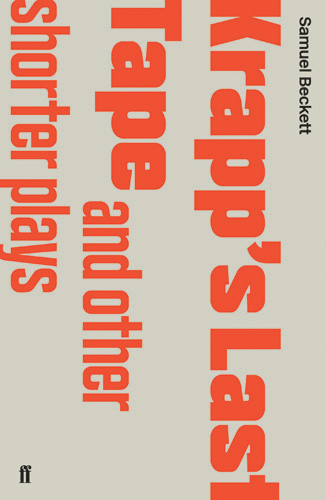
Any colour, so long as it’s grey” — New typographic covers for the Faber editions of Samuel Beckett,  designed by London-based studio A2/SW/HK. You can see more from the series at Faber’s Flickr photostream.

The Publishers’ Dilemma — Tobias Schirmer on publishing’s digital future:

[D]igitalization is not about a product moving from its analogue to a digital form. It is a revolution that changes everything. The old business models don’t work the way they used to. Inevitably, publishing needs to think about how it can still inject value somewhere in between the creation of content and its distribution. Not transition but change management is needed.  Acknowledging this is the first step in getting out of the publishers dilemma.

Now is the Winter of our Discontent — Peter Olson, the former chairman and CEO of Random House, is feeling gloomy in Publishers Weekly. I wonder how much of this only applies to bloated multinationals?:

With the recession accelerating changes that are already taking place in the market, the world after 2009 will likely begin to look very different for book publishers, and a likely return to the relative security of the last decade may be wishful thinking.

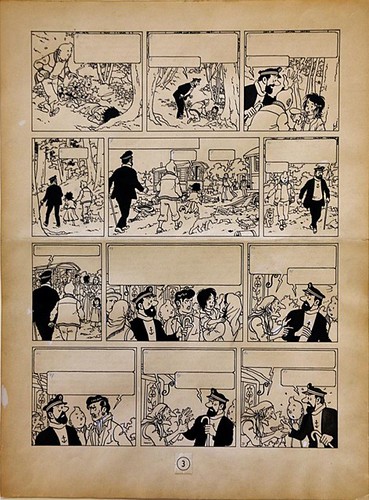
Tintin and the Broken Records600 lots associated with the cartoonist Hergé were sold at auction at the weekend:

The sale in Namur, southern Belgium, dominated by five large hand-drawn pages of original cartoon strips, raised 1,172,000 euros (1.57 million dollars), including charges, — a world record for Herge-associated items and a cartoon strip book record in Belgium, said Thibaut Van Houtte, an expert on hand for the Rops auction house sale.

Titles Designed by Saul Bass — A collection of Bass’ incredible film credit sequences at Not Coming To A Theater Near You (via Grain Edit on Twitter):

One is pressed to cite an example of an active, self-contained, and characteristic credits sequence in film prior to the work of Saul Bass. And…  in regard to innovation, renown, and influence, Bass’ impact in credits design remains virtually unparalleled, even to this day.

Comments closed

Something for the Weekend, April 17th, 2009


Isotype — Gerd Arntz’s amazing pictograms and visual signs for the visual language Isotype at the beautifully designed The Gerd Arntz Web Archive (pictured above).

Jacket(s) — Much as I admire Chip Kidd’s book covers, most of them are just too familiar to re-post here. But I hadn’t seen this ingeniously layered design for Kenzo Kitakata’s Ashes before even though it was published by Vertical in 2003 (pictured above). Seeing it all laid out, it’s really hard to begrudge Mr. Kidd’s reputation for awesomeness.

We like to be part of something — Nick Harkaway on connections:

A paper book has a history. Somewhere, at some time, an author wrote it all down, printed it out, gave it to an editor, who also worked over it. The book was typeset – yes, on a computer, these days, but still — and finally pressed and packaged and distributed. There is a chain of physical events which leads from me to you. With old editions, it’s even more direct. With signed ones, it’s a handshake. We like to connect. And digital books feel as if they’re trapped behind glass. The book is in the machine, and we can’t open the cover and touch the pages.

Black, white and read all overCreative Review looks at Faber & Faber‘s new editions of 20th Century poetry. The books feature specially commissioned woodcut and linocut cover illustrations.  The new editions are part of the Faber’s 80th anniversary celebrations. You can see more of the cover images at designer Miriam Rosenbloom’s design:related page.

The Disappointment Brokers — I going to go out on a limb and say this is another must-read for book-industry types from Poets & Writers — Literary agents Anna Stein, Jim Rutman, Maria Massie, and Peter Steinberg have a fascinating conversation about their profession and the state of the industry:

here’s the silver lining: [The industry’s] unhealthy enough that it’s an exciting time. It’s broken enough that publishers and agents and everyone has to change. Everyone has to rethink what they’re doing. So we have a group responsibility, and an opportunity, in a way that the industry has probably never seen before.

The Legacy of ModernismSpiegel Online celebrates 90 years of Bauhaus (via @PD_Smith).

Comments closed

Faber: Looking Back, Going Forward

Not some dusty, elbow-patched publisher: The Bookseller talks to CEO and publisher Stephen Page about Faber & Faber’s legacy and their plans for the future:

“We are in a moment of major, major change. Which from a brand like Faber is not threatening, only exciting, stimulating and interesting… The happy residue of the past 80 years is that we have this great history with six Booker winners and 11 Nobel laureates. Yet if we sit still and admire ourselves, this will only have a half-life and it will cool.”

Founded by Geoffrey Faber and T S Eliot, Faber published some of the defining books of the 20th Century including James Joyce’s Finnegans Wake, Sylvia Plath’s The Bell Jar, William Golding’s Lord of the Flies, and Samuel Beckett’s Waiting for Godot. They celebrate their 80th anniversary next year.

Link

Comments closed

Monday Miscellany Sept 29, 08

James Bridle of booktwo.org puts his money where his mouth is and launches the entirely print-on-demand, web-based publisher Bookkake: “Bookkake is a project born… of my desire to see publishing move with technology and survive as the guardian and helpmate of literature.

Faber Books’ on Flickr: “We’re gradually uploading some of our favourite covers, photos and various other ephemera from our archive. Our archivist uncovers new material every day – we hope you enjoy his discoveries as much as we do!

The 7 Sentence Online Marketing Plan and 4 Myths About Internet Marketing from Monique Trottier of So Misguided and Boxcar Marketing.

Five Ways Amazon Can Improve the Kindle from Gadget Lab on Wired.com: “The rumblings in the ground are pointing to an imminent Kindle 2.0, a successor to Amazon’s loved but flawed e-book reader.” Lots and lots of comments. (Is planned obsolescence going to be a problem for the e-book reader in the long-term? Anyone?)

The Muxtape story – or how the music industry is conspiring to alienate fans and kill itself? There’s almost certainly a lesson for the book industry in there somewhere…

Comments closed