Skip to content

Tag: designers

Q & A with Ingrid Paulson, Ingrid Paulson Design

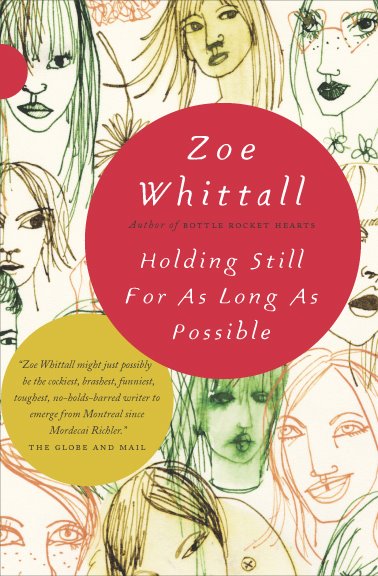
Holding Still cover

Before setting up her own design studio in Toronto, award-winning Canadian designer Ingrid Paulson was senior designer at McClelland & Stewart, and art director for Key Porter and Raincoast Books.

Although Ingrid worked at Raincoast, we didn’t actually meet until BookCamp Toronto earlier this year. We only had a brief a conversation, but it was just about long enough for me to blurt out that I wanted to interview her, and for the apparently unflappable Ingrid to say “OK” (and sound like she might mean it).

And so I do want to say a big thank you to Ingrid for coming through with such grace and patience, and for providing such wonderful answers to my not-so-wonderful questions.

Could you describe your design process for book covers?

In terms of workflow? The publisher gives me a title information sheet and/or a creative brief, plus (fingers crossed) either a few chapters or the entire manuscript for the book. I always ask to read the fiction, but for non-fiction I can manage well with a concise book description and perhaps the introduction. I submit a minimum of three cover concepts to my contact at the publishing house, and wait for feedback. Then I either redesign and resubmit, or, if I was ‘on to something,’ I tweak one of the concepts until we get it right.

In terms of creative process? Um. Well.

Some cover concepts appear in my head, fully formed, by the end of my first conversation with my publishing contact. Other get dragged out of me kicking and screaming, begging to stay in the dark void of my head. Sometimes I sketch out the covers — wee thumbnails in my moleskine — whereas other times I play a Google Images lotto search using various vague terms that would describe a feeling I want to associate with the book. Sometimes the font is the first thing chosen, or I envision the type at certain sizes and placed in specific places. Other times, the image is driving the cover and the type just has to play catch-up. I’ll envision a book as predominantly red, or dark, or punchy — and that all comes from what the author has written. I’ll respond to textured sentences with textured visuals (perhaps collage?) and bleak will meet bleak. (But not so bleak as to discourage someone picking it up. The bookbuyer is in my thoughts as well, as I try to envision them and their habits, quirks, and book needs.) Needless to say, my brain gets crowded.

And then there are the days when I just stare at a wall and hope against hope I’ll figure out something clever. I haunt a lot of bookstores.
wallis

What are your favourite projects to work on?

The ones I get right on the first try.

I love working on fiction, but it takes the most concentration and, because fiction is so subjective, so evocative of the human condition (both funny and sad), designing a fiction cover can drive me nuts. There is never one absolute visual solution for fiction. Nonfiction, on the other hand, can get formulaic, but I love the simplicity of thought — punchline design, in many ways. So, for sanity’s sake, I prefer to keep a balance of fiction and nonfiction going. Cookbooks can be a blast to design, but I (sheepishly) think that comes from the photo shoot where we all end up eating most of the props (the ones that have flavour, or haven’t been sprayed with any shellac). And then there are the special projects where I’m asked to work on the cover and interior, and I am part of the planning and layout process, where I get to research the images, discuss things with the editors on a page-by-page basis. Those projects are rare, but they keep me happy for a few years at a time.

What do you think makes a good cover design?

Being able to lure someone into picking up the book and reading the back, which takes about 1.5 seconds of their time. Job done. How to do that? If we in publishing knew, we’d also be able to predict bestsellers. The best I’ve figured out is to keep it a simple visual package — don’t let the type look out of place with the image, don’t use the same colours as everyone else is using that season, stay away from looking too much like any of the other books, but make it look like a book. I dunno. The cover should evoke an emotional pull from the bookbuyer, that moment of ‘yes, that’s interesting and looks like what I want to read.’ That solution changes from book to book.

What are some of the common mistakes publishers and designers make with covers?

For publishers, they’ll try to make their book look similar to someone else’s (bestselling) book, as if to catch the wave. This is not clever, it just means the publisher is out of ideas or is feeling the year-end coming and needs to hook on to a sales-winner. It’s the publisher that took a design chance on a different look — and came out the winner in terms of sales — that is the ultimate winner. The rest end up on the remainder table eventually. Daunting. They don’t call it a ‘gentleman’s profession’ for nothing. (Or ‘gentlewoman’s’. I’m just citing the old, old adage.)

For designers, it is not being able to pitch their cover effectively. If a designer can articulate the reasons for their choices of colour, type, and image, then they have a fighting chance of getting that design through. Otherwise they are leaving it to speculation. I’ve worked both sides of the table — inhouse art director, freelance designer — and I know that it is ten times harder for a freelancer to get that voice heard in the meetings. But inhouse staff can get asked to revise designs far more often than the freelancer, as the perceived economies behind a salaried staff versus a per-project contractor sometimes give the publisher too much leeway on revisions. I’ve been inhouse with a book cover that I simply didn’t ‘get,’ but there was no way to contract out the job, as, due to costs, the publisher refused. It was a painful, long design process for all involved (not just me), and they ended up with something inferior to what they would have gotten with a designer who understood the book. As an Art Director, I could’ve just handed it to a specialist designer and, with a few good notes, gotten something much more suitable for the book.

I guess that leads to a codicil: know when to walk away. Yes, we all want to try new book categories. Just know when to draw the line, so to speak.

British and American book design styles are often seen as quite distinct (with critics and proponents of both!). Is there a Canadian style of book design?

What there is known of Canadian book design is an amalgam of quiet, well-crafted literary press style — usually hand in hand with DIY letterpress style — smashed against a desperate need for full-bleed sepia landscapes (or sleeping sepia people) and egregiously large title type. We err on the side of poetic, which can look like a wash in the stores (or worse — too literary, which could alienate those poor readers still recovering from their English high school reading list). We avoid edgy.

There is some astonishing design coming out of the cracks across the nation — David Drummond comes to mind, as does the brain trust under Peter Cocking at Douglas & McIntyre — and I hope that will win out. Clear, slightly subversive, more in tune with our world-famous sense of humour. Intelligent is the word that comes to mind.
Do Canadian book designers have unique opportunities? Are they accompanied by particular challenges?

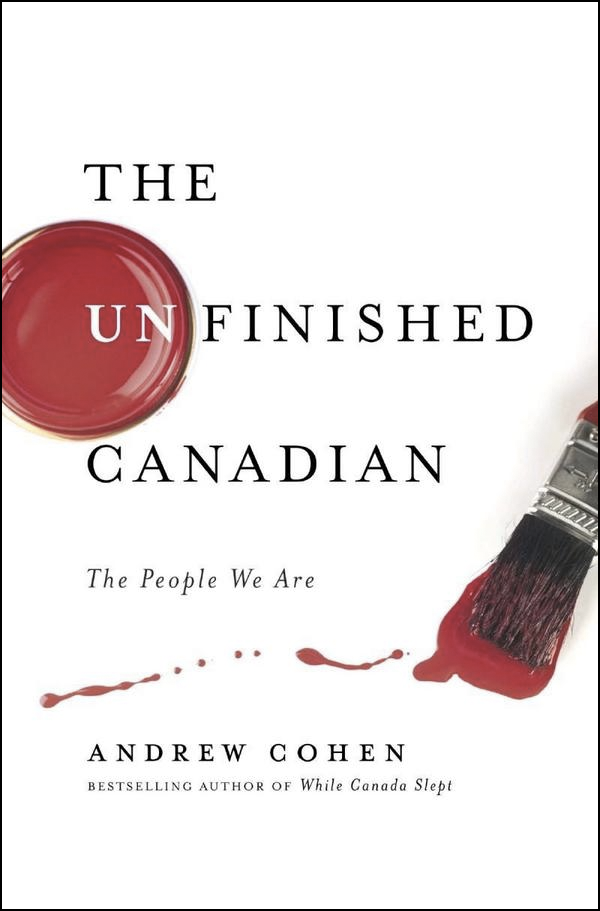
Figuring out new and exciting ways to design both hockey and ‘whither Canada’ books, which are a yearly staple on publishers’ lists. We are handy and imaginative with maple leaf imagery and the colour red.

You’re an artist as well as a book designer. Is there a tension between your artistic sensibility and the commercial design process?

Every day, and the design wins. I’ve tried to avoid overlaps, but words are images to me, so lately I’ve been working on art based around words. I try to keep it as three dimensional as possible (since my day work is two-dimensional), but then font choices become a factor and I run screaming. It helps to know that both Jenny Holzer and Barbara Kruger worked in designer/typesetter jobs early in their artistic careers.

The challenge lies in accepting and separating out design and art from their ultimate goals: design is created to communicate a product; art is created to communicate the world, in whatever form, or whatever scope, the artist chooses. There is no client in art.

How is designing book interiors different from designing their covers?

Interiors are, in many ways, a much more detailed exercise in communication. For a text-only book, I have to make sure that the reader never really sees the design, else it distract from their involvement with the text. For a picture book, the pictures stand tall, so the design should just assist the pictures. But a cover is a marketing tool, and the cover must try, in no uncertain terms, to woo the reader. It must stand out.
poster

Where do you look for inspiration?

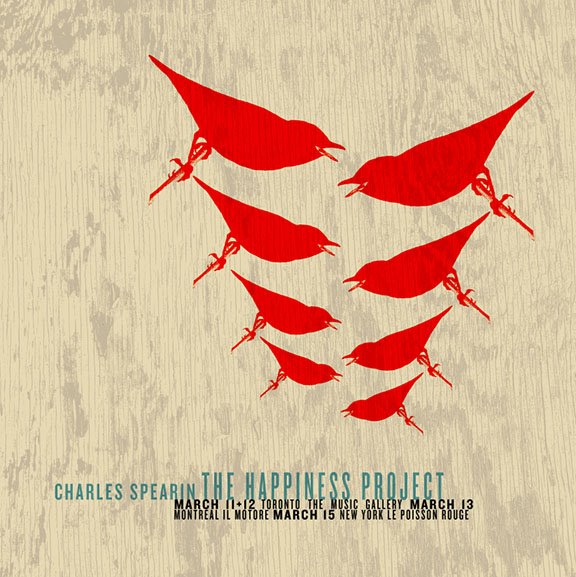
Currently? Other designers (book and non-book), as well as music poster design. There is a great revival (when did it go away?) of one-off poster designs for gigs. They are all silkscreened or letterpressed limited-edition beauties. I used to look at rave fliers all the time (when raves were the thing). I look online. I remember stuff my mom — who was an antiquer in the 1970s — used to show me, old ads and magazines. I read a lot (beyond manuscripts), so I end up with this polymathic knowledge of, say, alchemical symbols and Greek demigods. We used to be such a visual culture, pre-literacy, and I think in many ways we’re heading back there. My job is to connect the shorthand symbols of the culture, both old and new. It can fascinate me for hours, why LOLCats is the thing (and then not the thing, but what did the visual say of us?), or looking at, say, a Dutch design student’s incredibly cool/obscure website.

Who else is doing interesting work right now?

I love designers with latitute — ones that aren’t just one-trick (or one-look). Who comes to mind? Coralie Bickford-Smith, Jason Gabbert, Terri Nimmo, David Gee, Gabriele Wilson, Peter Mendulsund… They all have style that can bend to the project. I could go on, but that’s today’s list. It will change and expand tomorrow.

You’re very active with your website, blog, and Twitter etc. Is it important for a designer to engage with people online?

You know, every time I blog (or answer nice questions like yours), I sit back afterward and fear that my opinion is going to lose me a client. There is this balance one must keep when designing, as the client is always right (or deserves the design they get, depending on the outcome), yet what designers put out there does contribute to our visual worldscape. So, I try to contribute.

But I work from home (or, in Toronto parlance, I have a ‘live/work situation’). Blogging keeps me from talking to the wall too much, or thinking that the cat cares when I’m sweating to find the right sans-serif. It has been fascinating to watch how many book designers have joined Twitter lately — we all seem to find each other, this odd subgenre of designers, and I think in the future, that will result in some mind-blowing design (or a great convention in Bend, Oregon). My purpose online is to build community, to share ideas, to groan when needed, and if other non-designers join the conversation, well, then it just becomes this great party.

With the growing popularity of e-books, what is next for book cover design?

Ack! I don’t know. I really don’t. We’ll see what happens. What I do know is that there will always be a role for design, but what that role takes is anyone’s guess.

Thanks Ingrid!

Comments closed

Q & A with Nate Salciccioli

Thanks to blogging and Twitter I’ve been lucky enough to connect with a group of people in the book trade that I probably wouldn’t have met otherwise. Their enthusiasm and willingness to share their experiences is in stark contrast to the traditional reluctance of people in the industry to talk meaningfully (or positively) about what they do (without being three sheets to the wind).

Book designers in particular have an amazing online dialogue about their work and so over the next couple of months I’m planning a series of interviews with some of the designers whose projects have recently caught my eye.

First up on the docket is Nate Salciccioli. Nate is a graphic designer at The DesignWorks Group — purveyors of fine book covers since 1996 — and the chap behind the excellent Paradox of Awesome (it’s a long story and you probably had to be there…).

Even though he is only 23 (according to his website), Nate’s work has already been recognized by Print, Graphis, CMYK Magazine and elsewhere.

What attracted you to a career in book design?

Like many things, my career in book design was accidental. I’ll admit that, while in design school, I had neither considered nor seen many book covers. It certainly hadn’t entered my school-addled brain that I would (or could) pursue it exclusively. That all changed when I landed an internship with The DesignWorks Group, which I deem one of the most providential events of my life thus far. Everyone here is such a blast to work with, and I think falling in love with what they do here led to my love of book cover design.

Briefly, could you tell me a little about The DesignWorks Group?

Surely. Our little studio has been in the industry going on 14 years. We work almost exclusively in book cover design, with a few identities, websites, and movie posters thrown in for good measure. All told, there are 6 designers who call DWG home, and some amazing production and management people. From what I’ve gathered in talking with friends, the atmosphere at DWG is pretty unique; we love to collaborate, love to have fun, and LOVE the Shat (for those of you who are uninitiated, that’s William Shatner).

Something interesting is that none of our clientele is local. We work with publishers in NYC, Chicago, Nashville, San Francisco, Colorado Springs, Boston, and lots of other equally spaced out locations. This creates an interesting disconnect, which I think actually has helped our studio reach out through the internet with platforms like FaceOut Books, design:related, and Twitter.

How long have you worked there?

I’ve been working here since July 1, 2007. Has it really been over two years? I’m still waiting for two 30 inch monitors, if anyone is reading this…

Is there a ‘house’ style?

Thankfully, no. Our range of clients is so diverse that I think we’d be doing ourselves a disservice to aim towards anything as unified as a ‘house style.’ All the designers working here are deathly afraid of repeating themselves (in a good way). I do have to make a concerted effort to expose myself to lots of different kinds of design aesthetics to avoid getting a NATE look. Which reminds me, I need to stop using Futura…

Is there much collaboration between designers at DWG?

We’re always talking to each other. Many times a day I’m showing different people what I’m working on, and in turn taking a look at their screen. I can’t tell you how valuable this is in keeping my brain from fizzling. As a team, we’ll have brainstorming sessions when someone wants help in coming up with concepts. These concept generation sessions (CGSs??) always enrich the thinking on any given project.

Could you describe your design process?

Ah. You had to ask. Can I plead the fifth? Does ‘Plead the Fifth’ even make sense in Canada?

To be honest, my process varies from project to project. Sometimes I’ll read the book, do some sketches, find something I like, find a great image, create some brilliant typography, and get an ecstatic response from the client. SOMETIMES. More often, I’ll read and reread the given material from the client, roll some ideas around in my head for a while, and struggle for about an hour in Photoshop until I gain some momentum. If that doesn’t work, I run to the local convenience store for an ice cold Coca-Cola. I can’t stress enough the role of caffeine in graphic design.

What are your favourite projects to work on?

I love digging my teeth into a good fiction title. To me, fiction affords the most open-ended challenge: design something unique that gives an insight into the story. It’s more than problem solving. The art director I’m working with at the publisher plays a huge role in setting the tone for the project: Are we going for something brilliant, or for something palatable by Danielle Steele fanatics?

Some of my favorite projects lately have been a book about zombies, a reference series for Barnes and Noble, and several university press projects. I can’t get enough projects for university presses, by the way. Always a fun challenge.

What are the most challenging?

The biggest challenge is trying to continue innovating after several rounds with a project. When your ideas keep getting shut down, you have to find the place in your head that refuses to give up. On the flipside, it can be very rewarding to emerge from a bout like this with a cover that makes everyone happy (including me); it happens like that, sometimes.

What do you think makes a good cover design?

I’ve discovered that a good cover is more than just “oh wow, look at that neato type” or “shee whiz, no title on the cover!” It’s about communication in the end. I’ve admittedly produced designs that I thought looked great, but didn’t speak to the audience at all. If a cover can effectively introduce the book to its intended audience while still looking like a million bucks, it’s a good cover.

Where do you look for inspiration?

I have a morning routine that runs me through the gamut of book cover design sites (of which, happily, there are PLENTY), design inspiration sites, and blogs. I also have a running folder of lovely bits of design I find in different places. FFFFound is a great resource for visual stimuli, as are sites like NOTCOT.org and The Book Cover Archive. Just walking into a Barnes and Noble is a wonderful way to build enthusiasm for book design, as you can actually TOUCH them.

Who else is doing interesting work right now?

Some of my favorites to watch right now are Brian Chojnowski, Jason Heuer, Megan Wilson, Ben Wiseman, Christopher Brand, Jacob Covey, Helen Yentus, and Adam Johnson. There are so many talented designers working in book design, it boggles my mind.

As a young designer, what do you think the future holds for book cover design?

Some older and MUCH smarter people have told me there will always be a market for book cover design. I guess I’ll have to take their word for it. For me, the skills I develop working in books could translate easily to many other graphic design facets, which brings some comfort. I don’t expect to be holding a cardboard sign that says “Have Mouse, will Kern for Food” any time soon.

Thanks Nate!

You can find more of Nate’s work at his website and design:related portfolio.

6 Comments

Midweek Miscellany, June 3rd, 2009

I’m a little fatigued by all the inevitable post-Book Expo harping, hand-wringing and hubris, so please  forgive me if today’s links are a little light on book-book stuff…

Community Organizer — The New York Observer profiles John Freeman, the new editor of literary journal Granta:

Mr. Freeman believes in the inevitability of books—even if, as he will lay out in his forthcoming manifesto for Scribner, The Tyranny of E-Mail, the Internet is engendering in the people who use it habits that distract them from reading. This is the salve he has to offer a chapped and chafing industry. As people cry doom, he’s there to hold hands and assure them that it’s not that bad.

Cover Versions — Starting with Olly MossVideo Game Classics, Design Week looks at the trend of remixing just about everything to look like vintage 1960’s paperbacks.  What Consumes Me has a nice round-up of recent mash-ups (thx James!). And, if that wasn’t enough, Drawn! points to the another recent example: classic records reworked as classic Pelican paperbacks.

Which leads rather nicely to Emmanuel Polanco‘s Saul Bass inspired design for Moby Dick:

Throwing Down the Gauntlet — As widely reported elsewhere, Google are preparing to sell e-books according to the New York Times.

Making Mistakes — A fascinating interview with designer Paula Scher talking about creative failure at Psychology Today:

If you find yourself defending yourself and protecting yourself and being outraged about what’s around you, you’re in trouble. That doesn’t mean some things aren’t genuinely outrageous. But you have to ask yourself: Why are you outraged by something? What are you hiding from? What are you defending?

And, on a not dissimilar note…

Use It or Lose It — Indispensable creative advice from ad exec Dave Trott (via Mark McGuinness on Twitter):

If we wait for the right opportunity it won’t happen. It’ll stay in our drawer until the world has passed it by. Times will change and newer, more exciting things will be happening. Now it looks old and tired. Now it’s too late.

If we don’t find a way to make it happen, if we don’t take a chance and overcome lethargy and embarrassment to do it, it will disappear.

Students always ask me what I think they should do.

I tell them, “The answer is always the same two words: ‘everything’ and ‘now’.”

Everything and Now… Everything and Now…

Comments closed

Turning Towards Our Shelves

Ellen Lupton, author of Thinking With Type (interviewed by me here), interviews graphic designer David Barringer about his new collection of essays There’s Nothing Funny About Design over at Design Observer today.

It’s a wide ranging interview — mostly about design unsurprisingly — but a couple of paragraphs about books caught my eye:

I do think that ebooks are a step backwards, however. It’s like the fax. It’s not flexible or useful enough. Handheld computers should have greater power, and the Kindle instead has less. You should be able to access encyclopedias, dictionaries, and other searchable resources, just like we can on the computer or the iPhone. That’s where the real benefit of portable handheld units are. Who cares about downloading Twilight? I care about having access to entire online libraries of reference works, maps, and encyclopedias.

I’ve sort of come to the same conclusion. If e-readers are less convenient than cell phones, less useful than laptops, and less durable than books, what’s the point?

Anyway, David Barringer goes on to discuss our enduring emotional connection with book-books:

I’ve seen many friends who are avid readers turn toward their shelves of books and regard them as they would a photo album of their own lives. We take the contents of books into our imaginations, and our personalities are influenced by them. Looking at the books on my shelves, I feel memories bloom, my own life come back to me. Books are triggers for remembering where we have been, and who we are. A book is like a body part, and when you die and your connection to the book is broken, the book dies a little, too.

I thought that was rather touching…

Link

(NB Full Disclosure: Thinking With Type and There’s Nothing Funny About Design are published by Princeton Architectural Press, who are distributed in Canada by my employer, Raincoast Books)

Comments closed

Something For The Weekend, April 25th,2009

Comic Shelves by Oscar Nunez for Fusca Design (via The Ephemerist)

Goodnight Mechanical Dinosaur — Neil Gaiman on Batman in Wired (via LinkMachineGo):

[T]he great thing about Batman and Superman, in truth, is that they are literally transcendent. They are better than most of the stories they are in. That’s just Sturgeon’s Law: “90 percent of everything is crap.” Can you imagine how many thousands, or millions, of words have been written on Batman? Try to read them and you’re looking at 100,000 pages, perhaps a million, and you can assume that 90 percent of it is crap. Yet the 10 percent, and even better the 1 percent of that 10 perfect, is absolutely glorious. That pays for everything.

Tea and Cake — Louise Tucker chats to colleague Scott Pack about The Friday Project on HarperCollins’ 5th Estate blog:

It is still the only imprint to specialise in taking great web content and making books from it. That gives us a much wider brief than most people think…

Our future plans are very exciting. Our author deals will now all be profit-share arrangements with us splitting the profits of the books 50/50 with the authors. We are soon to announce some bold eBook initiatives and there is more to come.

Figuring it Out — Type legend Erik Spiekermann, co-author of Stop Stealing Sheep, on the basics of typography.  Not new, but still a great primer/reminder.


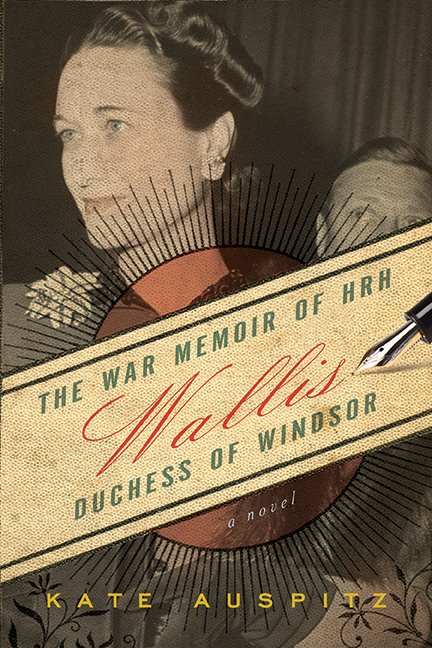
Will it sell in Moosejaw? — Book designers Bill Douglas (The Bang), Ingrid Paulson, (Ingrid Paulson Design), Angel Guerra (Archetype Design), Terri Nimmo, (Random House), and Kelly Hill, (Random House), discuss their craft in The National Post (Ingrid Paulson’s cover design for Kate Ausptiz’s The War Memoir of HRH Wallis Duchess of Windsor pictured above).

Wrapper’s Delight — A librarian at the Bodleian Library has found the earliest-known book dust jacket in an archive of book-trade ephemera:

Unlike today’s dust jackets, wrappers of the early 19th century were used to enfold the book completely, like a parcel. Traces of sealing wax where the paper was secured can still be seen on the Bodleian’s discovery, along with pointed creases at the edges where the paper had been folded, showing the shape of the book it had enclosed.

Comments closed

Midweek Miscellany, April 15th, 2009

The #amazonfail shitstorm — from Amazon’s awful “ham-fisted”  glitch (a phrase so dirty it’s probably de-listed from their own searches) to the seething self-righteous indignation on Twitter — has been enough to make me want turn off the internet and go back to bed. But if you need  an overview of the whole sorry story, business reporter Andrea James has done a very thorough job following it for Amazon’s local newspaper the Seattle Post-Intelligencer, and summaries, shivering with schadenfreude, can be found in the New York Times, The Guardian, Wall Street Journal, and the National Post.  No doubt the other major dailies were all over it too…

Former PW editor Sara Nelson at The Daily Beast , Evgeny Morozov at Foreign Policy, and the Vromans Bookstore Blog offer some alternative perspectives.

But I’ve got to say I agree with Jessa Crispin at BookSlut: “I’m bored with this.”

(UPDATE: Clay Shirky has written perhaps the most thoughtful post on #amazonfail I’ve read to date: The Failure of #amazonfail)

Lets. Move. On…

Straight Up — Knopf designer Peter Mendelsund who moonlights as art director of Vertical Press and blogs at Jacket Mechanical,  interviewed at the always ace FaceOut Books (Smell Man by Munenori Harada, designed by Peter Mendelsund pictured above).


Contact — Filmmaker and writer Adam Harrison Levy on William Klein’s recent appearance in New York and the importance book-signings (William Klein: Buicks, 2 tiered, New York, 1955, Howard Greenberg Gallery, pictured above):

A book signing is a manifestation of an urge to recover something that we, as a culture, fear losing — namely the hand of the artist in the age of mechanical (and digital) reproduction. Now more than ever it seems that we want to get close to creativity: to hear the voice and see the skin and experience the physical presence of the person who made something that we deem to be meaningful. Is this because so much of our lives now is mediated through a screen?

What Went Wrong? — An interesting article (and something of a mea culpa) in the Boston Globe about the mistakes and missed opportunities made by newspapers underestimating the impact of the web.

In Perpetua — MyFonts strike up a ‘dialogue’ with Eric Gill (1882 – 1940), stonecarver, graphic artist, type designer and writer:

If we insist on the ornamental we are not making the best of our system of manufacture, we are not getting the things that system makes best. The process by which a railway locomotive has become the beautiful thing it now is, this process must be welcomed in all other departments of manufacture. … And ornamental typography is to be avoided no less than ornamental architecture in an industrial civilization.

We Love Typography —  “FFFFound for all things type, typography, lettering, & signage” created by I Love Typography in collaboration with Kari Pätilä.

And finally, I would like to pass on my condolences to the friends and family of Derek Weiler, editor of the Quill & Quire, who died at the weekend, aged 40.

Comments closed

Q & A with Ellen Lupton

“Ellen Lupton makes this industry smarter. If graphic design has a sense of its own history, an understanding of the theory that drives it and a voice for its continuing discourse, it’s largely because Lupton wrote it, thought it or spoke it.” — Katherine Feo, AIGA

Dedicated to raising design awareness, Ellen Lupton is the Director of the Graphic Design MFA program at Maryland Institute College of Art (MICA) and curator of contemporary design at the Cooper-Hewitt National Design Museum.

A regular columnist  for ReadyMade Magazine, she has contributed to Print, Eye, I.D., and Metropolis, and writes regularly about design at both Design-Your-Life and her own website Design Writing Research.

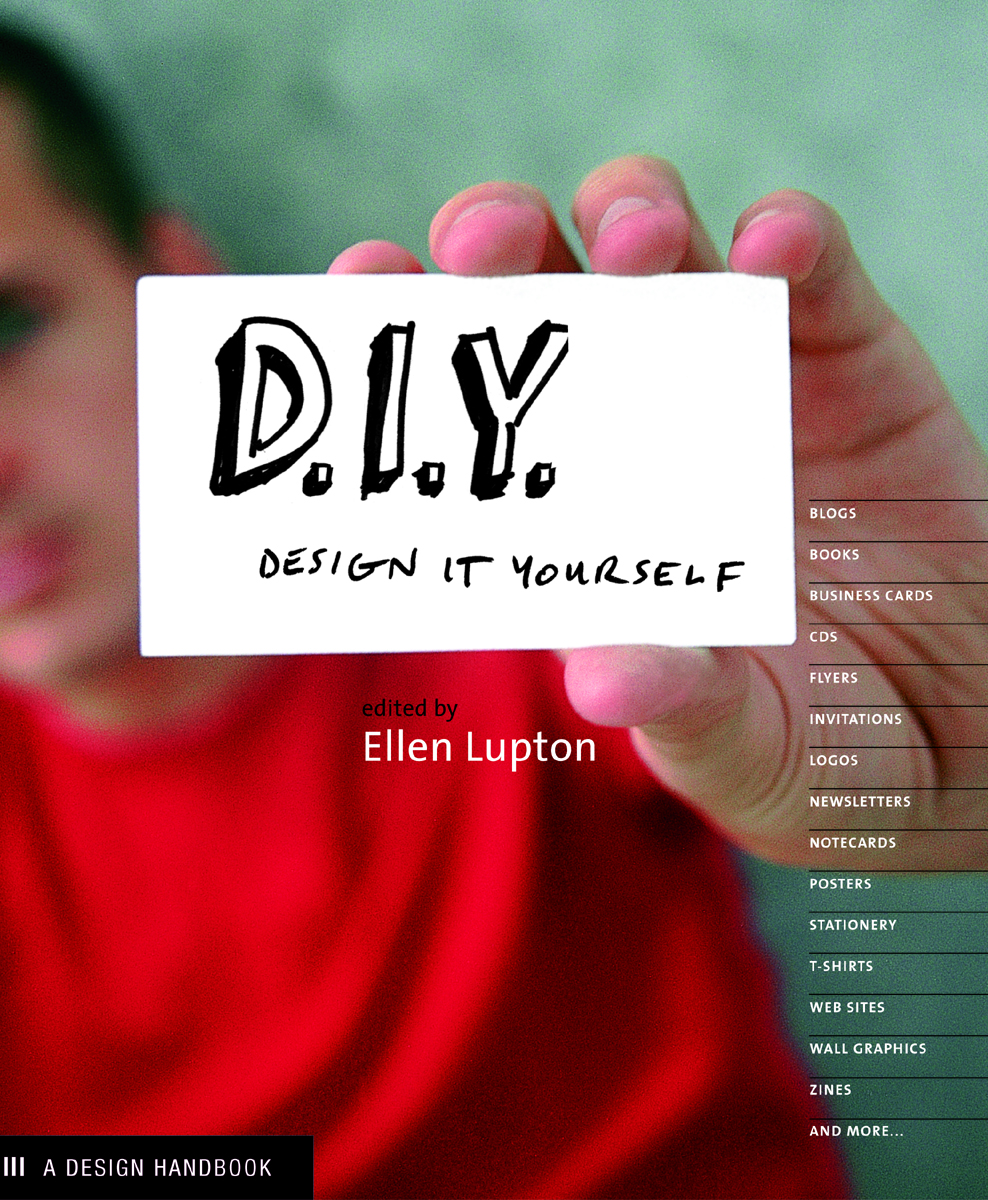
Her books include the indispensable introduction to typography Thinking with Type, DIY: Design It Yourself, D.I.Y. Kids,  co-authored with her identical twin sister Julia Lupton, and Graphic Design: The New Basics, co-authored with Jennifer Cole Phillips.

Design Your Life: The Pleasures and Perils of Everyday Things , another collaboration with her sister Julia, will be published by St. Martin’s Press later this year.

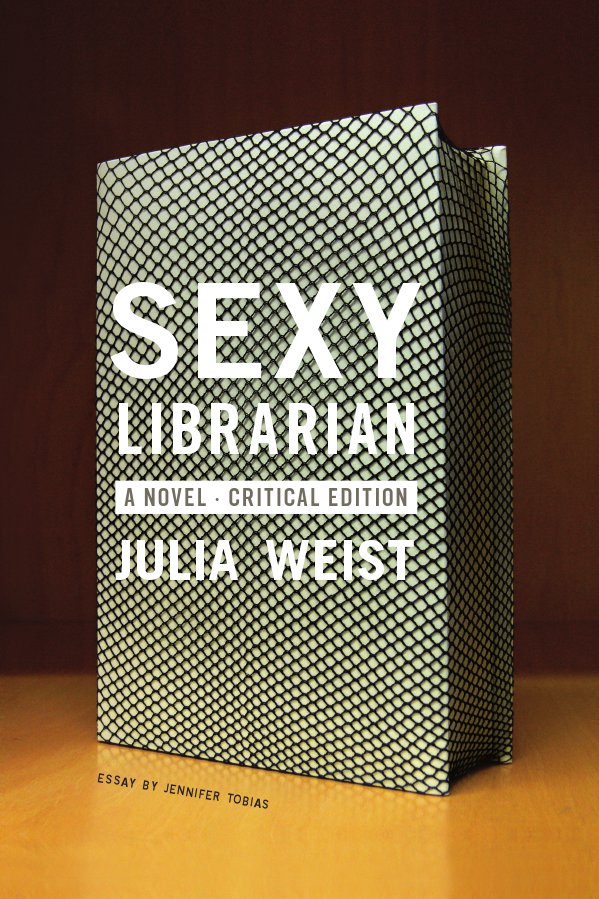
But, not content with being an  author, curator, designer, and educator, Ellen recently became a publisher, founding  Slush Editions to independently publish the novel Sexy Librarian by artist Julia Weist.

Sexy Librarian also features as a case study in Ellen’s latest book  Indie Publishing— a guide for independent authors written, researched, and designed in collaboration with graduate students at MICA — published in December 2008 by Princeton Architectural Press.

Ellen kindly replied to my questions about design and indie publishing by email.

And for the sake of full disclosure, I should make absolutely clear that several of Ellen’s books are published by New York’s Princeton Architectural Press who are distributed by Raincoast Books in Canada. But, for the record, that only explains why I have her email in my address book, not why I chose to interview her.

I have also interviewed Ellen previously for the Pages bookstore in Toronto.

How would you define ‘indie publishing’?
Indie publishing is author-driven. The traditional publishing industry is controlled by publishing professionals — editors, marketing people, promotional staff, and the publishers in charge. These are all skilled people. In our book, we use the term broadly, to encompass everything from handmade zines to print-on-demand books to offset publications distributed by the authors to small imprints created by design firms who wanted to get into the content business.

How is it different from the traditional publishing industry?
Because it’s author-initiated, indie publishing side-steps the traditional barriers of the publishing industry. It gets beyond the gatekeepers. Now, those gatekeepers act as guardians of quality to some degree, but they also contribute to a homogeneous and profit-driven publishing industry that many authors find hostile and hard to penetrate. Indie publishing often serves niche or local markets that can’t be addressed by mainstream publishing.

What are the benefits of publishing yourself?
If you have had difficulty breaking into the mainstream publishing world, going independent is liberating. If you end up producing a successful book, the profits can be substantial, but this shouldn’t be the main motive to get into publishing. Few authors make substantial bucks on their books — regardless of who publishes them. For most of us, writing and producing books is a labor of love.

What are the risks?
Most forms of indie publishing cost money, and that’s a risk. When you work with a commercial publisher, they foot the printing bill. Publishers also provide essential services like editing, proofreading, design, distribution, and marketing. The indie publisher has to take on all these tasks alone (or find friends to help out). It’s not easy, especially the distribution part. Self-published books are still viewed as less legitimate than commercially published books, although this is starting to change.

Do you see indie publishing as part of a wider D.I.Y. movement?
We are seeing more independent production in all creative fields — music, art, theater, design, etc. Younger creative people are interested in creating new institutions and networks outside the official art world or music/literature establishments. They are comfortable using technology to disseminate their ideas.

How has the internet affected the development of indie publishing?
The internet allows indie publishers to reach potential readers outside the bookstore system. Today, anyone can set up an Amazon Marketplace account or sell publications directly from their web sites. Print-on-demand publishers like Lulu and Blurb produce books when someone buys them, sending the finished book directly to the customer. These technologies are creating new possibilities for authors, especially those whose work is directed at narrower, smaller audiences.

What advice would you give someone publishing their first book?
Love your book. Get advice from lots of people in order to have the best possible content. Consider the different avenues that exist for publishing your work, including mainstream publishing as well as independent ventures.

Think about your audience and the best way to reach them. And think about your own primary goals for publishing a book. For example, an artist having a gallery exhibition might use a print-on-demand book as a tool for building his or her career via grant applications, networking with galleries and curators, securing lecturing and teaching opportunities, and more. A well-designed, carefully authored book has many functions. Selling copies to lots of people is just one of them. You might use a book as professional portfolio for landing a job or attracting clients — maybe all you need is a few copies.

What are some of the common mistakes people make designing books?
It’s important to use good software. The industry standard today is Adobe InDesign, which is available for both Mac and PC and can be easily learned via software manuals or technical workshops. Programs like Microsoft Word or Publisher are extremely cumbersome and will ultimately be frustrating to a person trying to design a refined and elegant book. Choosing a good typeface is also important. Avoid Times Roman, which was originally designed for newspapers and is so widely used as to be banal. Beautiful, high-quality typefaces such as  Garamond often come bundled with layout software and computer operating systems. Keeping your design simple and consistent from page to page is a rule of thumb for any book design. You also need to “unlearn” some habits from high school, such as leaving two spaces between sentences — this is not done in formal typesetting, and it will make your book look amateurish.

What do you look for in good book design?
Beautiful type, elegant margins, consistent pages.

Have you ever bought a book just for its cover?
Of course! Cover design is extremely important. A cover is not only a billboard advertising your book on a shelf, it’s also an online logo for your book that needs to look great at 100 pixels high. Getting help from a good graphic designer on your book cover is a worthwhile investment.

What will be the impact of e-books on publishing?
I believe that e-books are going to be very, very good for authors. By lowering the cost of publishing, e-books will make it easier for more authors to get their work published and to reach specific audiences who want their content. What I’m less sure about is how e-books will affect graphic designers!

Are we finally seeing the ‘End of Print’?
I do believe there is a sea change going on. After decades of unsuccessful attempts at creating electronic book readers, suddenly the time seems right. I don’t think print will disappear, but I think we will see less of it. It remains a tactile, permanent, stable medium that users can feel a personal attachment to.

What role do you think print-on-demand will play in the future?
Print-on-demand is where digital media and print meet. I think we will see a lot more of this as prices go down in the future. Ultimately, it is a more sustainable way to publish and involves less financial risk, but right now, it is too expensive for large-scale endeavors.

How will e-books and print co-exist?
E-books are great for disposable reading — magazines, casual fiction, newspapers. Perhaps every physical book in the future will come with an e-book supplement. I often want to quickly reference a book I read, and e-books would be great for that. Personally, I collect books, but I don’t need to keep the latest Richard Price book on my shelf forever.

As a designer, do you feel an attachment to print?
I am very attached to print. I don’t want to see it disappear in my own lifetime, that’s for sure. I love the tactility, permanence, and scale. But I do find myself reading more and more online.

Thanks very much Ellen!

4 Comments

1/3 Alligator: The Book Cover Archive Q & A

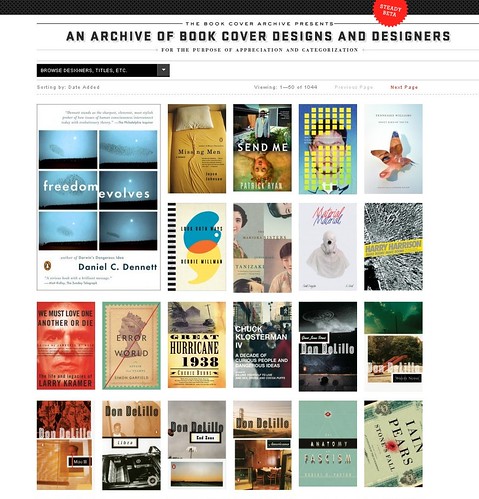
Lauded and linked to by everyone from The Guardian newspaper to the New Yorker blog (not to mention the really important folks like Drawn!Kottke, We Made This,  and Veer)  the dazzling The Book Cover Archive is — as the name suggests — a hand-picked archive of book cover designs and designers, collected “for the purpose of appreciation and categorization.”

Edited and maintained by frequent collaborators Ben Pieratt of General Projects and Eric Jacobsen of Whisky Van Gogh Go, it’s an indexed database of credited book covers sortable and searchable by title, author, designer, art director, photographer, illustrator, genre, publication date, publisher, and even typeface.

Earlier this month, I emailed Ben and Eric with a series of questions about the project.

What was the impetus behind BCA?

Ben: In all honesty, the Book Cover Archive is meant to serve as a passive teaching tool for people like me who suck at book cover design but want to get better.

Do you see BCA as expansion on Covers, the book cover design project you created for Fwis?

Ben: The two sites provide different services. The Fwis Covers blog serves as a platform from which to comment and critique. You can’t post a cover on Covers without commenting on it. Whereas the Archive is passive in its function and editorial voice. The only curatorial decision is the binary It’s In Or It’s Not.

R. Mutt ReadyMech

You’re getting quite well known—notorious even—for online not-for-profit ventures like Covers, ReadyMech, Schtock, and now BCA. How do you get started on these projects?

Ben: For every launched project there’s 10 failed ones that never got off the ground. It’s really just a matter of having ideas for projects that you know no one is ever going to pay you for and then running with it anyway because its fun as hell.

How did you become interested in book cover design?

Ben: Senior year of college I was struggling with my thesis project. I think I had been doing a study of “bad taste” and was just having a hell of a time with it. At around the same time my former business partner, Chris, told me to read Ender’s Game, a Sci Fi classic. I hadn’t read any sci-fi growing up because my dad kept feeding me non-fiction stuff. I loved the book but was embarrassed to carry it around because the cover was so incredibly bad. So I changed my thesis project to redesigning the book covers of science fiction classics. I’ve been mildly obsessed with both sci-fi and book covers ever since.

How do you select which covers to include in the archive?

Ben: I’m picky as hell.

Are there particular designers you look out for?

Ben: I’d like to think that I judge each cover on its merits alone, but there’s no question that I’m super biased. If its American and it’s coming out of New York then I’m probably going to love it.

Eternal Light by Paul J. McAuley, designed by Sanda Zahirovic

Do you have any recent favourites?

Eric: I’m very excited about the new promotional work that Gollancz/Orion has been putting out, the Future Classics and Totally Space Opera series. Besides being surprisingly conceptual and classy takes on genre fiction, I think they point at a trend toward collectible and fetishable books as a revenue stream for authors and publishers. I hope we’ll be seeing more of these kinds of editions soon. More on this in a below.

You’re actually designer yourself. How do you go about designing a new book cover?

Ben: I don’t think I’ve designed anything decent enough to merit being asked this question, honestly. I have no tricks beyond embracing the power of utter panic.

What do think makes a good cover design?

Ben: one-half concept, one-quarter contextual appropriateness, one-half design, one-half je nais se quois, one-third alligator.

And, I have to ask, what makes for a bad one?

Ben: I’m starting to come to realize that the biggest difference between a good design and a mediocre one is the typography. Most covers have a decent, if not passable, concept. Everyone has concepts. It’s really the typography that sets the best apart from the rest. That’s my current thought anyway, subject to change.

Which book would you like to redesign?

Ben: I really dislike the covers of Malcolm Gladwell’s books. They’re completely decent, but they rub me the wrong way. They take a visual from his books and find a piece of related stock art and slap it together. I think he’s earned better. I’d also love to standardize Stephen Hawking’s catalog into some kind of glorious uber-nerd package with a lo-fi sci-fi aesthetic.

Have you ever seen a cover and thought “I wish I’d thought of that”?

Ben: Jamie Keenan’s design for Faster makes me want to give up on life. Jon Gray’s cover for Steinbeck’s Murder makes me feel inadequate in any number of ways. Rodrigo Corral’s design for Invisible Monsters makes me question my sense of self. Most recently Helen Yentus’ cover for The Way Through Doors leaves me questioning if I should pack it all up and become a plumber.

Have you ever bought a book just for the cover design?

Eric: Lots, particularly from McSweeneys. I also re-buy a lot of books I already own when newer, nicer editions come out.

The Americanization of Benjamin Franklin by Gordon Wood, designed by Evan Gaffney

Ben: I was looking for a good book on Ben Franklin recently and bought the Evan Gaffney-designed The Americanization of Benjamin Franklin specifically because I hated all the other covers. Great book, by the way.

With the growing popularity of e-books, are you concerned that book cover design may soon be a lost art (hence the need to archive it)?

Eric: Nope. See next question.

Ben: The only thing I’m worried about is animated covers. You know that shit is coming.

Are we finally seeing “The End of Print”? What’s next for books?

Ben: I have no idea. I don’t think I’m qualified to have an opinion on the issue. I certainly don’t think so. The tactility of the technology is going to have to improve significantly before people are willing and ready to abandoned their hard[cover]ware for hardware (sorry, I had to). As far as books are concerned, I assume the industry will go through the same pains as the music industry. The number of independent publishers and self-publishers will increase dramatically as technology allows them to bypass the major booksellers altogether.

Eric: I think that due to the nature of reading and readers, adoption of e-books will be much slower than that of digital music (a similar paradigm shift), so even if e-books herald an ‘End of Print,’ it’s at least a decade off.

Will it even happen at all? I think so. I hope so. When I read about objections to e-books, it’s usually a lot of hemming and hawing about tactility and comfort and even the smell of pages; these complaints rarely touch on such trivialities as book availability and overall readership, which e-books would certainly expand.

E-book detractors have of a strange idea of what most books are. Those beautiful dusty old encyclopedias, that rare first-edition of Ulysses, even your fancy new Vintage paperback? That is not most books. The Grisham and Grafton paperbacks at the airport, Chicken Soup for the Spirit, college textbooks — that’s most books. Does anyone really care if the next Janet Evanovich thriller has no corporeal form? Wouldn’t that be an improvement?

Those who fear e-books should have a discussion with audiophiles. While CD sales have been steadily declining all decade, vinyl — the choice of music lovers everywhere — has gone up. iTunes downloads didn’t destroy the serious album market; it got more people listening to more artists, at the expense of bulk CDs (which “real” music fans sneered at to begin with) by one-hit-wonders. Listen to audiophiles talk about the “warmth of sound,” fidelity and tactility of vinyl, and compare their words to those of bibliophiles talking about the scent of pages; these are kindred spirits.

Here’s a possible future scenario: e-books become wildly successful, at the expense of  “airport paperbacks” and the bestseller list. Big Box bookstores go the way of Virgin Records. Readership and literacy grows (this is already happening), leading to more bibliophiles and Serious Book Lovers. As the market of crappy, badly designed books diminishes, the demand for beautifully crafted, fetishable books grows (sparking an unexpected return of the Independent Bookstore). There will ultimately be fewer books “in print,” but more awesome, well-designed books than ever.

Thanks Ben and Eric!

Link.

5 Comments

Midweek Miscellany, March 18th, 2009

The BombAlison Forner‘s cover design for Stephen M. Younger’s history of nuclear weapons (Ecco June 2009), seen at Book Covers Anonymous.


Has the computer democratised design? — Designer Peter Saville (perhaps best known for his iconic designs for Factory Records) at D&AD President’s Lecture earlier this month (above). More interesting snippets from the talk are available here (via The Strange Attractor).

Reminder — Writer Charlie Stross on why there isn’t a tipjar on his blog (via Times Emit):

If I put a Paypal tipjar on this blog to take conscience money from folks who’ve downloaded a (cough) unauthorized ebook or two, the money would come to me, not to the publisher. And without the publisher those books wouldn’t exist: wouldn’t have been commissioned, wouldn’t have been edited, wouldn’t have been corrected and marketed and sold in whatever form filtered onto the unauthorized ebook market. (Yes, they commission books, and pay authors for them up-front — a vital part of the process, because most of us can’t afford to take a year to write a book on spec and then hope somebody liked it enough to buy it…)

“We publish books and give them away – free” — Concord Free Press (via Scott Pack):

All 1,500 copies of our first free book, Give and Take, are circulating through the world—from New England to New Zealand, Soho to Slovakia. Our readers are making voluntary donations to charities or people in need. We ask them (nicely, of course) to give, then pass the book on, so that every time it changes hands, it generates more contributions.

Comments closed

Midweek Miscellany, March 11th, 2009

Rare (and not so rare)Joel Kral‘s fabulous collection of book covers on  Flickr (via Monoscope):

These are some of the rare (and not so rare) books that I have collected over the past 13 years. They range from graphic design, architecture, art, typography, illustration, skateboarding, graffiti, etc.

Literary Fibs“Miserable writerist” Charlie Brooker responds  to the claim that 65% of us lie about the novels we’ve read in a bid to impress people:

The… irony is that while people lie about having read highbrow novels in order to impress each other, a massive percentage of highbrow novels aren’t worth reading anyway because the authors are too busy trying to impress the reader (who, we now know, probably hasn’t bothered turning up)

Shelved Books — “A blog dedicated to the cover that never happened” by designer Kimberly Glyder.

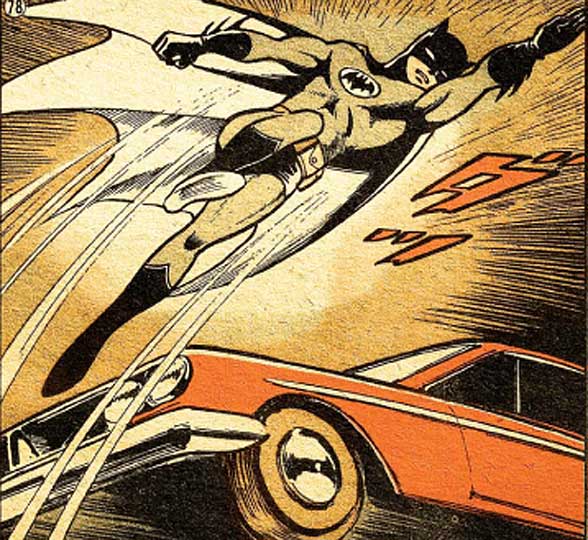
Day to Day Batman — Chip Kidd, the self-described “Indiana Jones of Forgotten Japanese Batman Comics”,  talks about Bat-Manga! on NPR (pictured above).

Isn’t that enough?Jeff Gordiner, Editor-at-Large at Details magazine and author of X Saves the World, interviewed at The Raleigh Quarterly (via@RonHogan):

Other than Philip Roth, though, almost everybody’s writing too much. Blogs, chat rooms, Twitter, Facebook status updates —there’s a wordy data glut going on, and it’s made me more reverent than ever of strategic silence. I’m fond of the J.D. Salinger approach — just evaporating from public view. Is it wrong that Salinger hasn’t left us with 30 or 40 books?

Snooty British traditions and  New York brashness — the National Post talks to Nicole Winstanley about Penguin Canada’s new imprint Hamish Hamilton Canada. This is the 4th installment of the Post‘s  ‘The Ecology of Books’ series. Part one is about literary agents, part two looks at literary journals, part three is a fascinating profile of McClelland & Stewart’s Ellen Seligman.

The Periodic Table of Typefaces —  (pictured above)

And finally, Alan Taylor has launched  ‘meta-blog’ Big Picture Notes to accompany the Boston Globe‘s brilliant photo blog The Big Picture.  Great stuff.

Comments closed

H.N. Werkman

Every day,  Eric Baker,  of Manhattan-based design firm Eric Baker Design Associates,  spends 30 minutes before work looking for “images that are beautiful, funny, absurd and inspiring”, and each Saturday he posts his selections to the Design Observer.

Eric’s selections for  14th February were all drawn from a great collection of images that Miguel Oks has posted to Flickr,  including  some amazing sets of 20th Century avant-garde books.

The covers pictured here are by the brilliant Hendrik Werkman (H.N. Werkman)  for the literary typographic journal Next Call , and are taken from the Dutch Books set.

Yale University Press published a lovely book by Alston W. Purvis on Werkman in 2004 as part of their Monographics series.

Comments closed

Jules Verne Series at FaceOut Books

The featured work at FaceOut Books this week is 28-year-old Ely Sarig’s elegant–and unpublished–designs for Jules Verne’s classic 19th Century science fiction novels 20,000 Leagues Under the Sea (above), From the Earth to the Moon (below), and The Clipper of the Clouds . The designs draw inspiration from Victorian industrial design, pirate ships, WWII submarines and spacecraft. Does it get any better than that?

Link

Comments closed