Skip to content

Tag: david drummond

50 Canadian Book Cover Designs

Lists are always problematic, but CBC Books longlist of Canada’s Most Iconic Book Covers seems strangely underwhelming somehow. Setting aside what counts as ‘Canadian’ (some of the books on the list were not designed by Canadians for example), ‘iconic’ covers are inevitably those that have stuck around and we are most familiar with, not necessarily those that are well designed or particularly interesting to look at. Needless to say, the list says more about our fondness for certain books and authors than about the current state of Canadian book cover design. Perhaps it isn’t really fair to judge the CBC’s contest this way, but it makes the list less interesting than it might otherwise have been (to me, at least).

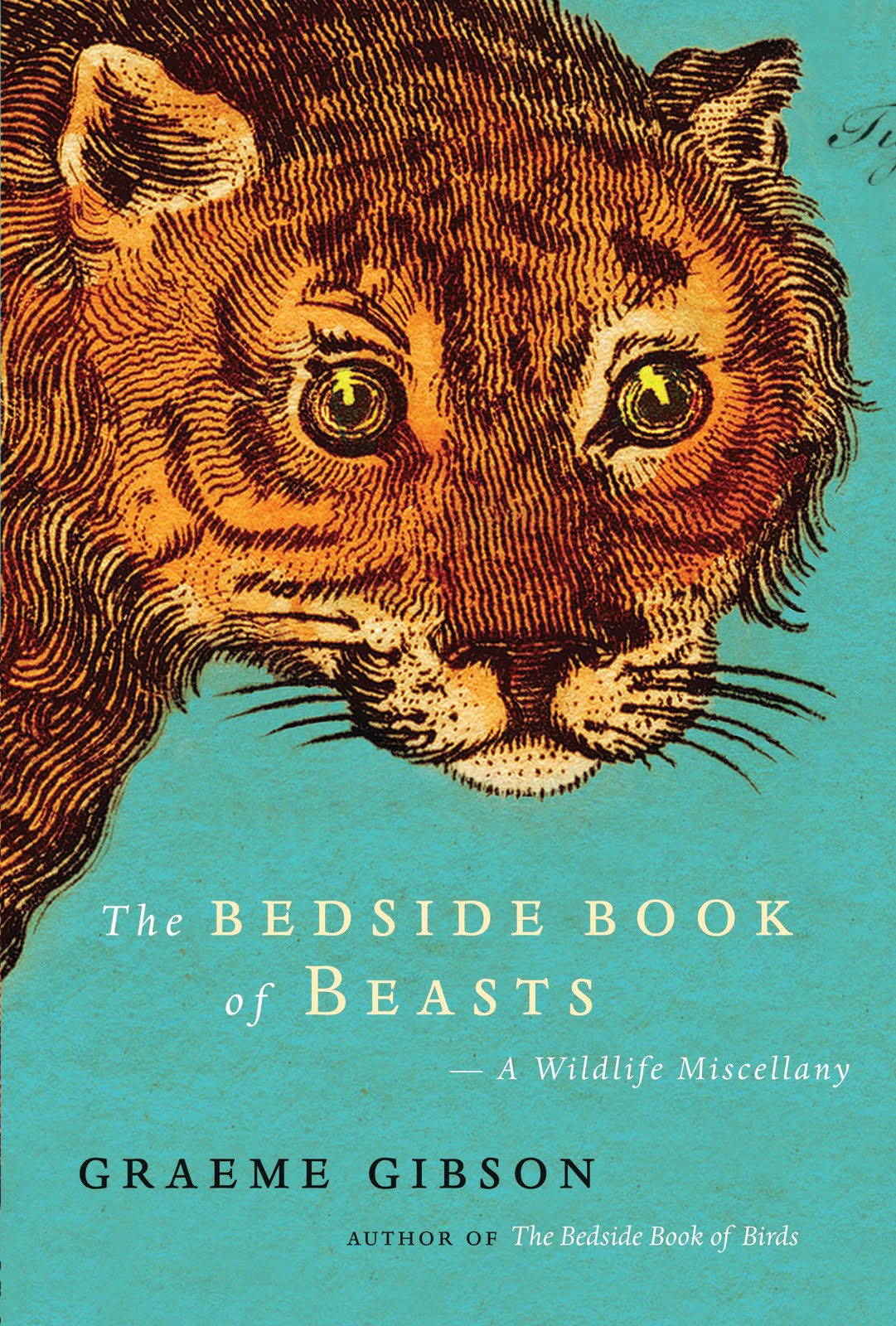
That said, I am terrible, no good Canadian. 10 years and one Canadian passport later, I still feel like the immigrant I am. It’s not that I feel particularly British any more (if I ever did), it’s more like I haven’t finished unpacking yet (which might literally be true come to think of it)! In nearly five years of blogging I haven’t dedicated a single post to Canadian book design. To remedy to that, below are 50 (FIFTY!) recent book covers designed in Canada. Some of them are well-known, some of them are award-winners, some of them were recommended, some I’ve posted before, and some are just personal favourites. I can’t say they’re ‘iconic’ but they are all great covers. Enjoy. (Pictured above: The Bedside Book of Beasts by Graeme Gibson; design by Scott Richardson; published by Doubleday Canada).

15 Comments

Something for the Weekend

The Many Lives of Donald Westlake — Michael Weinrab on the work of Donald Westlake, for Grantland:

The Outfit is 213 pages, which is actually somewhat long by the standards of the early Parker novels. There are 24 Parker titles in all, and most of the early ones are tight little symphonies of spare and rigid prose, split into four distinct movements; they somehow manage to adhere to a rough formula and still blow your hair back every time. Their tone is brutal and unsentimental, and their themes are Nietzschean to the extreme: People act, without adverbial accompaniment, and the whys and wherefores are utterly beside the point. The protagonist is a career criminal, a sociopathic utilitarian who despises small talk. When someone asks him if he had a good flight to his destination, he thinks, This wasn’t a sensible question. He is concerned entirely with the successful execution of crimes and with his own self-preservation amid this process. One memorable chapter ends with the line, “He buried him in the cellar in the hole the kid had dug himself.”

The Parker novels, written by Westlake under pseudonym Richard Stark, have been republished by the University of Chicago Press, with covers designed by David Drummond.

Simulations  — Tim Maughan on Extreme Metaphors, a new collection of interviews with J.G. Ballard, at Tor.com:

You can perhaps argue that Ballard missed the big change that was to come just years after his death—the apparent crisis of global capitalism, the shift of industrial and financial production towards the east, and the tightening pressure on the suburban middle classes that this would result in. But the kicking back against these pressures, in the form of the online rebellion and well mannered protest of Anonymous and the Occupy movement, seem to fit perfectly into this description. Both are, in many ways, more of a simulation of a protest than an actual protest themselves—one involves doing little more than clicking a mouse, the other seemingly owing more to music festivals and camping than to hard-fought political resistance.

Let It Bleed — An interview with cartoonist Yoshihiro Tatsumi at Hazlitt:

The parents were really up in arms about these bad books. Manga at that time was different than it is now. It was friendly manga, so little kids could read it too… On the page you have the same number of panels, the people move from left to right and they’re all the same size and it all looks the same on the page… There was no movement or anything like that. We took inspiration from movies, doing zoom shots or close-ups. Using the camera. We wanted to use these techniques in manga, really violent movement. We were trying to move the panels in a realistic kind of way, to make work without lies, true work.

Tatsumi, Eric Khoo’s 2011 film based on Tatsumi’s memoir A Drifting Life, is currently showing at the Lightbox in Toronto.

And finally…

The Names Change But… The conclusion to Mark Medley’s fascinating series on House of Anansi, ‘A Publisher’s Year’, at the National Post:

“The truth about publishing is that publishing houses change their names and identities all the time. It’s the nature of this perilous trade. When I started in the business there was a Collins, and there was a Harper & Row. I can’t even remember when it became HarperCollins. There was Doubleday Canada, and all of its imprints, and there was a Random House, and all of its imprints…”

Publishers fail and new publishers emerge to take their place.

Comments closed

My Favourite Covers of 2010

At the end of last year, Joseph Sullivan, curator of the late lamented The Book Design Review, asked me to write about my favourite covers of 2010. I’d always stayed away from such posts in the past because it was Joseph’s thing (his 2009 list is here). But since it was Joe who was doing the asking and The BDR was on “indefinite hiatus,” how could I not?

For various reasons, the list I compiled didn’t get used in the end, and it has sat in my drafts folder for about year now. I now have a list of my favourite covers of 2011, but before I post it I thought I would share that original list from 2010, if only for a bit of context.

I’ve made a few minor alterations to the list I sent to Joe — mostly to better accommodate the series designs and to fully utilise 12 months of regret and hindsight — but it is more or less intact, in spirit at least.

I’ve included the short introduction I wrote for the original piece to explain my process (or lack thereof…).

(Hindsight = 20/20: Apparently I like negative space. A LOT).

The Top 10 Book Covers of 2010

Selecting an annual top 10 of anything — film, music, books — is fraught with difficulty. Not only do you have to sift through all things you have seen, heard, and read over the course of a year (assuming you can remember them all), you must somehow take into account all the things you meant to get to and didn’t (where does one even start?). Worse, you are haunted by the awful, inevitable realization that there were any number of incredible things so outside your usual cultural range that they didn’t even register on your consciousness — the “unknown unknowns,” to borrow Donald Rumsfeld’s immortal phrase. Fate usually decides that you will discover at least one previously unknown work of brilliance exactly 24-hours after you publicly declare your favourites…

Then, having grappled with (ignored) all those thorny issues (and plunged on regardless), there is further problem of what actually constitutes good (let alone “great”) book cover design. Part science, part art (part pleasing interested parties), good book cover design is slippery and alchemical. How does one judge? Using what criteria? Ask 10 designers and you will surely get 10 differently nuanced answers.

I have not read all the books on this list, so I cannot claim authority on appropriateness of every cover to its subject (surely an significant consideration, and yet who would want to limit their list only to the books they had read?), so my criteria, such as they were, included the quality of the overall design — the composition, image selection and typography — as well as originality, swagger and the indefinable  je ne sais quoi essential in my opinion to really great covers.

And with that complete abdication from any claim to comprehensiveness or authority, I introduce my picks for the top 10 book covers of the last year with apologies to all the designers — particularly outside of North America and the UK — whose amazing work I have missed, forgotten, or otherwise neglected.

The covers are presented in alphabetically by title.

3 Comments

Stark’s Grofield Novels Designed by David Drummond

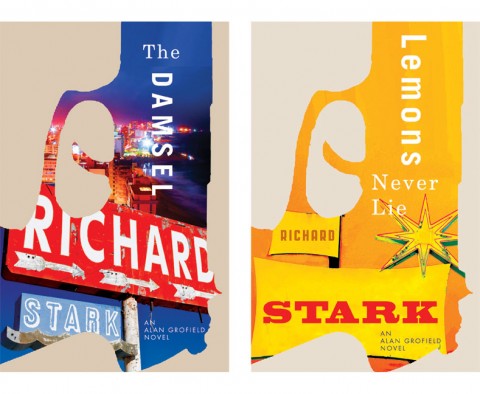
David Drummond designed the covers for the University of Chicago Press recent reissues of Richard Stark’s ‘Parker’ novels. Now David has designed great new covers for the reissues of Stark’s ‘Alan Grofield’ novels as well – The Dame, The Damsel, Blackbird and Lemons Never Lie.

I actually really like these earlier, slightly looser, alternatives as well:

David has written more about the design process on his blog, and you can read my interview with him here.

Comments closed

Q & A with David Drummond, Salamander Hill Design

“I haven’t changed my mind about modernism from the first day I ever did it…. It means integrity; it means honesty; it means the absence of sentimentality and the absence of nostalgia; it means simplicity; it means clarity. That’s what modernism means to me…” — Paul Rand

There is something of a Modernist tendency in the design of David Drummond. It is not in a strict adherence to the grid or Accidentz Grotesk (or anything quite so obvious), but rather in the thought and purpose underlying his work. There is always a clarity and assurance to the concept and composition. There is never erroneous detail or ornament. Form most definitely follows function. To describe David’s work this way, however, is something of an injustice. His designs are far wittier (and much less pedantic) than one thinks Modernism ought to be.  But then again, whoever said Modernism couldn’t be funny or irreverent? Not Paul Rand.

Perhaps it is simply better to say that David’s designs are the epitome of good ideas well executed. Their apparent effortlessness make it easy to underestimate his work. It is only when one tries to imagine how the cover could have looked otherwise that you truly realise his originality and what he has rejected or removed to get to his apparently simple designs. It should not be a surprise that Paul Rand is inspiration. After all, it was Rand who said:

“Simplicity is not the goal. It is the by-product of a good idea and modest expectations.”

Somehow that seems to get to the core of David’s work.

I am absolutely thrilled to post this interview. David’s work has received awards from AIGA, Communication Arts Magazine and Print Magazine and he is one of the finest book cover designers working today.

We corresponded by email.

How did you get into book design?
I was working in Montreal for an ad agency when I got a call from McGill-Queen’s University Press.  On the recommendation of my sister, whose book they were publishing, they were interested in looking at my portfolio. That was the catalyst to start breaking out on my own.

When did you open your own studio?
I opened Salamander Hill Design in 2001

Approximately how many publishers do you work with?
I just checked the folder on my computer titled “Presses” and there are about 40 in there. Some are very active and some not at all. It kind of goes up down. Some of them are self published authors as well. There are maybe about 10 that I have longstanding relationships with that feed me with work pretty regularly.

How many covers do you work a season?
Hard to say really. I have so many that are all at varying stages of production. Right now, if I count the books on my list, there are about 30. What I have come to realize is that it is really important for me to always have a lot of work on the go. It helps to keep me in the zone where I can do my best work. I really do think the creative faculty is like a muscle that you have to keep flexing.

You were previously an art director for a marketing and communications company. Has this informed your book cover design?
This is going to sound funny but I wouldn’t really describe myself as a book cover designer. My approach to cover design is pretty much the same that I apply to any area of visual communication. I see the project as solving a visual problem, whether it is a book cover, illustration, logo or package design. Even though I have always entered work in book cover design competitions through the years, it has also been equally important for me to enter competitions like Communication Arts Design Annual to have the work judged in the larger context of graphic design as a whole.

Do you still do corporate identity work and packaging design?
Lately I have been getting back into identity work more and more. I guess I must have been missing it. Last year I decided to branch out and do some illustration work for magazines and that has been really exciting. The tight deadlines and fast turn-arounds force you to make decisions faster. I really hope to develop that more this year. Just last week someone e-mailed me about doing a poster for film festival in Italy. It always amazes me when a job like that lands in your in-box out of the blue.

Could you describe your book cover design process?
In a nutshell: present the cover brief to yourself as a problem that has to be solved. Then I try and bombard my brain with images from all kinds of sources to see if I can trigger something. For me it is about finding the visual hook. If that doesn’t work right away I tend to put it aside and take my dog Beau for a walk. I am sure all the local farmers that pass me on the road in their pick-up trucks must wonder about me and my dog walking far from home in all kinds of weather but I would honestly say it is an important part of my creative process.

I tend to like showing one concept whenever possible. I would say this is true for all of my design work. It shows the client that you have taken a stand and believe in the solution. That doesn’t mean you haven’t produced many different concepts along the way. I am sort of brutally self critical and if something isn’t working or if I am forcing it too much I put it aside and start again. I work with a lot of different clients with different protocols and some of them require that multiple concepts be presented up front. When that is the case I still try and make a strong case for the one I believe in.

I think the key to doing your best work is having a great client relationship. My brother is a poet and he compares publishing a book of poems to launching a pebble off the Grand Canyon and waiting for the sound of it hitting the bottom to come back to you. That is a bit the way I feel when I start working for a new client when you aren’t familiar with their approval process. Sometimes you launch your design out there and then — silence. I have a relationship with most of my clients where I know they want to be surprised by a solution. It does set the bar high each time but I need that challenge.

My wife works as a horse groom for a big show barn and gets up at 5:00 in the morning to get ready for work. Consequently I start my day around the same time. It’s funny — I live in farm country and basically keep farmer’s hours. The lights are also on in the neighbouring barns when I start my day. I focus on idea generation in those early hours and leave the more mundane production stuff to later in the day when my energy is flagging.  The Tron, Inception, Dark Knight soundtracks come in handy at that point to keep me going.

What are your favourite books to work on?
Hard to say really. For the nonfiction stuff I love working on covers that have a great title that presents the subject in a new way. That really tends to help get the ball rolling.

What are the most challenging?
Books on the economy/Wall Street, Canadian Federalism, the Supreme Court, Native Peoples. I say this because I have done so many of them and each time you have to find a new way of presenting it. So far I have always managed to find a new take on it. I keep going back to the well and so far it hasn’t gone dry.

Do you see any current trends in book design?
Not a big fan of trends. Whenever I have been asked to judge design work for competitions the work that always grabs you are the ones that present a strong concept with a clean and simple execution. I think that is the key to producing work that is timeless.

Where do you look for inspiration, and who are some of your design heroes?
I look for inspiration pretty much everywhere. Paul Rand is a big design hero of mine because he kept on creating right to the end. I pretty much knew early on in my career that, because I’m such an oddball, the path of becoming creative director in a big agency was not really an option — not much of a schmoozer.

For me it has always been about the work.

Who else do you think is doing interesting work right now?
So many designers really. I would probably choose designers outside of the book design world like Montreal design firm Paprika — their work never ceases to surprise me.

What does the future hold for book cover design?
I truly feel privileged to get up in the morning and find a new design brief for a cover design in my in-box. Doing this type of work is a perfect fit for me and I hope to continue doing it for as long as it lasts.

And lastly… You (somewhat famously) live in a rural municipality in Quebec with a population of less than 500 people. What can you see from your studio window?
I live in a big rambling farmhouse built in 1825 on about 140 acres of land in Elgin, Quebec. The back fence line is the American border. Our farm sits at the base of the Adirondacks just where the Chateauguay Valley begins. My office is on the second floor with a view out the back. The view is always changing. Depending on the time of the year there are sheep, cows, horses, wild turkeys, deer, and an assortment of barn cats outside my window.

Wonderful! Thanks David.

David’s work can be seen at his blog and at the website for Salamander Hill Design.
1 Comment

Midweek Miscellany

The Man With the Getaway Face — Cartoonist Darwyn Cooke talks The LA Times’ Hero Complex blog about his latest Richard Stark (AKA Donald Westlake) adaptation, The Outfit, released this month:

With the first book, I was really trying to get Don Westlake’s worldview across to people. The story had already been told several times in films… and what-have-you, but it had never been told down the line, so it was really important for me to do that. With “The Outfit,”  I was able to sort of step back and say, ‘OK, the plan is we’re doing four books here; are there ways I can make this one stronger in terms of how it relates to the three other books?’ We don’t have, say, 20 books to get our readers acquainted with this entire world, so are there things that I can do here to help in that regard? So I changed a few things. And to be honest, I fixed a couple  of tiny problems with the story that I think Donald would have giggled about if I had brought them up. ‘Oh, geez, good point…

And on the subject of Richard Stark, David Drummond recently posted the final 3 covers (there are 18 in total) for the University of Chicago Press’ Parker reissues  (mentioned previously here):

Where the Wind Blows — Stephen Page, CEO of Faber & Faber, outlines the challenges facing existing book publishers at The Guardian:

Publishers perform roles that writers need. The question now is whether writers will continue to turn to existing publishers to perform these tasks, and whether they believe they offer value. Some authors will bypass publishers (some always have) but among most authors and agents I deal with, there is no appetite to do so, because publishers continue to perform essential roles for writers in both the physical and digital worlds (editorial, marketing, distribution, and so on). However, urgent questions are rising about how a successful 21st-century publisher ought to look and function, and whether existing publishers can adapt quickly enough…

A Hipster Never Teaches  a Square Anything — Over at Good, Lexicographer Mark Peters looks at the origins of the word “hipster” and why, these days, nobody admits to being one:

“Hipster” first popped up in 1940, and The Historical Dictionary of American Slang’s first use includes the statement that “A hipster never teaches a square anything.” The OED’s early examples include semi-definitions such as “know-it-all” (1941) and “man who’s in the know, grasps everything, is alert” (1946). Those descriptions sound groovy, but in the HDAS’s definition of “hipster,” we can find the seed that grew into today’s widespread hipster-phobia: “A person who is or attempts to be hip, esp. a fan of swing or bebop music.” It’s that attempting—especially in clumsy, transparent ways—that make the hipster horrible.

And finally…

What Batman Taught Me About Being a Good Dad — The headline tells you just about all you need to know about Adam Rogers post for The Atlantic (what dad doesn’t secretly believes that Batman is full of very important life lessons?), but hey…

I am trying to build a good human being here, someone who will make the world better for his presence. Because I don’t know any other way to do it, that means I’m building a little geek… I want him to think that these stories have weight, that they mean something; they are our myths. I give my son comics and cartoons and episodes of Thunderbirds because I want him to understand right and wrong, and why it’s important to fight the dark side of the Force. The mantras spoken in this corner of pop culture are immature, but they have power: With great power comes great responsibility. Truth, justice, and the American Way. The weed of crime bears bitter fruit. No evil shall escape my sight.

secretly
Comments closed

Something for the Weekend

David Drummond’s Parker Series for University of Chicago Press.

“a little bit Warhol, a little bit Factory Records” —  Christian Schwartz explains why he started type foundry Commercial Type at I Love Typography:

It’s much easier to be an “armchair quarterback,” second-guessing everyone else’s seemingly questionable decisions regarding everything… than it is to deal with the actual reality of budgets, technology, and timelines. Theorizing about how and why things work is all well and good, but putting our ideas into practice is of course the real test…

Typography and JudaicaSteven Heller interviews book designer and typographer Scott-Martin Kosofsky. Fascinating stuff:

It’s the best of times and the worst of times, but I have a feeling that people have always said that… In regard to print, I think we’re at a great moment, with access to mature technology and aesthetics… There’s no excuse for anything looking less than great. But books (and print in general) have lost their pride of place. Book publishers, a group nearly always behind the curve, have failed to grasp that their online counterparts spend a lot of time and money concentrating on User Experience, while they remain unfamiliar with the concept. It wasn’t always that way, but when the professionalism and discipline that was demanded by metal type fell away, things got worse and worse, especially typographically.

Punk — An interview with Jaime Hernandez about Love and Rockets and the recently published The Art of Jaime Hernandez at NYC Graphic:

“That’s how Love and Rockets started: we were just cocky and didn’t know we could fail. We went ahead and published the first one ourselves and didn’t care what the outcome would be, we just wanted to be printed. Hopefully we could sell it and make money, but there was no one to tell us not to. That was the punk part of it. The more we got good response, the more we kept doing it.”

And finally…

The Pollak Coffee Table Book seen at UnderConsideration’s FPO. Breathtakingly beautiful.

Comments closed

Something for the Weekend

Circulation and the City design by David Drummond

New from David Drummond

The Original Spirit — Toronto indie institution This Ain’t The Rosedale Library (one of the 10 best bookshops in the world according to The Guardian) featured at Books@Torontoist, with some nice quotes from owner Charlie Huisken:

“creative knowledge [is] accumulative and comes from many sources… Being an autodidact has served me well”

Books in the Age of the iPad — Craig Mod’s article on printed books and digital publishing caused much of a flutter on Twitter yesterday. I’m not sure that I entirely agree with his thesis — which seems to imply that some kinds of content can be completely divorced from their media — but his website is beautifully designed, and more importantly he makes some interesting points. I especially like his conclusion:

I propose the following to be considered whenever we think of printing a book:

  • The Books We Make embrace their physicality — working in concert with the content to illuminate the narrative.
  • The Books We Make are confident in form and usage of material.
  • The Books We Make exploit the advantages of print.
  • The Books We Make are built to last

In that vein, more on David Pearson‘s beautiful book cover designs for Cormac McCarthy at We Made This. I love that he used rubber stamps…

And finally… Jaron Lanier, author of You Are Not A Gadget, talks about the failure of Web2.0 with Aleks Krotoski of The Guardian:

3 Comments

Midweek Miscellany

Catcher in the Rye — Illustration and hand-lettering by Toronto-based Darren Booth (self-directed project). Darren has done a rather fine Lord of the Flies cover as well.

The Catastrophist — Chris Hitchens on J.G. Ballard in The Atlantic:

For most of his life, our great specialist in catastrophe made his home in the almost laughably tranquil London suburb of Shepperton, the sheltered home of the British movie studios. He obviously relished the idea of waking one day to find himself the only human being on the planet, to explore a deserted London and cross a traffic-free Thames, to pillage gas stations and supermarkets and then to drive contentedly home.

Read the Printed Word!

I Pledge to Read The Printed Word — Buttons from readtheprintedword.org

“A Day Pass to Fucking Narnia” —  Paul Carr’s ‘Anticipating the Apple Tablet: When Journalism becomes Fan Fiction’ at TechCrunch:

I get that an Apple tablet is big news. I agree with those who say that Apple’s product launches deserve more attention than those from other companies as their products tend to be ‘game-changers’… But until the official launch announcement comes, I would rather not hear another word about Apple and their tablet. Not because it isn’t news – but because so many of the journalists anticipating the launch have dropped any sense of responsibility to their readers and replaced it with cloying fanboyism.

(Please note the funny, if slightly schoolboy, URL of the post)

And finally…

A rather fine new cover by David Drummond.

5 Comments

Midweek Miscellany, August 5th, 2009

Foucault — A nice new cover design from David Drummond (approval pending).

(And apparently I like photos of the backs of people’s heads)

Kill Your DarlingsPrint asks book designers Carol Devine Carson, John Gall, Paul Buckley, Rodrigo Corral, John Gray, Gabriele Wilson, Paul Sahre, and Peter Mendelsund about the covers that didn’t quite make it:

every book jacket designer has at least one that got away—a fresh, inventive cover that was shot down en route to the bookstore shelf. These “lost” covers form a parallel universe in which the books we read and love exist in entirely different skins.

Re-typing History — The Financial Times reports on typographer Mike Parker’s challenge to the accepted history of the ubiquitous Times New Roman:

The… evidence for his version of history is a brass pattern plate bearing a large capital letter B. He holds the plate up to show the familiar form of the letter, its characteristic curves and serifs. The point, he says, is that such pattern plates represent a technology that was not used after 1915. The creation of Times New Roman was announced in 1932.

Bite-Size Edits — Baking books with the Book Oven chefs.

Forgotten Bookmarks — the “personal, funny, heartbreaking and weird things” found in books at a rare and used bookstore.

The Book Depository launches in the US. There are details at The Book Depository blog.

And finally…

Trial and Error — Author Matthew Pearl discusses the evolution of the cover for his novel The Dante Club. It’s nice to read about an author not having a hideous experience with a publisher for a change, and I actually think that the cover design for The Dante Club, while not flashy, gives a lot of great visual cues to readers about the nature of the book (which is really what it is about isn’t it?).

1 Comment

Something for the Weekend

Das Boot — David Drummond’s cover for Canadian Water Politics Edited by Mark Sproule-Jones, Carolyn Johns, and B. Timothy Heinmiller has been selected for the AIGA 50 Books/50 Covers this year. The book is published by McGill-Queens University Press who clearly take pride in the look of their books and have some other rather nice cover designs on their site.

The Long Goodbye — Another long, hard — and somewhat cynical look — at the state of the book industry. This time it’s the turn of Elisabeth Sifton, senior vice president of Farrar, Straus & Giroux, in The Nation.

W. W. Norton Book Design Archive — Publisher W. W. Norton have started posting their book cover designs to designated Flickr set (Crime by Irvine Welsh, designed by Darren Haggar pictured above) . I’d love to see more publishers do this (via The Book Cover Archive Blog).

Bird Brained or Brilliant — The contentious issue live-tweeting conferences. I only mention this because it tallies with my own recent experience of live-tweeting Raincoast’s Fall 09 Sales Conference. And because I’m a nerd (via Kate Trgovac on Twitter).

Gigantic Robot — the awesome Tom Gauld is publishing a new 32-page comic called The Gigantic Robot this summer. According to the Creative Review blog it’s “a fable concerning the production of a secret weapon whose promise apparently goes unfulfilled”. Can’t wait.

And finally (on a completely un-book related note)…

Redux — Muxtape is dead! Long live Muxtape! Whereas the late, lamented Muxtape was a place to upload mp3 ‘mixtapes’ (that fell foul of the music industry lawyers), Justin Ouellette’s new site is a platform for bands to share their music. Nice (via ISO50).

Comments closed