Skip to content

Tag: Books

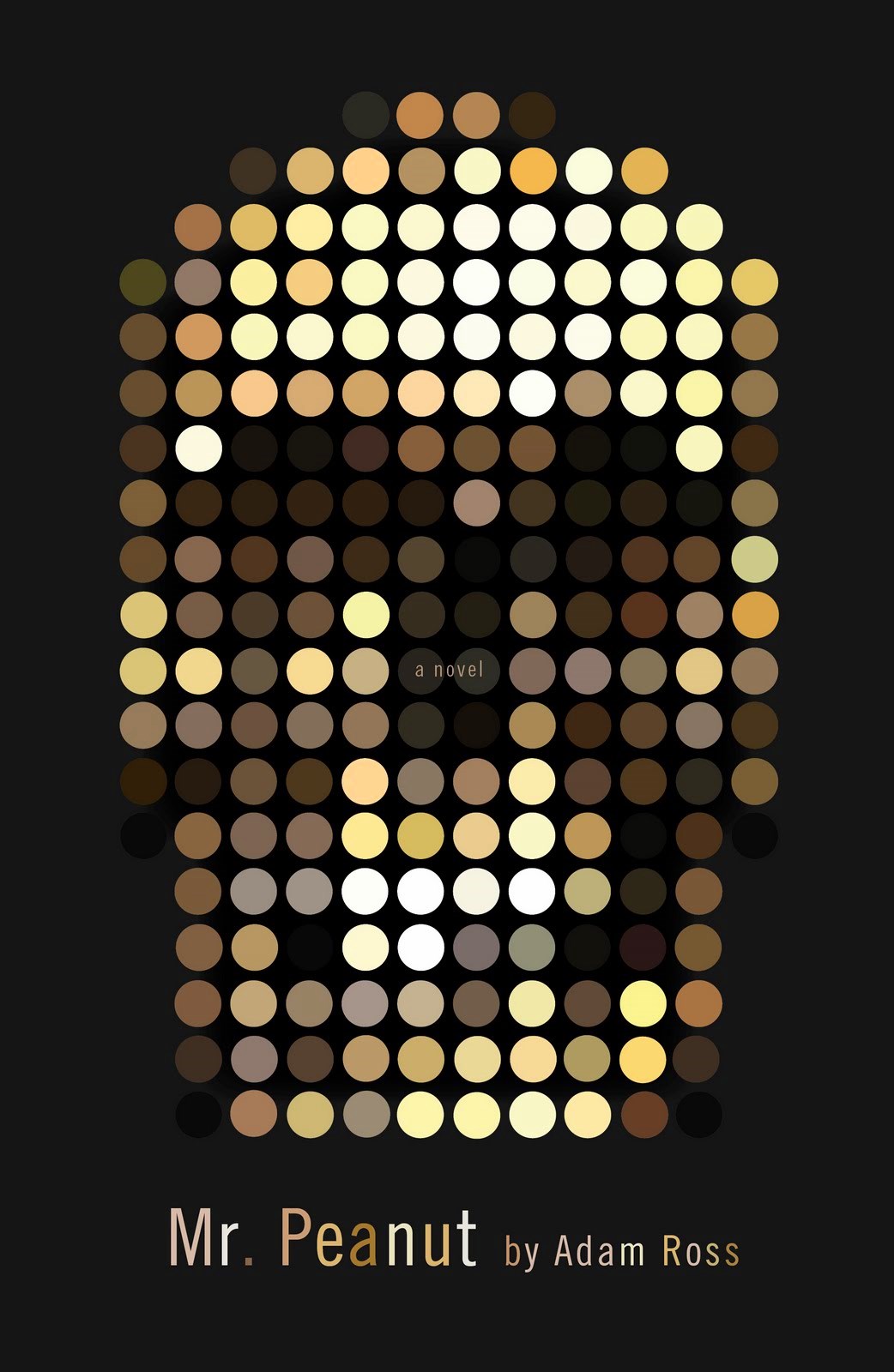
Mr. Peanut

From Mr. Mendelsund. Brilliant.

Comments closed

Missed Things: Thursday

Covers for The Invincible Iron Man No. 20 and 21 by Salvador Larroca and Frank D’Armata, with design by Rian Hughes (seen at the website of the author Matt Fraction). Is it just me, or do these have a whiff of Marber’s Penguin Crime series about them? Or is it more like Olly Moss?

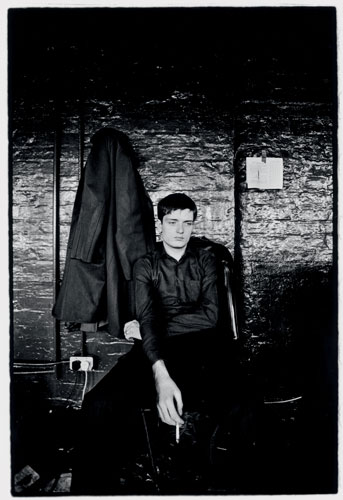
Grey Overcoat Music —  3:AM Magazine‘s Lee Rourke talks to photographer Kevin Cummins about his new book Manchester: Looking for the Light through the Pouring Rain (published by Faber & Faber), which documents 30 years of the Manchester’s music scene. 

The Guardian also has a slide show of  photographs by Cummins (above: Ian Curtis, 1979).

And if you’re interested in Factory Records and the Manchester music scene you might also be interested in The Haçienda: How Not to Run a Club by New Order bassist Peter Hook (published by Simon & Schuster) also reviewed in The Guardian.

The Lost Pleasure of Browsing — Charles Rosen for the New York Review Blog:

I realize that mail order shopping has been going on for a long time, but have always thought that this destroys one of the pleasures of civilized life. I do not understand how one can buy clothes without trying them on, and as for books, the individual book should seduce and inspire you to buy it.

Spelling “Theatre” the British Way — Andy Ross talks to New Yorker page OK’er Mary Norris about copy editing “America’s most prestigious literary magazine” at The Red Room:

The main thing here is to respect the writer. The writers don’t have to do everything we want them to—we make suggestions. The ideal would be to give an editor a proof and have all your suggestions meet with approval. Sometimes you notice that your suggestions have not been taken, so if something bothers you, you try again. Sometimes you wear them down, sometimes you cave.

I have been on both sides of the process, as a writer and as a query proofreader. Being edited sometimes felt like having my bones reset on a torture rack. I don’t ever want to do that to a writer, but I probably have from time to time.

And bless The New Yorker for using double consonants before suffixes — “traveled” is barbaric.

And finally…

Illusive: Contemporary Illustration Part 3 published by Gestalten looks rather fine.

http://blogs.nybooks.com/post/212201723/the-lost-pleasure-of-browsing
Comments closed

Missed Things: Wednesday

Henry Sene Yee, Creative Director of Picador, discusses the elegantly understated cover design for Time by Eva Hoffman, the latest addition to Picador’s BIG IDEAS // small books series.

And I’ve mentioned this before but it bears repeating: Picador are putting their catalogues — and, therefore, their outstanding cover designs — on their Facebook page.

Logicomix by Apostolos Doxiadis and Christos H. Papadimitriou reviewed in The New York TimesThe Guardian, and FT. It sounds kind of awesome. The book also has a nice website with lots of content.

The Inevitable Frontier — Jennifer de Guzman, editor-in-chief at the independent comics publisher SLG Publishing, on digital comics in PW:

Right now, sales from digital comics aren’t going to mean we can pack up print publishing. Not even close. But despite being in the midst of it rather than a wide-eyed observer, I can see that in the near future digital comics are going to be playing a bigger role for all publishers than they do now. And it’s better to be so integrated in the change that you don’t notice that it’s happening than to find yourself left behind and marveling at “the things they can do now.”

“Issues” — A less than warm reception for the Kindle in Australia:

Jeremy Fisher, executive director of the Australian Society of Authors, said he was advising his 3000 members to resist publishing through the Kindle.

“As I understand at this point in time, Amazon asks for a very, very big discount from publishers for their works to be included in Kindle so that the return coming back to the publisher is smaller and the return coming back to the author is smaller,” he said.

“The person making the most money is Amazon.”

Hmm… Yes, well, moving swiftly on…

Jacket Whys — A really nice blog about children’s and YA book covers.

And on the subject of kids books…

Who The Wild Things Are –Artist Roger White looks at the inspiration Maurice Sendak’s Wild Things for the Boston Globe:

The Wild Things looked like nothing ever seen in a children’s book. Rendered in simple ink-hatch over watercolor sketches, they evoked a perfect mixture of proto-adult dread and anarchic, childlike glee – an eternal, platonic form of the kindly monster. From the moment they appeared in 1964, they seemed bracingly and completely original. But in fact Sendak’s monsters had a long series of ancestors and descendants…

But according to Bruce Handy, deputy editor at Vanity Fair, (and his children) kids don’t actually like Where the Wild Things Are… Umm… What?

Comments closed

Missed Things: Tuesday

Thesis Project — Mikey Burton’s illustrative reinterpretations of classic book covers for junior-high-school students. Mikey’s more recent work, including gig posters for Wilco, is also awesome.

The Writer’s Reader — Michael Silverblatt, the endlessly enthusiastic host of KCRW radioshow Bookworm, profiled in O, The Oprah Magazine (via TEV).

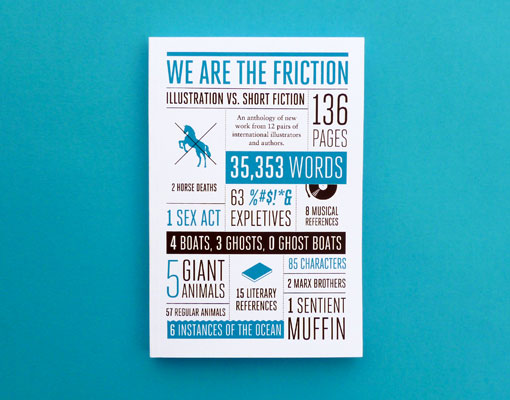
We Are The Friction seen at The BCA, Design Work LifeSwissMiss and others. Sing Statistics, the “collaborative concern” of designer Jez Burrows and illustrator Lizzy Stewart, and publisher of We Are The Friction, also has a great Flickr photostream (and there are images of the book launch at Edinburgh’s Analogue Books on the shop’s Flickr photostream).

It Isn’t Rocket Science — Makenna Goodman, formerly an assistant to an unpleasant sounding literary agent in New York, talks about her move to rural Vermont and happier times with publisher Chelsea Green in the Huffington Post.

Intelligent Eclecticism — Steven Heller on the groundbreaking illustrated covers used for Time‘s “soft-cover book club” throughout the 1960’s:

Eclecticism was a viable and intelligent decision. While consistent design for a series of related books makes good strategic sense, these books were bound together by the editors’ judgment. Designing them as separate entities — avoiding the impression of formulaic repetition — made the most sense for the book club but also for the artists and designers who created them. Each cover (indeed each book) had a unique integrity that raised the standard of the genre while showcasing the creators’ artistic strengths.

And finally…

On the subject of vintage book design and great illustrations, be sure to take a look at Martin Klasch blogger P-E Fronning’s set of Swedish book covers on Flickr.

Comments closed

Missed Things: Monday

I was talking about Romek Marber right before I left the building, so it seems appropriate to get things started with him too…

In an extract from a new book called Penguin by Illustrators, the Creative Review reprints the full text of the presentation made by Marber to the Penguin Collectors Society in 2007:

Much has been made of the grid; it has even been labelled ‘the Marber grid’. I believe that the pictures for the initial twenty covers, played an important part in forging the identity of the Crime series. The grid was important as the rational element of control. The consistency of the pictures contributed, as much as the grid, to the unity of the covers, and the dark shadowy photography gave the covers a feel of crime.

And on a related note, idsgn profiles Gill Sans, the ‘Helvetica of England’ which was used by Edward Young on the early Penguin paperbacks (Marber switched to Akzidenz Grotesk if memory serves…).

Coaxing — Ron Charles, Deputy Editor of the Washington Post’s Book World, interviewed in Bookslut:

The number of books keeps rising, as far as I can tell. The number of readers is stable or stagnant or even declining. When you look at the amount of space we spend covering television… I’m not criticizing my own paper, I’m criticizing my own industry. Who needs help watching TV? Reviews of television shows, I shake my head; I can figure out if I want to watch The Office or Curb Your Enthusiasm all by myself. But help me find a good novel, in this enormous stack of books at the book store. That’s a real service.

You can also follow (the surprisingly candid) Ron Charles on Twitter.

Meanwhile, Publishing Trends looks at Book Reviews, Revamped.

Correspondence — Eric Hanson, author of A Book of Ages, commemorates the 60th anniversary of the letter that inspired the lovely 84, Charing Cross Road (via The Second Pass).

If any of you haven’t read 84 Charing Cross Road, please go do so now…

The Billy bookcase turns 30 — Lucy Mangan celebrates in The Guardian.

And lastly…

I’ve linked here before on several occasions, but I just wanted to mention the all around awesomeness that is A Journey Round My Skull. Recent posts include BLICKFANG — The Eye-Catching Covers of Weimar Berlin and Thirty More Book Covers From Poland.

1 Comment

Reasons to be Cheerful


They’re here and I’m back — officially one year older, and a father of two. Mum and the twins, born a week before my birthday, are doing well.

The new Raincoast website is close to being on schedule (thanks to Monique at Boxcar, Al, Tony, Jamie and Siobhan at Raincoast HQ) and daily coffee consumption — while still exceptionally high — is back to a more sustainable level. I still have that grid for Amazon to do though…

But back to the Optimist business: I missed a lot of great stuff while I was away, so expect posts every day this week (starting Monday) as I try to catch up. The interviews with book designers will hopefully return in November.

Thanks to Mark for the pep talk a couple of weeks ago, and thanks to the people who emailed and left comments while I was away.

It’s nice to be back.

11 Comments

Something for the Weekend, September 25th, 2009

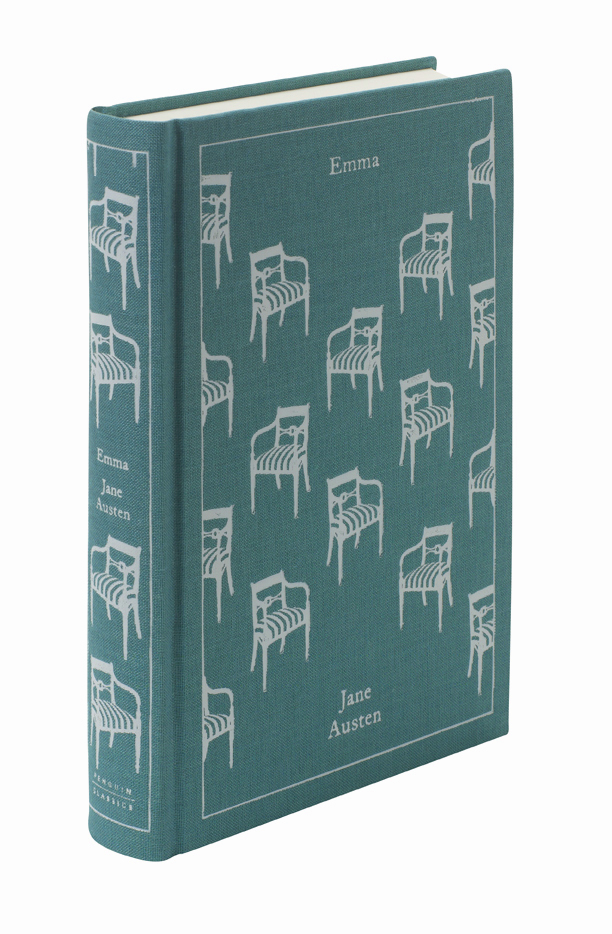
Great Ideas — Art director and designer David Pearson discusses his publishing venture White’s Books with Peter Terzian in Print Magazine (above: cover for Emma, published by White’s Books; illustrated by Amy Gibson):

Due to the arrival of eBooks, many prophesied the death of the printed word, but we see it as an opportunity to turn the spotlight back on the traditional methods of book production and to luxuriate in the craft and tactility of the physical book and the printed page. It’s lovely to be designing with longevity in mind as we aim to create objects that will be retained and cherished by their readers.

David Pearson also discusses his work for Éditions Zulma and Penguin. I’m hoping to post a Q & A with David on The Casual Optimist later this fall.

Questions Should Be Answered — Dutch type designer Jos Buivenga, whose quality free typefaces (including personal favourite Fontin Sans) are available from his one-man font foundry exljbris, interviewed in the MyFonts newsletter. Jos’ new typeface Calluna (shown above) looks rather lovely.

The Future of Publishing? — Patrick at the Vroman’s Bookstore blog looks at what publishers do and how they might do it (or something different) in the future. While there is nothing especially new here, it’s an interesting post in part because it’s written from the perspective of a bookstore. The comments are worth reading too, if only for Ann Kingman‘s contributions and hilarity of a certain self-styled “agent of change” having the audacity to accuse someone else of oversimplifying (pot introducing kettle). All of which is a good, solid reminder that I have a related post in my drafts folder than needs dusting off… *Sigh*

And on a related note…

Reimagining the Book — Mark of index//mb is looking for people to help organise a conference on authorship in Toronto.

And just FYI: There is a good chance that this will be the last post for a couple of weeks. Work stuff + Life Stuff + Internet Fatigue means that I need a break from even the gentle rigours of irregularly posting here. Hopefully normal service will resume in October (for what it’s worth…).

Out.

2 Comments

Midweek Miscellany, September 23rd 2009

It’s funny how topics of conversation sometimes repeat themselves for no apparent reason. This week Romek Marber and his designs for Penguin have come up with sufficient frequency for me to take it as a sign I should post some links about about him:

Eye Magazine has a great article about his classic design of Penguin Crime Series:

Marber’s grid allows for different placements of title and author’s name depending on the length of the title and the needs of the design as a whole. There are small inconsistencies in some of the vertical measurements on a few of the books, probably due to printer’s error, but the basic design is sufficiently robust that it does not matter… With the typographic structure in place, Marber could concentrate on producing images that reflected the atmosphere of the books, which he read with relish from cover to cover. He was a graphic image-maker of great versatility, able to sum up the stories with motifs and ciphers that contrived to be both playful and threatening. Many of these whodunnits were decades old, but his interpretations gave them a contemporary allure.

The Ministry of Type shows you how to construct the famous Marber grid.

Apt Studio have a Marber WordPress theme (demo). Are any literary blogs using this I wonder?

And there’s this great Flickr set of Romek Marber Crime Covers.

Please let me know if you have any other good Marber links…

In other news…

The Electro-Plasmic Hydrocephalic Genre-Fiction Generator 2000 by David Malki (via INDEX // mb).

The Awesomeness Manifesto — I’m a little skeptical about these kinds of manifestos simply because they’re not terribly useful, but Umair Haque’s list is as interesting for its criticism about the chimera that is ‘innovation’ as for what is says about the warm and fuzzy  ‘awesomeness’.

1 Comment

Designer Q & A’s Round One

Monday’s interview with Paul Buckley wrapped up the first round of my Q & A’s with book designers. I’ve been overwhelmed by the generosity of the designers who have participated in the series and I’ve had some great correspondence from designers and non-designers alike who have read the posts. I owe a lot of people a lot of thanks. Thank you. But now the fall book season is well and truly under way now and there’s going to be a (hopefully) short hiatus before the second round of Q & A’s start.

As with round one, I’m hoping to talk to designers who are in different stages of their careers and whose work is interesting and distinctive. I’m very excited about the designers who have already agreed to answer my questions, and I have some ideas about other designers who I’d love to be involved.

Suffice to say it should be good (fingers crossed) — it’s just going to take a little time — so I hope you can be patient while I try and set things up (and juggle life and the day job).

In the meantime, here’s a recap of the great designers I spoke to this summer:

Nate Salciccioli, designer, The DesignWorks Group

Ingsu Liu, VP Art Director, W.W. Norton and Co.

Ingrid Paulson, designer,  Ingrid Paulson Design

Michel Vrana, designer, Black Eye Design

Alex Camlin, Creative Director, Da Capo Press

Coralie Bickford Smith, Senior Designer, Penguin Press

Paul Buckley, VP Executive Creative Director,  Penguin US

And these two older interviews might also be of interest if you missed them:

Ben Pieratt and Eric Jacobsen, dudes, The Book Cover Archive

Ellen Lupton, designer, writer, editor, educator, Design Writing Research

Thanks.

3 Comments

Q & A with Paul Buckley, Penguin US

Photo by Erika Larsen. Design by Paul Buckley

It is not every day that I get an email from the Vice President Executive Creative Director of Penguin US, so it was something of a surprise when Paul Buckley sent me a note a few weeks ago about a book cover design mentioned in my interview with his wife Ingsu Liu.

I had been conspicuously unable to locate the image online and Paul was able to help. But it seemed like too good an opportunity to miss, so I asked the Brooklyn-based designer if he would be willing to do a Q & A about his work as well. Again, much to my surprise, not only did Paul say yes, he managed get his answers back to me in record time (with annotations and links included!)…

Of Mice and Men

How did you come to book design?

I went to SVA on an illustration scholarship, and was very intent on becoming an illustrator. While other parents were giving their kids children’s books, my father was giving me illustration annuals. But I supported myself during my college years working for various NYC design studios as a designer, learning through those around me… and at the same time pursuing freelance illustration assignments as well – basically learning both crafts simultaneously through different venues. Right after graduation I took a 3 month road trip spending my savings, and thus came home to Greenpoint needing an income. A studio manager at one of the studios I worked in during my early college years suggested me to her sister who was working at NAL/Plume/Dutton, as they needed a Junior Designer… I landed the position with a portfolio that was equal parts design and illustration. Though in the beginning I was very hardcore about becoming the best painter I could be, I quickly fell in love with designing book covers and never looked back… within two years we merged with Penguin. Though I’ve become far too busy (and lazy!) to pull out the oils and actually paint something, I did manage to get a few simple ink drawings in the Society of Illustrators this year. I realize these will pale in comparison to 99% of everything else done by the true working pros in the annual, but it was still a kick and an honor to have my work chosen for inclusion.
The World According to Garp

Can you describe your role at Penguin?

I act as a Creative Director overseeing a sizeable staff and many many projects. My Penguin publishing team is very open to me and my guys pitching ideas and we nicely act as an overall creative team, in a way that editorial and art together collaborate to create nice projects — most recently I’m directing a cover design book where we have the authors commenting on their covers, and a new series named Penguin Ink, where the world’s leading tattoo artist’s do covers for me. Recently in the stores is the gorgeous collaboration of Roseanne Serra with Ruben Toledo… this was all Roseanne’s brilliant art direction, and I had nothing to do with it — but it is gorgeous Penguin project that is very much worth checking out.
Art by Duke Riley
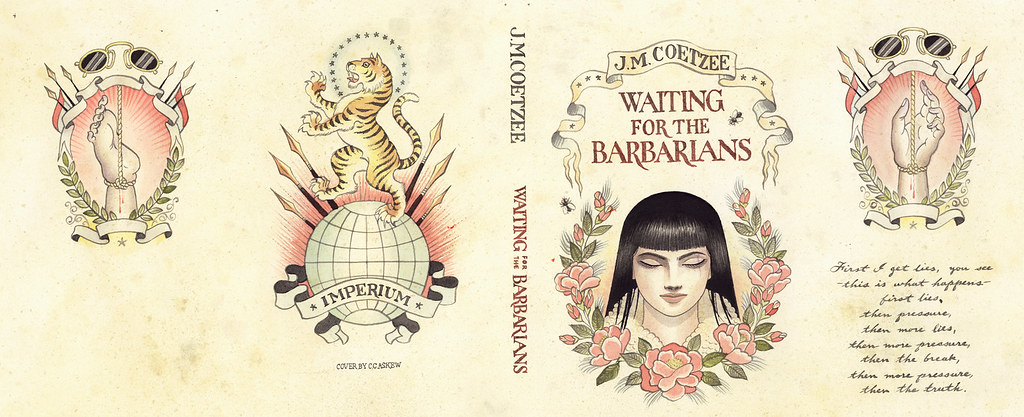
Waiting for the BarbariansArt by Chris Conn

How many imprints do you oversee?

Six

Does each imprint have a particular design style?

Yes, each imprint is very unique unto itself, as each Publisher/Editorial team brings their own style, as does each Art Director. In my group, Roseanne Serra and I collaborate on Penguin paperbacks, and to a lesser degree, with the Viking imprint as well. Roseanne art directs Pam Dorman books. Joe Perez smartly art directs Portfolio and Sentinel, which are brilliant business and political imprints. Darren Haggar art directs Penguin Press overseeing the packaging for literary giants like Thomas Pynchon and Zadie Smith… and while not it’s own imprint per se, Maggie Payette Art Directs our gorgeous poetry series.

The Jan Tschichold Penguin paperbacks are design icons in the UK. Is there a sense of that legacy within Penguin Group USA?

Very much so. We all have quite a few Tschichold books on our shelves. The UK Penguin art department, under the Art Direction of Jim Stoddart and John Hamilton, does an incredibly beautiful job of keeping that legacy alive.

How is American book cover design different from the UK?

I don’t know that it is all that different. In fact, Art Directors over here, and Art Directors over there, are hiring the same art and design talents on each side of the Atlantic.

Do you discern any current trends in American book cover design? Yes… very nicely a resurgence of designers and illustrators who do both the design and illustration; the whole package. Jaya Miceli, Chris Brand, Jon Gray, Gregg Kulick, Jamie Keenan, Rodrigo Corral, Ben Wiseman, Jennifer Wang, Tal Goretsky, etc – these are the folks creating the personally unique covers of today that will be the design icons of tomorrow.
Art by Chris Ware

How did the Penguin Graphic Classics come about?

We do a handful of what we call Penguin Graphic Classics Deluxe packages every list, and when it was time do one for Voltaire’s Candide, I handed it off to Helen Yentus who was in my group at the time. Helen wanted to work with Chris Ware on it, and off it went with us all happy that he accepted the assignment. When Chris’s sketch came in, it just sort of blew everyone away… Up to that point we’d never had anyone grab editorial control of a cover that way… Chris had gone hog wild and wrote all his own copy and illustrated and designed the living hell out of every square inch of this cover from flap to flap. It took forever to make its way around the packaging meeting table with everyone grabbing hold of it, reading it and laughing out loud. A short time later, our Penguin Publisher Kathryn Court declared that we needed to do more of these. Kathryn really nurtures good art and design and is one of the reasons I’ve been here so long.
Cover by Tomer Hanuka with design by Paul Buckley and Tomer Hanuka

Art by Anders Nilsen
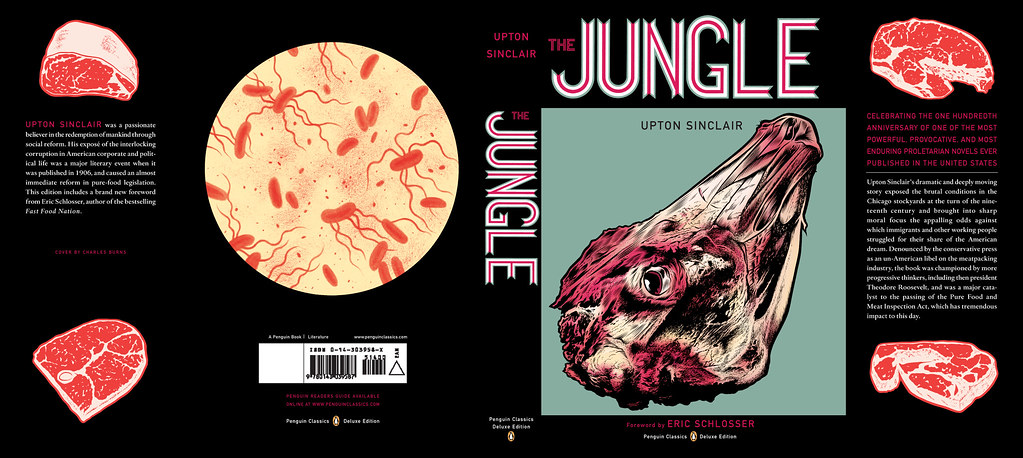
Art by Charles Burns
Art by Roz Chast

How did you match the artists with the titles?

The titles were given to us by the Penguin Classics editorial team, and Helen and I would sit in my office surrounded by comic books and simply have fun matching this artist with that title.
Art by Michael Cho. Design by Paul Buckley

Are their plans to expand the series? What new covers can we look forward to in the future?

We do about 6 a year and I think we are all comfortable with that number at the moment. I just finished White Noise with Michael ChoMoby Dick by Tony Millionaire just came out, as did Huck Finn by Lilli Carré, and Ethan Frome by Jeffrey Brown. In the near future, I’d really love to do something with Jim Rugg, Jeff Lemire, Mike Mignola, David Small, and I still hold out hope that one day Crumb will actually say to me “damnit you pesky bastard… ok, ok, I’ll do it”.
Art by Tony Millionaire


Art by Lilli Carre. Design by Paul Buckley

Do you still design yourself?

All the time… mostly in the evenings after everyone has gone home and I can focus without the constant distractions of the work day. My greatest hits are posted on my website.

 
Art by David Byrne. Design by Paul Buckley. 
Pigmented foil stamped on linen cloth
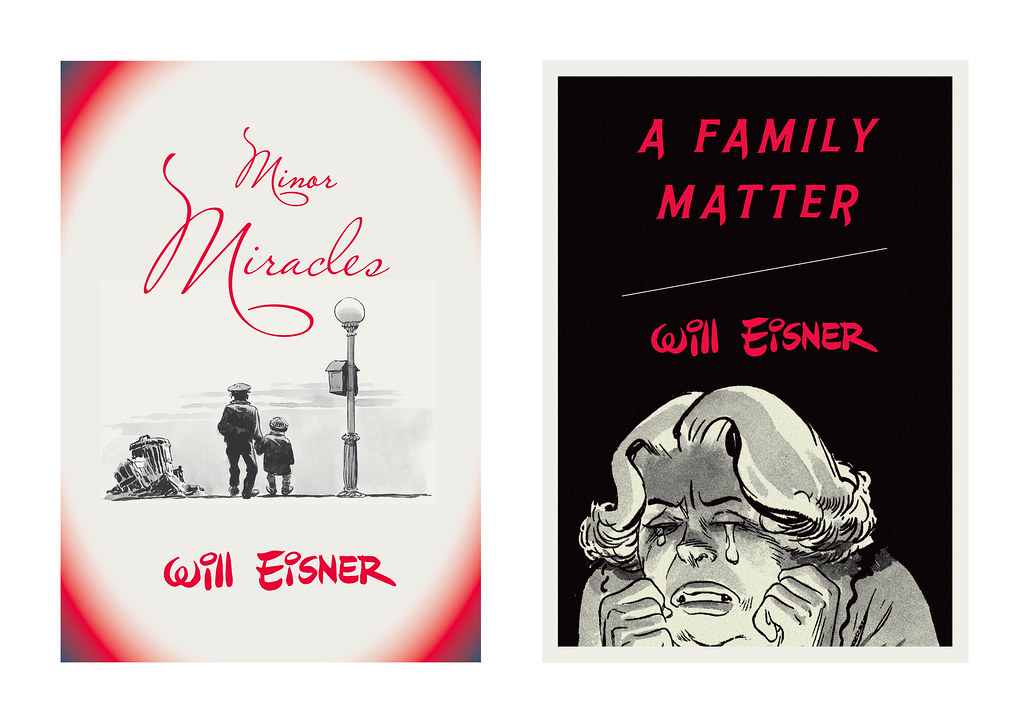
Art by Will Eisner. Design by Paul Buckley. 
Art direction by Ingsu Liu & Albert Tang
 Photo by Fredrik Broden. Design by Paul Buckley

Could you describe your design process?

I start each project with the hope that I’m going to do something unusual; and then I try my best to do just that — read the material and find a visually unique way to interpret it. I tend to go either very loud, or very subdued and moody. I do a ton of comps for every cover I work on — sometimes, 20 or more to explore what I’m thinking and all the tangents that come along during the process — I get nuts when freelancers send me two or three comps. I’ll show 3-5 of what I think are the best and receive comments and direction on those from editorial… when discussing why a designer did this or that, I think what people commenting on book covers seem to gloss over is that the publishers and editors have far more at stake than the cover designer — they have committed sums of money and must answer to the house and the author to make this book a success — so they are very strong about what they think the cover should be and nothing is being printed without their full consent.

Here are a few rejects from the pile… I’m not saying these covers are better for the individual book, than what got printed… maybe the books would have tanked with these covers… but they do illustrate how in-house visions do not always sync:
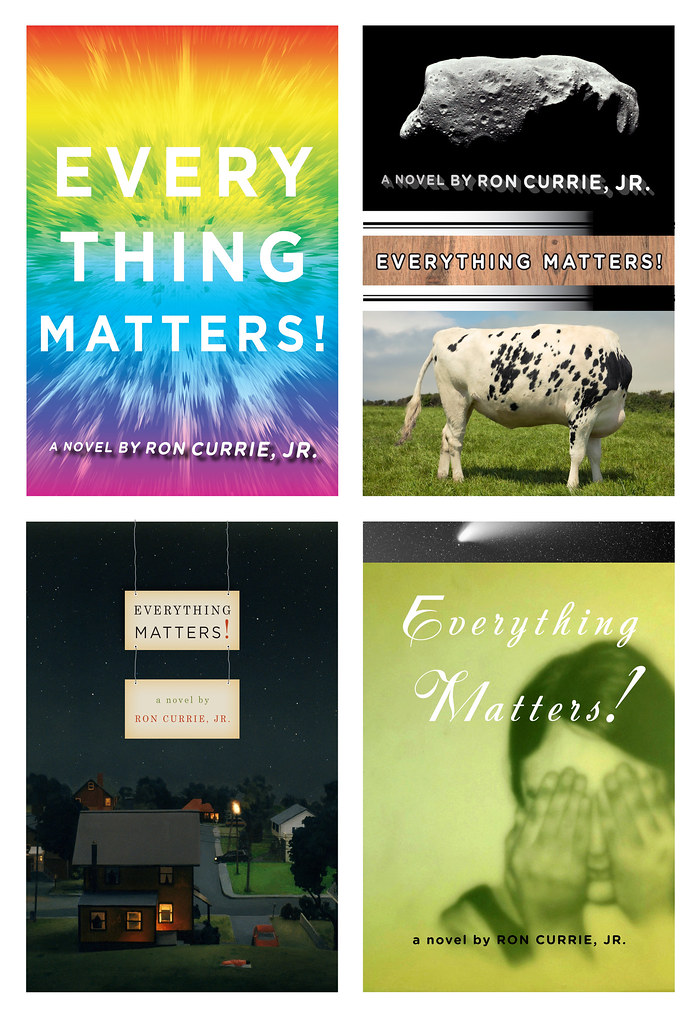
Upper left: art by Paul Buckley. Upper right: various stock.
Lower Left: art by Amy Bennett with descending placards by Paul Buckley.
Lower Right: painting by Keniche Hoshine with added stock image.
(see final cover here)
Various antique endpapers combined with altered ebay images
and antique portrait of feral child.
(see final cover here)

Do you approach fiction and non-fiction differently?

Often, yes. Fiction needs a more peripheral approach where I’m looking to capture a mood to reflect the book’s tone, whereas non-fiction often needs you to stare it directly face on and state precisely what the topic is.

What are your favourite books to work on?

Any title where the Editor and Publisher are open.

What are the most challenging?

Any title where the Editor and Publisher are nervous.

Where do you look for inspiration?

Everywhere. My staff blows me away daily. My wife shows me beautiful work constantly. Editors show me stuff. Blogs like yours so nicely showcase how much great work is out there. Friends deluge my inbox with artist links. Illustrators. Photographers. Fine Artists. Music. Furniture. All talent is inspiring. Cruising Flickr and the web in general has me bookmarking new people daily, and I can spend hours google imaging the most absurd things that always tangent me to the greatest places. I found and purchased an image for a difficult book cover project recently just because I decided to google “leucistic squirrel” after I noticed a few in Prospect Park. I have no idea how we all existed before the internet.

What do you look for in a designer’s portfolio?

A unique talent. Distinction.

Front cover art by Frank Miller. Design by Paul Buckley

What does the future hold for book cover design?

There will be a market that just wants/needs to download the material for reading purposes, and there will be a market that is looking for an object. What Penguin does with the Graphic Classics is a great example– some student will download Gravity’s Rainbow cheaply, while an older Thomas Pynchon or Frank Miller fan with a little more cash in their pocket will want the beautiful book/object. So I believe the cover design market will shrink in that way. Textbooks and travel guides will go digital first as there is no real reason to carry all that in your backpack or pay for all that book production. For digital readers, big budget fiction and non fiction titles will have moving covers, more like mini movie trailers. If Grisham were still with us, his future digital reader cover would be something akin to us looking at a murky black screen… the reader would hear running footsteps and ragged breathing… then a loud shot rings out, and a big red splotch hits your screen and drips to form the title type. Then one blurb after another flies across the screen and after a moment Grisham himself pops up in the corner thanking you for purchasing his new book and asking if you’d like to peruse his backlist titles… and click this link if you’d like to pay an extra dollar to help our troops in North Korea, Iran, Afghanistan or Iraq. Interior-wise, there will be tons of product placement… not necessarily for gratuitous reasons; but because people, places and things are mentioned on every page in every book be it fiction or non fiction; and if folks desire a more interactive read that really helps them get into the book in a different way, then it’s possible there will be quick jump links to everything – for instance… if in this book, the character is having lunch in Balthazar and then running off to the Standard Hotel for an ongoing affair… then why not have Balthazar and The Standard pay a small fee to the publisher to provide these links; this seemingly free advertising? Big money to had there. I reserve judgement as to whether any of this is a good thing or a bad thing… but as publishing goes more digital, I think it’s naive to think these things wont happen to books just as they happen everywhere else.

Thank you very much!

You bet.

9 Comments

Something for the Weekend, September 18th, 2009


Bring the Noise — Toronto illustrator Michael Cho (known locally for his much-loved signage for the now defunct Pages Books & Magazines on Queen Street) discusses his jacket art for the Penguin Graphic Classics edition of Don Delillo’s White Noise.

I ‘m very happy to hear that D+Q are publishing a ‘petit livre’, Backalley Drawings, by Michael next year.

And watch this space for an awesome Q & A with Paul Buckley, the art director of the Penguin Graphic Classics series (coming soon!)…

But Is It Type? — Design educator Ellen Lupton on the difference between lettering and typography for Print Magazine:

I subscribe to the rather rigid theory that typography is about readymade, reproducible families of letterforms. Vernacular hot-dog signs, handwritten wedding invitations, and space-age logos aren’t typography…

Perhaps my quibble is an old one: you just can’t view real typography online. Beautifully printed books and magazines are still the best resource for designers who want to know what’s happening in their field. Yet the design discourse is unfolding in real time on the web, and this is where students and young designers go to participate and be inspired.

And while were on the subject of typography, I thought — as a bungling amateur — that Brian Hoff’s post 10 Common Typography Mistakes was useful. Although I like to think I was surprising good at Cheese or Font (for what it’s worth).

Publish Local — An interesting list from The Task Newsletter (via REFERENCE LIBRARY). Would this work for book publishing?:

  1. Find what’s missing
  2. Work in the gaps
  3. Figure it out together
  4. Make it visible
  5. Make it viable
  6. Research and plan
  7. Expand existing systems
  8. Plan transparently
  9. Start small
  10. Commit to it
  11. Learn about your local flora
  12. Don’t get permission
  13. Print what you’ve got
  14. Make positive spaces.
  15. Find funding

And lastly, I just had to post this…

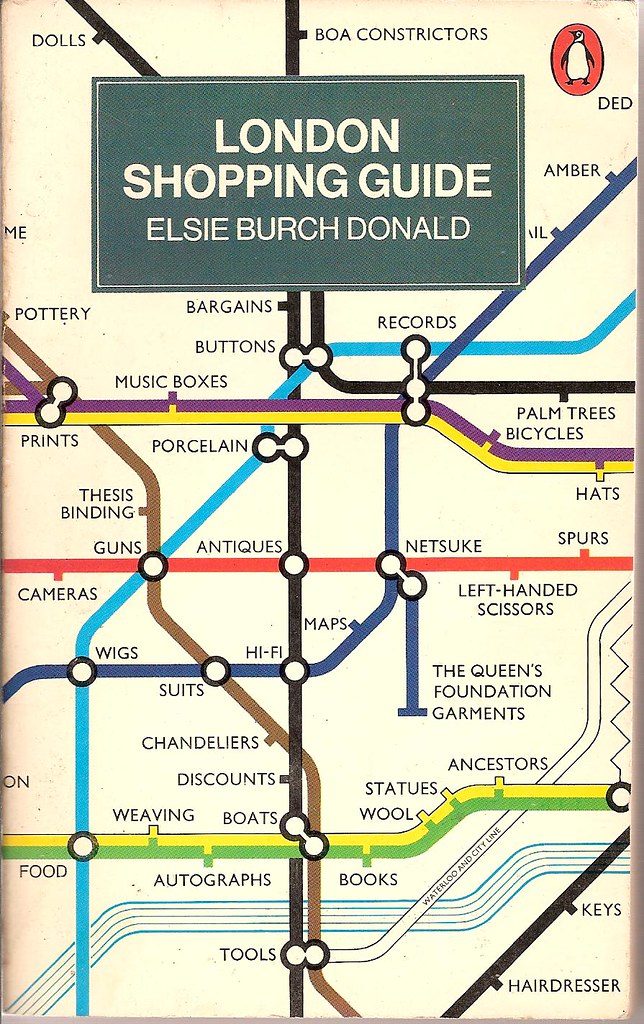
London Shopping Guide — Revised second edition from 1977, cover design by John Carrod, seen at Covers etc on Flickr.

Two design classics in one: Penguin paperbacks and Harry Beck’s tube map. What more could you ask for?

Comments closed

Q & A with Coralie Bickford-Smith, Penguin Press

Coralie Bickford-Smith was one of the first book designers I mentioned on The Casual Optimist and her distinctive cover designs have featured regularly ever since.

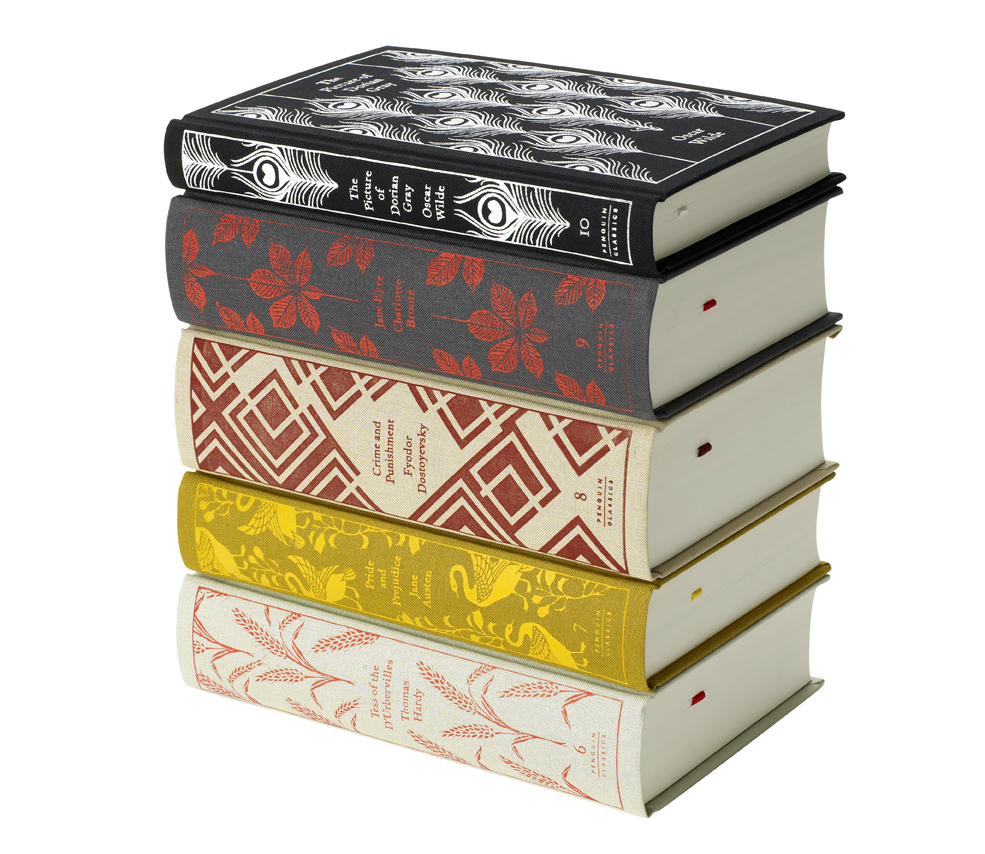
While Coralie’s work for Penguin clearly draws inspiration from the Arts & Crafts Movement and British inter-war illustration and design, it never seems trite or conventional. There is always an asymmetry, angle, pattern, or colour combination that gives it an unexpected twist that lifts it out of the ordinary. Her covers for Penguin’s ‘Gothic Reds’, for example, are amongst the most brilliantly stark, original, off-kilter and unsettling covers of recent memory.

It almost goes without saying that I am thrilled that Coralie agreed to an interview, and I’m using it as a shameless excuse to post a lot of images of her work.

When did you decide to become  a designer?

I don’t remember when I heard the term designer for what I wanted to do and it all became clear, but I spent my childhood collecting stamps, letraset, calligraphy nibs, books and making my own edition of the dictionary. All that made a lot of sense once I started studying design at university.

What is your role at Penguin,  and where did you work previously?

I’m a senior cover designer for Penguin Press, which publishes Penguin’s classic fiction list as well as non-fiction titles in science, philosophy, history, etc. Before I started at Penguin I worked in various jobs designing whole books, magazines and instore promotions for supermarkets. It was not until a started at Penguin that I settled down and really started to feel creatively fulfilled.

Do you work on particular  imprints?

At Penguin Press we have a number of imprints: Allen Lane, Particular Books, Penguin Classics, Modern Classics, Red Classics and Penguin Paperbacks. Our art department shares the titles around so we get to work on different projects and designers are not tied to one imprint.

Penguin is synonymous with British book design. Is there a sense of that legacy within Penguin  itself?

Absolutely, it’s great to work for a publisher with such a rich design heritage. The responsibility to live up to that can be quite daunting at times, but you just have to get on with what you do and enjoy it, otherwise it would get paralysing. The reputation means that design is valued within the company, which gives the designers a stronger voice. Not that we get carte blanche — sales and marketing obviously have their say — but there isn’t always the decision to play it safe, we’re given a bit more rope to take some risks and hopefully push things further. So we get to have a lot of fun with design and feel listened to and respected.

Could you describe your  design process for book covers?

The first stage of every new cover is nerves and self-doubt: can I do something interesting, visually smart and get across the fundamental nature of the book and help it sell? Nightmare. So I get reading and then try to throw away all my concerns and fears and start getting stuff down on the page, sketching on paper and working things out on the computer. Usually that means trying out a lot of rubbish and having to trust that eventually something will emerge from the process that works. When that happens I can breathe a short sigh of relief and then get on with developing and refining until the cover is finished.

Your work often incorporates  traditional Arts and Craft elements like ornamentation, illustration,  and hand-drawn type. Is this something you strive for or is it dictated  by the nature of the projects?

I suppose those elements are close to being obsessions of mine — I was heavily into William Blake and William Morris as a child. Some projects have quite open briefs so I can pursue a particular vision — the first of my hardback classics grew out of a fascination with Victorian book bindings, which inspired me to experiment with foil-stamped cloth bindings. Other times there will be an element in the brief — illustration for the Boys’ Adventure series for example — that I latch on to and try to get the most out of, with lots of period research and careful commissioning. A lot of the hand-drawn type on my books is commissioned — Stephen Raw is great at period type — but I’d like to develop my own skills in that area as well. John Gray is a constant source of inspiration, the energy in his hand-drawn type is incredible.

What are your favourite  books to work on?

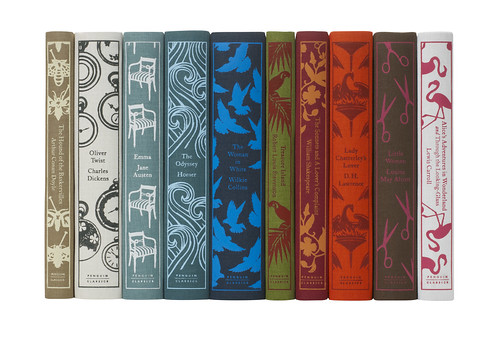
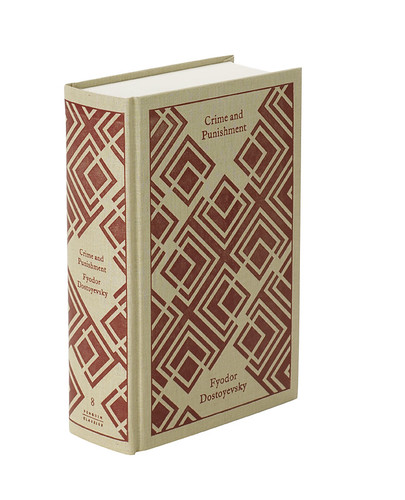
I would say the cloth classics right now. I really enjoy the process of getting the best colour combinations and the feel of the end result in my hands. Representing classic literature through patterns is fun there is so much to go on within the text. Life only doing these would be dull though, so I like that I get to work on a variety of titles. I like that there’s always another area in which to push myself as a designer. I think its coming up with concepts I like best. The rush of the moment where you show it to someone and they get it. When you feel that you know you have got it right.

What are the most challenging?

They’re all challenging at the start, when I think I might make a hash of this one. Conceptual covers for non-fiction can be quite a challenge — especially when there’s a late change to the title or subtitle that makes a great design suddenly redundant. It can be hard scrapping a cover I’ve become attached to and has been approved. I just have take a deep breath and remind myself that the cover is there to serve the book and not the other way around…

How is designing for a series  different for designing an individual cover?

As you would expect, it’s a more intense process. I always have to have rules that will work across the series, from colour usage to typography. There are often period-specific elements that have to researched and backed up. It there’s a grid it has to work across the whole series and not get tired and boring. It’s a longer process, and the energy and attention to detail has to be maintained to the end. With individual covers its a bit more organic as you won’t have to pay down the line for decisions that might create difficulties if spun out into a series. If it works it works and once you’ve got it you move on.

Do have a favourite set  from your recent designs?

Again it has to be the cloth classics as they sit so satisfyingly on the shelf as a set. I tend to pick my work apart after each series is finished and make notes about what I would do next time and how I can improve on the way I approach the typography and the images, well all of it really. I think designers are harsh critics of their own work; there’s a dissatisfaction that motivates us to keep producing new stuff, new approaches.

Where do look for inspiration  and who are some of your design heroes?

The internet is a huge and readily accessible resource. I can spend ages going from site to site just soaking up inspiration. I like to collect objects that I see in junk shops/ebay/charity shops. Bookshops too of course – I really enjoy the Oxfam book shops, so many gems to be found. As for design heroes, there are many. The Williams I mentioned earlier — Blake and Morris. Then there’s so much inspiration in the Penguin back catalogue, form people like Romek Marber and Alan Aldridge. In current book design, John Gray and David Pearson often come up with things that make me think wow, look what you’ve done, that’s amazing. There are also many outside of the book world I admire, such as Orla Kiely. I love her use of colours, and also the 70’s vibe. I have a thing for 70’s orange plastic, and her stuff reminds me of that, its really comforting.

What does the future hold  for book cover design?

Covers are still a lot of the time the only piece of marketing material to attract the customer so I don’t think that is going anywhere fast. We might go through a wave of utter tripe as everyone gets all excited about 3D or animated covers, and the novelty of technology takes precedence over good design. Electronic books are inevitably going to impact physical publishing, but the printed book is a very successful technology in its own right and I don’t think it will be entirely displaced. For all the advantages of ebooks — portability, interactivity, production and distribution savings — there’s something potent about the physical object that will always have a strong appeal. I like to think that as the volume of physical books declines, the average quality of the design will increase, because books will have to work harder to justify their physical presence.

Thanks Coralie!

7 Comments