Skip to content

Tag: Design

Something for the Weekend

A series of book cover design concepts for The Infamous Press by Norwegian graphic designer Morten Iveland (via IS050).

Paid by the Joke — The enduring appeal of Keith Waterhouse’s Billy Liar in The Guardian:

Billy Liar’s longevity is not an example of a tale that is told and told again with a dulling faithfulness; rather, the long life of Billy Liar is a story of reincarnation, of each new generation seizing upon the tale afresh and making the story its own. Its influence may be felt in half a century of creative endeavour, in drama and literature and film, and, perhaps most keenly, in popular music: referenced, for instance, in the video for the Oasis single The Importance of Being Idle, and in a song by the Decemberists, and popping up, too, in many of Morrissey’s lyrics, including the Smiths’ 1984 hit William, It Was Really Nothing.

And if anyone at Penguin is reading, please, please reissue Billy Liar with the Tony Meeuwissen Woodbine cover from the 1970’s (come on, you know you want to):

(image via David The Designer)

If Covers Could Talk — A nice satirical book cover blog, kind of like Unhappy Hipsters for books.

And finally…

W. W. Norton, who have done great job with their Flickr — particularly their book design archive where the above stunner by Gray318 comes from — now have a Tumblr as well. The latest post, at the time of writing, is an animated scene from Stitches, the graphic memoir by David Small. Nice work.

5 Comments

Raymond Hawkey 1930-2010

The dapper graphic designer Raymond Hawkey, whose innovative work at The Daily Express and The Observer changed the face of British newspapers in the post-war era, died last week aged of 80.

Hawkey’s modern graphic style also revolutionized British book cover design.

His stark black and white cover for Len Deighton’s 1962 Harry Palmer novel, The Ipcress File, which — with its chipped teacup, stubbed out cigarette and Smith & Wesson revolver — mixed violence with the everyday, became iconic despite initial opposition from the book’s horrified publisher Hodder & Stoughton.

Designer Mike Dempsey, who profiled Hawkey for Design Week in 2001, noted:

What Hawkey did with [The Ipcress File] was one of the key moments in design history. It is important to view this piece of work within the context of the period. Hawkey’s photographic use of inanimate objects to give a narrative dimension to the cover was startlingly new and made a dramatic impact on the publishing scene. The publisher, Hodder, found the design too spartan with its black and white photography, plain background and small undifferentiated typography, but both Deighton and Hawkey held firm. They were right, because on publication in 1962, The lpcress File sold out within 24 hours.

After the success of The Ipcress File, Hawkey became a sought-after book cover designer, working on more jackets for Deighton, as well as covers for Ian Fleming, Kingsley Amis and Frederick Forsyth amongst others.

According to his obituary in The Guardian, Hawkey was  a shy and quietly spoken man:

But in spite of his gentle voice and manner, once engaged in an assignment he was indefatigable, working 16 hours at a stretch, before sleeping briefly and putting in another 16-hour day in the flat where he lived for five decades. He was wonderfully generous, especially with his time, to young people who sought his advice, whether it was on design or writing – he wrote four very fine thrillers, including It (1983), regarded by many as the first truly modern ghost story.

A fastidious and private man, he had a dread of dying in hospital; and after a long illness he died in his own bed – with his beloved wife, Mary, reading his favourite poem to him.

Comments closed

Midweek Miscellany

The Eyes Have It — An interview with gentleman book cover designer and advertising copywriter David Gee about his design for Jim Hanas’s e-book short story collection Why They Cried. You can find my interview with David here.

Writers on Process — Writers of every stripe talking about how they write (via Largehearted Boy).

In Their Own Words — A BBC archive of television and radio interviews with modern British novelists including Virginia Woolf, Daphne du Maurier, Anthony Burgess, J.G. Ballard,  and Muriel Spark. One could quibble about about selection of some of  contemporary novelists, but otherwise this is pretty amazing collection.

And speaking of archives…

Design is History is an expanding reference for graphic design history created by designer Dominic Flask.

And finally…

The only page of Jason’s silent and sadly aborted adaptation of Edgar Allan Poe’s The Black Cat.

e-book short story collection, Why They Cried

3 Comments

Coralie Bickford-Smith’s Fitzgeralds

Not only does the talented Coralie Bickford-Smith, senior cover designer for Penguin Press, have a spiffy new website, she has also unveiled her stunning metallic cover designs for Penguin’s new editions of  F. Scott Fitzgerald.

Coralie is now on Twitter, and you can read my Q & A with her here.

Comments closed

Midweek Miscellany

The typographical cover for Oscar Guardiola-Rivera’s What If Latin America Ruled the World designed by Sarah Greeno at Bloomsbury UK.

The Gall — The inimitable  John Gall, VP and Art Director of Vintage / Anchor Books, interviewed for a rather super looking new magazine called Design Bureau:

[O]nce you have a nice solid concept, the rest of the process can almost seem effortless; enjoyable, even. And these, of course, are usually the best ones.” Gall describes his creative process as threefold: research, concept and execute. “Read the books, come up with some ideas, flesh them out, see what is sticking,” he says. However, it’s the process of getting a book’s cover approved that poses the greatest challenge for Gall and his team. “If the publisher comes back and says, well, ‘This needs really big type with a chicken on it’, that obviously means they think this is kind of important,” he says. “The re-working, dealing with all the feedback (some warranted, some moronic) ‘make this bigger’, ‘make this smaller’, ‘my psychic thinks it should be blue’—that is what separates the men from the boys,” he says.

John Gall by Noah Kalina

The article is accompanied by photographs by Noah Kalina, and includes John’s tips for lunch in New York. What more could you ask for? An interview with designer Abbott Miller you say? Well, Design Bureau have one of those as well.

Exit Interview — Former New York Times Design Director Khoi Vinh on designing the newspaper’s paywall, and his decision to walk away, in the New York Observer:

One way of trying to make logical design decisions is through research. Mr. Vinh’s team has been studying traffic patterns on the site and watching test subjects, real readers, in a lab to see how their eyes move across the page when they are reading The Times online.

“I take it all with a grain of salt,” he said. “Everything is so measurable now, theoretically. But the truth of the matter is, there’s never enough data to substitute for raw decision-making abilities. At the end of the day, you still need to make the decision.”

Designing Madison Avenue The New York Review of Books blog on the look of TV show Mad Men:

Among many things that make Mad Men so intriguing is its broad definition of what constitutes design. For example, its cunningly detailed, not-quite-couture female costuming—the B.H. Wragge-style coat-and-dress ensembles, the Koret handbags, the Coro costume jewelry—makes the female characters … seem as if they have stepped straight out of the Sunday New York Times during the twilight of Lester Markel… Equally fanatical attention is paid to interior design. The offices of Sterling Cooper were done up in the spacious, late International Style corporate mode epitomized by the boxy glass-and-steel skyscrapers that rose along Park Avenue after World War II.

And on a somwhat related note, Eleanor Wachtel interviews legendary designer Milton Glaser for CBC Radio. Good stuff.

1 Comment

Kickstart

Craig Mod’s fascinating essay on re-publishing his book Art Space Tokyo using fund-raising website Kickstarter has been much linked to elsewhere, but I’ve only just found time to actually read it and it is definitely worth your time if you have hadn’t had chance to read it yourself yet:

I had one chief consideration in defining the goals for the Kickstarter project: make enough books to generate substantial returns. Then use those returns to further expand this or similar publishing endeavors.

I never intended to just sell a few books. The last thing I wanted was for this Kickstarter project to be nothing more than the start and end of Art Space Tokyo’s new print run. Instead, I wanted it to be the jumping point for exploring more projects in a similar spirit to Art Space Tokyo; a means to explore digital books and to fund the startup of a publishing venture that could make this happen.

(link)

Comments closed

Penguin 75: Q & A with Paul Buckley and Christopher Brand

Launched with 10 titles by Allen Lane in 1935, Penguin Books turns 75 this year. To commemorate the anniversary, Executive VP Creative Director Paul Buckley has compiled Penguin 75, a collection of 75 book covers from the Penguin US archive.

Penguin 75 is an inside look at the Penguin design process with candid and irreverent commentary from authors, designers, editors and artists as well as Penguin Art Directors Darren Haggar and Roseanne Serra and Buckley himself. Filled with the kind of distinctive illustrative covers that are now associated with Penguin US, the book is wonderful slice of American book cover design. As Karen Horton recently noted in her interview with Buckley for design:related:

Penguin 75… is less about the history of the old orange-spined paperbacks and more about the relationships Creative Director Paul Buckley helped to facilitate in the last decade between publisher, editor, author, and designer.”

I was lucky enough to talk to Paul and the book’s designer Christopher Brand about Penguin 75 last week.

How did Penguin 75 come about?

PB: I’ve always had a mix of fascination, disdain, and understanding, for what my staff and I go through in trying to get our work approved, as well as what the editors and publishers are dealing with on their end. Of course all people whose work is subjective go through some sort of approval process — and it’s not easy for the folks on the other end of the situation either; the ones saying “this is just not right”. As it’s something we do not hear much about (other than at some industry function), I thought it would be interesting to put some of these stories together in book form.

And how did you get involved in the project, Chris?

CB: I was working on staff at Penguin at the time. I let Paul know that I would be interested in working on it when he first mentioned the project to everyone. I mostly work on covers but I’ve had the chance to work on a few interiors before this one.

What criteria did you use to choose the covers?

PB: There were different sets of criteria; the most obvious being that they had to be Penguin paperbacks, as we had decided to use this project in conjunction with our 75th Penguin imprint anniversary. Another criteria was that I wanted to show recent Penguin work, so nothing older than 10 years or so. Then it came down to a combination of which covers look great and also have an interesting story associated with them, as well as trying to get a mix of intriguing authors and designers in there — not just your obvious fiction darlings, but a true microcosm of the publishing world and art world.
The covers are very different from the iconic Penguin paperback covers. Do you think the book shows a different side to Penguin’s design history?

PB: Of course. Penguin UK does a gorgeous job of tapping into the Penguin archive and history, and while I like to go there from time to time, I’m very interested in Penguin’s future in a different sort of way. The beautiful Penguin by Design is just not who I am, and if I tried to do a version of that, two things would happen — I’d fail as my heart would not be in it, and no one would buy it as it’s already out there in a few books. This is not to say that I’m not a huge fan of Penguin’s design history — I am, but I see it as a place to tap into occasionally, while still moving the brand forward — as nothing creative can remain as it was, nor should it if it wants to stat vital in it’s own day. But we do maintain Penguin’s age old love of illustrated and well crafted covers.

Do you have a sense that Penguin US has a design sensibility that is separate from the Penguin UK tradition?

PB: Whether you’re UK or US, it’s still Penguin tradition, so I don’t define it as you do. Both sides are very proud of Penguin, it’s history, it’s cache, it’s values — and both sides have built Penguin into what it is today, and what it stands for. So while we are separate entities that bring different things to the table, the overall strive to keep the quality bar set very high is paramount to either side.
Was it hard to choose just 75 covers?

PB: Unbelievably hard. That ate up the first month or so, just getting it down to 75, who was left in, who was left out, who on staff has five covers in, while another has only one or two, is it a good mix visually and editorially of this and that, etc etc.

Chris, did you have a say in any of the selections?

CB: Paul did an initial edit and went through tons of the books. Once he narrowed it down I helped a little bit with figuring out what we should put in, but mostly I would come to Paul later on when were trying to lay out the book. If we couldn’t get enough content for one of the books then we would have to find another one to put in. Or, if Paul wanted to add more books toward the end then we had to figure out what to subtract. I was more involved when it affected the design.

Were there any covers or comps that you wanted to include but couldn’t?

PB: By the nature of only utilizing 75 covers / series, things have to be left out. So yes, but only for that reason.

Penguin 75 includes contributions from authors and editors as well as designers, but I notice you left out Sales & Marketing!

PB: I did not leave out sales and marketing any more than I left out elves and leprechauns… I simply did not have any real sales and marketing stories. The Penguin marketing director, John Fagan, is hands down the best marketing director in the universe — we all know the horror stereotype stories of the marketing director killing this and that just to hear their own voices in the room, but John is so much an integral part of our team and loves what we are doing with our packaging; so unless he really thinks we’re missing something, he’s incredibly supportive; and when he does have something to say, he still manages to do it in a kind and intelligent way. Our sales team also leaves that stereotype behind. Trust me, you see in the book that I’m not pulling any punches and I made sure no one else in the book did either — so if I had great Penguin sales and marketing stories, you’d be reading them.

As a designer, were you surprised by any of the  comments from authors and editors about the cover designs, Chris?

CB: The range of comments from the authors was pretty surprising. Some were very thoughtful and you could tell they appreciate and understand book cover design. Other authors weren’t very happy with their covers and they made that pretty clear.

Was it fun to design a book about book design?

CB: More than anything, it was just fun for me to be working on the interior of a book instead of just the cover. It was a nice change.

Were there any unique challenges?

CB: The biggest challenge was that Paul and I were working on this book, but at the same time we both had full time jobs at Penguin. Paul tried to clear my plate for me a bit, but we both still had a lot of other responsibilities to deal with. Another thing that was hard was that we were sort of doing this whole thing on the fly. We were responsible for not just designing the book but gathering all of the content and all of the things that we needed to design the book (the comments, the hi-res art, etc.). We had to get everything together as we went and this stuff trickled in throughout the process.

On a design level, there was a lot of information to organize. It was challenging to come up with a system for everything. We had comments from that authors and designers, then there were comments from the art directors that we created another system for, all of the credit information for each book, we were showing alternative designs for some covers. There was a lot to think about.

Did you try to take account of Penguin’s design history while working on your design?

CB: I did take Penguin’s history into account at the beginning when we were figuring out what the layout should look like. I used Gill Sans throughout the book, but it’s pretty small and doesn’t feel overwhelmingly “Penguin”. I tried some things that were more in the style of older Penguin covers, but in the end we went with something more modern.

Was it strange to design a book that includes some of your own work?

CB: It was a little strange at first, but many of the covers in the book were designed by my co-workers so a lot of the work was very familiar to me.

So, did the book make you reconsider any of your own designs, or your design process?

PB: I’d love to sound thoughtful and say “yes” and expound on some brilliant new design wisdom — but the answer is “no”. All of the entries in this book are well known to me, and most have been for years. Putting them all down in one place just made me feel proud of what my department does — but I’ve always been incredibly proud of my team. If anything, it made me reconsider what it takes to put a book together, and see editors and authors in a more favorable light.

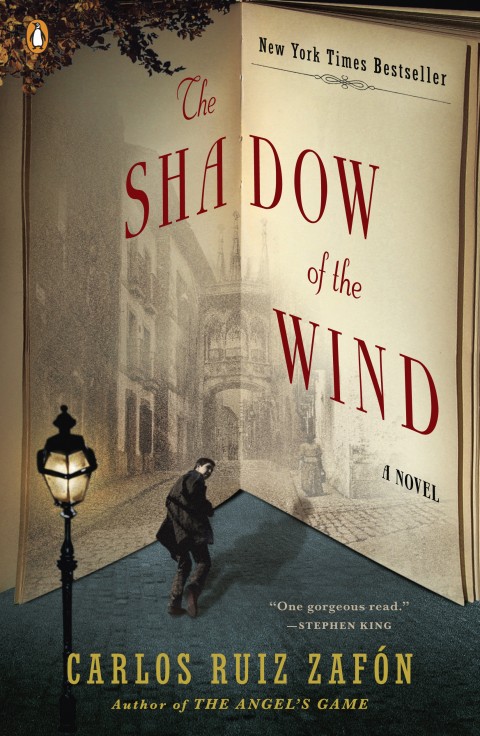
And, Chris, I have to ask… How does it feel to be immortalized on the cover of The Shadow of the Wind by Carlos Ruiz Zafón?

CB: It was an amazing opportunity. I think this only the beginning of my modeling career.
Thanks Paul and Chris!

Images:

  1. Penguin 75 cover, design by Paul Buckley
  2. Penguin “Graphic Classics”:
    The Dharma Bums | Art Director: Paul Buckley |  Illustrator/Designer: Jason
    The Portable Dorothy Parker | Art Director: Paul Buckley | Illustrator/Designer: Seth
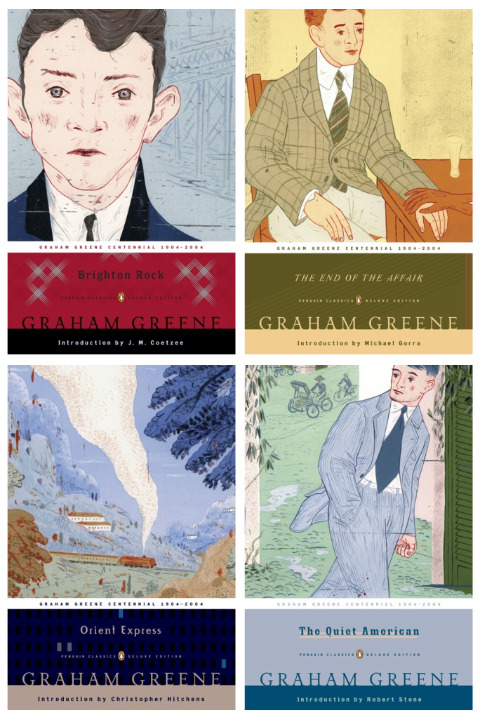
  3. Graham Greene Backlist | Designer/Art Director: Paul Buckley | Illustrator Brian Cronin
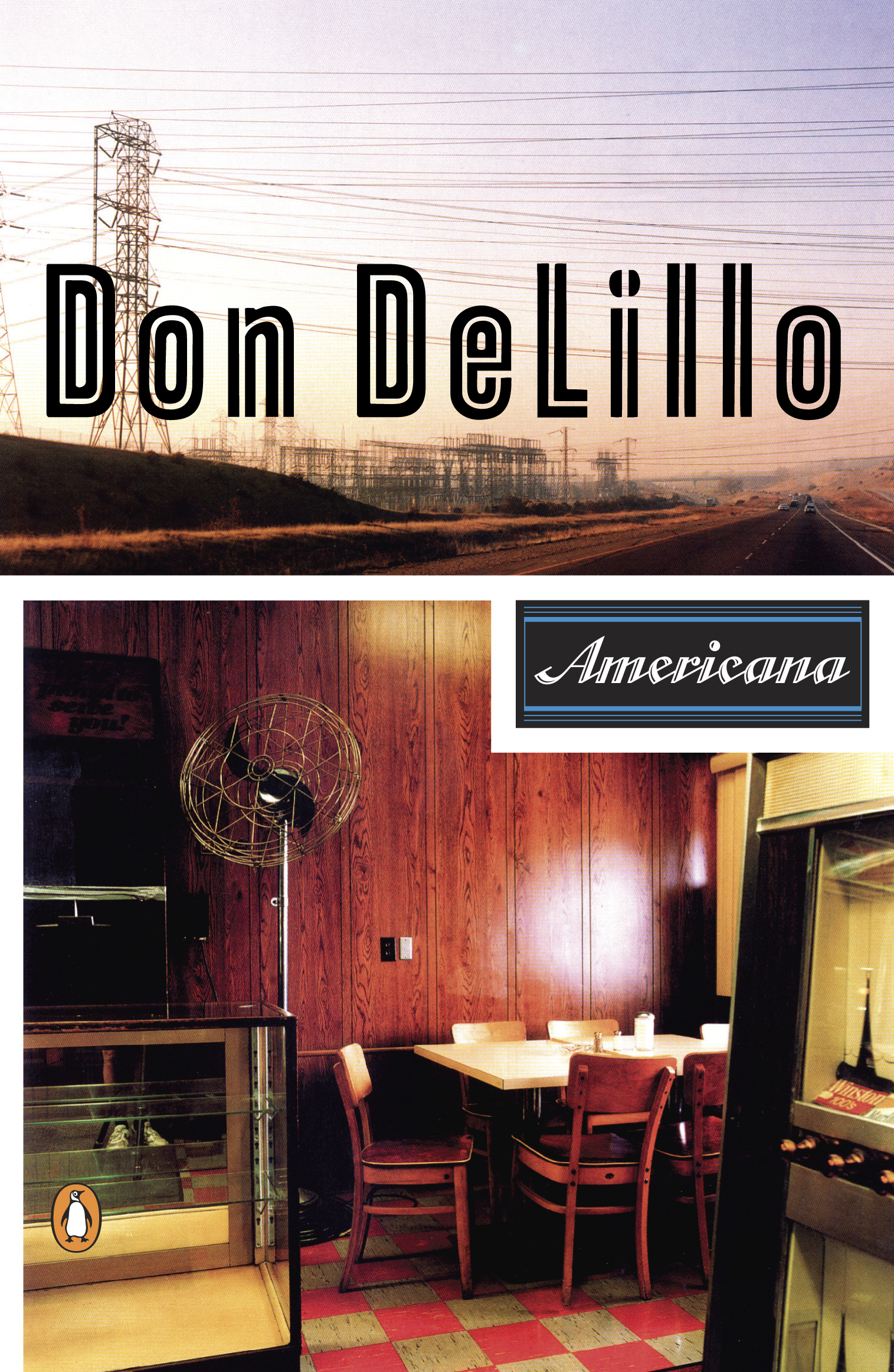
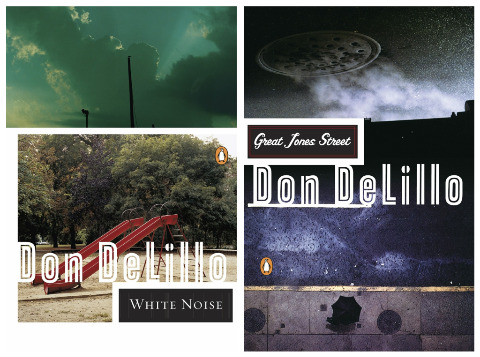
  4. Don Delillo Backlist:
    Americana
    | Designer/Art Director: Paul Buckley | Photos: Jeff Brouws
    White Noise | Designer/Art Director: Paul Buckley | Photos: Jason Fulford
    Great Jones Street | Designer/Art Director: Paul Buckley | Photos: Hugues Colson (top), Tom Zimberzoff (bottom)
  5. Emporium and unused image | Designer/Art Director: Paul Buckley | Illustrator: Viktor Koen
  6. Special Topics in Calamity Physics | Designer/Art Director: Paul Buckley
  7. Pages 220 – 223  Penguin 75 | Designer: Christopher Brand
  8. Pages 244 – 247 Penguin 75 | Designer: Christopher Brand
  9. There Once Lived a Woman Who Tried To Kill Her Neighbor’s Baby | Designer: Christopher Brand | Illustrator: Sam Weber | Art Director: Roseanne Serra
  10. The Jewish Messiah | Designer: Christopher Brand art Rodrigo Corral Design | Art Director: Darren Haggar
  11. The Shadow of the Wind | Designer: Tal Goretsky | Art Directors: Darren Haggar and Paul Buckley
4 Comments

You Can’t Judge A Book By It’s Cover

As it’s Friday, and with thanks to David Gee who sent this my way, a little something for journalists who can’t let sleeping clichés lie:

Have a great weekend.

1 Comment

Somthing for the Weekend

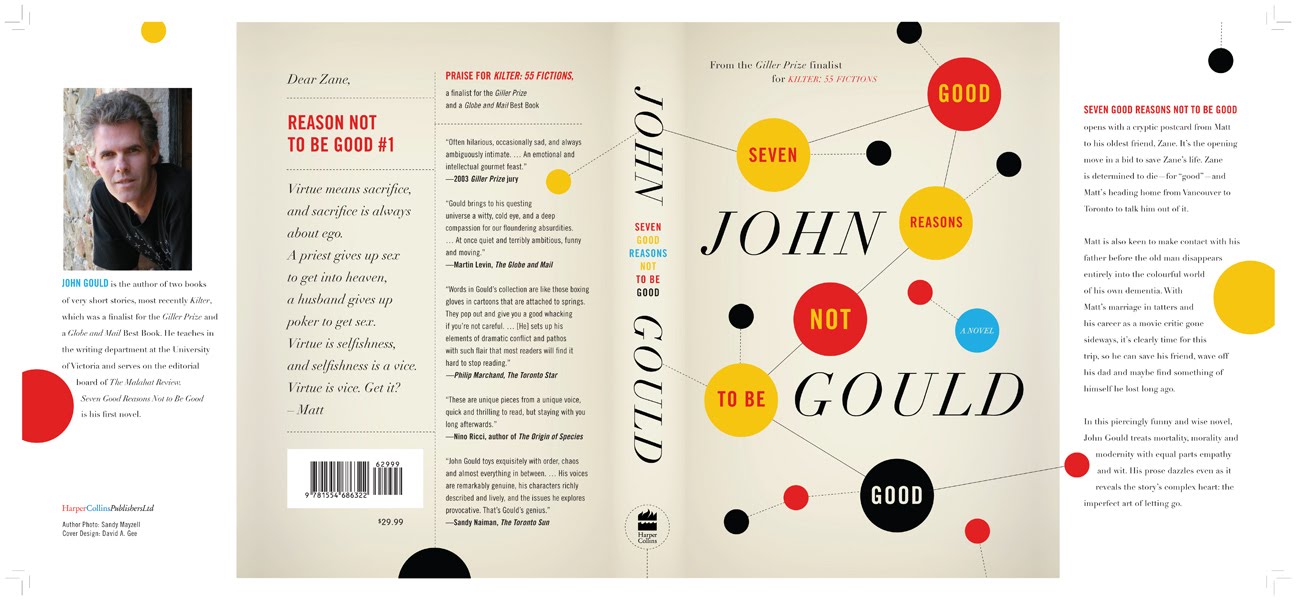
“Spot gloss on the molecules” — David Gee’s cover for 7 Good Reasons Not To Be Good by John Gould.

Going Back — Artistic Director Michael Salu on the creating the cover of the new issue of Granta magazine:

For this concept to work, we needed to strive for authenticity – to create the physical object ourselves. The typefaces would need to be sourced, traditionally hand-set and photographed to give the cover the depth that the issue deserves. For this I approached St Bride Printing Library, which has long been a place of fascination and wonder for me. My first visit to the library – with its oil, wood and metal, its smell of history – made a huge impression on me.

The Connoisseurs — Peter and Charlotte Fiell, who recently ended their 15-year tenure as heads of the design branch of Taschen, talk about their new publishing venture Fiell at More Intelligent Life:

What is design? It’s the forethought that goes into the making of man-made things. It’s films, pharmaceuticals, airplanes, chairs, tape recorders … it’s the world of stuff. It’s huge, so everybody should have a big interest. It’s not some avant-garde, highly expensive niche. We want to make money by publishing books that sell, but we’re in the business of promoting ideas, culture, taste, connoisseurship. If you want to make a difference you want to get into as many people’s heads as you can and change their opinion. The secret is to strike this balance between making your books appealing to learned type readers, while at the same time, making them useful and interesting to novice readers. Our aim is to make books as appealing to teenagers in Tokyo as architects in Amsterdam.

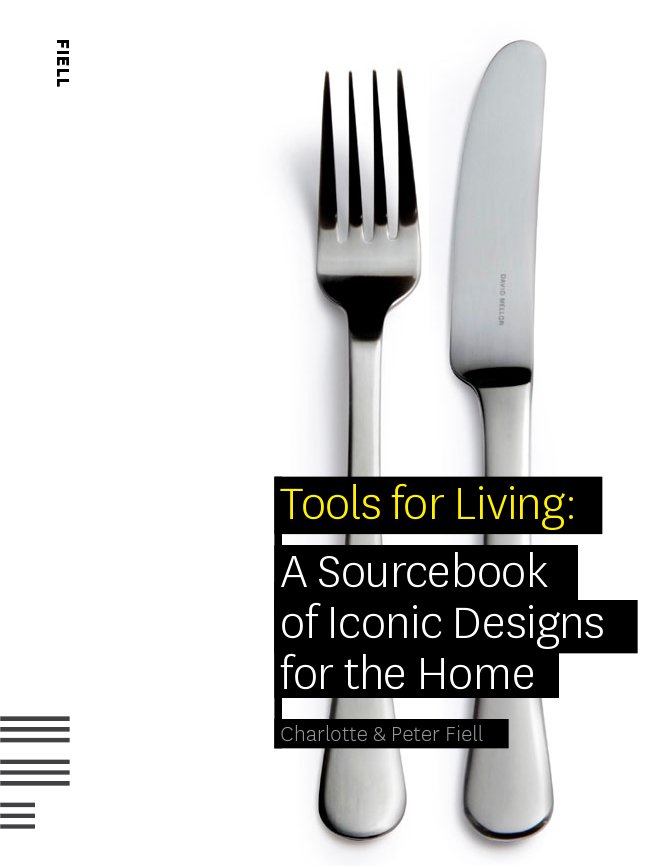
(Above: Spreads from Tools for Living: A Sourcebook of Iconic Designs for the Home by Charlotte and Peter Fiell)

Designing In Order To  Eat — Chris Ware’s introduction to Penguin 75 excerpted at GQ magazine:

Book designers, you should know, have to be ready to create something new, exciting, and original almost every day in order to eat, and a certain degree of burnout smokes out the weaker specimens; I can’t imagine coming up with cover after cover without at some point resorting to an out-of-breath take, intentional or not, on someone else’s great idea. This urge toward ever-freshness brings the profession perilously close to that of fashion, and the worst examples of such greet us at the grocery store checkout among the tabloids, gum, and ring pops. But the best of it, those that last, have recently been appearing from Penguin (yes, Penguin, not just the bearer of boring spring break assignments anymore!), following a path led by designer Paul Buckley into beautiful new ways of graphically proffering the written word.

The excerpt is accompanied by a slideshow of covers from the book. My interview with Paul Buckley and designer Christopher Brand about Penguin 75 will be up early next week.

And Finally… The book cover design Tumblr (via Alan Trotter’s ≥ notes)

1 Comment

Something for the Weekend

An Ethics of Interrogation — Another stunning cover design by Isaac Tobin (via This Isn’t Happiness). My Q & A with Isaac here, if you missed it.

Isaac also has at least two covers in AIGA’s 2009 selections for 50 Books/50 Covers.

Reader Despair Syndrome — An unintentionally Onion-esque post about RSS anxiety (something we can all relate to I’m sure) by Leon Neyfakh for the New York Observer (via Sarah Weinman):

Legions of jittery, media-conscious New Yorkers are eating themselves alive signing up for feeds they never end up reading  in hopes of becoming better people—more knowledgeable, more fun to talk to, more in control of their Internet consumption. They subscribe to dozens, sometimes hundreds of news sources, each of them added to the list with the best of intentions…

Hark! — Dave Howard interviews artist Kate Beaton about her comic Hark! A Vagrant for The Torontoist:

It’s very calculated, it takes me a long time to write a strip, but when you read it, part of the delivery is that timing, that kind of bouncyness of flow, getting a punch-line in without being obvious about it. Or getting the slip on someone, to make them laugh.To make somebody laugh is a difficult thing, it takes a lot of precise steps.

And speaking of comic strips…More Chris Ware posters seen at OMG Posters!

And finally…

The Superhero/Villain Name Generator

Comments closed

Midweek Miscellany

Caustic Soda — James Morrison AKA Caustic Cover Critic talks about five great covers (and a few terrible ones) at Flavorwire. The great ones include Charlotte Strick‘s design for 2666 by Roberto Bolaño. Charlotte talked about this cover and boxed set with FaceOut Books a while back.

The Case of Abundance — The formidable Clay Shirky interviewed at Publishing Perspectives:

We are already in a world where most books are incomprehensible to most people –- whether that be content comprehension or the question “why would anyone publish that?” — but we don’t notice that anymore.

What has happened with the web is that there is so much content that we have broken all the old filters. And for now, we are experiencing it as the completely overburdened and chaotic environment that it is. But that doesn’t mean people should stop publishing online. It just means that we need better filters. Because in fact, the over-publishing of content has been a normal problem since the invention of the printing press. It’s just that we had ways of ignoring things we didn’t care about. The problem isn’t getting people to shut up, the problem is creating filters to help people find their way to things they want.

And finally…

I’m probably the last person on the interwebs to discover Erik Heywood’s blog on books, bookshelves, bookstores, and libraries (etc.), but it really is quite lovely (via The Silver Lining).

Comments closed

What Is All This?

Fantagraphics Art Director Jacob Covey‘s first foray into designing for prose fiction is this cover for a 600-page collection of short stories by Stephen Dixon, What Is All This?

Incidently, Jacob also did a nice job colouring Gilbert Hernandez‘s cover art for Kristen Hersh‘s new memoir, Rat Girl. The design is by Jaya Miceli at Penguin Books:

You can read my interview with Mr. Covey here.

I colored Gilbert Hernandez’s cover art to Kristen Hersh’s new memoir, Rat Girl. Fairly easy job but it gives me an excuse to plug the book and the design work of Jaya Miceli over at Penguin Books.

2 Comments