Skip to content

Category: Q & A

Q & A with The Heads of State

Jason Kernevich (left) and Dustin Summers (right), known together as award-winning design shop The Heads of State, met in the design program at Tyler School of Art, Philadelphia. Shortly after graduating, the duo began producing screen-print posters for the local independent music scene. The simple, bold graphic style of their work quickly garnered international attention and acclaim, and their clients now include the likes of R.E.M., Wilco, The National, The New York Times and The Guardian, as well as publishers Penguin, HarperCollins, and Random House.

If that wasn’t enough, the duo recently released a new letterpress print inspired by F. Scott Fitzgerald’s novel The Great Gatsby . The 4-colour, limited edition print (on 140 lb. French Poptone Sweet Tooth paper) shows the business cards and personal stationery of the Jazz Age VIPs that attend Gatsby’s parties in the summer of 1922. Complete with lovely touches such vintage typography and the characters’ professions and street addresses, the print is a beautiful tribute to a 2oth Century classic.

Jason, Dustin and I corresponded by Twitter and email about the Gatsby print and their unique design collaboration.

How did this project come about?

We’d been kicking around the idea of doing something with the novel for a long time. Chapter Four breaks from the plot for a moment and the narrator begins reminiscing about the folks who came to the parties that summer. The names by themselves are just incredible. There is some detail given about the characters’ background but not much. We had to make a lot of it up. But there were hints at a profession or an address here and there and that led to the idea to do business cards.

What’s the enduring appeal of The Great Gatsby for you?

Like most people, we first came across this book in high school and hated it. Rediscovering it later in life has been a joy. The time period holds endless allure. It was between the wars. The reputation of the roaring twenties and its decadence and flamboyance allows the reader to imagine so much more than what’s on the page. And there’s plenty on the page! It’s all the more poignant because of the crash that followed.

Do you think the story has particular contemporary relevance?

The lead-up to the Great Depression holds a contemporary economic relevance for sure. But it’s also a hell of a break-up story in a way with it’s jealousy, conspiracy, and doomed aspirations. That is certainly a side of the novel not fully grasped in the 9th grade.

Your work often seems inspired by New Deal era WPA illustration and mid-century modern design. Are you also inspired by the Jazz Age?

We hadn’t really looked to it for much inspiration in the past, but through our research we found that a lot of the documents of that era were much more practical and less decorative than we anticipated, which connected more with our aesthetic.

How did you recreate the vintage type?

A lot of it came from books that we scanned as well as classic typefaces that predate the era or modern decorative faces that reference it. There was also some hand lettering done.

Did you research 1920’s typefaces? Were you trying to be totally accurate?

We weren’t trying to be 100% accurate. Capturing the spirit was the most important thing. We had a few historical references for inspiration. The credits and titles for the original King Kong conveyed a sense of glamour and of old New York that was appropriate for some cards despite the film being from 1933. We found a few business cards from the early twenties for doctors, furriers, jewelers, etc. They were surprisingly modest and utilitarian. Which makes sense due to printing and lettering limitations. So we aimed for somewhere in the middle.

Do you have a favourite ‘card’ on the poster?

It changes. The “Films Par Excellence” card is a favorite. But Jordan Baker’s gets our pick. She is the only main character we did a card for and we wanted to sneak it in as a payoff to fans of the book. We like to say that her card was inspired not just by her profession (golf champion) but by her eyelashes.

What’s the appeal of manual printing processes like letterpress and silkscreen?

It a tactile, sensual thing that you feel connected to as a viewer. It’s great to be able to interact with a piece of design in that way. It also added a disguise of authenticity and age to this project. Oh, the irony.

Could you describe your creative process? How does your collaboration work?

Over the years we’ve developed quite a shorthand with one another. Our process is sometimes as simple as a conversation while sketching. We’ve hit on some of our best ideas in a matter of few minutes by just talking through the problem at hand. Sometimes it’s more labored over. In those instances we hit the books, research, sketch, and let the best and most clear idea win. We are both always in pursuit of the best idea and that helps move things along.

Who are your design heroes?

We have so many. Plenty of usual suspects from the 1950’s and 1960’s and from our early days of making silkscreen posters. We love the travel posters of David Klein. Book designers like John Gall and Paul Sahre. Leanne Shapton is a personal favorite. A lot of our artist friends never cease to amaze us with the work they churn out. Jessica Hische. Tim Gough. Matt Curtius and Gina Triplett. Martha Rich. Josh Cochran and Chris Neal and everybody else at the Pencil Factory in Brooklyn.

What’s next for The Heads of State? Will we be seeing more book covers from you soon?

We’ve got some book covers in the works. We’re also working on more self-initiated projects and products as well as a few branding projects we’ll be unveiling in the next few months that we’re pretty psyched about.

Thanks!

How did this project come about?

We’d been kicking around the idea of doing something with the novel for a long time. Chapter Four breaks from the plot for a moment and the narrator begins reminiscing about the folks who came to the parties that summer. The names by themselves are just incredible. There is some detail given about the characters background but not much. We had to make a lot of it up. But there were hints at a profession or an address here and there and that led to the idea to do business cards.

What’s the enduring appeal of The Great Gatsby for you?

Like most people, we first came across this book in high school and hated it. Rediscovering it later in life has been a joy. The time period holds endless allure. It was between the wars. The reputation of the roaring twenties and its decadence and flamboyance allows the reader to imagine so much more than what’s on the page. And there’s plenty on the page! It’s all the more poignant because of the crash that followed.

Do you think the story has particular contemporary relevance?

The lead-up to the Great Depression holds a contemporary economic relevance for sure. But it’s also a hell of a break-up story in a way with it’s jealousy, conspiracy, and doomed aspirations. That is certainly a side of the novel not fully grasped in the 9th grade.

Your work often seems inspired by New Deal era WPA illustration and mid-century modern design. Are you also inspired by the Jazz Age?

We hadn’t really looked to it for much inspiration in the past, but through our research we found that a lot of the documents of that era were much more practical and less decorative than we anticipated, which connected more with our aesthetic.

How did you recreate the vintage type?

A lot of it came from books that we scanned as well as classic typefaces that predate the era or modern decorative faces that reference it. There was also some hand lettering done.

Did you research 1920’s typefaces? Were you trying to be totally accurate?

We weren’t trying to be 100% accurate. Capturing the spirit was the most important thing. We had a few historical references for inspiration. The credits and titles for the original King Kong conveyed a sense of glamour and of old New York that was appropriate for some cards despite the film being from 1933. We found a few business cards from the early twenties for doctors, furriers, jewelers, etc. They were surprisingly modest and utilitarian. Which makes sense due to printing and lettering limitations. So we aimed for somewhere in the middle.

Do you have a favourite ‘card’ on the poster?

It changes. The Films Par Excellence card is a favorite. But Jordan Baker’s gets our pick. She is the only main character we did a card for and we wanted to sneak it in as a payoff to fans of the book. We like to say that her card was inspired not just by her profession (golf champion) but by her eyelashes.

What’s the appeal of manual printing processes like letterpress and silkscreen?

It a tactile, sensual thing that you feel connected to as a viewer. It’s great to be able to interact with a piece of design in that way. It also added a disguise of authenticity and age to this project. Oh, the irony.

Could you describe your creative process? 10. How does your collaboration work?

Over the years we’ve developed quite a shorthand with one another. Our process is sometimes as simple as a conversation while sketching. We’ve hit on some of our best ideas in a matter of few minutes by just talking through the problem at hand. Sometimes it’s more labored over. In those instances we hit the books, research, sketch, and let the best and most clear idea win. We are both always in pursuit of the best idea and that helps move things along.

Who are your design heroes?

We have so many. Plenty of usual suspects from the 1950’s and 1960’s and from our early days of making silkscreen posters. We love the travel posters of David Klein. Book designers like John Gall and Paul Sahre. Leanne Shapton is a personal favorite. A lot of our artist friends never cease to amaze us with the work they churn out. Jessica Hische. Tim Gough. Matt Curtius and Gina Triplett. Martha Rich. Josh Cochran and Chris Neal and everybody else at the Pencil Factory in Brooklyn.

What’s next for The Heads of State? Will be seeing more book covers from you soon?

We’ve got some book covers in the works. We’re also working on more self-initiated projects and products as well as a few branding projects we’ll be unveiling in the next few months that we’re pretty psyched about.
Thanks!  Dan
5 Comments

Q & A with Jason Gabbert

Sometimes it can take me a little while to feature a designer on The Casual Optimist. Such is the case with Oregon-based book designer Jason Gabbert.
I was impressed with Jason’s work with Charles Brock and — at that time — Nate Salciccioli (interviewed here) back when Faceout Studio was still known as the DesignWorks Group. But neither the time or the topics ever seemed to be completely right. Then, earlier this year, Jason announced he was branching out on his own and going freelance. What better excuse could there be for an Q & A?
Jason and I corresponded by email. I think it was worth the wait…
How did you get into book design?

I was first introduced to book design my senior year of high-school. My family has been involved with publishing since I can remember and that led to me receiving an internship with a publisher in town. From that internship I was brought on as an intern to the brilliant Faceout Studio, which specializes in book cover design. The internship ended up turning into a full time design position. And now I’m doing my own thing.

Why did you decide to go freelance?

After working at Faceout Studio several years I began to realize that my passions were driving me to going freelance for myself. Different people work well in different environments and I wanted to try a new one out.

Was it a difficult decision?

The decision was a difficult one to make. A good beer and Jedi Knights helped with that though! The economy was screaming at me to stay where I was at, while my passions were screaming the opposite. In the end, my family and I (through stressful nights, prayer, and the counsel of those we trust) decided that this would be the best decision for me to establish my own personal creative integrity.

Could you describe your design process?

I think my process is more like a choose your own adventure book than a guide. But, broadly speaking, I like to gather as much information as possible on what I am designing, then I try and think of the simplest and most striking way to communicate the content’s key idea or ideas. After that I start doing random things (image searching, font searching, looking at different inspirations, etc…) hoping I’ll find a good way to showcase that key idea.

What are your favourite books to work on?

That’s a hard one. Off the top of my head, my favorite books are probably the more academic. Books with deep content that is just begging to be simplified to a cover.

What are the most challenging?

The most challenging books for me are often those that have been written a hundred different ways by a hundred different authors (though I am sure authors have their reasons for reintroducing these ideas). It is very difficult to keep coming up with new solutions for old ideas… but in the end, we are problem solvers… and avoiding cliché is one of the greatest challenges of all.

Do you have any recent favourites?

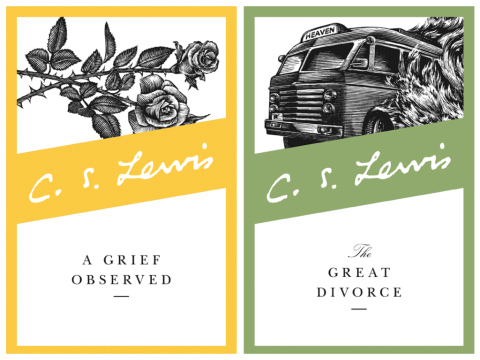
Of my own? That’s tough. I think one of my most recent favorites was the C.S. Lewis series I was able to work on. That was a dream project, and I was happy to be involved. In the end I wasn’t able to direct the illustrations themselves, but simply being able to come out with an effective format to communicate Lewis’s academic side was a privilege. I also have several academic books I’ve enjoyed working on.

Do you discern any current trends in American book cover design?

I’m sure there are trends flying by all the time. The beautiful thing about book cover design is that there are so many designers out there with so many different ways to solve a problem. I also think that trends that exist are changing faster all the time (though you would have to talk to a cover design veteran to know for sure). The cover design industry is growing its online presence, we see new things and change our approaches all the time.

Do you think that the Pacific Northwest has different design sensibility from New York and the East coast?

I’m sure it does, though I can’t recall any differences off the top of my head. I think I pull my inspiration from many similar sources as the East coast does. I don’t get as many inspirations in person, but I see many of the same things. I don’t go putting mountains, trees, and fish on every design I make… or do I…?

Where do you look for inspiration, and who are some of your design heroes?

I live on the internet. Blogs and online portfolios are my friend. My design heroes vary and are many. During this freelance transition I have had great encouragement from Henry Sene Yee and Peter Mendelsund… designers I have great respect for. The list is much longer than those two though.

Who else do you think is doing interesting work right now?

So many! I’ve been impressed with how many designers are creating fresh and intelligent works. Specifically, I’d probably want to tip my hat to the University of Chicago Press, they have been doing a ton of brilliant work.

What does the future hold for book cover design?

Change. Who knows what changes… but things will always change. We should always be seeing how we ourselves can also change to meet new challenges. I believe people will always read and books will always need to be identified by some graphic element.

Thanks Jason!

5 Comments

Q & A with Clare Skeats

Hugo Wilcken’s Colony (published in 2007 and mentioned previously here) is almost certainly the novel I’ve talked up most this year. The cover, something like a jaunty vintage travel poster to a malarial Heart of Darkness (nauseously appropriate for a postmodern novel about a French penal colony), was designed by London-based print designer Clare Skeats.

Specializing in book design and art direction, Clare has a a great eye for partnering distinctive typography with bold creative imagery. Her covers often seem to use elements from the past, but always feel dynamically contemporary.

I’m really happy to have had the opportunity talk to Clare about her work. We corresponded by email.

How did you get into book design?

After graduating in 97, I tried, and failed to get a job as a junior designer at Penguin. They did offer me work experience though — so I moved to London to do that, and basically never left.

Have you always run your own studio? Where were you previously?

No. I stayed at Penguin for 4 years (they did eventually employ me!), then during a brief period at Random House, an opportunity arose to work for UK clothing designer Margaret Howell. It was great to step away from books for a bit and be part of a completely different industry. I was involved in virtually all aspects of the company; from designing Fashion Week press invites to drawing up manufacturing specification manuals. During my time there I was also working freelance — so after two very busy years, I left Margaret Howell to become full-time freelance, which is where I am now.

Could you describe your design process?

I’m lucky in that a lot of my clients allow me to just read and then make all the suggestions. I work in a number of ways; completely independently, or collaboratively with an illustrator or photographer. If I decide that illustration is the most appropriate response, I spend time identifying the right style and finding relevant practitioners. I’ve worked with Kazuko Nomoto (aka Nomoco) a great deal, and I found her initially as I had Andy Warhol’s Vogue illustrations in my head for Lolita. I’ll suggest say 3 or 4 illustrators to the client, along with a rough idea of the brief and composition. I then refine the brief and collaborate with the chosen illustrator.

Whether I’m working on my own, or collaboratively, I spend a lot of time researching — it’s a process I’ve always loved. For Somebody to Love I had to research embalming as the book is about a transsexual mortician who falls in love with one of her, um… clients. I wanted the cover to reflect the surgical and beautifying themes so I started to research embalming tools which lead me to those 18th-Century engravings of surgical instruments. Also used to great effect on this Simian Mobile Disco record cover designed by Kate Moross:

I needed to commission illustrations of modern instruments but retain the engraving reference and I initially proposed a wood engraver to the client, but the idea scared them. So I had to find a vector illustrator who could approximate an engraving style. I found Fred van Deelen who did a brilliant job. What I loved about Kate’s record cover was the way the central black circle (or maybe its a die-cut?) was working as a device to hold the type. So I shamelessly adapted it to my own needs for my cover.

When I started working on Potty!, I read the author’s autobiography which lead to a fun afternoon poking around the posh country outfitters shops of St. James and Saville Row — I took lots of photos and produced a mood board which helped me to get the sample spreads and art direction approved. I teach on the foundation course at Central St Martins and I’m always banging on about research — mostly because I can’t understand why a student wouldn’t want to do it!

My client for Potty!, wanted an illustrative component to the design and I was wary at first as I think illustration can often look like a whimsical add-on in some cookbooks, which wouldn’t be appropriate at all with Clarissa. The book is about one pot cookery so I decided to make the pots the stars and commissioned scraper-board maestro Joe McLaren to produce them — there are 24 in total and this is my absolute favourite:

Do you prefer to use unconventional typography and hand-drawn lettering than more classic typefaces?

Not particularly — the enjoyment comes from finding the right type style for the job, and that could be making lettering out of cake decorations, or typesetting a whole book — each offers their own sense of fulfillment. Working with the wildly varying content of books offers wonderful opportunities to work with typefaces that wouldn’t normally get considered for most commercial print jobs. I hate snobbery in design — if Dom Casual is right for a job, go with it!

Do you ever create the type or letters yourself ?

I wouldn’t have the confidence to create digital type from scratch, its such a skill in itself — adapting existing fonts is about as far as I go. I’ve hand-drawn lettering quite a bit though — I like to use a dip pen and drawing ink which creates a really nice line. I used this for Lolita, Tom Bedlam and Just in Case, to name a few. Another Meg Rossoff cover I had rejected features lettering that I drew on damp paper to create a cloud-like effect when reversed-out of the sky.

I can’t walk past an art supply shop. The ‘STEINBECK’ stamp in Of Mice and Men comes courtesy of something called Fabfoam, which you’ll find next to the sequins and glitter in the ‘hobby craft’ section.

How do you approach designing a series of covers?

Find the longest combination of title and author, and then work backwards from there! If your design can accommodate One Day in the Life of Ivan Denisovich by Alexander Solzhenitsyn then you know you’re on to a good thing. I think a successful series style has enough consistency and rigour to be easily recognised but has enough flexibility within it to future-proof against unforeseen issues. If there are too many variables within a series style, it lacks identity — and if there are not enough, it looks dry and undynamic. The nice thing about designing the Vintage Classics series design was that I knew the images would be really diverse so I could make the rest of the cover quite restrained and structured.

What are your favourite books to work on?

Its always a thrill to get asked to do a classic. I did Animal Farm very early in my career at Penguin and I’ve always regarded it as a huge privilege — especially as I was so junior at the time. I recently had to re-do the artwork to fit the new Modern Classics grid, so I’m really honoured that it survived a series re-design!

I also like first-time authors (as there’s no baggage), and books about really odd subjects: invisible dogs, menopause, suicide, unicorns … bring it on. I’d like to do more books for young adults, but they usually get rejected!

What are the most challenging?

Without a doubt, it’s the BIG book. The one the publisher has paid huge sums for at Frankfurt as it’s ‘going to be the next … (insert name here)’. The amount of emphasis placed on the role that the jacket is expected to perform is enormous and yet if the book becomes a bestseller its widely regarded as being down to good writing and good reviews. But if it fails, its regarded as being the fault of the jacket. Its this widely-held belief that allows high street booksellers and supermarkets to assert so much influence on the design — so what should be an exciting job can turn into a fairly unrewarding experience for the designer.

Do you prefer working with illustrators or photographers? Or does it depend on the project?

I do enjoy the camaraderie on shoots — the Potty! shoot was great fun — but publishing cover budgets are usually such a feeble match for photographer’s fees that I find I’m constantly looking at ways to cut costs which just becomes a bit boring after a while. The preponderance of headless women on book covers is testament to the fact that there’s rarely budget for a model, hair or make-up. And yet, interestingly, the expectation from the publisher for a Merchant Ivory film still remains pretty high — even if the budget doesn’t.

I love the spontaneity of working with an illustrator — of making the most of their skills and seeing how they interpret a brief. When I saw the physical object that I commissioned from Helen Musselwhite on The Still Point, I gasped (in a good way)! Being able to hand-pick such talented people to work with is a huge privilege — it’s a part of my job that I will always love.

Do you see any recent trends in British book design?

Yes, I think production specs (particularly on hardbacks), have been steadily increasing in a bid to get the public excited about the physical objects again, so we’ve had a glut of cloth-and-foil, sprayed edges etc. There’s been a lot of patterns and a return to traditional typographic sensibilities, and a rediscovery of our British design heritage. Mid-century modern references are still enjoying a bit of a moment…

Where do you look for inspiration and who are some of your design heroes?

My earliest design hero was Charles Schultz. I was obsessed with Peanuts when I was a kid and copied the way that the characters wrote — I loved the way their handwriting appeared above their heads, I thought it was genius!

I was also a huge Roald Dahl fan and consequently grew up with the scratchy inky gorgeousness of Quentin Blake‘s illustrations.

No surprises here, but I greatly admire the work of designers like Saul Bass, Abram Games, Alan Fletcher, Alvin Lustig and Paul Rand — the wit and brevity of their work is so impressive. Slightly more decorative demi-gods include Eric Ravillious, Edward Bawden and Osbert Lancaster. Sorry for the lack of anyone female — or indeed, alive.

What does the future hold for book cover design?

Hopefully the impact of ebooks will be a positive; there’s a lot of books out there that really don’t deserve to see a printing press.

Thanks Clare!

4 Comments

Q & A with Karen Horton, Design:Related

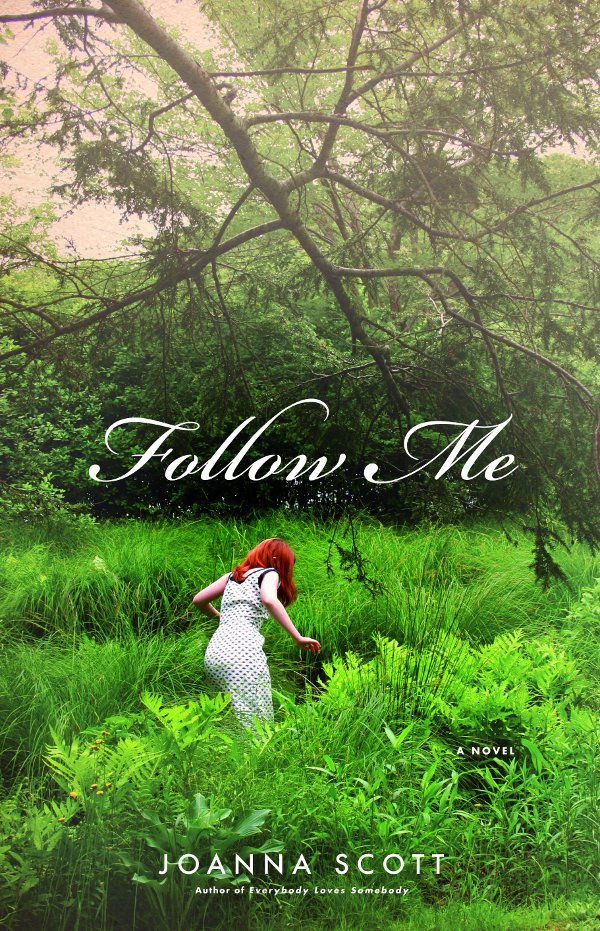
It is possible that the cover for Follow Me by Joanna Scott — with its lovely typography and curious undertones of David Lynch’s small town America — was the first time I noticed the name of designer Karen Horton. But then again, it might have been because of something on Design:Related, which she co-founded, or her blog Daily Design Discoveries, which is (as the name suggestions) a daily source of eclectic design inspiration.

Certainly, once I started to notice Karen’s name, I kept noticing it.

I’m grateful to Karen for taking time out from her busy schedule to reply to my emails and questions, and for providing all the amazing covers accompanying the Q & A (full credits and notes can be found at the end of the post).

What inspired you to become a book designer?

Working as a book cover designer almost happened by accident. Shortly after graduation I moved to NYC. I wanted to work on print design and started by applying to either magazines or book publishing houses almost exclusively. If the right opportunity came along to work at a magazine, I might be on a different track today. I liked the idea of designing something tactile and I already loved books.

Until recently you were the Art Director at Little, Brown & Company. Where did you work previously?

The first position of my professional career was as a Junior Designer in the Ad/Promo department of St. Martin’s Press. One of my responsibilities involved being a liaison between the Ad/Promo department and the Trade Art division. This might’ve been my lucky break. I felt that I was a nag visiting the cover designers weekly to remind them we needed layered files and cover tiffs for an upcoming catalog. When a junior level position opened in the cover art department, the art directors thought of me and suggested that I apply. I’m so thankful that I had the chance to work among such a talented group of designers and mentors. The job was very challenging and after a couple of years I began to question if I was a book cover designer just because I fell into that role and if it was my real niche. I wanted the experience of designing more than what fits within the constraints of a 6×9 rectangle. This led to my next position at The Children’s Museum of Manhattan where I had opportunities to work with my hands with an endless variety to the kinds of projects I collaborated on. The people working with me were fantastic, but I knew from the beginning that I missed book publishing. It took leaving it for me to appreciate what I left behind.

My next book-publishing job was at Oxford University Press where I started as a Design Associate and quickly moved up to the level of Art Director (partly due to unusual circumstances). It was surreal to have a team reporting to me, and this proved to be very rewarding. I have an incredible amount of respect for the editors and quality of books published by OUP, and there are many reasons why I loved the culture within a university press. All the same, I didn’t have the personal confidence yet to be in this leadership role and believed I still had much to learn before becoming the kind of art director I aspired to be. Also, I sought the opportunity to work on fiction in addition non-fiction books. After OUP, I worked at Little, Brown and Company as a Senior Designer and was later promoted to an Art Director.

Could you describe your design process?

This varies dependent on the kind of assignment.  For fiction titles I will always start with reading the full manuscript if available. I spend a good amount of time thinking, researching, and when applicable looking for historically appropriate typefaces. Although, sometimes I might be better off spending more time on the execution of my ideas than the preparation before-hand.

What are your favourite books to work on?

This is a hard question; there isn’t a clear favorite. Having a personal connection to an aspect or subject can greatly contribute to my enjoyment. Last year I had the privilege of designing the Picador paperback edition of Israel is Real. My mother is Israeli so I naturally had an interest.

What are the most challenging?

The same things that can make a project enjoyable can also contribute to the challenges. When you feel too attached to a cover design it can become tough to edit down your ideas and discard ones that you have an attachment to and may not appeal to the wider audience. In the past I’ve had the habit of saving my favorite projects to the end, wanting all the time to try out all options and make the design perfect.

Now you’ve left Little, Brown & Co., What’s next for you?

It’s too soon to tell. I’m still spending a good portion of my time designing book covers for various clients, including Hachette. The flexibility of working from my own studio will eventually allow more time to devote to the Design:Related project. The responsibility of managing a social community while having a full-time job was becoming increasingly difficult. I didn’t bring my Design:Related tasks to the office, but at a point it was evident that I was needed in a greater capacity if the site would succeed. I was always feeling behind (and lacking sleep) and the CEO and fellow co-founder of the site also had a full-time job he recently left. We both decided to make a greater investment of our time in order to take the project past the level of a side project and onto the next chapter.

For people unfamiliar with the site, could you describe Design:Related?

Design:Related is an online community where designers can share inspirations and resources to fellow creatives in a broad range of fields related to design. It also provides networking opportunities and portfolio tools to help with your online presence as a creative professional.

What motivated you and your co-founders to start it?

While Matt Sung (CEO, co-founder) and I were in school at the University of Florida we started conceptualizing a site for designers to share their work and ideas. It took a few years after graduating for us to transform our initial concept into a fully functioning design network.

Approximately how many users does it have now?

For now these numbers are subjective to me and the figures change daily. What’s interesting is how many quality members we have who contribute to the integrity of the site by sharing relevant design news, inspirations, comments, and encouragement to students. We are working on enhancements to the overall experience and functionality of the site that we hope will help continue to grow the network in a positive direction.
What is your current role at Design:Related?

I’m the Co-founder and Content Director. Since we are still a small team with limited resources, all who are involved with the project are continuously juggling tasks outside of their designated responsibilities.

You also blog at Daily Design Discoveries. Do you think it’s important for designers to have a strong presence online?

It’s important for a designer to have an online presence separate from Facebook, but I don’t think having a blog is necessary. For me it is just a welcome distraction from my real work. As a co-founder of Design:Related, all of the content I make is tied to our brand, which adds importance and value. With my Daily Design Discoveries blog I don’t overthink my posts, which is nice from time to time.

Where do you look for inspiration?

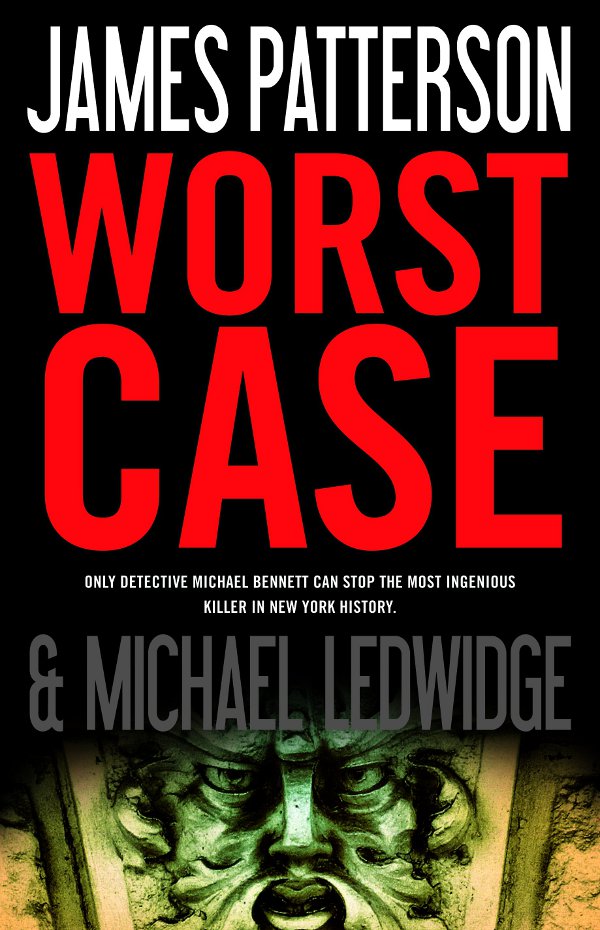
One of my favorite past times is browsing a flea market or used bookstore.  As a kid I used to beg my mom to take me to garage sales on weekends. I’m fortunate to be walking distance from The Strand and the Chelsea Flea Market. This is dangerous for my bank account though. Some book assignments can lead you on field trips. For the book Worst Case by James Patterson, the kind of imagery I was looking for was limiting with just search browsers. My Creative Director suggested that I spend a couple hours browsing the Metropolitan Museum of Art. Right when I was about to leave, I found the perfect book at the museum’s shop. It is more exciting when you find imagery in an unexpected source.

Who are your design heroes?

Although I admire many designers, Alvin Lustig comes to mind.

What does the future hold for book cover design?

I wish I knew. At times I think the profession of being a book cover designer is in jeopardy with the increasing popularity of reading on smartphones and other portable devices. There may be greater emphasis placed on starting with a strong design, without the luxury of relying on fancy printing effects or being neatly displayed in a shop window. For example, designers may need to review their covers as small thumbnails to determine the legibility of delicate text and elements when sitting in an iBooks shelf. Who knows? Maybe in an over-saturated marketplace, with rampant closures of bookstores, design could be more important than ever before.

Thanks Karen!

Images:

  1. Follow Me by Joanna Scott
    Jacket photograph ©Christine Callaghan/Arcangel Images
    Creative Director: Mario J. Pulice
    Publishing house: Little, Brown and Company
  2. The Natural History of Uncas Metcalfe by Betsey Osborne
    Art Director: Michael Storrings
    Cover illustration from Bibliotheque des Arts Decoratifs, Paris/Archives Charmet/The Bridgeman Art Library
    Publishing house: St. Martin’s Press/Griffin imprint
  3. I Never Loved a Man the Way I Love You by Matt Dobkin
    Art Director: Michael Storrings
    Cover photograph of Aretha Franklin ©Michael Ochs Archives
    Publishing house: St. Martin’s Press/Griffin imprint
  4. Dictionary of American Art and Artists by Ann Morgan
    Jacket photograph: Installation view: 20th Century American Art, 1989. Whitney Museum of American Art, New York.
    Paintings, left to right: Summer Table (detail), 1972-73 © 2007 Brice Marden/Artists Rights Society (ARS), New York. Day One (detail), 1951-52 © 2007 Barnett Newman Foundation/Artist Rights Society (ARS), New York. Three Flags, 1958 © Jasper Johns/Licensed by VAGA, New York, New York.
    (Karen’s note: securing the image rights for this photo was very difficult/tricky because not only did it include an interior wall from the Whitney Museum, but included artwork from three different artists. I worked with a photo researcher who helped with dealing with the vendors directly.)
  5. Discovering Modernism by Louis Menand
    Cover photograph of T.S. Eliot and Virginia Woolf courtesy of Princeton University Library
    Publishing house: Oxford University Press
  6. The Swan Thieves by Elizabeth Kostova
    Creative Director: Mario J. Pulice
    Jacket painting credit: Leda, 1832 by Francois Eduard Picot, Paris collection © Peter Willi/Superstock
    Publishing house: Little, Brown and Company
    (Karen’s note: final jacket has foil and embossing, printed on Neenah Eames painting paper stock)
  7. Israel is Real by Rich Cohen
    Art Director: Henry Sene Yee
    Cover painting of Jerusalem: William Holman Hunt/Getty Images
    Publishing house: Picador USA
  8. Kabul in Winter by Ann Jones
    Art Director: Henry Sene Yee
    Cover photograph © Ann Jones
    Publishing house: Picador USA
  9. The Lion’s Eye by Joanna Greenfield
    Creative Director: Mario J. Pulice
    Cover photograph of lion © blickwinkel / Alamy
    Publishing house: Little, Brown and Company
  10. My Paper Chase by Harold Evans
    Creative Director: Mario J. Pulice
    Cover photograph of Harold Evans © Lord Snowdon
    Publishing house: Little, Brown and Company
  11. Angel Island by Erika Lee & Judy Yung
    Art Director: Brady McNamara
    Jacket photos provided by authors and the Angel Island Immigration Station Foundation
    Publishing house: Oxford University Press
  12. China: Fragile Superpower by Susan L. Shirk
    Art Director: Kathleen M. Lynch
    Jacket photograph © Andrew Wong/Getty Images
    Publishing house: Oxford University Press
  13. Worst Case by James Patterson
    Creative Director: Mario J. Pulice
    Jacket photograph from Faces in Stone: Architectural Sculpture in New York City by Robert Arthur King. © 2008 by Robert Arthur King. Used by permission of W. W. Norton & Company, Inc
    Publishing house: Little, Brown and Company
    (Karen’s note: final jacket has foil and embossing)
  14. Don’t Blink by James Patterson & Howard Roughan
    Creative Director: Mario J. Pulice
    Jacket painting credit: Leda, 1832 by Francois Eduard Picot, Paris collection © Peter Willi/Superstock
    Publishing house: Little, Brown and Company
    (Karen’s note: final jacket has foil and embossing)
  15. The Postcard Killers by James Patterson & Liza Marklund
    Creative Director: Mario J. Pulice
    Jacket Photo imaging by Debra Lill
    Jacket photographs: man running ©Yolande de Kort/Arcangel Images; woman in running © Roberto Pastrovicchio/Arcangel Images; street in Stockholm, Sweden © Karin Smeds/Getty Images
    Publishing house: Little, Brown and Company
    (Karen’s note: final jacket has foil and embossing)
1 Comment

Q & A with Daniel Justi

Twenty-nine year old Brazilian designer Daniel Justi graduated in graphic design and art direction from centro universitário belas artes de são paulo, and has been working in editorial design and type design in São Paulo for the last 6 years.

Regular readers of Caustic Cover Critic and Design Work Life will already be familiar with his distinctive book jackets and typography, but I’m happy to post a new interview with Daniel here.

Daniel and I corresponded by email, and he was good enough to answer all my questions in English.

How did you get into book design?

When I was finishing university, I received a proposal for an internship job at an publish house called Editora Manole. So I started working as an editorial assistant. After a while, I started to get very interested in the various methods of making books, so I started studying typography, grids, proportions and many things about Fibonacci, Villard and the golden ratio more deeply. Today, I think that designing the interiors of books is one of the most technical fields of graphic design.

What is your current role in the industry?

Fortunately, I got a position that is rather rare nowadays, which is working with both the cover design and the interiors of books. Sometimes there isn’t enough time so I need to hire freelancers and, in these cases, I need to act as art director. Besides, I run my small type foundry and also do freelance work for some publishers.

Are there a lot of opportunities for book designers in São Paulo?

Yes and no. The publishing field in São Paulo is quite busy. There are many publishers and most of them hire freelancers. At the same time is unusual to work for several publishers. It is more common to do work for only one or two. The editors don’t seem to like to vary their freelancers. So when an editor trusts you, you usually get a lot of work.

Could you describe your design process?

My design process is often not linear. Of course I always start with basics like color, shape and typography, but I think its important not to have total control of the process. The accidents, incidents and coincidences are important in my process. For books, I usually say, “let the text control.” The content is what sets the decisions like to using or making illustrations, pictures, collages, textures, typography, etc..

There is nothing better than content to define the shape.

What are your favourite books to work on?

Definitely literature and art.

I believe that literature books are the best. They don’t need obvious solutions. You can be daring, try something new or maybe weird, since that has something to do with the content and, most important, makes the reader think.

I think the main function of a book cover is to create a communication with the reader and not just give you all the obvious way. It is important never to underestimate the reader.

I also enjoy working on academic books, containing information graphics, charts and timelines. I like to find the visual solutions for these kind of books.

What are the most challenging?

Medical books.

The publishing company where I work is well known for his books on medicine. It’s always a great challenge to make good design books on this topic. Currently I think it’s a fun challenge, but a few years ago, it was terrifying!

When did you become interested in type design?

In my last year of university, I had an extra course of a project called Tipocracia.

Tipocracia is a project of a graphic designer and professor called Henrique Nardi. The purpose of this project is to disseminate the typography and type design in Brazil. It is a very important initiative and encourages students to engage in the field.

I’ve always had a great interest in typography, but contact with Tipocracia was what motivated me to start my own type foundry.

Does working so closely with type inform your book design?

Absolutely! Work with type design completely changes your view of typography.

Currently, my attention is more focused on covers, but I never want to stop designing the interiors of the books, which is where all your technical knowledge is put to the test. So, for me, doing both (cover and interior) will always be enjoyable.

What are some of the current design trends in Brazil?

Hard to say. Brazil is a very big country and many things happen outside of São Paulo.

In São Paulo, for example, I don’t think there’s a specific local trend. I think it’s more like trends that exist in other large cities and urban centers, like London or New York.

Trends end up becoming more global. This year, for example, designers from Pentagram (including Paula Scher and DJ Stout ) came to São Paulo to promote workshops. At the end of the year Stefan Sagmeister is coming. Maybe it’s all about a global trends.

Who are some of the Brazilian designers we should look out for?

There are so many names, but I’ll try to summarize my favorites by area:

Book covers: Retina_78

Graphic Design: Rico Lins

Type design: Fabio Haag

Illustration: Thiago Queiroz

Photo: Cia de Foto

Where do you look for inspiration and who are some of your design heroes?

I try not to look for inspiration in graphic design field. I think it’s necessary to have other interests to inspire you. Things that inspire me are simple like skateboarding on a Saturday afternoon, reading a book, listening to some music, photography and going to the movies or art exhibitions.

Some of my heroes are Paul Rand, Alvin Lustig, Neville Brody, László Moholy-Nagy, Josef Müller-Brockmann, Jan Tschichold and so many others…

What does the future hold for book cover design?

I believe that things tend to increasingly professionalize. The market is saturated of free stock images. It’s important to create customized solutions so we don’t repeat what has already been done.

My central philosophy is to never underestimate the consumer. Design is communication, and for it to exist, you must not deliver everything and let people think for themselves. There must be an interaction.

I really like Massimo Vignelli’‘s phrase:

“I disagree with people who think the word dog should look like a dog. Even worse are people who think the word dog should bark.”

Thanks Daniel!

1 Comment

Penguin 75: Q & A with Paul Buckley and Christopher Brand

Launched with 10 titles by Allen Lane in 1935, Penguin Books turns 75 this year. To commemorate the anniversary, Executive VP Creative Director Paul Buckley has compiled Penguin 75, a collection of 75 book covers from the Penguin US archive.

Penguin 75 is an inside look at the Penguin design process with candid and irreverent commentary from authors, designers, editors and artists as well as Penguin Art Directors Darren Haggar and Roseanne Serra and Buckley himself. Filled with the kind of distinctive illustrative covers that are now associated with Penguin US, the book is wonderful slice of American book cover design. As Karen Horton recently noted in her interview with Buckley for design:related:

Penguin 75… is less about the history of the old orange-spined paperbacks and more about the relationships Creative Director Paul Buckley helped to facilitate in the last decade between publisher, editor, author, and designer.”

I was lucky enough to talk to Paul and the book’s designer Christopher Brand about Penguin 75 last week.

How did Penguin 75 come about?

PB: I’ve always had a mix of fascination, disdain, and understanding, for what my staff and I go through in trying to get our work approved, as well as what the editors and publishers are dealing with on their end. Of course all people whose work is subjective go through some sort of approval process — and it’s not easy for the folks on the other end of the situation either; the ones saying “this is just not right”. As it’s something we do not hear much about (other than at some industry function), I thought it would be interesting to put some of these stories together in book form.

And how did you get involved in the project, Chris?

CB: I was working on staff at Penguin at the time. I let Paul know that I would be interested in working on it when he first mentioned the project to everyone. I mostly work on covers but I’ve had the chance to work on a few interiors before this one.

What criteria did you use to choose the covers?

PB: There were different sets of criteria; the most obvious being that they had to be Penguin paperbacks, as we had decided to use this project in conjunction with our 75th Penguin imprint anniversary. Another criteria was that I wanted to show recent Penguin work, so nothing older than 10 years or so. Then it came down to a combination of which covers look great and also have an interesting story associated with them, as well as trying to get a mix of intriguing authors and designers in there — not just your obvious fiction darlings, but a true microcosm of the publishing world and art world.

The covers are very different from the iconic Penguin paperback covers. Do you think the book shows a different side to Penguin’s design history?

PB: Of course. Penguin UK does a gorgeous job of tapping into the Penguin archive and history, and while I like to go there from time to time, I’m very interested in Penguin’s future in a different sort of way. The beautiful Penguin by Design is just not who I am, and if I tried to do a version of that, two things would happen — I’d fail as my heart would not be in it, and no one would buy it as it’s already out there in a few books. This is not to say that I’m not a huge fan of Penguin’s design history — I am, but I see it as a place to tap into occasionally, while still moving the brand forward — as nothing creative can remain as it was, nor should it if it wants to stat vital in it’s own day. But we do maintain Penguin’s age old love of illustrated and well crafted covers.

Do you have a sense that Penguin US has a design sensibility that is separate from the Penguin UK tradition?

PB: Whether you’re UK or US, it’s still Penguin tradition, so I don’t define it as you do. Both sides are very proud of Penguin, it’s history, it’s cache, it’s values — and both sides have built Penguin into what it is today, and what it stands for. So while we are separate entities that bring different things to the table, the overall strive to keep the quality bar set very high is paramount to either side.

Was it hard to choose just 75 covers?

PB: Unbelievably hard. That ate up the first month or so, just getting it down to 75, who was left in, who was left out, who on staff has five covers in, while another has only one or two, is it a good mix visually and editorially of this and that, etc etc.

Chris, did you have a say in any of the selections?

CB: Paul did an initial edit and went through tons of the books. Once he narrowed it down I helped a little bit with figuring out what we should put in, but mostly I would come to Paul later on when were trying to lay out the book. If we couldn’t get enough content for one of the books then we would have to find another one to put in. Or, if Paul wanted to add more books toward the end then we had to figure out what to subtract. I was more involved when it affected the design.

Were there any covers or comps that you wanted to include but couldn’t?

PB: By the nature of only utilizing 75 covers / series, things have to be left out. So yes, but only for that reason.

Penguin 75 includes contributions from authors and editors as well as designers, but I notice you left out Sales & Marketing!

PB: I did not leave out sales and marketing any more than I left out elves and leprechauns… I simply did not have any real sales and marketing stories. The Penguin marketing director, John Fagan, is hands down the best marketing director in the universe — we all know the horror stereotype stories of the marketing director killing this and that just to hear their own voices in the room, but John is so much an integral part of our team and loves what we are doing with our packaging; so unless he really thinks we’re missing something, he’s incredibly supportive; and when he does have something to say, he still manages to do it in a kind and intelligent way. Our sales team also leaves that stereotype behind. Trust me, you see in the book that I’m not pulling any punches and I made sure no one else in the book did either — so if I had great Penguin sales and marketing stories, you’d be reading them.

As a designer, were you surprised by any of the  comments from authors and editors about the cover designs, Chris?

CB: The range of comments from the authors was pretty surprising. Some were very thoughtful and you could tell they appreciate and understand book cover design. Other authors weren’t very happy with their covers and they made that pretty clear.

Was it fun to design a book about book design?

CB: More than anything, it was just fun for me to be working on the interior of a book instead of just the cover. It was a nice change.

Were there any unique challenges?

CB: The biggest challenge was that Paul and I were working on this book, but at the same time we both had full time jobs at Penguin. Paul tried to clear my plate for me a bit, but we both still had a lot of other responsibilities to deal with. Another thing that was hard was that we were sort of doing this whole thing on the fly. We were responsible for not just designing the book but gathering all of the content and all of the things that we needed to design the book (the comments, the hi-res art, etc.). We had to get everything together as we went and this stuff trickled in throughout the process.

On a design level, there was a lot of information to organize. It was challenging to come up with a system for everything. We had comments from that authors and designers, then there were comments from the art directors that we created another system for, all of the credit information for each book, we were showing alternative designs for some covers. There was a lot to think about.

Did you try to take account of Penguin’s design history while working on your design?

CB: I did take Penguin’s history into account at the beginning when we were figuring out what the layout should look like. I used Gill Sans throughout the book, but it’s pretty small and doesn’t feel overwhelmingly “Penguin”. I tried some things that were more in the style of older Penguin covers, but in the end we went with something more modern.

Was it strange to design a book that includes some of your own work?

CB: It was a little strange at first, but many of the covers in the book were designed by my co-workers so a lot of the work was very familiar to me.

So, did the book make you reconsider any of your own designs, or your design process?

PB: I’d love to sound thoughtful and say “yes” and expound on some brilliant new design wisdom — but the answer is “no”. All of the entries in this book are well known to me, and most have been for years. Putting them all down in one place just made me feel proud of what my department does — but I’ve always been incredibly proud of my team. If anything, it made me reconsider what it takes to put a book together, and see editors and authors in a more favorable light.

And, Chris, I have to ask… How does it feel to be immortalized on the cover of The Shadow of the Wind by Carlos Ruiz Zafón?

CB: It was an amazing opportunity. I think this only the beginning of my modeling career.

Thanks Paul and Chris!

Images:

  1. Penguin 75 cover, design by Paul Buckley
  2. Penguin “Graphic Classics”:
    The Dharma Bums | Art Director: Paul Buckley |  Illustrator/Designer: Jason
    The Portable Dorothy Parker | Art Director: Paul Buckley | Illustrator/Designer: Seth
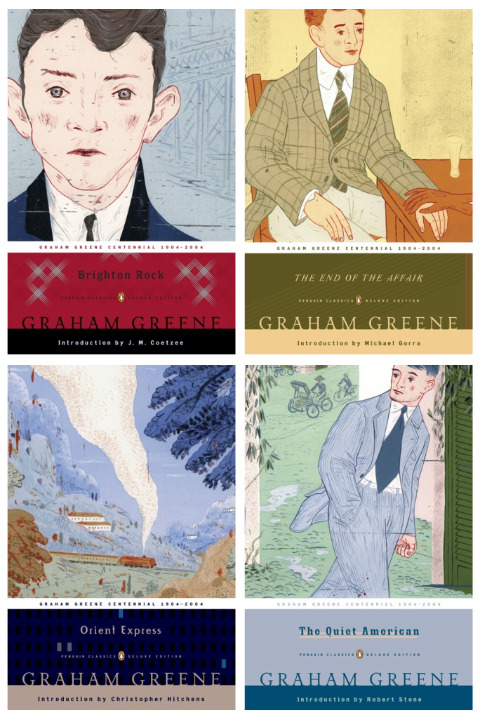
  3. Graham Greene Backlist | Designer/Art Director: Paul Buckley | Illustrator Brian Cronin
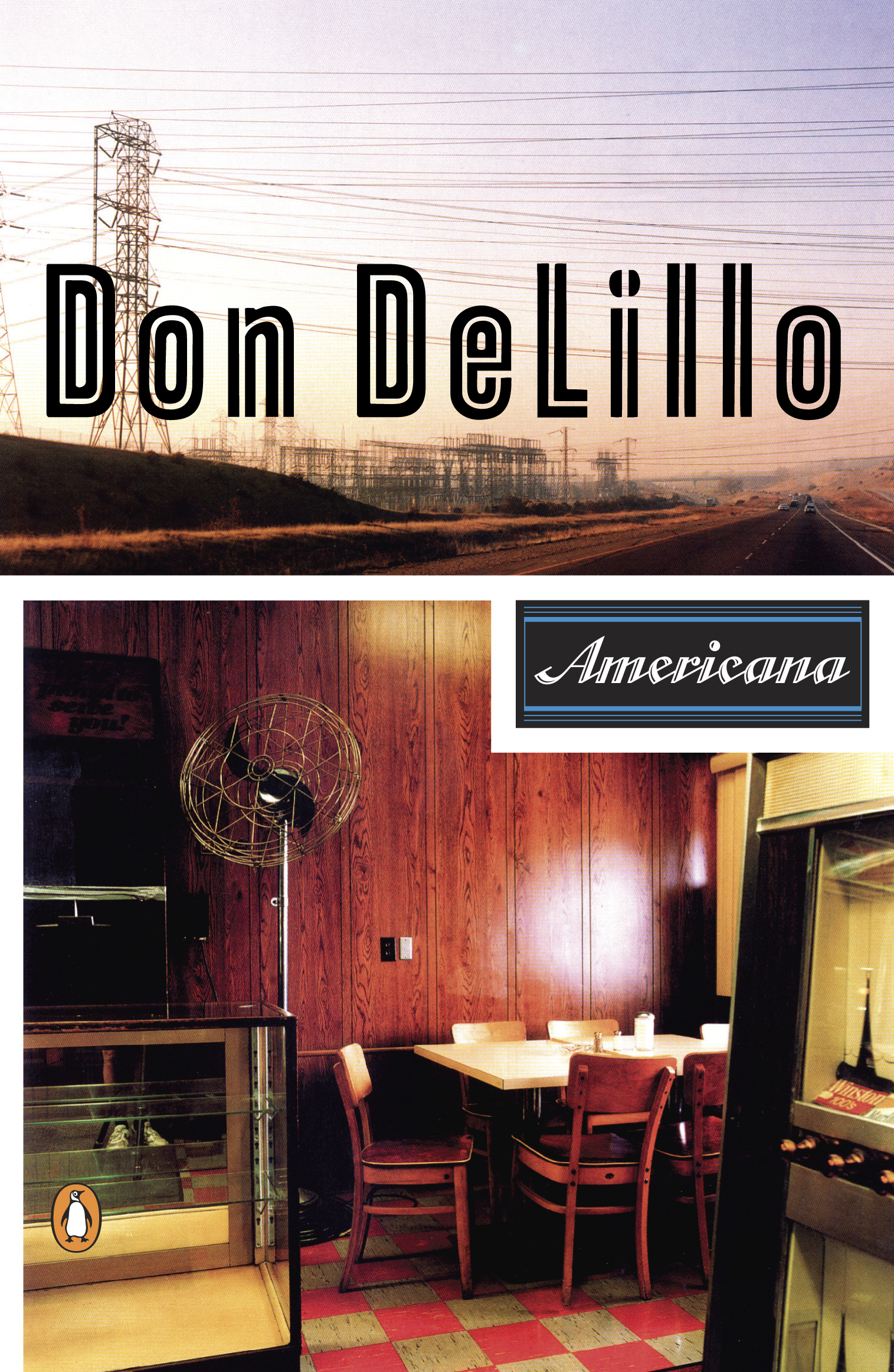
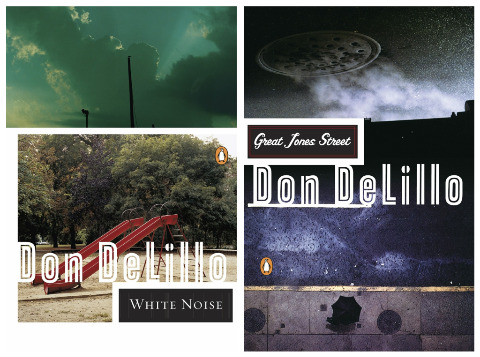
  4. Don Delillo Backlist:
    Americana
    | Designer/Art Director: Paul Buckley | Photos: Jeff Brouws
    White Noise | Designer/Art Director: Paul Buckley | Photos: Jason Fulford
    Great Jones Street | Designer/Art Director: Paul Buckley | Photos: Hugues Colson (top), Tom Zimberzoff (bottom)
  5. Emporium and unused image | Designer/Art Director: Paul Buckley | Illustrator: Viktor Koen
  6. Special Topics in Calamity Physics | Designer/Art Director: Paul Buckley
  7. Pages 220 – 223  Penguin 75 | Designer: Christopher Brand
  8. Pages 244 – 247 Penguin 75 | Designer: Christopher Brand
  9. There Once Lived a Woman Who Tried To Kill Her Neighbor’s Baby | Designer: Christopher Brand | Illustrator: Sam Weber | Art Director: Roseanne Serra
  10. The Jewish Messiah | Designer: Christopher Brand art Rodrigo Corral Design | Art Director: Darren Haggar
  11. The Shadow of the Wind | Designer: Tal Goretsky | Art Directors: Darren Haggar and Paul Buckley
4 Comments

Gil Scott-Heron Redesigns by Stuart Bache

Born in Chicago, April 1, 1949, poet and musician Gil Scott-Heron is perhaps best known for the politically infused bluesy soul and proto-hip-hop he created with Brian Jackson in the early 1970’s.

Although recently troubled by drug addiction and in and out of prison for drug possession, an apparently resurgent Scott-Heron released his first studio album in 16 years, I’m New Here (XL Recordings), in February, and two of his novels — The Vulture (1970) and The Nigger Factory (1972) — were reissued (for a second time) by Canongate Books with new cover designs by talented UK designer Stuart Bache.

I recently talked to Stuart about Gil Scott-Heron and the redesign…

How did you get into book design?

I fell upon book cover design by shear luck. In late 2005, after a stint of travelling, I decided it was time to think about my career. I found, applied and was surprised (and ecstatic) to be given the job of Junior at Hodder & Stoughton and moved to London.

When did you discover the work of Gil Scott-Heron?

I first discovered Gil Scott-Heron way back in school. We had been reading and discussing To Kill a Mocking Bird in English Class and I remember taking a real interest in the subject, which my teacher at the time picked up on and loaned me both The Vulture and The Nigger Factory.

How did you come to design the covers of his books?

It was a great pleasure to be asked to design the covers for the reissues. I had already been doing some work for Canongate and so when the Art Director asked if I had time to come up with ideas for the reissues I jumped at the chance. It was a fairly short deadline, but I believe those to be the best kind, great for creativity (and a few extra grey hairs).

Could you describe your design process for the covers?

The brief asked for them to be fresh, streetwise, graphic and contemporary. I designed a few covers for each title, with different images and branding styles, which were then passed on to Canongate for their prefered direction.

The final The Vulture cover centred around John Lee (the young lad who is murdered) and the title cried out to be used in some sort of graphic function. The Nigger Factory relied heavily on an image that both showed and did justice to that moment in US history. It also needed a graphic so I added the stripes to represent the flag, but the use of red paint strokes shows the heat and anger involved too.

What is the typeface?

The typeface I used is Futura, probably light. I have a thing about Futura, Century Gothic and the like. It’s the perfect circles of the ‘O’ and ‘C’.

Are they a departure from your usual design work?

These covers stand out for me, especially compared to my usual style. I take a lot of pride in my work but I’m never usually proud of it — I always see something I could have done better. But the Gil Scott-Heron’s showed I could do something completely different…and in a short timescale too.

What are you working on currently?

At the moment I’m working on another title for Canongate called Super Cooperators and Aline Templeton’s new thriller Cradle to Grave for Hodder & Stoughton. This time of year tends to be quiet, too quiet really, but these are nice titles to be getting along with. Cradle to Grave gives me the opportunity to play with my homemade textures and brushes in Photoshop, and Super Cooperators is, once again, going to be something very different from the rest of portfolio.

Where do look for inspiration and who are some of your design heroes?

Ever since I’ve been freelance I have had a renewed enthusiasm for design, I notice everything and I’m hardly out of bookshops — I see books all the time that I think ‘I wish I’d designed that’. It really keeps you on your toes and gives you the incentive and the push to do better.

I owe a lot to Hodder & Stoughton, their Art Department has some of the best designers in the industry and I learned an awful lot during my time there — and if they had never given me the chance I wouldn’t be writing this now.

Thanks Stuart!

Comments closed

Q & A with Ferran López, Random House Mondadori

I came across the work of graphic designer Ferran López after stumbling on his wonderful book cover blog The Jacket Museum.

Based in Barcelona, and currently working at Random House Mondadori — the Spanish-language joint publishing and distribution venture between Random House and Italian publisher Mondadori — Ferran’s eye for typography and background in photography is evident in his sharp book cover designs.

Although I want to interview more designers who work outside of Canada, UK and US at The Casual Optimist, the opportunity doesn’t often present itself because of my almost total inability to speak any other languages. But when I noticed that Ferran publishes his blog in both English and Spanish, there was absolutely no excuse not to speak to him!

I’m really happy to be able to include Ferran’s answers in both English and Spanish in this interview, but I have also posted all the questions and answers in just Spanish for those who would prefer to read it that way.

And I do want to say a big thank you to Ferran for both his patience and for providing the translation…

How did you get into book design?

Merely by chance. Although my training is photography and I was a photographer for many years, more and more my jobs were getting closer to the world of graphic design. At the end of the year 2000 I was working as a freelance designer and moonlighting doing digital photography manipulation and retouching. Around this time I met Marta Borrell, the Art Director at Random House in Spain (before the joint-venture with Mondadori). She was looking for a graphic designer to work in-house on trade book cover design. Even though I had never tried book design, I was enthusiastic about the idea because I love books. Marta liked my portfolio and my enthusiasm. She took a chance on me and (I like to think) it turned out all right! We have been working together for a decade now.

Casi por casualidad. Mi formé como fotógrafo, aunque desde hace muchos años mi trabajo, por vocación, fue acercándose cada vez más al diseño gráfico. A finales de 2000 trabajaba como diseñador free-lance y en manipulación digital de fotografía. Fue entonces cuando conocí a Marta Borrell, la directora de arte de Random House en España (por aquel tiempo previo a la joint-venture con Mondadori) que estaba buscando un diseñador para la división de libros Trade. A pesar que nunca había trabajado con libros estaba entusiasmado con la idea, ¡me encantan los libros!. A Marta le gustó mi portfolio y mi entusiasmo.  Apostó por mi y creo que la cosa resultó bien. Llevamos ya una década trabajando juntos.

Briefly, could you tell me about working at Random House Mondadori?

It reminds me of a sequence from Billy Wilder‘s “One, Two, Three”. The pace is frantic and the procedures are complex at times, but, although it sounds like a cliché, it is impossible to think of a team of better professionals. Almost everyone in the workplace is young (even the CEO is younger than me!) and this translates into passion. There are 13 of us In the Art Department and sometimes we seem like family or better yet a clan. We suffer a lot, but always together! Just kidding! But at times, when someone is under a lot of pressure or creatively blocked, there is always someone to lend a hand, or at least have a coffee break with.

Se parece mucho a una secuencia de «Uno, Dos, Tres» de Billy Wilder. El ritmo es frenético, los procesos a menudo complicados pero, aunque suene a cliché, es imposible imaginar un equipo de mejores profesionales. Es una empresa joven (¡Hasta la Consejera Delegada es más joven que yo!) y creo que eso se traduce en entusiasmo.

En el departamento de diseño somos 13 personas, a veces parecemos una familia o incluso un clan. Sufrimos mucho, pero siempre juntos. Es broma; pero a veces cuando alguno de nosotros está bajo mucha presión o bloqueado siempre hay alguien con quien compartir el proceso, consultar o al menos con quien tomar un café.

What is your current role there?

At the moment, I am responsible for the Design of the Trade Commercial and the Paperback divisions. In the Paperback Division my job is basically coordination and support. As a designer, my job is mainly centered in book covers for Commercial Trade, bestsellers, novels and mass-market non-fiction for the “Plaza & Janés” and “Grijalbo” imprints.

Also, since its establishment in 2004, I’m also in charge of the “Caballo de Troya” imprint, an experiment: a small independent publisher within a huge publishing company.

Actualmente soy responsable de Diseño de las divisones Trade Comercial y Bolsillo. En la división de bolsillo mi función principalmente es estratégica y de apoyo. Como diseñador mi trabajo se centra en las cubiertas de los libros de Trade Comercial: best-seller, novelas y no ficción de carácter masivo, en los sellos Plaza & Janés y Grijalbo.

También, desde su fundación en 2004 me encargo de Caballo de Troya, casi un experimento: un pequeño sello independiente que vive dentro de un gran grupo editorial.

Approximately how many covers do you work on a season?

About 100 new books a year.

Unas cien novedades al año.

Could you describe your design process?

I don’t follow the same procedure with every book. Some times, I read the briefing and I start visualizing the cover, the message, the photo or the illustration that seems to fit the book. Other times, I need to read, comment, draw, write, web-surf, look out the window and make several trips to the coffee machine to obtain what I want to transmit visually. At times, nothing seems to work and then I begin creating an idea by a typographical approach to unblock myself.

No sigo el mismo proceso con todos los libros. A veces, tal como leo el briefing, empiezo a visualizar la portada, el mensaje, la fotografía o la ilustración que a mi parecer encaja. Otras veces necesito leer, comentar, dibujar, escribir, navegar, mirar por la ventana y hacer varios viajes a la cafetera para conseguir saber lo que quiero que visualmente transmita. En algunas ocasiones ningún método parece funcionar y entonces para desbloquear empiezo a creando la imagen desde la aplicación tipográfica.

What are your favourite books to work on?

Novels where I can’t help getting infatuated with one of its characters. Also books where I can give the cover a hidden meaning or a wicked twist. And finally, those low stream books with a small print-run where I can use daring images.

Aquellas novelas en los que me enamoro perdidamente de alguno de sus protagonistas (a veces es inevitable), los libros en los que se puede esconder una segunda lectura o un giro perverso en la portada y finalmente aquellos libros minoritarios con un corto tiraje que permiten utilizar imágenes más arriesgadas.

What are the most challenging?

Books with complex plots and/or multiple sub-plots. Those where the parties involved in the process of approval (editors, marketing staff, sales, etc.) have diverse ideas of what should the cover reflect. And off course, those books which the sales expectations are extremely high…The pressure is on!

Los libros con tramas laberínticas o con múltiples mensajes y subtramas. Aquellos en los que las distintas partes implicadas en el proceso de aprobación tienen visiones muy distintas de lo que debe comunicar la portada. Y por supuesto aquellos en los que las expectativas de venta son muy altas: The pressure is on!

When you’re working on translated books, do you look at the US or UK covers, or do you try to avoid them?

We always take the original cover into consideration. When a new book comes up, we review the original cover with its editor and the marketing department to see if it would work in Spain. With some authors, for instance, Stephen King or Terry Pratchett, we don’t even consider changing it — their fans would never forgive us. In any case, whether we use the original covers or not, they always help us as guide to which way we want to go.

German and Italian cover versions are always good reference.

An interesting example is the case of Ken Follet’s “World Without End”. We had both US and UK editions and I designed an adaptation combining the best elements of both. Now, we have the best of them all!

Siempre tenemos en cuenta la portada original. Cuando se presenta el libro valoramos en conjunto con edición y marketing si la portada puede funcionar o no en nuestro mercado. Con algunos autores, como Stephen King o Terry Pratchett ni siquiera nos planteamos el cambio, sus seguidores no nos lo perdonarían. En cualquier caso, utilicemos la portada original o no, siempre nos sirven de guía. Las ediciones alemanas e italianas también son dos buenos referentes.

Como caso curioso, para la edición española de «El mundo sin fin»  de Ken Follet compramos la portada estadounidense y la británica e hice una adaptación combinando lo mejor de ambas. ¡Ahora nuestra portada es la mejor!

Where do you look for inspiration and who are some of your design heroes?

Design books, movie and TV series imagery. Supermarket shelves and flea markets. Second hand book shops and record stores. Obviously on the Web (piece of cake!). Besides book cover design blogs, Ffffound!, But Does it Float, Grain Edit and Some Random Dude are among my favourites.

Spain’s very own Daniel Gil is perhaps responsible that I am working in this field. When it comes to contemporary designers there is a bunch of good ones: Rodrigo Corral, Henry Sene Yee, David Wardle, John Gall, Juan Pablo Cambariere, Peter Mendelsund, Darren Haggar…My list goes on…

En los libros, en el cine y en las series de televisión. En las estanterías del supermercado y en los mercadillos. En las tiendas de discos y libros de segunda mano. En Internet (¡es tan fácil!); además de los blogs de diseño editorial, Ffffound!, But Does it Float, Grain Edit y Some Random Dude son mis sitios favoritos.

El español Daniel Gil es quizás el principal responsable de que ahora mismo yo esté haciendo esto. En cuanto a los contemporáneos hay un buen grupo de excelentes diseñadores: Rodrigo Corral, Henry Sene Yee, David Wardle, John Gall, Juan Pablo Cambariere, Peter Mendelsund, Darren Haggar… Es imposible no dejarse alguno…

What does the future hold for book cover design?

Obviously, things in this field are going to change, but I cannot imagine how. It is completely unforeseeable. In any case, I think covers will always be a great vehicle to sell books, no matter what the medium is. We will just have to wait and see how it will affect our way of working, our tools and our approach.

Las cosas van a cambiar, de eso no me cabe duda, pero me cuesta imaginar como. Es imprevisible.

En cualquier caso creo que las portadas seguirán siendo un argumento excelente para vender libros, sea cual sea el soporte. Si esto es así habrá que ver como afectará a nuestra manera de trabajar, nuestras herramientas y nuestros procesos.

Thanks (gracias!) Ferran!

8 Comments

Q & A with Ferran López, Random House Mondadori (Spanish)

This is the Spanish language version of The Casual Optimist interview with Ferran López, designer at Random House Mondadori and curator of book cover blog The Jacket Museum.

¿Cómo llegaste a ser diseñador de libros?

Casi por casualidad. Mi formé como fotógrafo, aunque desde hace muchos años mi trabajo, por vocación, fue acercándose cada vez más al diseño gráfico. A finales de 2000 trabajaba como diseñador free-lance y en manipulación digital de fotografía. Fue entonces cuando conocí a Marta Borrell, la directora de arte de Random House en España (por aquel tiempo previo a la joint-venture con Mondadori) que estaba buscando un diseñador para la división de libros Trade. A pesar que nunca había trabajado con libros estaba entusiasmado con la idea, ¡me encantan los libros!. A Marta le gustó mi portfolio y mi entusiasmo.  Apostó por mi y creo que la cosa resultó bien. Llevamos ya una década trabajando juntos.

¿Puedes describir brevemente cómo es un día de trabajo en Random House Mondadori?

Se parece mucho a una secuencia de «Uno, Dos, Tres» de Billy Wilder. El ritmo es frenético, los procesos a menudo complicados pero, aunque suene a cliché, es imposible imaginar un equipo de mejores profesionales. Es una empresa joven (¡Hasta la Consejera Delegada es más joven que yo!) y creo que eso se traduce en entusiasmo.

En el departamento de diseño somos 13 personas, a veces parecemos una familia o incluso un clan. Sufrimos mucho, pero siempre juntos. Es broma; pero a veces cuando alguno de nosotros está bajo mucha presión o bloqueado siempre hay alguien con quien compartir el proceso, consultar o al menos con quien tomar un café.

¿Cuál es tu función allí?

Actualmente soy responsable de Diseño de las divisones Trade Comercial y Bolsillo. En la división de bolsillo mi función principalmente es estratégica y de apoyo. Como diseñador mi trabajo se centra en las cubiertas de los libros de Trade Comercial: best-seller, novelas y no ficción de carácter masivo, en los sellos Plaza & Janés y Grijalbo.

También, desde su fundación en 2004 me encargo de Caballo de Troya, casi un experimento: un pequeño sello independiente que vive dentro de un gran grupo editorial.

Aproximadamente, ¿En cuantas portadas trabajas en una temporada?

Unas cien novedades al año.

¿Podrías describir tu proceso al diseñar?

No sigo el mismo proceso con todos los libros. A veces, tal como leo el briefing, empiezo a visualizar la portada, el mensaje, la fotografía o la ilustración que a mi parecer encaja. Otras veces necesito leer, comentar, dibujar, escribir, navegar, mirar por la ventana y hacer varios viajes a la cafetera para conseguir saber lo que quiero que visualmente transmita. En algunas ocasiones ningún método parece funcionar y entonces para desbloquear empiezo a creando la imagen desde la aplicación tipográfica.

¿Que libros son tus favoritos para trabajar?

Aquellas novelas en los que me enamoro perdidamente de alguno de sus protagonistas (a veces es inevitable), los libros en los que se puede esconder una segunda lectura o un giro perverso en la portada y finalmente aquellos libros minoritarios con un corto tiraje que permiten utilizar imágenes más arriesgadas.

¿Cuales son los que plantean un reto mayor?

Los libros con tramas laberínticas o con múltiples mensajes y subtramas. Aquellos en los que las distintas partes implicadas en el proceso de aprobación tienen visiones muy distintas de lo que debe comunicar la portada. Y por supuesto aquellos en los que las expectativas de venta son muy altas: The pressure is on!

Cúando trabajas en libros extranjeros, ¿Miras la portada original o prefieres evitarla?

Siempre tenemos en cuenta la portada original. Cuando se presenta el libro valoramos en conjunto con edición y marketing si la portada puede funcionar o no en nuestro mercado. Con algunos autores, como Stephen King o Terry Pratchett ni siquiera nos planteamos el cambio, sus seguidores no nos lo perdonarían. En cualquier caso, utilicemos la portada original o no, siempre nos sirven de guía. Las ediciones alemanas e italianas también son dos buenos referentes.

Como caso curioso, para la edición española de «El mundo sin fin»  de Ken Follet compramos la portada estadounidense y la británica e hice una adaptación combinando lo mejor de ambas. ¡Ahora nuestra portada es la mejor!

¿Dónde buscas inspiración y cuales son tus «Héroes del diseño»?

En los libros, en el cine y en las series de televisión. En las estanterías del supermercado y en los mercadillos. En las tiendas de discos y libros de segunda mano. En Internet (¡es tan fácil!); además de los blogs de diseño editorial, Ffffound!, But Does it Float, Grain Edit y Some Random Dude son mis sitios favoritos.

El español Daniel Gil es quizás el principal responsable de que ahora mismo yo esté haciendo esto. En cuanto a los contemporáneos hay un buen grupo de excelentes diseñadores: Rodrigo Corral, Henry Sene Yee, David Wardle, John Gall, Juan Pablo Cambariere, Peter Mendelsund, Darren Haggar… Es imposible no dejarse alguno…

¿Qué crees que reserva el futuro para el diseño editorial?

Las cosas van a cambiar, de eso no me cabe duda, pero me cuesta imaginar como. Es imprevisible.

En cualquier caso creo que las portadas seguirán siendo un argumento excelente para vender libros, sea cual sea el soporte. Si esto es así habrá que ver como afectará a nuestra manera de trabajar, nuestras herramientas y nuestros procesos.

Thanks (gracias!) Ferran!

Comments closed

Q & A with Peter Mendelsund and Tom McCarthy

In the early days of The Casual Optimist I scribbled out a short list of book designers I wanted to interview. More designers have been added since then, but a few of the original list remain un-interviewed. At the top of the list has been the name I actually wrote down first: Peter Mendelsund.

As Senior Designer at Knopf, Mendelsund’s designs feature here regularly. Much as I love his covers, however, Peter has been interviewed extensively elsewhere. I just haven’t known how to approach his work in a way that he would find interesting.

That was until I saw the shockingly subversive jacket design for Tom McCarthy‘s new novel “C”. The pairing of Mendelsund, the designer who is a musician, and McCarthy, the author who is an artist, was — it seemed to me — inspired.

A perfect opportunity…

What follows is primarily an interview with Peter about that design for “C”. But over the course of a few emails, Peter and I both decided to bring Tom into the conversation. I had met Tom shortly after the release of his debut novel Remainder and Peter had, it transpired, met Tom in New York after Knopf had signed “C”. It made sense to both of us.

It is a long, but absolutely fascinating exchange. Peter kindly answered my questions more fully than I had any right to expect and Tom, who was contributing from Stockholm, was more than gracious in less than ideal circumstances. I’m grateful to them both.

7 Comments

Q & A with Jason Godfrey, Bibliographic

Jason Godfrey’s Bibliographic: 100 Classic Graphic Design Books was one of my favourite books last year.

Published by Laurence King in the UK, the book is distributed by Raincoast in Canada (Chronicle Books in the US) and so I was fortunate enough to have the opportunity to ask Jason a few questions about the book and get some lovely spreads from the publisher.

My original plan was to run the interview on the (recently redesigned) Raincoast website, but ultimately the interview was a little too long for our blog there, so I’ve decided to republish the whole unexpurgated monster here.

As I mentioned on in my original Raincoast blog post, Bibliographic is not history of graphic design or even a definitive list of 100 books on the subject — it’s more of an essential design book shopping list — and basically I really wanted to know why Jason decided to make the book, how he decided on the  final selections, and what exactly was informing his decisions.

We corresponded by email…

What was the inspiration for Bibliographic?

There was a need for a illustrated resource of graphic design publishing. Many books and articles contained very good reading lists but I had always found them rather detached without the visual reference. The best graphic design books are important artefacts in the history of graphic design and many of the books are becoming difficult to find and access.

004-103_1

What criteria did you use to select the books?

The only rule that was applied throughout was that the books had to be visually interesting, there seemed little point in photographing books that would not look appealing on the page. That the books were designed by some of the cream of graphic design this turned out not to be a big problem but it did mean that some important critical analyses had to be put to one side.

Did you ask other designers for their recommendations?

Whilst mentioning to other designers that I was working on Biblographic I found that they were very keen to promote their own favourite titles and it did help extend the list and also confirm the importance of books that had already been chosen. As part of the book I asked about 20 designers to give me a list of 10 books from their own library, this was an idea borrowed from the designer Tony Brook at Spin who had earlier published a newspaper Spin 2 with reading lists from 50 designers.

Was it difficult to decide which recent books to include?

To gauge which newly published titles will come to be seen part of the canon of graphic design books is not the easiest of tasks. Looking back from a distance helps to establish the relevant trends and lends more perspective to any choices. Regardless the best books all seem to be those that can tell a good story. One recent book, Mark Holt and Hamish Muir’s 8vo: On the Outside (Lars Müller Publishers, 2005) did just this, exploring the process of the studio’s work and the effect of technological on this process and output in a thoroughly engaging book.

There are photographs of every book included in Bibliographic. Were any of the books difficult to locate?

A number of the books are from my own collection others I borrowed from friends and colleagues. Some were so precious I had to send the photographer Nick Turner over to where the their owner could keep them in sight at all times. A handful of books I could only locate at the St Bride Printing Library who were kind enough to facilitate their shooting.

Were there any books you wanted to include but couldn’t access?

Early in the process of compiling my list of 100 books I decided that many of the early examples of early 20th Century graphic design books particularly those of the typographic revolutions of the 1920s and 1930s would be too difficult to access as they are now the preserve of museums. It would all have taken me too far from my premise that Bibliographic could be representative of a working studio library.

Which books came close to being in the 100, but didn’t quite make the final cut?

Tough choices had to made particularly where an author or series of books were successful. Alan Fletcher is very well represented in the book and I couldn’t justify putting in the excellent Identity Kits: A Pictorial Survey of Visual Signals (Studio Vista, 1971) a book he co-authored with Germano Facetti the then art director at Penguin Books. Another book that came very close was Robert Bringhurst’s The Elements of Typographical Style (Hartley & Marks, 1992) which I felt lacked the visual punch necessary for Bibliographic.

Of the books you don’t own in Bibliographic, is there one that you particularly covet?

The 1926 Deberny & Peignot, Specimen Général would be a welcome addition to my library. There was copy in a studio I worked for and I was forever using it as a point of reference or just to admire the elegant section dividers designed by Maximilien Vox.

When did you start collecting design books?

There are a few books that I have from when I was a student but I didn’t seriously start collecting until I had been working professionally for a few years and made a decision to stop buying records in favour of what I found to be the more fulfilling occupation of acquiring books.

What is on your ‘to buy’ list?

New Graphic Design in Revolutionary Russia (Lund Humphries, 1972) by Szymon Bojko is a book I am trying to locate. I have yet to see a copy but it was designed by Herbert Spencer the author and designer of Pioneers of Modern Typography (Lund Humphries, 1969) and so I am expecting an interesting book.

In the introduction to Bibliographic, Steven Heller says he has a separate apartment for his books! How extensive is your library?

Mine is not as nearly extensive as Steven’s although it does take up a large part of my studio and I am in need of extra shelving at the moment. It also needs saying that in common with most designers my collection also contains many books on the arts, photography and others of general interest.

What is your own design background?

I graduated from the Royal College of Art in London and worked for a number of years at Pentagram Design, then moved to New York and Austin, Texas before returning to London and setting up my own studio.

What were the challenges of designing a book about design books?

After the efforts of writing Bibliographic the actual design was very enjoyable. Because each spread contains only one book the challenge was in arranging the images to create an enjoyable flow throughout the book. The spreads from the photographed books are so rich with graphic imagery that I was worried that the pages would look like graphic wallpaper if all the images were kept in pro, but changing the scale of the spreads helped to create changing areas of white space and focus the readers attention on one spread at a time.

Could you describe your process for designing books?

Knowing the amount of copy and image count for an average page is the start for any book design project. From this point I can begin to form a grid (invariably using the guides in Derek Birdsall’s excellent Notes on Book Design (Yale University Press, 2004), chose the typefaces, text and headline styles, treatment of imagery and other pagination. This will go to form sample spreads that are approved by the publisher before advancing on the book proper.

What does the future hold for book design?

The evolution of book design seems to move at a glacial pace, its foundations are based on a template centuries old with some 20th Century tweaks by the likes of Lászlo Moholy-Nagy and Gyorgy Kepes. Advances in printing technology have and will allow for more flexibility in how pages are laid out and inevitably there will be new fashions and styles to accommodate but little wholesale change.

Thanks Jason!

6 Comments

Q & A with Jacob Covey, Art Director Fantagraphics Books

I get excited just about every time I post an interview on The Casual Optimist (I am officially a cheap date), but it is a special thrill to post a Q & A with Jacob Covey, designer and Art Director at Fantagraphics.

Partly this is because I’m grateful that in defiance of all reason, publishing wisdom, cold, hard financial facts, bitter law suits, common sense and ‘good taste’, pioneering Seattle-based comics publisher Fantagraphics even exists.

Partly it’s an excuse (not that I really need one) to post Love + Rockets cover art.

And partly it’s because I thought there was a very real chance the interview wouldn’t happen.

But mostly it is because there is something about Jacob’s work — which combines the Chantry-esque DIY design aesthetic of skate art, gig posters, record sleeves, underground comix, zines and punk, with a Ware-like preoccupation with detail and precision — that resonates with me and fits so perfectly with Fantagraphics.

Needless to say, Jacob’s award-winning work has been featured in Print, Communication Arts and How.

We caught up over email…

How did you get into book design?

The germ of the thing started with working at the public library where I was a conspicuously slow page. I would look at every cover I was shelving, setting aside certain ones to check out and carry a few blocks away to a color photocopier. I liked having the inspiration around and I couldn’t afford to buy design books. This was around 1999, when I was beginning to study graphic design and at night was staying out late shooting photos of bands for record labels, local monthlies, and things like that. As for getting into book design professionally, in late 2003 I had just moved back to the Northwest after leaving a job in Los Angeles at a skate company. I was interviewing for a job to churn out ads at the local alternative weekly, The Stranger, and the Art Director, Joe Newton, kindly suggested that I instead talk to Gary Groth at Fantagraphics. They were looking for a new designer but apparently they were in no hurry to actually hire someone as I basically called relentlessly for six months. I think I was just the last man standing at the other end of the phone line so they hired me.

 Briefly, could you tell me about working at Fantagraphics?

If the publishing industry is a zoo, then Fantagraphics is the monkey house. It’s not a conventional workplace and you could get tetanus from walking barefoot but it’s a place where everyone is laboring out of love and there’s a lot of receptivity to trying new things and having your ideas heard. Much more so than I think is possible at most publishers. I have immense respect for the history of the company as an archivist of great work and I have the opportunity to deal with our publishing decisions on a regular basis. It’s satisfying in that way– but the office itself is a neglected three story house with 30 years of dusty artwork, ancient paste-ups, and discarded razor blades strewn about. So it’s not for everyone.

As for the work, Fantagraphics publishes the great cartoonists from Charles Schulz to R. Crumb, but as often as not I’m designing a book of paintings or a collection of pop culture artifacts or even the occasional prose novel.

You’re also a freelance designer. How is that different from your role as art director at Fanta

For one thing I’ve established myself with Fantagraphics enough that I know the material well and have to explain my decisions less. They’re very supportive and because of that I am mostly pushing myself to do better work. With my freelance clients there’s a lot more to learn from their needs and the process involves more time spent on researching and exploring ideas. The freelance work is also much more varied subject matter. For example, as I type this I’m working on the branding for a 2011 museum exhibition focusing on the band Nirvana, a non-fiction book cover for HarperCollins, a band t-shirt design, an AIGA event poster, and a book layout for a start-up imprint in the UK. There are a lot of other publishers I’d like to work with but I’m a pretty shoddy self-promoter.


Could you describe your design process?

In the case of Fantagraphics, I hate to say that most of the time there are so many projects on my plate that I’m just cranking the books out, trying to trust my instincts and learning from any mistakes. We have a list of about 50 books a year with only me and one other designer, Adam Grano, along with our works-through-the-night production guy, Paul Baresh, scanning and laying out everything from the books to the ads and supplying media requests — if we get behind schedule we rarely hire out for another designer, the book simply gets published late. So there’s a lot of pressure to just keep moving. The job requires a lot of discipline to approach books with an eye on getting them approved by the editor/artist without delays and yet still make them interesting. There is process but it’s very accelerated and it’s not unusual that I have to go with my first impulse for a book design and wish I had time to do a dozen more comps.


Is designing for reprint collections different than designing for new material?

Notably, the job description of a cartoonist and a graphic designer are similar in that they both work with text and images but the truth is very few cartoonists have a very developed design sense (just as my cartooning skills are sub par). Working with individual artists on original material can be a really rewarding collaboration or a Sisyphean attempt to improve an idea that the artist is married to. So, in truth, the deader the artist, the easier my job — reprint collections have a more dispassionate approval process.

What are your favourite books to work on?

I’m not sure that there’s any type of book that’s my favorite to work on but I’ve become very comfortable with the process that goes into art books in general. I just finished working on a very collaborative book of VHS box art with the collector/editor Jacques Boyreau and I enjoyed that. The subject matter itself isn’t necessarily what’s interesting to me but there was a long process of sitting with Jacques early on and determining the best way to showcase the work, which ended up being very austere, spotlighting the actual physical history of the boxes and conjuring the experience of seeing them in their element by retaining the old, beaten up boxes, plastered in rental stickers. Some of these boxes we had to prop back together from having been chopped up for those large plastic cases that were used in videostores. In the end, there was more of an anthropological story to looking at the boxes themselves rather than just the art that was on them.

This doesn’t work for every project but it’s great for receptive, collaborative editors. It’s fun to step into someone else’s fixation and figure out how to present the material more evocatively, in a way that will pull other people into what the editor loves about the subject. To design in a way other than plop-plop-plop, here are the images and some nice captions. Then I finish that book and it’s my job to find out and communicate what’s exciting about the next one.

How much say do the artists involved have in the design of their books?

Assuming the artists are involved in a given project, they generally have all the say they want. Fantagraphics publishes The Best and we have to respect the artists’ wishes and peccadilloes. They’re visual people so we usually end up with a good package, if not always a great one.

How are final cover decisions made at Fanta?

On a lot of projects I get more say than is customary for the Art Director but it ultimately rests on the in-house editor of the project and the outside artist or editor whose book it is. We all hash out our opinions about what works for the material and the market but we don’t really have scheduled meetings to sit down and scrutinize. Again, it’s all pretty swift moving.

Who else do you think is doing interesting work right now?

Honestly I can’t seem to go on the web without being intimidated by all the talent that’s out there. I couldn’t list all the people. By far, the designer who most consistently floors me is Peter Mendelsund. The man works brilliantly in every genre thrown at him. I also have to say how happy I am that the Design Works Group guys are in nearby Oregon. I don’t know any other book designers here in Seattle so it’s great to have them around, making a good name for the Northwest.

Where do you look for inspiration and who are some of your design heroes?

I’m a cliché: Inspiration is wherever it turns up.

Art Chantry has been really important throughout my development and is someone whose talent and vision I admire a great deal. I think his influence shows up the most in my work, though not necessarily in the most obvious ways. Chantry, Lester Beall and the Constructivists were my heroes when I used to proclaim design heroes. I would definitely add Mendelsund and Paul Sahre to my contemporary list.

Of course you can’t work in comic book design without acknowledging the significance of two of the world’s most important contemporary designers, Chip Kidd and Chris Ware. They made it possible for me to do a lot of what I do with Fantagraphics.

Could you tell me a little about your personal project Beasts! ?

Beasts! is a classical bestiary of mythological creatures as depicted by some of my favorite contemporary artists from the worlds of comics, skate graphics, rock posters, children’s book illustration, the fine art world, et cetera. The first book is now in its fourth printing and the second and final volume came out in early 2009. Each book has ninety artists and four writers involved. I call myself the curator of the project as it’s more like an art exhibit than a standard art book. I wrote up brief descriptions based on my research of creatures, then the artists chose the creature that was most interesting to them and the writers would pen proper text based on historical references to the creatures. It’s a lot more serious than people seem to expect. I like these stories, I like that these creatures existed to someone who told the original story, and it was great to see them given form — a lot of the beasts are very obscure and before I got art from an artist there usually wasn’t any depiction to be found for a beast. There are also interviews with respectable experts like the marine biologist, artist, and writer Richard Ellis as well as contemporary eyewitnesses to some mysterious beasts.

Did you design the Beast! books as well as edit them?

Yes, except the Chinese edition that just came out. The publisher translated and totally repackaged it for that market. It was part of my intent with Beasts! to see what could come of a close working relationship between the editor and the designer on a book project. (Obviously I took that to the extreme by performing both roles.) Books are generally fairly linear, straight-forward affairs or sometimes they’re eccentric art books that end up feeling like design masturbation. I’m interested in what can happen somewhere in between these things that will engage the reader to enjoy multiple readings or even to just feel like more of a participant in the whole experience. There are a lot of interesting details that never make it into books simply because the designer isn’t involved with the editorial side or is otherwise not involved on a collaborative level.

What does the future hold for book cover design?

Everyone’s got an opinion on that and my voice would just be din. It’s hard to say if it’s like the film world facing VCRs or the music world facing MP3s but it’s not bleak to me.

Thanks Jacob!

You can find more of Jacob’s work on his website.

UPDATE: Jacob was kind enough to send me a few more images to accompany the interview and these have now been added to the original post.

8 Comments